Scattering-assisted high-precision detection of fractional spatiotemporal optical vortices

Yiwei Sun
1,#
,
Chaofan Zhang
2,#
,
Ronghui Xu
2

,
Haigang Liu
1,*
,
Xianfeng Chen
1,3,4,*
*Correspondence to:
Haigang Liu, State Key Laboratory of Advanced Optical Communication Systems and Networks, School of Physics and Astronomy, Shanghai Jiao Tong University, Shanghai 200240, China.
E-mail: liuhaigang@sjtu.edu.cn
Xianfeng Chen, State Key Laboratory of Advanced Optical Communication Systems and Networks, School of Physics and Astronomy, Shanghai Jiao Tong University, Shanghai 200240, China. E-mail: xfchen@sjtu.edu.cn
Xianfeng Chen, State Key Laboratory of Advanced Optical Communication Systems and Networks, School of Physics and Astronomy, Shanghai Jiao Tong University, Shanghai 200240, China. E-mail: xfchen@sjtu.edu.cn
Light Manip Appl. 2026;1:202604. 10.70401/lma.2026.0009
Received: February 02, 2026Accepted: April 07, 2026Published: April 10, 2026
Abstract
Spatiotemporal optical vortices (STOVs) possess helical phase singularities distributed jointly in space and time, enabling light to carry transverse orbital angular momentum and offering a fundamentally new degree of freedom for structured light. However, the precise detection of STOVs with fractional topological charges remains highly challenging, as conventional interferometric and diffraction-based techniques suffer from limited resolution and experimental complexity. Here we demonstrate a scattering-assisted detection scheme that enables ultra-high-precision measurement of STOVs with fractional topological charges. By exploiting the sensitivity of random scattering media to the spatiotemporal phase structure of broadband optical fields, we establish a robust mapping between scattered intensity patterns and fractional STOV states. This approach achieves reliable discrimination of fractional topological charges with step sizes down to 0.01, significantly surpassing the resolution of existing methods. Furthermore, we leverage this capability to realize a multi-level free-space optical communication scheme encoded by fractional STOV states, demonstrating enhanced channel capacity within a compact experimental configuration. This work introduces scattering media as a powerful platform for probing spatiotemporal phase singularities, and opens new opportunities for high-dimensional spatiotemporal photonics and optical communications.
Keywords
Spatiotemporal optical vortices, fractional topological charges, high-precision detection, optical communications
1. Introduction
Spatiotemporal optical vortices (STOVs) represent a distinct class of structured light fields characterized by phase singularities jointly distributed in space and time. Unlike conventional optical vortices[1,2], whose helical phase is defined solely in the spatial domain, STOVs exhibit intrinsically coupled spatiotemporal phase structures, enabling light to carry transverse orbital angular momentum (OAM)[3,4]. This unique property has attracted growing interest in recent years[5-7], as it introduces fundamentally new degrees of freedom for light–matter interaction[8,9], ultrafast photonics[10,11], and high-dimensional optical information encoding[12,13]. Following the emergence of STOVs, substantial efforts have been devoted to developing experimental techniques for their detection and characterization. Early studies primarily relied on interferometric approaches[3,4,14,15], in which the spatiotemporal phase singularity of a STOV is revealed through interference with a reference pulse. While interferometric methods provide direct access to phase information, they typically require ultrahigh temporal slicing precision and complex optical setups, rendering them highly sensitive to experimental instability. Diffraction-based techniques have subsequently been proposed as a more compact alternative for STOV detection[16,17]. By analyzing diffraction patterns induced by spatiotemporal phase modulation, these methods enable qualitative identification of STOV states without the need for interferometric stability. However, diffraction-based approaches generally suffer from limited resolution and reduced discrimination capability for closely spaced or fractional topological charges[18,19], restricting their applicability in precision measurements and high-dimensional encoding schemes.
Accurate discrimination of fractional-order STOVs is of both fundamental and practical importance. Fractional STOVs extend the concept of orbital angular momentum beyond integer quantization, offering a continuous parameter space for structured light manipulation[20] and information encoding[21].
Compared with conventional integer vortex modes, fractional charges provide a denser set of possible states for information encoding. At the same time, the partial overlap between neighboring fractional states also imposes stricter requirements on the discrimination capability of the detection scheme. However, the lack of robust and precise detection techniques has so far limited their experimental utilization and integration into functional photonic systems. Beyond interferometric and diffraction-based approaches developed specifically for STOV characterization, scattering-based techniques, regarded as powerful tools for probing complex optical fields[22,23], have recently attracted renewed interest in the context of spatiotemporal photonics. Rather than suppressing scattering, these approaches exploit the intrinsic sensitivity of random media to the spectral and phase properties of incident light.
For broadband spatiotemporal wave packets such as STOVs, scattering processes encode subtle variations of the spatiotemporal phase structure into complex intensity patterns, which suggests a promising route for high-precision detection[24,25].
In this work, we address this challenge by introducing a scattering-assisted[26,27] detection scheme for fractional STOVs. By exploiting the sensitivity of random scattering media to the spatiotemporal phase structure of ultrafast optical fields, we establish a robust mapping between scattered intensity patterns and fractional STOV states. This approach enables ultra-high-precision discrimination of fractional topological charges and further allows us to demonstrate a high-dimensional free-space optical communication scheme based on fractional STOV encoding. Our results position scattering media as an effective platform for probing spatiotemporal phase singularities and open new avenues for precision spatiotemporal photonics[28] and optical information processing[29].
2. Methods
2.1 Physical description
Under the paraxial and slowly varying envelope approximations, a linearly polarized spatiotemporal coupled (STc) field can be expressed in scalar form as: E(x,y,t) = A(x,y,t)·e-Φ(x,y,t)·e-iω0t, where A(x,y,t) and Φ(x,y,t) denote the spatiotemporal amplitude and phase, respectively. A convenient representation of STc fields is provided in the mixed spectral domain (kx,ky,ω), which is Fourier-conjugate to (x,y,t):
In this work, the incident field considered in the scattering process is a STOV, which can be written as Ein(x,y,t) = A(x,y,t)exp(ilθx-t)e-iω0t, where l is the topological charge and θx-t denotes the azimuthal angle in the mixed x-t plane. STOVs correspond to a particular class of STc wave packets carrying a helical phase singularity in a mixed space–time plane. Experimentally, this is achieved by imprinting a spiral phase in the (kx,ω)domain, resulting in a spatiotemporal phase factor exp(ilθx-t), where l is the topological charge. Because the phase winding occurs in a space–time plane rather than a purely spatial plane, the associated phase singularity is oriented transverse to the propagation direction, enabling STOVs to carry transverse orbital angular momentum[30]. For fractional values of l, the spatiotemporal phase landscape becomes highly sensitive to small variations of the topological charge. This enhanced sensitivity provides a continuous degree of freedom for structured-light encoding[31], while simultaneously imposing stringent requirements on experimental detection, motivating the scattering-assisted approach developed in this work.
Here, the random layer is modeled as a linear optical system. For a fixed scattering sample, the incident spatiotemporal field is deterministically mapped to a scattered output field.
In Eq. (3), x, y, t denote the integration variables associated with the incident field, whereas x′, y′, t′ denote the coordinates of the scattered output field. The transmission kernel T(x,y,t;x′,y′,t′) describes the linear mapping from the input STOV field Ein(x,y,t) to the scattered output field Eout(x′,y′,t′). In the discretized form, this relation can be written as a transmission matrix. Eq. (4) shows that the recorded signal is the time-integrated intensity of the scattered field. Therefore, different incident STOVs can produce distinguishable speckle intensity patterns after passing through the same scattering medium. A strongly scattering medium introduces a large number of propagation paths with different propagation lengths and phase delays, such that the output field at each spatial position can be regarded as the coherent superposition of many partial waves. This process effectively converts subtle variations in the input phase distribution into observable intensity fluctuations in the speckle pattern. In a strongly scattering regime, even minute perturbations in the initial optical field can lead to pronounced variations in the resulting speckle distribution. A natural example of this phenomenon is the butterfly effect, in which small perturbations can evolve into significant macroscopic consequences over extended distances. In particular, for spatiotemporal optical vortices, whose phase structure is defined in a coupled space-time (or space-frequency) domain, the multiple-scattering process inherently mixes spatial and spectral components of the incident field, leading to a pronounced sensitivity of the speckle pattern to the spatiotemporal phase singularity. As a result, even small variations in the fractional topological charge can induce measurable changes in the interference among scattering paths, giving rise to distinguishable intensity patterns. This phase-to-intensity mapping mechanism is fundamentally different from simple systems and constitutes the physical basis for the enhanced detection capability demonstrated in this work.
3. Results and Discussion
3.1 Experimental realization
The experimental setup is illustrated in Figure 1. A broadband femtosecond laser pulse with a central wavelength of 800 nm and a spectral bandwidth of 20 nm was used as the light source. After passing through a beam splitter, the collimated beam was directed by a reflective mirror onto a diffraction grating. Spatiotemporal modulation of the pulse was achieved using a grating–cylindrical lens–spatial light modulator (G–CL–SLM) configuration, where G, CL, and SLM denote the diffraction grating, cylindrical lens, and spatial light modulator, respectively. Fractional spatiotemporal optical vortices (F-STOVs) were generated by encoding fractional spiral phase patterns onto the SLM. In the present G-CL-SLM configuration, the spatiotemporal phase modulation is mainly introduced along one transverse dimension, while the other transverse dimension remains nearly invariant because it is associated with the spectral expansion of the pulse. Nevertheless, after passing through the random medium, the encoded spatiotemporal phase information is still mapped into distinguishable speckle intensity patterns for subsequent detection. After modulation, the generated F-STOV wave packets were focused by an objective lens onto a scattering medium. The scattered spatiotemporal speckle patterns were subsequently recorded by a charge-coupled device (CCD) camera with a resolution of 1,200 × 1,080 pixels, where each pixel had a physical size of 3.45 × 3.45 μm2. The SLM and CCD were synchronized and controlled via Labview. The SLM used in the experiment comprised 1,920 × 1,080 independent liquid-crystal pixels with a pixel size of 8 × 8 μm2 operated at a refresh rate of 60 Hz. The grayscale level of the SLM ranged from 0 to 255, corresponding to a phase modulation depth of 0-2π. By loading a predesigned phase-only hologram onto the SLM as shown in Figure 2, the spectrally dispersed femtosecond pulse was first collimated by the cylindrical lens and then reflected by the SLM. Upon retracing the optical path through the cylindrical lens and diffraction grating, the pulse was recombined in space and time, resulting in the formation of a STOV wave packet carrying the prescribed topological charge. For each fractional STOV, the spatiotemporal speckle pattern corresponding to the incident STOV was recorded.
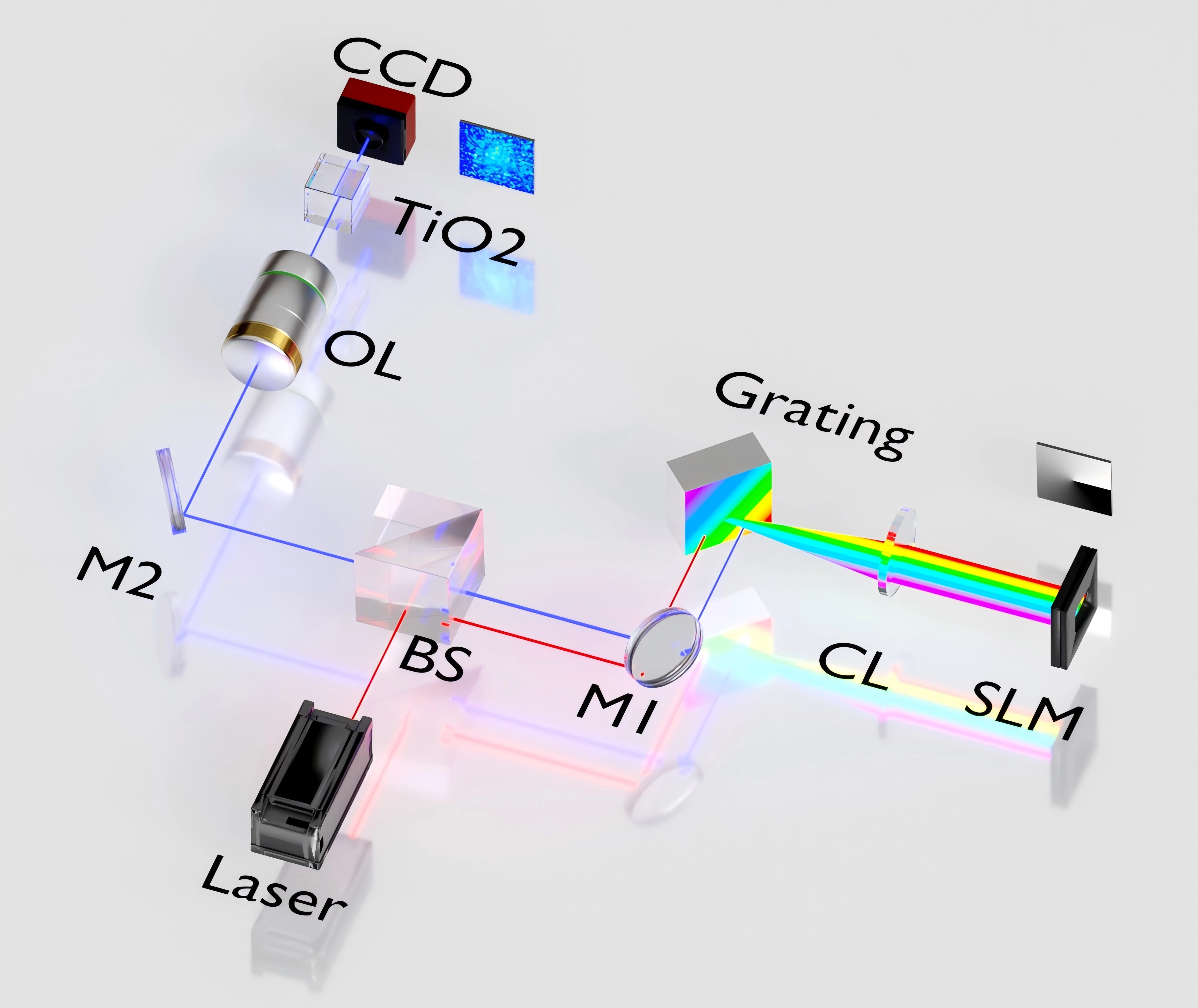
Figure 1. Experimental setup for the generation and scattering-assisted detection of F-STOVs. A broadband femtosecond pulse is modulated by a G–CL–SLM system to generate F-STOVs with prescribed fractional topological charges. The structured wavepackets are subsequently focused by an objective lens onto a TiO2 scattering medium, which provides sufficiently strong multiple scattering to generate fully developed speckle patterns while remaining stable during the measurement process, with the TiO2 layer having a thickness of 100 μm and a mean free path of approximately 2.5 μm. The resulting speckle patterns are recorded by a CCD camera for analysis. F-STOVs: fractional spatiotemporal optical vortices; G–CL–SLM: grating–cylindrical lens–spatial light modulator; CCD: charge-coupled device.
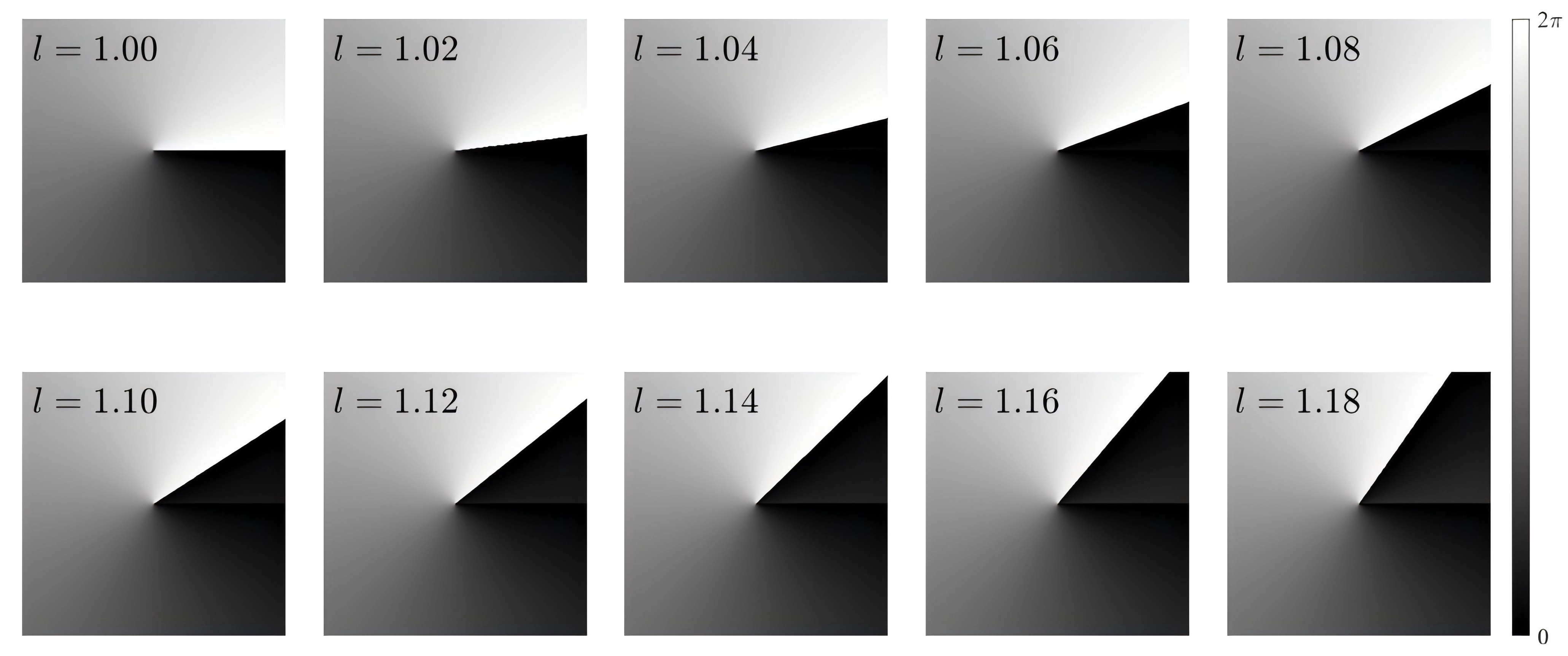
Figure 2. Phase distribution loaded on SLM for generating fractional spatiotemporal optical vortices. Representative fractional spiral phase patterns corresponding to topological charges ranging from l = 1.00 to 1.18 with an increment of Δl = 0.02. The grayscale encodes the phase value from 0 to 2π. SLM: spatial light modulator.
By loading the fractional spiral phase patterns shown in Figure 2 onto the spatial light modulator, we acquired the corresponding speckle patterns of fractional STOVs corresponding to a topological charge interval of Δl = 0.02, as illustrated in Figure 3. We note that, by visual inspection alone, it is extremely difficult to distinguish the subtle differences between speckle patterns associated with closely spaced fractional topological charges, making accurate identification challenging. To establish a robust correspondence between speckle patterns and the fractional topological charge of the STOVs, a ResNet-based architecture was therefore employed for speckle pattern analysis, following strategies similar to those used in previous studies[32]. In this framework, the recorded speckle intensity images are used as inputs to the convolutional neural network. The residual blocks extract hierarchical spatial features from the speckle patterns, while the final fully connected layer performs classification of the fractional topological charges.
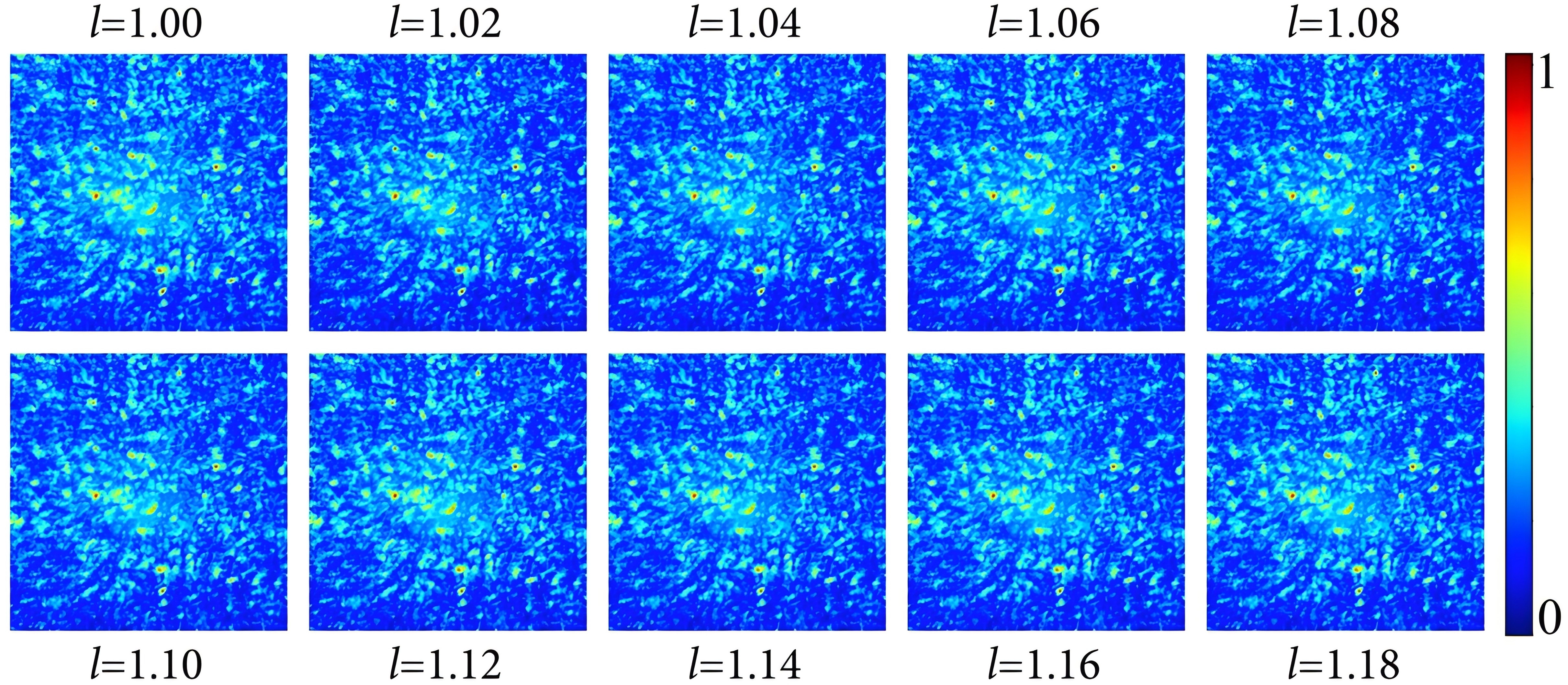
Figure 3. Scattered speckle patterns corresponding to fractional spatiotemporal optical vortices. Measured speckle intensity distributions corresponding to fractional STOVs with topological charges ranging from l = 1.00 to 1.18 in steps of Δl = 0.02, after transmission through a TiO2 scattering medium. The intensity is normalized to the range [0, 1]. Although adjacent fractional charges differ only slightly, the resulting speckle patterns exhibit subtle yet reproducible variations, which cannot be reliably distinguished by visual inspection alone. STOVs: spatiotemporal optical vortices.
The learning rate was adaptively adjusted according to the model performance to facilitate efficient convergence of the network parameters. In addition, the discrimination of closely spaced fractional STOV states is intrinsically challenging, which further increases the sensitivity of the validation accuracy to sample composition. Therefore, the learning curves in Figure 4 should be interpreted as a proof-of-concept evaluation of feasibility rather than as the performance of a fully optimized practical system. For datasets with different topological-charge intervals, training and analysis were carried out using a two-stage learning strategy. Specifically, a relatively large learning rate was first employed to rapidly improve the prediction accuracy, followed by a reduced learning rate applied to well-performing models to enable fine optimization with smaller update steps, thereby approaching the optimal solution.
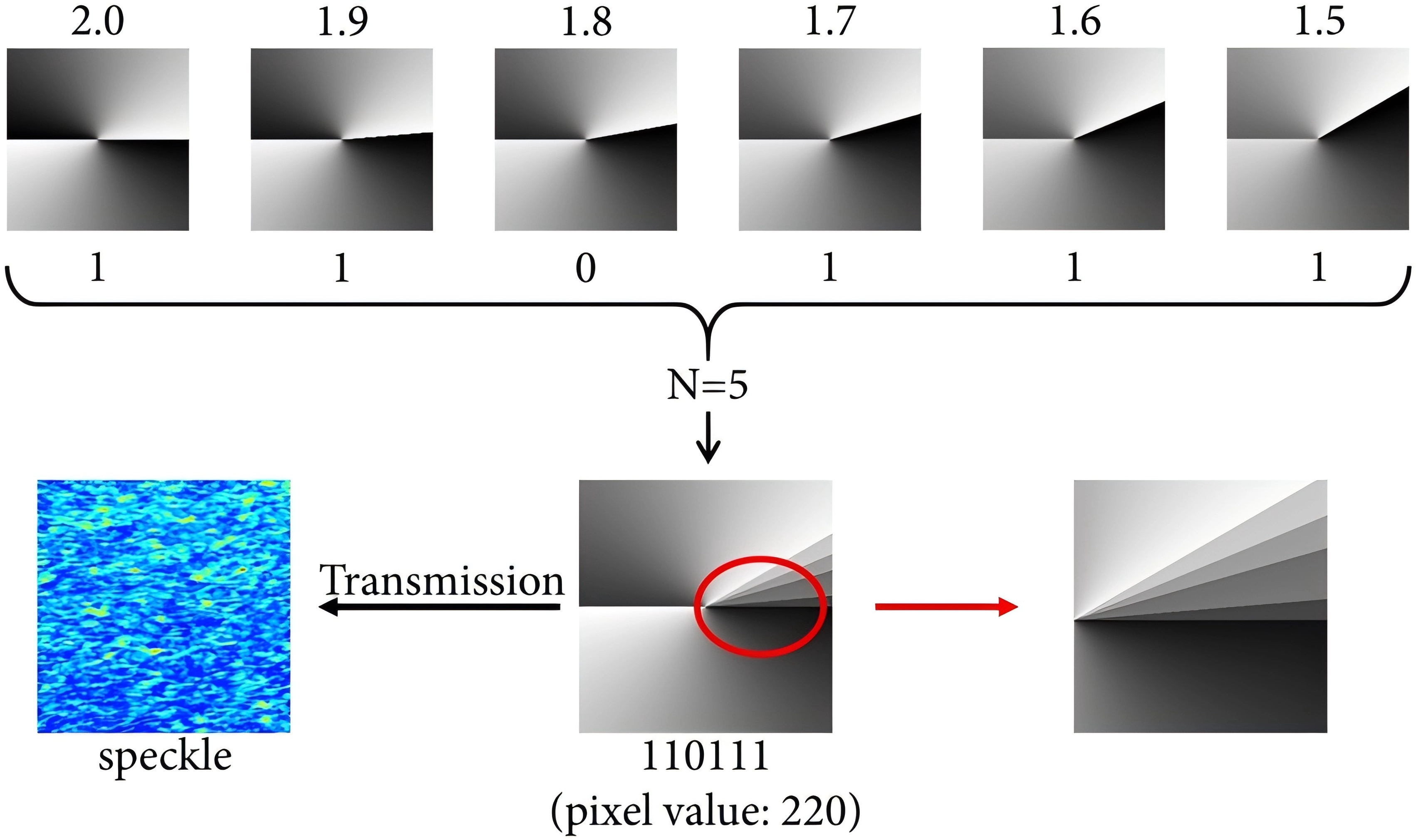
Figure 4. Training dynamics for recognizing 6-bit fractional STOV superposition states. Training and validation accuracies of the ResNet18-based classifier under different learning rates. (a)–(d) correspond to learning rates of 1 × 10⁻⁵, 5 × 10⁻⁶, 2 × 10⁻⁶, and 7 × 10⁻⁷, respectively. A two-stage learning-rate adjustment strategy is employed, in which a relatively larger learning rate enables rapid convergence at early stages, followed by smaller learning rates for fine optimization. The results demonstrate that appropriate learning-rate scheduling is essential for achieving stable and high recognition accuracy in fractional STOV superposition decoding. STOV: spatiotemporal optical vortice.
Based on this training strategy, we systematically evaluated the classification performance for different topological-charge intervals. As the interval between adjacent charges decreases, the discrimination task becomes progressively more challenging, reflected by a clear reduction in the achievable prediction accuracy. For relatively large charge separations (Δl = 0.1 and 0.05), the model converges rapidly and achieves accuracies exceeding 98%. When the interval is reduced to Δl = 0.02, the accuracy decreases to approximately 90%, indicating a marked increase in overlap between speckle patterns associated with neighboring fractional states. In the most demanding case of Δl = 0.01, the prediction accuracy saturates at around 76%, highlighting the intrinsic difficulty of resolving closely spaced fractional STOVs even with optimized training. These results delineate the practical resolution limit of the scattering-assisted detection scheme in the fractional regime. The achievable resolution is influenced by several factors, including the correlation properties of speckle patterns in the scattering medium, the phase modulation fidelity and spatial resolution of the SLM, and the capacity of the neural network model. In particular, the finite pixel size and discrete grayscale modulation of the SLM introduce sampling and quantization errors in the encoded phase holograms, which limit the ability to faithfully generate extremely small differences between neighboring fractional topological charges. Therefore, the demonstrated Δl = 0.01 should be regarded as the practical resolution limit of the current system rather than a fundamental physical limit.
We further propose a scheme for exploiting ultra-high-resolution F-STOVs in optical communication. Our experimental demonstrations reveal the potential of using STOVs to expand the information capacity of optical communication channels in the temporal dimension. The optical communication simulation system employed in this work shared the same optical configuration as that shown in Figure 1. To ensure experimental stability, the optical path length between the SLM and the CCD camera was fixed at 1 m. In our setup, the distance between the TiO2 scattering medium and the CCD camera was fixed at 2 cm. Under this condition, the recorded speckle patterns remained stable against small perturbations in the optical path during the measurement process. When selecting the encoding unit, F-STOVs with a topological-charge interval of Δl = 0.1 were chosen to construct multiplexed encoding states, enabling clearer discrimination between different encoded symbols. Specifically, six nonzero F-STOV modes with topological charges ranging from l = 1.5 to l = 2.0 were employed to encode each bit. At the receiver, the decoded bit value was determined by identifying whether the detected F-STOV fell within the predefined dynamical range corresponding to logical “0” or “1”. The multiplexed encoding scheme based on F-STOVs can be expressed as
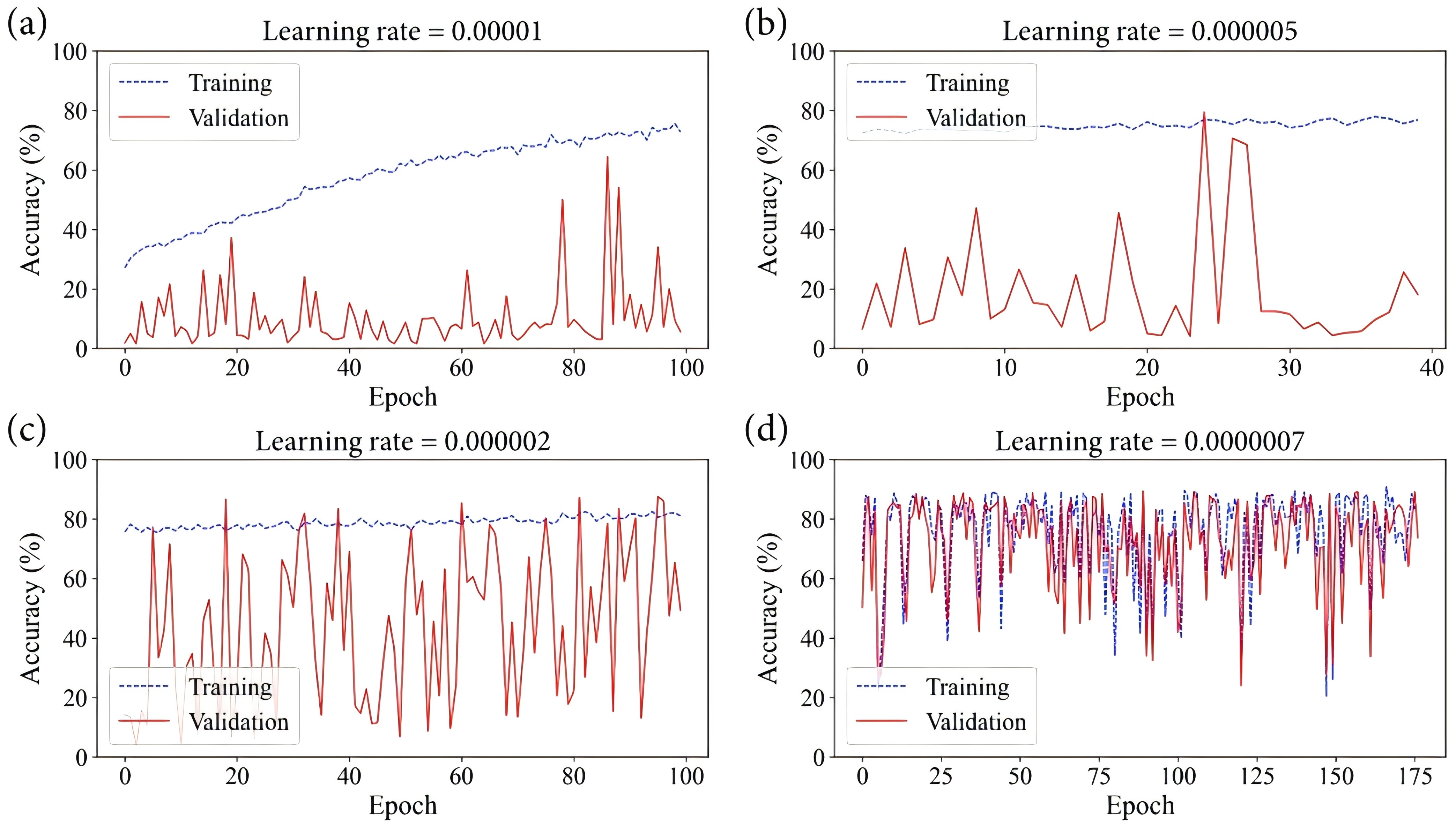
Figure 5. Example of a 6-bit fractional STOV superposition encoding scheme. Six fractional STOV modes with topological charges ranging from l = 1.5 to 2.0 (Δl = 0.1) are assigned as independent encoding units. Each mode is either activated (“1”) or deactivated (“0”) according to the input binary sequence, resulting in a multiplexed fractional STOV superposition state. The example shown corresponds to the binary sequence “110111” (pixel value 220), whose associated phase-only hologram generates a composite STOV field. After transmission through the scattering medium, the encoded information is converted into a characteristic speckle pattern for decoding. STOV: spatiotemporal optical vortice.
As shown in Figure 4, we present the training results for the multiplexed F-STOV encoding scheme, where the interval between adjacent encoding units was set to Δl = 0.1. The differences introduced by the encoded phase holograms can be observed from the corresponding speckle patterns shown in Figure 3. Figure 4a,b,c,d display the training outcomes obtained using learning rates of 0.00001, 0.000005, 0.000002, and 0.0000007 at different stages of the training process. Among these configurations, the best-performing model achieves a validation accuracy approaching 90%.
Figure 6 shows the average channel feature maps extracted from the output of the layer4 block of the ResNet18 network. From left to right, the feature maps correspond to six representative F-STOV multiplexed states encoded by different 6-bit binary patterns, which represent the speckle intensity distributions of the corresponding encoded states. The heat maps reveal pronounced differences in the extracted feature distributions for different input states. Notably, the multiplexed states “110010” and “110100” both contain three logical ‘1’ bits, corresponding to three effective F-STOV modes. Despite having the same number of active encoding bits, their extracted feature maps exhibit clear and distinguishable differences. This observation indicates that even multiplexed F-STOV states with identical numbers of constituent modes can give rise to significantly different intensity distributions, enabling reliable discrimination by the neural network.
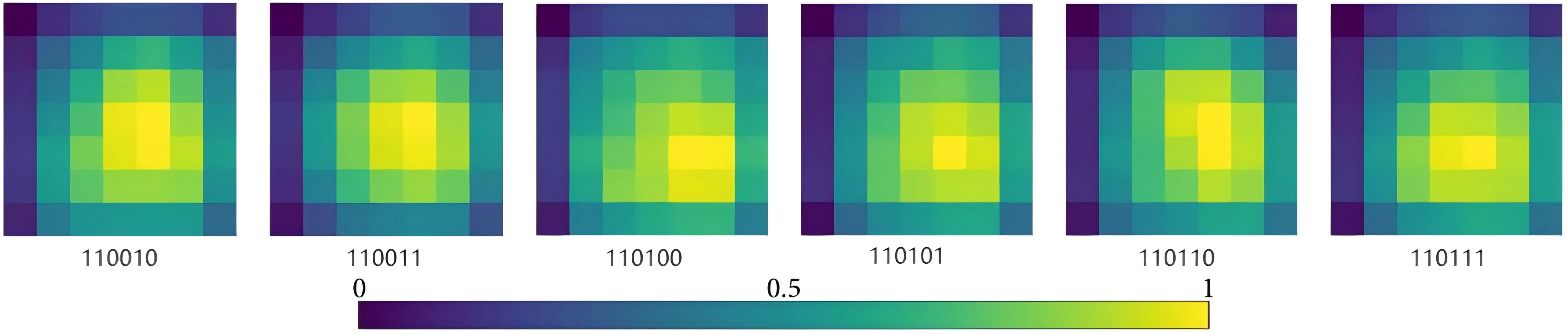
Figure 6. Feature representations extracted for encoded fractional STOV superposition states. Average channel heatmaps extracted from the layer4 block of the ResNet18 network for six representative 6-bit fractional STOV superposition states, corresponding to 110010, 110011, 110100, 110101, 110110, and 110111. Each heatmap represents the spatially averaged activation of feature channels in response to the scattered speckle pattern of a given encoded state. Distinct activation distributions are observed for different encoding patterns, indicating that the network captures discriminative features associated with different fractional STOV superpositions. STOV: spatiotemporal optical vortice.
To demonstrate the application of the ultra-fine F-STOV multiplexing scheme in optical communication, we performed an image transmission experiment using a grayscale image. Under the same optical configuration adapted for the trained deep convolutional neural network, the experiment illustrates the feasibility of F-STOV–based multiplexed communication. A total of 50 × 50 pixels values were extracted from the grayscale image, with each pixel represented by an 8-bit grayscale level ranging from 0 to 255. In our scheme, each pixel value was divided by four and subsequently encoded into a 6-bit F-STOV multiplexed state. The serialized set of 2,500 pixel values was converted into the corresponding multiplexed F-STOV states and sequentially loaded onto the spatial light modulator, as illustrated in Figure 7. At the receiver, the corresponding intensity distributions were captured by a CCD camera. The trained neural network was then used to decode and predict the transmitted data from the recorded intensity patterns. The predicted binary data were converted back into decimal values and subsequently mapped to grayscale pixel intensities, enabling reconstruction of the transmitted image after reassembling all pixels. Compared with the original image, the reconstructed image exhibits a pixel-level bit error rate (BER) of approximately 17.3%. Although this BER is still high compared with well-optimized conventional optical communication systems, the present experiment is intended only as a proof-of-concept demonstration of fractional-STOV-based encoding and decoding. At this stage, the main significance of the proposed scheme lies in introducing an additional spatiotemporal degree of freedom and demonstrating the feasibility of scattering-assisted detection, rather than in outperforming existing communication systems in terms of error rate. Analysis of the F-STOV multiplexed phase patterns employed in the communication scheme indicates that, for a topological-charge interval of Δl = 0.1, the six-bit phase encoding occupies only a portion of the available phase space, leaving substantial redundancy in the encoding domain. This observation suggests that additional F-STOV modes could be incorporated to encode more bits per symbol, thereby increasing the channel capacity. In principle, such an extension would enable a significant enhancement of the achievable bandwidth in F-STOV–based optical communication systems.
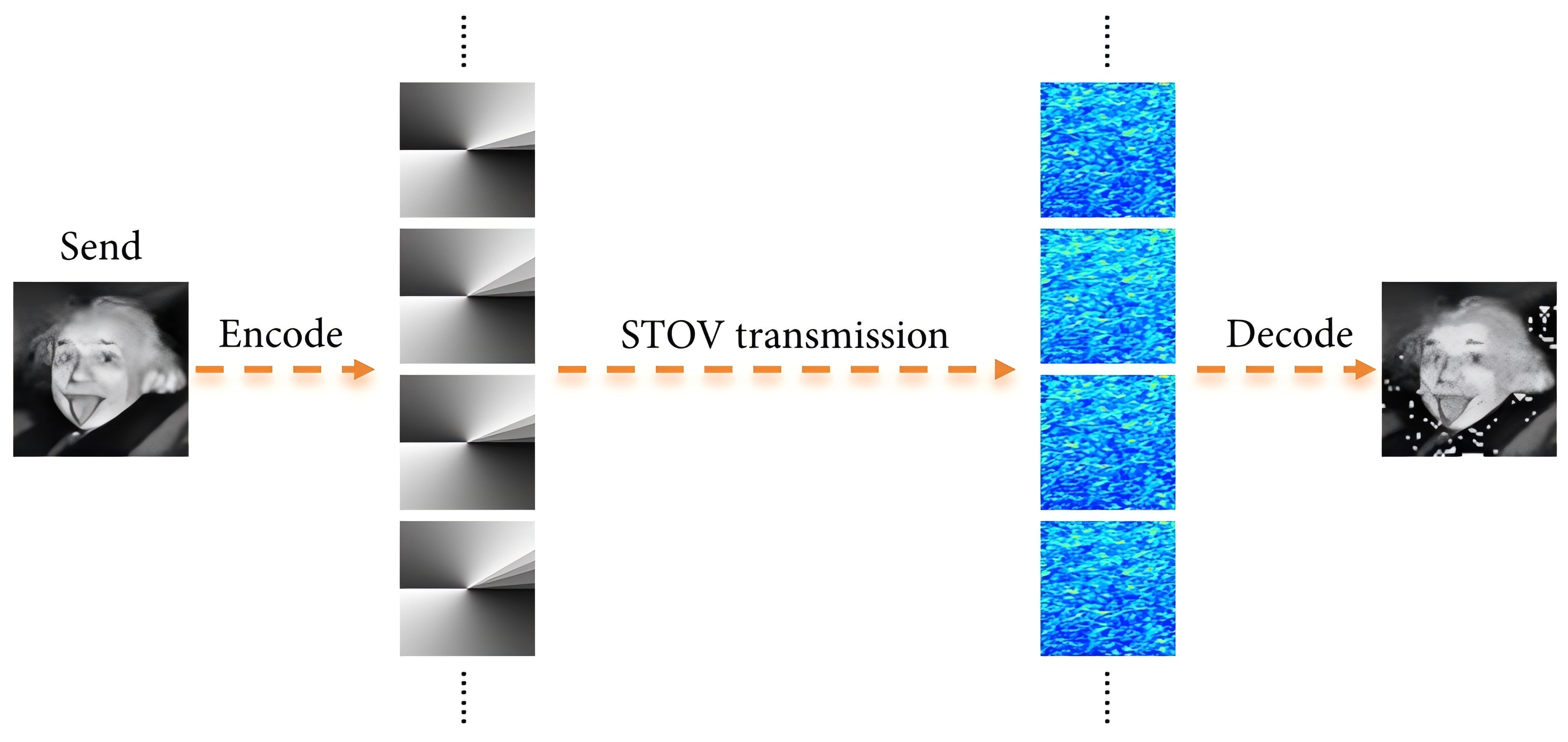
Figure 7. Image transmission using a fractional STOV–encoded optical communication system. Schematic illustration of grayscale image transmission based on 6-bit fractional STOV superposition encoding. Each pixel of the input image is mapped onto a corresponding fractional STOV superposition state, which is transmitted through the scattering-assisted optical channel and recorded as a speckle pattern. The received speckle patterns are subsequently decoded by the trained neural network to reconstruct the image. STOV: spatiotemporal optical vortice.
At present, several limitations remain for practical implementation. The most significant constraint arises from the refresh rate of the spatial light modulator, which is limited to 60 Hz and thus severely restricts both the achievable transmission rate and channel capacity. In addition, although data acquisition and neural network training can be performed during the initial stage of communication, encoding and decoding an increasing number of fractional STOV multiplexed states require longer acquisition and calibration times. This imposes more stringent demands on the modulation speed of both the phase modulator and the detection system. Taking the 6-bit F-STOV superposition-based communication scheme as an example, at least 26 = 64 intensity patterns must be collected for network training. In our implementation, achieving satisfactory prediction accuracy required approximately 10 hours of training. For communication schemes employing a larger number of bits, both the number of required samples and the training time would increase exponentially, which is unfavorable for rapid system reconfiguration. In recent years, rapid advances in integrated photonics and optoelectronic hardware have significantly improved computational performance. Continued progress in photonic chip fabrication and computing hardware is expected to substantially shorten neural network training times, making the application of denser F-STOV multiplexing schemes in optical communication increasingly feasible. Finally, it should be emphasized that the present experiments are primarily intended to demonstrate the feasibility of the proposed approach, without extensive optimization of the deep neural network architecture. Even though fractional STOV states are not mutually orthogonal, the present results show that deep-learning-assisted detection can still provide stable discrimination, indicating its potential for future non-orthogonal optical communication. We anticipate that further refinement of network design will not only improve communication fidelity but also reduce training time and storage requirements.
By integrating the proposed scheme with conventional optical communication techniques, such as polarization multiplexing, the transmission capacity can be significantly enhanced while fully exploiting the advantages enabled by a topological-charge interval of Δl = 0.1. In addition, if spatiotemporal phase modulation could be extended from one transverse dimension to both transverse dimensions, the available encoding degrees of freedom would be further enlarged, which may provide additional benefits for both detection quality and information capacity. Notably, the proposed approach effectively overcomes key limitations associated with traditional STOV detection methods, including the requirement for continuous interferometric measurements and the susceptibility to large diffraction-induced speckle variations. In this context, our work establishes a new pathway toward the development of ultra-fine optical orbital angular momentum–based communication by leveraging deep learning–assisted detection. The potential impact of this approach extends beyond the optical domain and may be readily generalized to other wave-based communication platforms, including microwave[33], terahertz[34], and acoustic systems[35]. These results point toward a promising direction for next-generation high-capacity communication technologies[36].
4. Conclusion
In this work, we investigated the scattering-assisted high-precision detection of fractional spatiotemporal optical vortices. We experimentally validated the detection performance of the proposed scheme using a ResNet18 neural network for different topological-charge intervals. Specifically, optimal detection accuracies of 99%, 98%, 90%, and 76% were achieved for charge intervals of Δl = 0.1, 0.05, 0.02, and 0.01, respectively. Building upon the demonstrated ultra-fine detection capability for fractional STOVs, we further proposed a free-space optical communication scheme employing 6-bit STOV superposition keying with Δl = 0.1. In an image transmission experiment using a grayscale portrait of Albert Einstein, the proposed system achieved a pixel-level bit error rate of approximately 17.3% while maintaining robustness against environmental perturbations encountered in the experimental setup. These results expand the dimensionality of structured light available for optical communication and demonstrate the potential of spatiotemporal structured beams for enhancing channel capacity in free-space optical links. More broadly, our findings highlight the versatility of STOVs as an information carrier in the temporal domain, complementing existing spatial and polarization-based multiplexing techniques. With continued advances in computational optics and data-driven signal processing, STOVs are expected to play an increasingly important role in optical communication, quantum information, and related photonic technologies.
Authors contribution
Sun Y: Conceptualization, methodology, investigation, formal analysis, data curation, writing-review & editing.
Zhang C: Formal analysis, data curation, writing-review & editing.
Xu R: Discussion.
Liu H: Conceptualization, supervision, resources, validation, writing-review & editing.
Chen X: Conceptualization, supervision, funding acquisition, writing-review & editing.
Conflicts of interest
Xianfeng Chen is an Editorial Board Member of Light Manipulation and Applications. Other authors declared that there are no conflicts of interest.
Ethical approval
Not applicable.
Consent to participate
Not applicable.
Consent for publication
Not applicable.
Availability of data and materials
The data that support the findings of this study are available from the corresponding author upon reasonable request.
Funding
This work is supported by the National Natural Science Foundation of China (Grant Nos. 12192252, 12341403, 12374314 and 12464046), the National Key Research and Development Program of China (Grant No. 2023YFA1407200), and the Innovation Project of GUET Graduate Education (Grant No. 2026YCXS244).
Copyright
© The Author(s) 2026.
References
-
1. Lian Y, Qi X, Wang Y, Bai Z, Wang Y, Lu Z. OAM beam generation in space and its applications: A review. Opt Lasers Eng. 2022;151:106923.[DOI]
-
2. Lee D, Sasaki H, Fukumoto H, Hiraga K, Nakagawa T. Orbital angular momentum (OAM) multiplexing: An enabler of a new era of wireless communications. IEICE Trans Commun. 2017;E100.B(7):1044-1063.[DOI]
-
3. Hancock SW, Zahedpour S, Goffin A, Milchberg HM. Free-space propagation of spatiotemporal optical vortices. Optica. 2019;6(12):1547.[DOI]
-
4. Chong A, Wan C, Chen J, Zhan Q. Generation of spatiotemporal optical vortices with controllable transverse orbital angular momentum. Nat Photonics. 2020;14(6):350-354.[DOI]
-
5. Fan H, Cao Q, Laboratory Z, Liu X, Chong A, Zhan Q. Perfect spatiotemporal optical vortices. Photon Res. 2025;13(6):1776.[DOI]
-
6. Porras MA. Optics of spatiotemporal optical vortices for atto- and nano-photonics. Nanophotonics. 2025;14(6):845-852.[DOI]
-
7. Chen J, Zhao J, Shen X, Mo D, Qiu CW, Zhan Q. Orbit–orbit interaction in spatiotemporal optical vortex. Engineering. 2025;45:44-51.[DOI]
-
8. Jhajj N, Larkin I, Rosenthal EW, Zahedpour S, Wahlstrand JK, Milchberg HM. Spatiotemporal optical vortices. Phys Rev X. 2016;6(3):031037.[DOI]
-
9. Rivera N, Kaminer I. Light–matter interactions with photonic quasiparticles. Nat Rev Phys. 2020;2(10):538-561.[DOI]
-
10. Wan C, Chong A, Zhan Q. Optical spatiotemporal vortices. eLight. 2023;3:11.[DOI]
-
11. Huang S, Wang P, Shen X, Liu J. Properties of the generation and propagation of spatiotemporal optical vortices. Opt Express. 2021;29(17):26995.[DOI]
-
12. Willner AE, Huang H, Yan Y, Ren Y, Ahmed N, Xie G, et al. Optical communications using orbital angular momentum beams. Adv Opt Photon. 2015;7(1):66.[DOI]
-
13. Trichili A, Rosales-Guzmán C, Dudley A, Ndagano B, Ben Salem A, Zghal M, et al. Optical communication beyond orbital angular momentum. Sci Rep. 2016;6:27674.[DOI]
-
14. Gui G, Brooks NJ, Kapteyn HC, Murnane MM, Liao CT. Second-harmonic generation and the conservation of spatiotemporal orbital angular momentum of light. Nat Photon. 2021;15(8):608-613.[DOI]
-
15. Zahedpour S, Hancock SW, Milchberg HM. Second harmonic generation of spatiotemporal optical vortices and conservation of orbital angular momentum. In: Frontiers in optics + laser science 2021; 2021 Nov 1-4; Washington, United States. Washington: Optica Publishing Group; 2021.[DOI]
-
16. Huang S, Wang P, Shen X, Liu J, Li R. Diffraction properties of light with transverse orbital angular momentum. Optica. 2022;9(5):469.[DOI]
-
17. Huang S, Li Z, Li J, Zhang N, Lu X, Dorfman K, et al. Spatiotemporal vortex strings. Sci Adv. 2024;10(19):eadn6206.[DOI]
-
18. Huang S, Wang P, X Y, Liu J, Li R. Fractional spatiotemporal optical vortices. arXiv:2504.11697 [Preprint]. 2025.[DOI]
-
19. Huang HC, Liao CT, Leung HM. Arithmetic with spatiotemporal optical vortex of integer and fractional topological charges. arXiv:2512.25049 [Preprint]. 2025.[DOI]
-
20. Mallick NS. Vortex beam assisted generation and manipulation of structured light. J Opt Soc Am B. 2024;41(9):2085.[DOI]
-
21. Kai C, Feng Z, Dedo MI, Huang P, Guo K, Shen F, et al. The performances of different OAM encoding systems. Opt Commun. 2019;430:151-157.[DOI]
-
22. Mounaix M, Andreoli D, Defienne H, Volpe G, Katz O, Grésillon S, et al. Spatiotemporal coherent control of light through a multiple scattering medium with the multispectral transmission matrix. Phys Rev Lett. 2016;116(25):253901.[DOI]
-
23. McCabe DJ, Tajalli A, Austin DR, Bondareff P, Walmsley IA, Gigan S, et al. Spatio-temporal focusing of an ultrafast pulse through a multiply scattering medium. Nat Commun. 2011;2:447.[DOI]
-
24. Kan X, Jin Q, Wang Y, Yin C, Wu J. High-precision angular detection via partially coherent vortex interferometer and deep learning. Opt Commun. 2025;596:132542.[DOI]
-
25. Wu S, Ma F, Wang A. Detecting small variation rate of refractive index based on OAM interferometry and time–frequency analysis. Opt Laser Technol. 2024;174:110566.[DOI]
-
26. Leonetti M, Grimaldi A, Ghirga S, Ruocco G, Antonacci G. Scattering assisted imaging. Sci Rep. 2019;9:4591.[DOI]
-
27. Sun Y, Wu X, Shi J, Zeng G. Scattering-assisted computational imaging. Photonics. 2022;9(8):512.[DOI]
-
28. Zhan Q, Laboratory Z. Spatiotemporal sculpturing of light: A tutorial. Adv Opt Photon. 2024;16(2):163.[DOI]
-
29. Kulce O, Mengu D, Rivenson Y, Ozcan A. All-optical information-processing capacity of diffractive surfaces. Light Sci Appl. 2021;10:25.[DOI]
-
30. Feng F, Yuan X. A new member of the structured light family: Optical spatiotemporal vortices. Light Sci Appl. 2023;12:236.[DOI]
-
31. Young M, Beeson E, Davis J, Rusinkiewicz S, Ramamoorthi R. Viewpoint-coded structured light. In: 2007 IEEE conference on computer vision and pattern recognition; 2007 Jun 17-22; Minneapolis, USA. Piscataway: IEEE; 2007. p. 1-8.[DOI]
-
32. Priya TS, Ramaprabha T. Resnet based feature extraction with decision tree classifier for classificaton of mammogram images. Turk J Comput Math Educ. 2021;12(2):1147-1153.[DOI]
-
33. Krishna VN, Padmasine KG. A review on microwave band pass filters: Materials and design optimization techniques for wireless communication systems. Mater Sci Semicond Process. 2023;154:107181.[DOI]
-
34. Chen Z, Ma X, Zhang B, Zhang Y, Niu Z, Kuang N, et al. A survey on terahertz communications. China Commun. 2019;16(2):1-35.[DOI]
-
35. Zhang Y, Li C, Wang H, Wang J, Yang F, Meriaudeau F. Deep learning aided OFDM receiver for underwater acoustic communications. Appl Acoust. 2022;187:108515.[DOI]
-
36. Fresi F, Imran M, Malacarne A, Meloni G, Sorianello V, Forestieri E, et al. Advances in optical technologies and techniques for high capacity communications. J Opt Commun Netw. 2017;9(4):C54.[DOI]
Copyright
© The Author(s) 2026. This is an Open Access article licensed under a Creative Commons Attribution 4.0 International License (https://creativecommons.org/licenses/by/4.0/), which permits unrestricted use, sharing, adaptation, distribution and reproduction in any medium or format, for any purpose, even commercially, as long as you give appropriate credit to the original author(s) and the source, provide a link to the Creative Commons license, and indicate if changes were made.
Publisher’s Note
Science Exploration remains a neutral stance on jurisdictional claims in published
maps
and institutional affiliations. The views expressed in this article are solely those
of
the author(s) and do not reflect the opinions of the Editors or the publisher.
Share And Cite


Science Exploration Style
Sun Y, Zhang C, Xu R, Liu H, Chen X. Scattering-assisted high-precision detection of fractional spatiotemporal optical vortices. Light Manip Appl. 2026;1:202604. https://doi.org/10.70401/lma.2026.0009
Tips
Copy completed.
Submit a Manuscript
Author Instructions
Cite this Article
Article Metrics
0
View
0
Download
Cited
Article Updates

 Get citation
Science Exploration Style

Sun Y, Zhang C, Xu R, Liu H, Chen X. Scattering-assisted high-precision detection of fractional spatiotemporal optical vortices. Light Manip Appl. 2026;1:202604. https://doi.org/10.70401/lma.2026.0009
copy
Share Link
copy
Subscribe