Corrosion monitoring technologies for anti-corrosion coatings: Principles, advances and future perspectives

Jinke Wang
1,2,*

,
Jingya Huo
2,3
,
Sahaopeng Liu
2,3
,
Yanliang Chen
2,3
,
Lingwei Ma
1,2
*Correspondence to:
Jinke Wang, Beijing Key Laboratory of Materials Intelligent Technology, School of Advanced Materials Innovation, University of Science and Technology Beijing, Beijing 100083, China; National Materials Corrosion and Protection Data Center, University of Science and Technology Beijing, Beijing 100083, China.
E-mail: jk_wang@ustb.edu.cn
Smart Mater Devices. 2026;2:202628. 10.70401/smd.2026.0046
Received: June 01, 2026Accepted: September 10, 2026Published: September 10, 2026
Abstract
Organic anti-corrosion coatings are extensively used to protect metallic structures, but conventional coatings mainly serve as passive barriers and offer limited information on concealed interfacial degradation. Once corrosive media pass through pores, cracks, or local delamination, under-coating corrosion may begin before visible rusting or coating blistering becomes evident. Early, in situ, and real-time monitoring of coating degradation is therefore necessary for assessing coating performance, clarifying failure mechanisms, and supporting timely maintenance. This review presents recent advances in corrosion monitoring technologies for anti-corrosion coatings. Electrochemical sensing methods, including electrochemical impedance spectroscopy, electrochemical noise monitoring, and galvanic corrosion sensors, are examined with respect to their signal mechanisms, sensor configurations, and suitability for service-state assessment. Optical and electromagnetic sensing techniques are subsequently reviewed for nondestructive and spatially resolved detection of under-coating corrosion. Special attention is given to corrosion-sensing coatings that introduce responsive molecules or micro/nanocontainers into coating matrices to realize pH- or metal ion-triggered fluorescent and colorimetric warning. Finally, the major remaining challenges and future research directions are discussed, including high-sensitivity detection, long-term signal stability, multi-signal coupling, quantitative interpretation, and engineering implementation of intelligent coating systems.
Keywords
Anti-corrosion coatings, corrosion monitoring, electrochemical sensors, optical sensors, corrosion-sensing coatings
1. Introduction
Metallic materials show excellent mechanical properties, good processability, and high electrical and thermal conductivity. Therefore, they are broadly used in marine engineering, transportation, petrochemical equipment, and infrastructure construction. During service, however, metallic materials are frequently exposed to harsh environments involving humidity, heat, salt spray, ultraviolet irradiation, and alternating temperatures, all of which may accelerate corrosion failure. Corrosion not only damages coating systems but also reduces the mechanical integrity of the underlying metal. In serious cases, it may lead to major safety accidents[1,2]. Thus, the development of efficient and reliable anti-corrosion systems has remained a key issue in materials protection[3,4].
Organic anti-corrosion coatings are the most commonly used technologies for metal protection due to their relatively low cost, simple application, and wide adaptability. The protective effect is mainly based on the formation of a continuous physical barrier on the metal surface, which suppresses the transport of H2O, O2, and corrosive ions to the coating/substrate interface and thereby delays corrosion reactions[5]. However, conventional organic coatings remain essentially passive protective systems. They cannot effectively perceive changes in the internal coating structure or in the coating/metal interfacial condition. Once pinholes, cracks, scratches, or local delamination are formed, corrosive media may enter through these channels and spread beneath the coating. Since this process is often concealed, visible rust generally indicates that the barrier performance of the coating has already declined markedly[6]. Therefore, technologies that enable early, real-time, and in situ monitoring of under-coating corrosion are important for prolonging the service life of both coatings and metallic substrates.
Metal corrosion is an electrochemical process accompanied by electron transfer, local pH variation, and metal ion release. Therefore, monitoring these early changes is essential for evaluating coating degradation, understanding failure mechanisms, and enabling timely maintenance. Traditional evaluation of coating corrosion has mainly depended on electrochemical methods, in which variations in electrochemical signals are analyzed to describe the evolution of coating barrier properties and interfacial corrosion. However, many of these methods require electrochemical workstations, controlled testing conditions, and skilled operators, which restricts their application in continuous field monitoring under complex service environments.
In recent years, substantial attention has been given to real-time monitoring of coating degradation and service failure. Monitoring approaches such as electrochemical sensors[7], optical sensors[8,9], electromagnetic sensors[10,11], and corrosion damage warning coatings[12-15] have been proposed. Compared with conventional post-failure inspection or offline characterization, in situ monitoring technologies can obtain early information related to coating structural degradation, interfacial damage, and under-coating corrosion propagation. These data are helpful for explaining failure mechanisms, assessing protective performance, and predicting service life. Corrosion sensors mainly evaluate the coating service state through external signal conversion mechanisms, such as electrochemical, optical, or electromagnetic responses. By contrast, corrosion-sensing coatings focus on the self-response behavior of the coating itself. By incorporating functional components that respond to corrosion-related signals, such as pH variation or metal ion release, these coatings can provide in situ and visual feedback from within the coating. Together, these two strategies are promoting the transformation of anti-corrosion coatings from passive barrier systems toward active sensing, early warning, and intelligent protection. Notably, “early corrosion monitoring” refers to the capability of detecting coating degradation before conventional visual inspection can identify apparent coating failure, such as rust formation, blistering, cracking, or severe delamination. In different monitoring technologies, early responses may occur from several minutes or hours after electrolyte ingress to several days before visible coating failure, enabling timely maintenance and preventing further deterioration.
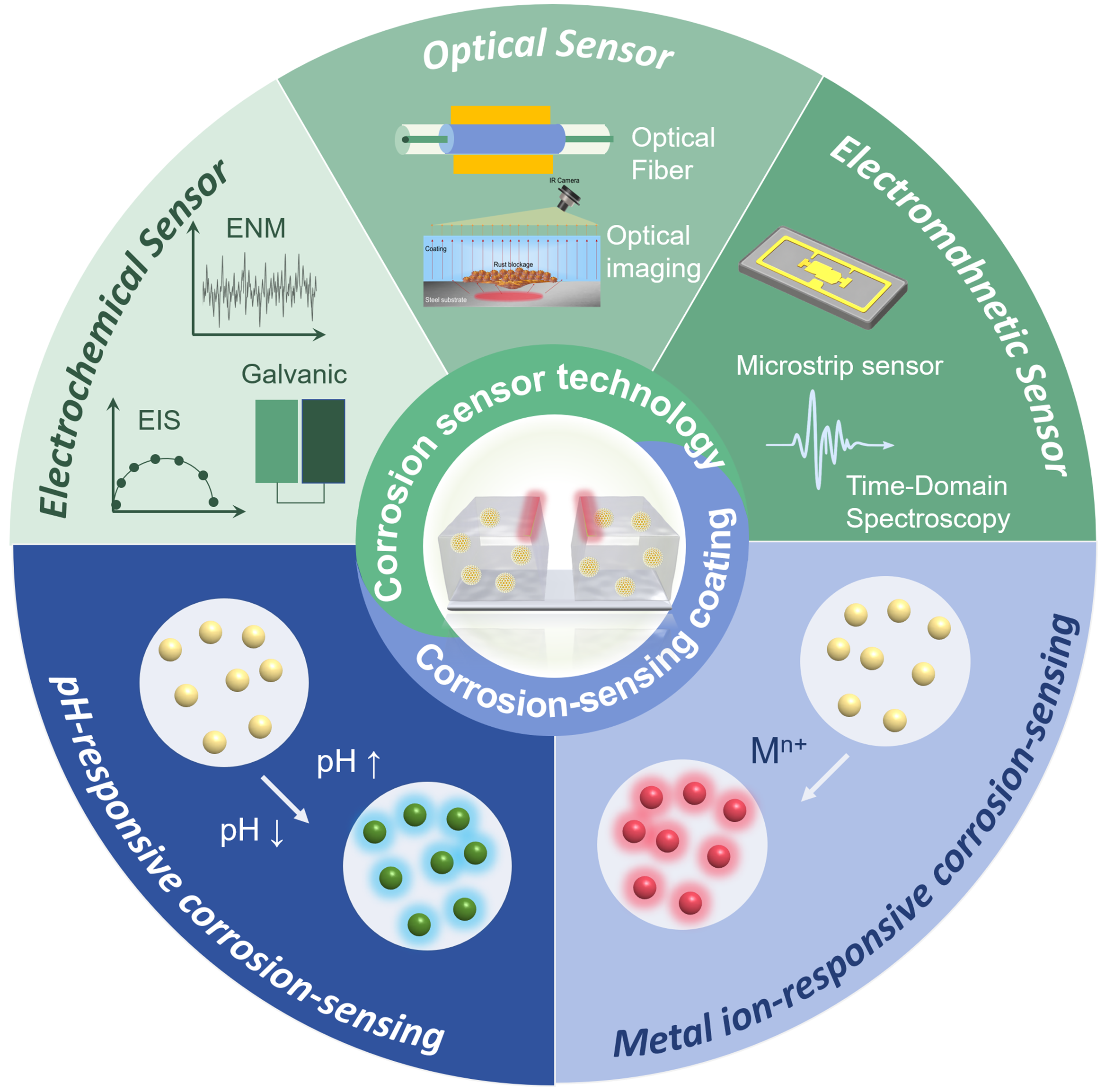
Although corrosion monitoring and smart anti-corrosion coatings have attracted increasing attention in recent years, these two topics are still often discussed separately. In practical coating systems, however, coating degradation, interfacial corrosion, and warning responses are closely related. Therefore, this review focuses on monitoring technologies specifically associated with anti-corrosion coatings, rather than on general corrosion detection or coating protection alone. The reviewed approaches are organized according to their main signal-conversion mechanisms, including electrochemical, optical, and electromagnetic sensing, as well as coating-integrated pH- and metal ion-responsive warning systems (Figure 1). Their sensing principles, representative designs, response characteristics, and practical limitations are discussed. By linking external sensor-based monitoring with self-reporting coating systems, this review aims to provide a clearer understanding of how anti-corrosion coatings may develop from passive barrier layers toward intelligent systems with monitoring, early warning and life-cycle management functions.
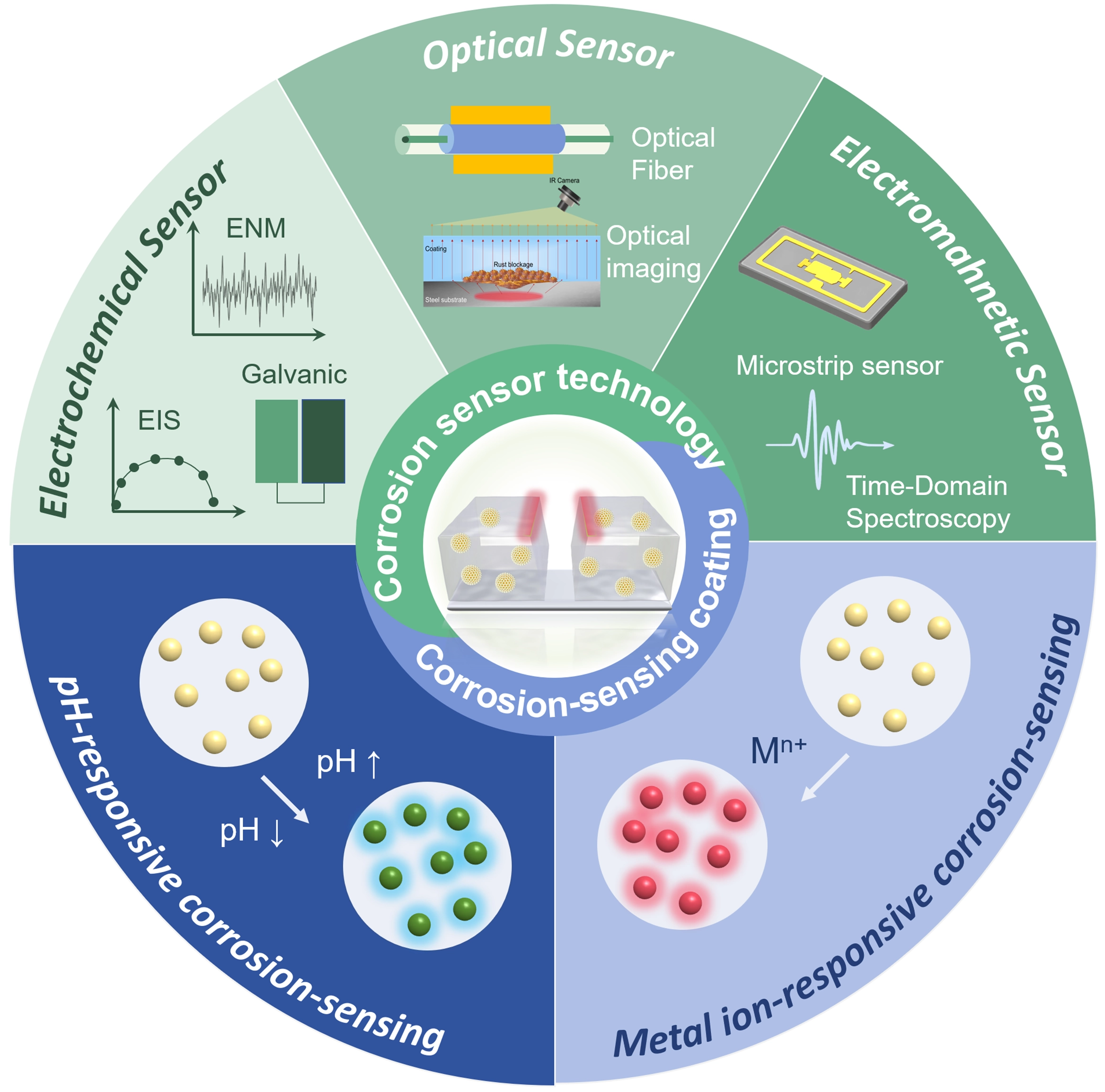
Figure 1. The schematic diagram for corrosion monitoring technologies. EIS: electrochemical impedance spectroscopy; ENM: electrochemical noise monitoring.
2. Electrochemical Sensor Monitoring Technologies
Electrochemical techniques are among the most established approaches for assessing corrosion and the protection performance of metallic materials and coatings. Xia et al. summarized a range of electrochemical methods that can be used for corrosion assessment and protection evaluation under field conditions, including potentiodynamic polarization, linear polarization resistance (LPR), electrochemical impedance spectroscopy (EIS), electrochemical noise analysis (ENA), and galvanic current measurements[16]. These techniques provide complementary information on corrosion kinetics, coating barrier properties, interfacial degradation, and localized corrosion activity. Among them, potentiodynamic polarization and LPR are mainly used to evaluate corrosion kinetics and corrosion rates, whereas EIS is particularly useful for characterizing coating barrier properties and coating/metal interfacial processes. ENA can provide information on spontaneous electrochemical fluctuations associated with localized corrosion, while galvanic current measurements enable direct monitoring of electrochemical coupling between dissimilar metallic regions. Considering their different sensing mechanisms and applicability to corrosion monitoring, this section focuses on three representative electrochemical sensor technologies: EIS corrosion sensors, electrochemical noise corrosion sensors, and galvanic corrosion sensors.
2.1 EIS corrosion sensors
EIS is among the most commonly applied methods for corrosion assessment and coating monitoring, with support from a relatively well-established theoretical framework[17]. Mansfeld[18] systematically used EIS to examine the corrosion behavior of polymeric anti-corrosion coatings and showed that low-frequency impedance could effectively indicate coating barrier performance. Walter[19] further linked impedance spectral characteristics with coating degradation processes, thereby promoting EIS as an accepted method for assessing anti-corrosion coatings. Leidheiser and Funke et al.[20] developed a coating water uptake-interfacial delamination model, indicating that water penetration is a critical factor contributing to the loss of coating protection. This model has subsequently been widely adopted to explain the failure behavior of organic coatings. The Bierwagen group further demonstrated that EIS can describe corrosion reactions at the coating/metal interface and assess the effects of nanofillers on interfacial structure, corrosive-medium transport pathways, and coating barrier properties[21]. Therefore, EIS has become an important technique for the design and evaluation of intelligent anti-corrosion systems.
The principle of EIS involves applying a small-amplitude alternating perturbation across a defined frequency range and analyzing the frequency-dependent impedance response of the tested system. Information regarding coating barrier properties, interfacial charge transfer, and corrosion reaction kinetics can then be derived. Because metal corrosion is an electrochemical process occurring at the coating/metal interface, EIS is highly responsive to coating defect growth, corrosive medium infiltration, and interfacial deterioration. Dong et al.[22] developed a coating impedance sensor for assessing coating corrosion failure. The sensor adopts an annular three-electrode configuration composed of a working electrode (WE), reference electrode (RE), and counter electrode (CE). The tested coating is directly deposited on the sensor surface, and its service condition can be evaluated through real-time impedance spectra. The miniaturized structure enables integration with a microcontroller-based testing circuit and an external battery, allowing possible deployment under practical service conditions. The study also identified three characteristic thresholds for coating failure: |Z|0.01Hz < 106 Ω·cm2, breakpoint frequency (fb) > 100 Hz, and phase angle at 10 Hz (θ10Hz) < 20°. These criteria offer quantitative indicators for the early warning of coating failure. Compared with conventional three-electrode electrolytic cells, this sensor exhibited greater sensitivity for monitoring corrosion-induced coating degradation and shows potential for rapid field assessment of coatings in atmospheric environments.
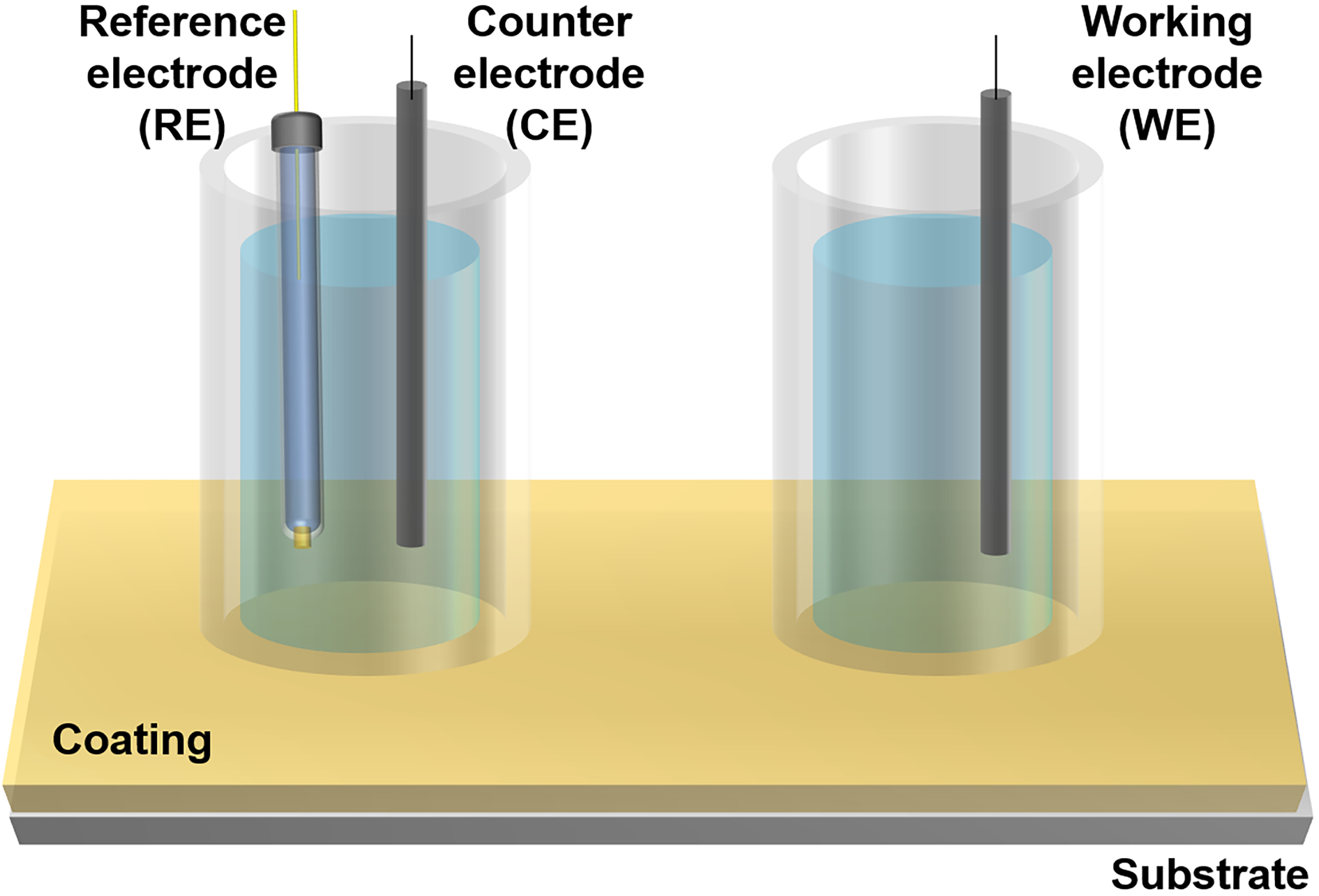
Dong et al.[23] further developed a two-electrode impedance sensor probe based on a dual-cell EIS configuration for nondestructive assessment of anti-corrosion coatings under service conditions. As illustrated in Figure 2, the dual-cell system is composed of two interconnected electrolytic cells. One cell contains the RE and CE, whereas the other contains a graphite rod connected to the WE terminal of the electrochemical workstation. This configuration permits EIS measurement without damaging the coating surface or drawing a lead from the metallic substrate, thereby addressing key limitations of conventional single-cell tests. Experimental results indicated that the EIS data obtained from the sensor probe for zinc-rich epoxy coatings in the pristine state and after 40 days of salt spray exposure were in good agreement with those obtained using the dual-cell method. This finding confirms the potential of the two-electrode impedance sensor for fully nondestructive evaluation in engineering field applications.
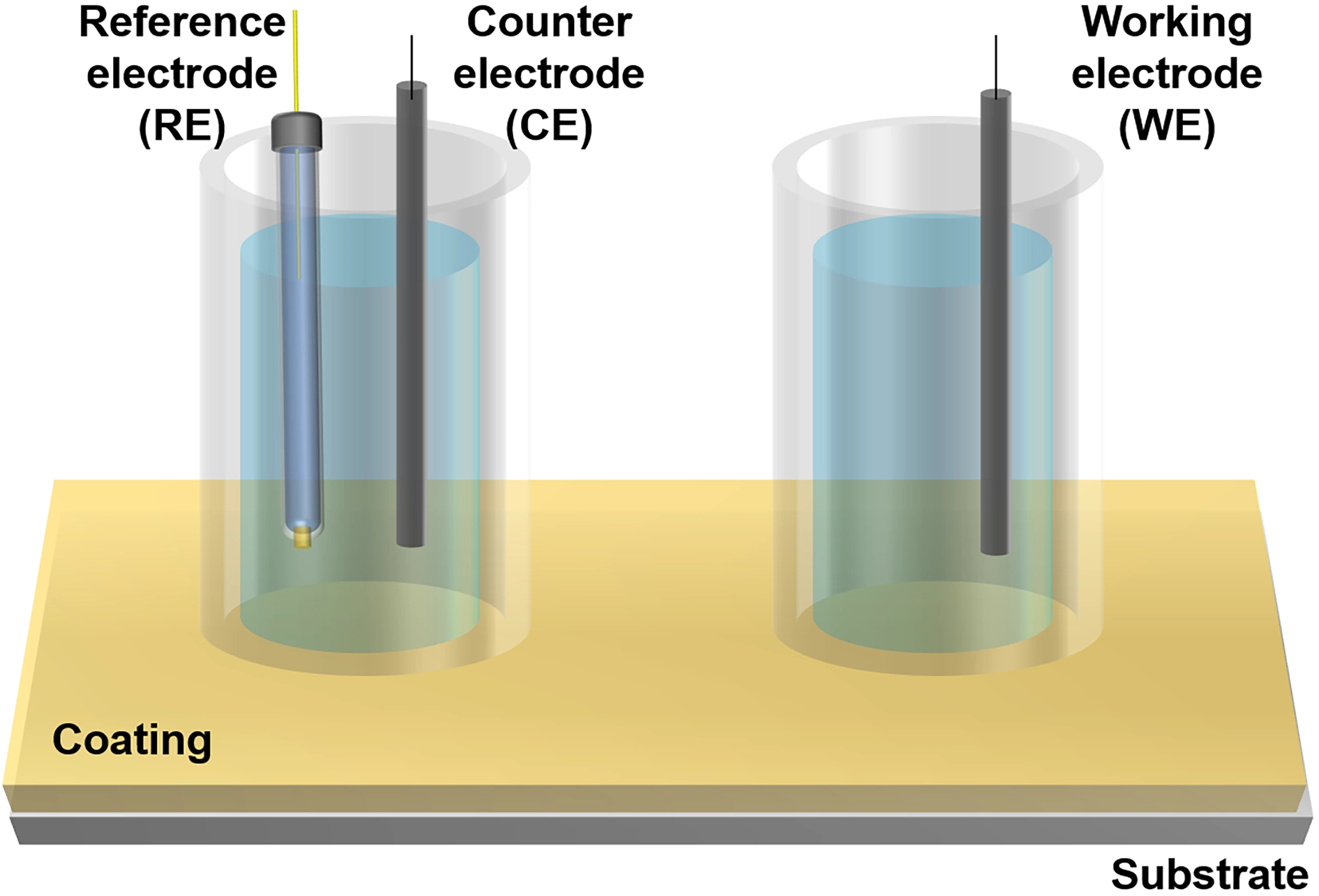
Figure 2. Schematic of the dual electrolytic cell testing method. RE: reference electrode; CE: counter electrode; WE: working electrode.
Due to its well-established theoretical basis for evaluating the deterioration of coating barrier properties, EIS remains one of the most reliable techniques for assessing coating degradation. However, despite the transition from conventional laboratory-based measurements to miniaturized impedance sensors, the continued reliance on electrolytes and specialized instrumentation remains a major obstacle to their widespread practical application. Addressing these challenges through further technological advances will be crucial for facilitating their broader application.
2.2 Electrochemical noise corrosion sensors
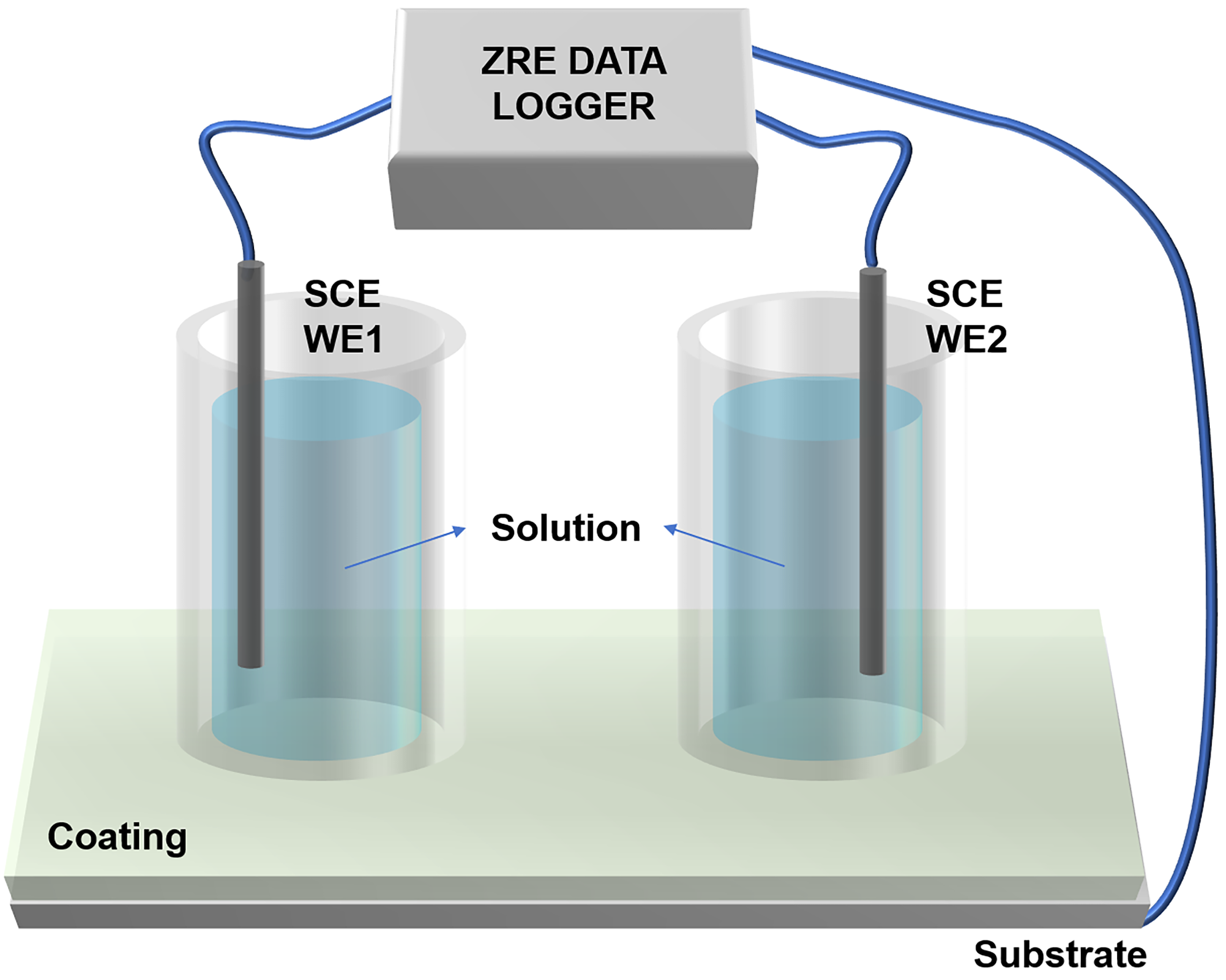
Electrochemical noise monitoring (ENM) relies on the spontaneous fluctuations in potential and current produced during corrosion reactions[24]. As a non-perturbative technique, ENM records spontaneous fluctuations in potential and current arising from corrosion reactions. These electrochemical fluctuations can provide information on localized corrosion activity and its temporal evolution, making ENM particularly useful for atmospheric corrosion monitoring. Ma et al. reviewed contemporary ENM approaches for atmospheric corrosion measurement and highlighted their applicability to the characterization of corrosion activity under realistic exposure conditions[25]. Mills et al.[26] developed and verified a practical ENM-based monitoring device for the on-site assessment of anti-corrosion coatings on steel structures, as presented in Figure 3. To overcome the complex electrode arrangement and salt bridge connection needed in conventional field ENM testing, the device used a single-substrate configuration together with a detachable electrolyte cell. Electrical conduction was established through the electrolyte inside the cell, enabling on-site ENM measurements without the use of a salt bridge.
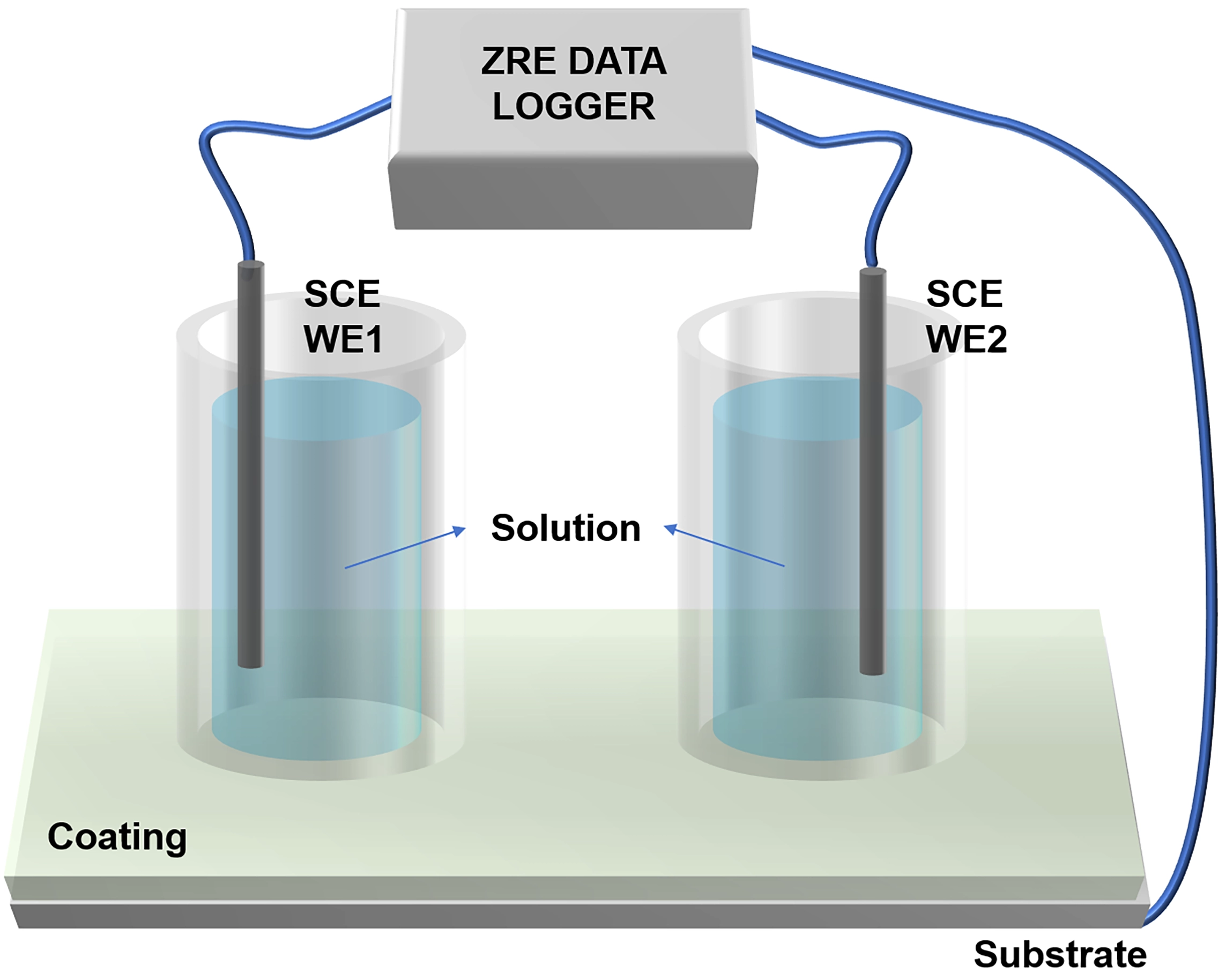
Figure 3. Schematic of a single substrate electrochemical noise measurement. WE: working electrode; SCE: saturated calomel electrode.
In this configuration, a copper-foil-covered filter paper pad was applied as a temporary electrical connector to maintain stable contact with the coating surface and ensure reliable signal collection. The results showed that the connection pad usually had to remain in contact with the coating surface for about 30-45 min to obtain a stable coating response. By raising the acquisition frequency from the conventional 2 Hz to 10 Hz, the time required for a single measurement could be shortened from 10 min to 2 min while retaining accuracy. The device can be installed on coatings under practical service conditions for long-term and continuous acquisition of electrochemical noise signals. It can follow changes in coating protection and detect early signs of localized corrosion and aging failure, providing a useful approach for assessing coating behavior and early failure warning in real environments.
Compared with EIS-based sensors, ENM enables the monitoring of spontaneous electrochemical fluctuations without requiring an externally applied sinusoidal alternating current (AC) perturbation, thereby offering a unique advantage for localized corrosion detection under relatively undisturbed conditions. Nevertheless, the high susceptibility of electrochemical noise signals to environmental interference remains a major challenge. Future advances in signal-processing and noise-filtering strategies will be essential for enhancing measurement robustness and promoting the broader implementation of ENM-based sensing technologies.
2.3 Galvanic corrosion sensors
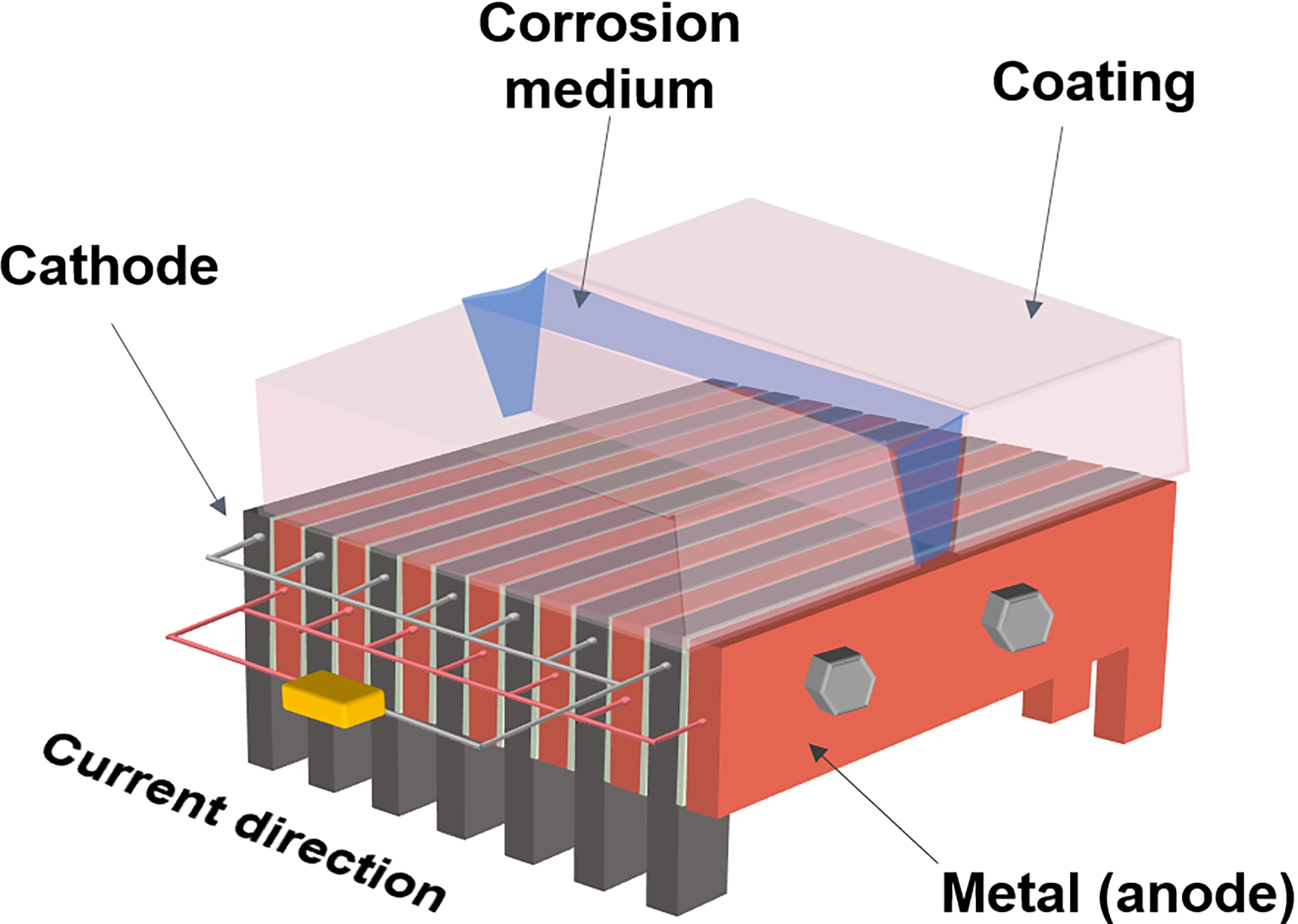
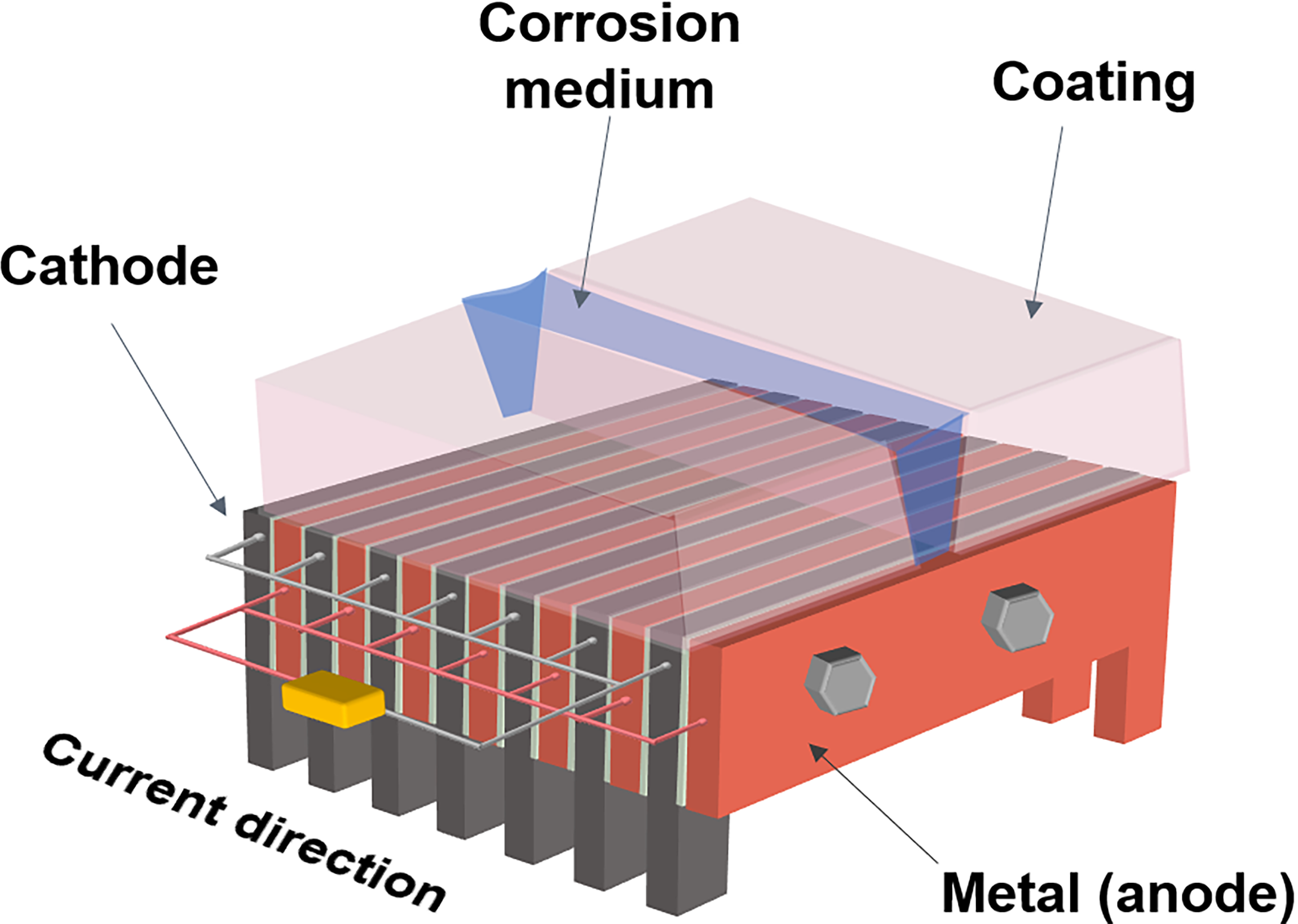
Galvanic corrosion sensors are generally fabricated by integrating two electrode materials with different potentials on an insulating substrate while maintaining electrical isolation between them[27,28]. When a thin liquid film, such as rainwater, condensed water, or salt solution, develops on the sensor surface, galvanic coupling is formed between the dissimilar electrodes and produces a current response. The instantaneous current or accumulated charge can therefore be applied to characterize environmental corrosivity and metal corrosion activity (Figure 4). Mizuno et al.[29] employed an Fe-Ag galvanic corrosion sensor to monitor atmospheric corrosion environments at different locations of automobiles. The sensor output effectively reflected the influence of rainwater, relative humidity, salt deposition, and vehicle operating conditions on the local corrosive environment. The average daily charge calculated from the sensor output also exhibited a good correlation with the corrosion rates of steel and galvanized steel specimens, suggesting that this sensor can support quantitative assessment of environmental corrosivity, corrosion life prediction, and material selection.
The use of galvanic corrosion sensors has extended from bare-metal atmospheric corrosion assessment to real-time monitoring of organic coating protection. Wang et al.[30] combined a steel/graphite galvanic sensor with artificially scratched coatings, allowing the electrolyte to connect the carbon steel anode and graphite cathode through the scratch. The generated galvanic current was applied to monitor substrate corrosion in the damaged area in real time. Epoxy coatings containing 15 wt% zinc phosphate showed lower and more stable galvanic currents under both immersion and cyclic wet/dry conditions. Their accumulated charge was markedly lower than that of blank epoxy coatings, and the current evolution agreed with the EIS and energy-dispersive X-ray spectroscopy (EDS) results. These results indicate that galvanic sensors can effectively assess the active protection provided by inhibitor-containing coatings after damage.
Zhang’s group further employed galvanic corrosion sensors to verify the functions and service behavior of smart protective coatings. For photothermally responsive self-healing coatings, galvanic sensors directly recorded corrosion current variations in scratched regions during light irradiation, rainwater exposure, and water evaporation. The results demonstrated that poly (ε-caprolactone) modified titanium nitride nanoparticles (PCL@TiN) composite microspheres recovered coating barrier performance through the dual mechanism of scratch closure and molten sealing, while also decreasing corrosion current output under outdoor sunlight[31]. In another study, galvanic sensors were applied to continuously record currents of scratched coatings in NaCl solution. The optimized coating maintained lower currents than the blank polyurethane (PU) coating, and its accumulated charge was about one quarter of that of the blank coating, indicating that CeO2 effectively suppressed substrate corrosion after coating damage. Galvanic sensors have therefore developed from tools for environmental corrosivity assessment into platforms for real-time monitoring of coating failure and functional verification of smart coatings.
Liu et al.[32] applied a galvanic corrosion sensor to monitor the in situ healing behavior and anti-corrosion performance of an intrinsic self-healing coating. In this work, a self-healing epoxy coating based on dynamic covalent boroxine bonds was developed. Through the introduction of polydimethylsiloxane containing dynamic boroxine bonds (PDMS-Boro) and the flexible crosslinker D400 into the epoxy network, segmental mobility at room temperature and water-molecule-induced interfacial reconstruction ability were achieved in the coating. After the scratched self-healing and control coatings were exposed to neutral salt spray, the damaged self-healing coating showed a fast decrease in corrosion current and continuous inhibition of localized anodic activity during long-term exposure. This finding shows that galvanic sensors can be used not only to assess extrinsic active protection but also to dynamically monitor damage closure, interfacial reconstruction, and restoration of barrier performance in intrinsic self-healing coatings.
Galvanic corrosion sensors have gradually evolved from simple indicators of environmental corrosivity into multifunctional platforms capable of evaluating coating degradation, inhibitor release, and self-healing processes. Their simple configuration, continuous signal output, and excellent compatibility with smart coatings make them promising tools for long-term structural health monitoring. However, quantitative interpretation of the measured current remains highly dependent on the coating architecture and environmental conditions, highlighting the need for standardized calibration models.
3. Optical Sensors Corrosion Monitoring Technologies
3.1 Optical fiber corrosion sensors
Fiber-optic corrosion sensors monitor under-coating corrosion by transforming changes in strain, refractive index, or the local interfacial environment into optical signals[33,34]. Compared with conventional electrochemical methods, optical fiber sensors provide compact size, high sensitivity, resistance to electromagnetic interference, corrosion resistance, and good compatibility with sensor networks. Therefore, they are attractive for long-term service monitoring of large steel structures, reinforced concrete structures, and marine engineering equipment. For strain-based fiber-optic sensing systems, coating deformation or local strain concentration induced by the volumetric expansion of corrosion products is the main signal source. Tang et al.[35] examined the effects of localized corrosion and stress level on the strain transfer efficiency between steel rebars and distributed fiber-optic sensors (DFOSs). The results indicated that corrosion itself does not directly decrease strain transfer efficiency, but the spatial nonuniformity caused by localized corrosion generates large strain gradients and abnormal fiber readings. DFOSs can detect the locations of large corrosion pits, but the strain transfer coefficient at corrosion pits is generally below 100%, whereas that in neighboring regions may exceed 100%. For example, at a rebar corrosion degree of 9.06%, the strain transfer coefficient at the minimum residual cross-section was about 75%, while that at the adjacent section reached 120%. These findings suggest that corrosion monitoring using fiber-optic sensors must account not only for signal sensitivity but also for sensor packaging, strain transfer pathways, and localized corrosion morphology.
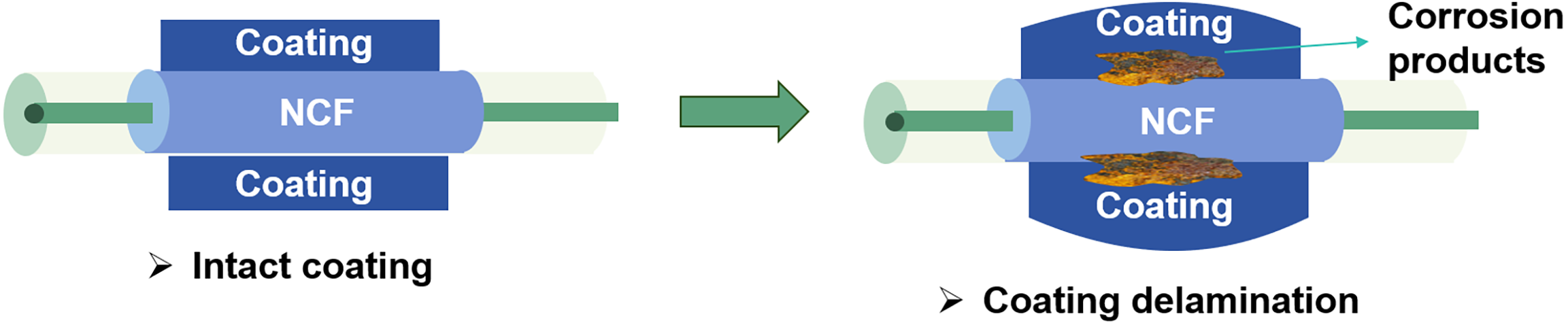
For under-coating corrosion monitoring, Tang et al.[36] incorporated no-core fiber (NCF) sensors into organic coatings on painted structural steel to monitor corrosion propagation beneath damaged coatings. An NCF sensor is composed of a segment of no-core fiber fusion-spliced between two single-mode fibers, and its transmission spectrum is highly responsive to the refractive index of the surrounding medium. When under-coating corrosion extends to the vicinity of the fiber, local coating delamination develops, and corrosion products and hydrolysis products accumulate around the fiber, leading to a shift in the dip wavelength of the transmission spectrum (Figure 5). In this study, painted steel plates were immersed in a 3.5 wt% NaCl solution for 28 days, and EIS results, surface morphology, and spectral variations were recorded. The dip wavelength shifts of NCF sensors with diameters of 125, 90, and 60 μm were 12.15, 14.3, and 17.85 nm, respectively. The dip wavelength shift also showed a linear relationship with the coating damage index. Although smaller-diameter NCF sensors produced larger total wavelength shifts, the sensitivity to the coating damage index was comparable among sensors with different diameters, with about 1.00 nm wavelength shift corresponding to 1% coating damage. This work shows that NCF sensors can transform invisible under-coating corrosion into measurable optical signals, providing a promising approach for early detection of coating failure.
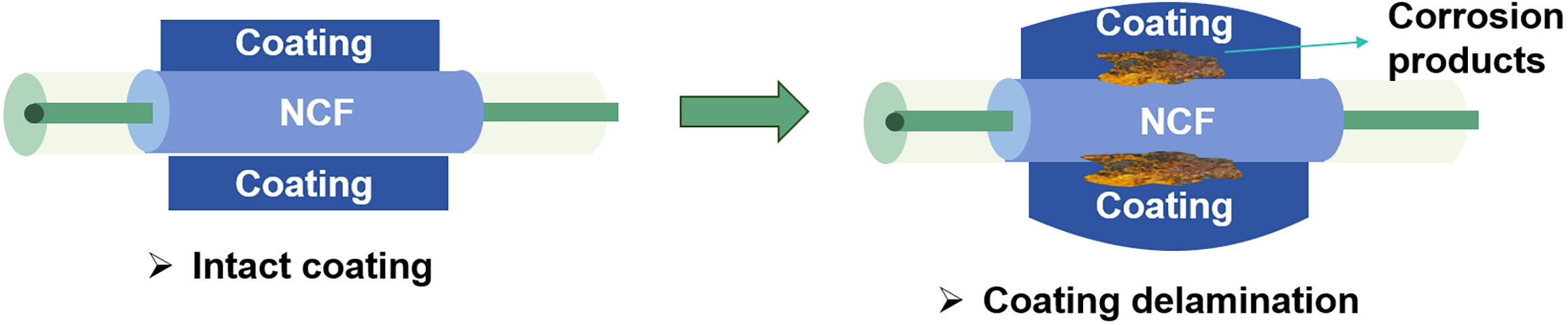
Figure 5. Schematic illustration of monitoring under-coating corrosion of painted structural steel using an NCF optic sensor. NCF: no-core fiber.
For large coated structures, such as marine steel piles, distributed fiber-optic sensors provide further benefits for continuous spatial monitoring and quantitative inversion of corrosion depth. Fan et al.[37] placed a distributed fiber-optic sensor in the marine organic coating of steel piles and promoted localized corrosion in damaged coating areas by using a saltwater-soaked sponge and an external power supply. This approach highlights coating pore deformation induced by the expansion of corrosion products. The growth and spread of localized corrosion were assessed using fiber strain signals. A calculation model for the central depth of localized corrosion pits was established by considering the relative position between the corrosion center and nearby fibers, the number of influenced fibers, and pit morphology. After calibration, the central depth of corrosion pits was inversely obtained from real-time fiber strain data, and the difference between calculated and measured values was controlled within 6%. The minimum detectable corrosion depth and depth resolution were both approximately 0.01 mm. Shen et al.[38] applied distributed optical fiber sensors to monitor non-uniform corrosion of steel piles in marine corrosion zones and established quantitative models for evaluating corrosion-induced mass loss. The spatial distribution of corrosion deterioration was visualized based on distributed strain responses. These studies show that fiber-optic corrosion sensors are developing from single-point response and damage recognition toward distributed localization, process monitoring, and quantitative evaluation of corrosion depth.
Fiber-optic sensors offer extremely high sensitivity, excellent immunity to electromagnetic interference, and distributed sensing capabilities, making them particularly suitable for monitoring large-scale infrastructure. However, challenges remain in ensuring long-term interfacial stability, reliable sensor encapsulation, manageable installation complexity, and quantitative interpretation of complex corrosion morphologies.
3.2 Optical imaging monitoring technologies
Optical imaging monitoring detects corrosion-prone regions and evaluates damage by tracking variations in surface or sub-surface visual characteristics, such as color, grayscale intensity, texture, morphology, and thermal response. Among these techniques, digital image processing remains one of the most fundamental and extensively used methods. In general, grayscale or true-color images are first collected using cameras, microscopes, or other imaging devices. These images are then processed through denoising, enhancement, segmentation, edge extraction, texture characterization, and feature analysis to distinguish degraded areas from intact regions[39]. For instance, the U.S. Naval Research Laboratory employed image processing to assess rust distribution and organic coating deterioration in ship ballast tanks[40]. In that study, wavelet transform was adopted to suppress image noise, and wavelet-based edge detection was subsequently used to locate possible rusted areas. In bridge coating inspection, Lee analyzed images of bridges in Indiana, USA, and demonstrated that the approach was effective for blue-painted steel structures. Nevertheless, its reliability declined under uneven illumination and strong background interference. To overcome these constraints, Chen et al.[41] integrated color imaging, Fourier transform, and support vector machines for rust detection on steel bridges, obtaining better assessment performance than conventional image-based methods. Tao et al.[42] further applied the HSV color model to characterize color fading in polyurethane coatings on steel substrates after 24 months of exposure to marine splash and atmospheric environments, thereby quantifying coating degradation through color feature parameters. Overall, digital image processing offers the advantages of being non-contact, inexpensive, rapid, and suitable for large-scale inspection. Its performance, however, is highly dependent on lighting conditions, background complexity, surface contamination, and the visual detectability of corrosion. Therefore, this method is generally more appropriate for condition evaluation once corrosion has produced visible changes in surface color, texture, or morphology. Laser scanning provides another non-contact optical approach for characterizing corrosion-induced changes in metal surfaces. He et al.[43] developed a micro-electromechanical system laser scanning system for nondestructive detection of corrosion characteristics in metal artifacts. The system characterized corrosion through changes in reflected light intensity associated with corrosion-induced surface roughening, demonstrating its potential for real-time and nondestructive corrosion monitoring under different environmental conditions.
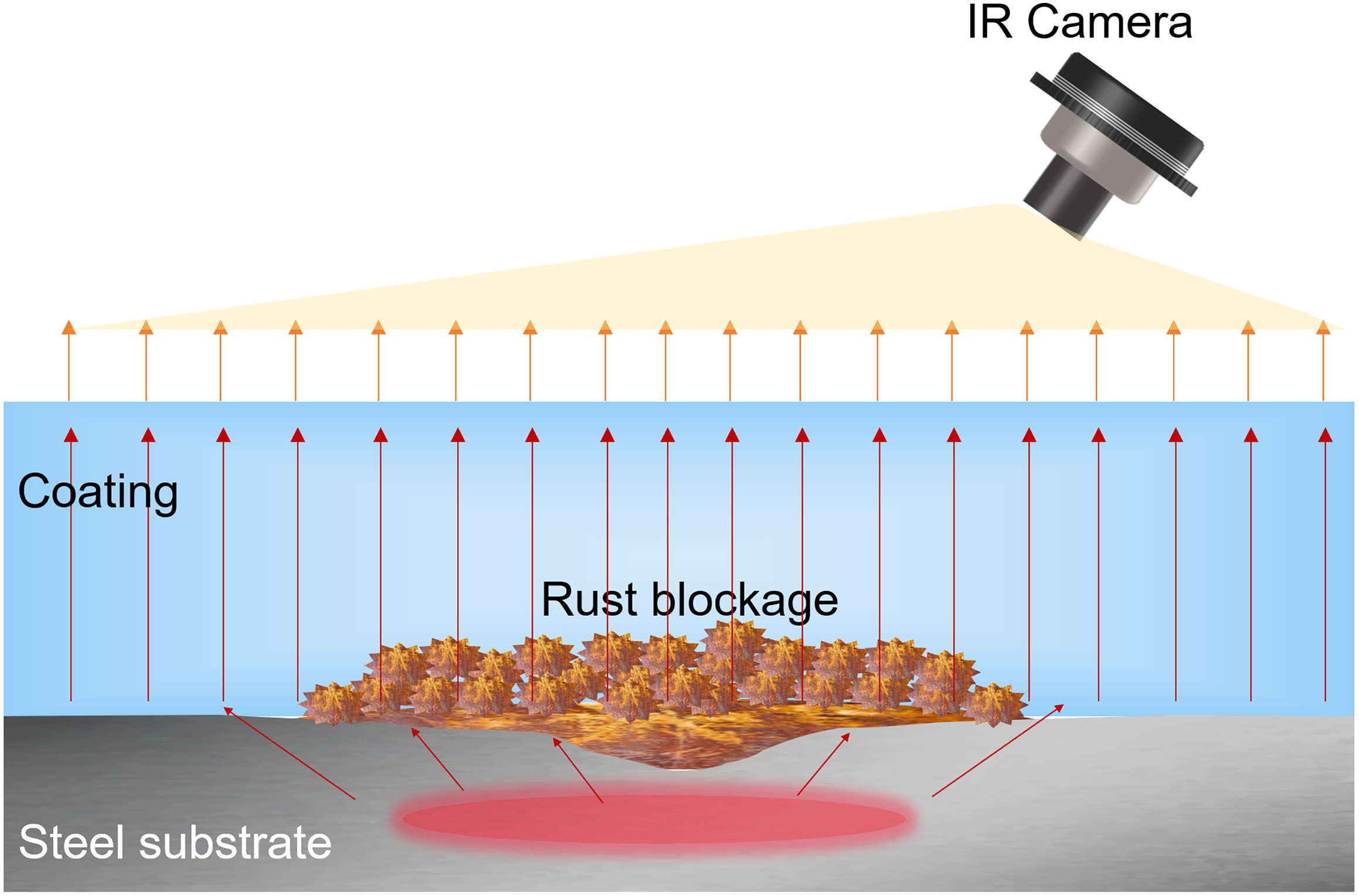
Unlike visible-light image analysis, infrared thermography can detect concealed corrosion and under-coating defects by capturing differences in heat diffusion within the coating/metal system after thermal excitation[44]. This technique relies on the fact that corroded zones, intact metallic areas, and coating defects usually differ in thermal properties, layer thickness, or interfacial integrity, which leads to recognizable thermal anomalies in surface temperature fields or phase images. Marinetti and Vavilov systematically investigated the theoretical foundation of infrared thermography for hidden corrosion detection in metals and established one-dimensional, two-dimensional, and three-dimensional heat conduction models[45]. They reported that, when metals are thick or corrosion defects are small, lateral heat diffusion can substantially weaken temperature contrast. Consequently, three-dimensional numerical simulation and inversion formulas are needed to estimate material loss with sufficient accuracy. Under practical detection conditions, the error of corrosion characterization may be controlled within 20%. In addition, phase images generated by Fourier transform can reduce the influence of non-uniform heating in raw thermograms, improving the detectable material-loss threshold from approximately 50 % in original thermal images to around 25 % in phase images. Accordingly, infrared thermography serves as an effective complement to visible-light imaging and provides a nondestructive means of identifying hidden corrosion and under-coating damage.
Based on infrared thermography, Yang et al.[46] proposed a through-coating imaging method using electromagnetic induction pulsed phase thermography (EMIPPT) for nondestructive visualization and assessment of early marine atmospheric corrosion. This method integrates high-frequency electromagnetic induction through-coating heating, thermal wave propagation, and infrared temperature-field measurement, enabling detection, shape reconstruction, and size evaluation of under-coating corrosion without coating removal. Unlike conventional infrared thermography, which mainly heats the coating surface and depends on thermal reflection responses, EMIPPT directly acts on the metal and corrosion products beneath the coating through electromagnetic induction. Phase analysis is then applied to reduce interference caused by non-uniform heating, surface emissivity, and lateral heat diffusion (Figure 6). EMIPPT phase images could detect and characterize under-coating corrosion in real marine atmospheric exposure samples after 1, 3, and 6 months. Corroded regions were recognized from the boundaries of low-phase areas, corrosion roughness was estimated using phase profiles and phase standard deviation, and corrosion development was described by the mean phase value. Compared with laser profilometry, pulsed eddy current, and microwave waveguide methods, EMIPPT provides non-contact operation, large-area inspection, rapid detection, high resolution, and visualization, showing considerable potential for field monitoring of under-coating corrosion.
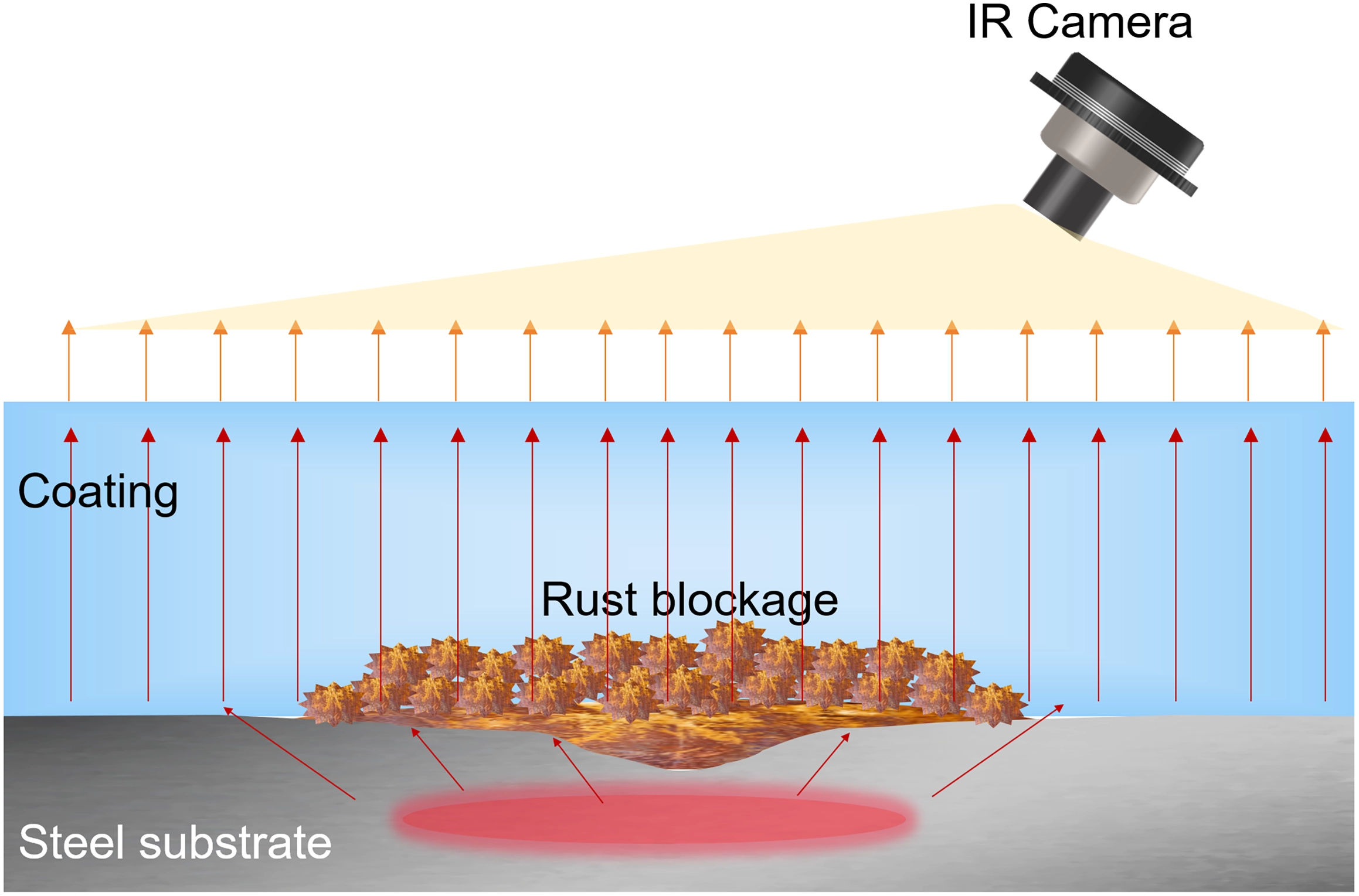
Figure 6. Diagram of heat conduction from the bottom steel to the coating through corrosion. IR: infrared.
Optical imaging enables rapid, large-area, and non-contact inspection, making it particularly suitable for routine visual assessment of engineering structures. However, its effectiveness largely depends on lighting conditions, image quality, and the visibility of corrosion features. Therefore, integrating artificial intelligence with multimodal image fusion has emerged as an important strategy for improving detection reliability and automation.
4. Electromagnetic Sensors Monitoring Technologies
Unlike optical imaging techniques that mainly rely on visible changes, thermal responses, or reflected light variations for direct visualization of corrosion-related features, electromagnetic sensing methods evaluate coating degradation by detecting changes in electromagnetic parameters, such as dielectric properties, conductivity, and resonance characteristics. Therefore, optical imaging is generally more suitable for surface-level visualization and spatial identification of corrosion regions, whereas electromagnetic methods provide advantages in monitoring subsurface degradation, moisture penetration, and hidden corrosion beneath intact coatings.
4.1 Microwave resonator sensing
Moisture penetration is an important factor contributing to coating corrosion failure. On the one hand, it can cause hydrolytic aging of the coating. On the other hand, it can carry corrosive media to the metal substrate and initiate corrosion reactions. Khalifeh et al.[47] proposed a radio-frequency identification (RFID) microstrip resonator sensing method for monitoring water diffusion inside organic coatings. This method utilizes the change in dielectric constant caused by water absorption in the coating. By monitoring the resonant frequency shift of an open-stub microstrip resonator caused by changes in the dielectric properties of the coating, the water ingress process can be characterized. The results showed that, compared with a conventional microstrip transmission line, the planar stub resonator was more sensitive to variations in the dielectric properties of the coating and could reflect degradation phenomena such as water diffusion and residual bound water. Therefore, it can serve as an effective sensing method for assessing the reduction in protective performance and early failure of organic coatings.
Beyond moisture-induced degradation monitoring, microwave resonator sensors have also been extended to evaluate mechanical damage and structural deterioration of protective coatings. Balasubramanian et al.[48] developed an AI-enabled differential split-ring resonator (DSRR)-based nondestructive sensing system for real-time monitoring of erosive wear in multilayer coatings. The system detected coating degradation through variations in the resonant characteristics of split-ring resonators embedded beneath the coating layer. By correlating resonance responses with coating wear evolution and integrating a recurrent neural network model, the system was capable of identifying the eroded layer and estimating wear depth and erosion rate. This study demonstrates the potential of microwave resonator-based sensing for intelligent and autonomous monitoring of coating degradation under complex service conditions.
Overall, microwave resonator sensing technology exhibits advantages including rapid response, remote interrogation capability, and potential integration into smart coating systems. However, its sensing performance remains affected by factors such as sensor configuration, coating thickness, and environmental interference, requiring further optimization for practical applications.
4.2 Microwave backscattering sensing
Microwave backscattering sensing provides a non-contact strategy for evaluating coating degradation by analyzing variations in reflected electromagnetic signals caused by changes in dielectric properties and interfacial conditions. Gao et al.[49] developed an intelligent early-corrosion detection system for metal-surface coatings using backscattering microwave sensors and machine learning. The system consists of several double U-shaped resonant units. By recording radar cross-section signals under different water ingress states and extracting resonant frequency shift features, the system identifies whether water ingress has taken place inside the protective layer on the metal surface. Because water and oxygen are important factors causing under-coating corrosion of metals, this method mainly uses water ingress within the coating as an early warning signal of corrosion failure. When combined with classification algorithms such as random forest, intelligent identification of coating health status can be achieved, offering a typical example of low-cost, non-contact, and intelligent monitoring of coating corrosion failure.
4.3 Terahertz time-domain spectroscopy technology
In addition, Yang et al.[50] used terahertz time-domain spectroscopy (THz-TDS) for nondestructive quantitative detection of corrosion regions beneath coatings and evaluation of anti-corrosion coating performance. This method applies the ability of terahertz electromagnetic waves to pass through dielectric coatings and form reflections at the metal substrate or corrosion interface. Through denoising, peak imaging, morphological processing, and adaptive threshold segmentation of reflected time-domain signals, the positions and areas of corrosion regions beneath coatings can be quantified. This study further applied this method to compare the protective performance of different coating systems and monitor changes in corrosion rate. These results suggest that terahertz detection can not only recognize corrosion damage already formed under coatings but also provide quantitative support for studying coating failure evolution and evaluating protective service life.
Jiang et al.[51] further developed a THz-TDS-based approach for quantitatively measuring corrosion thickness in coated steel structures. By extracting the time delay and amplitude variations of reflected THz pulses, the thickness of both the coating and corrosion layer could be determined without damaging the protective system. In addition to corrosion localization, THz-TDS has also been applied for evaluating the degradation and quality of organic protective coatings. Tu et al. developed a THz pulse imaging method combined with wavelet packet energy analysis for evaluating organic protective paints. By extracting characteristic features from THz time-domain signals, the coating degradation state could be rapidly classified, demonstrating the potential of THz-based sensing for intelligent monitoring of protective coating performance[52].
These studies indicate that THz-TDS is a promising technique for monitoring hidden corrosion and interfacial degradation in protective coatings. Nevertheless, its application to practical coating systems remains challenging due to limited penetration depth, signal attenuation, and the need for improved quantitative interpretation of THz responses.
5. Corrosion-Sensing Coating Technologies
In addition to external sensor-based monitoring approaches, the functional modification of organic coatings themselves to provide corrosion-sensing ability has become another important research direction for coating corrosion monitoring and failure warning. Corrosion-sensing coatings give visual feedback on early corrosion reactions occurring at the coating/metal interface. They can indicate localized corrosion at through-coating defects and underfilm corrosion caused by the penetration of corrosive media. Such coatings are usually prepared by incorporating fluorescent probes, or chromogenic molecules that respond to local pH changes or metal ions into the resin matrix[53,54]. To mitigate compatibility issues associated with the direct incorporation of corrosion-responsive species, micro/nanocontainers are commonly employed for their pre-encapsulation. This approach isolates the sensing species from the coating matrix, minimizes premature leaching or deactivation, and enables stimulus-responsive release during corrosion. When metal dissolution, oxygen reduction, or local hydrolysis occurs at coating defects, these responsive species react with OH-, H+, or metal cations produced during corrosion, resulting in fluorescence enhancement, fluorescence quenching, or visible color changes. In this manner, corrosion location and corrosion evolution can be indicated in situ.
5.1 pH-responsive fluorescent corrosion-sensing
pH-responsive fluorescent corrosion sensing is based on local pH differences between anodic and cathodic regions during metal corrosion. These pH changes cause variations in the emission intensity or emission color of fluorescent probes, allowing nondestructive identification of corrosion initiation sites beneath coatings. Anodic metal dissolution and the following hydrolysis usually cause local acidification, whereas cathodic oxygen reduction generates OH- and produces local alkalization. Accordingly, pH-responsive fluorescent systems can recognize corrosion-active cathodic regions by sensing pH increases, or locate actual metal dissolution sites by responding to pH decreases in anodic areas.
Fluorescein[55], coumarin[56], and their derivatives are widely used as pH-responsive fluorescent indicators. They generally show fluorescence enhancement under alkaline conditions and can therefore identify OH– produced by cathodic corrosion reactions. Wang et al.[57] encapsulated coumarin in polymer microcapsules and dispersed them into epoxy coatings. After immersion in 3.5 wt% NaCl solution, the scratched area displayed a clear fluorescent signal due to the local pH increase induced by cathodic reactions, enabling visual recognition of corrosion damage on carbon steel, aluminum alloy, and copper substrates. Salaluk et al.[58] covalently grafted fluorescein isothiocyanate (FITC) onto SiO2 nanocapsules and used 3-nitrosalicylic acid to weaken the initial FITC fluorescence. When corrosion-induced alkalization occurred, FITC fluorescence increased, while the release of 3-nitrosalicylic acid removed its shielding effect on FITC excitation light, generating green fluorescence at the damaged site. Weak fluorescence was observed after the scratched sample was immersed in 3.5 wt% NaCl solution for 6 h, before obvious corrosion products appeared, demonstrating early-stage corrosion feedback.
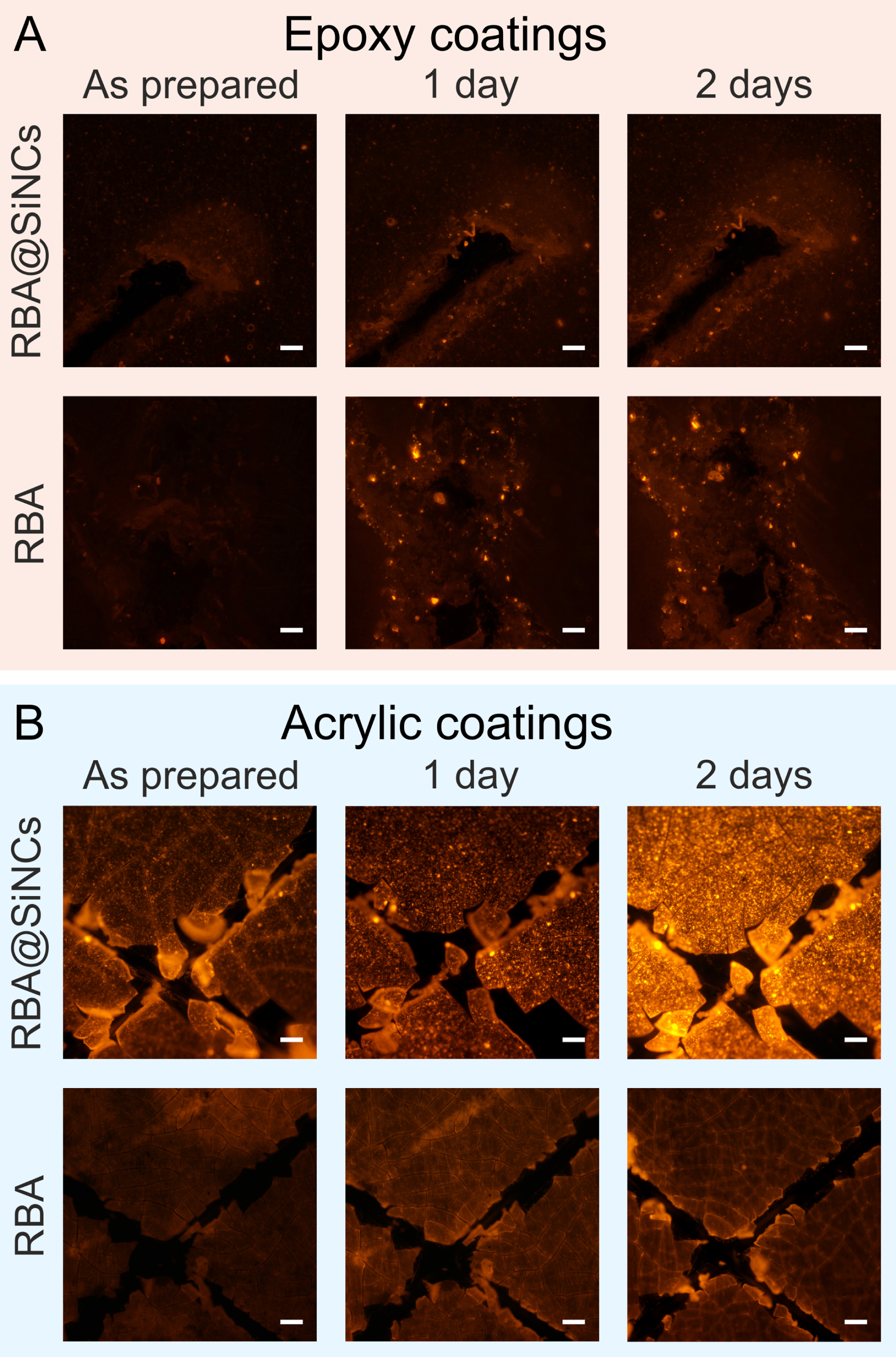
Acid-responsive turn-on fluorescent probes can also be applied for anodic corrosion detection. Mal’tanova et al. encapsulated a rhodamine B acylhydrazone (RBA) pH-sensitive fluorescent probe into silica nanocontainers for incorporation into water-based epoxy and acrylic coatings, enabling early fluorescent detection of steel corrosion[59]. Under the acidic conditions associated with localized corrosion, protonation of RBA induces spirolactam ring opening, leading to a pronounced increase in fluorescence intensity. The RBA@SiNC-containing epoxy coatings exhibited a clear fluorescent response after immersion in 0.5 M NaCl solution, with fluorescence microscopy visualizing the onset of corrosion after only 1 day (Figure 7).
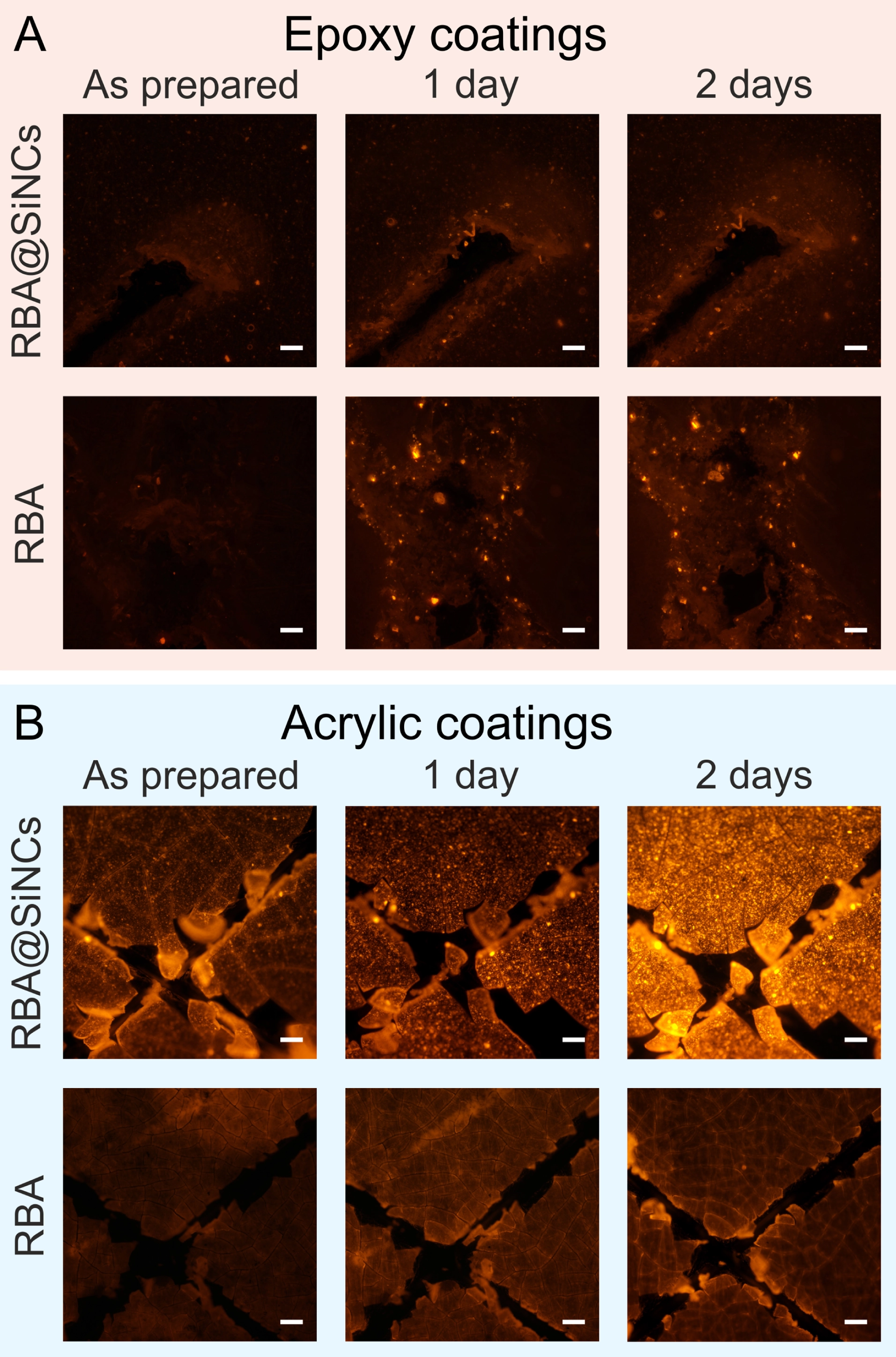
Figure 7. Fluorescence microscopy images for scribed epoxy and acrylic coatings on steel with RBA@SiNCs and with directly added RBA: as prepared and after 1 day and 2 days of exposure to 0.5 M aqueous NaCl. Reproduced from reference[60]. CC BY 4.0. RBA: rhodamine B acylhydrazone.
In addition to intensity-based fluorescent warning, ratiometric fluorescent pH imaging has also been introduced to enhance the quantitative ability of corrosion-sensing coatings. Crespy et al.[60] prepared halochromic polymer nanosensors based on dual-emission terpolymer nanoparticles for visual detection of local pH variations in coatings. The nanoparticles were synthesized from a terpolymer containing polymerizable 4-methoxy-1,8-naphthalimide and fluorescein moieties, which functioned as the energy donor and acceptor, respectively. Under 365 nm ultraviolet (UV) irradiation, Förster resonance energy transfer (FRET) occurred inside the nanoparticles. As the local environment shifted from acidic to alkaline, the blue emission at around 420 nm decreased, whereas the green emission at around 530 nm increased, allowing the pH value to be determined from the ratiometric blue/green luminescence signal. After these nanoparticles were incorporated into a transparent epoxy coating on steel, local pH evolution near scratched regions could be monitored using a simple handheld UV lamp and a smartphone camera. Image processing further converted the luminescence images into pseudo-color pH maps, showing that the scratched area gradually became acidic during immersion in NaCl solution because of steel corrosion and metal-ion hydrolysis. This work expands pH-responsive fluorescent warning from qualitative corrosion indication to spatially resolved pH mapping, providing a useful pathway for quantitative visualization of corrosion processes in smart coatings.
5.2 pH-responsive colorimetric corrosion-sensing
Compared with fluorescent corrosion sensing, pH-responsive colorimetric warning can be directly observed under natural light without UV excitation or fluorescence detection instruments, making it attractive for field inspection and large-area structural monitoring. This type of system uses local pH changes caused by anodic acidification or cathodic alkalization to trigger color formation or color transition of pH indicators (Figure 8). Common pH color indicators include thymol blue[61], bromocresol green[62], cresol red[63], and phenolphthalein[64,65].
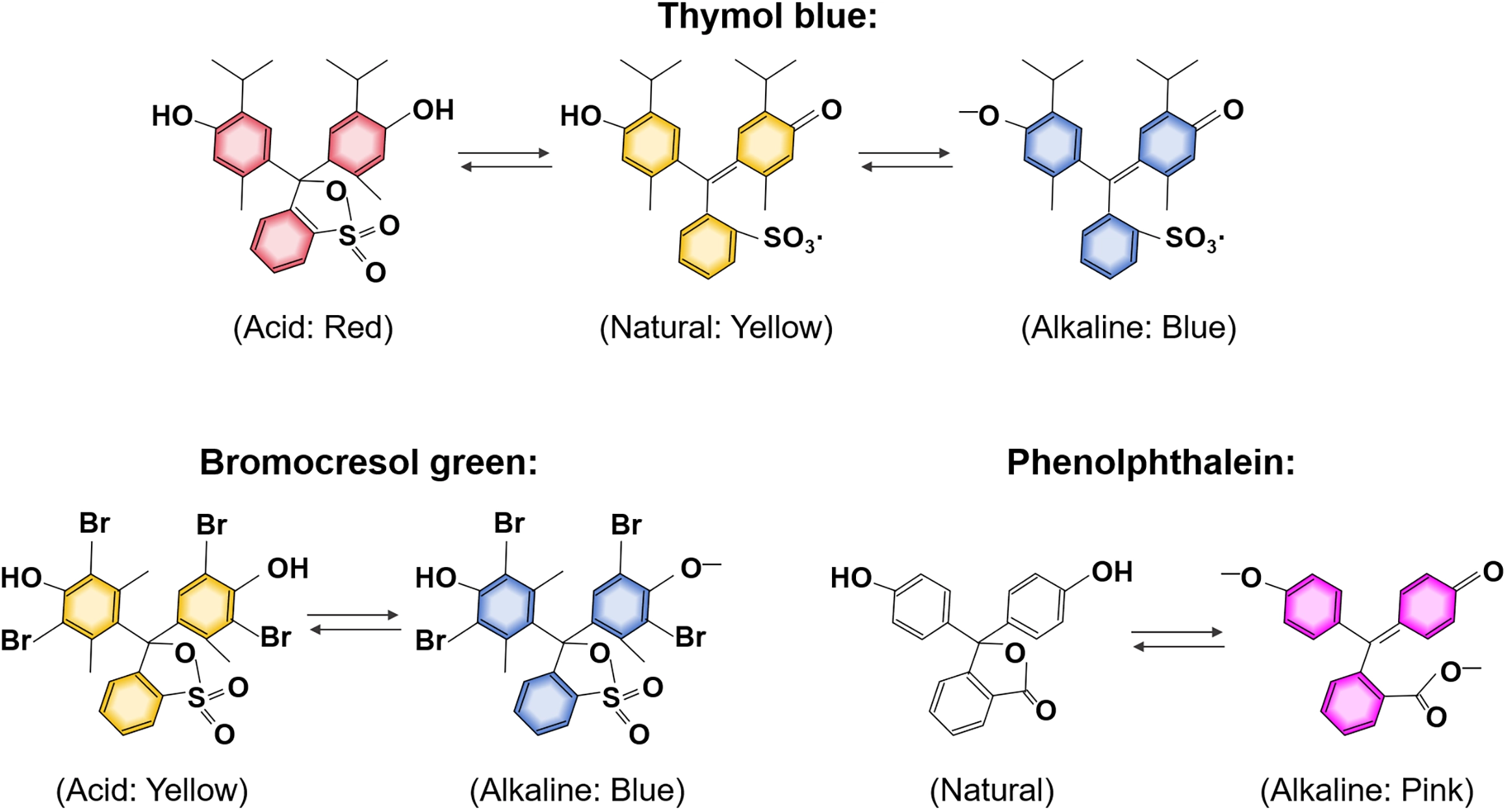
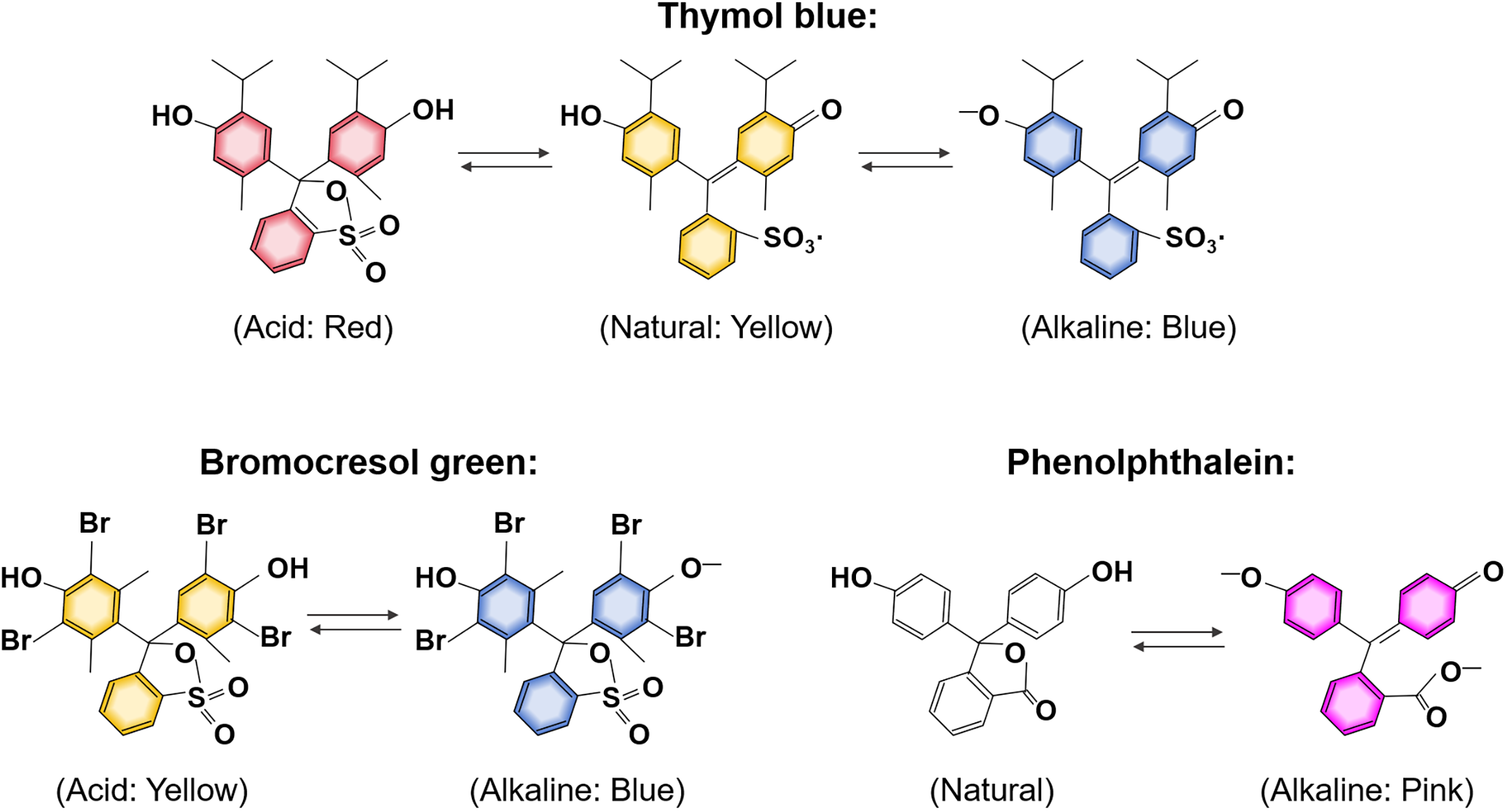
Phenolphthalein is colorless below pH 8.2 and becomes bright pink under alkaline conditions, providing a strong color contrast. Therefore, it is often used to indicate OH- produced by cathodic reactions. Galvão et al.[66] encapsulated phenolphthalein in SiO2 nanocapsules and added them into a waterborne transparent coating for corrosion sensing of AA2024 aluminum alloy. The coating containing SiNC-PhPh produced a pink signal after immersion in 5% NaCl solution for 8 d, and this color change appeared earlier than visible corrosion damage. For magnesium alloys, which easily undergo rapid corrosion-induced alkalization, phenolphthalein-based colorimetric warning systems also show strong sensitivity. Mata et al.[67] introduced SiNC-PhPh into polyetherimide (PEI) coatings for corrosion detection on AZ31 magnesium alloy. A transparent and compact PEI coating with 5 wt% SiNC-PhPh could detect early corrosion events at the micrometer scale through a pink signal. Its detection sensitivity was even greater than that of conventional EIS measurements. The system also showed good signal repeatability in simulated droplet environments, suggesting that phenolphthalein nanocapsules are suitable for visual monitoring of early corrosion of magnesium alloys under service conditions. pH color indicators can also be co-encapsulated with self-healing agents to obtain both corrosion sensing and coating repair. Sun et al.[68] prepared urea-formaldehyde microcapsules containing both phenolphthalein and epoxy resin, and incorporated them into polyurea coatings for the protection of AZ31 magnesium alloy. After scratching, the microcapsules ruptured, releasing phenolphthalein and epoxy resin simultaneously, thereby enabling corrosion indication and localized repair. The coating displayed a clear pink signal at the scratch after immersion in 3.5 wt% NaCl solution for 7 min, and the color intensity increased with longer immersion time.
Other pH color indicators have also been applied for corrosion sensing. Sousa et al.[69] used chitosan microspheres as carriers to load bromocresol green, cresol red, and phenolphthalein for detecting local pH variations during AA2024 aluminum alloy corrosion. Cresol red-loaded microspheres turned red or purple in alkaline cathodic regions and yellow in acidic anodic regions. Bromocresol green-loaded microspheres exhibited blue or green color changes depending on the local acid-base environment. In contrast, phenolphthalein-loaded microspheres showed a weaker response in the AA2024 system because the local pH did not reach the alkaline range needed for strong coloration. Patra et al.[70] compared thymol blue and phenolphthalein in sol-gel coatings on mild steel. Phenolphthalein-based coatings exhibited higher sensitivity for corrosion coloration, whereas thymol blue showed better inhibition performance. When the two indicators were combined at a ratio of 1:3, the coating presented improved corrosion indication sensitivity together with enhanced protective performance.
5.3 Metal ion-responsive fluorescent corrosion-sensing
Metal ion-responsive fluorescent corrosion sensing is based on coordination or complexation between fluorescent probes and metal ions produced by anodic dissolution. These interactions cause changes in fluorescence intensity or emission color, allowing corrosion regions to be identified. According to the response mechanism, such systems can be classified into chelation-enhanced quenching (CHEQ) and chelation-enhanced fluorescence (CHEF)[71,72]. CHEQ-type probes show strong initial fluorescence, which becomes weaker after interaction with metal ions such as Fe2+, Fe3+, or Al3+. For example, Phen-NH2 emits yellow-green fluorescence under UV light, but its fluorescence intensity decreases markedly after contact with Fe2+. Cheng et al. used Phen-NH2 in carbon steel corrosion-sensing coatings. During immersion in saline solution, fluorescence near the scratched area gradually became darker, enabling identification of the corrosion region[73-75]. Carbon dots (CDs) can also generate fluorescence quenching through complexation with Fe3+ and have been applied for early-stage corrosion sensing of steel[76-78]. Ma et al.[78] grafted 1,10-phenanthrolin-5-amine onto CDs to prepare CDs-APhen composites. The composite showed fluorescence quenching in the presence of Fe2+/Fe3+. After loading onto sericite and incorporation into a polyurethane coating, the scratched region displayed a black fluorescence quenching line during corrosion, achieving fluorescent warning of steel corrosion.
CHEF-type warning forms local fluorescent bright spots on a non-fluorescent or weakly fluorescent background, which is more suitable for identifying early-stage corrosion. Common CHEF probes include rhodamine derivatives and 8-hydroxyquinoline (8-HQ). Rhodamine-based probes show enhanced fluorescence in response to Fe3+ and are widely used for steel corrosion detection. Augustyniak et al.[79] introduced an Fe3+-responsive 3',6'-bis(diethylamino)-2-[(1-methylethylidene)amino] (FD1) probe into epoxy coatings. FD1 formed a complex with Fe3+ produced at anodic corrosion sites of steel and generated turn-on fluorescence. With a low loading amount of 0.5 wt% in a filled epoxy coating, the probe generated fluorescent signals before corrosion damage could be observed by the naked eye, thus allowing early detection of both scratched corrosion and underfilm corrosion.
8-HQ has weak fluorescence by itself but gives strong yellow-green fluorescence after complexation with Al3+, making it suitable for corrosion sensing of aluminum alloys[80,81]. Luo et al.[82] incorporated 8-HQ loaded fillers into resin coatings. After the scratched aluminum alloy coating was immersed in 3.5 wt% NaCl solution, the released 8-HQ complexed with corrosion-produced Al3+, giving a clear fluorescent signal in the scratched area. The fluorescence intensity increased with immersion time, suggesting that the system could indicate corrosion progress. Jiao et al.[83] developed a fluorescent damage-warning coating by incorporating Rhodamine B-loaded Ni-Zn bimetallic metal-organic frameworks (RhB@MOFs) into an epoxy matrix. Coating damage triggered an immediate fluorescence enhancement, whereas subsequent corrosion of the steel substrate generated Fe3+ ions that interacted with Rhodamine B, resulting in fluorescence quenching (Figure 9). This distinct fluorescence response provides an effective strategy for hierarchical corrosion warning and damage visualization. Metal ion-responsive fluorescent warning is directly related to anodic metal dissolution and therefore provides good corrosion localization capability. CHEQ systems are relatively simple to construct but are more vulnerable to background fluorescence interference. CHEF systems offer a higher signal-to-noise ratio and are more suitable for visual detection of early-stage corrosion. Probe encapsulation, immobilization on nanocarriers, and multi-signal response design can further enhance their stability, selectivity, and long-term service reliability in coating matrices.
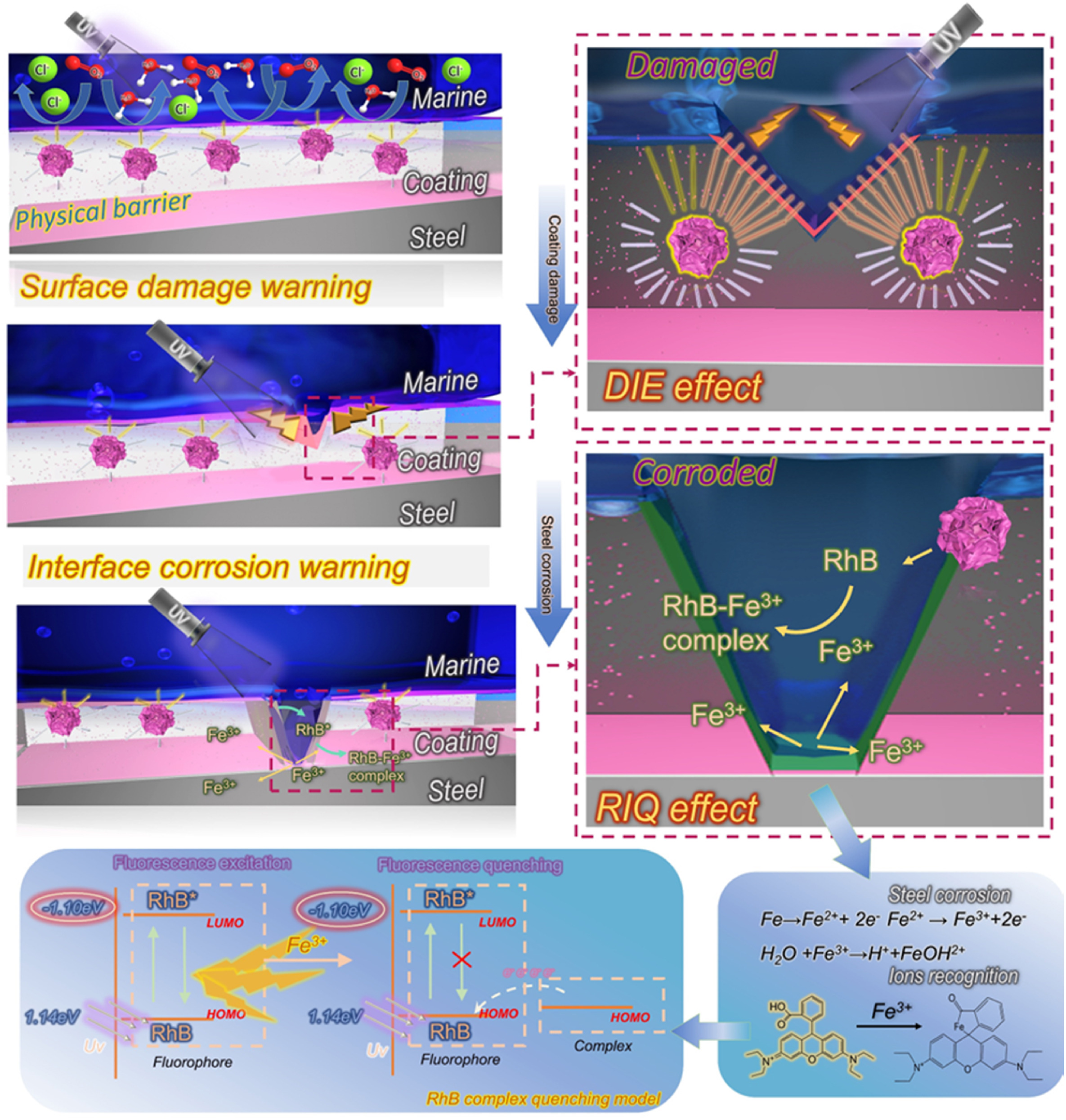
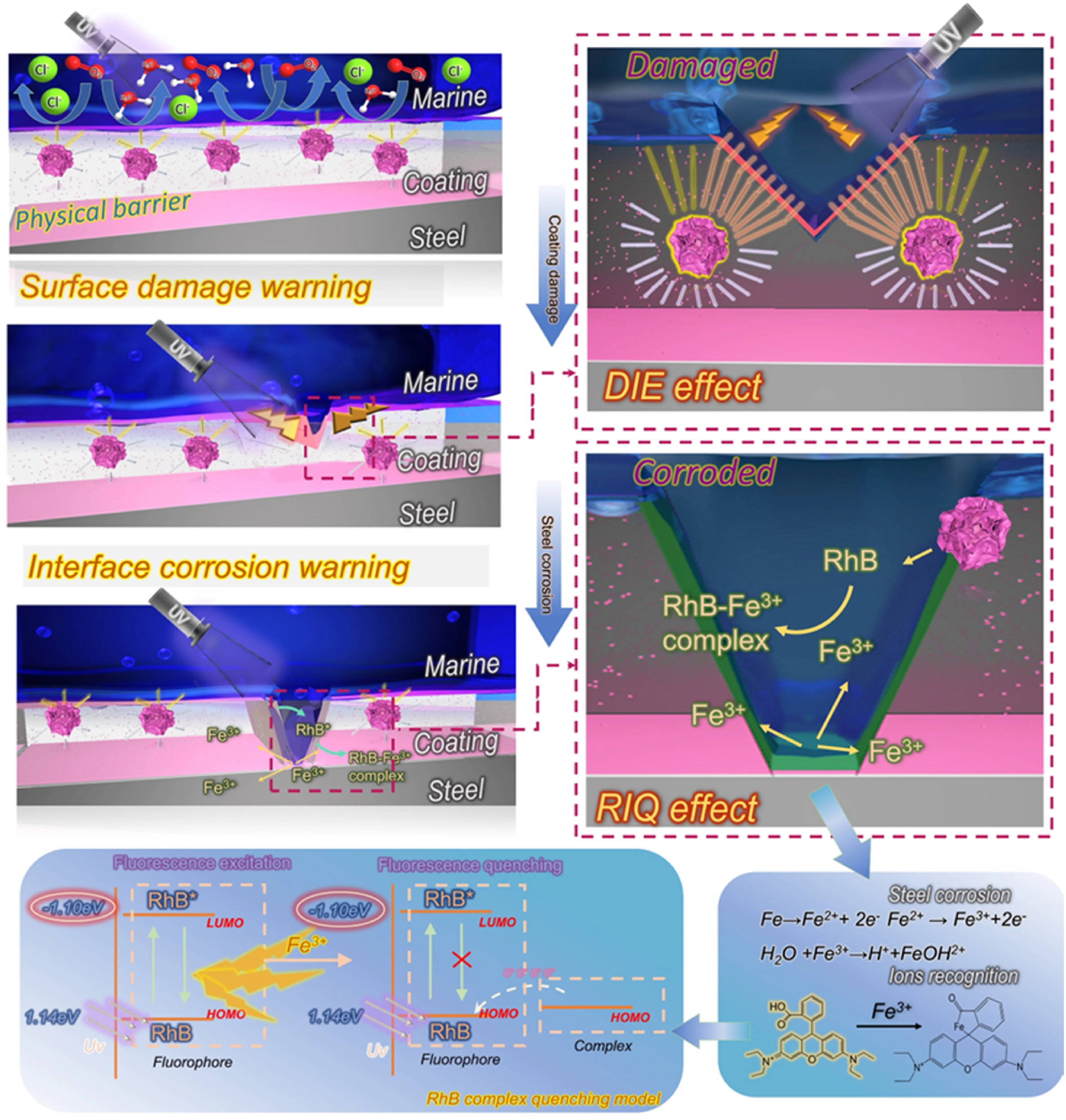
Figure 9. Demonstration of dual-responsive warning mechanism in RhB@MOFs nanoprobes embedded coating. Reproduced from reference[84]. CC BY 4.0. RhB@MOFs: Rhodamine B-loaded Ni-Zn bimetallic metal-organic frameworks. RhB: Rhodamine B; DIE: damage-induced fluorescence enhancement effect; RIQ: ionic-recognition induced quenching effect.
5.4 Metal ion-responsive colorimetric corrosion-sensing
Some chromogenic substances exhibit distinct color changes after complexation or chelation with metal ions released during corrosion, thereby enabling visual warning of metal corrosion. Polyphenols are representative examples. Tannic acid, gallic acid, and related compounds contain abundant phenolic hydroxyl groups and can generate dark-colored complexes with Fe3+, making them suitable for indicating steel corrosion. Wang et al.[84] prepared tannic acid-loaded mesoporous silica nanocontainers (MSN-TA) and introduced them into epoxy coatings. When the coating was damaged, the released tannic acid complexed with Fe3+ produced by steel corrosion and generated a visible black signal at the scratch (Figure 10). The formed complex layer also suppressed corrosion propagation, providing the coating with both corrosion-sensing and self-healing functions. Liu et al.[85] developed ZIF-7@PEG-TA nanosensors, in which the purple signal produced by tannic acid-iron coordination was applied to detect localized corrosion beneath the coating. Meanwhile, imidazole-based inhibitive species were released through ZIF decomposition, creating a synergistic effect between colorimetric warning and active protection.
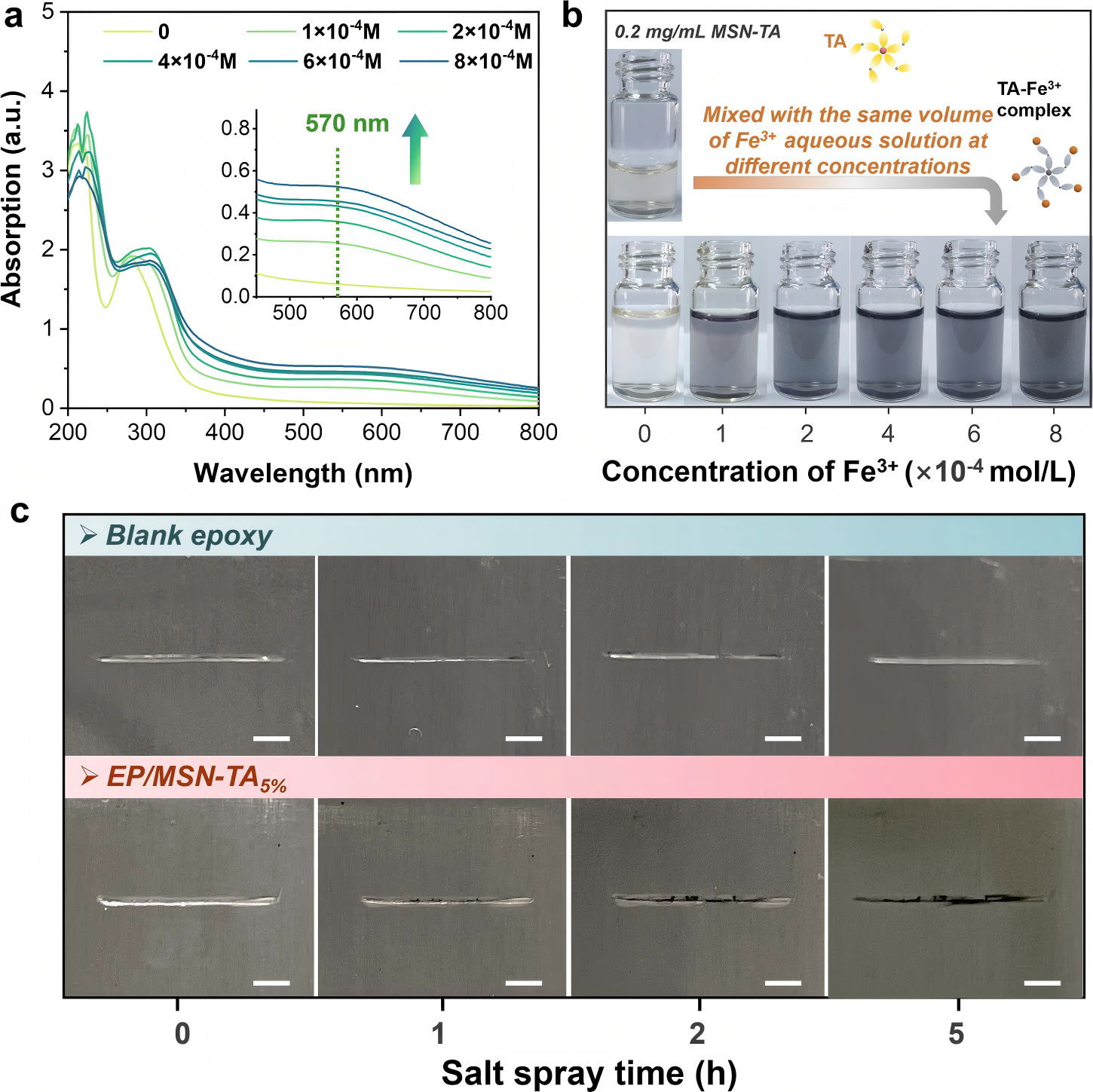
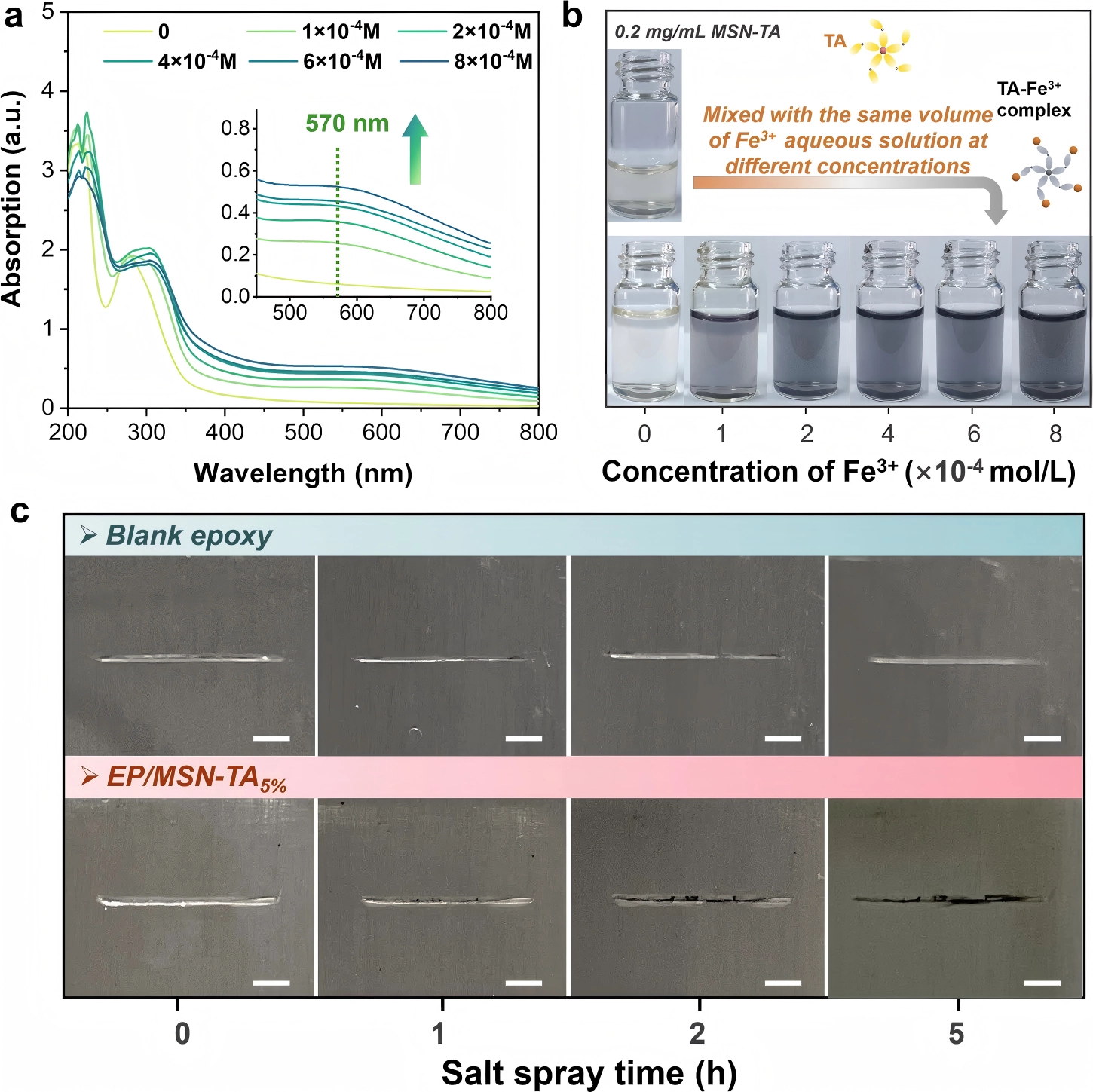
Figure 10. (a) UV-Vis spectra; (b) Optical images of MSN-TA dispersion with the addition of the same volume of Fe3+ ion solutions at different concentrations; (c) The optical images of scratches on the surfaces of blank epoxy and the EP/MSN-TA5% coating during salt spray test. Reproduced from reference[85]. CC BY 4.0. MSN-TA: tannic acid into mesoporous SiO2 nanocontainers; EP: epoxy; UV: ultraviolet.
1,10-Phenanthroline (Phen) and its derivatives represent another important group of metal ion-responsive materials for colorimetric warning of steel corrosion. Their bidentate nitrogen-containing heterocyclic structure can coordinate with Fe2+ to produce red complexes, enabling a visual response to Fe2+ released during anodic dissolution of steel[86,87]. Gunasekaran et al.[88] grafted 1,10-phenanthrolin-5-amine onto alkyd resin and applied it to mild steel. After immersion in 3.5 wt% NaCl solution, red spots developed in the coating, and Scanning electron microscopy–energy-dispersive X-ray (SEM-EDX) analysis verified that the colored regions corresponded to actual corrosion sites. This study suggests that chemical grafting of chromogenic groups onto polymer chains can enhance indicator dispersion in coatings and reduce leaching during service. Later, 5-acrylamido-1,10-phenanthroline was copolymerized into acrylic resin[89]. The obtained coating changed from pale yellow to red, allowing underfilm corrosion to be identified through color variation.
Liu et al.[90] prepared chitosan/alginate-coated CaCO3 microcontainers loaded with 1,10-phenanthrolin-5-amine (APhen). After scratching, local pH variations triggered APhen release, and APhen quickly reacted with Fe2+ to generate red precipitates. The epoxy coating containing 5 wt% microcontainers produced a clear red signal within 2 min in salt spray tests, while generating relatively few corrosion products after 720 h of salt spray exposure. Cao et al.[91] co-loaded Phen and tripolyphosphate ions into poly dimethyl diallyl ammonium chloride (PDDA)-coated mesoporous TiO2 nanocontainers to prepare Phen-Tpp@MTNs-PDDA/epoxy (EP) coatings. After scratched coatings were immersed in 3.5 wt% NaCl solution, Fe2+ complexed with Phen and produced a red signal within 6 h. At the same time, the combined action of Tpp and Phen delayed corrosion of the steel substrate. Liu et al.[92] also loaded 8-HQ into halloysite nanotubes and used a chitosan/sodium tripolyphosphate shell to control release. Iron ions generated during corrosion complexed with 8-HQ and produced a dark-green color at the damaged region, allowing timely identification of the corrosion location. Metal ion-responsive colorimetric corrosion sensing offers intuitive signals, requires minimal instrumentation, and is suitable for on-site inspection and maintenance decisions. The main issues for practical application include improving the selectivity of chromogenic probes toward target metal ions, maintaining stable dispersion in coatings, and reducing long-term leaching.
Corrosion-sensing coatings fundamentally differ from external sensing technologies by directly integrating monitoring functions into protective coatings. This enables intuitive visualization of corrosion evolution while maintaining protective performance. However, balancing sensing sensitivity, long-term durability, coating transparency, and multifunctionality remains a major challenge in the future design of smart coatings. To provide a systematic comparison, the relative advantages, limitations, applicable scenarios, detection accuracy, cost, and deployment difficulty of the major corrosion monitoring technologies discussed in this review are summarized in Table 1.
Table 1. Comparison of corrosion monitoring technologies for anti-corrosion coatings.
| Technology | Advantages | Limitations | Typical applications | Accuracy | Cost | Deployment |
| EIS sensors | Sensitive, quantitative, and theoretically well established | Require electrolyte contact and specialized equipment | Coating degradation and interfacial corrosion | High | High | Moderate |
| ENM sensors | Non-perturbative and suitable for continuous monitoring | Susceptible to noise; complex signal interpretation | Localized and atmospheric corrosion | Moderate | Moderate | Moderate |
| Galvanic sensors | Simple, continuous, and compatible with smart coatings | Affected by electrode and environmental conditions | Coating damage, inhibitor release, and self-healing | Moderate | Low | Low |
| Fiber-optic sensors | Highly sensitive, distributed, and immune to electromagnetic interference | Difficult packaging, installation, and interfacial stabilization | Large infrastructure and marine structures | High | High | High |
| Optical imaging | Rapid, non-contact, and suitable for large-area inspection | Affected by illumination and surface conditions | Routine inspection of visible corrosion | Moderate | Low | Low |
| Infrared thermography | Detects hidden corrosion and coating delamination | Affected by heating uniformity and coating thickness | Subsurface corrosion inspection | Moderate-high | High | Moderate |
| Microwave sensing | Non-contact, rapid, and sensitive to moisture ingress | Affected by coating thickness and environmental interference | Early warning of water ingress and coating degradation | Moderate | Moderate | Moderate |
| THz-TDS | Enables subsurface imaging and quantitative characterization | Limited penetration and high equipment cost | Detailed inspection of hidden corrosion | High | Very high | High |
| Corrosion-sensing coatings | Directly visualize early corrosion while retaining protection | Probe leaching, matrix interference, and limited durability | Local pH- or metal-ion-responsive warning | Moderate-high | Low-moderate | Low |
Accuracy, cost, and deployment difficulty are qualitatively rated because they depend on sensor configuration, coating system, and environmental conditions. EIS: electrochemical impedance spectroscopy; THz-TDS: terahertz time-domain spectroscopy; ENM: electrochemical noise monitoring.
6. Conclusions and Perspectives
Corrosion monitoring technologies for anti-corrosion coatings have gradually moved beyond conventional electrochemical assessment and are now developing toward integrated sensing, visual warning, and intelligent protection. Electrochemical sensors, such as EIS, ENM, and galvanic corrosion sensors, remain important tools for following coating barrier degradation, interfacial corrosion, and the protective effect of inhibitor- or self-healing-based systems. Optical fiber sensors and optical imaging techniques add another dimension to this field, since they allow nondestructive, spatially resolved, and sometimes distributed detection of under-coating corrosion. Electromagnetic sensing methods, including microstrip resonators, microwave backscattering sensors, and terahertz time-domain spectroscopy, provide complementary routes for identifying water uptake, dielectric changes, interfacial defects, and corrosion products beneath coatings without removing the coating layer. In parallel, corrosion-sensing coatings have introduced responsive molecules, microcapsules, nanocontainers, and functional fillers into coating matrices, enabling the coating itself to report local pH variation or metal ion release at the early stage of corrosion. These advances indicate that anti-corrosion coatings are no longer limited to passive isolation, but are becoming functional platforms that can perceive, report, and in some cases respond to degradation.
Several issues, however, still need to be addressed before these technologies can be widely used under real service conditions. One important concern is signal reliability. In practical environments, local pH changes, background ions, humidity fluctuations, temperature variation, coating additives, and surface contamination may all influence sensor outputs or indicator responses. A strong signal is not always equivalent to real corrosion, and a weak signal does not necessarily mean that the coating is still intact. Moreover, sensor calibration under complex service conditions remains challenging because environmental fluctuations, coating aging, and sensor drift may affect the reliability of long-term monitoring results. More selective probes, more stable signal thresholds, and cross-validation between different monitoring methods are therefore needed to reduce false warnings and missed detections.
Long-term stability is another major limitation. Many fluorescent or colorimetric molecules may leach from the coating, lose activity, or interact with the resin matrix during aging. Embedded sensors may also suffer from interfacial debonding, packaging failure, or signal drift after long exposure. In addition to material stability, practical deployment requires consideration of sensor fabrication, large-scale integration, installation procedures, and compatibility with existing coating application processes. For this reason, future work should place more emphasis on the compatibility between sensing components and coating formulations. Encapsulation, covalent immobilization, chemically stable carriers, and robust sensor packaging are useful strategies, but their influence on coating compactness, adhesion, mechanical properties, and water transport should be evaluated at the same time.
The quantitative interpretation of monitoring signals also remains insufficient. At present, many corrosion-sensing coatings can clearly show color or fluorescence changes near damaged regions, but the relationship between signal intensity and corrosion rate, corrosion depth, damaged area, or residual coating life is still not well established. Establishing standardized correlations between sensing signals and corrosion parameters under different environmental conditions is essential for transforming sensing technologies from qualitative warning tools into quantitative maintenance platforms. Similar problems exist in some electromagnetic and optical methods, where changes in frequency, phase, strain, or image contrast may be affected by coating thickness, moisture distribution, surface roughness, and corrosion morphology. To support maintenance decisions, qualitative warning should be further combined with calibrated models, image analysis, machine learning, and long-term exposure data. Another key direction is the integration of sensing and protection. An ideal coating system should not only detect corrosion, but also slow down its propagation through inhibitor release, self-healing, or barrier reconstruction. Nevertheless, excessive addition of functional carriers or sensing fillers may introduce defects into the coating and weaken its original barrier performance. The balance among sensing sensitivity, active protection, mechanical integrity, and long-term durability should therefore be considered as a central issue in coating design.
Future research is likely to focus on multi-signal, multi-scale, and service-oriented monitoring through the synergistic integration of multiple sensing technologies. Specifically, electrochemical sensing methods can provide information on interfacial electrochemical activity, corrosion kinetics, and barrier degradation, while optical sensing and imaging techniques enable spatial visualization and distributed monitoring of corrosion initiation and propagation. Meanwhile, electromagnetic sensing methods can offer complementary information regarding moisture penetration, dielectric changes, and hidden degradation beneath intact coatings. The combination of these complementary sensing signals can overcome the limitations of individual monitoring techniques, reduce false alarms, and improve the accuracy and reliability of corrosion assessment. Distributed fiber-optic networks, miniaturized electrochemical sensors, wireless data acquisition, microwave or terahertz nondestructive testing, and intelligent image recognition may provide useful tools for large structures used in marine engineering, transportation, petrochemical equipment, and infrastructure. At the material level, corrosion-sensing coatings should be developed with stable carriers, environmentally benign indicators, low-interference matrices, and combined self-healing or inhibitor-release functions. At the application level, engineering implementation requires more than improved sensor performance. Calibration protocols should account for coating thickness, substrate geometry, temperature, humidity, and salinity, while application-specific warning thresholds should be correlated with corrosion depth, mass loss, or residual coating life. Sensor packaging and installation must withstand UV exposure, wet–dry cycling, mechanical loading, and long-term immersion without introducing coating defects or weakening interfacial adhesion. For large structures, low-power data acquisition, wireless transmission, self-diagnostic functions, and replaceable sensor modules are also required to reduce cabling and maintenance costs. Finally, accelerated laboratory tests should be correlated with long-term field data, and standardized procedures should define sensor placement, calibration frequency, data-quality requirements, and acceptance criteria before large-scale deployment.
Acknowledgements
DeepSeek was used solely for language editing and polishing of the manuscript. The authors reviewed, revised, and approved the final manuscript and take full responsibility for its content.
Authors contribution
Wang J: Conceptualization, supervision, writing-original draft.
Huo J, Liu S, Chen Y: Writing-original draft.
Ma L: Writing-review & editing.
Conflicts of interest
Jinke Wang is a Youth Editorial Board member of Smart Materials and Devices. The other authors declare no conflicts of interest.
Ethical approval
Not applicable.
Consent to participate
Not applicable.
Consent for publication
Not applicable.
Availability of data and materials
Not applicable.
Funding
This work was supported by the Advanced Materials-National Science and Technology Major Project (Grant No. 2024ZD0607500), the National Natural Science Foundation of China (Grant No. 52601110), and the China Postdoctoral Science Foundation (Grant No. 2025M780020).
Copyright
© The Author(s) 2026.
References
-
1. Yin Y, Li S, Wang W, Zhao D, Lan K, Rohwerder M. Silica-containing coatings for corrosion protection. Prog Mater Sci. 2026;159:101659.[DOI]
-
2. Esmaily M, Svensson JE, Fajardo S, Birbilis N, Frankel GS, Virtanen S, et al. Fundamentals and advances in magnesium alloy corrosion. Prog Mater Sci. 2017;89:92-193.[DOI]
-
3. Yang X, Yang Y, Sun M, Jia J, Cheng X, Pei Z, et al. A new understanding of the effect of Cr on the corrosion resistance evolution of weathering steel based on big data technology. J Mater Sci Technol. 2022;104:67-80.[DOI]
-
4. Chen Y, Wang Q, Hou L, Huang H, Gao Z, Wei Y. Self-warning and self-repairing mechanisms in functional coatings: A review. Exploration. 2025;5(4):e20240066.[DOI]
-
5. Shen Z, An M, Li S, Mi X, Xiao Q. In-situ mechanical exfoliation of graphite to UV curable graphene/acrylate coatings and their corrosion resistance properties. Smart Mater Devices. 2025;1(1):202401.[DOI]
-
6. Cheng L, Zhang A, Cao L, Deng K, Hou P, Liu C. Robust damage-sensing and corrosion-warning polymeric coatings: A new approach to visually monitor the degradation dynamics of coated Mg-alloys. Small. 2025;21(5):2404038.[DOI]
-
7. Wang B, Zhao L, Chen Y, Zhu L, Liu C, Cheng X, et al. Intelligent corrosion analysis and life prediction of ductile iron pipe systems using machine learning and electrochemical sensors. J Mater Res Technol. 2024;33:725-741.[DOI]
-
8. Raju B, Kumar R, Dhanalakshmi S, Dooly G, Duraibabu DB. Review of fiber optical sensors and its importance in sewer corrosion factor analysis. Chemosensors. 2021;9(6):118.[DOI]
-
9. Chen E, Li YX, Zhang SS. Quantitative monitoring of localized pitting corrosion in steel bars through a combined use of distributed optical fiber sensors and finite element analyses. Constr Build Mater. 2024;438:136970.[DOI]
-
10. Le M, Luong VS. Detection of corrosion on aircraft structures using an electromagnetic testing sensor and a spiking convolutional neural network. IEEE Sens J. 2024;24(21):35572-35579.[DOI]
-
11. Lu C, Li L, Liu Z, Xu C, Xin M, Fu G, et al. Location and corrosion detection of tower grounding conductors based on electromagnetic measurement. Measurement. 2022;199:111469.[DOI]
-
12. Li H, Meng XZ, Yan HJ, Zheng RC, Hu HS, Lei B, et al. Intelligent marine waterborne epoxy coating based on functionalized multiscale nanocomposite: Mechanical enhancement, self-reporting, and active/passive anti-corrosion. J Mater Sci Technol. 2025;221:68-83.[DOI]
-
13. Cheng L, Jiao D, Cao L, Deng K, Hou P, Liu C. Triple-action long-term anti-corrosion coating enabled by functional zinc molybdate-based nanosheets towards high-efficiency barrier, self-detection and self-healing properties. Chem Eng J. 2025;507:160426.[DOI]
-
14. Liu C, Wu H, Qiang Y, Zhao H, Wang L. Design of smart protective coatings with autonomous self-healing and early corrosion reporting properties. Corros Sci. 2021;184:109355.[DOI]
-
15. Li X, Gong B, Jin Y, Chen Z, Yang W. Intelligent water-borne coatings with self-reporting, self-healing, and robust barrier performance for the active corrosion protection of Q235 steels. Prog Org Coat. 2024;189:108366.[DOI]
-
16. Xia DH, Deng CM, Macdonald D, Jamali S, Mills D, Luo JL, et al. Electrochemical measurements used for assessment of corrosion and protection of metallic materials in the field: A critical review. J Mater Sci Technol. 2022;112:151-183.[DOI]
-
17. Orazem ME, Tribollet B. Electrochemical impedance spectroscopy. 2nd ed. Hoboken: John Wiley & Sons; 2017.
-
18. Mansfeld F. Electrochemical impedance spectroscopy (EIS) as a new tool for investigating methods of corrosion protection. Electrochim Acta. 1990;35(10):1533-1544.[DOI]
-
19. Walter GW. The application of impedance methods to study the effects of water uptake and chloride ion concentration on the degradation of paint films: I. Attached films. Corros Sci. 1991;32(10):1059-1084.[DOI]
-
20. Leidheiser H, Funke W. Water disbondment and wet adhesion of organic coatings on metals: A review and interpretation. J Oil Colour Chem Assoc. 1987;70(5):121-132. Available from: https://pascal-francis.inist.fr/vibad/index.php?action=getRecordDetail&idt=8312701
-
21. Tallman DE, Levine KL, Siripirom C, Gelling VG, Bierwagen GP, Croll SG. Nanocomposite of polypyrrole and alumina nanoparticles as a coating filler for the corrosion protection of aluminium alloy 2024-T3. Appl Surf Sci. 2008;254(17):5452-5459.[DOI]
-
22. Cai G, Wang H, Jiang D, Dong Z. Impedance sensor for the early failure diagnosis of organic coatings. J Coat Technol Res. 2018;15(6):1259-1272.[DOI]
-
23. Xiong QY, Jiang WJ, Zeng MT, Xu JS, Yi YG, Li YY, et al. In situ rapid non-destructive diagnosis on degradation of coatings based on dual-electrode electrochemical impedance probe. J Chin Soc Corros Prot. 2025;45(4):1025-1034. Chinese.[DOI]
-
24. Xia DH, Song S, Behnamian Y, Hu W, Cheng YF, Luo JL, et al. Review: Electrochemical noise applied in corrosion science: Theoretical and mathematical models towards quantitative analysis. J Electrochem Soc. 2020;167(8):081507.[DOI]
-
25. Ma C, Wang Z, Behnamian Y, Gao Z, Wu Z, Qin Z, et al. Measuring atmospheric corrosion with electrochemical noise: A review of contemporary methods. Measurement. 2019;138:54-79.[DOI]
-
26. Mills DJ, Broster M, Razaq I. Continuing work to enable electrochemical methods to be used to monitor the performance of organic coatings in the field. Prog Org Coat. 2008;63(3):267-271.[DOI]
-
27. Pei Z, Zhang D, Zhi Y, Yang T, Jin L, Fu D, et al. Towards understanding and prediction of atmospheric corrosion of an Fe/Cu corrosion sensor via machine learning. Corros Sci. 2020;170:108697.[DOI]
-
28. Pei Z, Cheng X, Yang X, Li Q, Xia C, Zhang D, et al. Understanding environmental impacts on initial atmospheric corrosion based on corrosion monitoring sensors. J Mater Sci Technol. 2021;64:214-221.[DOI]
-
29. Mizuno D, Suzuki S, Fujita S, Hara N. Corrosion monitoring and materials selection for automotive environments by using Atmospheric Corrosion Monitor (ACM) sensor. Corros Sci. 2014;83:217-225.[DOI]
-
30. Wang X, Jin L, Wang J, Wang R, Liu X, Gao K, et al. Assessing the corrosion protection property of coatings loaded with corrosion inhibitors using the real-time atmospheric corrosion monitoring technique. Int J Miner Metall Mater. 2025;32(1):119-126. Chinese.[DOI]
-
31. Wang J, Ma L, Huang Y, Ren C, Yang H, Wang Y, et al. Photothermally activated self-healing protective coating based on the “close and seal” dual-action mechanisms. Compos Part B Eng. 2022;231:109574.[DOI]
-
32. Liu T, Zhang H, Wu M, Fan Y, Jia R. An ultrafast and highly efficient self-healing coating with dynamic-covalent boroxine bonds for corrosion protection. Polymer. 2026;351:129843.[DOI]
-
33. Lin S, Tang F, Dang J, Li X. Automatic detection of steel rebar corrosion based on machine learning and light spectrum of fiber optic corrosion sensors. Opt Fiber Technol. 2023;79:103379.[DOI]
-
34. Poorghasem S, Liu Y, Jiang Z, Chen J, Bao Y. Machine learning-based automatic detection and prediction of cracks and corrosion using spatiotemporal measurements from distributed fiber optic sensors. Autom Constr. 2026;181:106679.[DOI]
-
35. Tang F, Hu J, Li T, Li G, Li HN. Effect of stress level and localized corrosion on the strain transfer between corroded steel rebar and distributed fiber optic sensor. Constr Build Mater. 2023;404:133329.[DOI]
-
36. Tang F, Bai J, Li G, Lin Z, Li HN. Monitoring under-coating corrosion of painted structural steel with no-core fiber optic sensors. Measurement. 2024;225:114075.[DOI]
-
37. Fan L, Li B, Pang Q, Shen W, Sun B. Corrosion monitoring beneath damaged coatings with localized pores on steel piles using distributed optical fiber sensors. Prog Org Coat. 2025;201:109150.[DOI]
-
38. Shen W, Pang Q, Fan L, Li P, Zhao X. Monitoring and quantification of non-uniform corrosion induced mass loss of steel piles with distributed optical fiber sensors. Autom Constr. 2023;148:104769.[DOI]
-
39. Ali AAIM, Jamaludin S, Imran MMH, Ayob AFM, Ahmad SZAS, Akhbar MFA, et al. Computer vision and image processing approaches for corrosion detection. J Mar Sci Eng. 2023;11(10):1954.[DOI]
-
40. Nelson BN, Slebodnick P, Lemieux EJ, Singleton W, Krupa M, Lucas K, et al. Wavelet processing for image denoising and edge detection in automatic corrosion detection algorithms used in shipboard ballast tank video inspection systems. In: Proceedings of the 8th Annual Conference on Wavelet Applications; 2001 April 18-20; Orlando, USA. Bellingham: SPIE; 2001. p. 134-145.[DOI]
-
41. Chen PH, Shen HK, Lei CY, Chang LM. Support-vector-machine-based method for automated steel bridge rust assessment. Autom Constr. 2012;23:9-19.[DOI]
-
42. Tao L, Song SZ, Jin WX. Detection method based on color characteristic for coating aging deterioration. CIESC J. 2009;60(2):415-420. Chinese.[DOI]
-
43. He Y, Shen P, Liu Y, He X, Xie Q, Zhou Y, et al. MEMS microscope laser scanning for detection of metal artifacts corrosion characteristics. Measurement. 2025;253:117472.[DOI]
-
44. Han JS, Park JH. Detection of corrosion steel under an organic coating by infrared photography. Corros Sci. 2004;46(4):787-793.[DOI]
-
45. Marinetti S, Vavilov V. IR thermographic detection and characterization of hidden corrosion in metals: General analysis. Corros Sci. 2010;52(3):865-872.[DOI]
-
46. Yang R, He Y, Zhang H, Huang S. Through coating imaging and nondestructive visualization evaluation of early marine corrosion using electromagnetic induction thermography. Ocean Eng. 2018;147:277-288.[DOI]
-
47. Khalifeh R, Lescop B, Gallée F, Rioual S. Development of a radio frequency resonator for monitoring water diffusion in organic coatings. Sens Actuators A Phys. 2016;247:30-36.[DOI]
-
48. Balasubramanian V, Niksan O, Jain MC, Golovin K, Zarifi MH. Non-destructive erosive wear monitoring of multi-layer coatings using AI-enabled differential split ring resonator based system. Nat Commun. 2023;14:4916.[DOI]
-
49. Gao Z, Jia S, Zou Z, Li Q, Zhou Y. Intelligent early-corrosion detection system based on backscattering sensors. IEEE Sens J. 2025;25(14):27735-27742.[DOI]
-
50. Yang S, Zhang Y, Zou Q, Jiang X, Jiang S. Non-destructive quantification of corrosion under coatings and evaluation of coating performance using terahertz time-domain spectroscopy. Constr Build Mater. 2025;501:144251.[DOI]
-
51. Jiang X, Xu Y, Hu H, Xie W. Nondestructive testing of corrosion thickness in coated steel structures with THz-TDS. Measurement. 2023;217:113088.[DOI]
-
52. Tu W, Zhong S, Zhang Q, Shen Y, Incecik A. Quality evaluation of organic protective paints using terahertz pulse imaging technology based on wavelet packet energy method. Ocean Eng. 2023;267:113282.[DOI]
-
53. Han X, Chen L, Guo X, Liao B. The key role of coordination chemistry in the synergistic protection and response mechanisms of intelligent self-healing anti-corrosion coatings. Coord Chem Rev. 2026;563:218054.[DOI]
-
54. Ma L, Ren C, Wang J, Liu T, Yang H, Wang Y, et al. Self-reporting coatings for autonomous detection of coating damage and metal corrosion: A review. Chem Eng J. 2021;421:127854.[DOI]
-
55. Guo Z, Li T, Chen T, Zhi D, Tian Y, Hao C, et al. Salt-gated releasing effect to open visual self-reporting/self-repairing function of coatings toward corrosion protection. ACS Sustainable Chem Eng. 2023;11(12):4738-4748.[DOI]
-
56. Miralvar MR, Babaie A, Rezaei M, Roghani-Mamaqani H, Mayan-Sofla RL, HassanAlizadeh P. Coumarin-based polyurethane with triple-shape memory effect, photo-responsive self-healing, photolithography, and dual-mode encoding/decoding for smart data transfer. Eur Polym J. 2024;221:113528.[DOI]
-
57. Wang JP, Wang JK, Zhou Q, Li Z, Han Y, Song Y, et al. Adaptive polymeric coatings with self-reporting and self-healing dual functions from porous core–shell nanostructures. Macromol Mater Eng. 2018;303(4):1700616.[DOI]
-
61. Lee TH, Song YK, Park SH, Park YI, Noh SM, Kim JC. Dual stimuli responsive self-reporting material for chemical reservoir coating. Appl Surf Sci. 2018;434:1327-1335.[DOI]
-
62. Rodge A, Koyalwar N, Jaiswal S, Shaikh S, Siddique SAMN, Bogle D, et al. AmmPatch: A visual, flexible, and reusable film sensor for ammonia gas. Adv Eng Mater. 2026;28(14):e70940.[DOI]
-
63. Zhao Y, Zhang T, Huang H, Xu Z, Xing T, Zhao Y. Hydrophobic-hygroscopic, pH indicator-based fabric coatings with humidity tolerance for rapid colorimetric NH3 sensing. Dyes Pigments. 2025;242:112987.[DOI]
-
64. Fu C, Liu A, Zhai Y, Lan H, Cui S, Qi T, et al. A smart platform for monitoring the whole life-course of self-healing coatings with the cooperation of self-reporting microcapsules and coating matrix. Colloids Surf A Physicochem Eng Asp. 2024;684:133152.[DOI]
-
65. Patra R, Vijay B, Raju KRCS, Gobi KV, Subasri R. Dual functional coatings: Comparative study of corrosion indicators for corrosion reporting and self-healing on MgAZ31 alloy. J Alloys Compd. 2025;1029:180755.[DOI]
-
66. Galvão TLP, Sousa I, Wilhelm M, Carneiro J, Opršal J, Kukačková H, et al. Improving the functionality and performance of AA2024 corrosion sensing coatings with nanocontainers. Chem Eng J. 2018;341:526-538.[DOI]
-
67. Mata D, Scharnagl N, Lamaka SV, Malheiro E, Maia F, Zheludkevich ML. Validating the early corrosion sensing functionality in poly (ether imide) coatings for enhanced protection of magnesium alloy AZ31. Corros Sci. 2018;140:307-320.[DOI]
-
68. Sun C, Liu C, Wang Y, Jiao D, Zhang AM, Sui PS, et al. Corrosion sensing and self-healing composite coatings on magnesium alloy AZ31 enabled by stimuli-responsive microcapsules loaded with phenolphthalein and epoxy resin. Prog Org Coat. 2024;186:108043.[DOI]
-
69. Sousa I, Quevedo MC, Sushkova A, Ferreira MGS, Tedim J. Chitosan microspheres as carriers for pH-indicating species in corrosion sensing. Macromol Mater Eng. 2020;305(2):1900662.[DOI]
-
72. Liu G, Wheat HG. Use of a fluorescent indicator in monitoring underlying corrosion on coated aluminum 2024-T4. J Electrochem Soc. 2009;156(4):C160.[DOI]
-
73. Cheng L, Liu C, Zhao H, Wang L. Hierarchically self-reporting and self-healing photothermal responsive coatings towards smart corrosion protection. Chem Eng J. 2023;467:143463.[DOI]
-
75. Cheng L, Liu C, Zhao H, Wang L. Photothermal-triggered shape memory coatings with active repairing and corrosion sensing properties. J Mater Chem A. 2021;9(39):22509-22521.[DOI]
-
76. Wu E, Gu S, Cheng L, Jiao D, Wang Z, Cui L, et al. Dynamic visualization for stress-induced crack initiation and resulted corrosion expansion in carbon quantum tailored epoxy coating. Prog Org Coat. 2025;203:109164.[DOI]
-
77. Liu Z, Jia R, Jian Y, Chen F, Yan G, He D. N-doped carbon dots as a multifunctional platform for real-time corrosion monitoring and inhibition. Colloids Surf A Physicochem Eng Asp. 2022;650:129499.[DOI]
-
78. Ma L, Xu D, Wu S, Guo X, Liu T, Wei M, et al. Polyurethane coatings with corrosion inhibition and color-fluorescence damage reporting properties based on APhen-grafted carbon dots. Corros Sci. 2024;232:112038.[DOI]
-
81. Hu Y, Cao X, Ma X, Pan J, Cai G, Zhang X, et al. A bifunctional epoxy coating doped by cerium (III)-8-hydroxyquinoline: Early self-reporting and stimuli-responsive inhibition on corrosion of Al substrate. Prog Org Coat. 2023;182:107616.[DOI]
-
82. Li W, Tao J, Chen Y, Wu K, Luo J, Liu R. Porous microspheres with corrosion sensing and active protecting abilities towards intelligent self-reporting and anti-corrosion coating. Prog Org Coat. 2023;178:107468.[DOI]
-
83. Jiao D, Liu C, Qiang Y, Li S, Sun C, Hou P, et al. Ni-Zn bimetal-organic framework nanoprobes reinforced polymeric coating to achieve dual-responsive warning of coating damage and interfacial corrosion. Nano Mater Sci. 2025;7(3):326-339.[DOI]
-
84. Wang J, Tan W, Yang H, Rao X, Luo X, Ma L, et al. Towards weathering and corrosion resistant, self-warning and self-healing epoxy coatings with tannic acid loaded nanocontainers. npj Mater Degrad. 2023;7:39.[DOI]
-
86. Cai M, Lin Q, Li W, Fan X, Zhu M. Phen@TiO2 modified epoxy resin/polyacrylate IPN composite coating towards wear/corrosion resistance and intelligent self-repairing/diagnosis. Prog Org Coat. 2022;173:107207.[DOI]
-
88. Dhole GS, Gunasekaran G, Singh SK, Vinjamur M. Smart corrosion sensing phenanthroline modified alkyd coatings. Prog Org Coat. 2015;89:8-16.[DOI]
-
89. Dhole GS, Gunasekaran G, Ghorpade T, Vinjamur M. Smart acrylic coatings for corrosion detection. Prog Org Coat. 2017;110:140-149.[DOI]
-
90. Liu T, Zhang D, Ma L, Huang Y, Hao X, Terryn H, et al. Smart protective coatings with self‐sensing and active corrosion protection dual functionality from pH-sensitive calcium carbonate microcontainers. Corros Sci. 2022;200:110254.[DOI]
-
92. Liu C, Hou P, Qian B, Hu X. Smart healable and reportable anticorrosion coating based on halloysite nanotubes carrying 8-hydroxyquinoline on steel. J Ind Eng Chem. 2023;118:109-118.[DOI]
Copyright
© The Author(s) 2026. This is an Open Access article licensed under a Creative Commons Attribution 4.0 International License (https://creativecommons.org/licenses/by/4.0/), which permits unrestricted use, sharing, adaptation, distribution and reproduction in any medium or format, for any purpose, even commercially, as long as you give appropriate credit to the original author(s) and the source, provide a link to the Creative Commons license, and indicate if changes were made.
Publisher’s Note
Science Exploration remains a neutral stance on jurisdictional claims in published
maps
and institutional affiliations. The views expressed in this article are solely those
of
the author(s) and do not reflect the opinions of the Editors or the publisher.
Share And Cite


Science Exploration Style
Wang J, Huo J, Liu S, Chen Y, Ma L. Corrosion monitoring technologies for anti-corrosion coatings: Principles, advances and future perspectives. Smart Mater Devices. 2026;2:202628. https://doi.org/10.70401/smd.2026.0046
Tips
Copy completed.
Submit a Manuscript
Author Instructions
Cite this Article
Article Metrics
0
View
0
Download
Cited
Article Updates

- Abstract
- Keywords
- 1. Introduction
- 2. Electrochemical Sensor Monitoring Technologies
- 3. Optical Sensors Corrosion Monitoring Technologies
- 4. Electromagnetic Sensors Monitoring Technologies
- 5. Corrosion-Sensing Coating Technologies
- 6. Conclusions and Perspectives
- Acknowledgements
- Authors contribution
- Conflicts of interest
- Ethical approval
- Consent to participate
- Consent for publication
- Availability of data and materials
- Funding
- References
- Copyright
 Get citation
Science Exploration Style

Wang J, Huo J, Liu S, Chen Y, Ma L. Corrosion monitoring technologies for anti-corrosion coatings: Principles, advances and future perspectives. Smart Mater Devices. 2026;2:202628. https://doi.org/10.70401/smd.2026.0046
copy
Share Link
copy