
Metadherin as a Cancer Fitness Gene: Lessons from Two Decades of Exploration
Time
8:00 PM, December 8, 2026 (U.S. Eastern Time, EST)9:00 AM, December 9, 2026 (Beijing Time)
Contact Us
Email: acrtjournal@sciexplor.comSpeaker
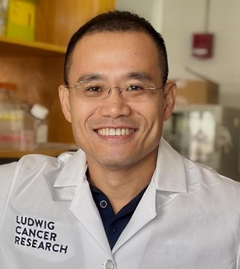
Prof. Yibin Kang
Department of Molecular Biology, Princeton University, Princeton, NJ, USA.
Yibin Kang, a founding member of the Ludwig Institute for Cancer Research Princeton Branch, is a Warner-Lambert/Parke-Davis Professor of Molecular Biology at Princeton University, and an associate director of Rutgers Cancer Institute of New Jersey. Kang graduated with a bachelor's degree from Fudan University in Shanghai in 1995. After completing his graduate study at Duke University in 2000 and postdoctoral training with Dr. Joan Massagué at the Memorial Sloan-Kettering Cancer Center, he joined the faculty of Princeton University as an assistant professor of molecular biology in 2004. He was promoted to associate professor with tenure in 2010 and to endowed chair full professor in 2012. Kang has served as the president of the Metastasis Research Society (2016-2018), the chair of the American Association for Cancer Research (AACR) Tumor Microenvironment Working Group (2018-2019), and president of the Chinese Biological Investigator Society (2018-2022).
Kang's research focuses on the molecular mechanisms of breast cancer metastasis. His work discovered new genes that promote recurrence, metastasis, immune evasion and chemoresistance of breast cancer, delineated tumor-stromal interactions that are essential for metastatic growth, identified novel regulators of mammary gland cell fate determination and tumor progression and developed new cancer therapeutic agents. He has published over 200 original articles in leading journals including Science, Cancer Cell, Nature Cell Biology, Nature Cancer and Nature Medicine. Kang's outstanding achievements have been recognized by many prestigious awards, including an American Cancer Society Research Scholar Award (2005), Department of Defense Era of Hope Scholar Award (2006), the 2011 Vilcek Prize for Creative Promise in Biomedical Sciences (2011), the American Association for Cancer Research (AACR) Award for Outstanding Achievements in Cancer Research (2012), the Fidler Innovation Award from the Metastasis Research Society (2014), the Fuller Albright Award from the American Society for Bone and Mineral Research (2014) and the AACR Outstanding Investigator Award in Breast Cancer Research (2014). Professor Kang was elected as a fellow of the American Association for the Advancement of Science (AAAS). He is a Komen Scholar and an inaugural inductee of the Duke Graduate School Few-Glasson Alumni Society in 2016. In 2019, he was selected as an American Cancer Society Research Professor.
Host
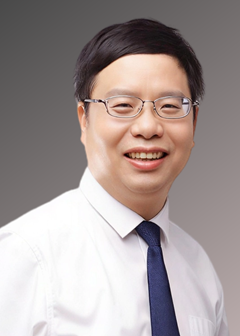
Prof. Ceshi Chen
Academy of Biomedical Engineering, Kunming Medical University, Kunming, Yunnan, China.
Prof. Ceshi Chen is a Professor at Kunming Medical University and Director of the Yunnan Provincial Key Laboratory of Breast Cancer Precision Medicine. He received his bachelor's degree in Biological Sciences from Nankai University in 1994 and his PhD in 1999 following doctoral training at the Shanghai Research Center of Biotechnology and the Shanghai Institute of Materia Medica, Chinese Academy of Sciences. From 1999 to 2005, he completed postdoctoral training at the University of Virginia and Emory University in the United States. He subsequently served as an Assistant Professor and Associate Professor at Albany Medical College from 2006 to 2011. From September 2011 to the end of 2025, he led a tumour biology research group at the Kunming Institute of Zoology, Chinese Academy of Sciences. Since 2022, he has served as Director of the Institute of Biomedical Engineering at Kunming Medical University and, since May 2023, as Vice President of Yunnan Cancer Hospital, the First Affiliated Hospital of Kunming Medical University.
His research focuses on breast cancer, ubiquitination, stem cell biology, and anticancer drug discovery. He has published more than 180 SCI-indexed papers, with corresponding-author publications in journals including Journal of Clinical Investigation, Signal Transduction and Targeted Therapy, Nature Communications, Advanced Science, Cancer Research, and Cell Death & Differentiation. His work has received more than 13,000 citations, and his H-index is 69. He has been recognised as an Elsevier Highly Cited Chinese Researcher in Basic Medicine for five consecutive years from 2021 to 2025 and was named among the world's top 2% of scientists in 2024. His honours include the National Science Fund for Distinguished Young Scholars, the National High-Level Talent Special Support Plan for Leading Talents in Scientific and Technological Innovation, and the State Council Special Government Allowance. He has led six key-category projects funded by the National Natural Science Foundation of China and served as a principal investigator of a key project under China's National Key Research and Development Program. He has also served as Executive Editor of the International Journal of Biological Sciences (IJBS) and Associate Editor of the Journal of Biological Chemistry (JBC), and holds leadership positions in several scientific societies in China.
Panelists
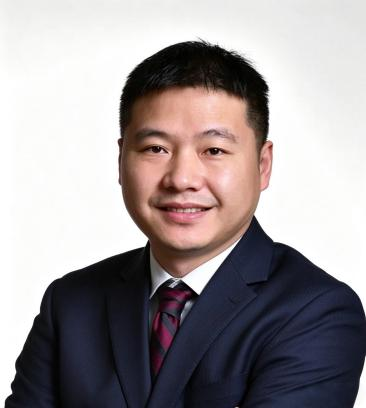
Prof. Hanqiu Zheng
Department of Basic Medical Sciences, School of Medicine, Tsinghua University, Beijing, China.
Prof. Hanqiu Zheng is an Associate Professor and PhD supervisor at the School of Medicine, Tsinghua University, and a recipient of China's National High-Level Talent Program for Young Professionals. His research focuses on the molecular mechanisms underlying cancer metastasis, with particular interests in transcriptional regulation, tumour–immune interactions, and bone metastasis. Using a dual-fluorescent reporter system developed by his laboratory, he identified FBXO11 as an E3 ubiquitin ligase that regulates SNAIL, a key transcription factor promoting cancer metastasis (Cancer Cell, 2014; Genes & Development, 2020). His work has also elucidated the roles of JAGGED1, a key ligand in the NOTCH signalling pathway, in cancer, including its involvement in macrophage-mediated evasion of cytotoxic T-cell killing (Cell Reports, 2022). In addition, his research has identified several molecules and metabolic factors involved in the early colonization of bone and therapeutic resistance in bone metastasis, including JAGGED1, lymphotoxin-β, and glutamine (Cancer Cell, 2017; Nature Cell Biology, 2024; Cancer Research, 2024).
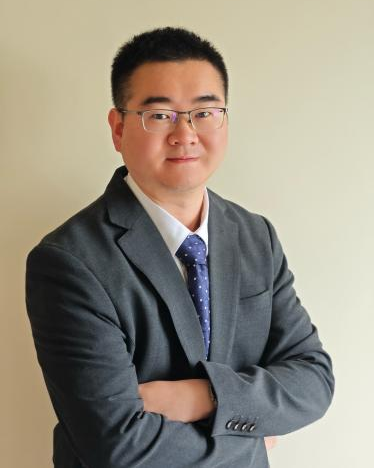
Dr. Minhong Shen
Key Laboratory of Breast Cancer in Shanghai, Department of Breast Surgery, Fudan University Shanghai Cancer Center, Shanghai, China.
Dr. Minhong Shen is a Research Fellow and PhD supervisor at Fudan University Shanghai Cancer Center. He received his B.S. degree from the College of Life Sciences at Zhejiang University in 2008 and his PhD in Basic Medicine from Zhejiang University in 2013. From 2014 to 2021, he conducted postdoctoral research at Princeton University, followed by an appointment as Assistant Professor at Wayne State University from 2021 to 2023. Since November 2023, he has been a Young Research Fellow at Fudan University Shanghai Cancer Center.
His research focuses on the molecular mechanisms underlying cancer metastasis and therapeutic resistance, with particular emphasis on the tumor microenvironment. He has received several prestigious fellowships and research awards, including the NJCCR Postdoctoral Fellowship (2015), the Susan G. Komen Postdoctoral Fellowship (2017), the DoD LCRP Idea Development Award (2023), and the National High-Level Talent Recruitment Program for Young Professionals (2023).
His research findings have been published in leading international journals, including Cell Stem Cell (2026), Advanced Science (2026), Signal Transduction and Targeted Therapy (2025), Trends in Cancer (2023), Nature Cancer (2022), Cancer Research (2021), Genes & Development (2020), Cancer Cell (2019), and Cell Research (2013).


