
The Molecular Approach to Multifunctional 2D Opto-electronics
Time
4:00 PM, March 11, 2026 (Beijing Time, CST)9:00 AM, March 11, 2026 (Paris Time, CET)
Contact Us
Email: smdjournal@sciexplor.comSpeaker
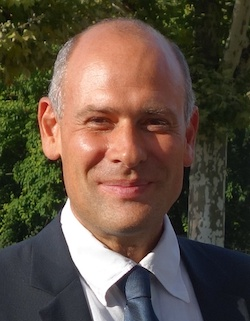
Prof. Paolo Samorì
ISIS, University of Strasbourg & CNRS, Strasbourg, France.
Paolo Samorì is Distinguished Professor at the University of Strasbourg and Director of the Institut de Science et d’Ingénierie Supramoléculaires (ISIS). He is Member of the Académie des technologies, Member of ACATECH, Foreign Member of the Royal Flemish Academy of Belgium for Science and the Arts (KVAB), Fellow of the Royal Society of Chemistry (FRSC), Fellow of the European Academy of Sciences (EURASC), Member of the Academia Europaea, Fellow of the Materials Research Society (MRS) and Senior Member of the Institut Universitaire de France (IUF). He has published 520+ papers on nanochemistry, supramolecular sciences, and materials chemistry, with a specific focus on two-dimensional materials and functional organic/polymeric nanomaterials for optoelectronics, energy storage, and sensing. He has been awarded numerous prestigious prizes and he is Associate Editor of ACS Nano.
Hosts
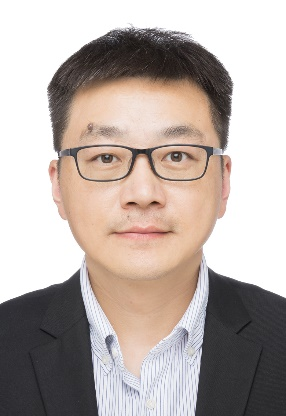
Prof. Jianxin Tang
Institute of Functional Nano and Soft Materials, Soochow University, Suzhou, Jiangsu, China.
Prof. Jianxin Tang received his B.Sc. degree in Physics from Zhejiang University, and Ph.D. degree in Physics and Materials Science from City University of Hong Kong. In 2008, he was appointed professor at Soochow University. In 2021, he was appointed professor at Macau University of Science and Technology. His current research areas/interests span materials science and device physics on organic and perovskite light-emitting diodes technology for flat panel display and solid-state lighting, and organic/perovskite photovoltaic cells for renewable energy. He has published over 300 papers in internationally refereed journals in the field of device physics and optoelectronics. He is the selected member for Ten Thousand Talent Program Innovation Leader of China, and Youth Chang Jiang Scholar of Ministry of Education of China, and was awarded as an NSFC Excellent Young Scholar. He has been awarded as the PI of First Class Prize of Science and Technology Award of Jiangsu Province, Young Science & Technology Award of Jiangsu Province, Second Class Prize of Natural Sciences Award of Ministry of Education, China.

Prof. Mischa Bonn
Department of Molecular Spectroscopy, Max Planck Institute for Polymer Research, Mainz, Germany.
Prof. Mischa Bonn is a research director at the Max Planck Institute for Polymer Research (MPIP), Mainz, Germany. He works on label-free (ultrafast) vibrational spectroscopy and microscopy of biomolecular systems and water in such systems. He received his PhD in 1996 from the University of Eindhoven for research performed at the FOM-Institute for Atomic and Molecular Physics AMOLF in Amsterdam. After postdoctoral research at the Fritz Haber Institute in Berlin and Columbia University in New York, he worked at Leiden University from 1999 as an assistant professor, and from 2002 as associate professor. In 2004 he became a group leader at the FOM-Institute for Atomic and Molecular Physics AMOLF. In 2011 he joined the MPIP. His research interests are the structure and dynamics of molecules at interfaces, and electron transfer across interfaces. He has won several prizes and awards and has published over 500 research articles.
Introduction
The exceptional properties of 2D materials can be enhanced, broadened, and optimized through their integration with custom-designed molecules, using the principles of supramolecular chemistry. By harnessing the vast variety of molecules that can be engineered and synthesized with targeted functionalities, it becomes feasible to design 2D materials with tunable physical and chemical properties. This strategy facilitates the development of new functionalities and the creation of multifunctional hybrid systems tailored for electronic applications beyond traditional CMOS technologies, aligning with the “more than Moore” approach focused on functional diversification.[1]
In my lecture I will present our recent findings on the use of chemical approaches to develop flexible pressure sensors with enhanced characteristics [2] and complex multi-responsive opto-electronic devices capable to emulate brain-like logic operations.[3]
[1] Chem. Rev., 2022, 122, 50
[2] Adv. Mater. 2025, 37, 2503867
[3] (a) Adv. Mater., 2025, 37, 2418281. (b) Adv. Mater. 2024, 36, 2307359; (c) Adv. Funct. Mater. 2025, 35, e09607
[2] Adv. Mater. 2025, 37, 2503867
[3] (a) Adv. Mater., 2025, 37, 2418281. (b) Adv. Mater. 2024, 36, 2307359; (c) Adv. Funct. Mater. 2025, 35, e09607
Presentation
Presentation
418


