
Well-defined Nanostructuring for Electrochemical Energy Conversion and Storage
Time
5:00 PM, May 28, 2026 (Beijing Time, CST)11:00 AM, May 28, 2026 (German Time, CET)
Zoom Meeting Link: https://us06web.zoom.us/j/85234943264?pwd=EjPiBoENN0JIMPUmh4eI5UjVbHIUhM.1
Meeting ID: 852 3494 3264
Passcode: 506037
Contact Us
Email: smdjournal@sciexplor.comSpeaker
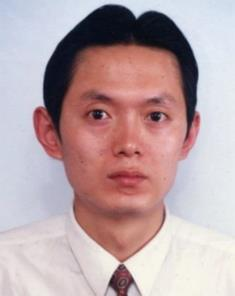
Prof. Yong Lei
Department of Applied Nano-Physics, Institute of Physics, Technical University of Ilmenau, Ilmenau, Germany.
Yong Lei is Professor and Head of the Department of Applied Nano-Physics at the Technical University of Ilmenau, Germany. After receiving his PhD from the Chinese Academy of Sciences in 2001, he worked at the Singapore-MIT Alliance for two years as a SMA research scientist. He began working in Germany in 2003 as an Alexander von Humboldt Fellow at the Karlsruhe Institute of Technology. From 2006 he worked at University of Muenster as a group leader and Junior Professor. In 2011, he joined the Technical University of Ilmenau as Professor. His research interests include template nanostructuring for energy conversion and storage, and optoelectronic applications. He has received a few prestigious European and German research grants including two European Research Council Grants. Prof. Lei is an Advisory Board Member or Associate Editor of Advanced Energy Materials (IF 26), Energy & Environmental Materials (IF 14.1), Small (IF 12.1), InfoMat (IF 22.3), Carbon Energy (IF 24.2), and Science China Materials (IF 7.4). At present, he has authored 367 SCI-indexed publications, with 27,530 citations (H-index 89). Many of his papers are published in high-impact scientific journals in physics, chemistry and materials science, including 8 papers published in Nature-series journals, 48 papers published in journals with impact factor higher than 20, and 154 papers published in journals with impact factor between 8-20.
Hosts
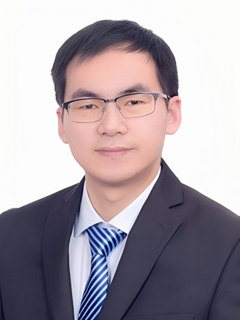
Dr. Zhu Ma
School of New Energy and Materials, Southwest Petroleum University, Chengdu, Sichuan, China.
Dr. Zhu Ma is an Associate Professor and Director of the Solar Cell Center at the Photovoltaic Industry Technology Research Institute. His research focuses on perovskite photocatalytic/electrocatalytic hydrogen production, silicon–perovskite tandem solar cells, and machine learning applications in new energy systems. He has conducted research at the University of Electronic Science and Technology of China, the University of California, Los Angeles, Southwest Petroleum University, and Lund University. To date, he has published over 100 SCI-indexed papers in leading journals such as Advanced Materials, Advanced Energy Materials, and Advanced Functional Materials, authored two English monographs, and obtained 23 granted Chinese invention patents. He currently serves as an editorial board member or young editorial board member for several international journals, including Smart Materials and Devices and Carbon Energy, and has led or participated in multiple national and provincial research projects in the field of renewable energy.

Dr. Jian Wang
Solid-State Chemistry Group, Helmholtz Institute Ulm (HIU), Ulm, Germany.
Karlsruhe Institute of Technology (KIT), Karlsruhe, Germany.
Karlsruhe Institute of Technology (KIT), Karlsruhe, Germany.
Dr. Jian Wang is a research fellow supported by Alexander von Humboldt foundation in Helmholtz Institute Ulm (HIU) and Karlsruhe Institute of Technology (KIT) after receiving his doctoral degree from University of Science and Technology of China. His research interests focus on the applications of catalysis in modulating electrochemical kinetics of secondary batteries (“Catalysis-in-Batteries”) and the exploration of in situ characterizations for probing interface mechanisms. Currently, Dr. Wang is also an Associate Editor of Energy Environ. Mater. and Guest Editor for J. Energy. Chem.. He has published over 50 papers as first or corresponding author in high-level journals, such as Adv. Mater., Angew. Chem., Energy Environ. Sci., Nano Lett., ACS Nano., Adv. Energy Mater., Adv. Funct. Mater. et al. He had also been invited to deliver presentations at international conferences, including the Electrochemical Society (ECS) Meeting, the European Materials Research Society (EMRS) Conference, ChinaNano 2017, and ChinaNano 2019 et al.
Introduction
Innovative technology for electrochemical energy conversion and storage is the key for so-called “clean energy” to realize a worldwide sustainable energy future. To compete with existing energy supply systems mainly based on fossil fuels, the efficiency of clean energy conversion and storage shall be largely improved. The intricate electrochemical reactions of energy conversion and storage and the involved kinetics and transport behaviors are closely associated with the selected materials and structures of electrodes. To this point, we proposed a concept of well-defined structuring of electrodes for improving the electrochemical performance of energy conversion and storage,[1-3]which have gained high research attention in the past years. We are using especially a templatebased technique with scalable, cost-effective and fast fabrication processes for electrode design.[4-6] The well-defined electrode structures possess large-scale arrayed configuration with highly controllable geometrical parameters (i.e., size, shape, heteroarchitecture, spatial arrangement, composition, surface vacancies), high density and perfect regularity. Such well-defined electrode structures are highly desirable for constructing devices for efficient energy conversion and storage, including photocatalysis and electrocatalysis devices;[7-11] sodium-ion, potassium-ion and zinc-ion batteries,[12-16] and supercapacitors.[17-18] The achieved high performances demonstrated that the well-defined structuring and material design play a crucial role for optimizing the energy conversion and storage devices via precise controlling structural features, indicating the high potential and importance of template-based well-defined nanostructuring and material design for both basic research and industrial device applications.
Keywords: Well-defined nanostructures; energy conversion and storage; photocatalysis and electrocatalysis; sodium-ion, potassium-ion and zinc-ion batteries; supercapacitors References
[1] R. Xu, Y. Lei*, et al., Adv. Energy Mater., 2021, 11 (15), 2001537.
[2] H. Zhao, Y. Lei*, Adv. Energy Mater., 2020, 10 (28), 2001460.
[3] J. Qiu, Y. Lei*, et al., Nano-Micro Lett., 2024, 16 (1), 130.
[4] R. Xu, Z. Zeng, Y. Lei*, Nat. Commun., 2022, 13 (1), 2435.
[5] L. Wen, R. Xu, Y. Mi, Y. Lei*, Nat. Nanotechnology, 2017, 12 (3), 244.
[6] R. Xu, Y. Lei*, et al., Adv, Funct. Mater., 2020, 30, 2005170.
[7] Z. Zhan, F. Grote, Z. Wang, R. Xu, Y. Lei, Adv. Energy Mater. 2015, 5 (24), 201501654.
[8] Z. Zhan, R. Xu, Y. Mi, H. Zhao, Y. Lei, ACS Nano 2015, 9, 4583.
[9] Z. Wang, Y. Lei et al., Nat. Commun. 2016, 7, 10348.
[10] Y. Mi, L. Wen, R. Xu, Z. Wang, D. Cao, Y. Fang, Y. Lei*, Adv. Energy Mater., 2016, 6, 201501496.
[11] P. Hong, Y. Lei*, et al., Adv. Mater., 2026, in press, e16978.
[12] L. Liang, Y. Lei*, et al., Energy Environ. Sci. 2015, 8, 2954.
[13] Y. Xu, Y. Lei*, et al., Nat. Commun. 2018, 9 (1), 1720.
[14] Y. Xu, Y. Lei*, et al., Angew. Chem. Int. Ed. 2015, 54, 8768.
[15] C. Wang, Y. Lei et al., J. Am. Chem. Soc. 2015, 137, 3124.
[16] C. Xu, Y. Lei*, et al., Adv. Mater., 2024, 36 (48), 2409533.
[17] Z. Lei, Y. Lei*, et al., Nat. Commun. 2020, 11 (1), 299.
[18] H. Zhao, Y. Lei*, et al., Adv. Mater. 2014, 26, 7654.
[1] R. Xu, Y. Lei*, et al., Adv. Energy Mater., 2021, 11 (15), 2001537.
[2] H. Zhao, Y. Lei*, Adv. Energy Mater., 2020, 10 (28), 2001460.
[3] J. Qiu, Y. Lei*, et al., Nano-Micro Lett., 2024, 16 (1), 130.
[4] R. Xu, Z. Zeng, Y. Lei*, Nat. Commun., 2022, 13 (1), 2435.
[5] L. Wen, R. Xu, Y. Mi, Y. Lei*, Nat. Nanotechnology, 2017, 12 (3), 244.
[6] R. Xu, Y. Lei*, et al., Adv, Funct. Mater., 2020, 30, 2005170.
[7] Z. Zhan, F. Grote, Z. Wang, R. Xu, Y. Lei, Adv. Energy Mater. 2015, 5 (24), 201501654.
[8] Z. Zhan, R. Xu, Y. Mi, H. Zhao, Y. Lei, ACS Nano 2015, 9, 4583.
[9] Z. Wang, Y. Lei et al., Nat. Commun. 2016, 7, 10348.
[10] Y. Mi, L. Wen, R. Xu, Z. Wang, D. Cao, Y. Fang, Y. Lei*, Adv. Energy Mater., 2016, 6, 201501496.
[11] P. Hong, Y. Lei*, et al., Adv. Mater., 2026, in press, e16978.
[12] L. Liang, Y. Lei*, et al., Energy Environ. Sci. 2015, 8, 2954.
[13] Y. Xu, Y. Lei*, et al., Nat. Commun. 2018, 9 (1), 1720.
[14] Y. Xu, Y. Lei*, et al., Angew. Chem. Int. Ed. 2015, 54, 8768.
[15] C. Wang, Y. Lei et al., J. Am. Chem. Soc. 2015, 137, 3124.
[16] C. Xu, Y. Lei*, et al., Adv. Mater., 2024, 36 (48), 2409533.
[17] Z. Lei, Y. Lei*, et al., Nat. Commun. 2020, 11 (1), 299.
[18] H. Zhao, Y. Lei*, et al., Adv. Mater. 2014, 26, 7654.
Presentation
Presentation
336


