
Adaptive Light Management for Energy Conversion
Time
3:00 PM, July 23, 2026 (Beijing Time, CST)9:00 AM, July 23, 2026 (German Time, CET)
Zoom Meeting Link: https://us06web.zoom.us/j/84732728188?pwd=pn2ry9JcsT1wRub6DY5T48s7tXmEwe.1
Meeting ID: 847 3272 8188
Passcode: 664135
Contact Us
Email: smdjournal@sciexplor.comSpeaker
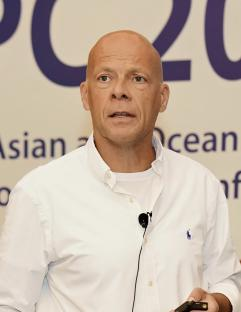
Prof. Dirk M. Guldi
Department of Chemistry and Pharmacy, Friedrich-Alexander-Universität Erlangen-Nürnberg, Erlangen, Germany.
Prof. Dirk M. Guldi completed both his undergraduate studies (1988) and PhD (1990) at the University of Cologne (Germany). Following postdoctoral appointments at the National Institute of Standards and Technology (USA), the Hahn-Meitner Institute Berlin (1992), and Syracuse University, he joined the faculty of the Notre Dame Radiation Laboratory in 1995. He was promoted a year later from Assistant to Associate Professional Specialist and remained affiliated with Notre Dame until 2004. Since 2004, he has been a Full Professor in the Department of Chemistry and Pharmacy at Friedrich-Alexander University Erlangen-Nürnberg. Since 2018, Prof. Guldi has served as Co-Editor-in-Chief of Nanoscale and Nanoscale Horizons, and he has been named among one of the world’s Highly Cited Researchers by Thomson Reuters, as well as among one of the World’s Top 2% Scientists.
The Guldi group and its network are at the cutting edge of worldwide research in solar-energy conversion, with expertise not only in advanced photon and charge management, but also with a clear focus on the ultimate objective of developing integrated solar energy-to-chemical fuel conversion systems that can eventually be utilized in practical devices. Their accomplishments are documented in more than 700 peer-reviewed publications, over 55,000 citations, and an h-index of 114. At the heart of this work is a multifaceted and interdisciplinary research program in which his group designs, conceptualizes, synthesizes, tests, and characterizes novel nanoscale materials for use in solar-energy conversion schemes.
A broad range of spectroscopic techniques (i.e., time-resolved and steady-state measurements with spectrophotometric detection covering timescales from femtoseconds to minutes) and microscopic techniques (e.g., scanning probe microscopy and electron microscopy) are routinely employed to investigate and optimize the dynamics and efficiencies of charge separation, charge transport, charge shift, and charge recombination processes.
The Guldi group and its network are at the cutting edge of worldwide research in solar-energy conversion, with expertise not only in advanced photon and charge management, but also with a clear focus on the ultimate objective of developing integrated solar energy-to-chemical fuel conversion systems that can eventually be utilized in practical devices. Their accomplishments are documented in more than 700 peer-reviewed publications, over 55,000 citations, and an h-index of 114. At the heart of this work is a multifaceted and interdisciplinary research program in which his group designs, conceptualizes, synthesizes, tests, and characterizes novel nanoscale materials for use in solar-energy conversion schemes.
A broad range of spectroscopic techniques (i.e., time-resolved and steady-state measurements with spectrophotometric detection covering timescales from femtoseconds to minutes) and microscopic techniques (e.g., scanning probe microscopy and electron microscopy) are routinely employed to investigate and optimize the dynamics and efficiencies of charge separation, charge transport, charge shift, and charge recombination processes.
Hosts

Prof. Jingde Chen
Institute of Functional Nano & Soft Materials (FUNSOM), Soochow University, Suzhou, Jiangsu, China.
Jing-De Chen received his Ph.D. from Soochow University in 2018 and is currently an Associate Professor at the Institute of Functional Nano & Soft Materials (FUNSOM), Soochow University, under the supervision of Prof. Jian-Xin Tang. His research interests include optical management and flexible electrode engineering for thin-film solar cells. He has published over 30 papers in prestigious journals, including Nature Communications, Science Advances, Advanced Materials, Angewandte Chemie International Edition, and Energy & Environmental Science.
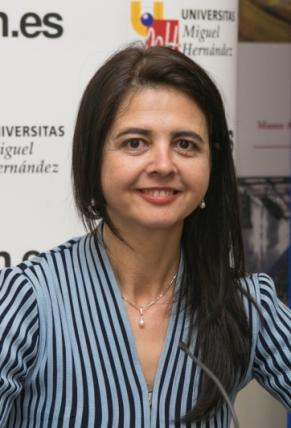
Prof. Ángela Sastre Santos
Área de Química Orgánica, Instituto de Bioingeniería, Universidad Miguel Hernández, Elche, Spain.
Ángela Sastre-Santos is currently Full Professor of Organic Chemistry at the Universidad Miguel Hernández de Elche (UMH, 2010). Head of the Instituto de Bioingeniería from October 2018 to July 2024. In October 1998 she joined the UMH as associate professor and in 2010 she was promoted to Full Professor. She currently directs a research group within the UMH Bioengineering Institute focused mainly on the synthesis of electroactive molecular and supramolecular systems with nano- and biotechnological applications.
She is a member of the American Chemical Society, Electrochemical Society, Society of Porphyrins and Phthalocyanines, the Spanish Royal Chemical Society and the Spanish Royal Physical Society; within the two latter, she was the President of the Nanoscience and Molecular Material Division (March 2013-May 2021). She has published more than 190 peer-reviewed articles, 5 national patents and 2 book chapters, with an h-index of 43. She was awarded the José Barluenga 2018 Medal by the Specialized Group of Organic Chemistry of the Royal Spanish Society of Chemistry in recognition of a projection of quality and excellence in her independent research career in Organic Chemistry. In 2024 ,she was recognized by UMH in the Research Groups Category, an award given to active faculty members conducting technological, innovative, or knowledge-transfer projects. She is also a co-founder of the spin-off Anfechem S.L.
Introduction
Adaptive light management materials are a class of advanced functional materials engineered to control the capture, manipulation, and utilization of light. These materials dynamically modulate light absorption in response to external environmental conditions. In photovoltaic (PV) systems, losses arising from thermalization and sub-bandgap transmission impose fundamental limits on device performance. For conventional single-junction cells, the theoretical maximum power conversion efficiency is approximately 33%, a constraint imposed by the Shockley–Queisser limit. Realizing the full potential of PV technologies therefore requires the development of novel strategies capable of circumventing these intrinsic efficiency boundaries.
Spectral down-conversion is a process in which high-energy photons are converted into lower-energy photons. Conversely, up-conversion involves the combination of two or more low-energy photons to generate a single higher-energy photon. Both processes enable the utilization of photons that would otherwise be lost. These mechanisms improve overall device efficiency by converting transmitted light into usable wavelengths or by transforming high-energy photons into wavelengths that are more efficiently absorbed by the active layer.
Acenes, a class of linearly fused aromatic hydrocarbons, stand out as a versatile platform for advanced light management due to their unique photophysical and electronic properties. They exhibit strong π-conjugation, resulting in high optical absorption across the visible spectrum and efficient fluorescence. Such characteristics make acenes particularly suitable for spectral down- and up-conversion. By strategically integrating acenes into device architectures, it is possible to broaden the effective spectral coverage, minimize energy losses from unutilized photons, and significantly improve overall optoelectronic performance. Their tunable electronic structure, combined with chemical stability and processability, further enables tailored light-management strategies for next-generation adaptive optoelectronic devices.
Presentation
Presentation
14
Free Discussion
9


