Kinetic resolution of bromonitroalkenes atropisomers enabling divergent access to multi-stereogenic molecules

Guishun Bai
1
,
Ruoqi Liu
1
,
Hua Chen
1

,
Hong Wang
1,3,*
,
Damien Bonne
2,*
,
Xiaoze Bao
1,3,*
*Correspondence to:
Hong Wang, College of Pharmaceutical Science & Collaborative Innovation Center of Yangtze River Delta Region Green Pharmaceuticals, Zhejiang University of Technology, Hangzhou 310014, Zhejiang, China; Zhejiang-Egypt Joint Laboratory on Intelligent Discovery of Marine Drugs, Hangzhou 310014, Zhejiang, China.
E-mail: hongw@zjut.edu.cn
Damien Bonne, Aix Marseille Univ, CNRS, Centrale Med, iSm2, Marseille, France. E-mail: damien.bonne@univ-amu.fr
Xiaoze Bao, College of Pharmaceutical Science & Collaborative Innovation Center of Yangtze River Delta Region Green Pharmaceuticals, Zhejiang University of Technology, Hangzhou 310014, Zhejiang, China; Zhejiang-Egypt Joint Laboratory on Intelligent Discovery of Marine Drugs, Hangzhou 310014, Zhejiang, China. E-mail: baoxiaoze@zjut.edu.cn
Damien Bonne, Aix Marseille Univ, CNRS, Centrale Med, iSm2, Marseille, France. E-mail: damien.bonne@univ-amu.fr
Xiaoze Bao, College of Pharmaceutical Science & Collaborative Innovation Center of Yangtze River Delta Region Green Pharmaceuticals, Zhejiang University of Technology, Hangzhou 310014, Zhejiang, China; Zhejiang-Egypt Joint Laboratory on Intelligent Discovery of Marine Drugs, Hangzhou 310014, Zhejiang, China. E-mail: baoxiaoze@zjut.edu.cn
Chiral Chem. 2027;3:202632. 10.70401/cc.2026.0041
Received: July 17, 2026Accepted: September 18, 2026Published: September 20, 2026
Abstract
The incorporation of multiple stereogenic elements into a single molecule can profoundly influence its biological and physical properties. However, the direct enantioselective synthesis of atropisomers bearing both axial and central chirality remains a significant challenge. Herein, we report an efficient kinetic resolution strategy based on a Michael addition/O-alkylation cascade between racemic bromonitroalkenes and 2-naphthols. This methodology enables the simultaneous synthesis of atropisomers featuring multiple stereogenic elements while recovering axially chiral bromonitroalkene building blocks with excellent stereoselectivities (up to 98% ee and > 20:1 dr, with a selectivity factor S up to 259). The reaction accommodates a broad range of electronic and steric substituents on both the nitroalkene and the naphthol components, as well as variation of the fused aromatic ring system. The synthetic utility of the approach was further demonstrated through gram-scale synthesis, parallel resolution, and the transformation of the recovered (aR)-bromonitroalkene into diverse atropisomeric architectures and the construction of various bis-axially chiral atropisomers via central-to-axial chirality transfer. A plausible transition-state model was proposed to rationalize both the stereochemical outcomes and the role of DABCO as a co-catalyst. This work provides a practical and versatile platform for accessing structurally complex molecules with multiple stereogenic elements and expands the synthetic toolbox for constructing chiral molecular architectures.
Keywords
Kinetic resolution, atropisomers, multi-stereogenic, bromonitroalkenes
1. Introduction
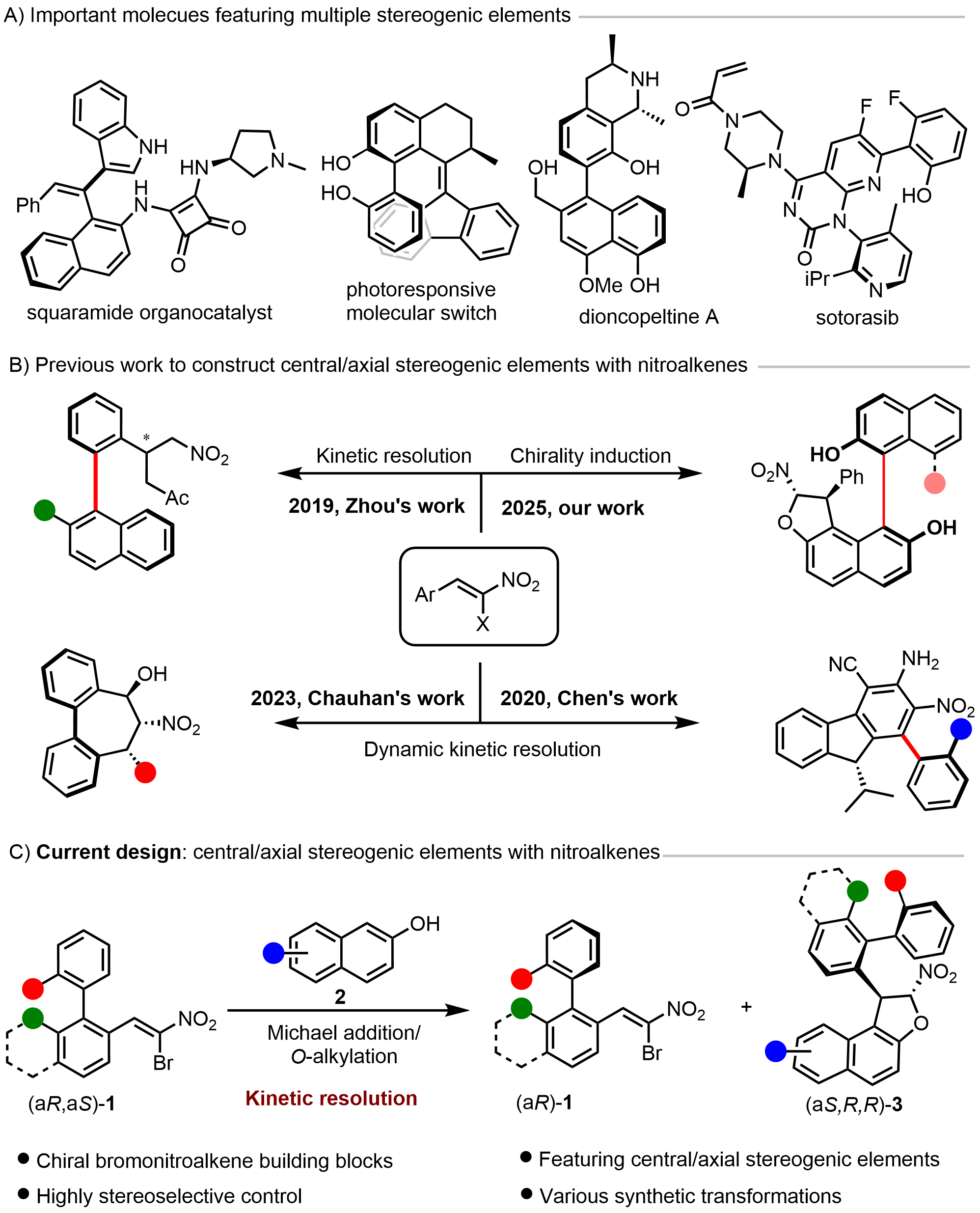
The introduction of multiple stereogenic elements into a molecular framework can significantly modulate biological activity and physical properties, endowing such molecules with unique functions and broad application potential across diverse fields[1]. These structural motifs are widely encountered in natural products[2], such as dioncopeltine A[3], chaetochromin A[4], and TMC-95 D[5,6], which typically combine one stereogenic C-C bond with multiple stereocentres. In the pharmaceutical arena, Sotorasib is the first FDA-approved drug featuring a configurationally stable C-N atropisomer, with its two atropodiastereomers displaying a ten-fold difference in potency against non-small cell lung cancer (Scheme 1a)[7]. Beyond natural products and drugs, molecules bearing multiple stereogenic elements have also found important applications in enantioselective catalysis[8-10] and functional materials[11,12]. For a long time, access to these structurally complex molecules has relied predominantly on resolution of racemates or diastereoselective synthesis from a chiral pool[1,13-16], whereas direct enantioselective construction remains a formidable challenge[17-19]. To address this, several catalytic strategies have been developed, including kinetic resolution[20,21], dynamic kinetic resolution[22-26], desymmetrization[27,28], and simultaneous installation of multiple stereogenic elements[29-32]. Among these, kinetic resolution is particularly attractive as it delivers both enantioenriched starting materials and target products in a single operation, making it one of the most practical methods for the preparation of non-racemic chiral compounds[33-36].
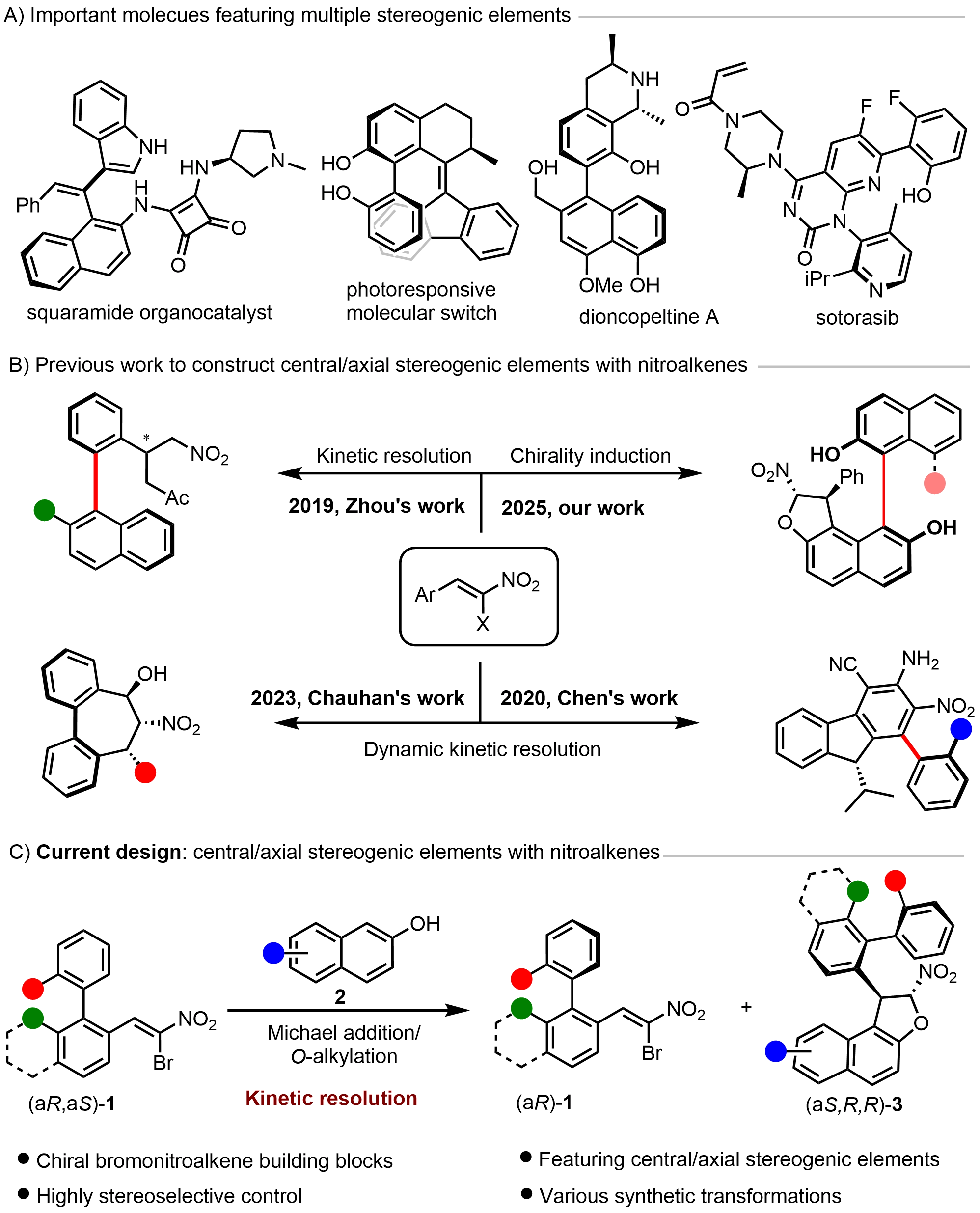
Scheme 1. The importance of multiple stereogenic elements and current design.
Owing to the strong electron-withdrawing nature of the nitro group, nitroalkenes are versatile building blocks that participate in a wide range of transformations, including cycloadditions and Michael additions, and their nitroalkane adducts can serve as versatile nucleophiles[37-39]. Consequently, nitroalkenes have found important applications in the synthesis of chiral natural products and bioactive molecules[40-42]. In 2019, Zhou and co-workers reported the kinetic resolution of axially chiral nitroalkenes in a Michael addition process, affording atropisomers bearing central chirality, albeit with moderate selectivity (Scheme 1b)[43]. Subsequently, exploiting dynamic kinetic resolution strategies, the groups of Chen[44] and Chauhan[45] independently developed (4 + 2) cyclization and domino 1,4/1,2-addition sequence reactions, respectively, for the construction of atropisomers incorporating additional stereocenters. More recently, our group has exploited the distinctive reactivity of halogenated nitroalkenes to construct dihydrofurans bearing multiple stereogenic elements using both chirality induction and DKR strategies[46,47].
Despite the demonstrated value of halogenated nitroalkenes in synthetic chemistry for the construction of various ring systems[48,49], no atropisomers incorporating such a structural motif have been reported to date. Herein, we designed a novel racemic atropisomer 1 containing a synthetically versatile bromonitroalkene unit. We applied a kinetic resolution strategy to the Michael addition/O-alkylation domino reaction of 1 with 2-naphthol derivative 2, an approach that efficiently constructs stereocenter-containing atropisomers 3, while simultaneously recovering the enantioenriched axially chiral bromonitroalkene building block 1. Importantly, adduct 3 can be further elaborated into atropisomers featuring 1,2-diaxes[50], and the recovered nitroalkene 1 can serve as a versatile platform for the synthesis of heterocycle-containing atropisomers[49,50]. This strategy offers an efficient and modular route for the design and synthesis of complex, drug-like or functional molecules bearing multiple stereogenic elements.
2. Methods
Unless otherwise noted, materials were purchased from commercial suppliers and used without further purification. Column chromatography was performed on silica gel (100 ~ 200 mesh). Enantiomeric excesses (ee) were determined by HPLC using corresponding commercial chiral columns as stated at 30 °C with a UV detector at 254 nm. All 1H NMR and 19F NMR spectra were recorded on a Bruker AvanceII 500 MHz and Bruker Avance III 376 MHz respectively, 13C NMR spectra were recorded on a Bruker AvanceII Bruker Avance III 126 MHz with chemical shifts reported as ppm (in DMSO-d6 or CDCl3, TMS as internal standard). HRMS (ESI) was obtained with a HRMS/MS instrument (LTQ Orbitrap XL TM).
2.1 Procedure for the synthesis of products 3
A solution of naphthol 2 (0.15 mmol, 0.75 equiv.), C2 (0.01 mmol, 5 mol%) and potassium bicarbonate (0.2 mmol, 1.0 equiv.) in dichloromethane (DCM, 4 mL) was stirred at -20 °C for 5 minutes. Then, the corresponding α-bromonitroalkenes 1 (0.2 mmol, 1.0 equiv.) was added and the reaction mixture was stirred at the same temperature. After the reaction was complete as indicated by TLC analysis, the crude product was quenched with hydrochloric acid (1 M, 5 mL) and the mixture was extracted with dichloromethane (2 × 5 mL). The combined organic extracts were dried with anhydrous Na2SO4 and concentrated in vacuo. The residue was purified by column chromatography to afford the products.
3. Results and Discussion
To validate our hypothesis, the reaction between ortho-methoxy substituted bromonitroalkene 1a and 2-naphthol 2a was selected as the model (Table 1). In the presence of the cyclohexanediamine derived squaramide catalyst C1 in dichloromethane at 0 °C, the Michael addition/O-alkylation afforded product 3aa and recovered nitroalkene 1a in 37% and 45% yield, with 72% ee and 36% ee, respectively (entry 1). Switching the chiral scaffold to a quinine-derived catalyst (C2) significantly improved the stereoselectivity, with both 3aa and recovered 1a reaching 90% ee, demonstrating the superiority of the quinine skeleton in this transformation (entry 2). Further evaluation of quinine-derived thiourea (C3) and urea (C4) bifunctional catalysts led to a marked decrease in both yield and enantioselectivity, although the dr of 3aa was slightly improved (entries 3-4). Extending the carbon chain of the squaramide moiety (C5) or removing the electron-withdrawing trifluoromethyl group (C6) both eroded the stereochemical control of the reaction (entries 5-6). Catalyst C2 was therefore identified as optimal, and a screen of base additives was subsequently conducted (entries 7-12). Strong inorganic base K2CO3 caused a sharp drop in the enantiopurity of product 3aa to 20% ee, whereas weak inorganic base (KF, K2HPO4∙3H2O, NaHCO3) had little effect on enantioselectivity. Although organic bases may compete with the catalyst and erode the enantioselectivity, the addition of DABCO improved the yield of 3aa (entry 12). DABCO was therefore introduced as a co-catalyst: with 20 mol% loading, the yield increased significantly while the ee of 3aa increased to 96%, and the ee of recovered 1a decreased only marginally to 86% (entry 13). Fine-tuning of temperature and concentration revealed that the best results were obtained at -20 °C and 0.05 M (entry 17), delivering 3aa and recovered 1a in 47% and 45% yield, with 97% ee and 94% ee, respectively. In addition, the rotational barriers of 1a and 3aa were determined experimentally to be 118.2 and 121.8 kJ/mol, respectively. These values indicate that both compounds are configurationally stable at room temperature, and the slightly higher barrier for 3aa suggests that the sp2-to-sp3 hybridization change at the β-carbon of the nitro group increases steric hindrance, thereby further stabilizing the chiral axis.
Table 1. Reaction optimization.
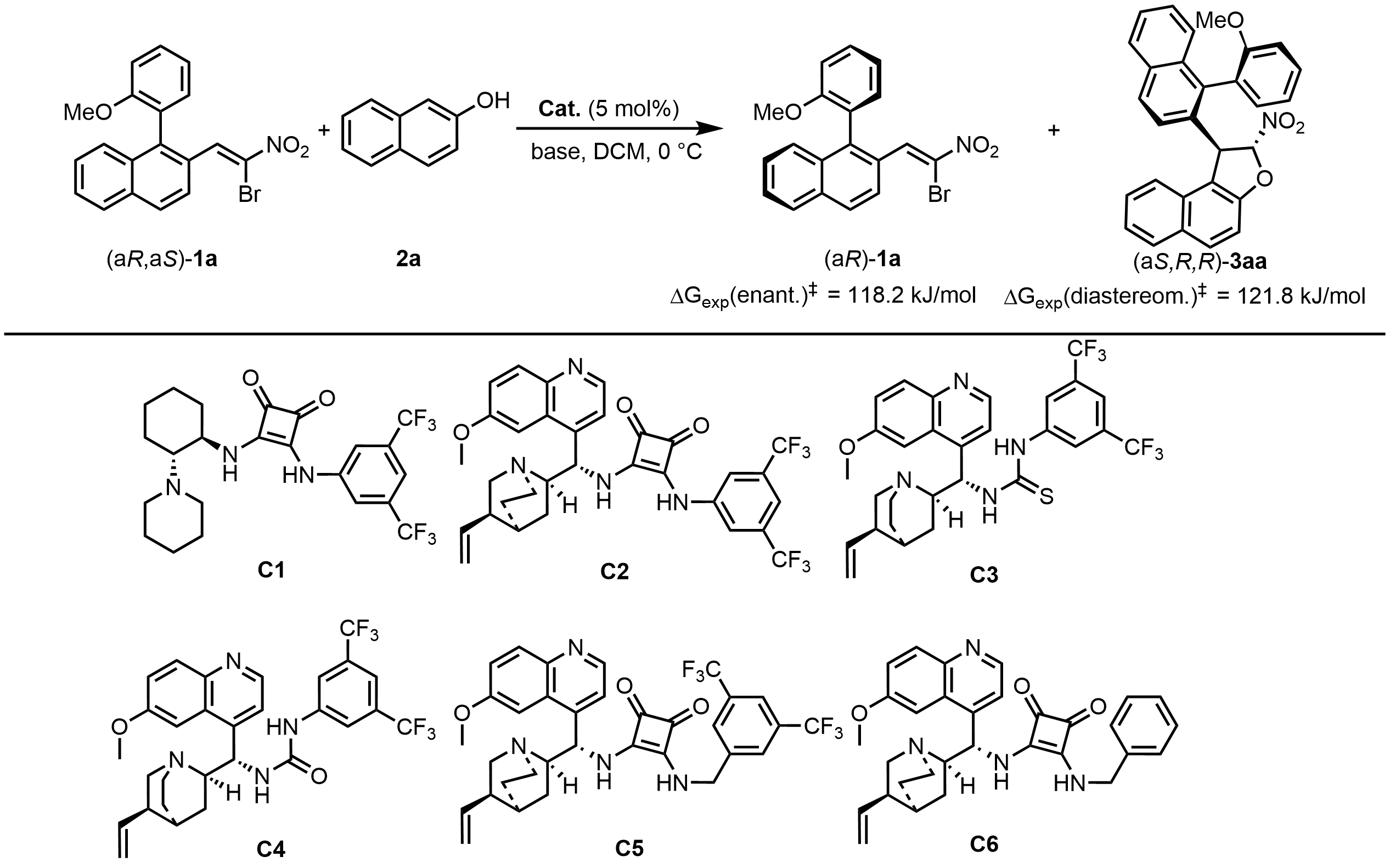
| entrya | cat. | solvent | base | yield of 1a (%)b | ee of 1a (%)c | yield of 3aa (%)b | dr of 3aa (%) | ee of major isomer of 3aa (%)c |
| 1 | C1 | DCM | KHCO3 | 45 | 36 | 37 | 4:1 | 72 |
| 2 | C2 | DCM | KHCO3 | 38 | 90 | 39 | 10:1 | 90 |
| 3 | C3 | DCM | KHCO3 | 35 | 18 | 42 | 14:1 | 38 |
| 4 | C4 | DCM | KHCO3 | 34 | 46 | 43 | 14:1 | 46 |
| 5 | C5 | DCM | KHCO3 | 37 | 86 | 40 | 6:1 | 82 |
| 6 | C6 | DCM | KHCO3 | 40 | 84 | 43 | 6:1 | 82 |
| 7 | C2 | DCM | KF | 35 | 88 | 35 | 6:1 | 86 |
| 8 | C2 | DCM | K2HPO4∙3H2O | 35 | 90 | 34 | 6:1 | 88 |
| 9 | C2 | DCM | K2CO3 | 41 | 70 | 45 | > 20:1 | 20 |
| 10 | C2 | DCM | NaHCO3 | 32 | 90 | 36 | 10:1 | 90 |
| 11 | C2 | DCM | TEA | 33 | 82 | 51 | 6:1 | 36 |
| 12 | C2 | DCM | DABCO | 45 | 74 | 46 | 14:1 | 70 |
| 13d | C2 | DCM | KHCO3 | 44 | 86 | 49 | 10:1 | 96 |
| 14d,e | C2 | DCM | KHCO3 | 45 | 90 | 45 | 10:1 | 98 |
| 15d,f | C2 | DCM | KHCO3 | 46 | 92 | 46 | 10:1 | 96 |
| 16d,g | C2 | DCM | KHCO3 | 42 | 93 | 46 | 10:1 | 97 |
| 17d,g,h | C2 | DCM | KHCO3 | 45 | 94 | 47 | 10:1 | 97 |
a: The reaction was carried out with rac-1a (0.1 mmol), 2a (0.075 mmol), Cat. (0.005 mmol) in DCM (1 mL) at 0 °C; b: All yields are reported as isolated yields, and those for 3aa represent the combined isolated yields of the diastereoisomers; c: The ee values were determined by HPLC analysis on chiral stationary phase; d: 20 mol% DABCO was added; e: -10 °C; f: -20 °C; g: -30 °C; h: 2 mL of DCM were used. ee: enantiomeric excess; DCM: dichloromethane.
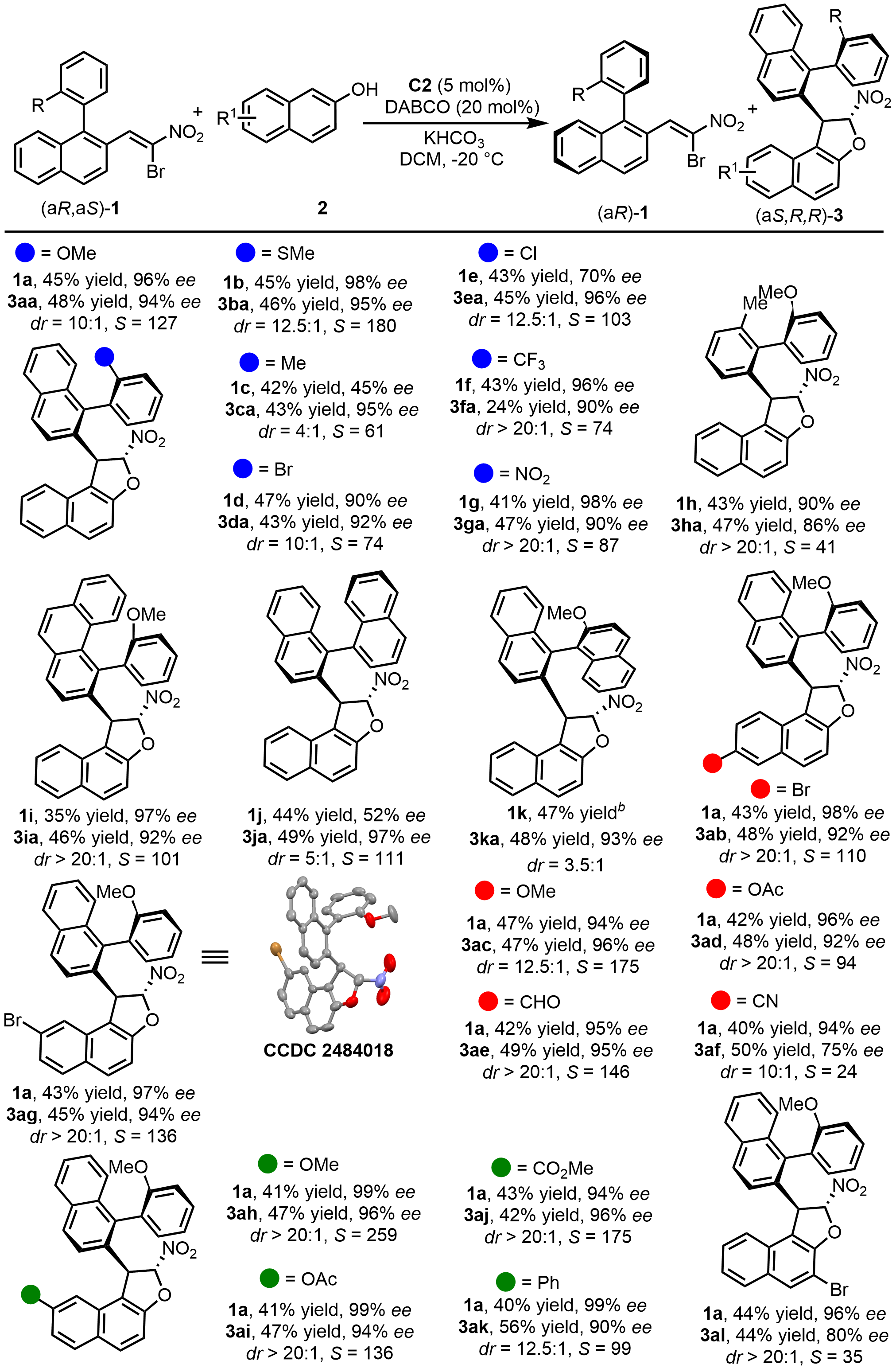
With the optimal conditions established, the substrate scope was investigated (Scheme 2). A series of substituted bromonitroalkenes 1 were first examined. Replacing the ortho-methoxy with a thiomethyl substituent (3ba) maintained the resolution efficiency, while increasing the selectivity factor (S). Introduction of a methyl group led to a significant drop in the ee of recovered 1c (45%), and although the enantioselectivity of cyclized product 3ca was unaffected, the dr fell to 4:1. When the ortho substituent was changed to bromine or chlorine, the ee of the recovered nitroalkenes (1d and 1e) decreased with diminishing steric bulk, yet the cyclized products 3da and 3ea were still obtained with high enantioselectivity. Replacing electron-donating substituents with electron-withdrawing groups (CF3, NO2) also afforded good results. The reduced yield observed for trifluoromethyl-substituted product 3fa was attributed to inefficient O-alkylation. The reaction also tolerated variation of the fused aromatic ring directly attached to the nitroalkenes, regardless of whether the ring system was contracted or extended (3ha and 3ia). Moreover, replacing the methoxyphenyl moiety with a 1-naphthyl (3ja) or 2-methoxynaphthyl group (3ka) diminished the ability of the catalyst to differentiate between the two atropisomers, resulting in only moderate diastereoselectivity for these products.
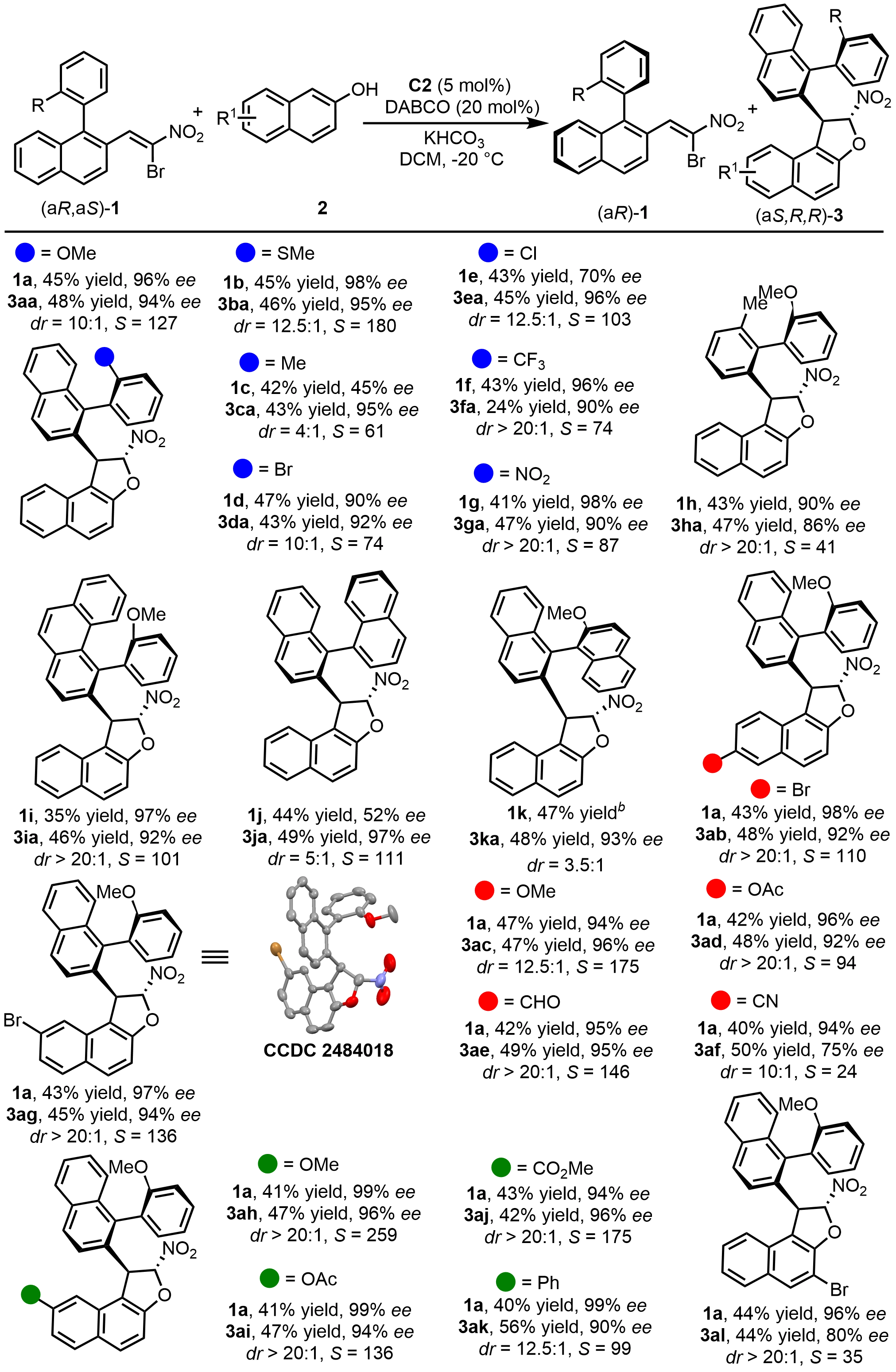
Scheme 2. Substrate scopea. aReactions were performed on a 0.2 mmol scale. All yields are isolated yields, accounting for the combined yield of diastereoisomers where applicable; bThe racemic form of 1k could not be resolved by chiral HPLC under the conditions examined.
The scope of 2-naphthol derivatives was then explored. Introduction of substituents with varying electronic properties at the 6- or 7-position of 2-naphthol (3ab-3ak) was well tolerated, maintaining both yield and enantioselectivity across the series. Notably, the 7-methoxy-substitued naphthol derivative 3ah exhibited the highest selectivity factor (S = 259). When a phenyl group was introduced at the 7-position, the dr value of product 3ak decreased, presumably due to steric interference between the phenyl substituent and the catalyst binding pocket, which attenuates the discrimination between both atropisomers of the nitroalkene substrate. Furthermore, substitution of the 3-position of 2 with bromine led to a decrease in the enantioselectivity of the cyclized product to 80% ee, while the ee value of recovered nitroalkene 1a remained high. The absolute configuration of product 3ag was unambiguously determined to be (aS,R,R) by single-crystal X-ray diffraction analysis. The configurations of the remaining products and the recovered starting material 1 were assigned by analogy[51].
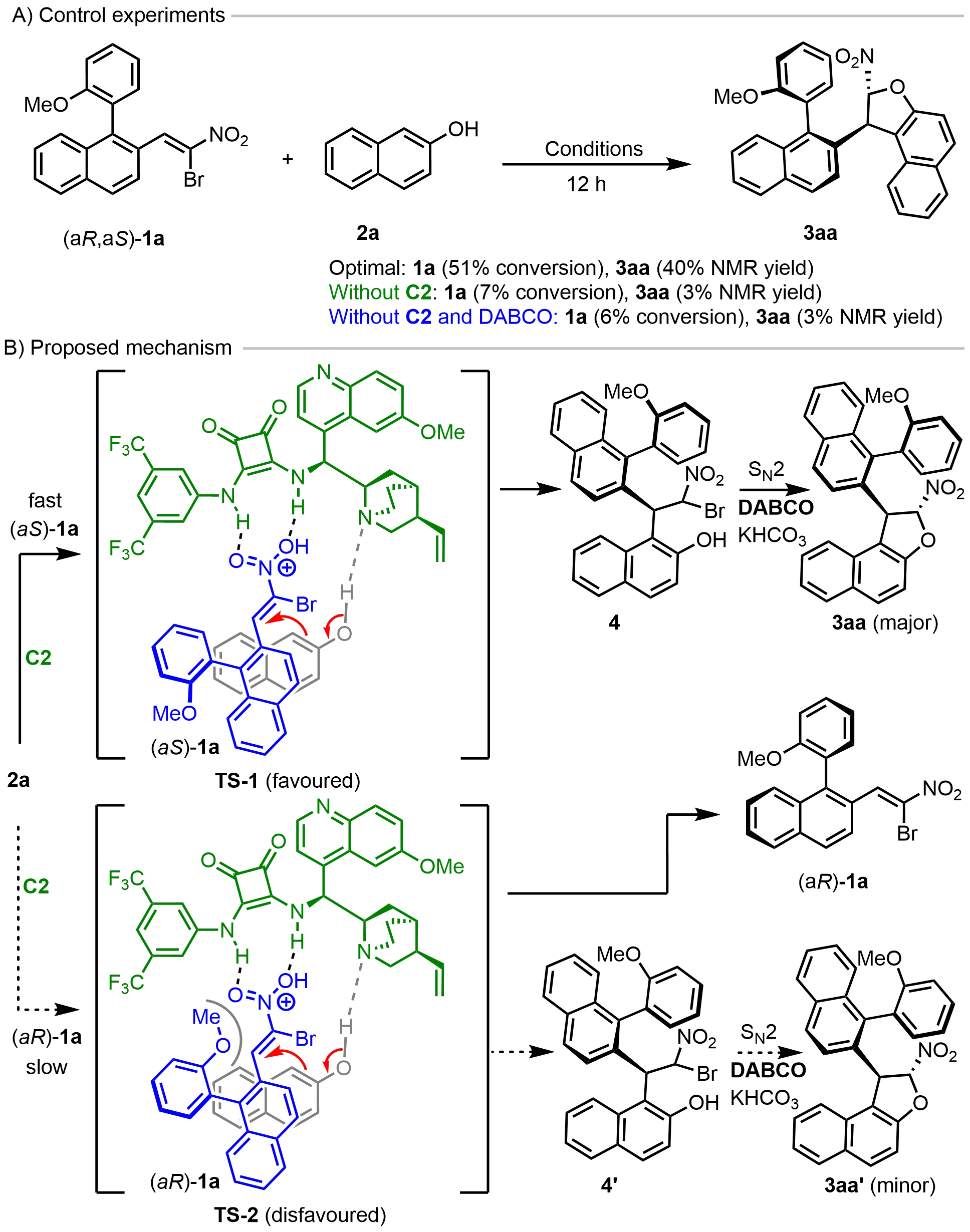
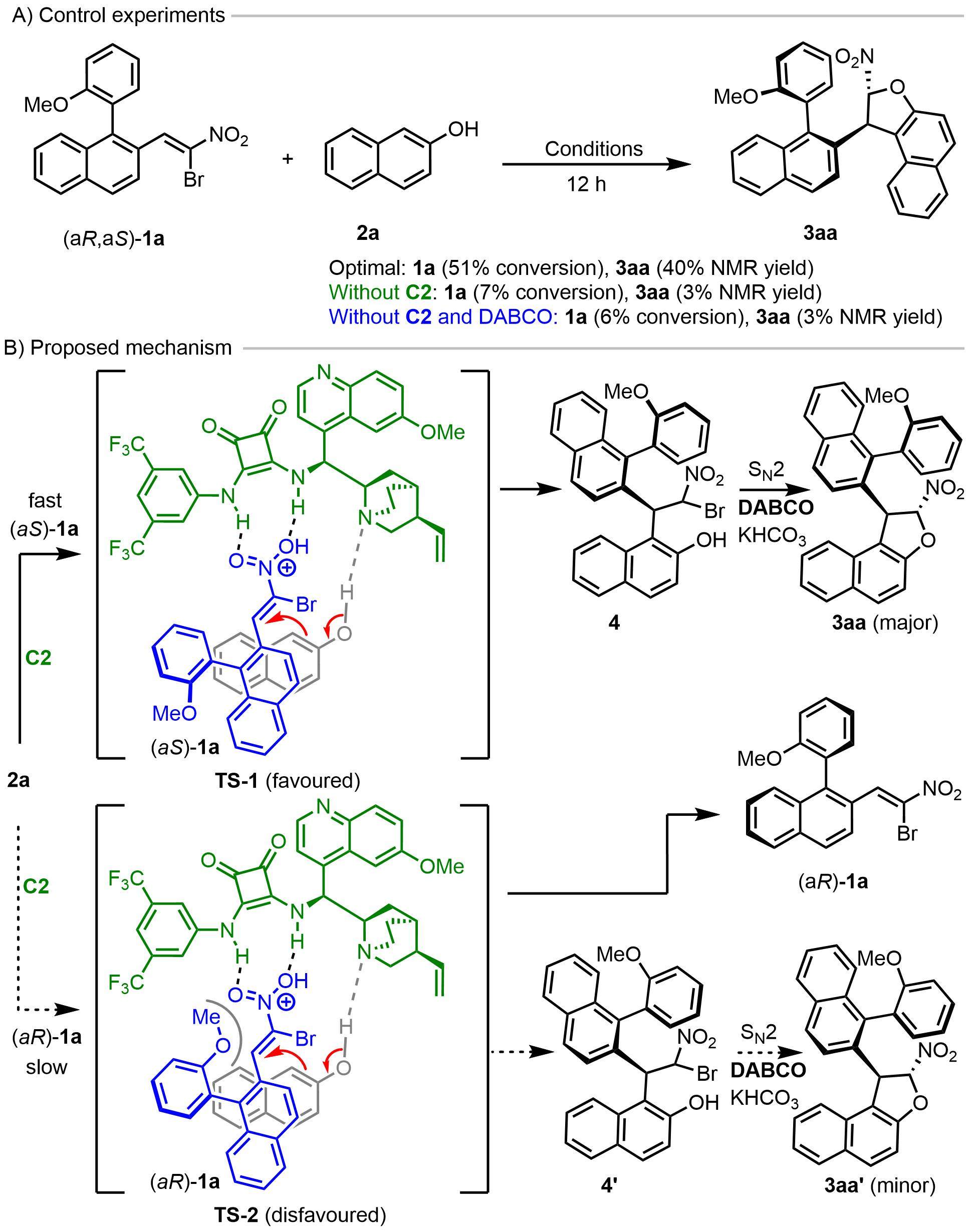
To probe the reaction mechanism, a series of control experiments was conducted (Scheme 3a). Under otherwise identical reaction conditions, the reaction proceeded sluggishly in the absence of catalyst C2, affording only 3% of product 3aa along with 7% conversion of starting material 1a. Furthermore, when both C2 and DABCO were removed, the outcome remained essentially unchanged compared to the condition lacking only C2. Combined with the observation that DABCO improved the yield of 3aa during the condition screening, these results suggest that DABCO is incapable of initiating the initial Michael addition step, but can serve as a base to facilitate the subsequent O-alkylation process. Collectively, these findings underscore the essential role of C2 as a bifunctional catalyst. Its squaramide moiety acts as a hydrogen-bond donor, and the catalyst as a whole is crucial for the efficient initiation of the Michael addition. Based on the absolute configuration of product 3, a plausible reaction mechanism is proposed in Scheme 3b. In the transition state TS-1, which involves (aS)-1a, the nitroalkene moiety is activated through hydrogen bonding by the squaramide unit of catalyst C2, while the tertiary amine of C2 simultaneously engages the hydroxyl group of naphthol 2a. Within this well-defined hydrogen-bonding network, 2a undergoes Michael addition onto the Si face of the nitroalkene (aS)-1a to afford the addition intermediate 4. In contrast, in transition state TS-2 involving (aR)-1a, significant steric repulsion arises between naphthol 2a and the ortho-methoxy group of the nitroalkene, resulting in a considerably lower reaction rate. This differential reactivity accounts for the preferential recovery of the (aR)-configured nitroalkene during the kinetic resolution process. The subsequent base-promoted O-alkylation then delivers the trans-dihydrobenzofuran products 3aa and 3aa'. Consistent with the control experiments, DABCO lacks a hydrogen-bond donor and therefore cannot replace C2 in the Michael addition step, yet it can accelerate the O-alkylation step, thereby improving the overall yield without affecting the enantioselectivity.
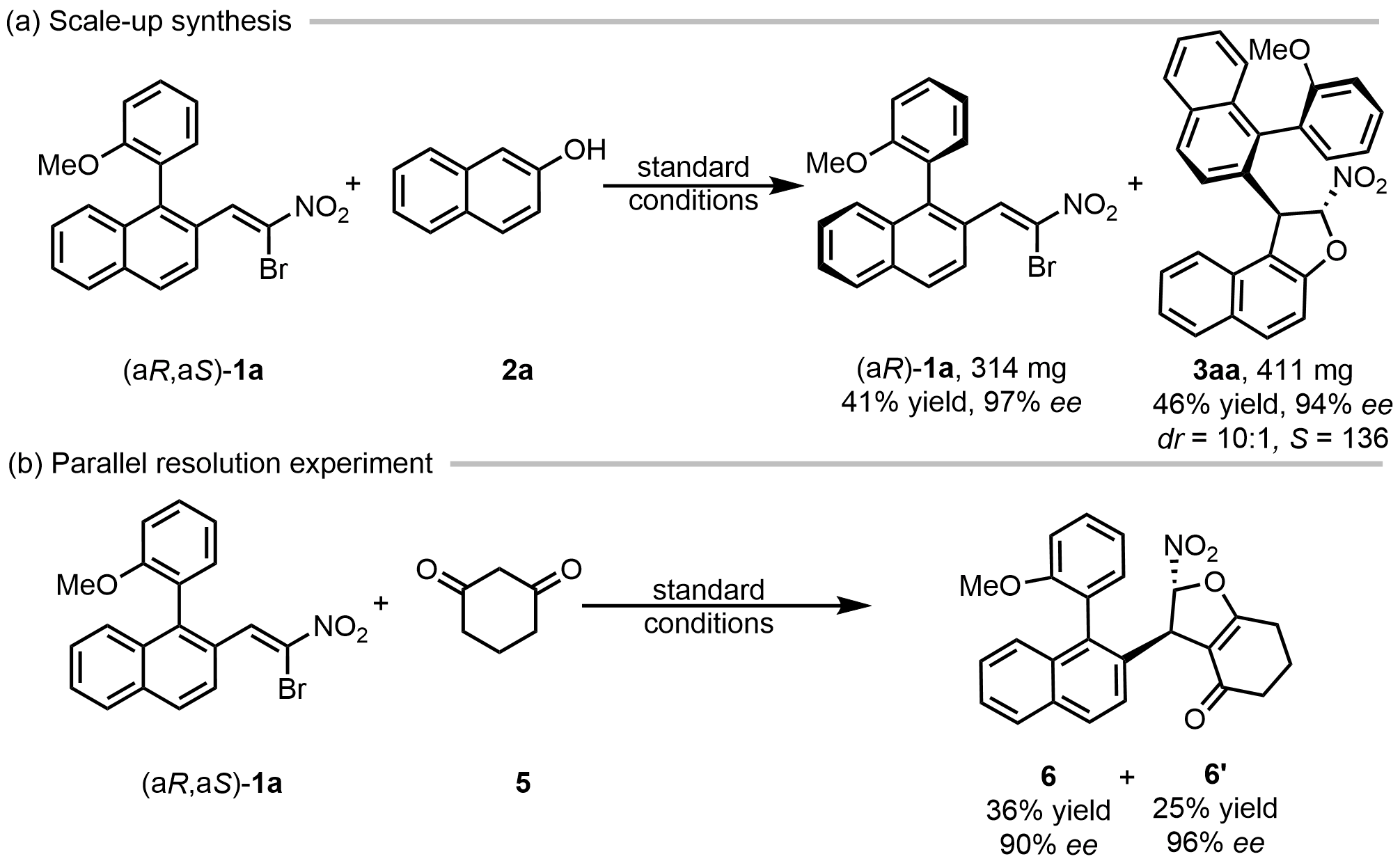
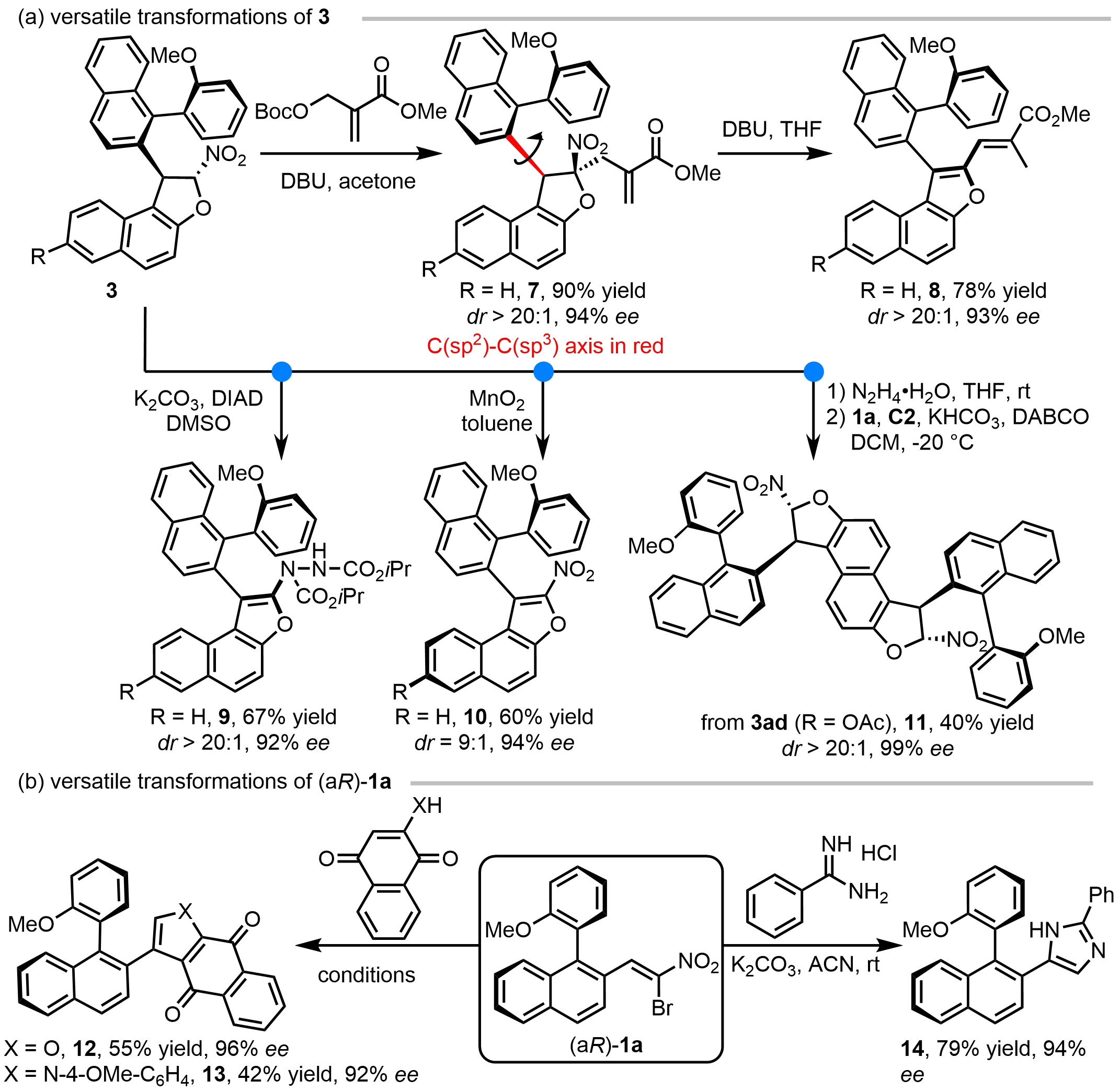
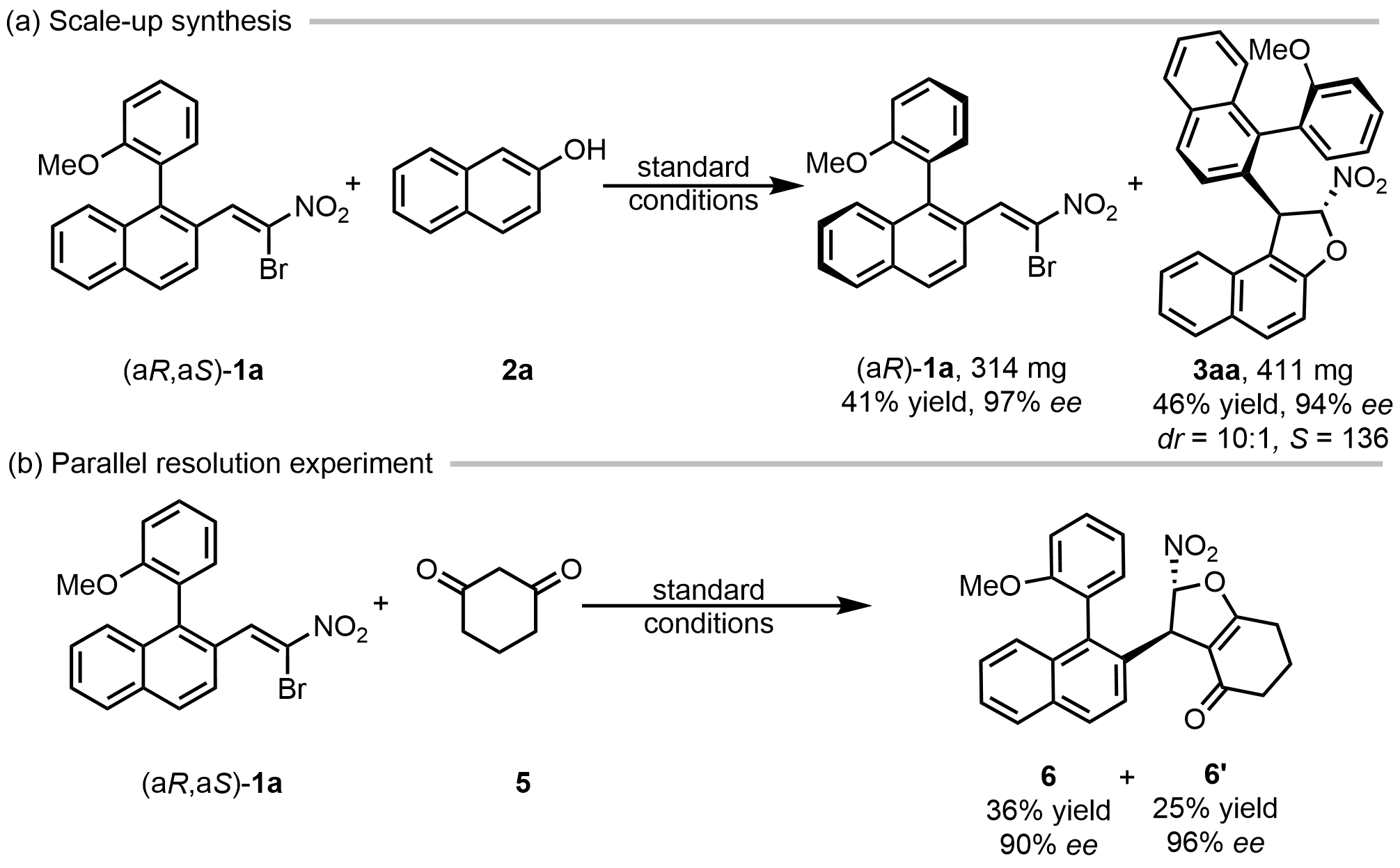
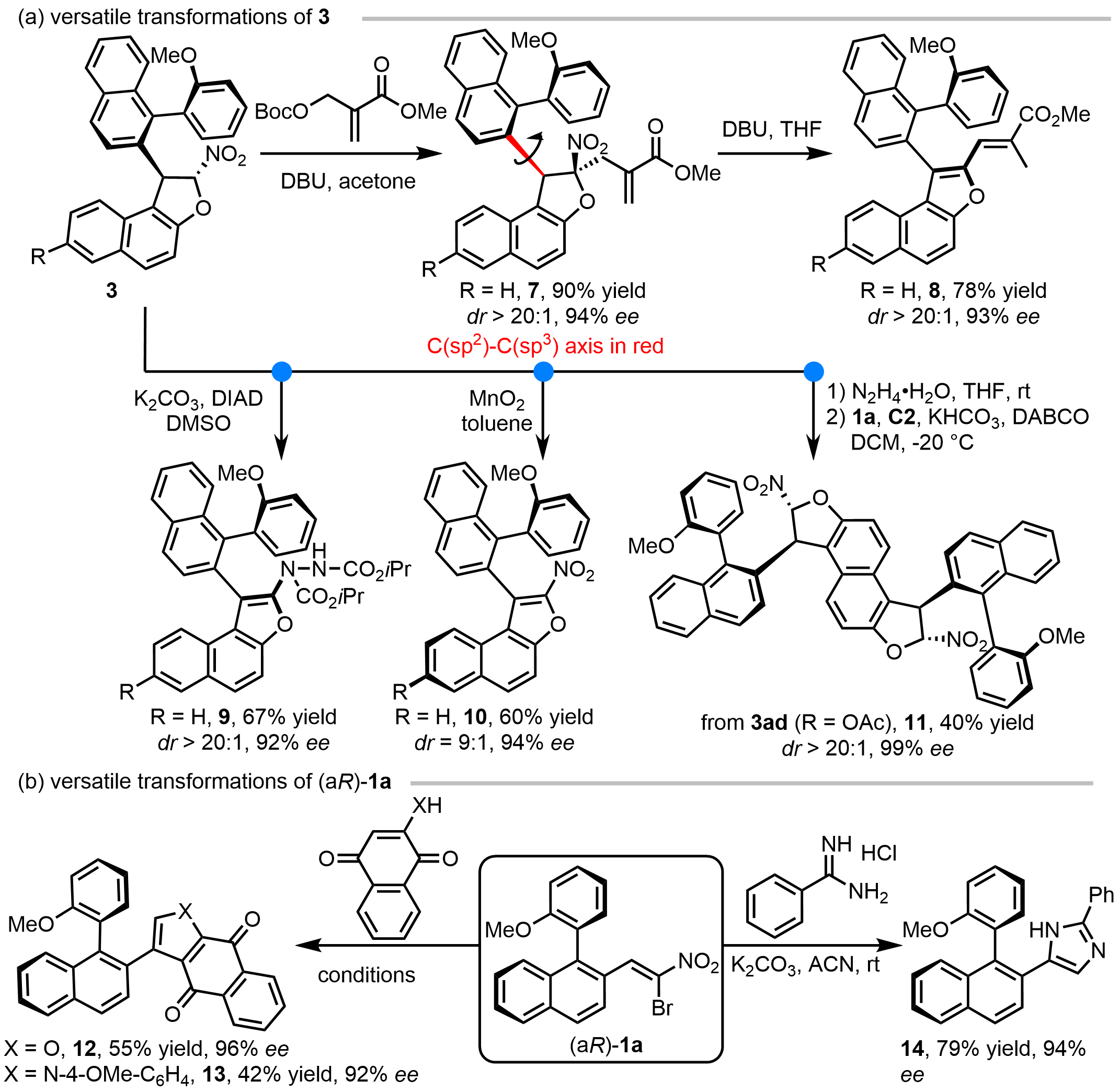
To further demonstrate the synthetic applicability of this method, gram-scale synthesis and downstream derivatizations were carried out. At mmol scale, cyclized product 3aa and resolved nitroalkene (aR)-1a were both obtained with high efficiency and without erosion of the stereoselectivity (Scheme 4a). When cyclohexane 1,3-dione was used in place of 2-naphthol, under the optimal conditions, only parallel resolution was achieved instead, affording separable cyclized products 6 and 6’ in 36% and 25% yield, respectively, with excellent enantioselectivity (Scheme 4b)[52,53]. Using a Morita-Baylis-Hillman (MBH) ester as the electrophile, a C(sp2)-C(sp3) atropisomer 7 was successfully constructed via central-to-axial chirality induction in excellent yield and with high stereoselectivity (Scheme 5a)[54]. To the best of our knowledge, this represents the first example of an atropisomer bearing both a C(sp2)-C(sp3) and C(sp2)-C(sp2) axis. Treatment of 7 with an excess of DBU triggered a 1,2-elimination to deliver the 1,2-diaxially chiral product 8. Pursuing the central-to-axial chirality transfer strategy further[55,56], bis-axially chiral furans bearing either an amino (9) or a nitro group (10)[57] at the 2-position of the furan ring were obtained in moderate yields with excellent enantioselectivities. In addition, C2-symmetric bis axially chiral furan 11 was accessed through the second Michael addition/O-alkylation domino reactions from 3ad, after the release of 6-OH group with Hydrazine Hydrate[58]. The resolved nitroalkene (aR)-1a also proves to be an excellent synthetic building block. As illustrated, (aR)-1a can engage a variety of reaction partners via (3 + 2) cycloaddition processes to construct heterocyclic atropisomers 12-14 featuring imidazole, furan, and pyrrole frameworks, respectively. Taken together, these transformations convincingly demonstrate the broad synthetic utility and application potential of the present method.
4. Conclusion
In conclusion, the first kinetic resolution of racemic atropisomeric bromonitroalkenes has been developed through a cascade Michael addition/O-alkylation with 2-naphthols. The resulting chiral dihydrobenzofuran atropisomers and recovered (aR)-bromonitroalkenes were obtained with excellent enantioselectivities and very good yields. The reaction accommodates a broad range of electronic and steric substituents on both the nitroalkene and the naphthol components, as well as variation of the fused aromatic ring system. The synthetic utility of this approach is further highlighted by the construction of diverse bis-axially chiral furans via central-to-axial chirality induction, and by the annulation of the recovered bromonitroalkene building block to deliver a variety of axially chiral heterocycles. Collectively, this methodology offers an efficient and modular strategy for accessing structurally complex molecules bearing multiple stereogenic elements, with significant potential for applications in medicinal chemistry and enantioselective catalysis.
Supplementary materials
The supplementary material for this article is available at: Supplementary materials.
Authors contribution
Bao X, Bonne D, Wang H: Conceptualization, methodology, project administration, supervision, writing-review & editing.
Bai G, Liu R, Chen H: Investigation, formal analysis, writing-review & editing.
All authors discussed and participated in the preparation of the final manuscript.
Conflicts of interest
The authors declare no conflicts of interest.
Ethical approval
Not applicable.
Consent to participate
Not applicable.
Consent for publication
Not applicable.
Availability of data and materials
Crystallographic data for the structures reported in this article have been deposited at the Cambridge Crystallographic Data Centre, under deposition numbers CCDC 2484018 (3ag).
Funding
This work was supported by the National Key Research and Development Program of China (Grant No. 2023YFA1506403), the international (regional) cooperation and exchange program jointly initiated by the National Natural Science Foundation of China (Grant No. W2412100), and the Fundamental Research Funds for the Provincial Universities of Zhejiang (Grant No. RF-A2024014).
Copyright
© The Author(s) 2026.
References
-
3. Bringmann G, Rübenacker M, Vogt P, Busse H, Assi LA, Peters K, et al. Dioncopeltine a and dioncolactone A: Alkaloids from triphyophyllum peltatum. Phytochemistry. 1991;30(5):1691-1696.[DOI]
-
11. Hasegawa M, Nojima Y, Nagata Y, Usui K, Sugiura KI, Mazaki Y. Synthesis and chiroptical properties of binaphthyl-hinged [5]helicenes. Eur J Org Chem. 2023;26(36):e202300656.[DOI]
-
13. Mondal A, Thiel NO, Dorel R, Feringa BL. P-chirogenic phosphorus compounds by stereoselective Pd-catalysed arylation of phosphoramidites. Nat Catal. 2022;5(1):10-19.[DOI]
-
14. Yang B, Tan X, Ge Y, Li Y, He C. Stereodivergent asymmetric synthesis of P-atropisomeric Si-stereogenic monohydrosilanes. Org Chem Front. 2023;10(19):4862-4870.[DOI]
-
21. Zhang J, Song M, Tang W, Xue D, Xiao J, Sun H, et al. Transforming racemic compounds into two new enantioenriched chiral products via intermediate kinetic resolution. ACS Catal. 2023;13(23):15603-15610.[DOI]
-
23. Shi M, Yao Y, Fan X, Zhang X, Chen X, Liu Y, et al. Highly stereoselective synthesis of α-substituted β-hydroxy sulfones via ketoreductase-catalyzed dynamic reductive kinetic resolution. ACS Catal. 2025;15(21):18847-18856.[DOI]
-
25. Wang D, Zong J, Wang B, Sun L, Xiao X, Piao H, et al. Asymmetric synthesis of allylic sulfonamides with axially and central chirality via palladium-catalyzed of atroposelective N-allylic alkylation. Green Synth Catal. 2025;6(2):211-215.[DOI]
-
26. Xiao X, Lu YJ, Tian HY, Zhou HJ, Li JW, Yao YP, et al. Organocatalytic atroposelective N-alkylation: Divergent synthesis of axially chiral sulfonamides and biaryl amino phenols. Org Chem Front. 2022;9(10):2830-2839.[DOI]
-
30. Zhang M, Niu T, Liang M, Xu F, Du Y, Zhuang H, et al. Consecutive asymmetric transfer hydrogenation of C2-acylated quinolines and quinoxalines: A diastereodivergent synthesis of enantioenriched tetrahydroquinolines and tetrahydroquinoxalines bearing Endo- and Exo cyclic chirality. J Am Chem Soc. 2025;147(21):18197-18207.
-
37. Lu YJ, Ning LF, Leng Y, Hu ZH, Chen CH, Su GF, et al. Synthesis of angularly fused tricyclic isoxazolines through cycloaddition of N-cyclopentenyl nitrones with nitroalkenes. Chin Chem Lett. 2026;37(11):112370.[DOI]
-
38. Yan L, Xu H, Wang Y, Dong J, Wang Y. Advances in multicomponent asymmetric cascade synthesis involving nitroolefin catalyzed by diarylprolinol derivatives. Chin J Org Chem. 2020;40(2):284. Chinese.[DOI]
-
39. Kumar M, Mritunjay , Kumar S, Gupta A, Sharma S, Singh P, et al. Advances in the chemical transformations involving nitroalkenes embedded in heterocyclic framework. Asian J Org Chem. 2025;14(6):e202500140.[DOI]
-
42. Denmark SE, Martinborough EA. Enantioselective total syntheses of (+)-castanospermine, (+)-6-epicastanospermine, (+)-australine, and (+)-3-epiaustraline. J Am Chem Soc. 1999;121(13):3046-3056.[DOI]
-
43. Cui L, Wang Y, Fan Z, Li Z, Zhou Z. Kinetic resolution of axially chiral 2-nitrovinyl biaryls catalyzed by a bifunctional thiophosphinamide. Adv Synth Catal. 2019;361(15):3575-3581.[DOI]
-
51. Cambridge Crystallographic Data Centre. CCDC 2484018 [Internet]. Cambridge (UK): Cambridge Crystallographic Data Centre. Available from: https://www.ccdc.cam.ac.uk/structures/
-
52. Vedejs E, Chen X. Parallel kinetic resolution. J Am Chem Soc. 1997;119(10):2584-2585.[DOI]
-
53. Liu Q, Jin Z. Recent advances in parallel kinetic resolution with organocatalysis. Green Synth Catal. 2026.[DOI]
-
55. Min XL, Zhang XL, Shen R, Zhang Q, He Y. Recent advances in the catalytic asymmetric construction of atropisomers by central-to-axial chirality transfer. Org Chem Front. 2022;9(8):2280-2292.[DOI]
Copyright
© The Author(s) 2027. This is an Open Access article licensed under a Creative Commons Attribution 4.0 International License (https://creativecommons.org/licenses/by/4.0/), which permits unrestricted use, sharing, adaptation, distribution and reproduction in any medium or format, for any purpose, even commercially, as long as you give appropriate credit to the original author(s) and the source, provide a link to the Creative Commons license, and indicate if changes were made.
Publisher’s Note
Science Exploration remains a neutral stance on jurisdictional claims in published
maps
and institutional affiliations. The views expressed in this article are solely those
of
the author(s) and do not reflect the opinions of the Editors or the publisher.
Share And Cite


Science Exploration Style
Bai G, Liu R, Chen H, Wang H, Bonne D, Bao X. Kinetic resolution of bromonitroalkenes atropisomers enabling divergent access to multi-stereogenic molecules. Chiral Chem. 2027;3:202632. https://doi.org/10.70401/cc.2026.0041
Tips
Copy completed.
Submit a Manuscript
Author Instructions
Cite this Article
Article Metrics
0
View
0
Download
Cited
Article Updates

 Get citation
Science Exploration Style

Bai G, Liu R, Chen H, Wang H, Bonne D, Bao X. Kinetic resolution of bromonitroalkenes atropisomers enabling divergent access to multi-stereogenic molecules. Chiral Chem. 2027;3:202632. https://doi.org/10.70401/cc.2026.0041
copy
Share Link
copy