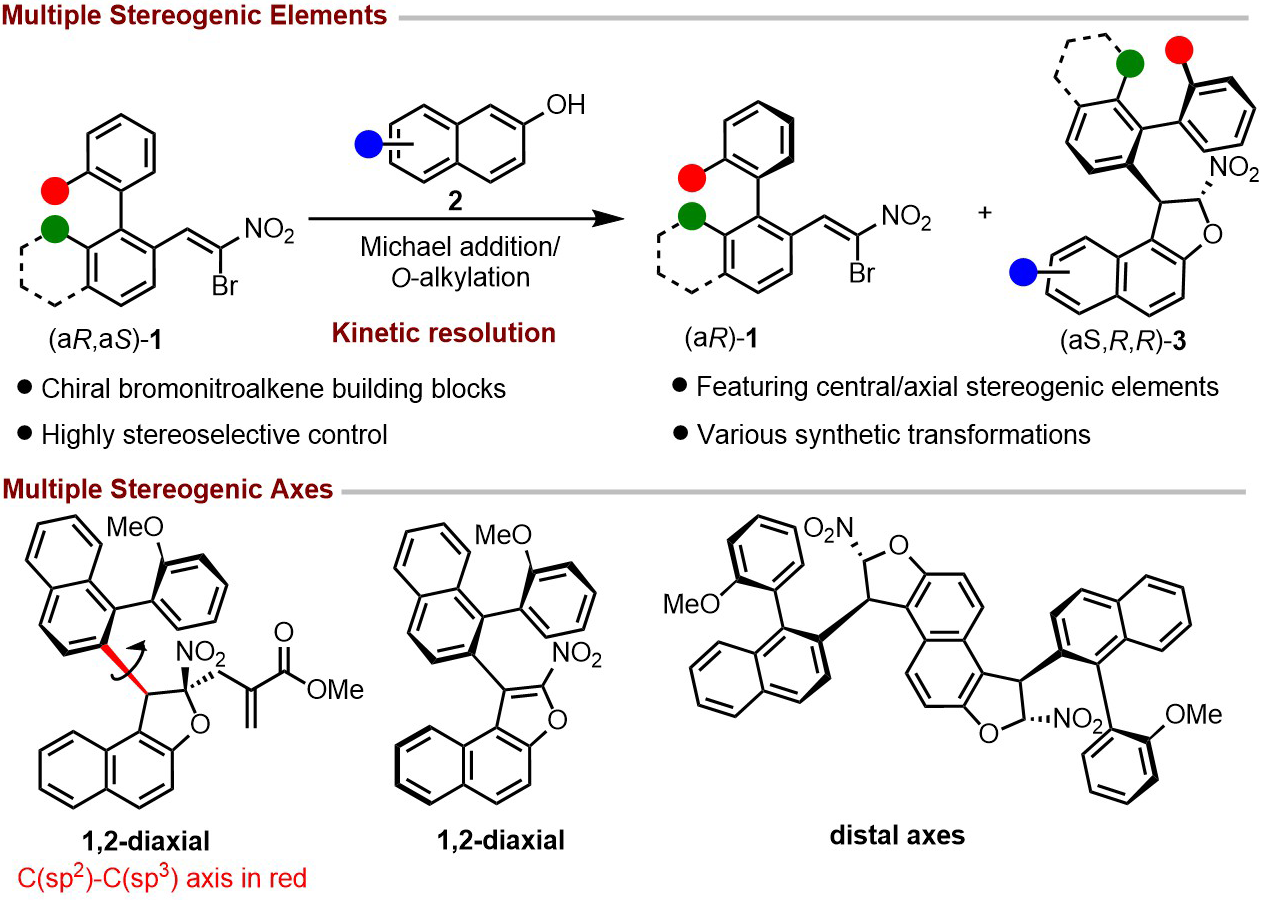
Kinetic resolution of bromonitroalkenes atropisomers enabling divergent access to multi-stereogenic molecules
-
The incorporation of multiple stereogenic elements into a single molecule can profoundly influence its biological and physical properties. However, the direct enantioselective synthesis of atropisomers bearing both axial and central chirality remains ...
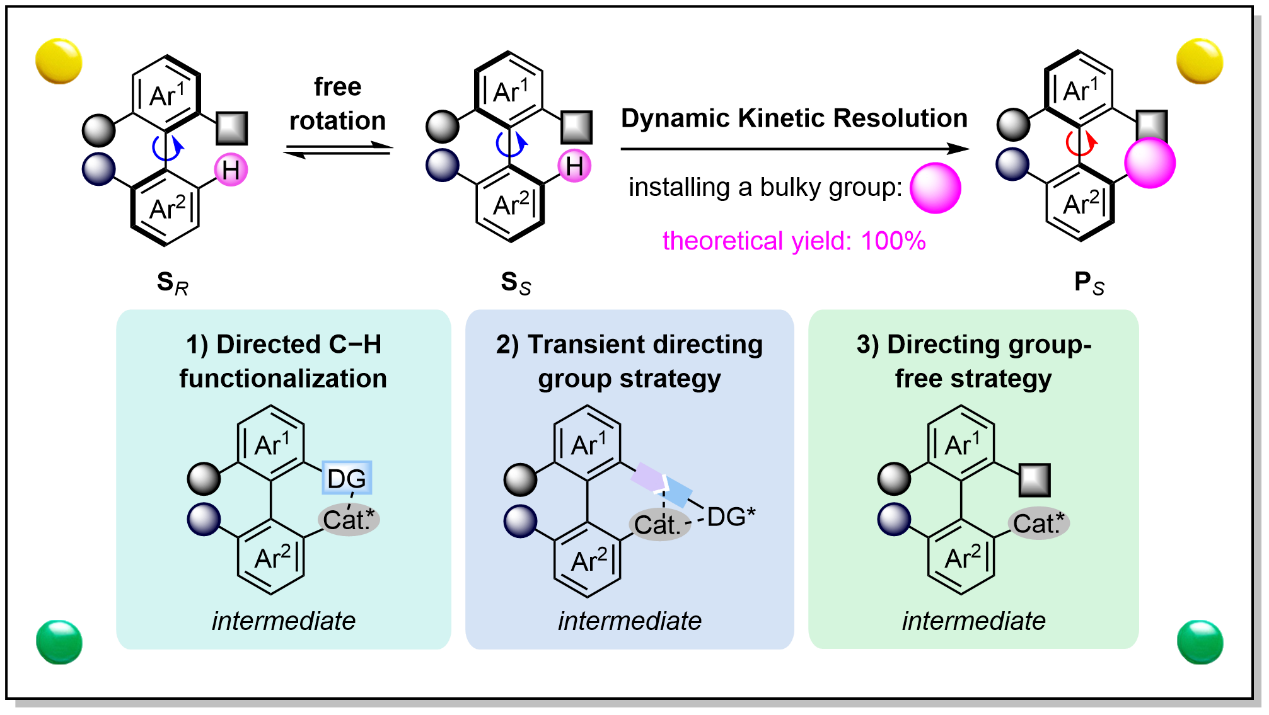
MoreThe incorporation of multiple stereogenic elements into a single molecule can profoundly influence its biological and physical properties. However, the direct enantioselective synthesis of atropisomers bearing both axial and central chirality remains a significant challenge. Herein, we report an efficient kinetic resolution strategy based on a Michael addition/O-alkylation cascade between racemic bromonitroalkenes and 2-naphthols. This methodology enables the simultaneous synthesis of atropisomers featuring multiple stereogenic elements while recovering axially chiral bromonitroalkene building blocks with excellent stereoselectivities (up to 98% ee and > 20:1 dr, with a selectivity factor S up to 259). The reaction accommodates a broad range of electronic and steric substituents on both the nitroalkene and the naphthol components, as well as variation of the fused aromatic ring system. The synthetic utility of the approach was further demonstrated through gram-scale synthesis, parallel resolution, and the transformation of the recovered (aR)-bromonitroalkene into diverse atropisomeric architectures and the construction of various bis-axially chiral atropisomers via central-to-axial chirality transfer. A plausible transition-state model was proposed to rationalize both the stereochemical outcomes and the role of DABCO as a co-catalyst. This work provides a practical and versatile platform for accessing structurally complex molecules with multiple stereogenic elements and expands the synthetic toolbox for constructing chiral molecular architectures.
Less -
Guishun Bai, ... Xiaoze Bao
-
DOI: https://doi.org/10.70401/cc.2026.0041 - September 20, 2026