Recent advances in the synthesis of chiral organosilanes via transition-metal-catalyzed asymmetric reactions of silacyclobutanes

Jusong Yang
1,*

,
Ruiqiang Lu
1
,
Jixiang Li
1
,
Liuzhou Gao
1
,
Yidong Wang
1,2,*
*Correspondence to:
Yidong Wang, School of Chemistry and Materials, Yangzhou University, Yangzhou 225002, Jiangsu, China; Jiangsu Provincial Key Laboratory of Green & Functional Materials and Environmental Chemistry, Yangzhou 225002, Jiangsu, China.
E-mail: wangyd021@yzu.edu.cn
Jusong Yang, School of Chemistry and Materials, Yangzhou University, Yangzhou 225002, Jiangsu, China. E-mail: yangjusong@yzu.edu.cn
Jusong Yang, School of Chemistry and Materials, Yangzhou University, Yangzhou 225002, Jiangsu, China. E-mail: yangjusong@yzu.edu.cn
Chiral Chem. 2027;3:202640. 10.70401/cc.2026.0045
Received: August 21, 2026Accepted: October 22, 2026Published: October 23, 2026
Abstract
Chiral organosilicon compounds are widely applied in frontier fields including synthetic chemistry, materials science, and pharmaceutical research. Thus, the design of green, operationally simple, and chemoselective strategies for the assembly of structurally sophisticated organosilicon frameworks is of paramount significance and continues to attract considerable attention. Silacyclobutanes (SCBs), a class of small-ring compounds with unique structural features, exhibit excellent reactivity due to their inherent ring strain. During the past decade, the transition-metal-catalyzed (Rh, Pd, Ni) regio- and enantioselective C-Si bond cleavage of silacyclobutanes has emerged as a powerful and complementary synthetic tool for accessing structurally diverse, functionalized chiral organosilanes. This review systematically surveys recent advances in transition-metal-catalyzed asymmetric cleavage of C-Si bonds in silacyclobutanes with various coupling partners, such as alkenes, alkynes, allenes, and carbonyls, for the construction of chiral functionalized organosilanes featuring carbon-centered, silicon-centered, or axially chiral stereogenic units. We also briefly discuss the associated reaction mechanisms, strategic modulation of reactivity and enantioselectivity, and prospective developments.
Graphical Abstract
Keywords
Transition-metal-catalyzed, asymmetric catalysis, silacyclobutanes, chiral silacycles, ring-expansion, ring-opening
1. Introduction
The development of efficient methodologies for the construction of chiral organosilicon compounds has emerged as a strategic priority in modern synthetic organic chemistry[1-5], materials science[6-8], and pharmaceutical discovery[9-14]. Driven by their inherent ring strain[15] and enhanced Lewis acidity[16], silacyclobutanes (SCBs) have attracted substantial attention as exceptionally versatile building blocks, enabling access to structurally diverse ring-opening and ring-expansion products across a broad range of transformations. The rapidly expanding scope of SCB chemistry is reflected in the recent appearance of several comprehensive reviews, including those by Xu and co-workers on synthesis and transition-metal-catalyzed transformations[17], Wu and co-workers on general reactivity and applications[18], and Zhao and co-workers on transition-metal-mediated C-Si bond cleavage[19].
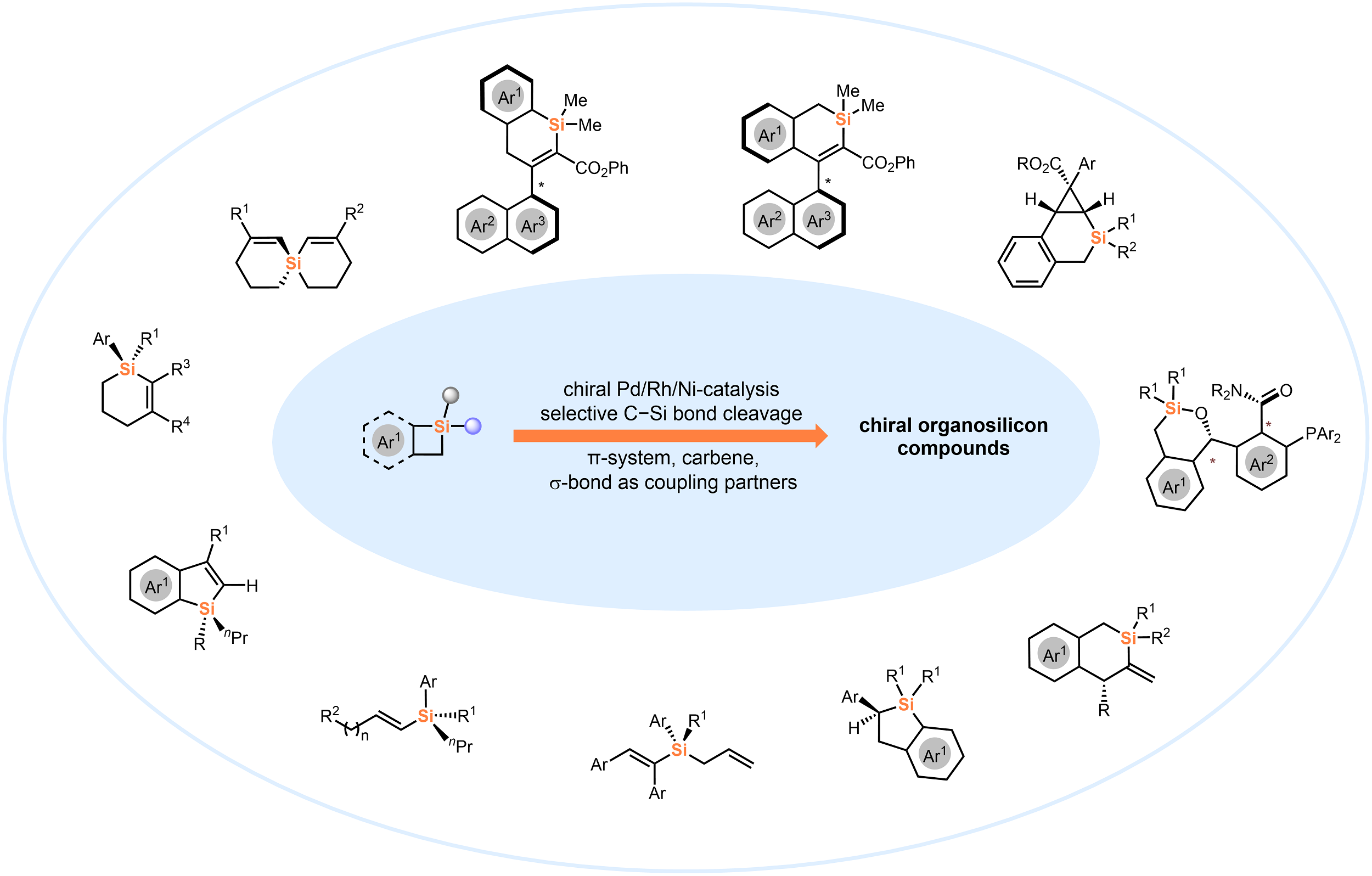
However, the realization of enantioselective variants long remained an unmet challenge, impeded by the inherent competition between ring-expansion and ring-opening manifolds, the intrinsic difficulty of achieving C-Si bond selectivity, and the scarcity of suitable chiral ligands. A decisive breakthrough came in 2011, when Shintani and co-workers disclosed the first palladium-catalyzed desymmetrization of SCBs, a pioneering report that not only established the feasibility of asymmetric SCB functionalization but also revealed the remarkable potential of these strained silacycles for constructing silicon-stereogenic centers[20]. Since then, a diverse array of catalytic systems based on palladium, rhodium, and nickel has been developed, enabling highly enantioselective ring-expansion and ring-opening reactions with a wide range of unsaturated substrates, including alkynes, alkenes, allenes, carbonyls, and carbenes. These methodologies now provide efficient access to carbon-, silicon-, and axially chiral organosilanes with excellent stereoselectivity (Figure 1).
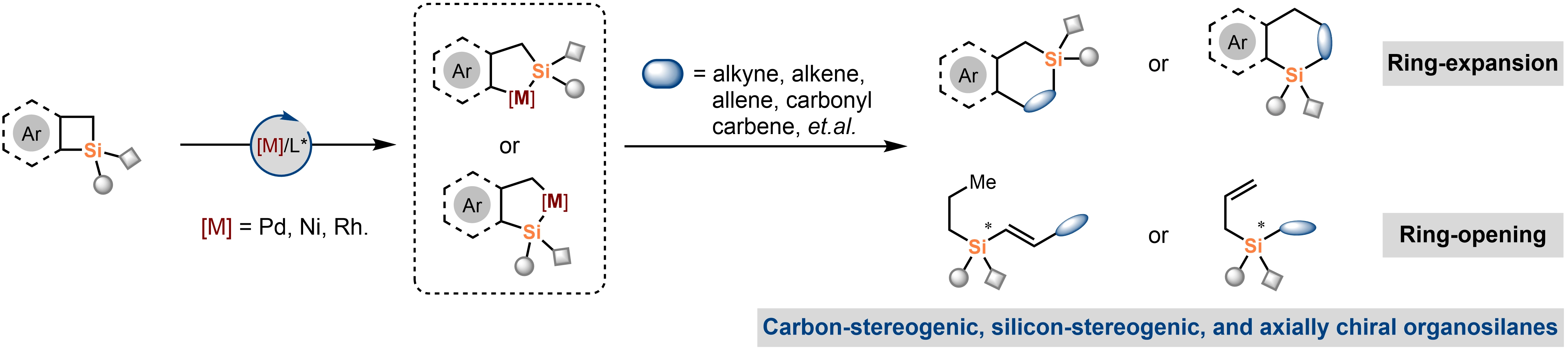
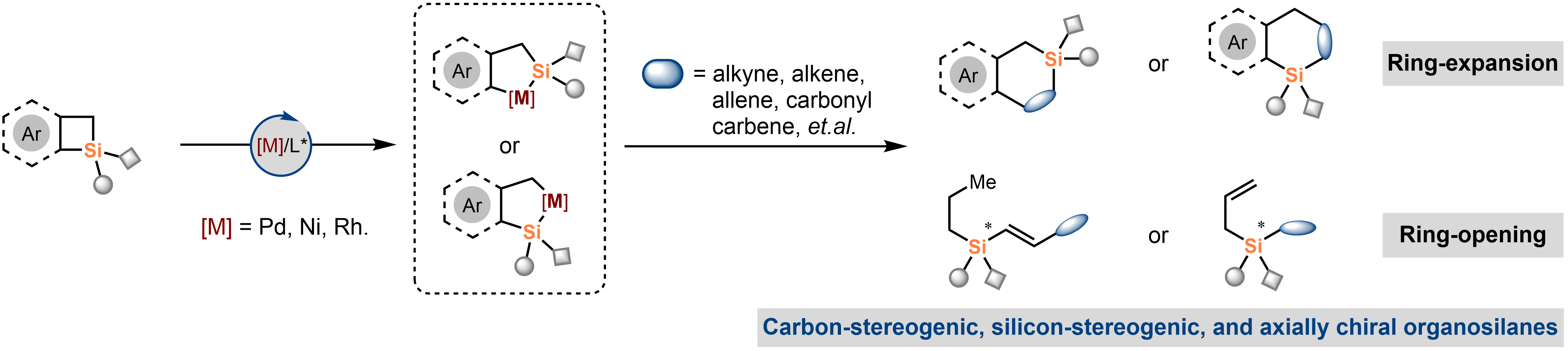
While Xu and co-workers have comprehensively surveyed enantioselective transition-metal-mediated reactions of SCBs through 2022[21], and Xiong, Zhang and co-workers surveyed silicon-stereogenic silacarbocycles assembled from diverse precursors beyond SCBs[22], the present review complements these works in three ways: it updates the coverage of the accelerated progress of the 2022-2026 interval; it organizes content by coupling partner (alkynes, alkenes, allenes, carbonyl compounds, and others) to facilitate comparative analysis; and the associated substrate scope and mechanistic studies are also integrated to provide critical insights into the reaction pathways and selectivity, thereby deepening our understanding of recent developments and highlighting the outstanding challenges and promising opportunities that warrant further exploration.
Before proceeding, we clarify the mechanistic terminology used throughout this review. Oxidative addition denotes Si-C bond cleavage by the metal with a formal two-electron increase in its oxidation state. σ-Bond metathesis refers to concerted Si-C cleavage via a four-centered transition state involving a metal-ligand bond (e.g., M-OR, M-H) without a change in metal oxidation state. The term transmetalation, which appears in several original publications to describe Si-to-metal group transfer, is retained when citing those authors’ original proposals; in such cases, the process is mechanistically analogous to σ-bond metathesis rather than to conventional transmetalation between two distinct metal centers. Migratory insertion describes the addition of a metal-carbon or metal-hydride bond across an unsaturated substrate, again without a redox change. Finally, β-hydride elimination, which proceeds through a discrete metal hydride, should be distinguished from ligand-to-ligand hydrogen transfer (LLHT), a concerted hydrogen transfer directly between two carbon-based ligands without a free M-H species.
2. Asymmetric Reactions of Silacyclobutanes with Alkynes
Investigations into the reactivity of silacyclobutanes with alkynes long predate the emergence of asymmetric catalysis in this arena. Pioneering studies not only established the fundamental reactivity framework but also brought to light a persistent challenge, namely, the competition between ring expansion and ring-opening pathways. The chemistry of silacyclobutanes with alkynes was inaugurated in 1975 by Sakurai and Imai, who disclosed the first palladium-catalyzed example of this transformation[23]. They demonstrated that alkynes bearing electron-withdrawing groups, such as alkynyl carboxylates, could undergo a [σ+π] cycloaddition to afford silacyclohexenes. While this seminal finding validated the feasibility of harnessing SCB ring strain to drive cycloadditions, the scope was restricted to highly activated alkynes, and the efficiency was often undermined by competitive side reactions. In 1991, Oshima and Utimoto undertook a more comprehensive investigation of the palladium-catalyzed system[24]. They observed that while the desired silacyclohexenes could be obtained, substantial amounts of allylsilane byproducts were invariably generated. This study led to a pivotal mechanistic proposal: the reaction proceeds via a palladasilacycloheptene intermediate, which can diverge along two competing pathways: (i) reductive elimination to afford the six-membered silacyclohexene and (ii) β-hydride elimination to furnish the ring-opened allylsilane byproduct. This inherent bifurcation introduced a chemoselectivity problem that would prove remarkably persistent, challenging researchers for the next twenty years. Moreover, the absence of suitable chiral ligands, compounded by an insufficient understanding of the factors governing the reductive elimination versus β-hydride elimination transition states, significantly delayed the development of an asymmetric variant of this transformation.
An important breakthrough in developing a catalytic asymmetric transformation of silacyclobutanes was made in 2011 by Shintani and Hayashi, who disclosed the first palladium-catalyzed enantioselective intramolecular desymmetrization of prochiral silacyclobutanes to yield silicon-stereogenic products (Figure 2)[20]. The efficacy of this protocol was predicated on the rational design of a sterically demanding chiral phosphoramidite ligand, which precisely governed the chemoselective evolution of the pivotal silametallacyclic intermediate. This approach enabled the efficient conversion of prochiral, alkyne-tethered silacyclobutanes 1 into silicon-stereogenic 1-sila-2-cyclohexenes 2 with exceptional levels of enantiocontrol (up to 95% enantiomeric excess (ee)). Beyond establishing a robust and general platform for constructing silicon-stereogenic centers, this work also demonstrated the largely untapped potential of silacyclobutanes as versatile building blocks in asymmetric catalysis.
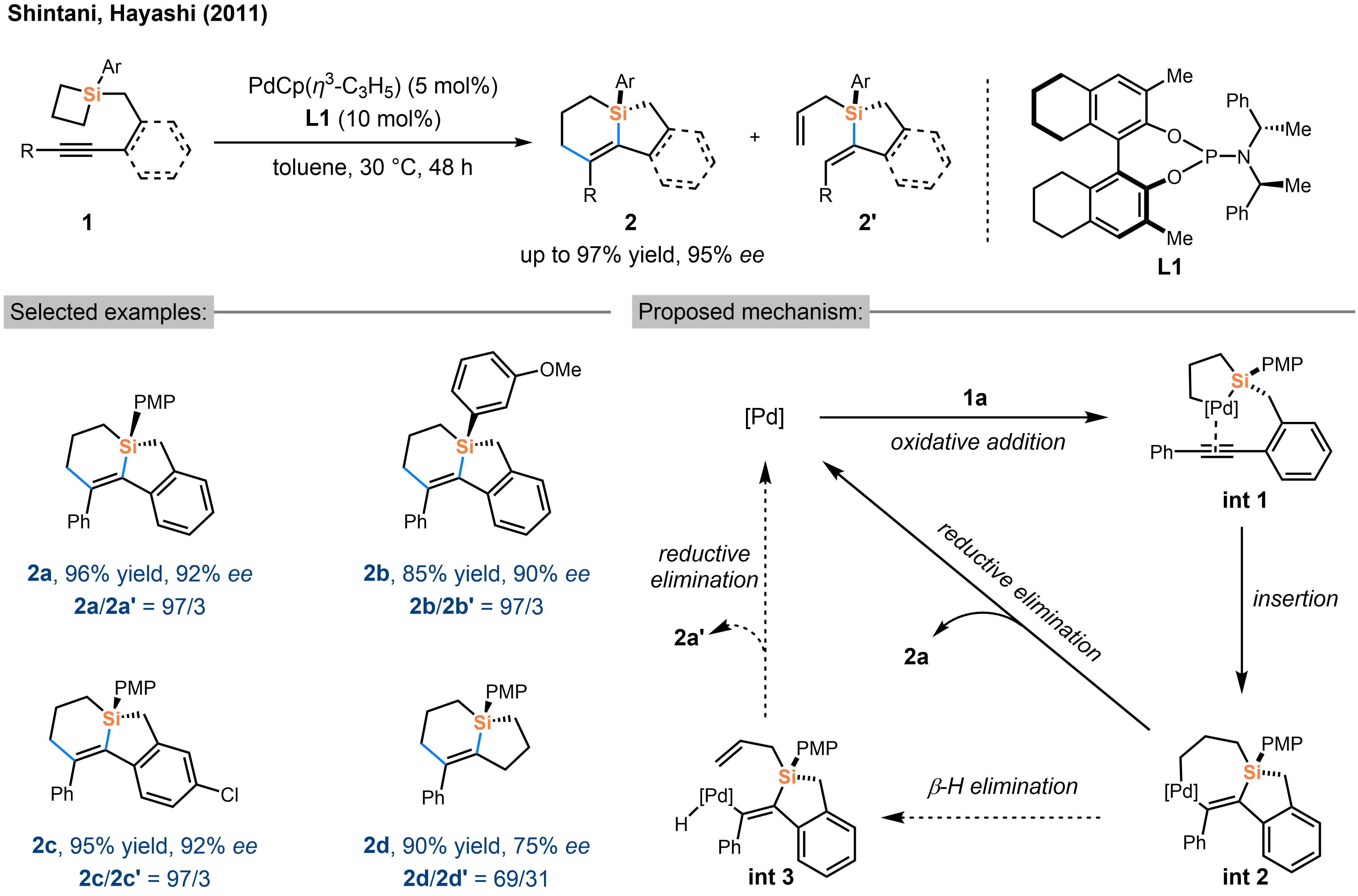
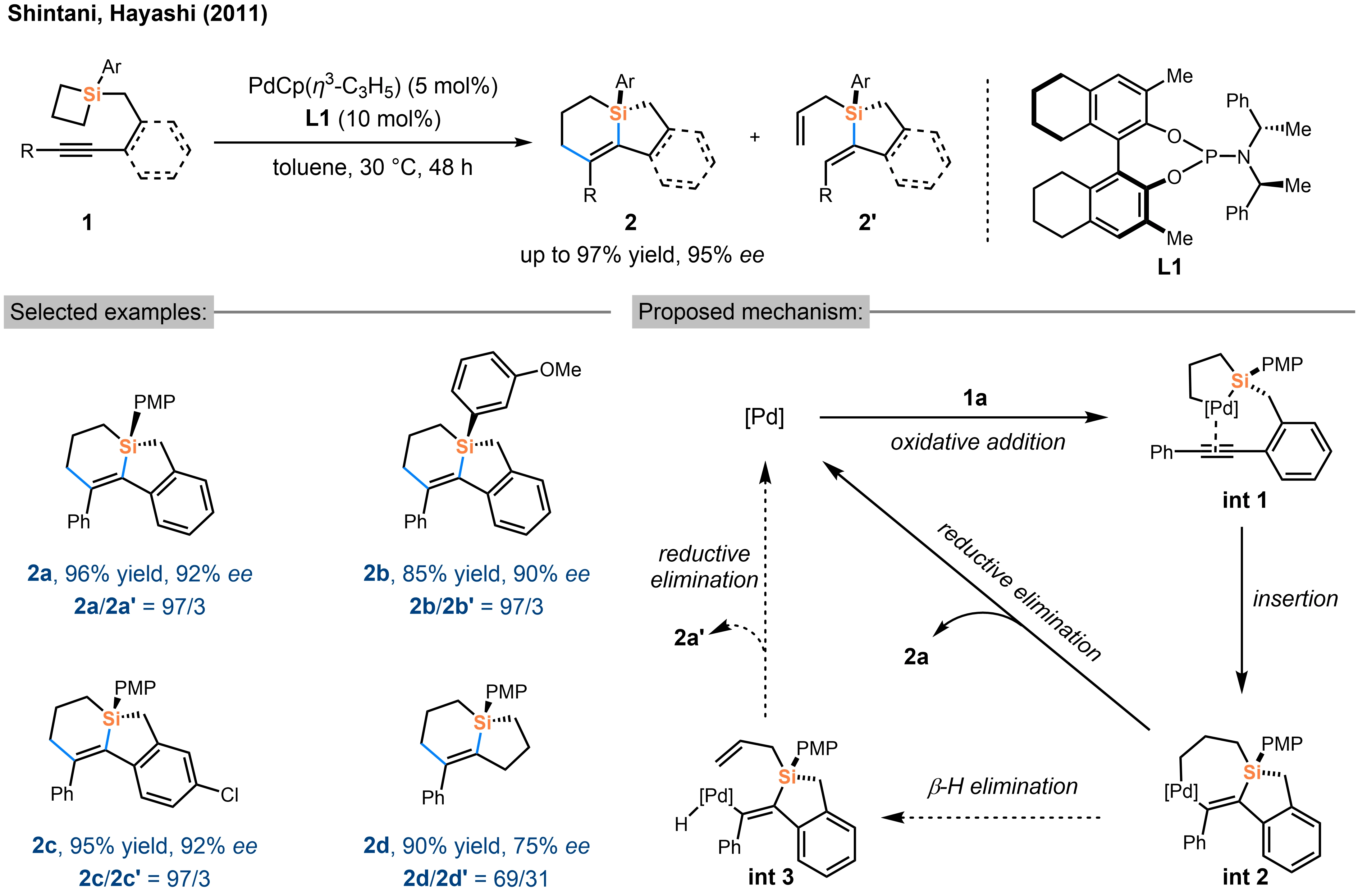
Figure 2. Palladium-catalyzed enantioselective intramolecular desymmetrization of silacyclobutanes. PMP: p-methoxyphenyl.
Building on this work, the same group extended their strategy to an enantioselective intermolecular desymmetrization of silacyclobutanes 3 with electron-deficient alkynes 4, using PdCp(η3-C3H5)/phosphoramidite L1 as the catalytic system (Figure 3)[25]. This protocol afforded silicon-stereogenic 1-silacyclohex-2-enes 5 with consistently high enantioselectivities. To gain a deeper understanding of the catalytic pathway, they carried out a series of experiments using PPh3 as the palladium ligand. Firstly, no evidence for the oxidative addition adduct, 1-pallada-2-silacyclopentane (int 4), could be obtained when a solution of Pd(PPh3)4 and 3a (2.0 equiv) in toluene-d₈ was heated at 60 °C. By contrast, when the preformed alkyne complex Pd(PPh3)2(4a), which is readily accessed from Pd(PPh3)4 and alkyne 4a at room temperature, was treated with 3a (2.0 equiv) under identical conditions (toluene, 60 °C, 6 h), the desired product 5a was obtained in 74% yield. This reaction was also monitored by 1H NMR, which confirmed that essentially all of the unreacted 4a remained coordinated to palladium in the form of Pd(PPh3)2(4a) throughout the reaction, with no evidence for the formation of int 4. Secondly, both Pd(PPh3)4 and the isolated alkyne complex Pd(PPh3)2(4a) were found to exhibit comparable catalytic activity in the reaction of silacyclobutane 3a with alkyne 4a. On the basis of these mechanistic experiments, a new catalytic cycle was proposed that proceeds via alkyne coordination (oxidative cyclization), Si-C bond cleavage through a σ-bond-metathesis-type transmetalation step, as originally termed by the authors, and reductive elimination (Path II), although the alternative oxidative addition-insertion sequence (Path I) cannot be rigorously ruled out.
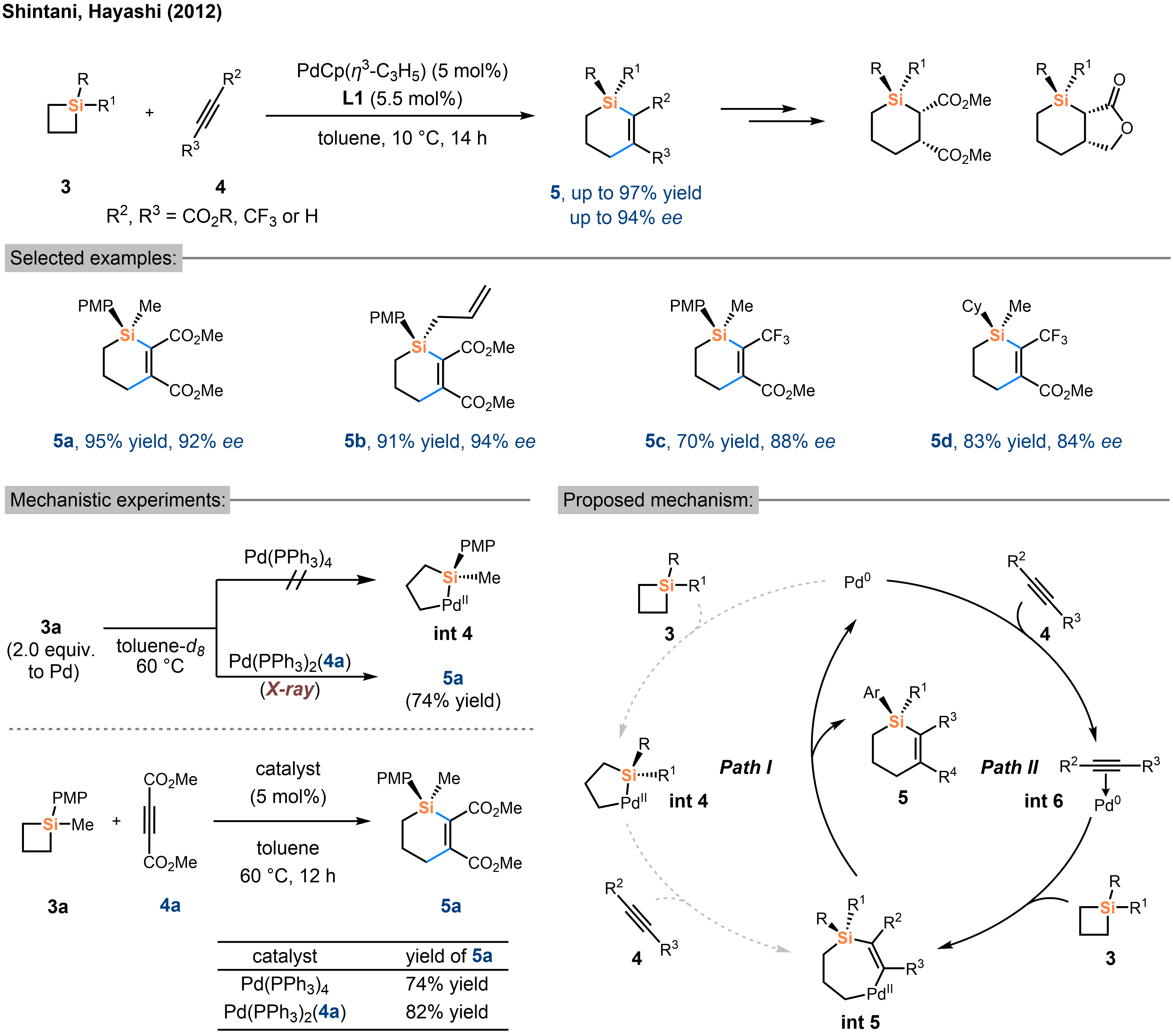
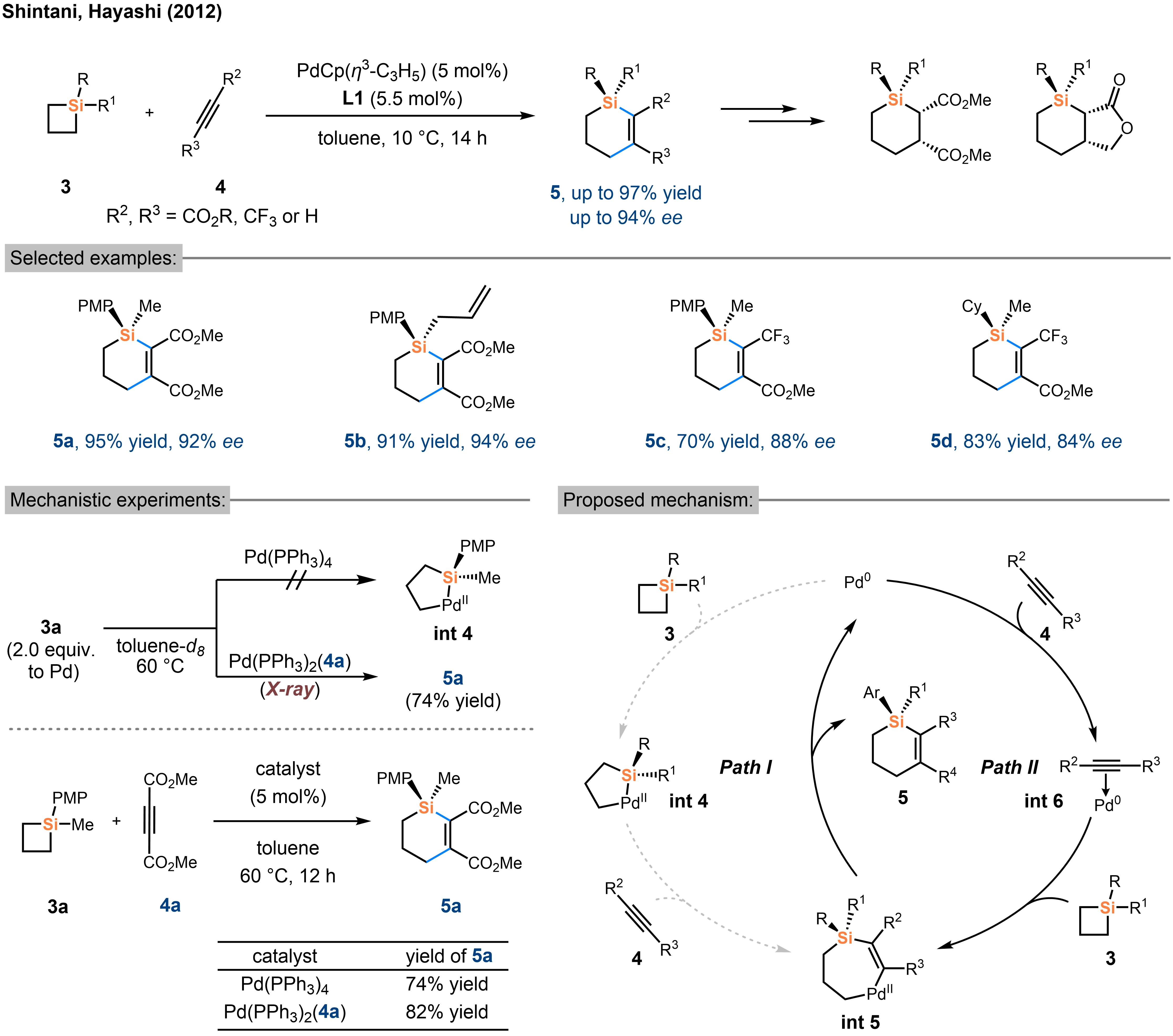
Figure 3. Palladium-catalyzed enantioselective intermolecular desymmetrization of SCBs with alkynes. PMP: p-methoxyphenyl; SCBs: silacyclobutanes.
The mechanistic proposal of Shintani and Hayashi was subsequently examined computationally by Xu and co-workers, who performed density functional theory (DFT) calculations on the full catalytic cycle of the desymmetrization of silacyclobutanes with dimethyl acetylenedicarboxylate[26]. Two initiation modes were compared: direct oxidative addition of the Si-C bond to Pd(0) (Path I) versus initial coordination of the alkyne to Pd(0) followed by Si-C bond cleavage (Path II). The calculations revealed that the cycle commencing with alkyne coordination is energetically more favorable, lending theoretical support to Path II. The formation of the seven-membered pallada-silacyclic intermediate was identified as the rate-determining step, whereas the enantioselectivity was governed by the oxidative addition of the silacyclobutane to the three-membered metallocyclic Pd(II) intermediate, a step highly sensitive to the steric repulsion between the chiral ligand and the substrate.
As noted above, the palladium-catalyzed ring expansion of silacyclobutanes is generally viable only with electron-deficient alkyne partners. Reactions with unactivated alkynes, such as phenylacetylene, are frequently plagued by competitive β-hydride elimination in intermolecular settings, leading to ring-opened allylsilanes as either the sole or predominant products. A notable development in this context came in 2019, when Song and co-workers demonstrated that unactivated alkynes could be effectively coupled with SCBs under mild conditions to furnish silicon-stereogenic silacyclohexenes with synthetically useful enantiocontrol (up to 91:9 enantiomeric ratio (er)) and exceptional chemoselectivity under mild conditions (Figure 4a)[27]. The success of the rhodium-catalyzed asymmetric protocol hinged on the rationally designed binaphthyl phosphoramidite ligand L2, featuring both 3,3’-trifluoromethyl and N-morpholino substituents. To gain mechanistic insight, two control experiments were performed. When 3a was treated with Rh(PPh3)3Cl in CDCl3 at 60 °C for 1 h, the majority of 3a remained unconsumed. Separately, the addition of Rh(PPh3)3Cl (1.0 equiv) to phenylacetylene induced a pronounced upfield shift of the alkynyl proton signal from δ 3.0 to 2.0, indicative of alkyne coordination to rhodium. On the basis of these observations, the authors proposed that the reaction proceeds via a mechanism analogous to that reported by Shintani and Hayashi[25]. Specifically, coordination of the rhodium center to the alkyne (int 8) facilitates cleavage of the Si-C bond of silacyclobutane 3, formulated by the authors as a transmetalation step (i.e., σ-bond metathesis, vide supra), to generate the rhodasilacycloheptene intermediate (int 9). Reductive elimination from int 9 then outcompetes the β-hydride elimination pathway, delivering the enantiomerically enriched product 7.
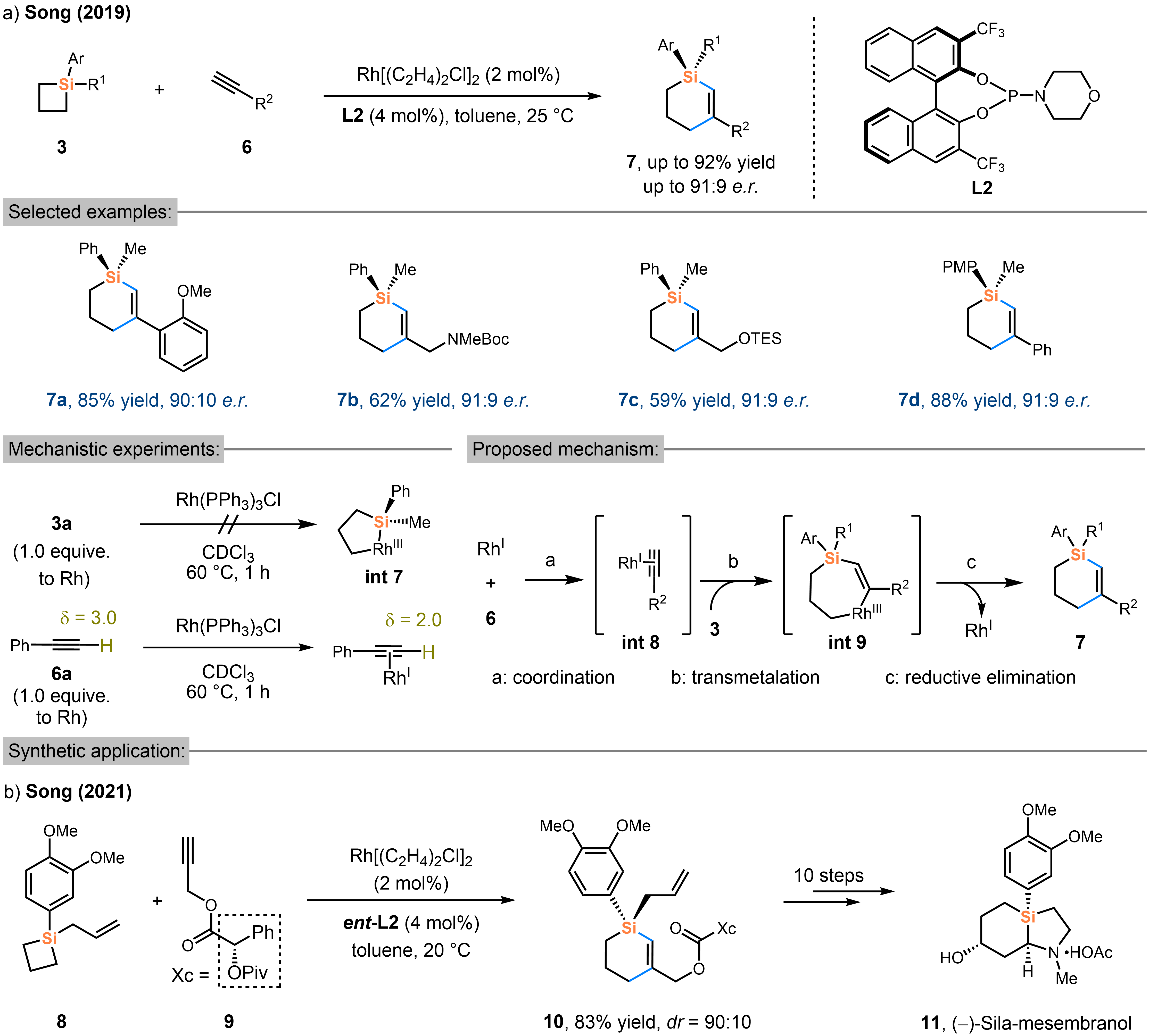
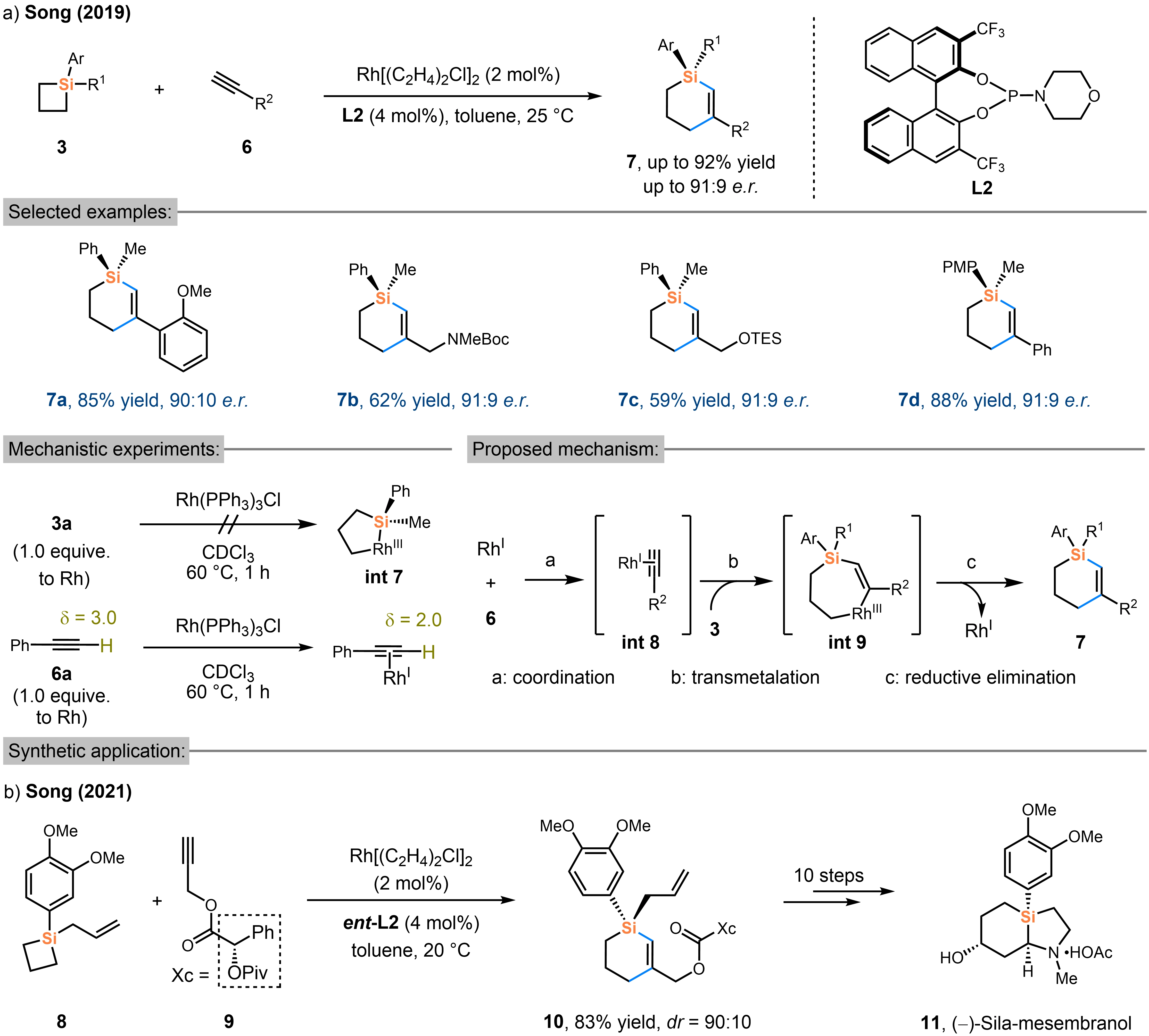
Figure 4. Rhodium-catalyzed asymmetric reaction of SCBs with unactivated aryl and alkyl alkynes and its synthetic application. SCBs: silacyclobutanes; PMP: p-methoxyphenyl.
The mechanism proposed by Song and co-workers was subsequently examined in detail by DFT calculations from Lan and co-workers[28]. The computed free-energy profiles support an alkyne-coordination-first pathway in which the Si-C bond is cleaved through oxidative addition to the alkyne-bound Rh(I) center as the rate- and enantioselectivity-determining step, to afford a silylrhodium(III) intermediate. Preferential 2,1-insertion of the alkyne into the Rh-Si bond then furnishes a seven-membered rhodacycle, from which reductive elimination is kinetically favored over β-hydride elimination, consistent with the experimentally observed chemoselectivity. To rationalize the efficient chirality transfer from a monodentate ligand remote from the reacting center, the authors proposed a “layered chirality relay model”, in which the chiral phosphoramidite (back layer) governs the position of the alkyne-bound rhodium center (middle layer), whose alkyne substituents in turn define the chiral environment experienced by the incoming siletane (front layer); a two-dimensional contour map analysis further corroborated this model.
The synthetic utility of this methodology was further demonstrated by its application to the asymmetric total synthesis of (-)-sila-mesembranol (11), the silicon bioisostere of the natural alkaloid (-)-mesembranol (Figure 4b)[13]. Notably, in vivo evaluations in two mouse models revealed that the silicon-containing analog 11 exhibits superior antidepressant activity relative to its natural congener, suggesting promising potential for clinical translation[13]. The enantioselective construction of the silicon stereocenter was achieved via a rhodium-catalyzed desymmetric ring expansion of the allyl-bearing silacyclobutane 8 with the (S)-mandelate-derived terminal alkyne 9, delivering the key synthetic intermediate 10 en route to the target molecule.
While Shintani and Hayashi had validated the [4+2] annulation of silacyclobutanes with activated internal alkynes bearing two electron-withdrawing groups (Figure 3)[25], extending this manifold to less reactive internal alkynes remained an enduring challenge. Their intrinsically low reactivity and poor chemoselectivity conspired to frustrate efficient catalytic ring expansion. Moreover, the use of unsymmetrical internal alkynes introduces an additional regioselectivity challenge, as competitive addition at the two distinct alkyne carbons could lead to regioisomeric silacycle products. This challenge was addressed in 2021 by Xu and co-workers, who disclosed the first multifunctional phosphine-promoted bimetallic Rh/Cu-catalyzed Si-C bond activation for the [4+2] annulation of SCBs 3 with unsymmetrical alkynyl esters 12, furnishing polysubstituted silacyclohexene derivatives 13 in moderate to good yields (Figure 5)[29]. This protocol features a broad substrate scope, mild reaction conditions, high chemoselectivity, and promising enantioselectivity, which is attributed to their newly developed multifunctional P-ligand, 1,1′-binaphthalene-2-α-arylmethanol-2′-ol (Ar-BINMOL)-Phos L3. Under these bimetallic conditions, the Ar-BINMOL-Phos ligand efficiently suppresses the undesired pathway, a feature attributed to both the steric congestion imparted by the Rh-O bond and the electronic modulation of the rhodium center by the copper cocatalyst. Moreover, mechanistic studies indicated that cuprous chloride was proposed to function bifunctionally, serving both to activate the alkynyl ester and to facilitate the productive conversion of the intermediate. Meanwhile, the synergistic cooperation between the copper species and the hydroxyl group of Ar-BINMOL-Phos promotes the reductive elimination, thereby effectively inhibiting olefin isomerization and the formation of undesirable products.
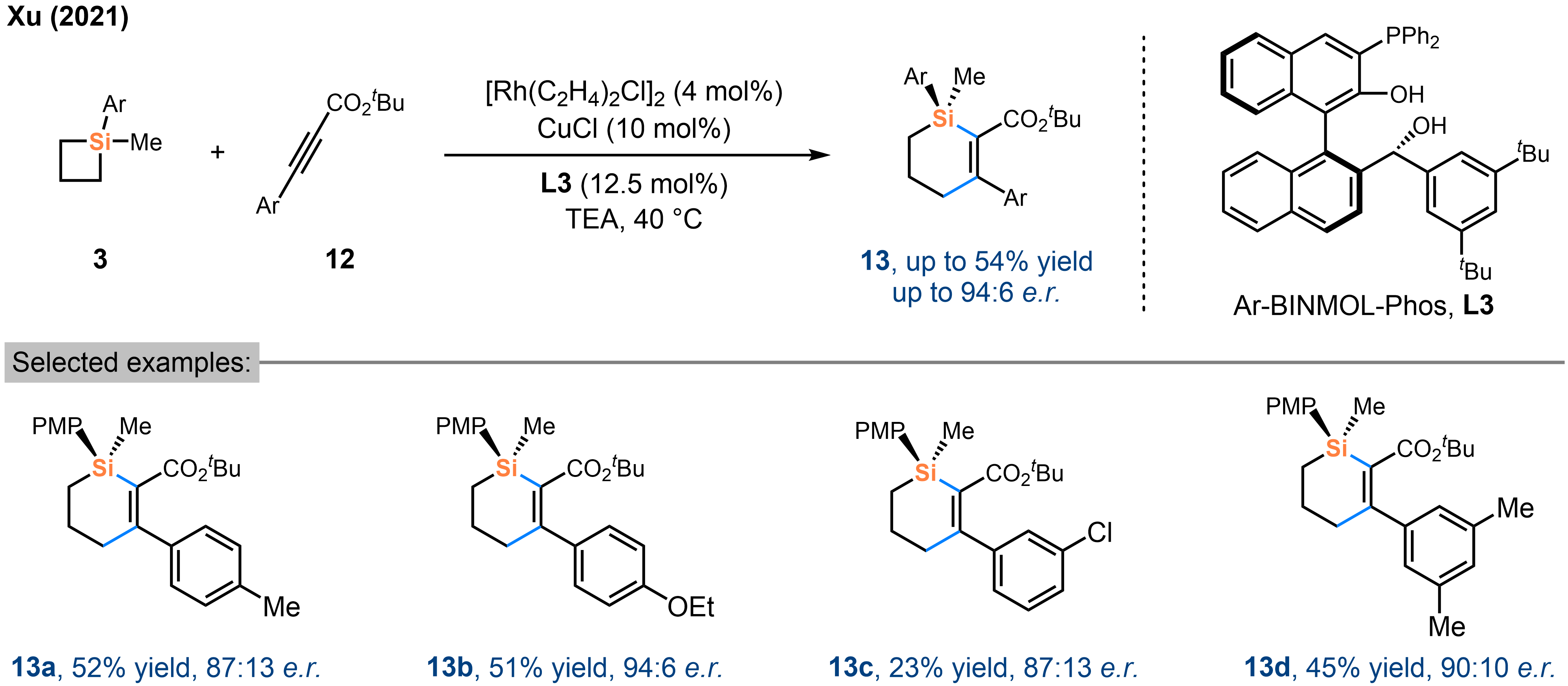
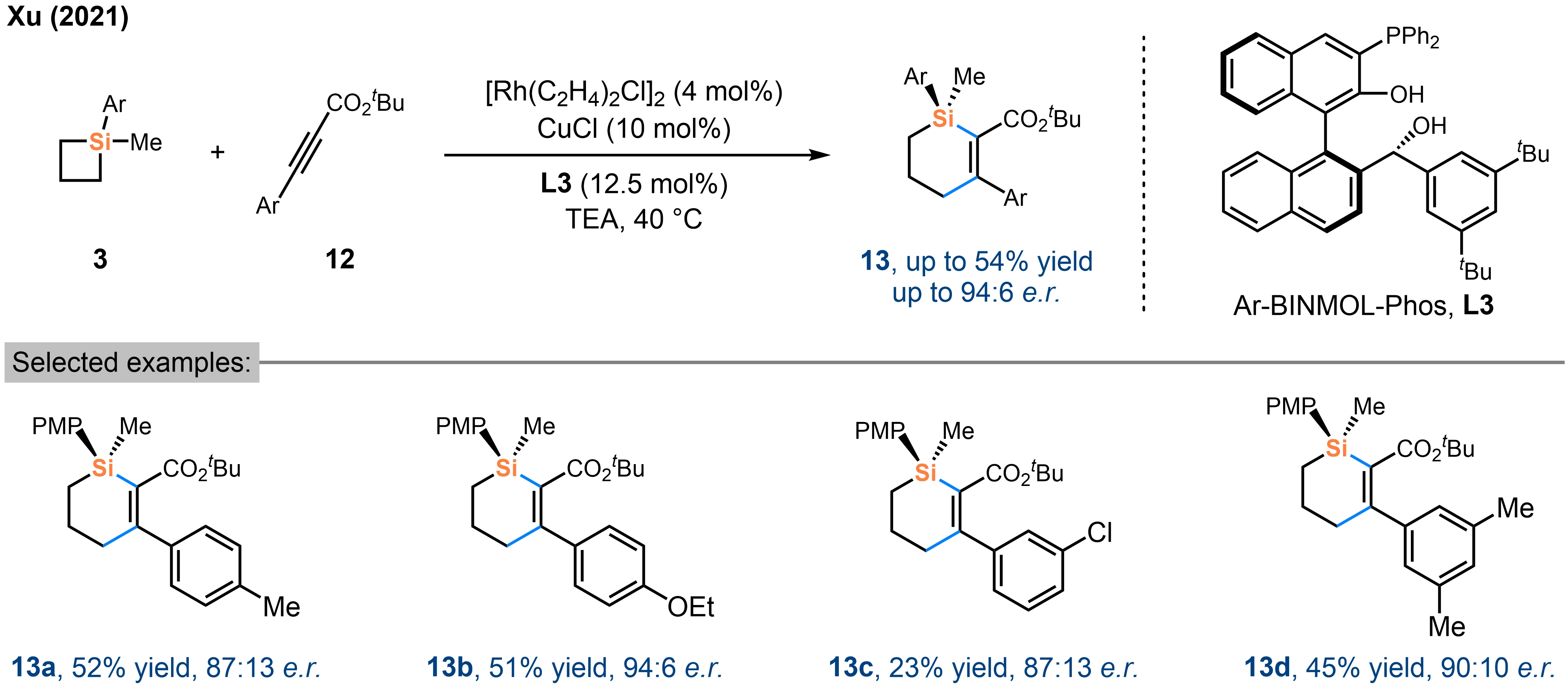
Figure 5. Asymmetric bimetallic Rh/Cu co-catalyzed [4+2] cycloaddition of SCBs with aryl propiolate. SCBs: silacyclobutanes; PMP: p-methoxyphenyl; Ar-BINMOL: 1,1′-binaphthalene-2-α-arylmethanol-2′-ol; TEA: triethylamine.
Building upon earlier investigations, Song and co-workers reported in 2022 an asymmetric dual ring-expansion of spirosilabicyclobutanes 14 with terminal alkynes 6 under rhodium catalysis (Figure 6)[30]. Although known for more than half a century, the spirosilabicyclobutane scaffold 14 had remained largely dormant as a synthetic building block. In this contribution, the authors harnessed this overlooked platform to access axially chiral spirosilabicyclohexenes bearing an unprecedented 6,6-silaspirane framework 15, fundamentally distinct from the 5,5-spirosilacycles obtained through established cyclization/cycloaddition manifolds. The use of the sterically demanding phosphine ligand L4 proved pivotal, enabling not only a one-pot double ring-expansion with a single alkyne but also a stepwise protocol with two different alkynes to generate homo- or hetero-disubstituted spirosilabicyclohexenes 15 in good yields with high enantioselectivity. However, this protocol proved to be ineffective for sterically hindered alkynes, including tert-butylacetylene and disubstituted derivatives, and similarly failed to accommodate electron-deficient substrates. Detailed DFT calculations provided a comprehensive rationale for the exceptional stereocontrol, which is dictated by the steric environment of the binaphthyl-derived phosphoramidite ligand.
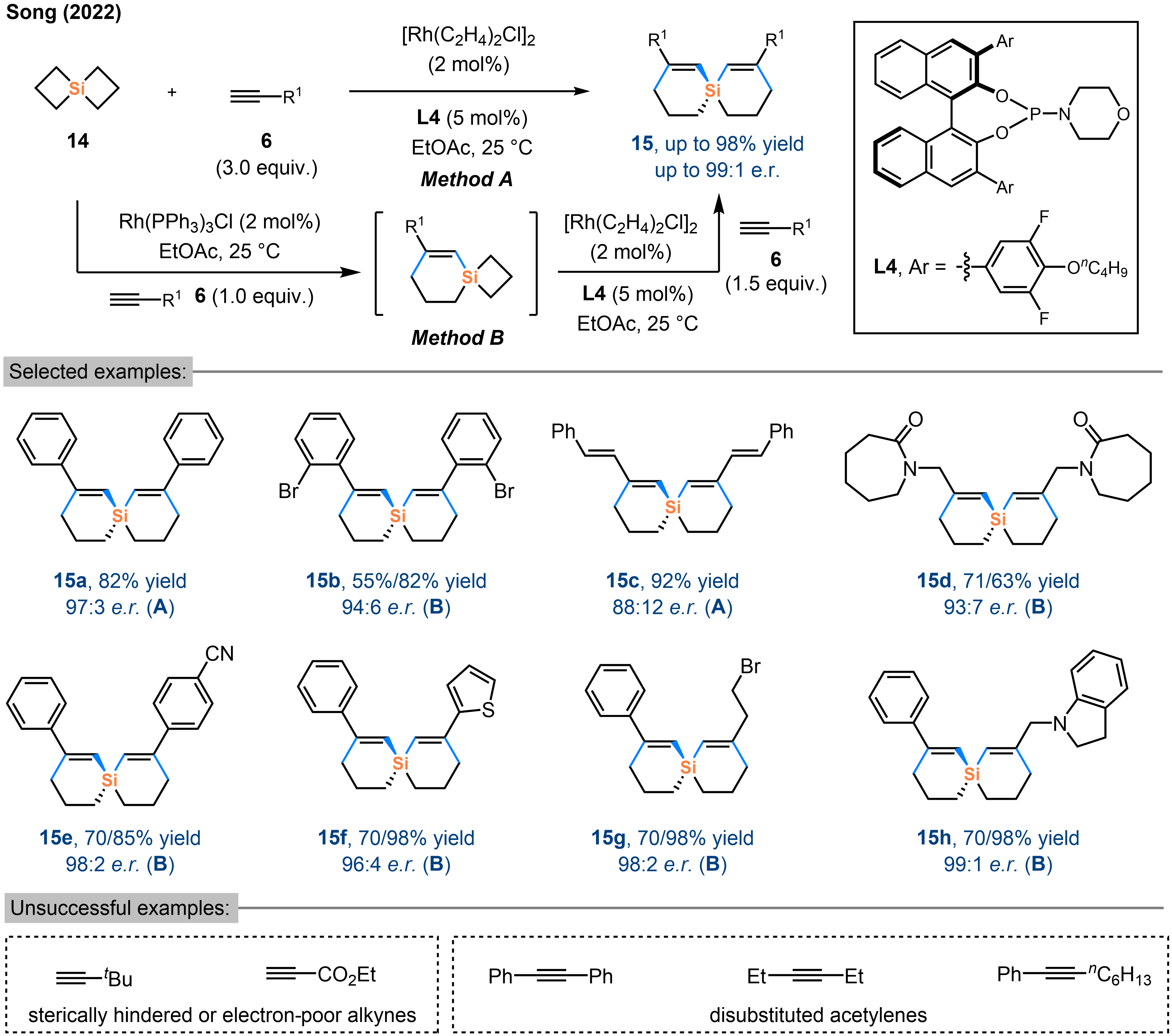
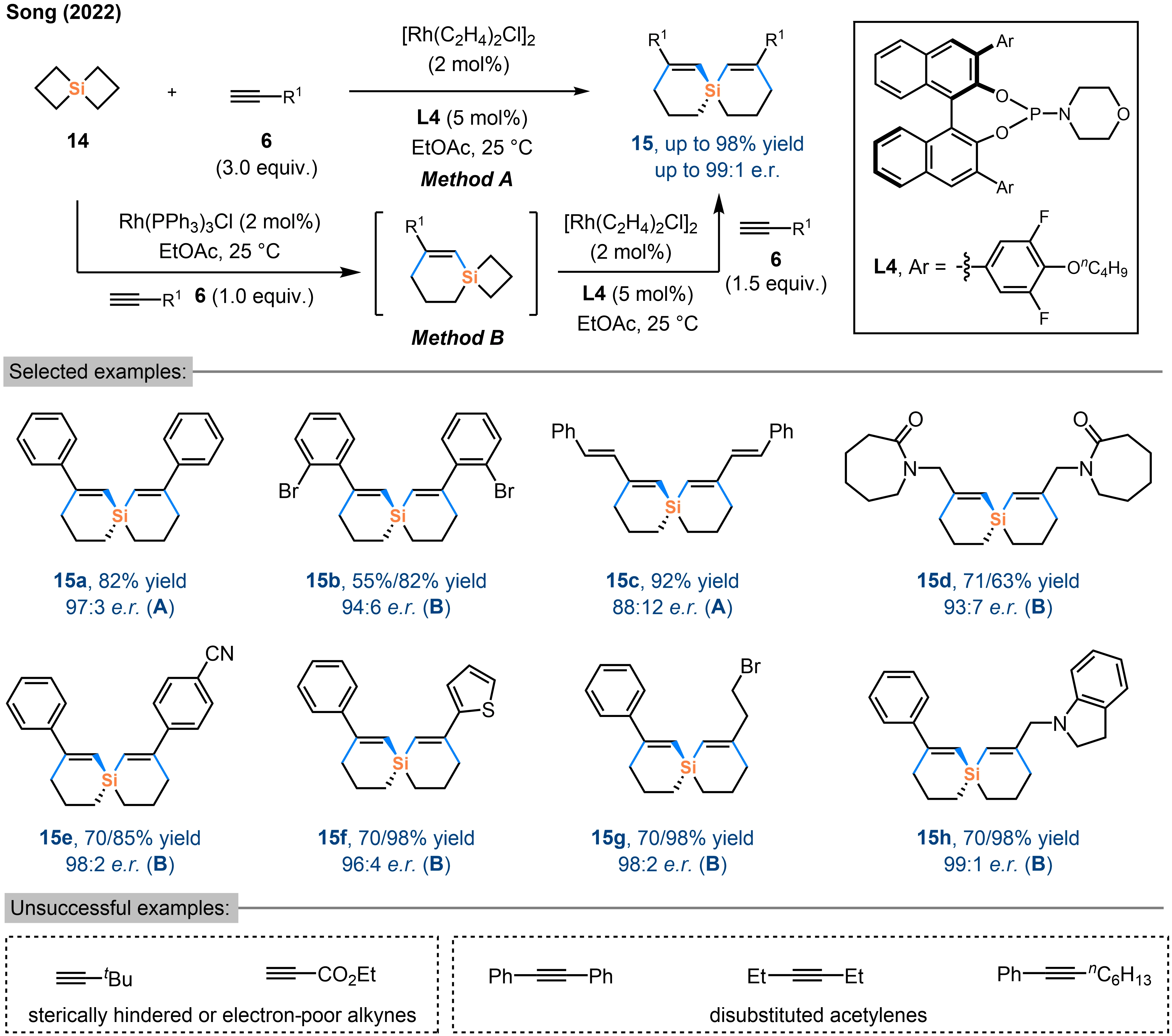
Figure 6. Rh-catalyzed asymmetric dual ring expansion of spirosilabicyclobutanes with terminal alkynes. EtOAc: ethyl acetate.
Building on their earlier success, the same research group subsequently extended their rhodium catalytic system to the asymmetric ring-expansion of 4,5-spirosilafluorenes 16, a class of substrates featuring a silacyclobutane unit spiro-annulated to a silafluorene core, with terminal alkynes 6 bearing aryl, alkyl, or alkenyl groups (Figure 7)[31]. The sterically demanding (R)-binaphthyl phosphoramidite ligand L5 proved to be the optimal choice, delivering a range of (S)-6,5-spirosilafluorenes 17 in high yields with exceptional enantiocontrol. However, the introduction of substituents at both the 1- and 8-positions proved to be detrimental, completely precluding the ring expansion. Meanwhile, as observed in their previous studies, internal alkynes remained incompatible with this protocol. This investigation stands as the first successful asymmetric synthesis of axially chiral 6,5-silaspirane frameworks, a structural motif that is mechanistically and strategically distinct from conventional cyclization or cycloaddition approaches.
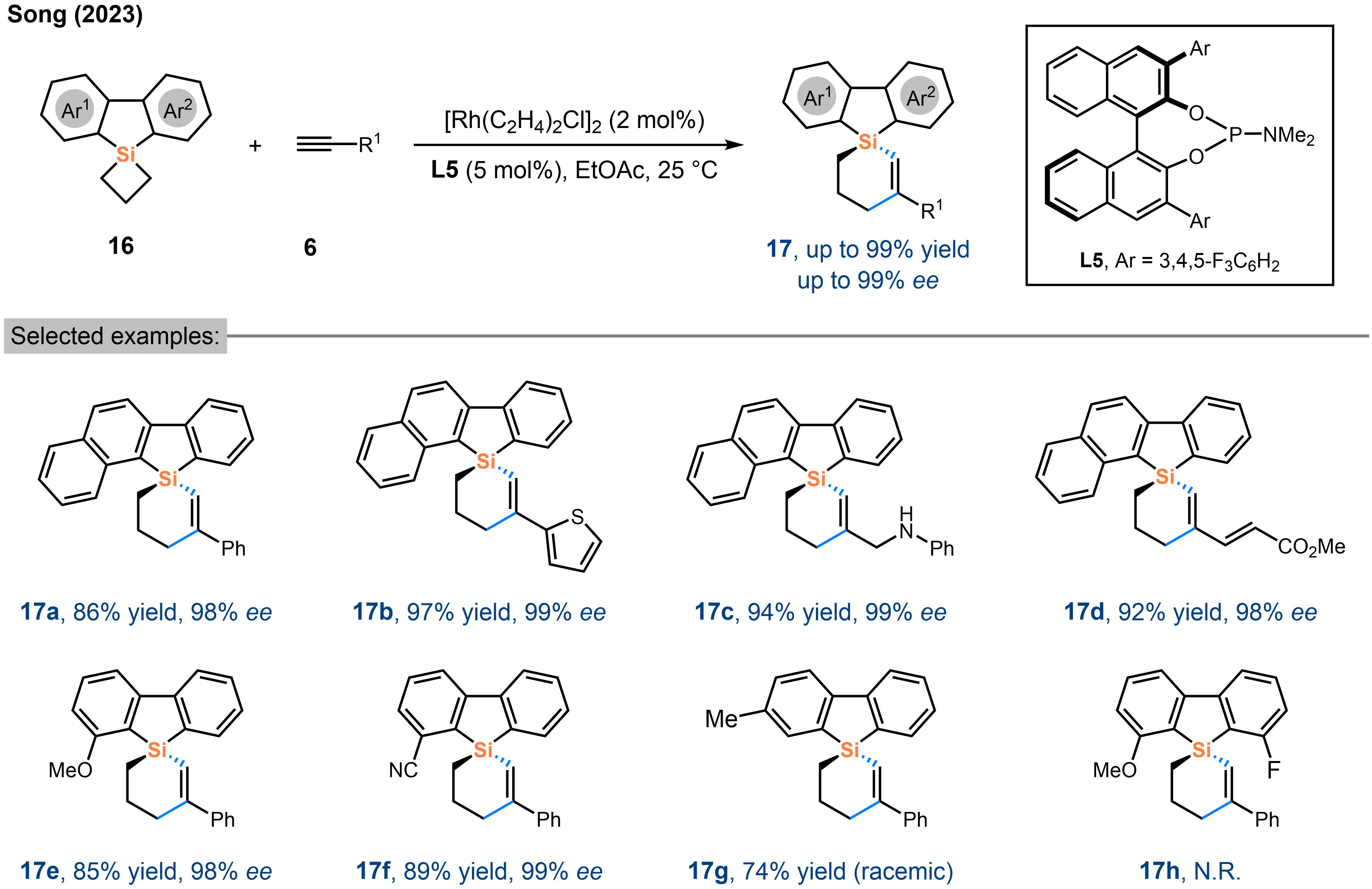
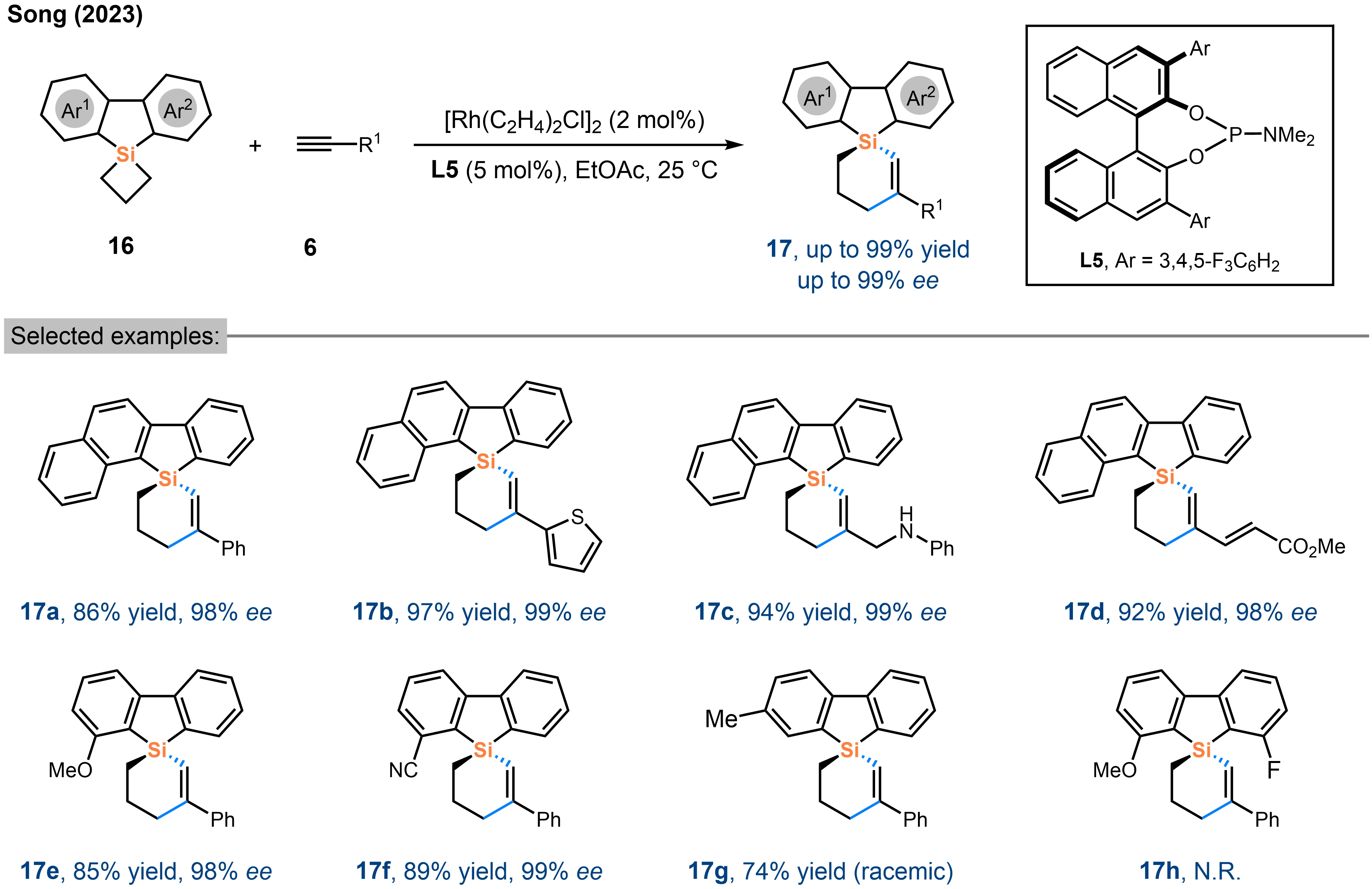
Figure 7. Enantioselective synthesis of 6/5-spirosilafluorenes by asymmetric ring expansion of 4/5-spirosilafluorenes. EtOAc: ethyl acetate.
The use of terminal alkynes in asymmetric ring-expansion reactions of simple silacyclobutanes was initially explored by Song’s group (Figure 4), although the enantioselectivities remained moderate (up to 91:9 er). In 2024, Zhang and co-workers reported a rhodium/Ming-Phos-catalyzed asymmetric annulation of silacyclobutanes 3 with terminal alkynes 6, affording silicon-stereogenic silacycles 18 with excellent levels of enantiocontrol (up to 97.5:2.5 e.r.) (Figure 8)[32]. The newly modified ligand Ming-Phos L6 played a pivotal role in enhancing the enantiocontrol. This catalytic system operated under mild conditions, efficiently suppressing ring-opening byproducts while accommodating a broad substrate scope. A wide range of substituted aryl, heteroaryl, and alkyl alkynes, as well as various substituted SCBs, were well tolerated. Furthermore, nonlinear effect studies verified that the catalytically active species incorporates a single chiral ligand. A catalytic cycle involving oxidative addition, migratory insertion, and reductive elimination was proposed, which is consistent with previously established mechanisms.
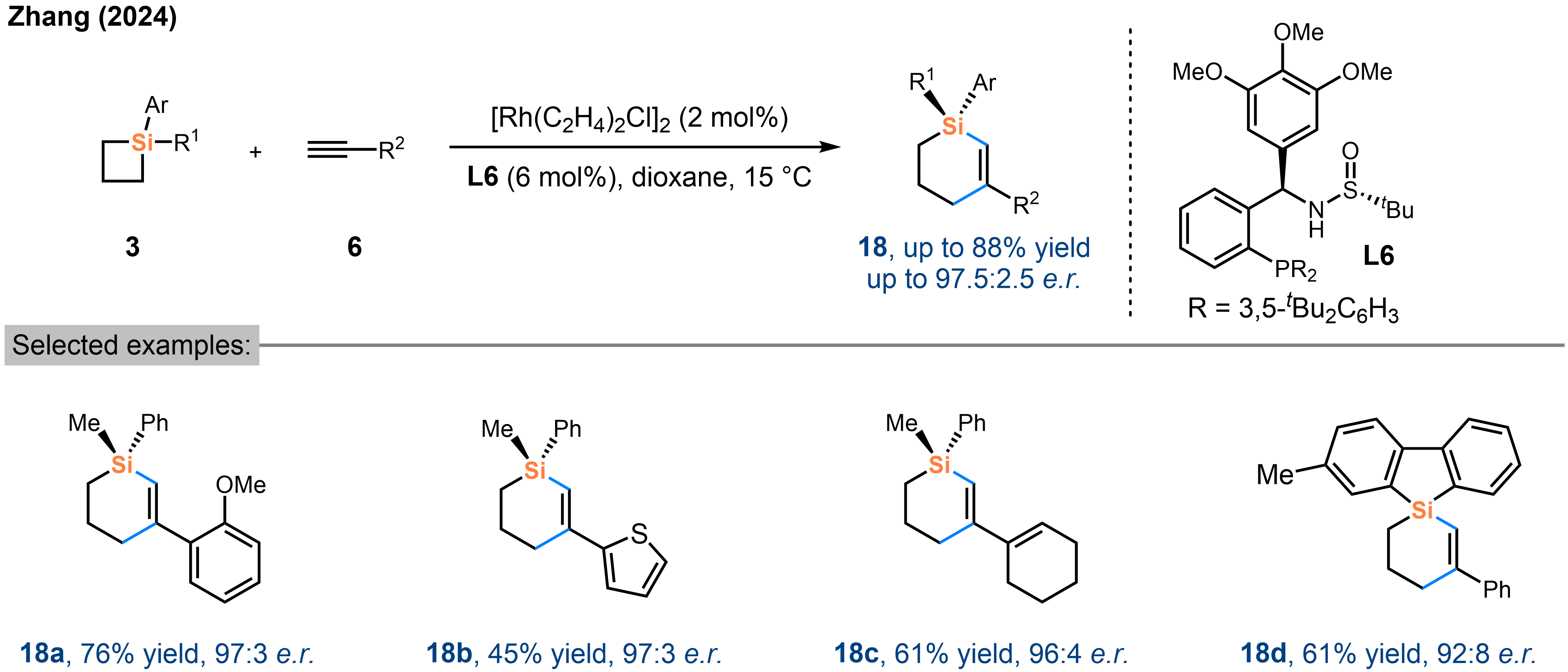
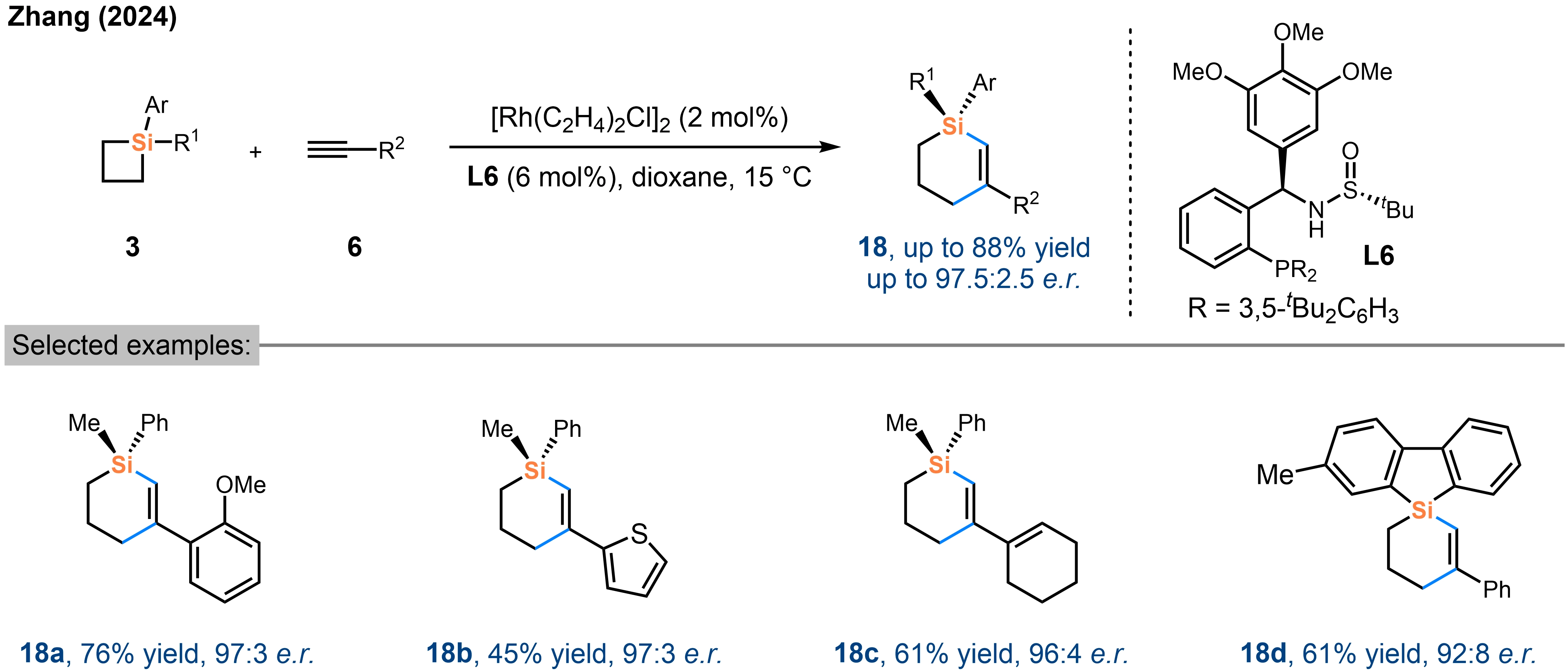
Figure 8. Rhodium/Ming-Phos-catalyzed asymmetric annulation reaction of SCBs with terminal alkynes. SCBs: silacyclobutanes.
As discussed above, palladium-catalyzed enantioselective ring-expansion reactions of SCBs with alkynes are generally confined to electron-deficient alkynes, while rhodium-based systems are restricted to terminal or activated internal alkynes. The development of an efficient protocol for unactivated internal alkynes has therefore remained a significant challenge. In 2022, this challenge was elegantly addressed by Zhao and co-workers, who developed a nickel-catalyzed, highly enantioselective ring-opening reaction of SCBs 3 with unactivated internal alkynes 19, employing a 1,1,4,4-tetraaryl-2,3-O-isopropylidene-L-threitol (TADDOL)-derived chiral phosphonite ligand L7 (Figure 9)[33]. This protocol represents a general and practical platform for the asymmetric synthesis of silicon-stereogenic allyl vinylsilanes 20. The reaction accommodated a variety of diarylalkynes bearing electron-neutral, electron-deficient, and electron-rich substituents at different positions of the phenyl ring. In contrast, symmetrical aliphatic alkynes delivered the corresponding product 20d with moderate enantioselectivity, and unsymmetrical alkynes, such as 1-phenylpropyne, proved to be completely unreactive under the standard conditions.
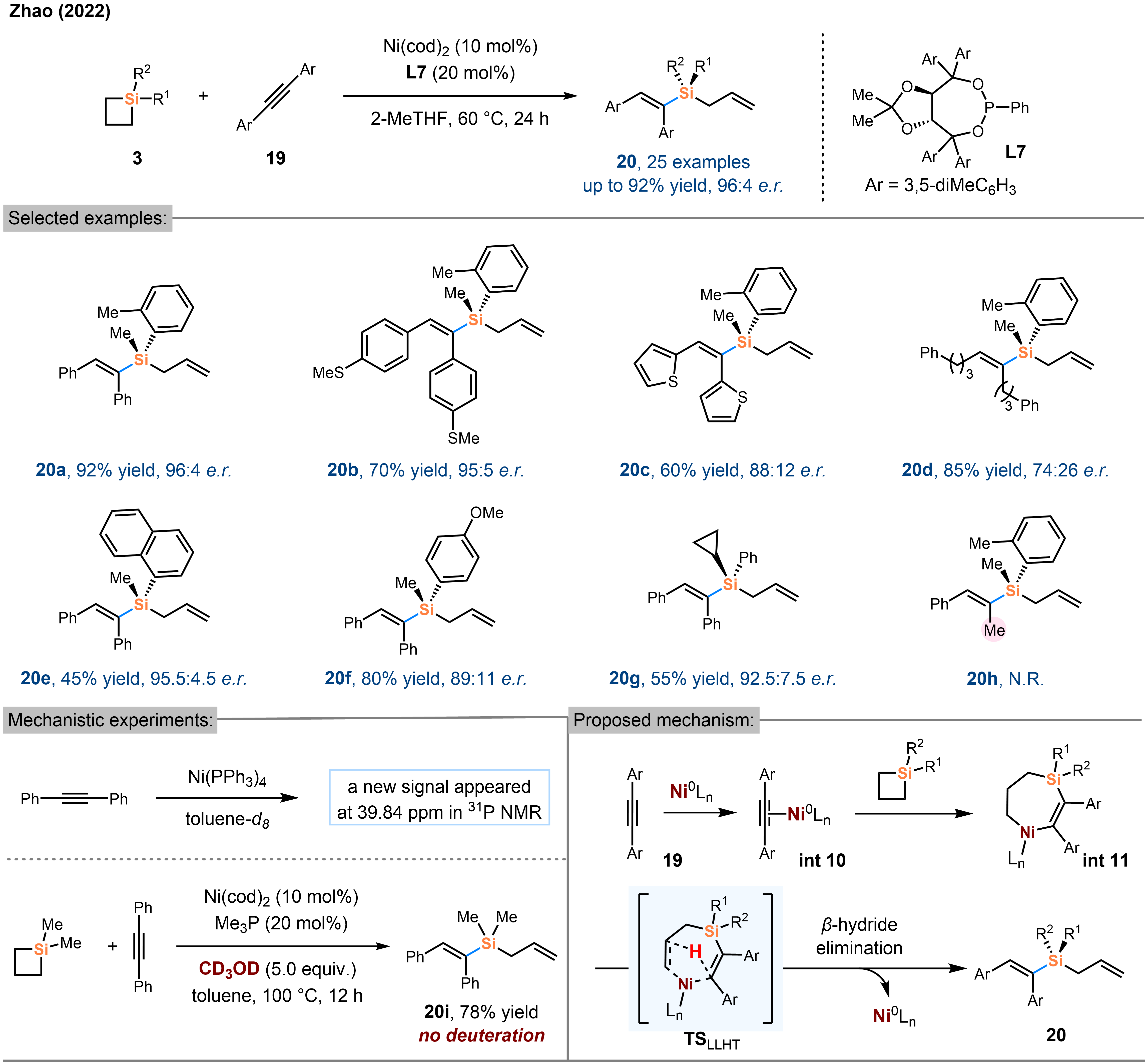
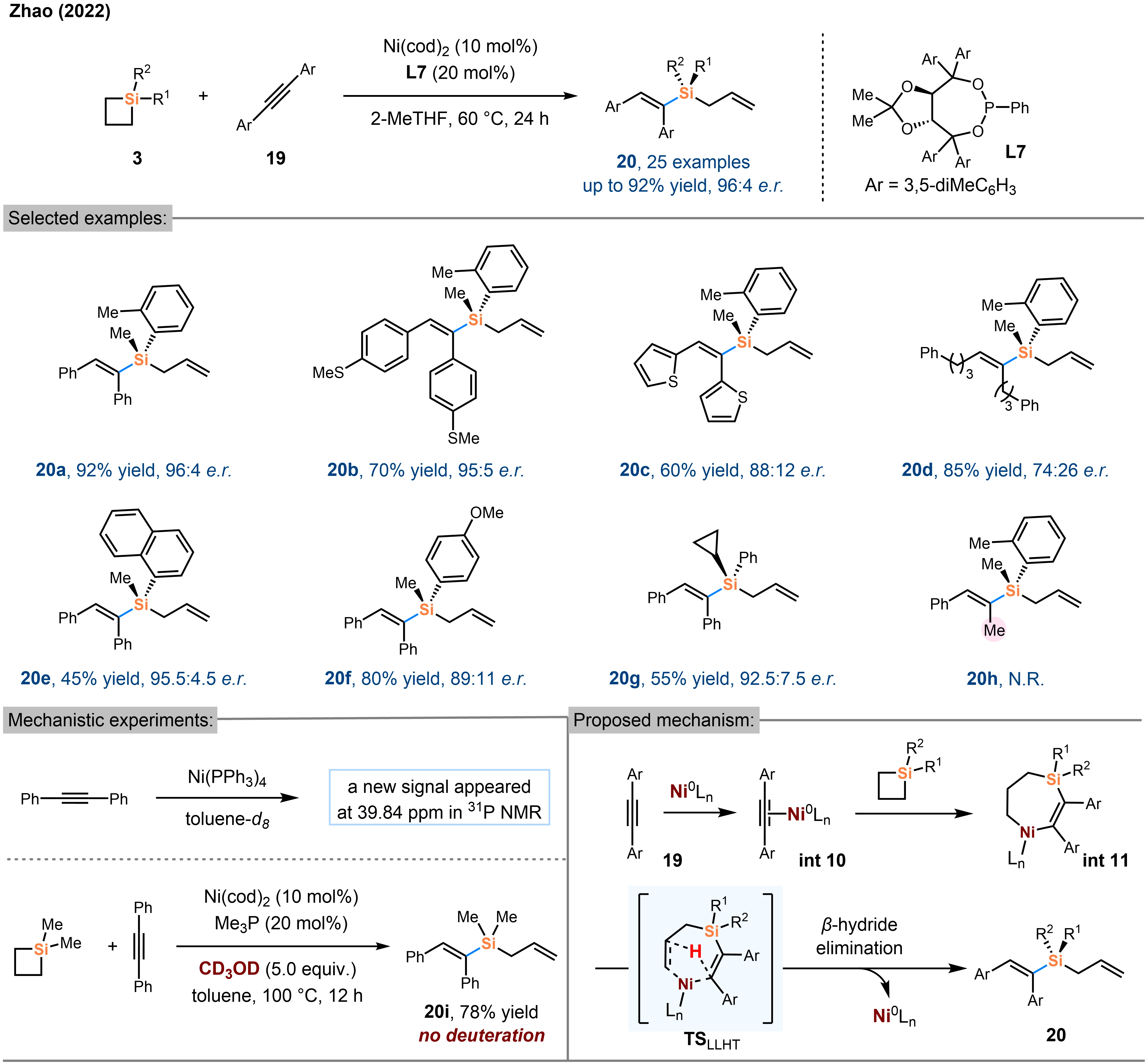
Figure 9. Nickel(0)-catalyzed divergent reactions of SCBs with internal alkynes. SCBs: silacyclobutanes; THF: tetrahydrofuran.
To gain deeper mechanistic insight, a series of diagnostic experiments was performed. The 31P NMR spectrum exhibited a new resonance at δ 39.84 ppm upon exposure of Ni(PPh3)4 to diphenylacetylene, supporting the generation of a nickel(0)-alkyne complex. Furthermore, no deuterium incorporation was observed in product 20i when the Ni-catalyzed ring-opening reaction was performed in the presence of 5.0 equiv of CD3OD. This finding strongly implies that the ring-opening process proceeds via an intramolecular hydrogen transfer. Based on these results, a plausible catalytic mechanism is proposed: initial coordination of Ni0 to the internal alkyne furnishes int 10, which is then converted to the nickel-silacycloheptene int 11 via a coordination-assisted oxidative cleavage of the Si-C(sp3) bond. The final hydrogen-transfer step then proceeds through transition state TSLLHT in a concerted LLHT manner (i.e., the hydrogen atom is transferred directly from the alkyl carbon ligand to the alkenyl carbon ligand), rather than through classical β-hydride elimination involving a discrete nickel hydride, thereby affording the allyl vinylsilane product 20.
Whereas the nickel catalytic system of Zhao and co-workers was largely confined to symmetric internal alkynes and required high catalyst loadings, extending the desymmetric ring-opening to terminal alkynes remained challenging because the alkyne C-H bond introduces a competing reductive-elimination manifold. In 2024, Xu and co-workers disclosed that a palladium catalyst bearing a TADDOL-derived phosphoramidite ligand L8 promotes the desymmetric ring-opening coupling of prochiral silacyclobutanes 3 with alkyl terminal alkynes 6, affording acyclic silicon-stereogenic allyl vinylsilanes 21 bearing a quaternary silicon stereocenter (33 examples, up to 94% yield and 94:6 e.r.; Figure 10)[34]. Deuterium-labeling experiments indicated an intramolecular hydrogen-transfer process, and DFT calculations support an alkyne-coordination-first pathway in which oxidative addition of the Si-C bond, migratory insertion (the enantiodetermining step), β-hydride elimination, and reductive elimination proceed sequentially. In contrast to the nickel-catalyzed reaction, which terminates through LLHT (vide supra), the palladium catalytic system delivers the same allyl vinylsilane scaffold through a β-hydride-elimination pathway, complementing the nickel chemistry in both catalyst metal and mechanism.
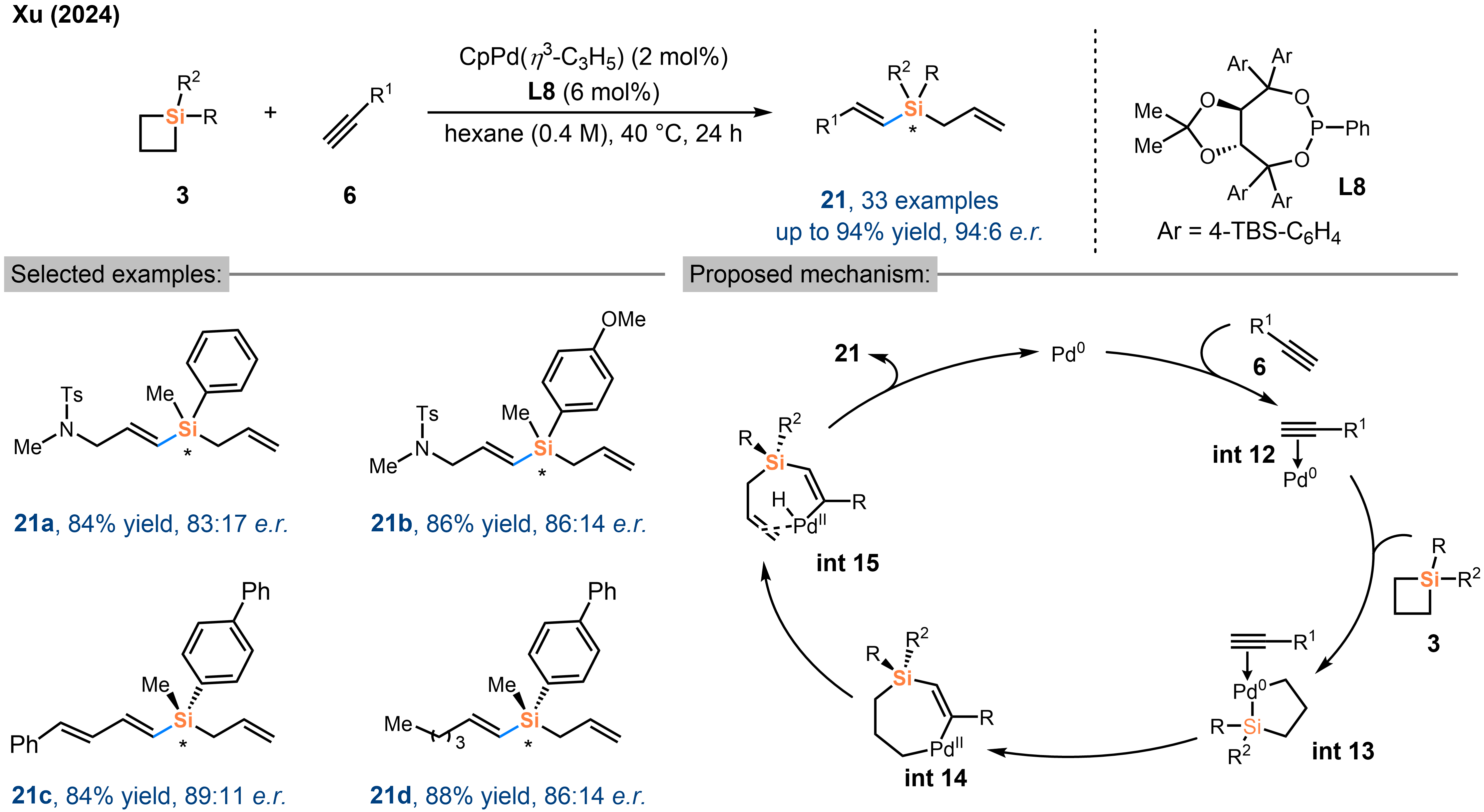
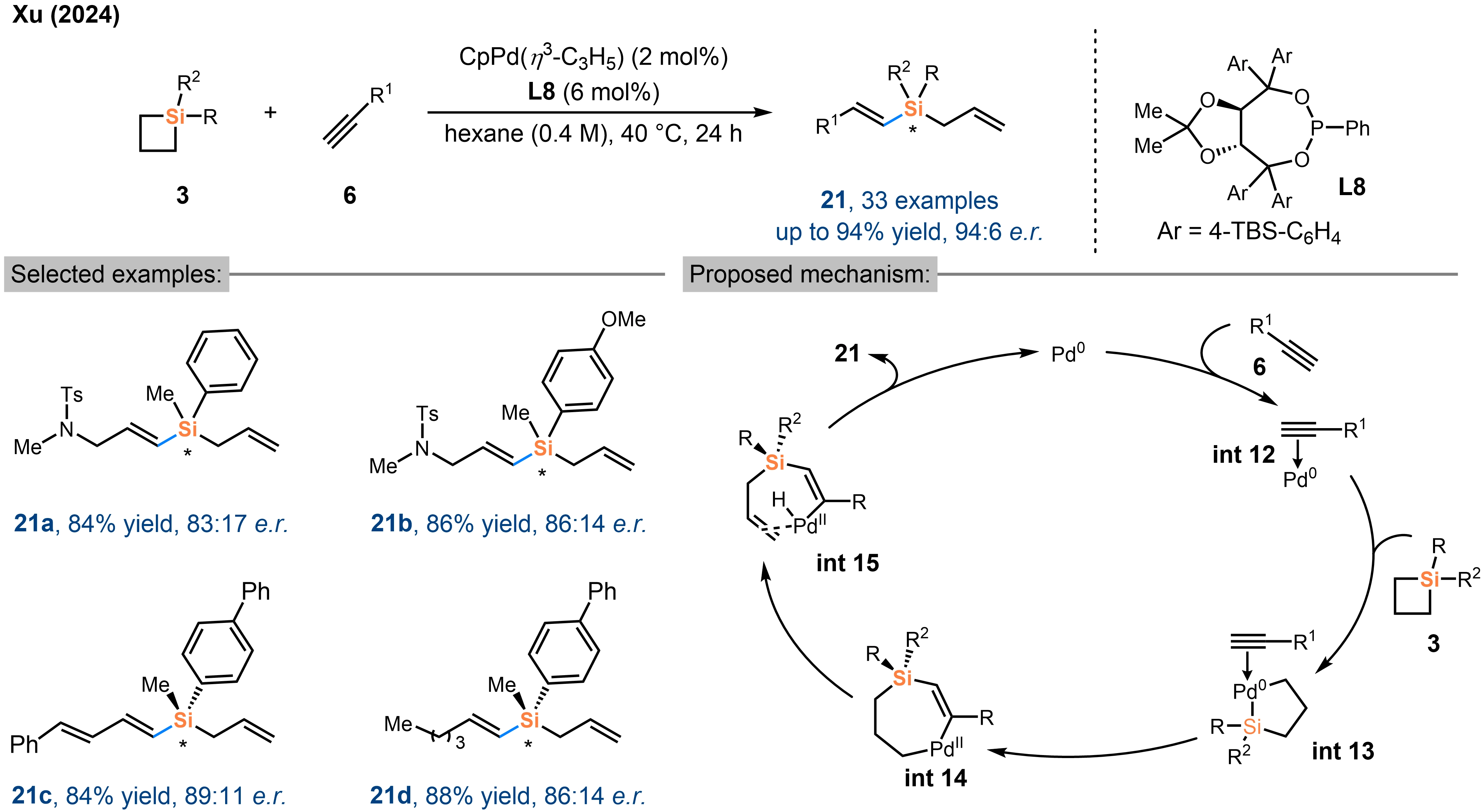
Figure 10. Pd-catalyzed desymmetric coupling reaction between silacyclobutanes and terminal alkynes.
Previous catalytic enantioselective desymmetrization reactions of silacyclobutanes with alkynes have mainly been directed toward the construction of silicon-stereogenic silacycles. In 2024, Song and co-workers reported a significant conceptual advance, establishing a versatile strategy for the synthesis of axially chiral silacyclohexenyl arenes through palladium-catalyzed ring expansion of benzosilacyclobutenes with internal naphthyl alkynes (Figure 11)[35]. The key to success lies in the strategic tuning of ligand cavity size, which allows for the divergent and enantioselective activation of either the Si-C(sp3) or Si-C(sp2) bond in benzosilacyclobutenes. Specifically, the (S)-8H-binaphthyl-derived phosphoramidite ligand L9 selectively activates the Si-C(sp3) bond to furnish (S)-1-silacyclohexenyl arenes 24, whereas the (R)-spiro phosphoramidite ligand L10 promotes Si-C(sp2) bond cleavage to afford (S)-2-silacyclohexenyl arenes 25. DFT calculations revealed that the ligand cavity size is the key determinant of regioselectivity: in the Si-C(sp3) pathway, both oxidative addition and migratory insertion contribute to regiocontrol, with enantioselectivity governed by migratory insertion; in the Si-C(sp2) pathway, migratory insertion dictates both regio- and enantioselectivity. The method is notable for its broad substrate scope, good functional-group tolerance, and the potential for product derivatization into axially chiral phosphite ligands for asymmetric catalysis.
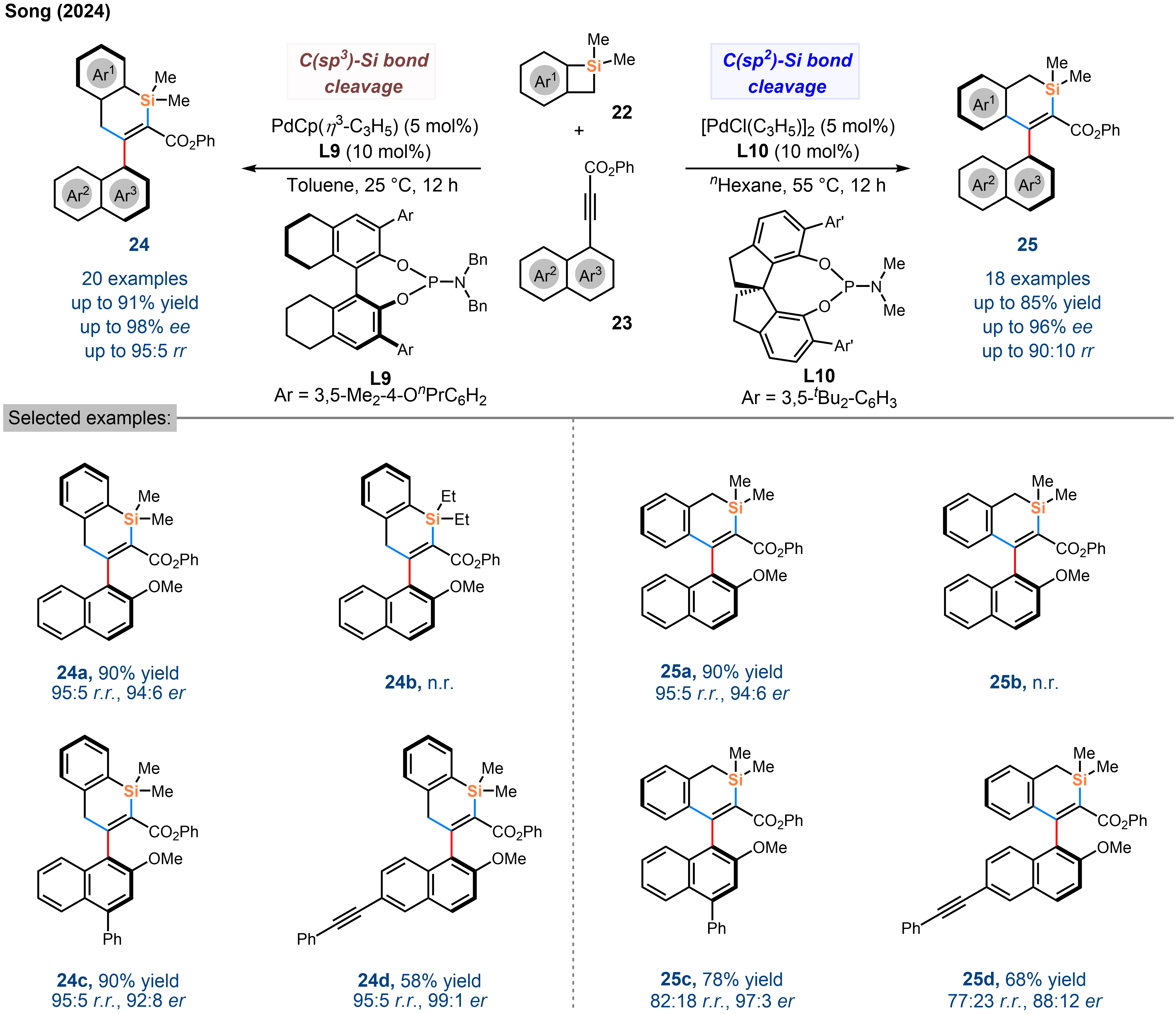
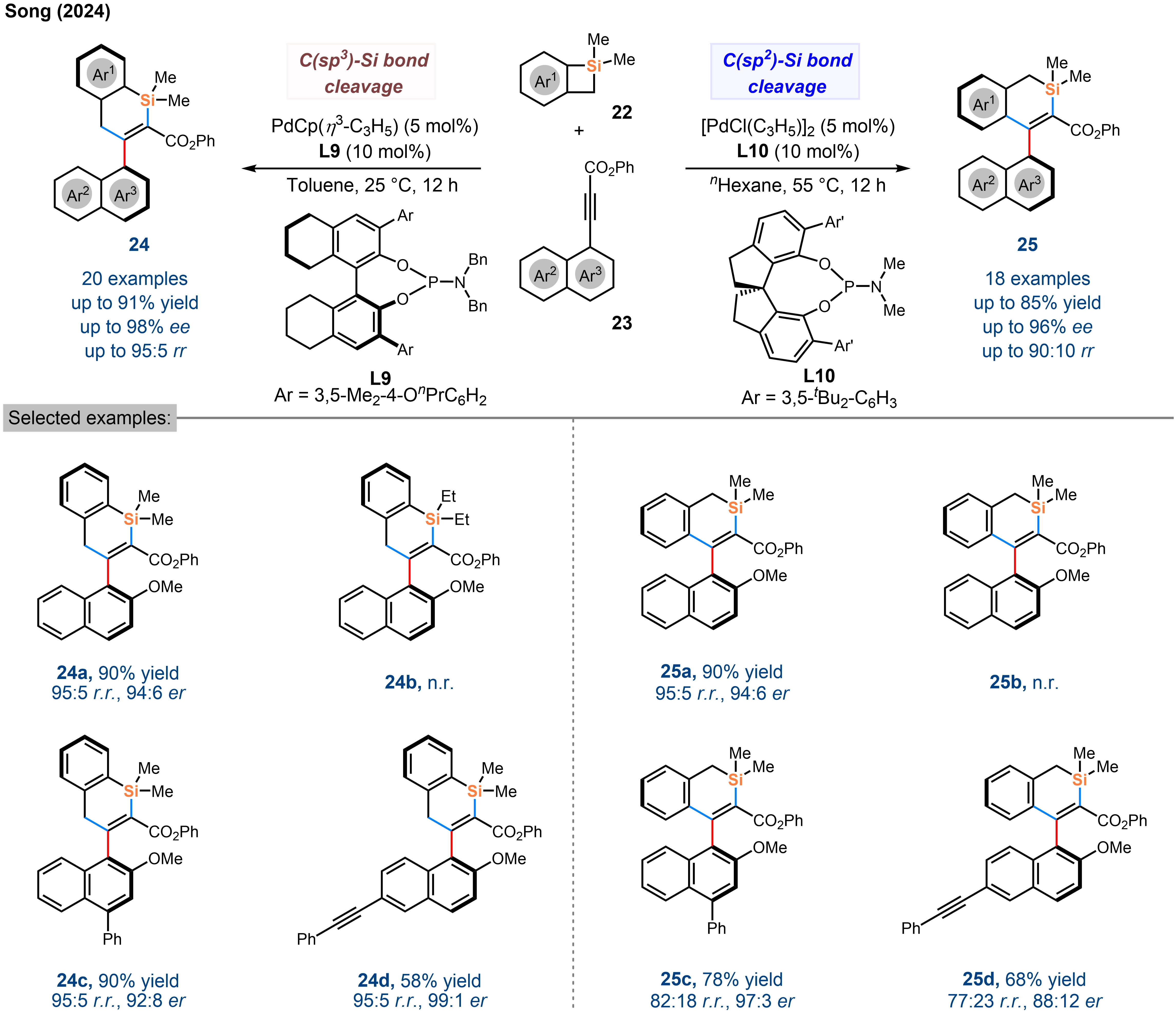
Figure 11. Synthesis of axially chiral silacyclohexenyl arenes through palladium-catalyzed ring expansion of benzosilacyclobutenes with internal naphthyl alkynes.
While catalytic enantioselective desymmetrization has become the predominant strategy for constructing silicon-stereogenic silacycles from silacyclobutanes and alkynes, kinetic resolution of silicon-centered chirality has remained a challenging objective. In 2025, Xu and co-workers successfully addressed this challenge by developing a palladium-catalyzed enantioselective [4+2] silacycloaddition of racemic benzosilacyclobutenes with unsymmetrical internal alkynes, achieving a kinetic resolution that furnishes silicon-stereogenic benzo[c]siline derivatives 28 and 29 with good enantioselectivities (Figure 12)[36]. The reaction proceeds via selective cleavage of the Si-C(sp3) bond, facilitated by chiral TADDOL-derived phosphoramidite ligands L11 and L12. The catalytic system operates under mild conditions, exhibits high chemoselectivity, tolerates a wide range of functional groups, and shows particular efficacy with unsymmetrical alkynes bearing ketone or ester moieties. Detailed kinetic and DFT studies established a nonclassical kinetic resolution mechanism, in which Si-C oxidative addition is the enantioselectivity-determining step, with stereocontrol exerted by the steric environment of the ligand. Of particular interest, the resultant silicon-stereogenic products displayed promising antiproliferative activity against HeLa cells, underscoring their potential in anticancer drug discovery[36].
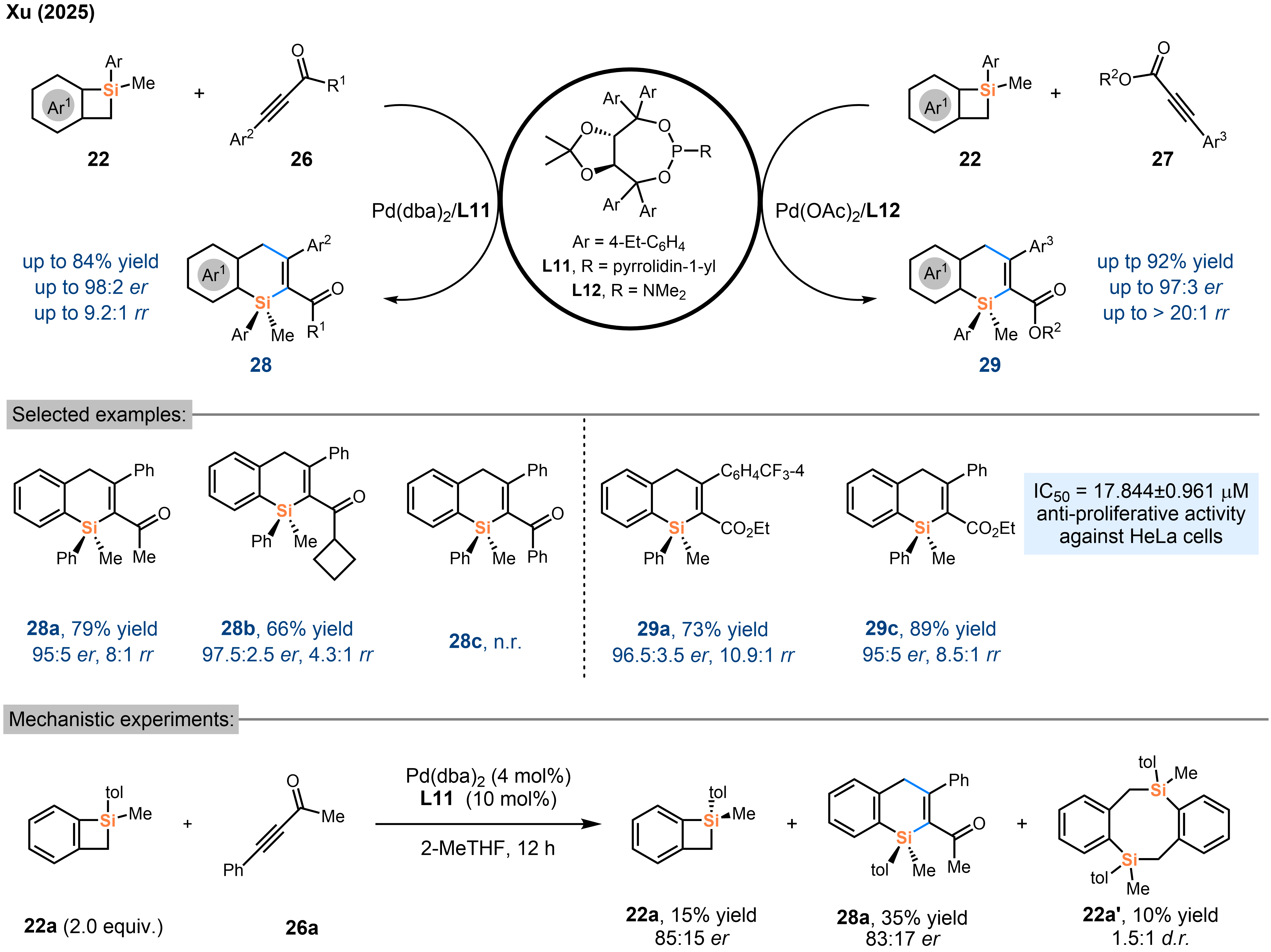
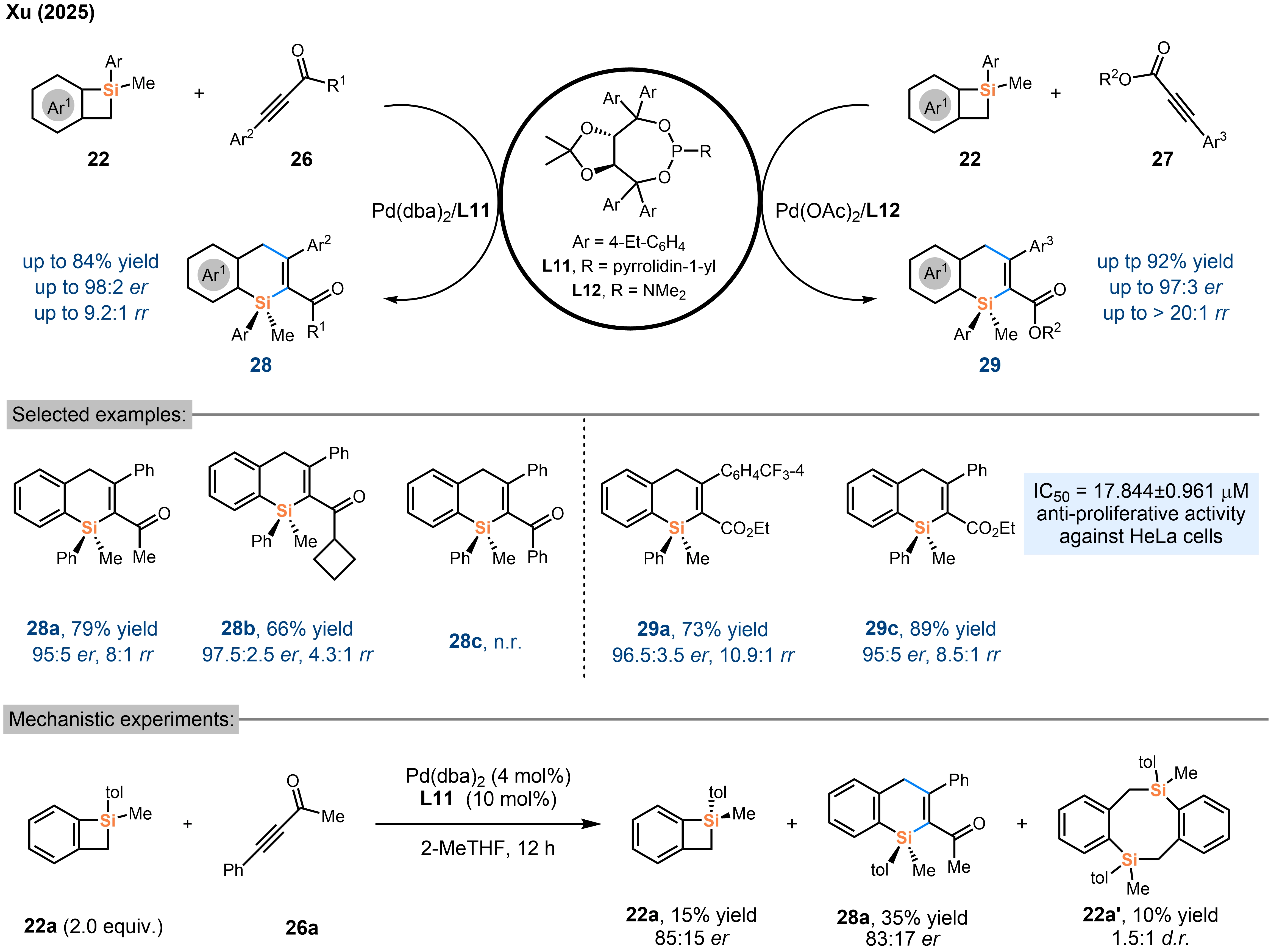
Figure 12. Pd-catalyzed enantioselective [4+2] silacycloaddition of unsymmetrical internal alkynes with racemic benzosilacyclobutenes. IC50: half-maximal inhibitory concentration.
In the same year, they also disclosed a palladium-catalyzed enantioselective ring expansion of racemic benzosilacyclobutenes 22 with ester-activated alkynes 30, affording silicon-stereogenic 1,2-dihydrobenzo silines 31 in up to 95% yield with moderate enantioselectivity (Figure 13)[37]. Time-course experiments revealed that the ee of the product remained essentially unchanged during the reaction, suggesting that the process may involve a parallel kinetic resolution or a dynamic kinetic asymmetric transformation rather than a classical kinetic resolution.
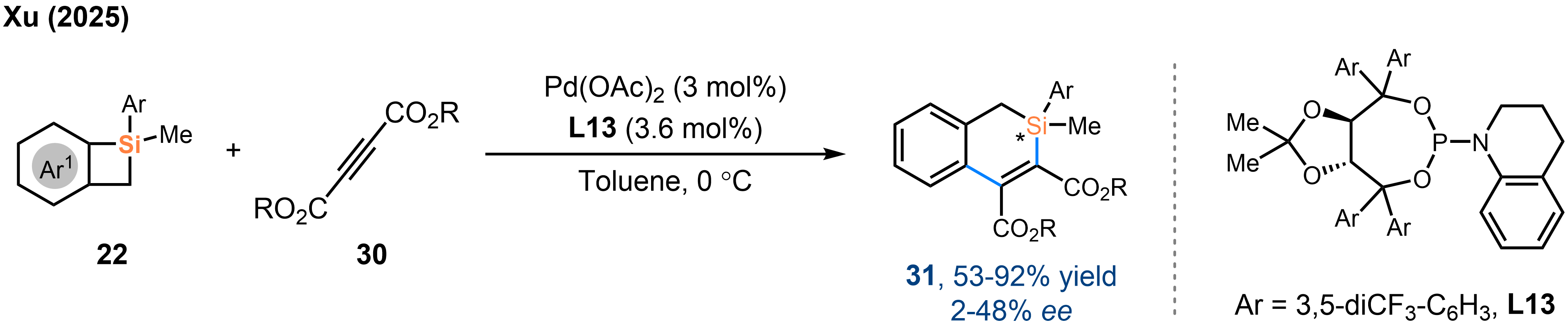
Figure 13. Palladium-catalyzed enantioselective ring expansion of racemic benzosilacyclobutenes with ester-activated alkynes.
Beyond these intermolecular reactions, the intramolecular ring opening of alkyne-tethered silacyclobutanes was very recently realized by Xu and co-workers (Figure 14)[38]. Using a 3,5-bis(trifluoromethyl)-substituted TADDOL-derived phosphoramidite ligand L14, a range of silicon-stereogenic benzo-fused sila-O/N-heterocycles 33 were obtained in high yields with excellent enantioselectivity, and the reaction reached completion within 10 s (turnover frequency (TOF) > 17,280 h-1) while tolerating air and moisture.
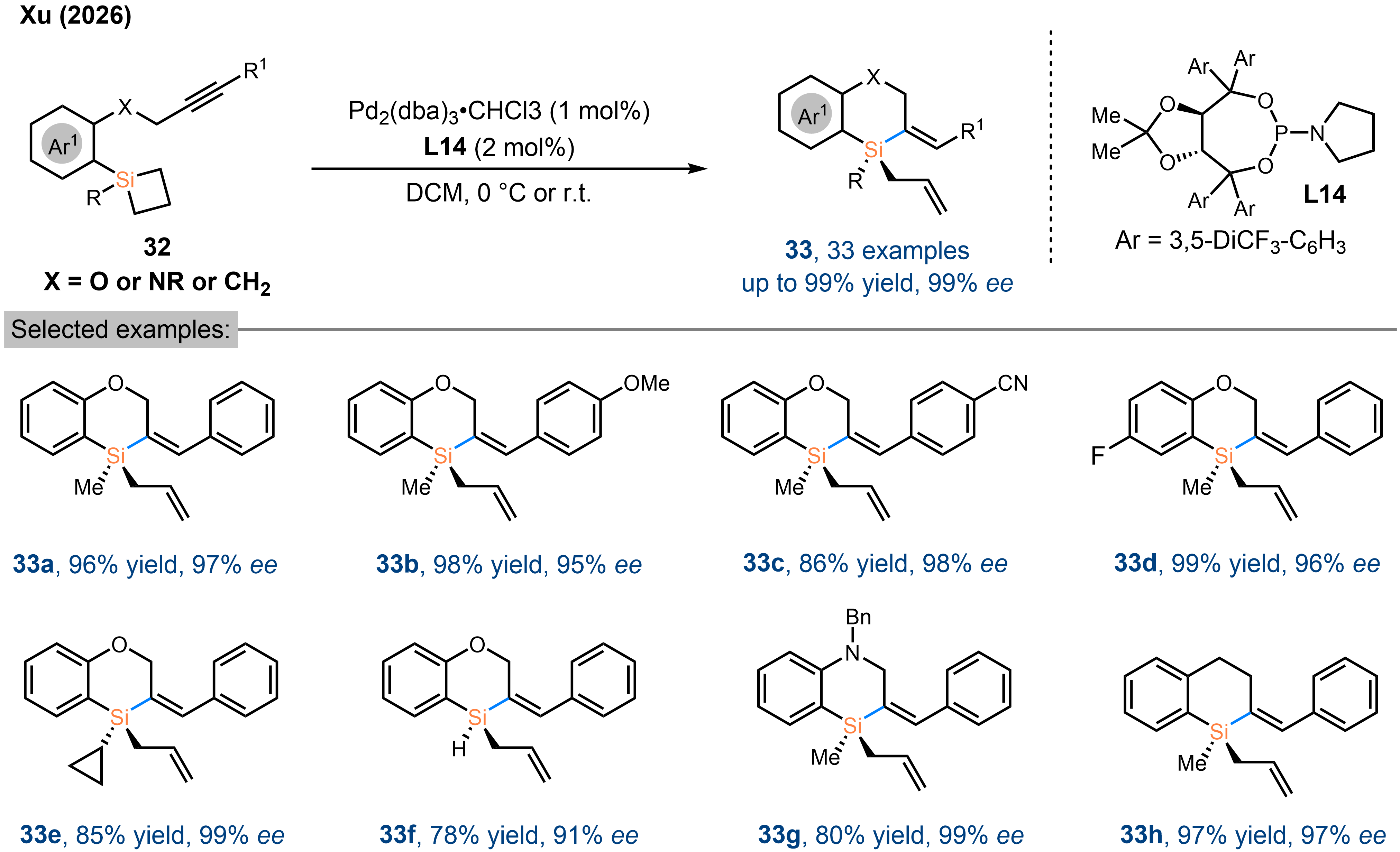
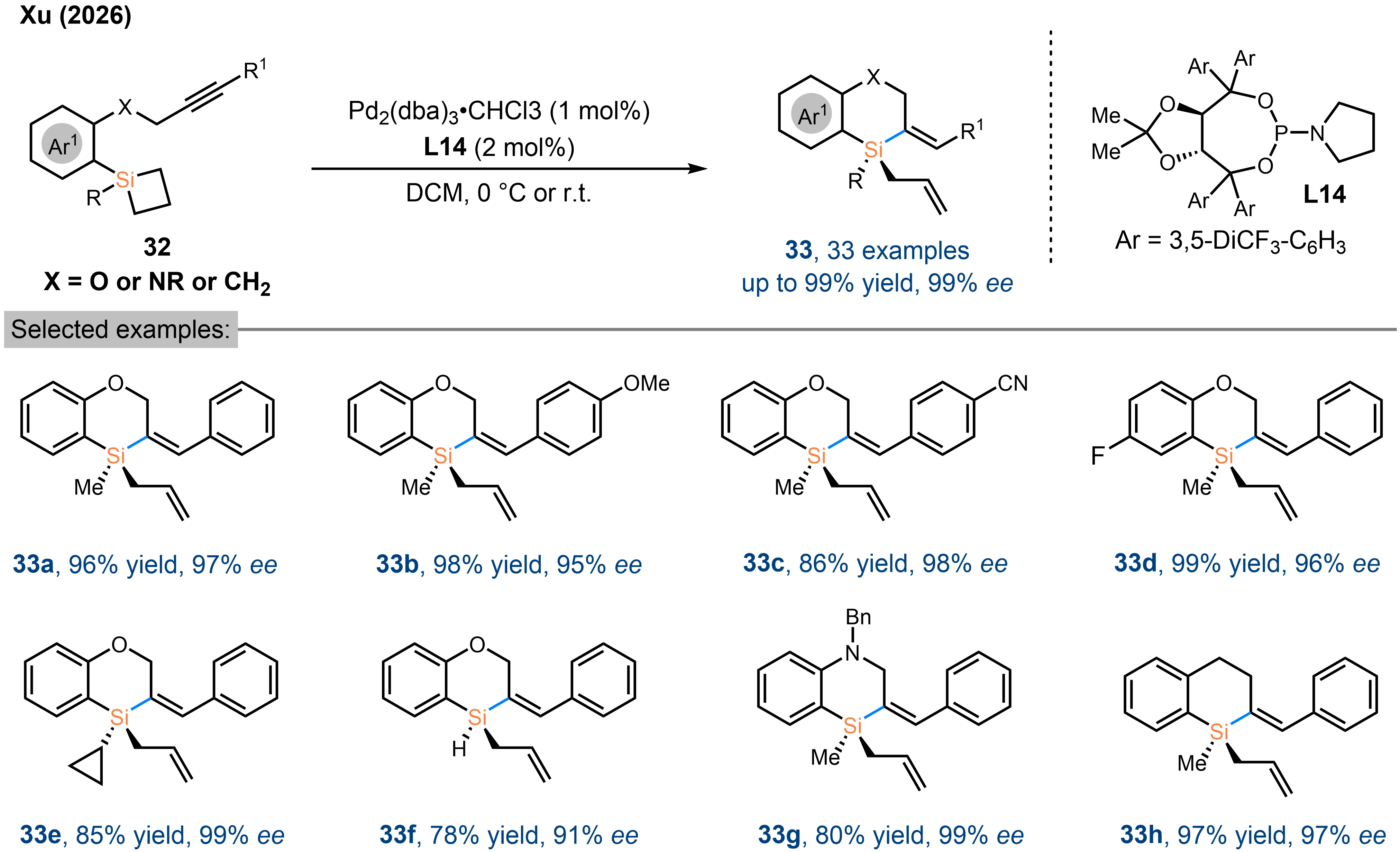
Figure 14. Pd-catalyzed Si-C activation and intramolecular ring-opening silacyclization.
3. Asymmetric Reactions of Silacyclobutanes with Alkenes
In 2007, Yorimitsu, Oshima, and co-workers pioneered the ring-opening of silacyclobutanes with terminal alkenes catalyzed by nickel, which produced linear vinylsilanes in good yields[39]. Despite this early progress, the subsequent development of asymmetric catalytic reactions, especially cycloadditions, remained a significant challenge for over a decade. This challenge was finally met in 2020 by Xu and co-workers, who disclosed a palladium-catalyzed [4+2] cycloaddition of benzosilacyclobutanes 22 with cyclopropenes 34, affording highly strained silabicyclo[4.1.0]heptanes 35 in good yields with excellent stereoselectivity (Figure 15)[40]. The reaction involves a chemoselective Si-C(sp2) bond activation step that is synergistically coupled with a C=C bond-activation-initiated [4+2] annulation, leading to the formation of both C(sp2)-C(sp3) and Si-C(sp3) bonds. The excellent stereocontrol is attributable to the electron-deficient phosphine ligand L15, which promotes selective Si-C bond activation, and the directing effect of the ester group on the cyclopropene. Notably, the chiral silabicyclic products possess good derivatization potential: they can be converted to multisubstituted cyclopropanes via fluoride-induced Si-C cleavage or subjected to hydroxyl functionalization, underscoring their synthetic utility.
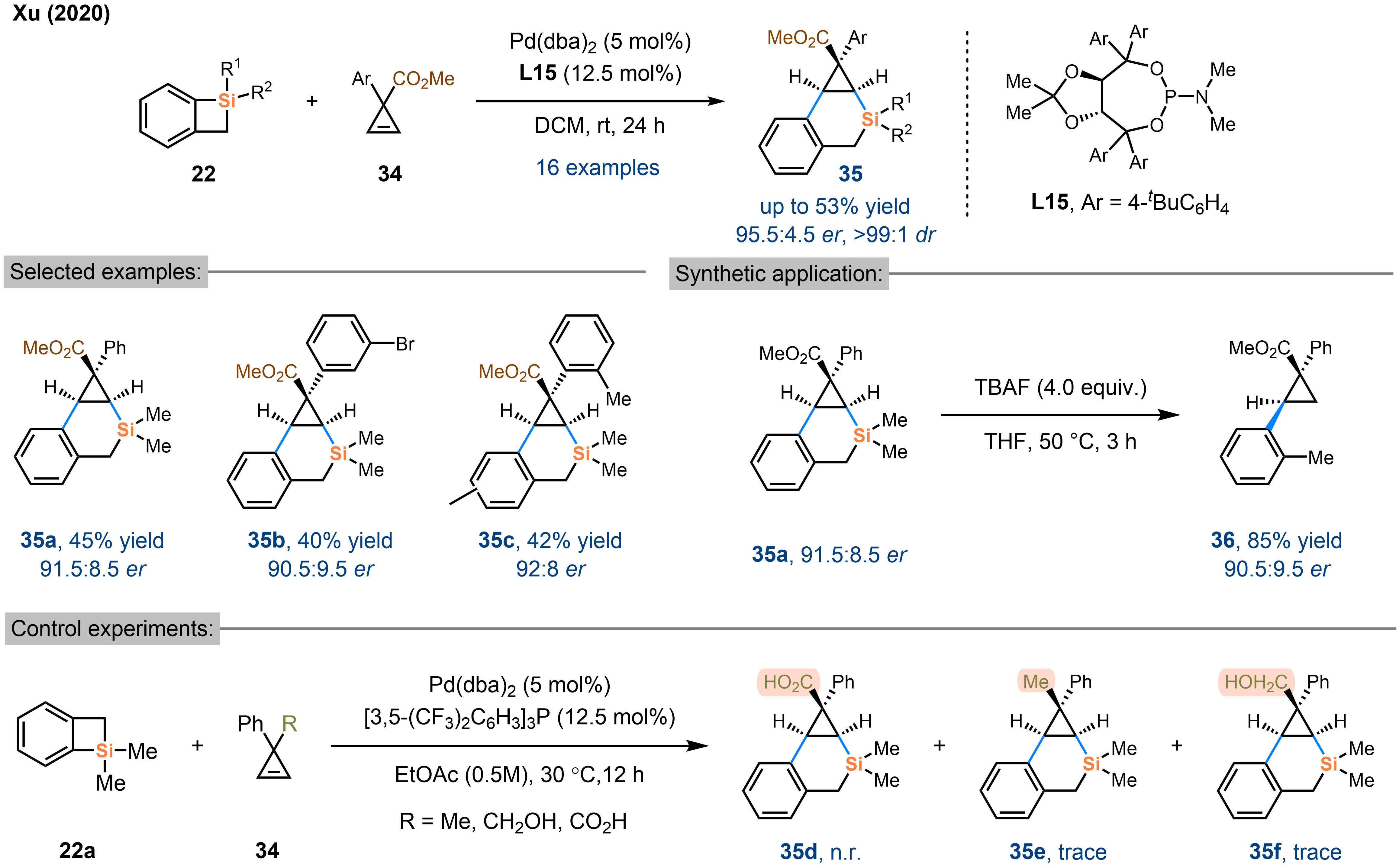
Figure 15. Pd-catalyzed asymmetric cycloaddition of alkenes with benzosilacyclobutanes. DCM: dichloromethane.
In 2024, Li and co-workers disclosed a Rh(I)-catalyzed enantioselective [4+3] cycloaddition of benzosilacyclobutenes 22 with bicyclic olefins 37, which proceeds through a formal [2σ+2σ] coupling of C-Si and O-Si bonds to deliver seven-membered chiral silacycles 38 with excellent enantiocontrol (up to 96% ee) (Figure 16)[41]. The authors identified [Rh(C2H4)2Cl]2 with the QuinoxP* ligand L16 in 1,4-dioxane at 60 °C as the optimal catalytic system. Mechanistic studies revealed that oxidative addition of the Si-C(sp2) bond serves as the turnover-limiting step, while migratory insertion of the aryl-Rh species is enantiodetermining. The protocol exhibited good functional-group tolerance on the benzosilacyclobutene component; however, simple unfused SCBs were unreactive under the standard conditions. The chiral products are synthetically versatile, undergoing various post-functionalizations without erosion of enantiopurity, and the protocol is scalable. The authors conducted control experiments to investigate whether epoxide or 1-naphthol intermediates, possibly formed by isomerization of 38a, could be responsible for the observed reactivity. The absence of a cross-coupling product with either species under the standard conditions confirmed that 38a participates directly in the reaction, ruling out the involvement of these isomerized intermediates. Overall, this study establishes an efficient intermolecular strategy for the construction of medium-sized chiral silacycles and expands the boundaries of asymmetric C-Si bond activation.
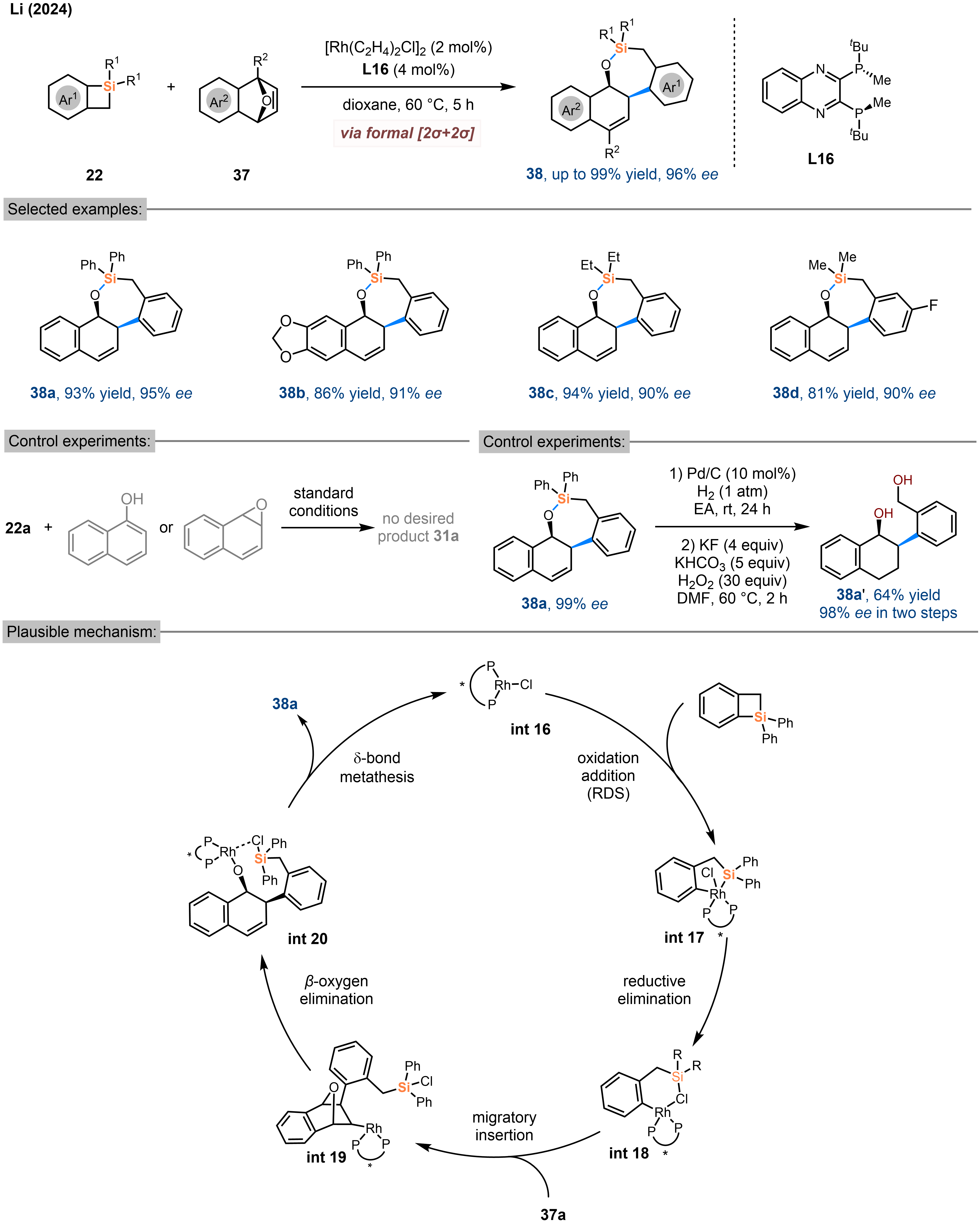
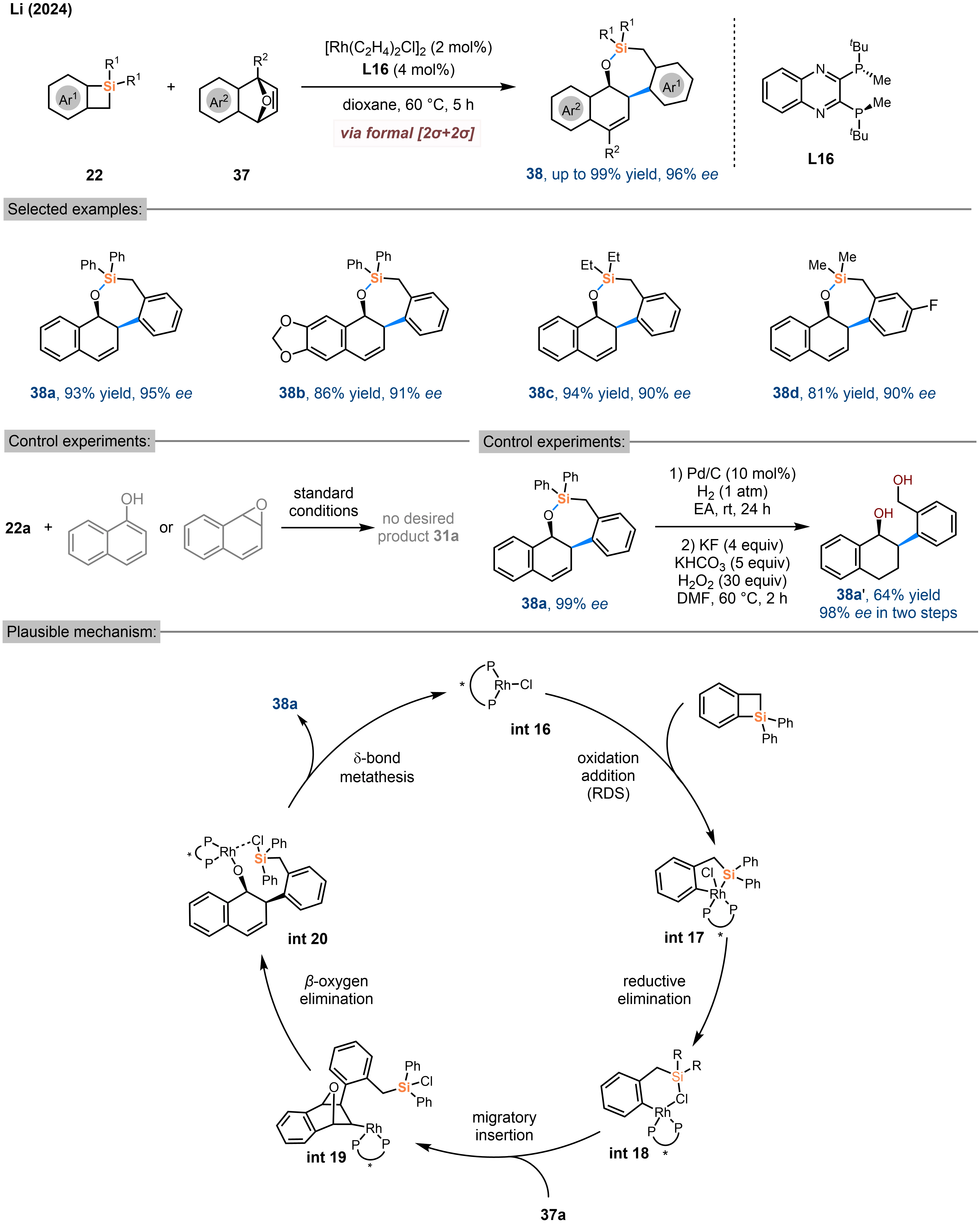
Figure 16. Rh-catalyzed asymmetric [4+3] cycloaddition via formal [2σ+2σ] couplings.
Very recently, DFT calculations by Li, Huang, and co-workers re-examined the mechanism of this reaction (Figure 16, bottom)[42]. The originally proposed pathway, involving direct olefin insertion into the Rh(III) metallacycle, was found to be kinetically inaccessible; instead, the rhodacyclic intermediate first undergoes Si-Cl reductive elimination to give a less congested Rh(I)-aryl species, which then engages the olefin through migratory insertion (the enantioselectivity-determining step), β-O elimination, and σ-bond metathesis. The revised cycle, with C-Si oxidative addition as the turnover-limiting step, is consistent with the kinetic data and accounts for the high enantioselectivity through steric repulsion between the ligand and the olefin substrate in the disfavored transition state.
In addition to the two aforementioned examples of asymmetric ring expansion of SCBs with terminal alkenes, the asymmetric ring-opening of SCBs with terminal alkenes has also made significant strides. In 2021, Zhao and co-workers reported the first intramolecular asymmetric ring-opening of silacyclobutanes 39 featuring an alkene moiety at the adjacent position. Using a Ni/L17 catalytic system, this protocol enabled the efficient synthesis of benzosiloles 40 possessing tetraorganosilicon stereocenters in excellent yields and with high enantioselectivities (Figure 17)[43]. Notably, alkali metal alkoxides were found to be essential for the reaction, presumably through their interaction with the silicon center of the substrate, thereby facilitating Si-C bond cleavage. To gain mechanistic insight, the authors subjected the deuterated substrate [D2]-39g to the standard reaction conditions, obtaining [D2]-40g in 83% yield with 93% ee. This deuterium incorporation suggests that β-hydride elimination is irreversible under the reaction conditions. Based on this deuterium labeling experiment and relevant literature, the authors proposed two plausible mechanistic pathways. Path A commences with coordination of the Ni catalyst to the alkene moiety to generate an η²-complex int 21, which undergoes Si-C bond cleavage via σ-bond metathesis with the Ni-alkene unit (termed transmetalation in the original proposal) to afford intermediate int 24; subsequent β-hydride elimination and reductive elimination deliver 40. Path B involves initial oxidative addition of the Si-C bond to Ni, followed by alkenyl insertion to produce the same intermediate int 23. Given the indispensable role of sodium tert-butoxide, the authors favored Path A, although Path B could not be entirely discounted.
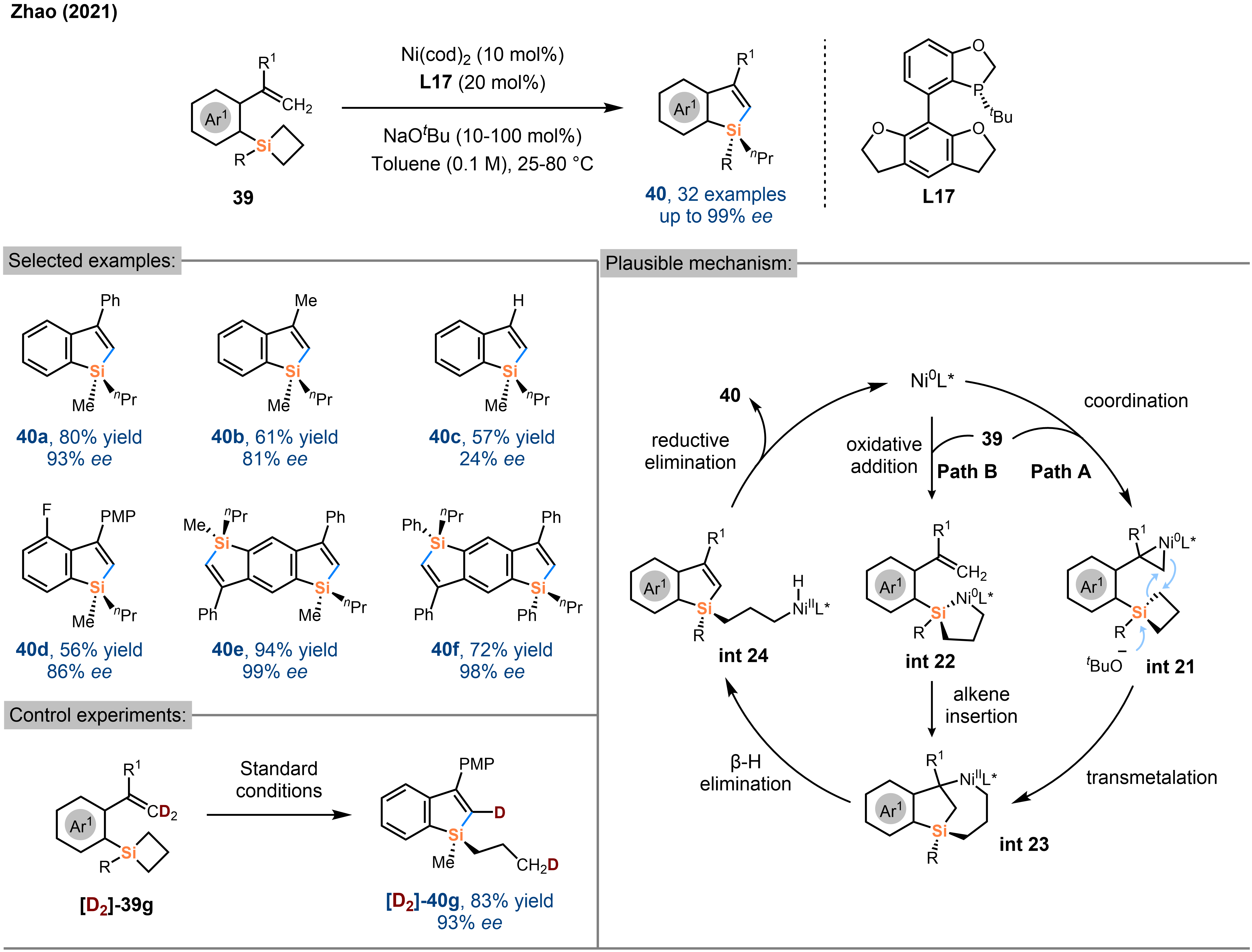
Figure 17. Nickel(0)-catalyzed intramolecular asymmetric ring-opening of SCBs. SCBs: silacyclobutanes.
This mechanistic picture was subsequently revisited by Xu through systematic DFT calculations (Figure 18)[44]. Their computed free-energy profile supports a pathway commencing with Si-C oxidative addition, followed by intramolecular alkenyl insertion to furnish the nickelacyclic intermediate int 23. In contrast to the original proposal, β-hydride elimination was not located on the potential energy surface; instead, the reaction is proposed to terminate through LLHT coupled with reductive demetalation via transition state TSLLHT, plausibly because the multicyclic intermediates required for the conventional pathway are destabilized by ring strain. Moreover, the alkenyl insertion was identified as both the rate- and enantioselectivity-determining step, with the observed enantioselectivity arising from C-H···π contacts and hydrogen bonding within the corresponding transition states. These divergent mechanistic interpretations indicate that the mechanism of this transformation remains to be fully established experimentally.
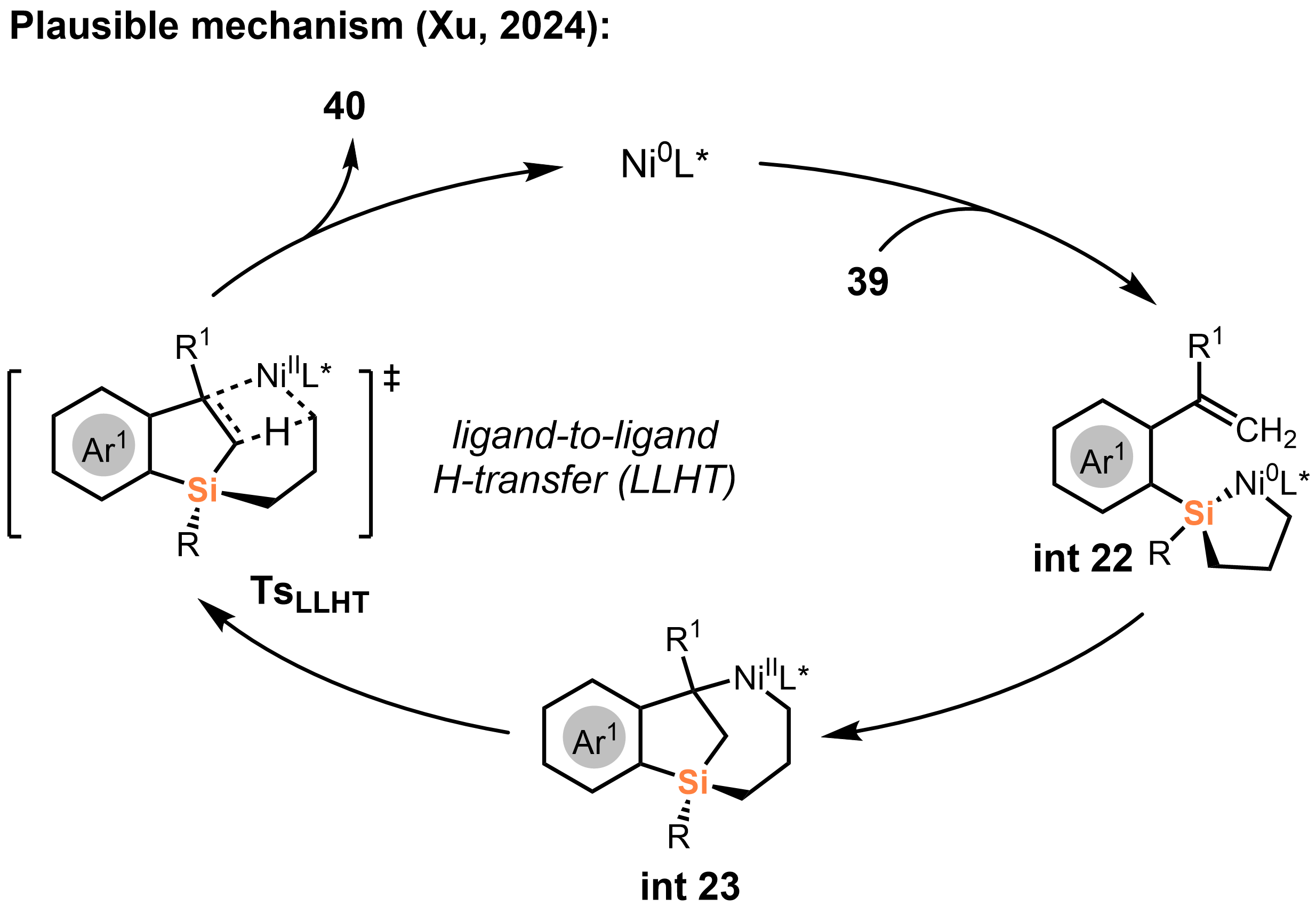
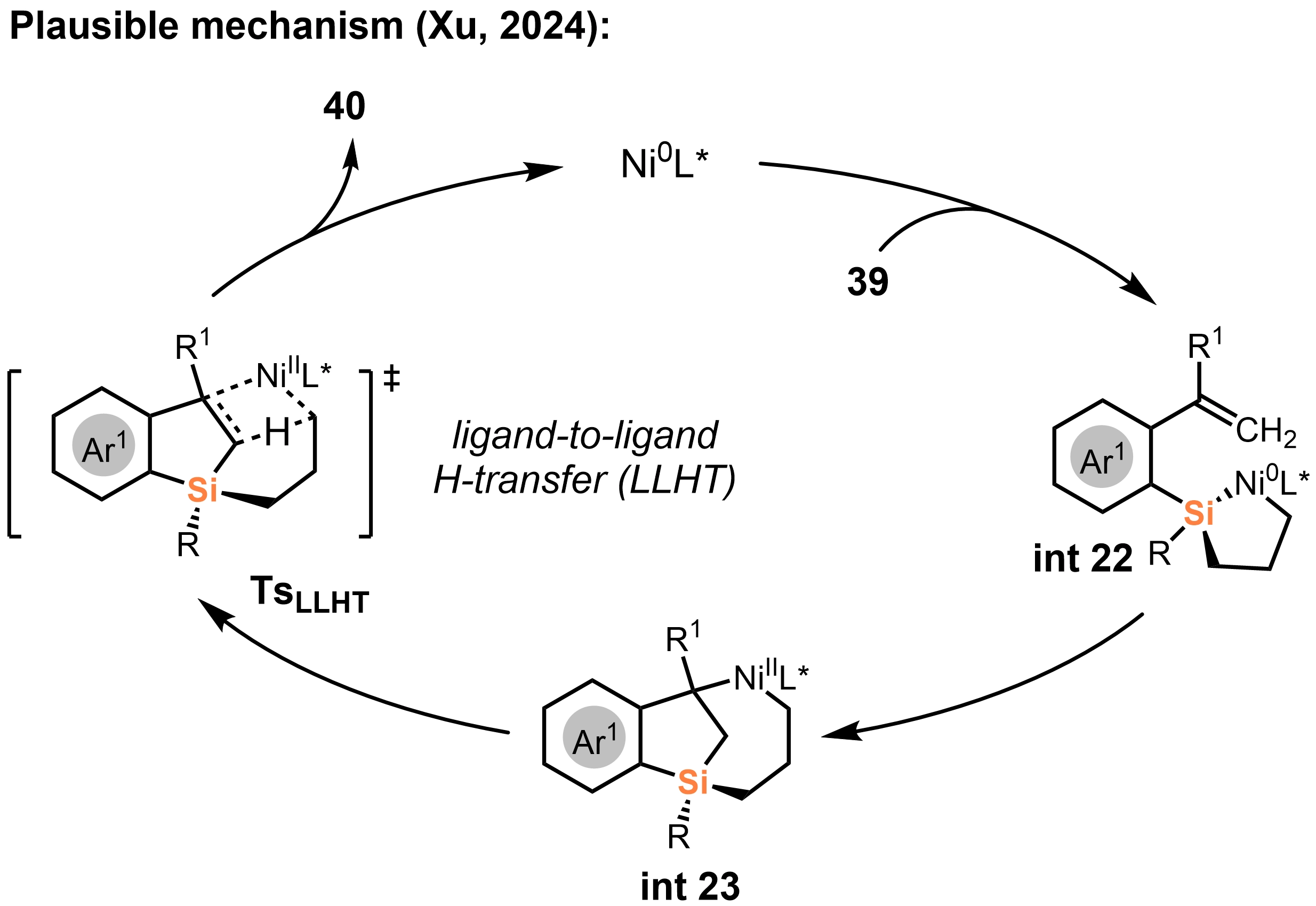
Figure 18. DFT-revised mechanism of the Ni(0)-catalyzed intramolecular asymmetric ring-opening of SCBs shown in Figure 17. SCBs: silacyclobutanes; DFT: density functional theory.
In 2025, the same group developed the first intermolecular asymmetric ring-opening of silacyclobutanes 3 with simple alkenes 41 using a chiral Rh catalytic system, affording linear silicon-stereogenic vinylsilanes 42 with high enantioselectivities (Figure 19)[45]. This method enables both terminal alkene silylation and chain-walking-based remote silylation of internal alkenes, with remarkable regioconvergent and enantioconvergent conversion of olefin isomer mixtures and broad functional-group compatibility. The authors attributed the promoting effect of LiOtBu to its interaction with the silicon center of the silacyclobutane, which facilitates the oxidative addition of the C-Si bond to Rh(I). Mechanistic investigations identified L18Rh-H as the catalytically active species, with Si-C oxidative addition serving as both the rate- and enantioselectivity-determining step. In addition, deuterium labeling experiments revealed that the reaction pathway operative in this Rh system is distinct from that of the nickel-catalyzed protocol reported by Yorimitsu and Oshima.
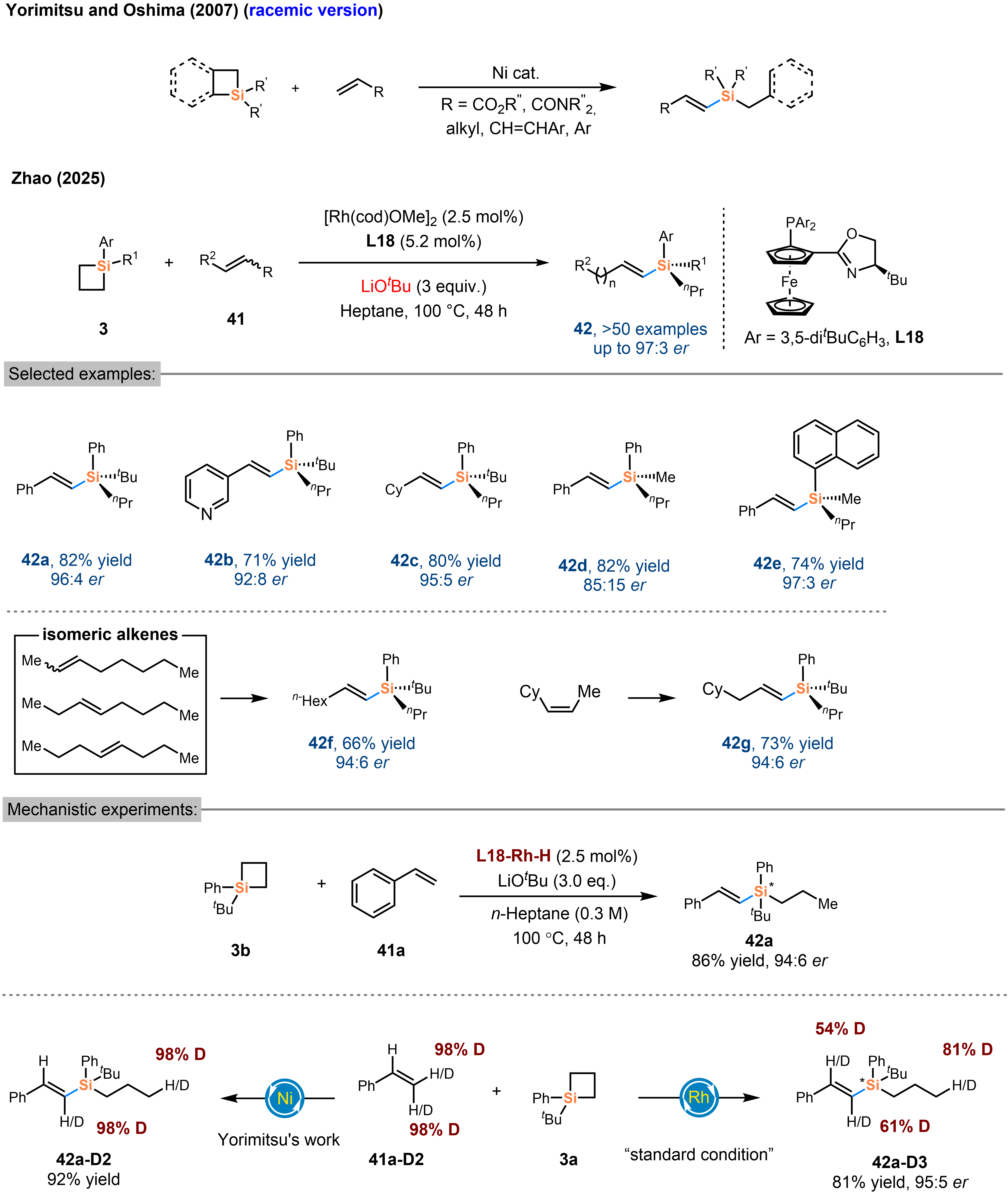
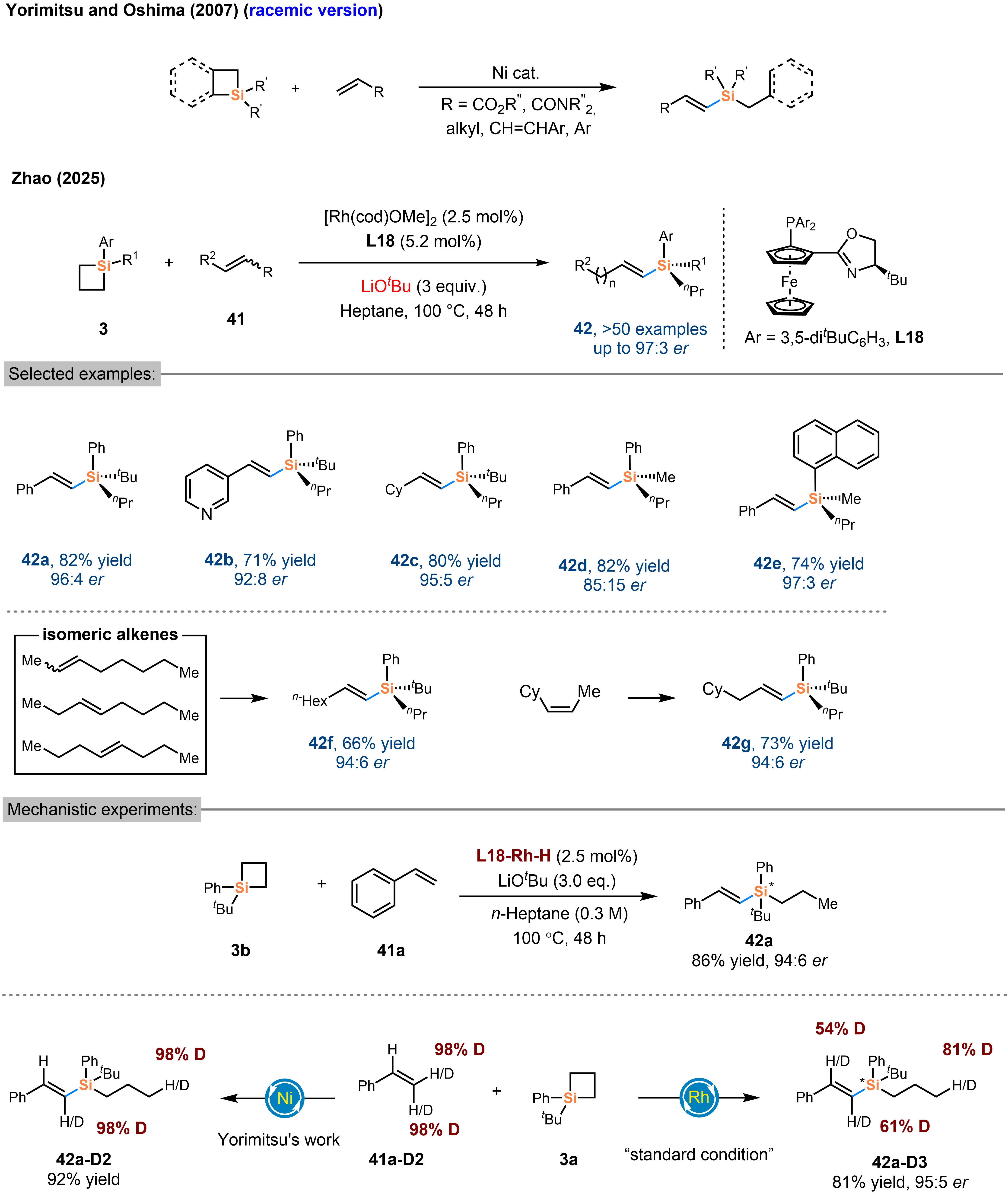
Figure 19. Enantioselective Rh-catalyzed ring opening reaction of SCBs. SCBs: silacyclobutanes.
4. Asymmetric Reactions of Silacyclobutanes with Allenes
Allene represents one of the most widely utilized unsaturated coupling partners in organic synthesis, but its reaction with silacyclobutanes has been scarcely documented, primarily due to the formidable selectivity challenges. The first study in this area dates back to 1991, when Oshima, Utimoto, and colleagues described the PdCl2(PPh3)2-catalyzed ring expansion of silacyclobutanes with allenes. Unfortunately, this early protocol included only two examples and suffered from poor chemoselectivity, affording a mixture of three regioisomeric products[24]. Although this early work laid the foundation, asymmetric catalytic variants remained a long-standing challenge until 2022, when Song’s group successfully developed the first asymmetric intermolecular ring expansion of silacyclobutanes 3 with allenoates 43 using a Pd/chiral phosphoramidite L19 catalytic system (Figure 20a)[46]. The transformation proceeds via β,γ-insertion to construct a Si-Cβ bond and delivers 2-(E)-enoate-substituted silacyclohexenes 44 in a moderate to good enantioselective manner.
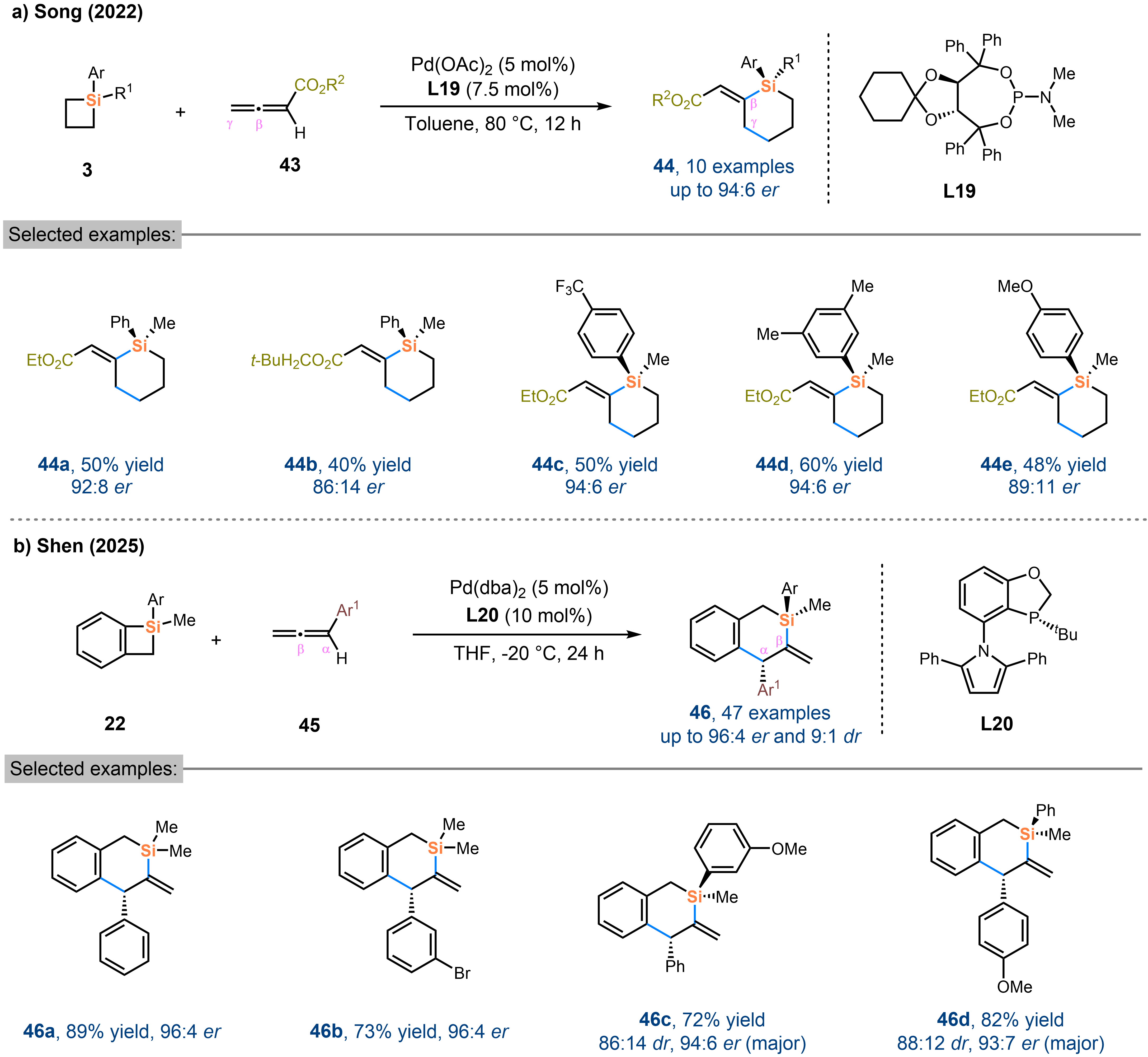
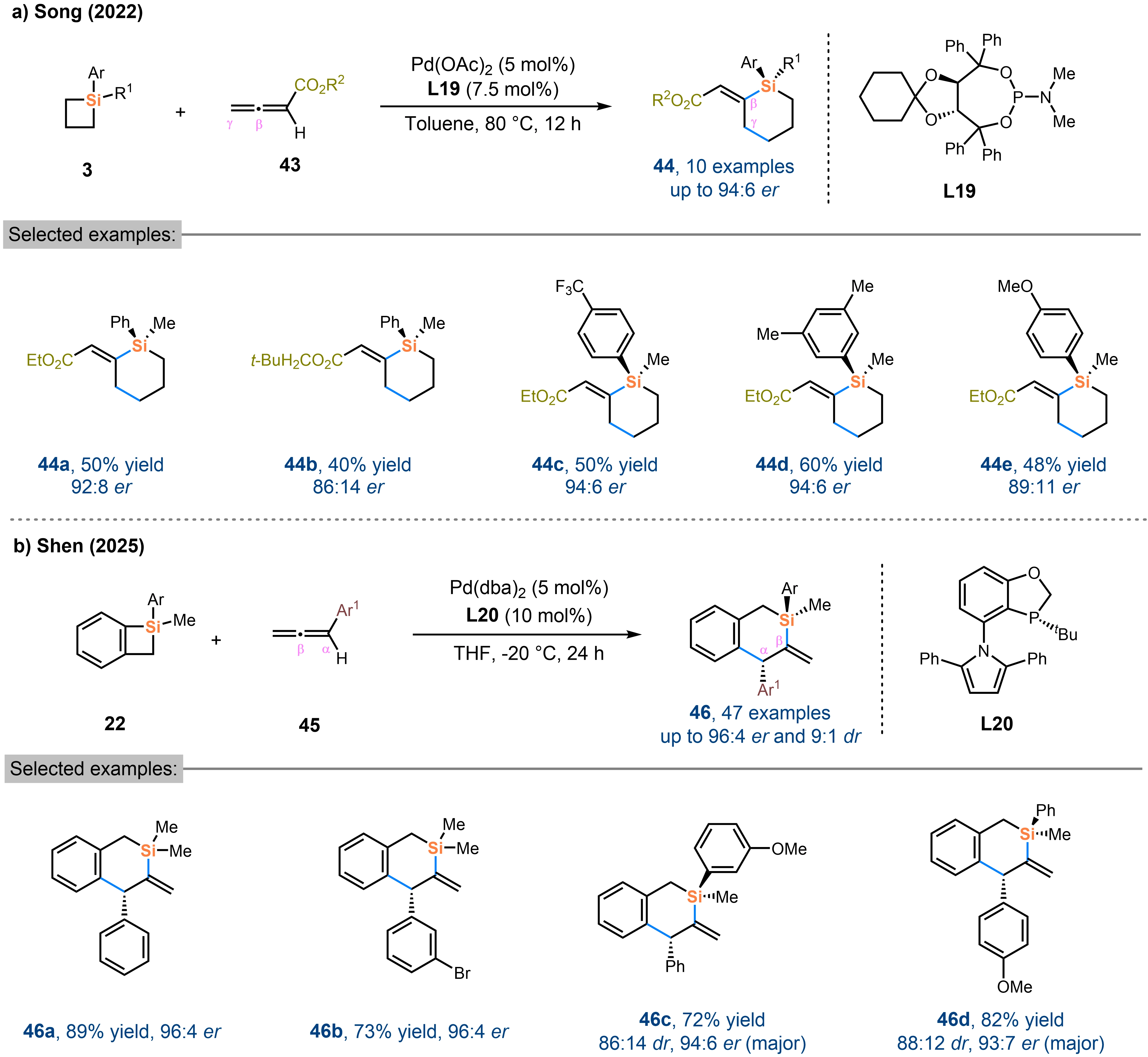
Figure 20. Pd-catalyzed enantioselective ring expansion of SCBs with allene by Song and Shen. SCBs: silacyclobutanes; THF: tetrahydrofuran.
The allene substrate scope was further extended to arylallenes in 2025 by Shen and co-workers, who developed a chiral monophosphine ligand L20-controlled Pd-catalyzed enantioselective [4+2] cycloaddition of racemic benzosilacyclobutenes with 1-arylallenes 45 (Figure 20b)[47]. This reaction provides a versatile platform for the synthesis of enantioenriched benzosilacyclohexanes bearing carbon stereocenters or both carbon- and silicon-stereogenic centers, with excellent levels of regio-, diastereo-, and enantioselectivity. Mechanistic studies, combining experimental data with DFT calculations, revealed that the ligand plays a crucial role in governing both the rate-determining and selectivity-determining steps of the β,γ-ring expansion/annulation process.
Almost simultaneously, Wang, Zhang, and colleagues independently disclosed a highly enantioselective palladium-catalyzed [4+2] annulation of benzosilacyclobutenes with a broad range of allenes 47 using a new chiral phosphoramidite ligand L21, furnishing enantioenriched chiral silatetralins 48 with excellent chemo-, regio-, and enantioselectivity (Figure 21)[48]. The transformation is distinguished by the exclusive insertion of the proximal allene C=C bond and the chemoselective activation of the Si-C(sp2) bond of the benzosilacyclobutene, while the chiral ligand effectively suppresses the competing non-enantioselective background pathway. The catalytic system is remarkably general, tolerating allenes with alkyl, alkenyl, aryl, heteroaryl, silyl, alkoxy, and various other functional substituents, including those found in bioactive molecules. Overall, this work provides a concise and efficient route to chiral silatetralins, with significant potential for bioisosteric optimization in medicinal chemistry.
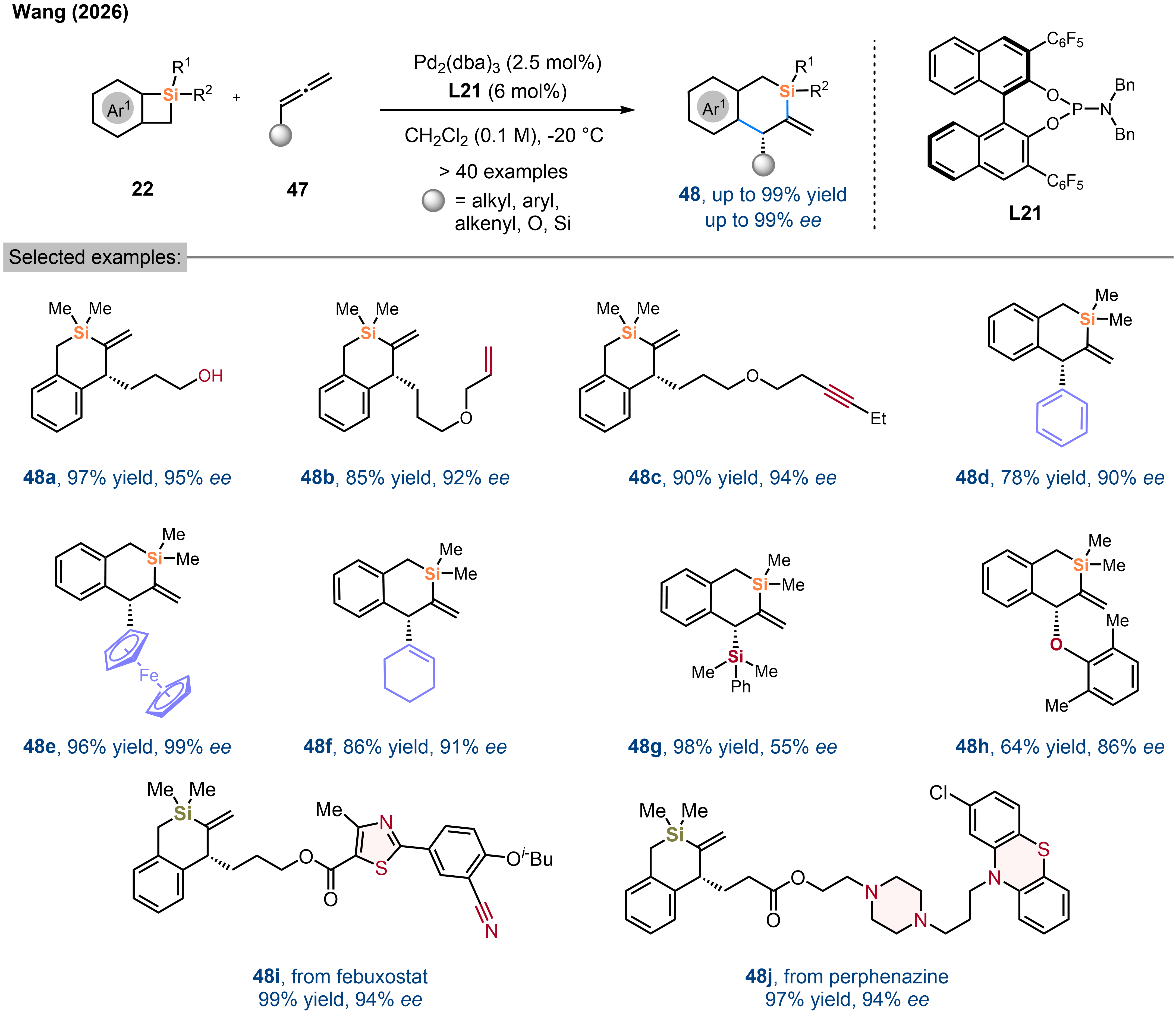
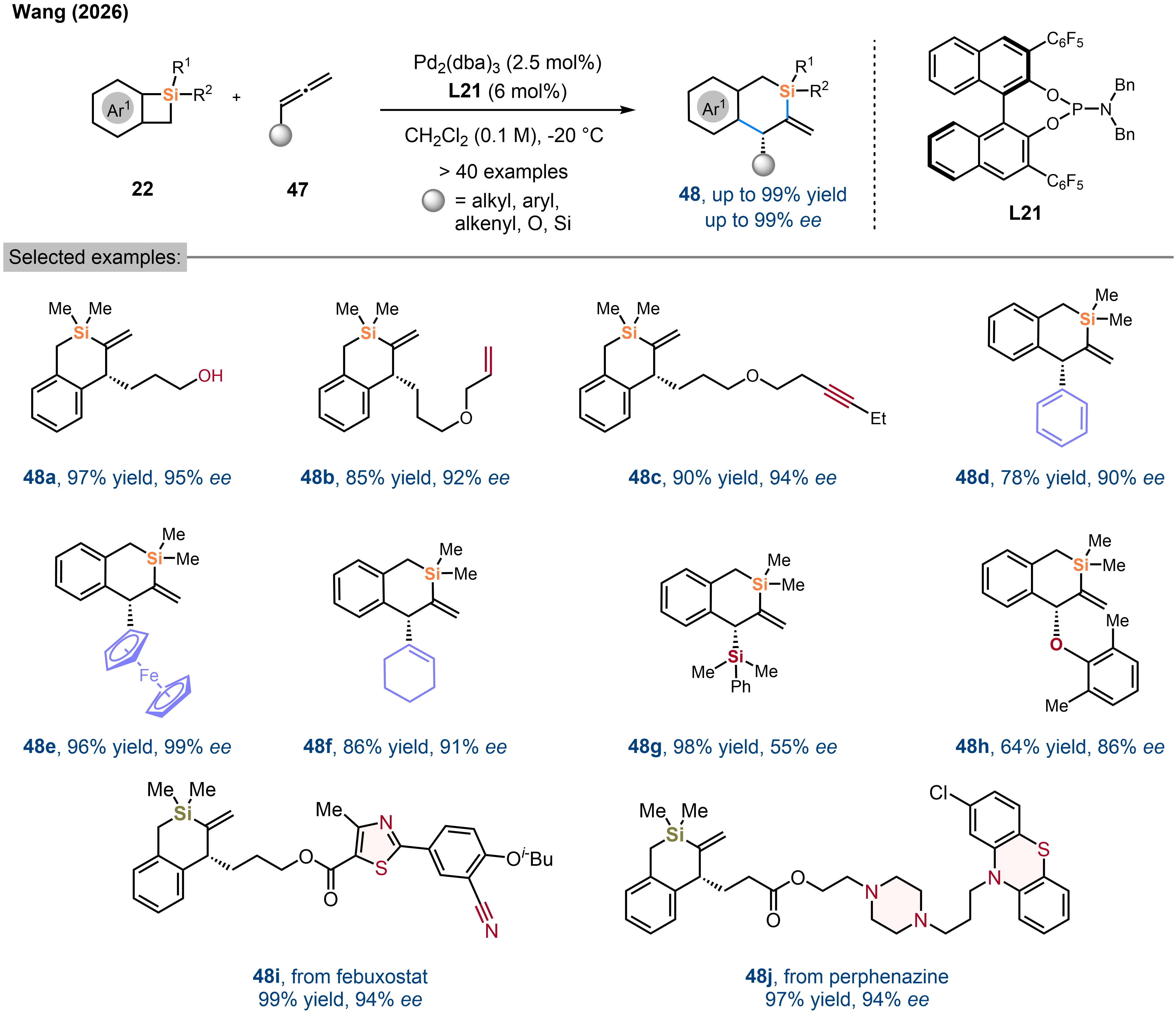
Figure 21. Palladium-catalyzed enantioselective [4+2] annulation with a broad range of allenes.
The same group subsequently expanded the allene substrate scope from simple alkyl derivatives to electron-rich N-allenamides 49 and developed a highly enantioselective Pd-catalyzed [4+2] annulation with benzosilacyclobutenes 22 using the identical ligand L21. This reaction delivers enantioenriched 1-amino-3-silatetralins 50 in excellent yields and with high regio- and enantioselectivity (Figure 22)[49]. Key features of this transformation include: (i) exclusive proximal C=C bond insertion of N-allenamides; (ii) selective Si-C(sp2) bond cleavage of benzosilacyclobutenes; (iii) broad substrate scope, including drug and natural product derivatives; and (iv) good functional-group tolerance. The DFT calculations provided detailed mechanistic insight into the origins of regio- and stereocontrol.
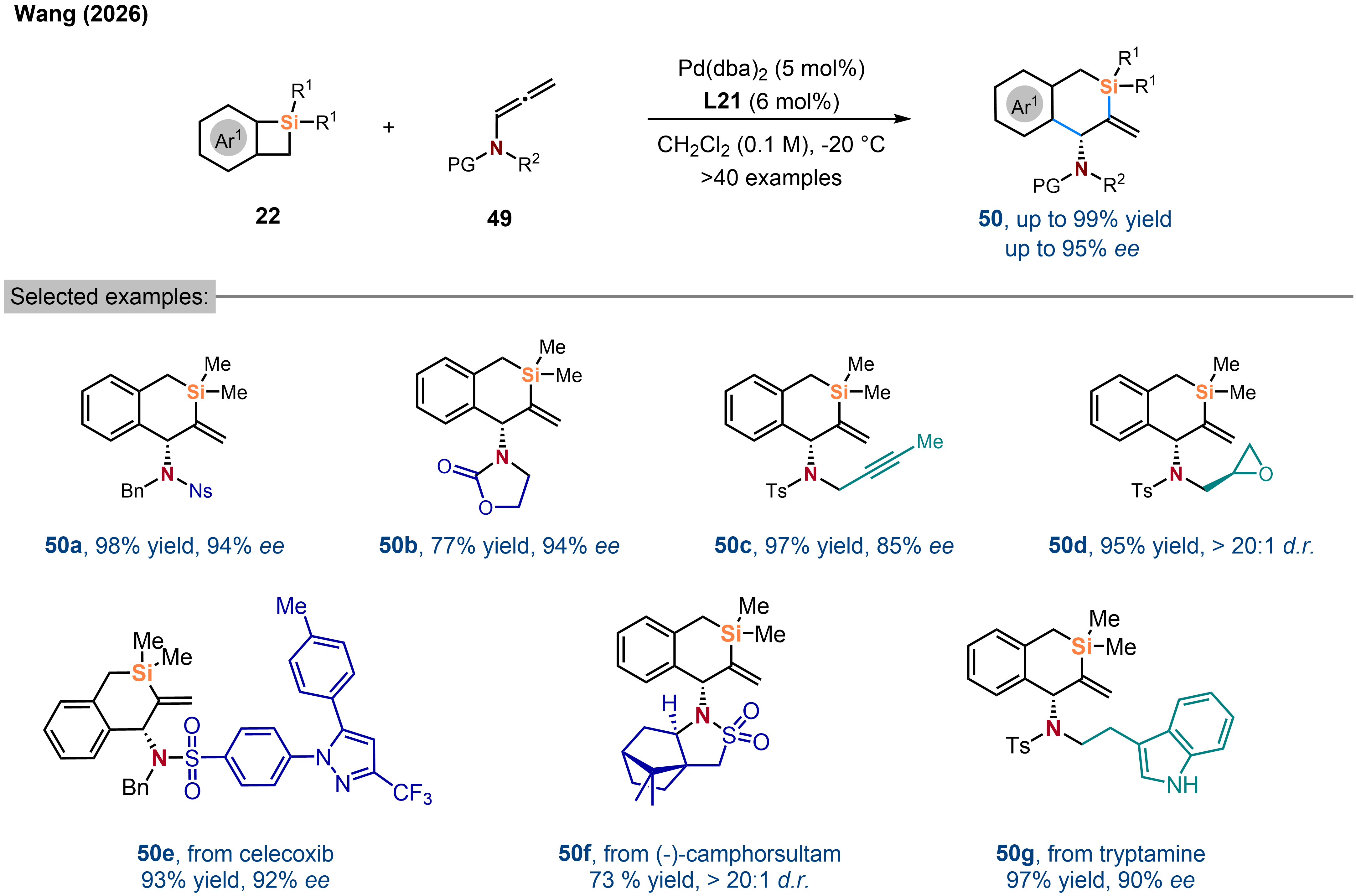
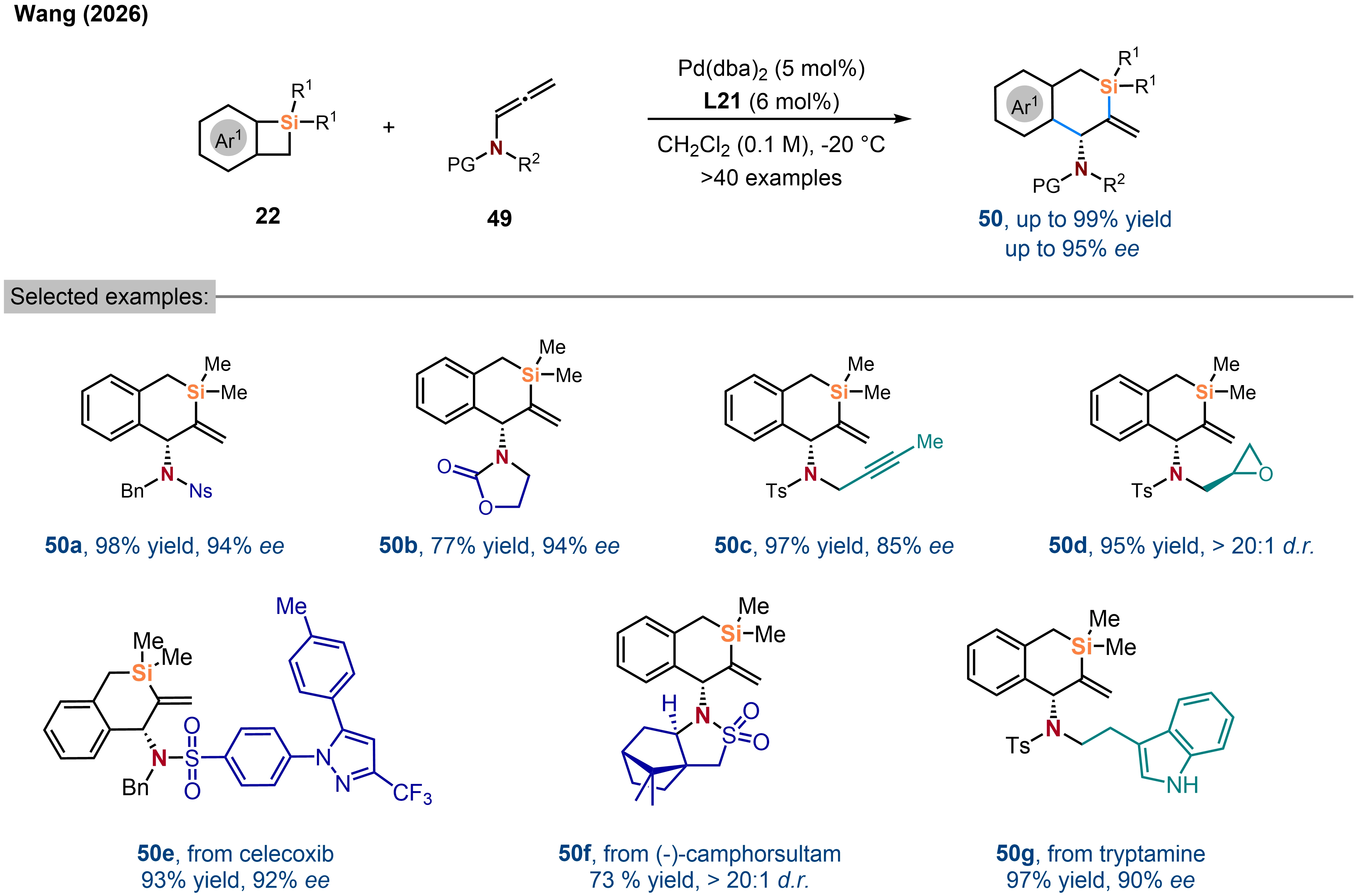
Figure 22. Palladium-catalyzed enantioselective [4+2] annulation with N-allenamides. THF: tetrahydrofuran.
In 2025, Xu and co-workers disclosed the first example of an asymmetric intramolecular silacyclization of allene-functionalized silacyclobutanes 51 under palladium catalysis, providing a modular approach to chiral seven-membered silacycles 52 (Figure 23a)[50]. The use of a chiral TADDOL-derived phosphoramidite ligand L22 enabled the desymmetrization of prochiral silacyclobutanes through Si-C bond activation, thereby allowing the construction of silicon-stereogenic centers. The authors proposed that the reaction operates through a β,γ-Si-C bond insertion sequence, followed by reductive elimination to furnish product 52. However, this protocol was demonstrated in only five examples and delivered moderate to good stereoselectivities. Looking ahead, the asymmetric intramolecular variants of these transformations are expected to be further developed, providing a versatile platform for the construction of structurally diverse chiral silicon-containing fused rings and polycyclic compounds.
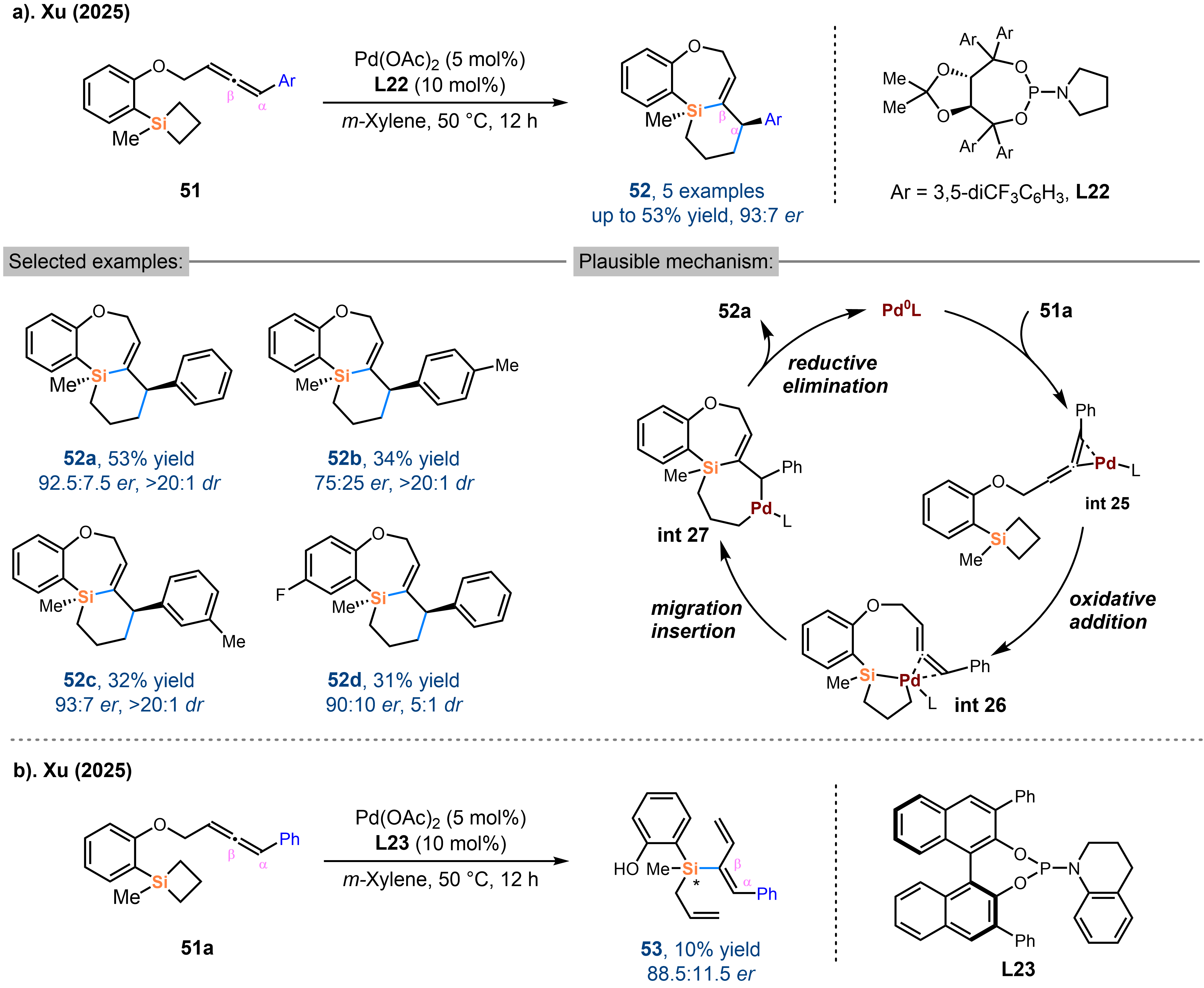
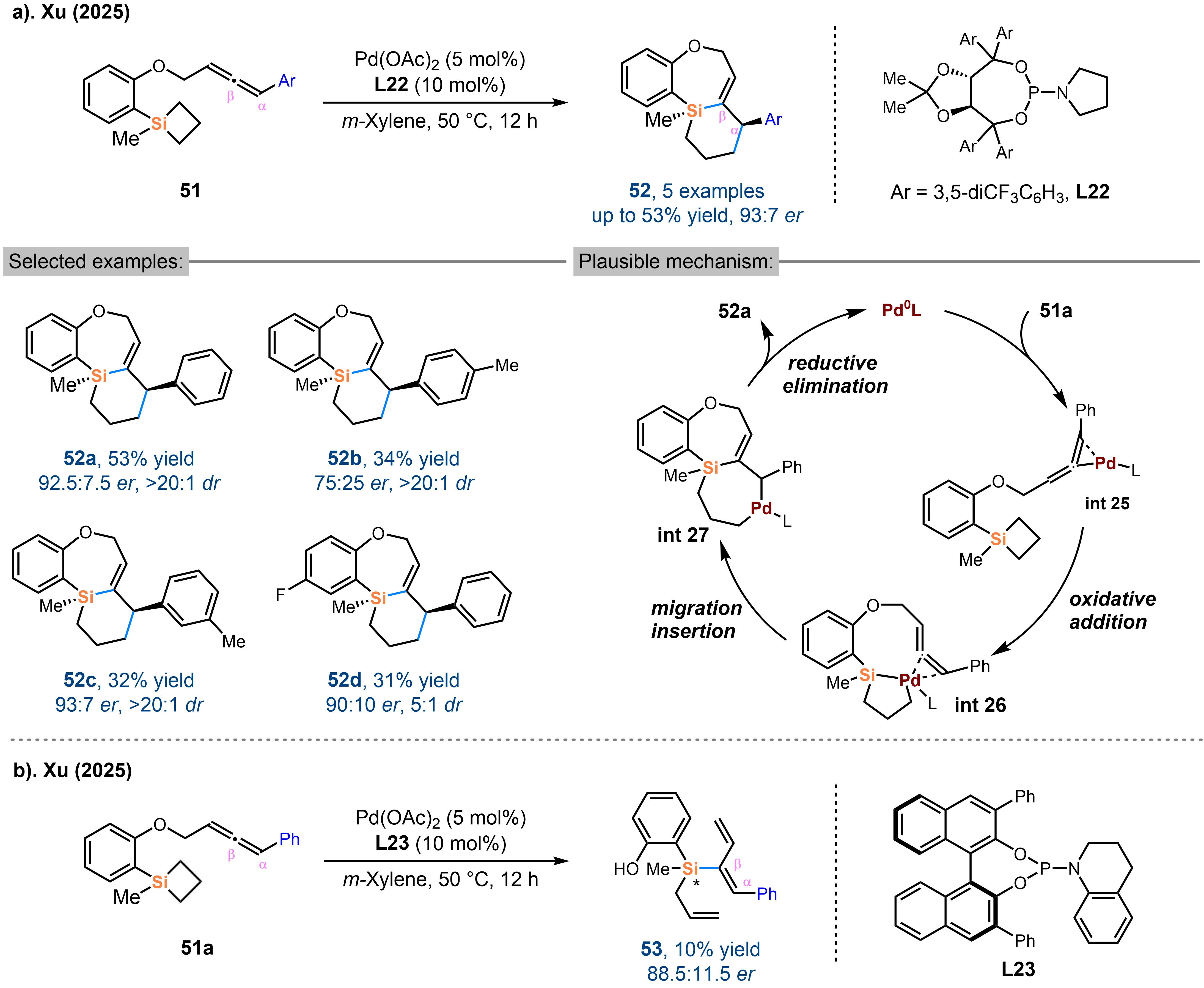
Figure 23. a) Palladium-catalyzed intramolecular enantioselective [4+2] annulation; b) chemo-divergent ring opening to a silicon-stereogenic silane (proof of concept).
Extending this intramolecular manifold from ring expansion to ring opening proved even more challenging. In 2025, the same group disclosed a ligand-controlled, chemo-divergent palladium-catalyzed intramolecular reaction of allene-functionalized silacyclobutanes, in which a silicon-stereogenic ring-opening product 53 was accessible in only a single case (Figure 23b)[51]. This result remains a proof of concept, with its scope and enantioselectivity yet to be established, and highlights the difficulty of controlling both the chemoselectivity (ring expansion vs. ring opening) and the stereoselectivity in the intramolecular allene manifold.
5. Asymmetric Reactions of Silacyclobutanes with Carbonyl Compounds
The interaction of C-M-Si species with carbonyl compounds can follow either 1,2- or 1,4-addition, giving cyclic or noncyclic silyl ethers, respectively, while competing with reductive elimination and β-hydride elimination pathways. Racemic transformations of SCBs with carbonyl compounds date back to 1990, when Oshima, Utimoto and co-workers reported the potassium tBuOK-catalyzed reaction of silacyclobutanes with aldehydes to afford six-membered cyclic silyl ethers[52]. Subsequent studies established Pd- and Pt-catalyzed reactions of SCBs with acid chlorides[53], nickel-catalyzed ring-opening and ring-expansion reactions with aldehydes[54], and a Pd-catalyzed formal cycloaddition with enones[55]. However, the mechanism remains poorly understood, and an asymmetric version providing chiral oxygen-containing silacycles via Si-C bond cleavage long remained elusive. The first asymmetric ring-expansion of benzosilacyclobutanes with aldehydes was reported in 2022 by Xu and co-workers. In subsequent studies, the same group has made notable advances in the asymmetric ring-expansion of benzosilacyclobutenes with diverse aldehydes, which has gradually become recognized as an efficient and robust platform for the synthesis of enantioenriched alcohol derivatives (Figure 24, Figure 25 and Figure 26)[56-58].
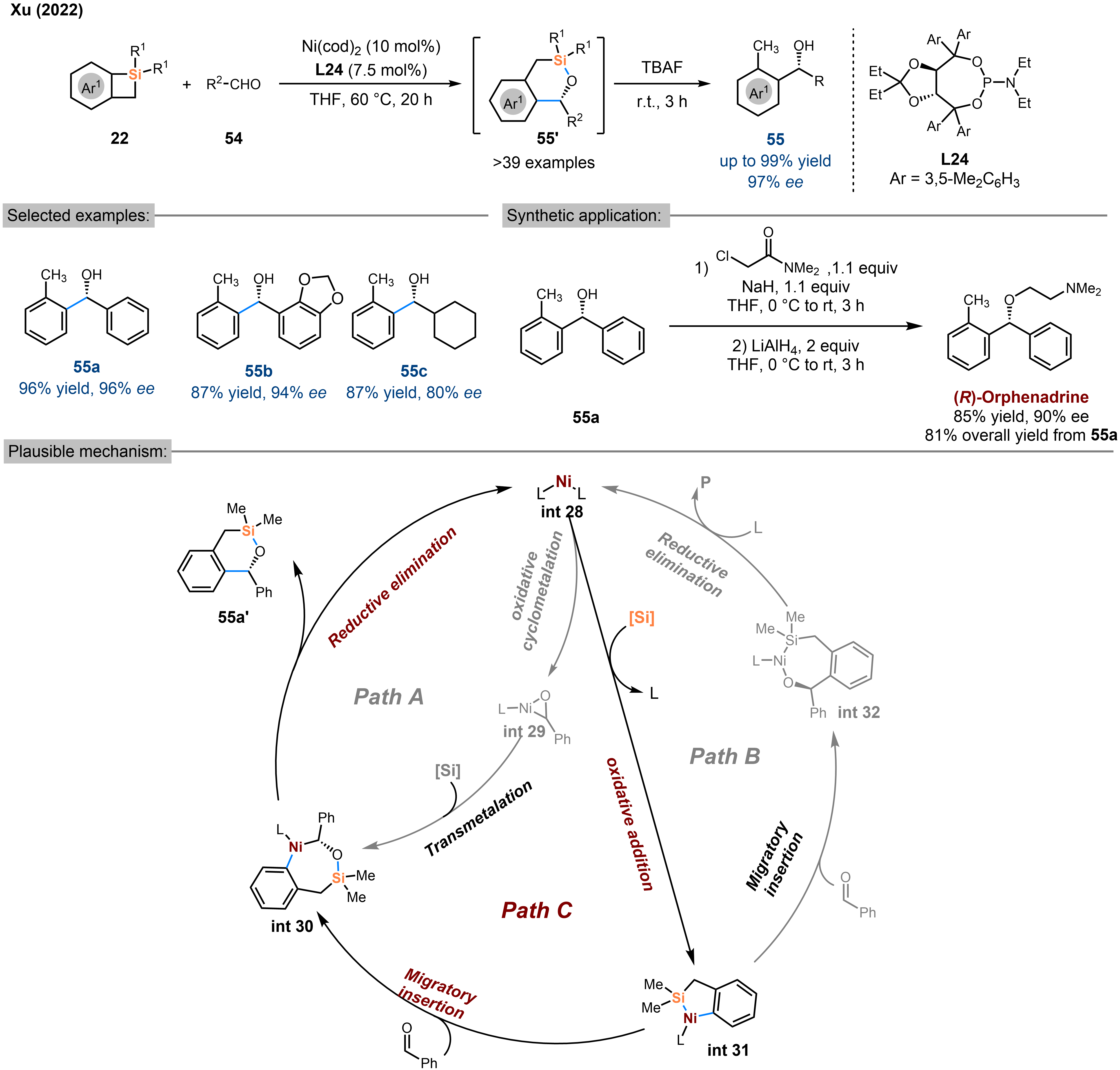
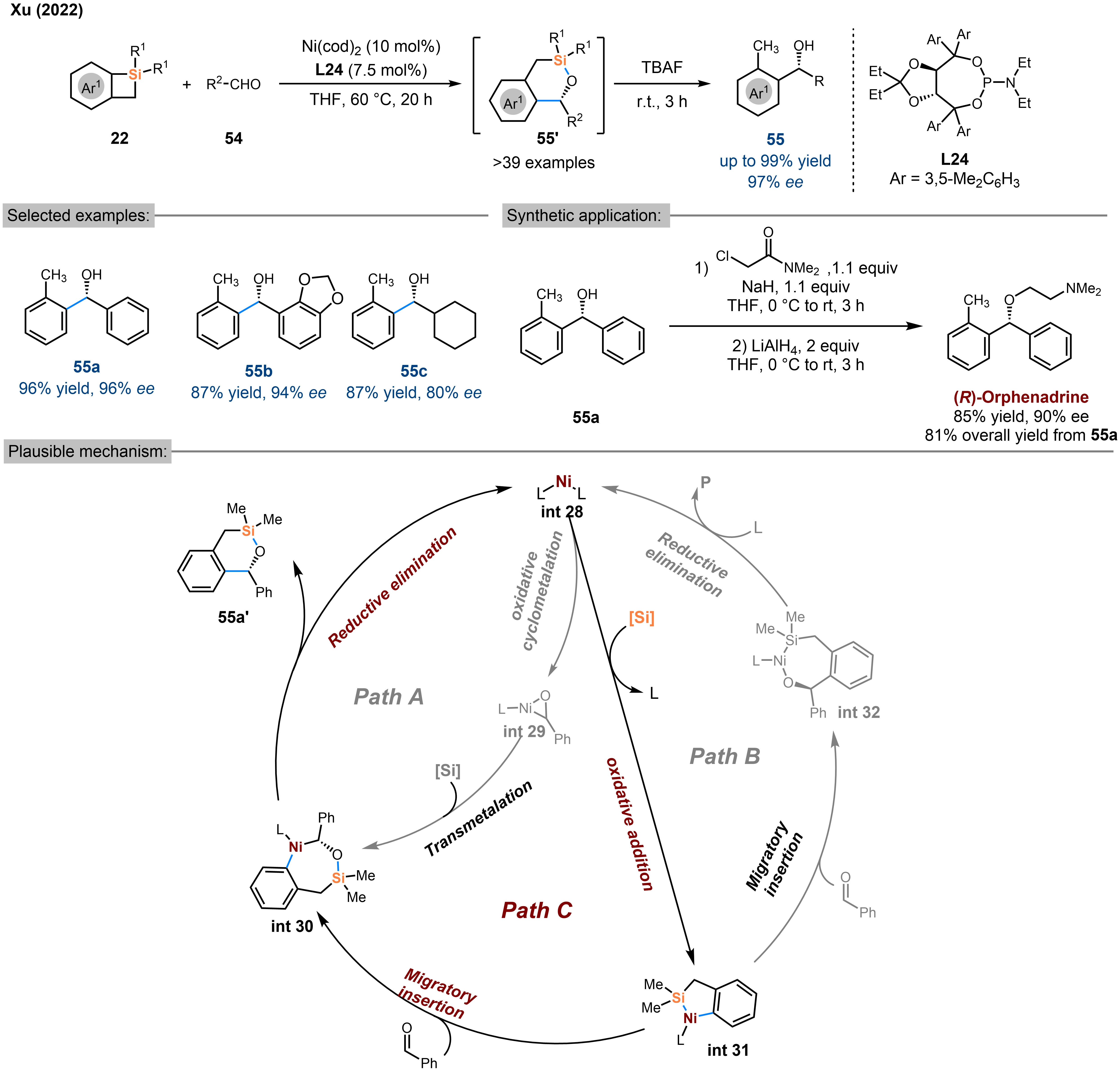
Figure 24. The first asymmetric ring expansion of benzosilacyclobutenes with aldehydes catalyzed by nickel. THF: tetrahydrofuran.
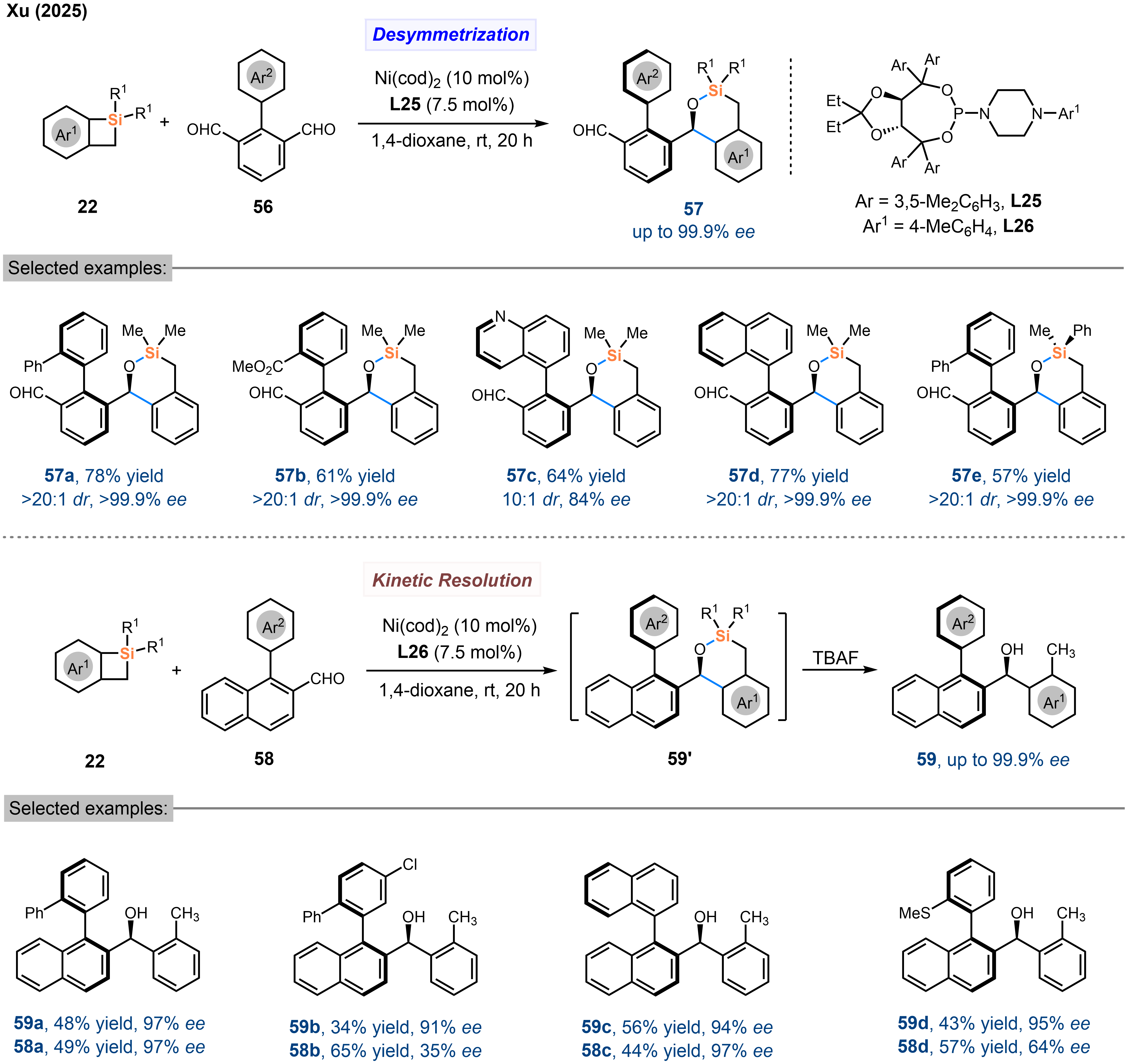
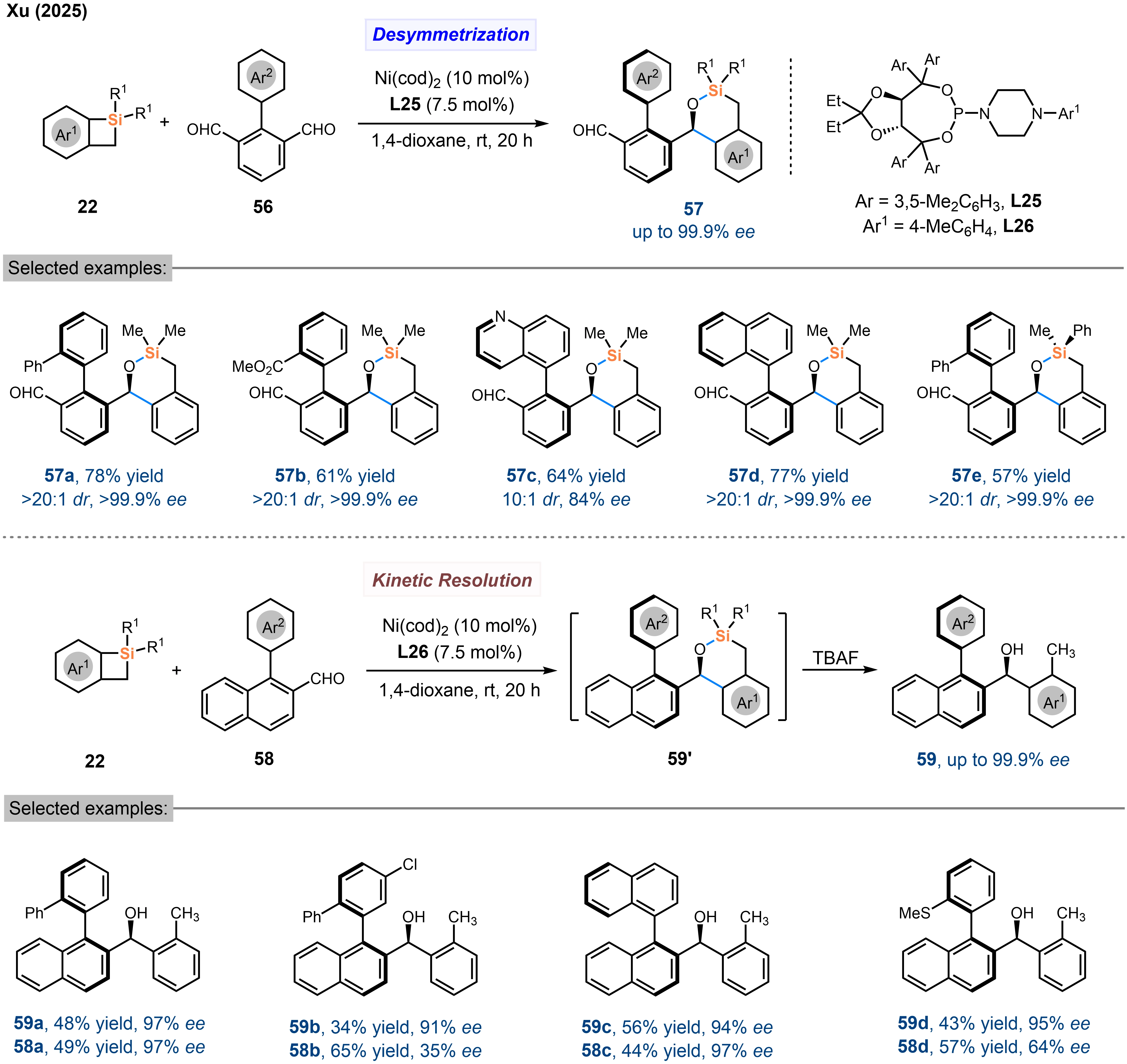
Figure 25. Ni-catalyzed asymmetric silacycloaddition for the synthesis of axially chiral biaryl oxasilacycles.
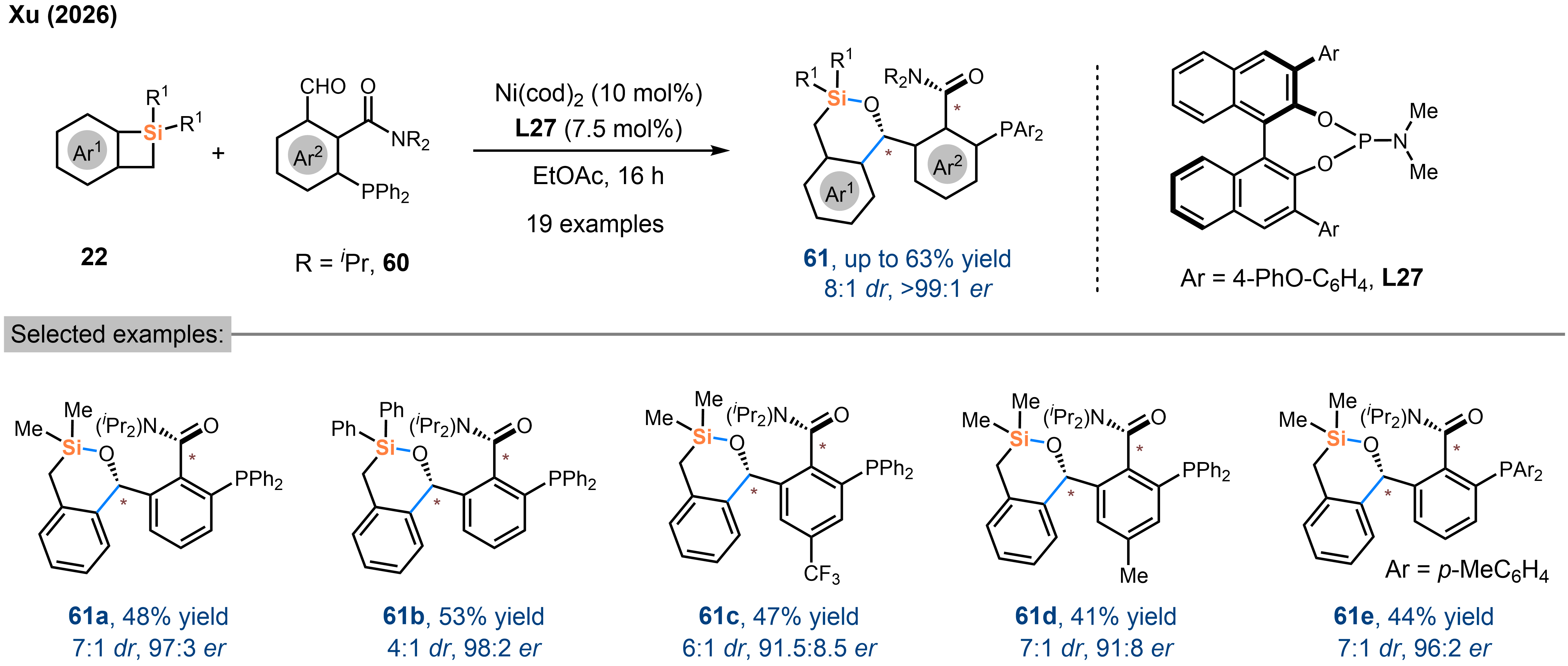
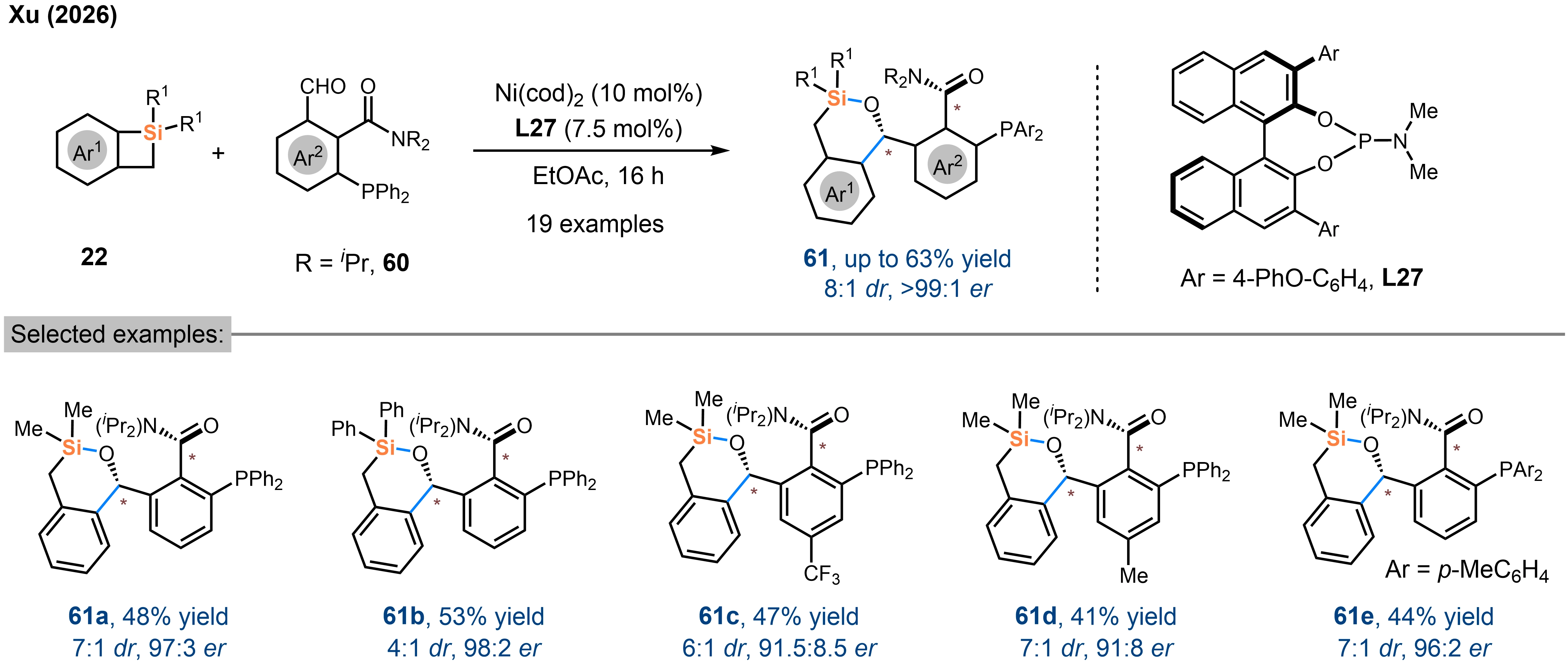
Figure 26. Ni-catalyzed asymmetric silacycloaddition for the synthesis of phosphorus atropisomers. EtOAc: ethyl acetate.
In 2022, Xu and co-workers disclosed the first asymmetric ring expansion of benzosilacyclobutenes 22 with aldehydes 54, enabling the direct synthesis of chiral six-membered oxasilacycles 55' and their derivatives 55 in high yields and with excellent enantioselectivities (Figure 24)[56]. This transformation is accomplished using a nickel complex combined with a TADDOL-derived phosphoramidite ligand L24. The synthetic utility of this protocol was demonstrated by the conversion of enantioenriched alcohol 55a into the clinically relevant anticholinergic agent (R)-orphenadrine through a concise two-step alkylation/reduction sequence. Mechanistic studies using DFT calculations established a stepwise pathway comprising three key events: (i) oxidative addition of the benzosilacyclobutene; (ii) aldehyde insertion into the Ni-Si bond, driven by the oxophilicity of the silicon center; and (iii) C-C reductive elimination. Importantly, the nickel-controlled Si-C(sp2) bond activation enables a selective migratory insertion of benzaldehyde, which is identified as the enantiodetermining step.
Subsequently, in 2025, the same research group further advanced their Ni-catalyzed asymmetric silacycloaddition strategy by applying it to the synthesis of various axially chiral biaryl oxasilacycles 57 and 59, featuring either carbon- or silicon-stereogenic centers, with excellent diastereo- and enantioselectivities (Figure 25)[57]. This transformation was enabled by a chiral Ni complex incorporating a large-cavity TADDOL-derived phosphoramidite ligand L25. This enantioselective nickel-catalyzed ring expansion of benzosilacyclobutenes 22 with aldehydes 56 was accomplished through a multifaceted approach that integrates desymmetrization, kinetic resolution, and dynamic kinetic resolution.
Very recently, the same group further extended their asymmetric catalytic system to provide a straightforward entry into a novel class of phosphorus-containing aromatic amide atropisomers 61 bearing an additional stereocenter. This was accomplished through an enantioselective ring expansion of benzosilacyclobutenes 22 coupled with dynamic kinetic resolution of racemic aldehyde-containing aromatic amides 60 (Figure 26)[58]. Notably, this approach circumvents long-standing challenges in silacycloaddition chemistry by strategically orchestrating competitive and cooperative interactions among distinct phosphine species, while delivering precise stereochemical control over both axial and central chirality across a broad substrate scope. Experimental and computational studies collectively confirmed the high configurational stability of the resulting products.
6. Asymmetric Reactions of Silacyclobutanes with Other Coupling Partners
While the commonly used unsaturated substrates, including alkynes, alkenes, allenes, and carbonyl compounds, have been extensively employed as coupling partners in the asymmetric ring-opening or ring-expansion of silacyclobutanes to access diverse chiral silicon-containing compounds, the exploration of alternative reaction manifolds has also attracted considerable attention. According to the nature of these less conventional coupling partners, this section is divided into reactions with arenes via C-H silylation (Section 6.1)[59-62], reactions with carbene precursors (Section 6.2)[63,64], and reactions with water and hydrogen (Section 6.3)[65-67].
6.1 Reactions with arenes via C-H silylation
In 2017, He and co-workers developed a [Rh(cod)OH]2/TMS-segphos L28 catalytic system that enables the tandem desymmetrization/C(sp2)-H silylation of silacyclobutanes 62 and intermolecular dehydrogenative silylation, delivering silicon-stereogenic dibenzosiloles 64 in good yields and enantioselectivities (Figure 27)[59]. The reaction accommodates substituted thiophenes as the primary aryl sources, with benzene also proving to be a viable substrate. Mechanistic studies, supported by a series of control experiments, established a clear distinction between the two steps: (i) the SCB ring-opening/intramolecular C-H silylation serves as the stereodetermining step; and (ii) the intermolecular dehydrogenative silylation between intermediate 64′ and arenes 63 is stereospecific and operates independently of ligand chirality.
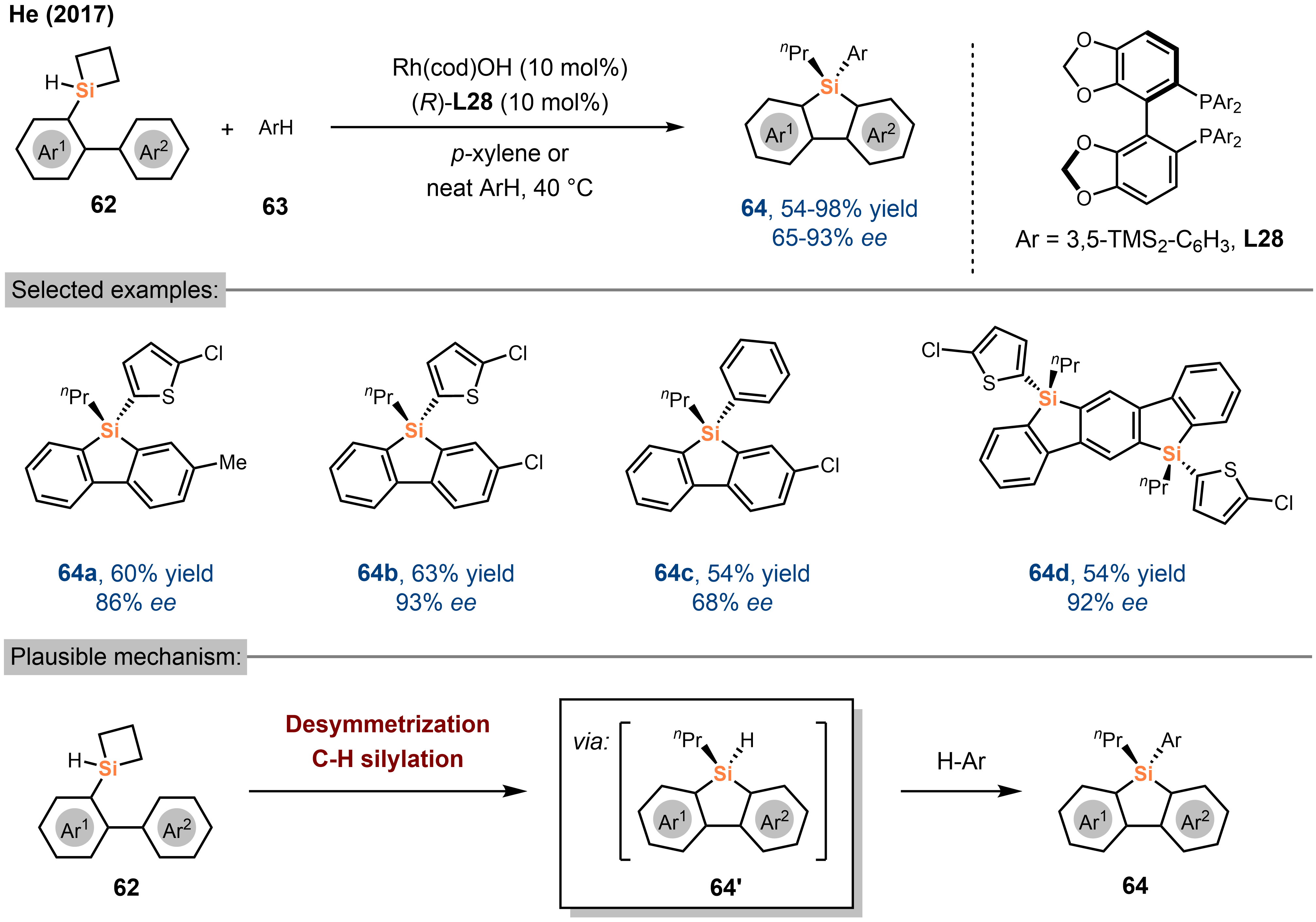
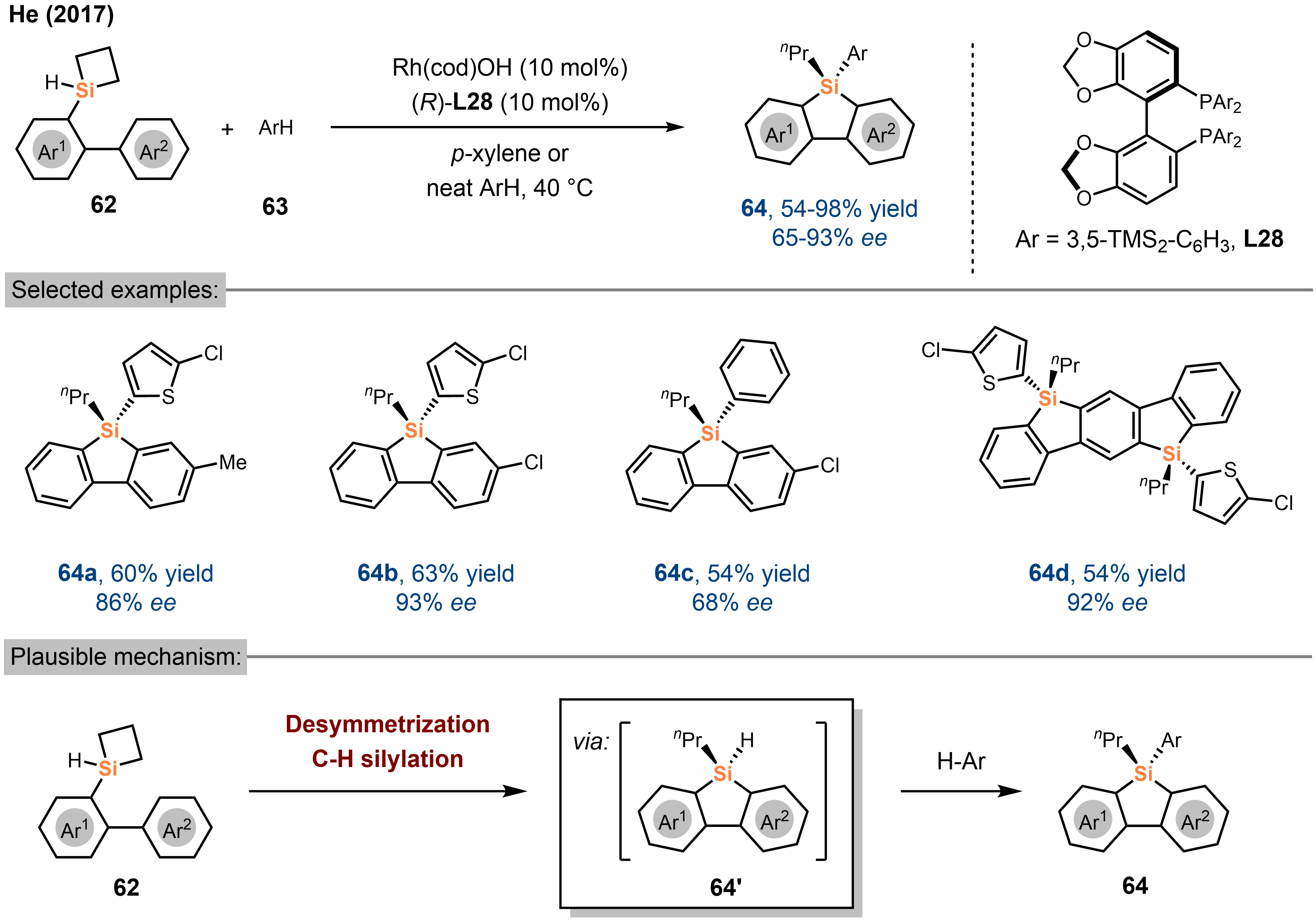
Figure 27. Rh-catalyzed tandem desymmetrization of silacyclobutanes/dehydrogenative silylation. cod: 1,5-cyclooctadiene.
In a subsequent study published in 2022, He, Zhang, and co-workers developed a rhodium/bisphosphine (L29)-catalyzed intermolecular enantioselective C(sp2)-H silylation of thiophenes 66, enabling the asymmetric synthesis of acyclic hydrosilanes 67 with silicon-stereogenic centers (Figure 28)[60]. Mechanistic studies provided two key insights: (i) deuterium labeling experiments confirmed that the in situ-generated [Rh]-H species is essential for catalytic efficiency; and (ii) parallel kinetic isotope effect (KIE) experiments established that irreversible C-H bond activation is the turnover-limiting step. On the basis of these results, a catalytic cycle was proposed wherein the [Rh]-H species undergoes desymmetrizing oxidative addition and reductive elimination to form intermediate 67′, which then reacts with thiophene substrates through C-H addition and reductive elimination to afford the target products. In addition, the ortho substituents on the silicon center were found to effectively suppress Si-H metathesis and polymerization side reactions via steric hindrance.
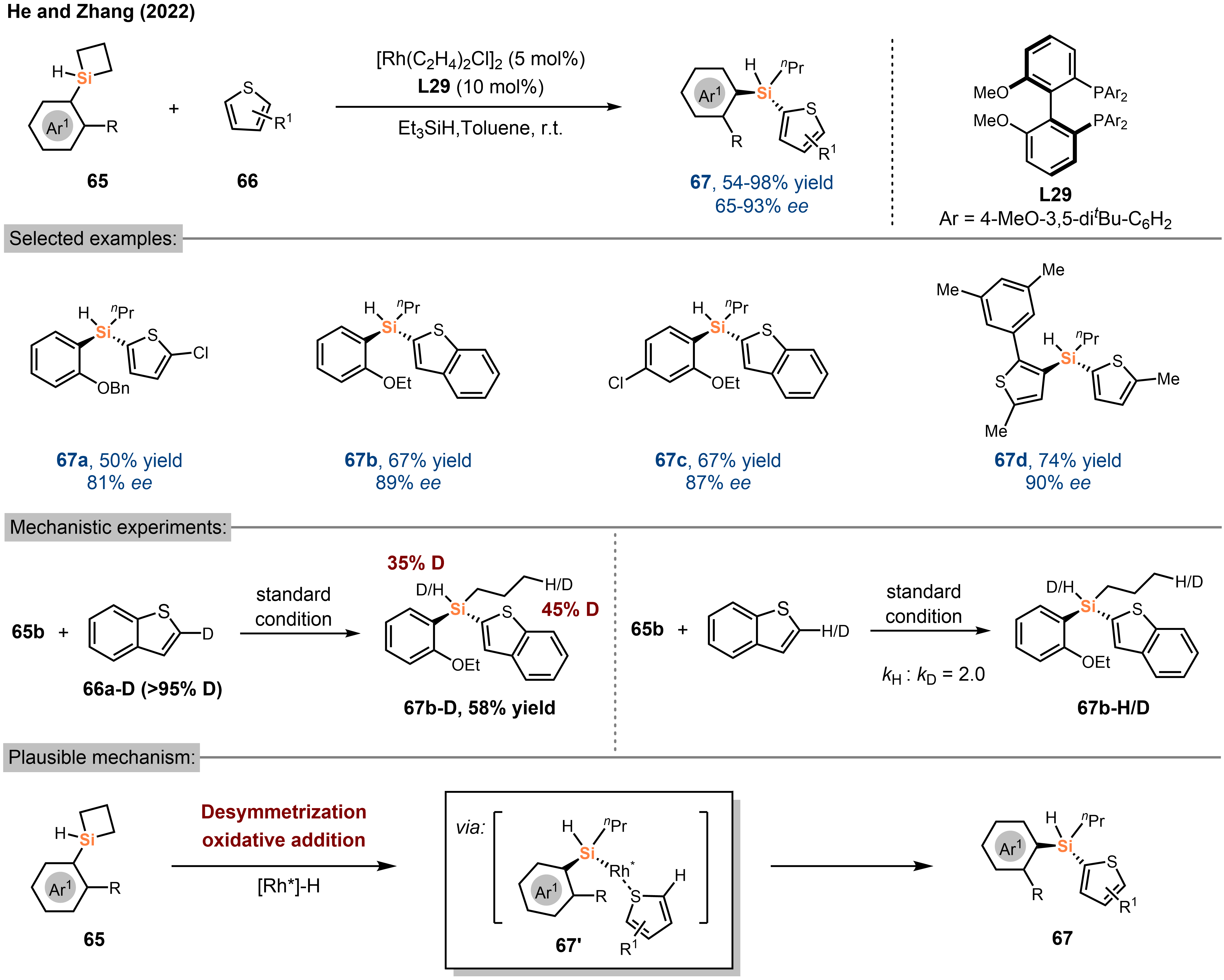
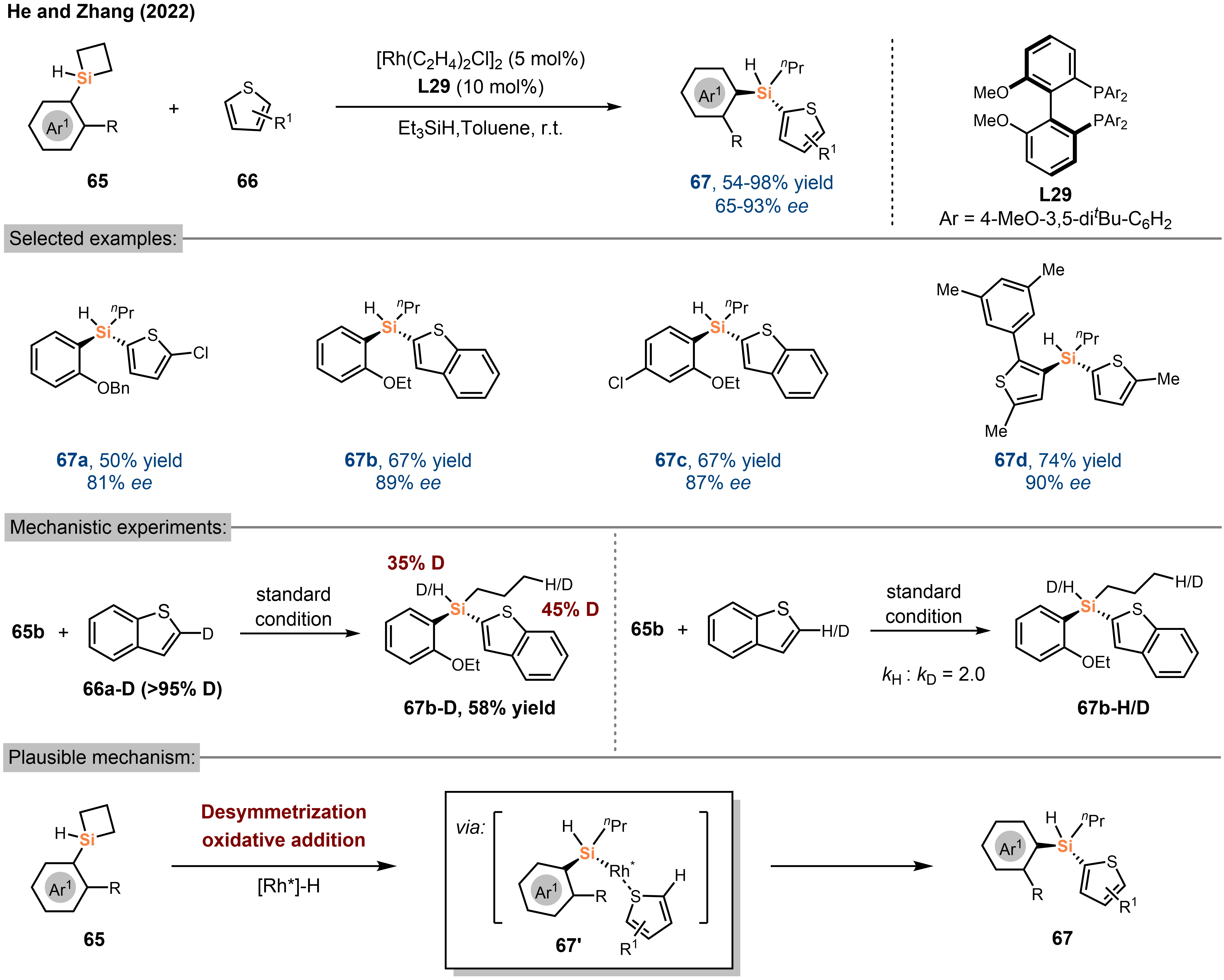
Figure 28. Rhodium-catalyzed enantioselective intermolecular C(sp2)-H silylation of thiophenes with SCBs to access acyclic silicon-stereogenic hydrosilanes. SCBs: silacyclobutanes.
6.2 Reactions with carbene precursors
In 2021, Wang and co-workers reported the first example of a palladium-catalyzed asymmetric carbene insertion into the Si-C bonds of silacyclobutanes 3 using chiral phosphoramidite ligands L30 (Figure 29)[63]. This reaction provides efficient access to silacyclopentanes 69 bearing tertiary or quaternary stereocenters in high yields and excellent enantioselectivities with good functional-group tolerance. The synthetic utility of this methodology was further demonstrated by its successful application to hydrazone substrates derived from the natural product (-)-perillaldehyde, as well as from the drug molecules estrone and iloperidone. The robustness of the protocol was underscored by a preparative-scale reaction, and the synthetic versatility of the products was exemplified by the oxidation of 69h to the corresponding chiral diol without any erosion of enantiopurity.
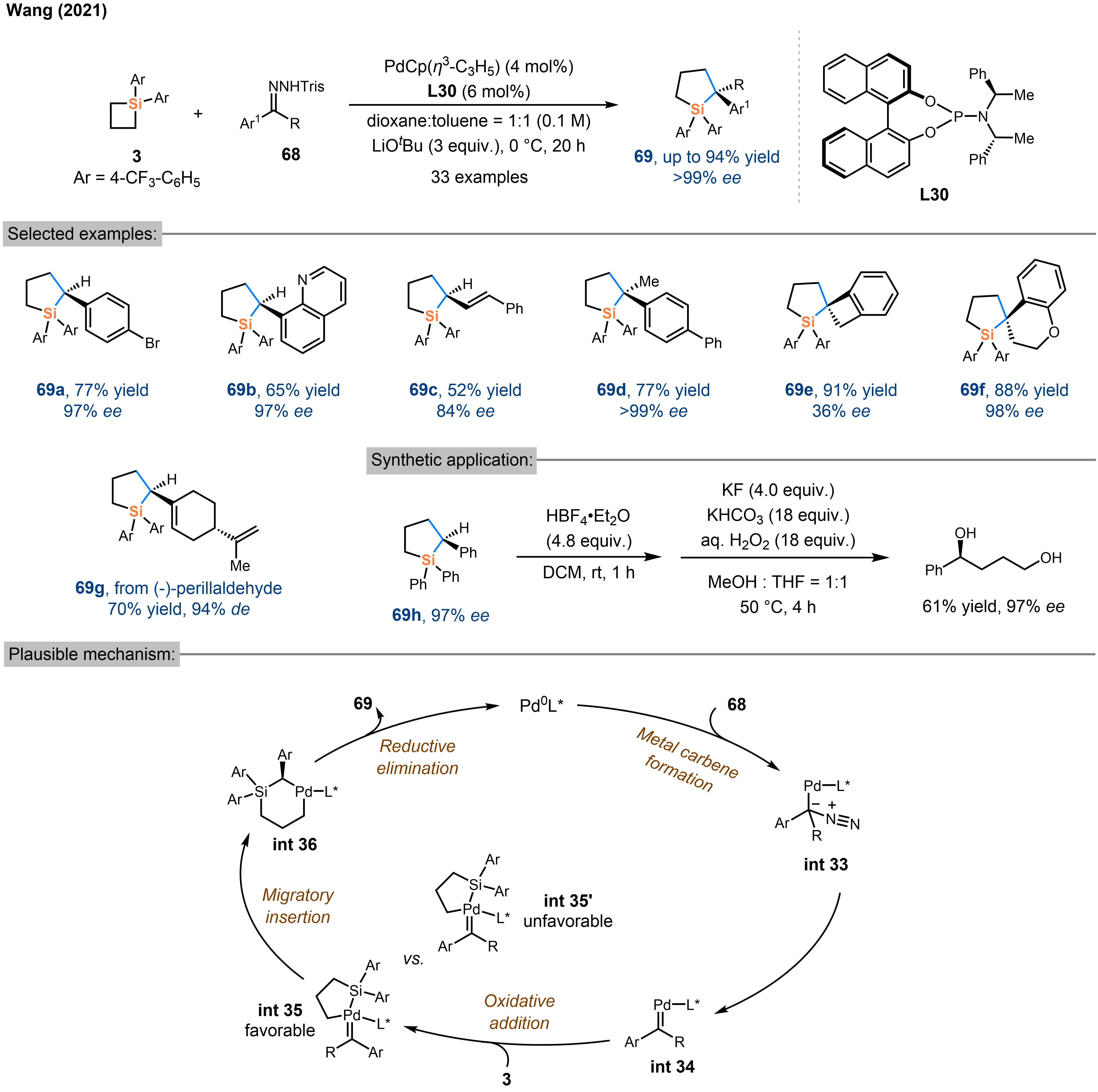
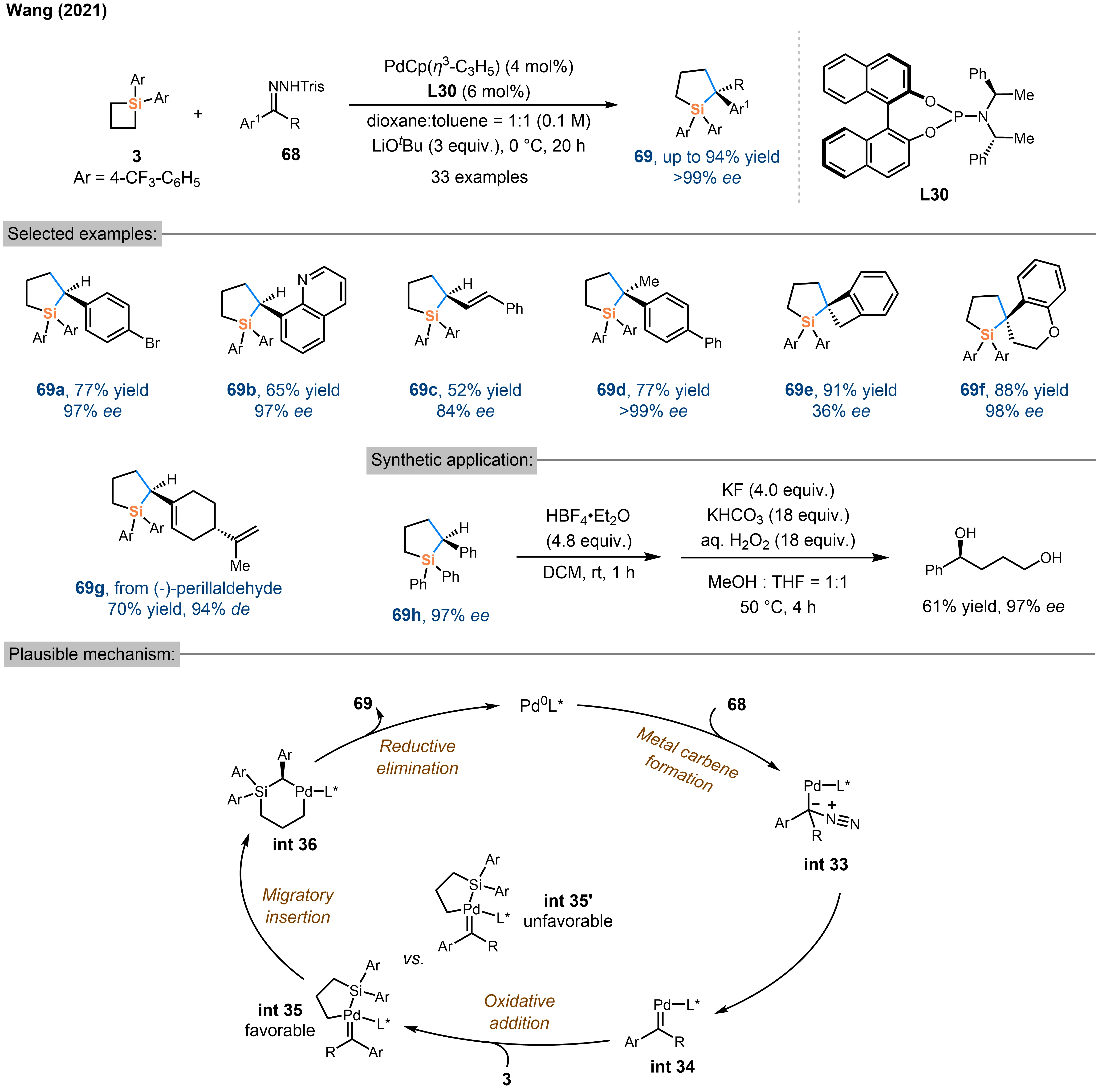
Figure 29. Palladium-catalyzed asymmetric carbene insertion into the Si-C bonds of SCBs. SCBs: silacyclobutanes.
DFT calculations were further performed to elucidate the catalytic mechanism, which was found to involve a sequence of four key steps: (i) metal carbene formation; (ii) oxidative addition; (iii) carbene migratory insertion; and (iv) reductive elimination. The catalytic cycle commences with coordination of the diazo substrate 68 to the Pd(0)-ligand complex int 33, followed by in situ release of N2 to afford the active palladium carbene int 34. This intermediate then reacts with the strained Si-C bond of SCBs 3 through oxidative addition, generating the five-membered palladacycle int 35. In the subsequent step, int 35 undergoes a highly regio- and enantioselective migratory insertion of the carbene into the Pd-Si bond to form int 36. Finally, reductive elimination of int 36 releases the desired silacyclopentanes 69 and regenerates the Pd(0) catalyst, thereby closing the catalytic cycle.
In a subsequent study published in 2022, the same research group extended their carbene insertion strategy to benzosilacyclobutanes, achieving ligand-controlled site-selective functionalization. The use of the sterically demanding chiral ligand L30 proved pivotal in promoting highly enantioselective insertion into the Si-C(sp3) bond, affording benzosilacyclopentane products 71 with excellent stereoselectivities and a broad substrate scope (Figure 30)[64]. The synthetic utility of this methodology was further demonstrated through the conversion of benzosilacyclopentane 71a via C(sp2)-Si bond cleavage to the corresponding chlorinated product in moderate yield. In addition, the SiPh2F moiety could be subsequently oxidized to the corresponding alcohol, highlighting the potential for further product diversification.
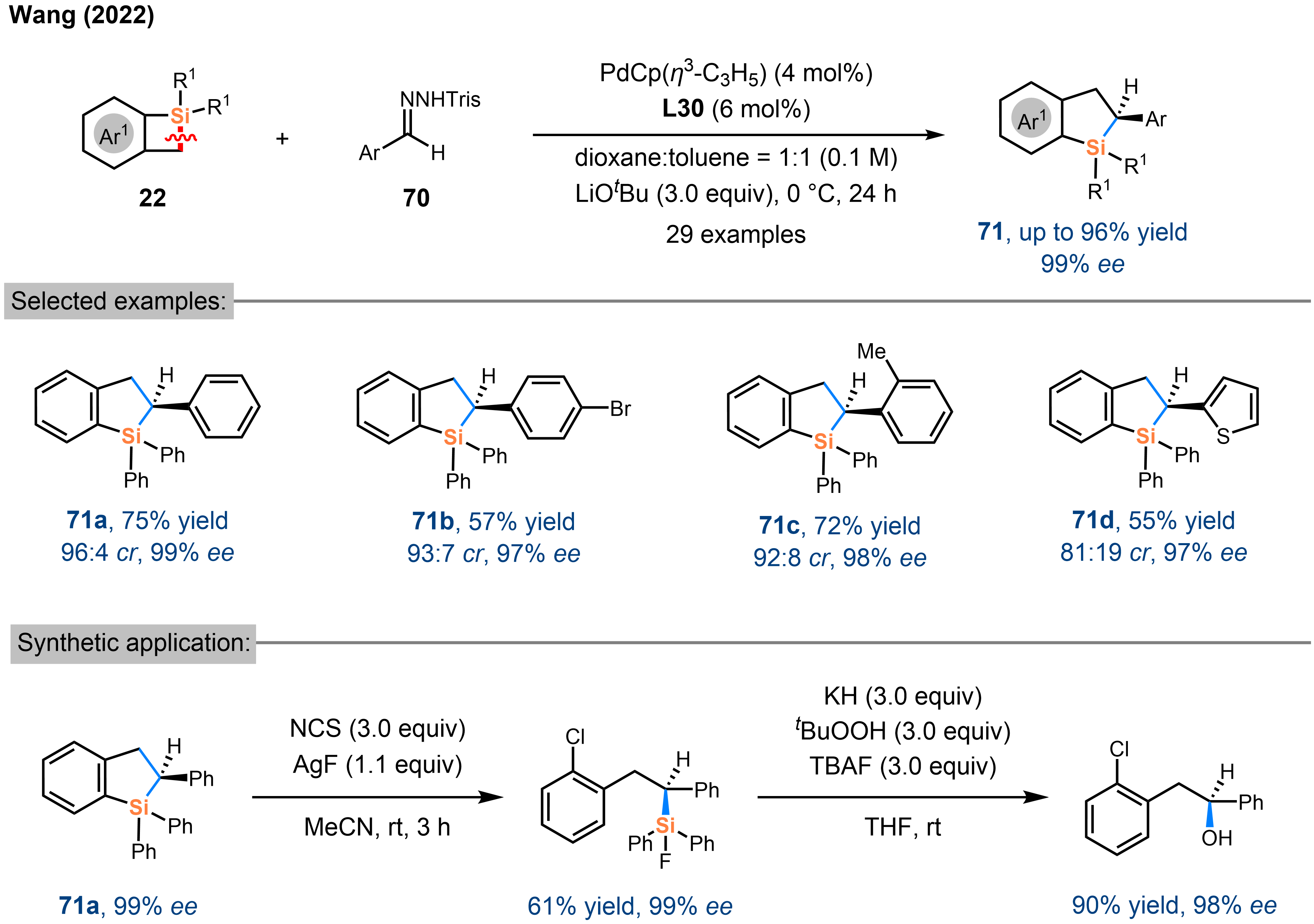
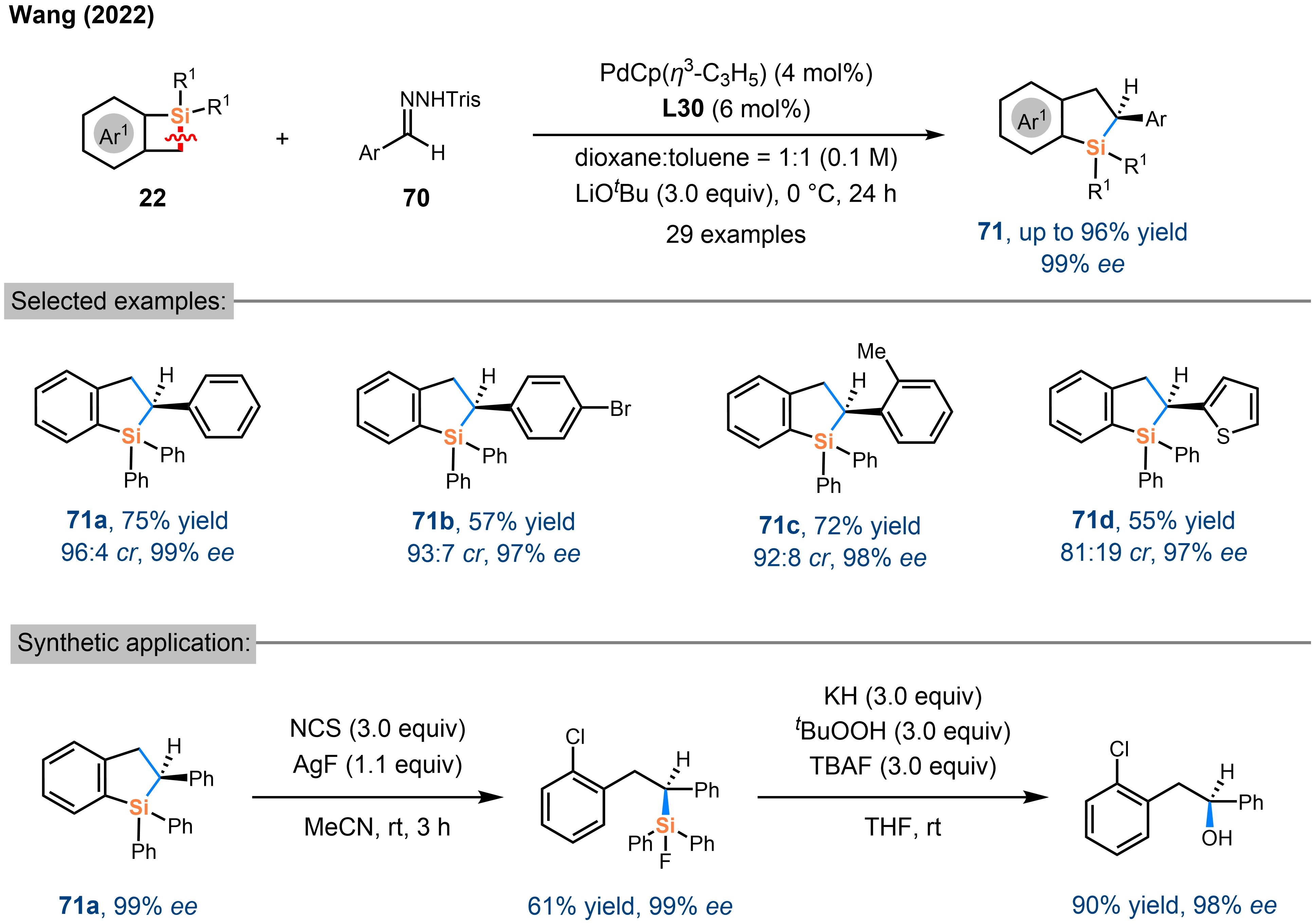
Figure 30. Palladium-catalyzed asymmetric carbene insertion into the Si-C(sp3) bonds of benzosilacyclobutanes.
6.3 Reactions with water and hydrogen
Beyond the coupling partners discussed above, water itself can serve as an unconventional reactant for Si-C bond cleavage. In 2023, Xu and co-workers disclosed the first rhodium-catalyzed hydrolytic cleavage of the Si-C bond of silacyclobutanes, affording silanols in up to 99% yield with 100% atom economy[65]. In the catalytic asymmetric variant, the desymmetric ring-opening of benzosilacyclobutane 72 with water, catalyzed by [Rh(cod)Cl]2 and a TADDOL-derived phosphoramidite ligand L31, delivered silicon-stereogenic silanol 73 in 87% yield with 68% ee (Figure 31, top). Although the enantioselectivity remains modest, this work establishes hydrolytic Si-C bond cleavage as a new manifold for accessing silicon-stereogenic silanols.
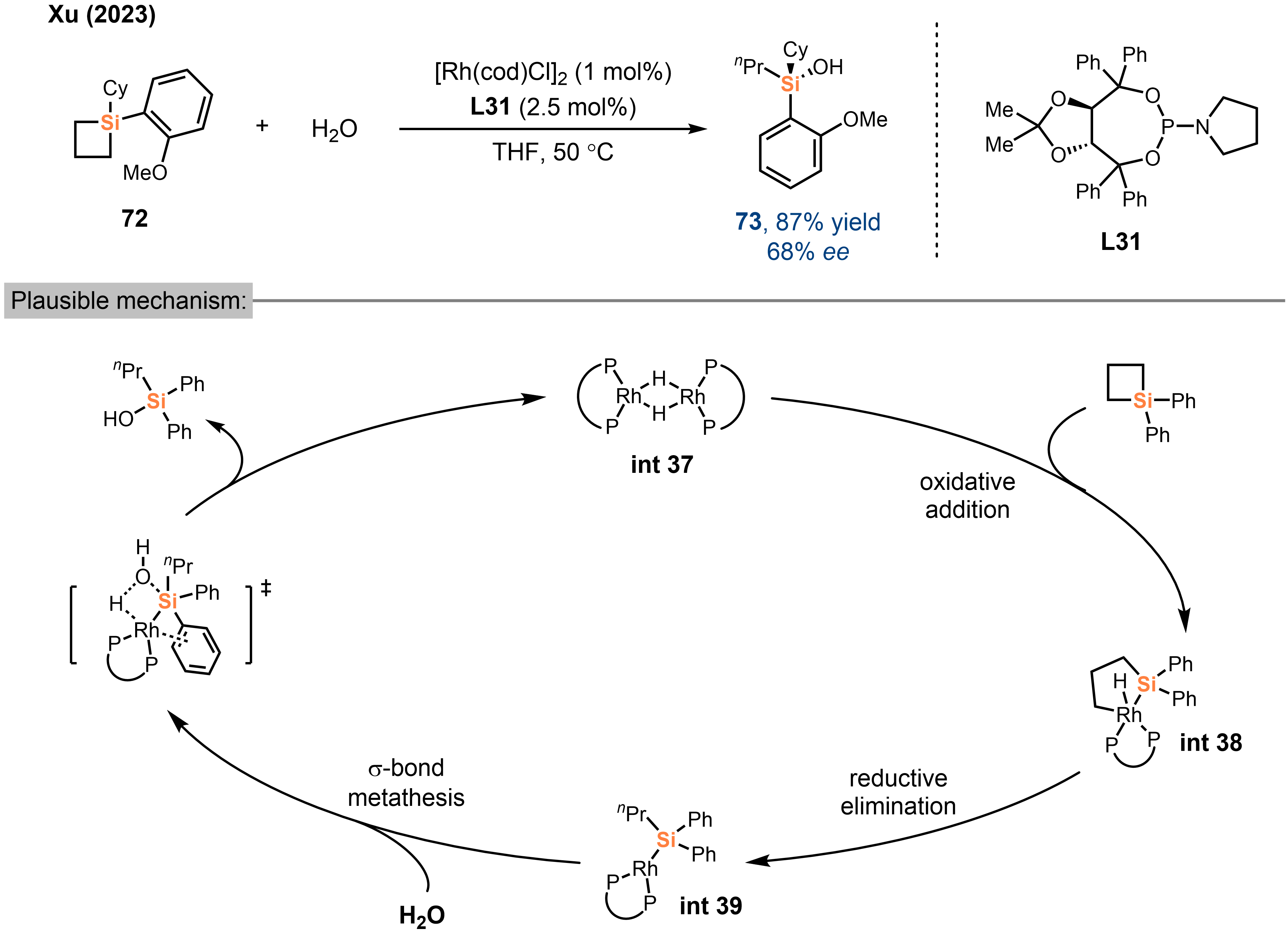
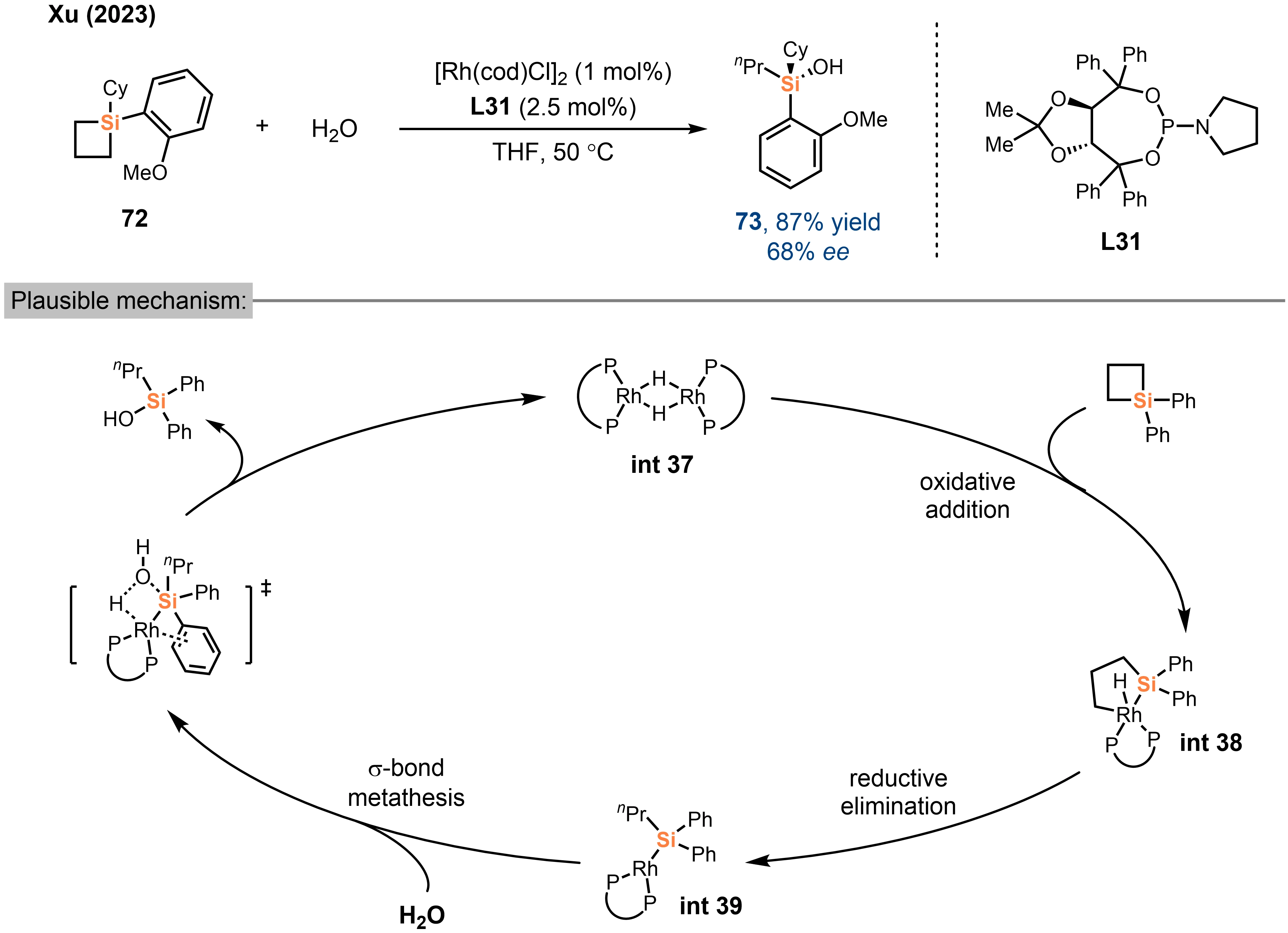
Figure 31. Rhodium-catalyzed asymmetric hydrolytic cleavage of the Si-C bond of silacyclobutanes with water. THF: tetrahydrofuran.
The mechanism of this hydrolytic cleavage was subsequently examined by DFT calculations from Qu and co-workers[66]. The originally proposed pathway, involving σ-bond metathesis of a rhodium chloride intermediate with water, was found to be kinetically unfeasible. Instead, the computations identified a rhodium-hydride-catalyzed cycle: the active Rh-H species, generated in situ from the precatalyst through oxidative addition, Si-Cl reductive elimination, and β-hydride elimination, activates the Si-C bond by oxidative addition as the rate-determining step, followed by C(sp3)-H reductive elimination to afford a silylrhodium(I) intermediate, which undergoes direct σ-bond metathesis with water to release the silanol and regenerate the catalyst (Figure 31, bottom).
Very recently, An and co-workers disclosed the first asymmetric hydrogenation of SCBs, providing a hydrogenative route to Si-stereogenic centers (Figure 32)[67]. Naphthyl-attached SCBs substrates 3 were converted into tertiary silanes, isolated as the corresponding silanols, with enantiocontrol relying on steric matching between the bulky ligand L32 and the ortho-substituent; the absence of the latter eroded the ee value to 39%. While currently limited to ortho-substituted aryl substrates, this hydrogenative strategy complements the ring-opening manifolds described above.
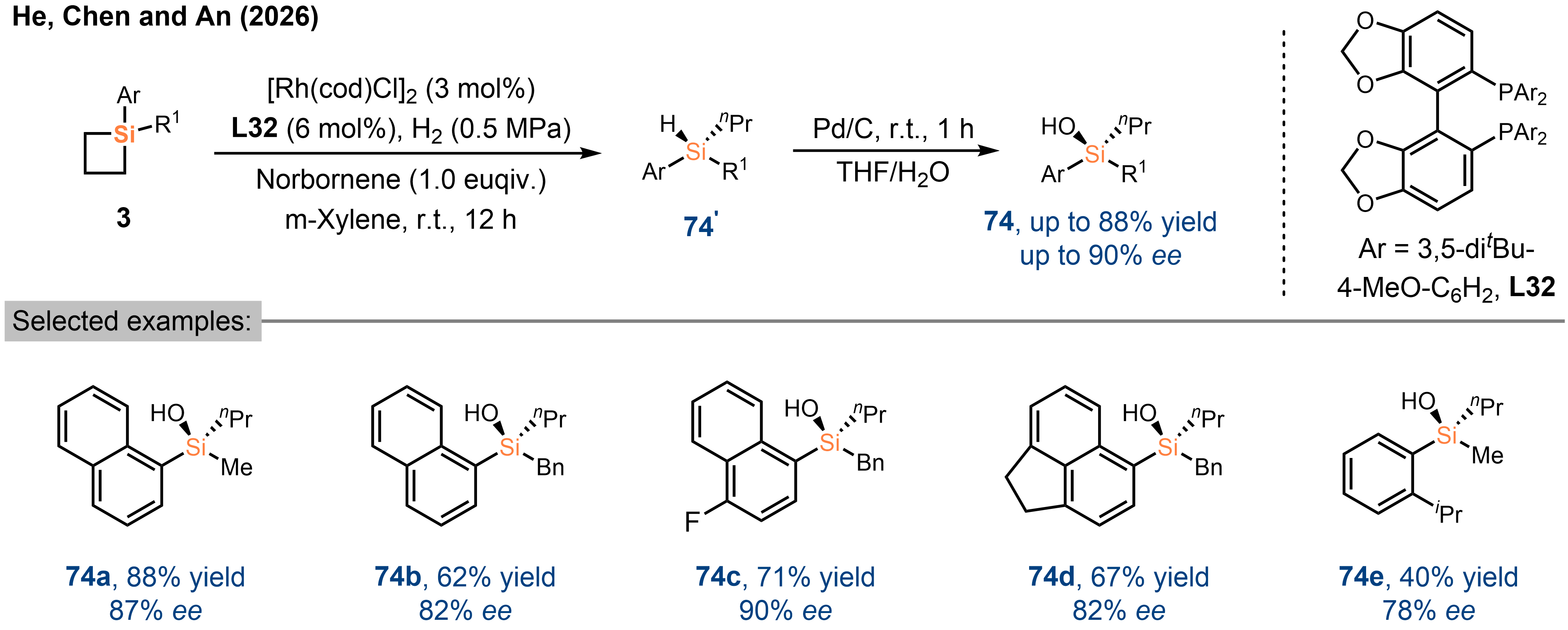
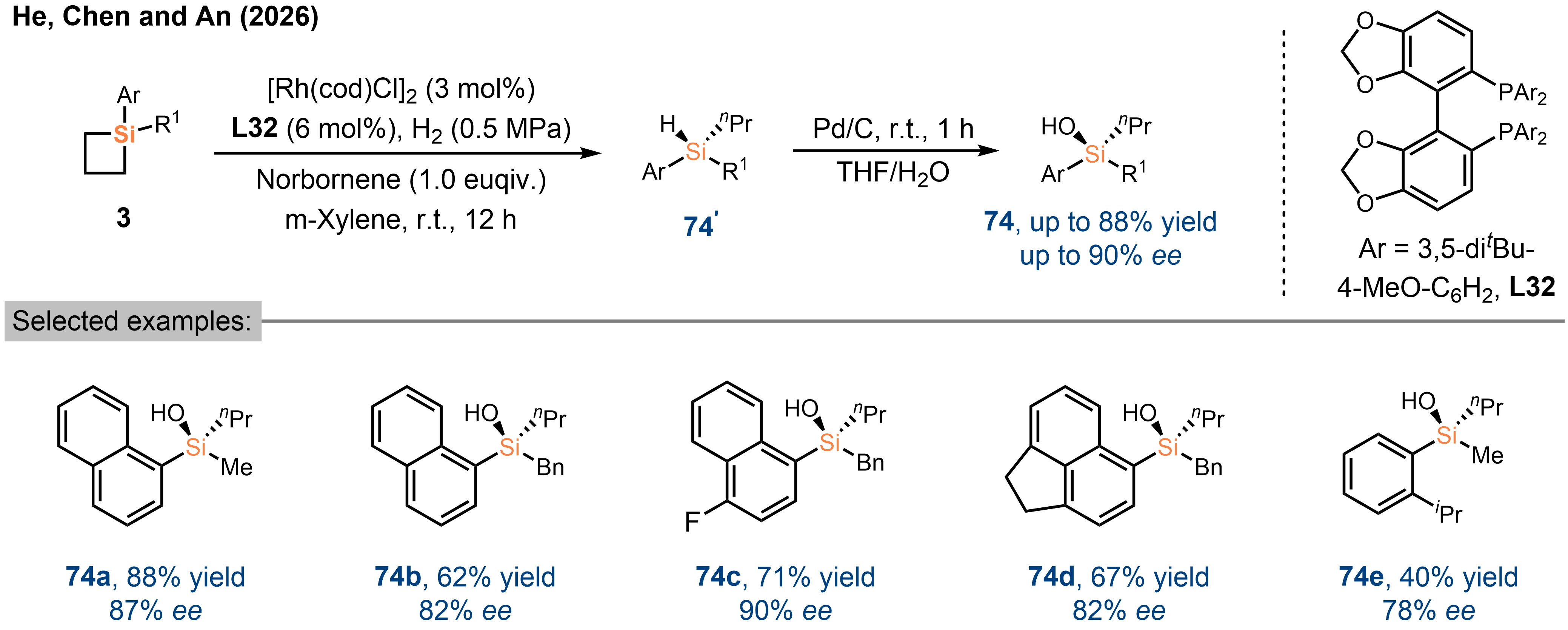
Figure 32. Rh-catalyzed asymmetric hydrogenation of SCBs. SCBs: silacyclobutanes. THF: tetrahydrofuran.
7. Conclusion and Perspective
The chemistry of silacyclobutanes dates to their discovery in the 1950s, followed by initial reactivity studies in the 1960s. Despite this early history, it is only in the past decade that asymmetric transformations of these four-membered silacycles have witnessed rapid growth. In this short review, we summarize the remarkable progress made in asymmetric transition-metal-catalyzed reactions of silacyclobutanes, including ring-expansion and ring-opening reactions that are synergistically coupled with Si-C bond formation. These methodologies have provided efficient access to structurally diverse chiral organosilanes bearing carbon-stereogenic, silicon-stereogenic, or axially chiral motifs. The catalytic asymmetry observed in these transformations can be attributed to two principal mechanistic manifolds. The first involves oxidative addition of the C-Si bond to generate five-membered metallacyclic intermediates, which subsequently engage in enantioselective reactions with π-systems, carbenes, or σ-bonds to promote selective ring-expansion or ring-opening. The second pathway operates via transmetalation or σ-bond metathesis-mediated cleavage of the C-Si bond, followed by stereoselective bond-forming events to construct chiral scaffolds.
Owing to the high ring strain and controllable Si-C bond cleavage/formation of silacyclobutanes, this field has become a research hotspot in organic synthesis driven by new asymmetric catalytic methods, with great potential for future breakthroughs. However, many challenges in this field still remain: 1) Some transition-metal catalysts show unsatisfactory asymmetric performance, especially in desymmetrization toward silicon-stereogenic centers, suffering from narrow substrate scope and low enantioselectivity, which makes it difficult to meet diverse synthetic needs; 2) The mechanisms of selective C-Si bond cleavage in most reactions are still unclear, limiting the development of efficient catalytic systems; 3) Most reactions rely on noble metals, while cheap-metal-catalyzed asymmetric systems are still underdeveloped.
Future research in this area is anticipated to pivot toward innovative asymmetric catalytic strategies, with a particular emphasis on developing efficient chiral catalytic systems derived from earth-abundant metals capable of governing selective C-Si bond cleavage in silacyclobutanes. Equally compelling is the unexplored territory of germacyclobutanes, the germanium congeners of silacyclobutanes. Owing to their distinct electronic structure, comparatively longer and weaker Ge-C bonds, and enhanced Lewis acidity relative to silicon[68,69], these strained four-membered germacycles promise reactivity profiles and stereochemical outcomes that defy simple analogy to silicon chemistry. The growing interest in chiral germanium-stereogenic compounds for asymmetric catalysis and medicinal chemistry underscores the significant potential of this underexplored scaffold[70-72].
Acknowledgements
The authors declare that Deepseek was used solely for language polishing during the manuscript preparation process. All research content, including study design, data analysis, interpretations, figures, and tables, is original and was not generated using AI tools. The authors reviewed, revised, and approved the final manuscript and take full responsibility for its content.
Authors contribution
Lu R, Li J, Gao L: Investigation, writing-original draft.
Yang J: Writing-original draft, writing-review & editing.
Wang Y: Supervision, conceptualization, writing-review & editing.
Conflicts of interest
The authors declare that they have no conflicts of interest.
Ethical approval
Not applicable.
Consent to participate
Not applicable.
Consent for publication
Not applicable.
Availability of data and materials
Not applicable.
Funding
We gratefully acknowledge support from the National Natural Science Foundation of China (Grant No. 22301268).
Copyright
© The Author(s) 2026.
References
-
1. Oestreich M. Chirality transfer from silicon to carbon. Chem Eur J. 2006;12(1):30-37.[DOI]
-
2. Oestreich M. Silicon-stereogenic silanes in asymmetric catalysis. Synlett. 2007;2007(11):1629-1643.[DOI]
-
3. Xu LW, Li L, Lai GQ, Jiang JX. The recent synthesis and application of silicon-stereogenic silanes: A renewed and significant challenge in asymmetric synthesis. Chem Soc Rev. 2011;40(3):1777-1790.[DOI]
-
5. Li H, Zhao PG, Wang CY, Zhang RY, Li JJ, Wu Y, et al. SPSiPs, a class of diphosphine ligands based on SPSiOL with a large dihedral angle. Org Lett. 2023;25(21):3859-3863.[DOI]
-
6. Miller RD, Michl J. Polysilane high polymers. Chem Rev. 1989;89(6):1359-1410.[DOI]
-
9. Mills JS, Showell GA. Exploitation of silicon medicinal chemistry in drug discovery. Expert Opin Investig Drugs. 2004;13(9):1149-1157.[DOI]
-
11. Ramesh R, Reddy DS. Quest for novel chemical entities through incorporation of silicon in drug scaffolds. J Med Chem. 2018;61(9):3779-3798.[DOI]
-
13. Luo G, Chen L, Li Y, Fan Y, Wang D, Yang Y, et al. Asymmetric total synthesis and antidepressant activity of (-)-sila-mesembranol bearing a silicon stereocenter. Org Chem Front. 2021;8(21):5941-5947.[DOI]
-
16. Gericke R, Gerlach D, Wagler J. Ring-strain-formation lewis acidity? A pentacoordinate silacyclobutane comprising exclusively equatorial Si-C bonds. Organometallics. 2009;28(23):6831-6834.[DOI]
-
17. Mu QC, Chen J, Xia CG, Xu LW. Synthesis of silacyclobutanes and their catalytic transformations enabled by transition-metal complexes. Coord Chem Rev. 2018;374:93-113.[DOI]
-
18. Huang J, Liu F, Wu X, Chen JQ, Wu J. Recent advances in the reactions of silacyclobutanes and their applications. Org Chem Front. 2022;9(10):2840-2855.[DOI]
-
19. Liu M, Qi L, Zhao D. Recent advances in transition metal-catalyzed C-Si bond cleavage of silacyclobutanes. Chin J Org Chem. 2023;43(10):3508-3525. Chinese.[DOI]
-
21. Huang WS, Wang Q, Yang H, Xu LW. State-of-the-art advances in enantioselective transition-metal-mediated reactions of silacyclobutanes. Synthesis. 2022;54(24):5400-5408.[DOI]
-
22. Yuan X, Jiao K, Sun J, Zhang Q, Xiong T. Catalytic enantioselective construction of silicon-stereogenic silacarbocycles. Chin J Chem. 2026;44(10):1638-1656.[DOI]
-
23. Sakurai H, Imai T. Novel [σ+π] cycloaddition of silacyclobutanes with acetylenes catalyzed by palladium complexes. Chem Lett. 1975;4(8):891-894.[DOI]
-
24. Takeyama Y, Nozaki K, Matsumoto K, Oshima K, Utimoto K. Palladium catalyzed reaction of silacyclobutanes with acetylenes. Bull Chem Soc Jpn. 1991;64(5):1461-1466.[DOI]
-
26. Zhang J, Xu JZ, Zheng ZJ, Xu Z, Cui YM, Cao J, et al. Palladium-catalyzed desymmetrization of silacyclobutanes with alkynes to silicon-stereogenic silanes: A density functional theory study. Chem Asian J. 2016;11(20):2867-2875.[DOI]
-
27. Chen H, Chen Y, Tang X, Liu S, Wang R, Hu T, et al. Rhodium-catalyzed reaction of silacyclobutanes with unactivated alkynes to afford silacyclohexenes. Angew Chem Int Ed. 2019;58(14):4695-4699.[DOI]
-
29. Wang X, Huang SS, Zhang FJ, Xie JL, Li Z, Xu Z, et al. Multifunctional P-ligand-controlled “silicon-centered” selectivity in Rh/Cu-catalyzed Si-C bond cleavage of silacyclobutanes. Org Chem Front. 2021;8(23):6577-6584.[DOI]
-
32. Sun Y, Zhou K, Ma C, Li Z, Zhang J. Rhodium/Ming-Phos-catalyzed asymmetric annulation reaction of silacyclobutanes with terminal alkynes. Green Synth Catal. 2024;5(3):205-210.[DOI]
-
34. Chen ZY, Wang ZL, Zhao JB, Xu YH. Palladium-catalyzed desymmetric coupling reaction between silacyclobutanes and terminal alkynes for the synthesis of silicon-stereogenic allyl vinylsilanes. Tetrahedron Chem. 2024;12:100093.[DOI]
-
36. Wang XB, Guo JJ, Chen C, Si JW, Xu Z, Zhao ZY, et al. Regio- and enantioselective palladium-catalyzed (4 + 2) silacycloaddition of unsymmetrical internal alkynes with racemic benzosilacyclobutenes. ACS Catal. 2025;15(24):20594-20604.[DOI]
-
37. Shang WJ, Zhou Q, Si JW, Zhu JH, Lv JY, Li L, et al. Palladium-catalyzed ring expansion of benzosilacyclobutenes: Ligand substituent effects on stereodivergent catalysis. Asian J Org Chem. 2025;14(6):e202500169.[DOI]
-
38. Zhu WK, Si JW, Peng SF, Li L, Ye F, Cao J, et al. Ultrarapid synthesis of Si-stereogenic silacycles via Pd-catalyzed Si-C activation and intramolecular ring-opening silacyclization. CCS Chem. 2026;8(2):925-936.[DOI]
-
41. Xu S, Wang F, Li X. Rhodium-catalyzed (asymmetric) annulation of silacyclobutanes with bicyclic olefins via C-Si bond activation. ACS Catal. 2024;14(23):17453-17459.[DOI]
-
42. Pan D, Shi Y, Li X, Huang G. Mechanism and origins of enantioselectivity of rhodium-catalyzed [4+3] annulation of benzosilacyclobutenes with 7-oxabenzonorbornadienes. Chem Eur J. 2026.[DOI]
-
43. Zhang J, Yan N, Ju CW, Zhao D. Nickel(0)-catalyzed asymmetric ring expansion toward enantioenriched silicon-stereogenic benzosiloles. Angew Chem Int Ed. 2021;60(49):25723-25728.[DOI]
-
45. Yin K, Zhang J, Pan D, Chen SH, Chen S, Shi Y, et al. Enantioselective construction of silicon-stereogenic vinylsilanes from simple alkenes. Nat Commun. 2025;16:797.[DOI]
-
46. Tang X, Zhang Y, Tang Y, Li Y, Zhou J, Wang D, et al. Ring expansion of silacyclobutanes with allenoates to selectively construct 2- or 3-(E)-enoate-substituted silacyclohexenes. ACS Catal. 2022;12(9):5185-5196.[DOI]
-
49. Sun Y, Lu R, Zhou H, Chen T, Gao L, Zhang J, et al. Enantioselective synthesis of chiral 1-amino-3-silatetralins via palladium-catalyzed [4 + 2] annulation of benzosilacyclobutenes with N-allenamides. ACS Catal. 2026;16(9):8022-8031.[DOI]
-
50. Peng SF, Si JW, Li L, Liu SL, Xu Z, Kwong FY, et al. Chemodivergent construction of seven-membered silacycles via palladium-catalyzed ring expansion from 4- to 7-membered rings. Org Lett. 2025;27(29):8052-8058.[DOI]
-
51. Peng SF, Si JW, Ye F, Li L, Liu SL, Xu Z, et al. Divergent catalysis: Elucidation of ligand-controlled chemo-divergent Pd-catalyzed intramolecular allene-silacyclobutane reactions. J Catal. 2025;452:116449.[DOI]
-
52. Takeyama Y, Oshima K, Utimoto K. Base induced reaction of silacyclobutane with aldehyde or epoxide. Tetrahedron Lett. 1990;31(42):6059-6062.[DOI]
-
53. Tanaka Y, Yamashita H, Tanaka M. Palladium- and platinum-catalyzed reactions of silacyclobutanes with acid chlorides affording cyclic silyl enol ethers and/or 3-(chlorosilyl)propyl ketones. Organometallics. 1996;15(6):1524-1526.[DOI]
-
56. Wang Q, Zhong KB, Xu H, Li SN, Zhu WK, Ye F, et al. Enantioselective nickel-catalyzed Si-C(sp2) bond activation and migratory insertion to aldehydes: Reaction scope and mechanism. ACS Catal. 2022;12(8):4571-4580.[DOI]
-
57. Zhu HJ, Shen MH, Si JW, Zhu WK, Fang XJ, Ye F, et al. Construction of axial and point chirality through Ni-catalyzed sila-cycloaddition reaction via desymmetrization and (dynamic) kinetic resolution. Sci China Chem. 2025;68(6):2513-2523.[DOI]
-
58. Shen MH, Wen AJ, Si JW, Pu ML, Xu Z, Ye F, et al. Enantioselective synthesis of P/Si-containing non-biaryl atropisomers with axial and point chirality by Ni-catalyzed silacycloaddition†. Chin J Chem. 2026;44(2):225-233.[DOI]
-
59. Zhang QW, An K, Liu LC, Zhang Q, Guo H, He W. Construction of chiral tetraorganosilicons by tandem desymmetrization of silacyclobutanes/intermolecular dehydrogenative silylation. Angew Chem Int Ed. 2017;56(4):1125-1129.[DOI]
-
61. Xu S, Gong M, Wang F, Li X. Rhodium-catalyzed intermolecular C-H silylation of indoles with silacyclobutanes. Chin J Chem. 2025;43(24):3522-3528.[DOI]
-
62. Gao F, Sun H, Zhang H, Zhao D. Iridium(I)-catalyzed enantioselective five- and six-membered C-H silylation of ferrocenes. Chiral Chem. 2026;2(2):202607.[DOI]
-
66. Li J, Chen W, Qu S. DFT study of rhodium-catalyzed transformation of silacyclobutane with alkyne or H2O: Si-Cl bond reductive elimination vs. alkyne insertion. Org Chem Front. 2024;11(13):3663-3674.[DOI]
-
68. Glidewell C. Unusual stereochemistry in compounds of silicon and germanium. Inorg Chim Acta Rev. 1973;7:69-81.[DOI]
-
69. Tu JL, Huang B. Catalytic construction of C(sp3)-Ge bonds: Recent advances and future perspectives. Adv Synth Catal. 2024;366(22):4618-4633.[DOI]
-
72. Liu SW, Ke J, He C. Recent advances in catalytic asymmetric synthesis of chiral organogermanes. Chiral Chem. 2026;2(2):202601.[DOI]
Copyright
© The Author(s) 2026. This is an Open Access article licensed under a Creative Commons Attribution 4.0 International License (https://creativecommons.org/licenses/by/4.0/), which permits unrestricted use, sharing, adaptation, distribution and reproduction in any medium or format, for any purpose, even commercially, as long as you give appropriate credit to the original author(s) and the source, provide a link to the Creative Commons license, and indicate if changes were made.
Publisher’s Note
Science Exploration remains a neutral stance on jurisdictional claims in published
maps
and institutional affiliations. The views expressed in this article are solely those
of
the author(s) and do not reflect the opinions of the Editors or the publisher.
Share And Cite


Science Exploration Style
Yang J, Lu R, Li J, Gao L, Wang Y. Recent advances in the synthesis of chiral organosilanes via transition-metal-catalyzed asymmetric reactions of silacyclobutanes. Chiral Chem. 2027;3:202640. https://doi.org/10.70401/cc.2026.0045
Tips
Copy completed.
Submit a Manuscript
Author Instructions
Cite this Article
Article Metrics
0
View
0
Download
Cited
Article Updates

- Abstract
- Keywords
- 1. Introduction
- 2. Asymmetric Reactions of Silacyclobutanes with Alkynes
- 3. Asymmetric Reactions of Silacyclobutanes with Alkenes
- 4. Asymmetric Reactions of Silacyclobutanes with Allenes
- 5. Asymmetric Reactions of Silacyclobutanes with Carbonyl Compounds
- 6. Asymmetric Reactions of Silacyclobutanes with Other Coupling Partners
- 7. Conclusion and Perspective
- Acknowledgements
- Authors contribution
- Conflicts of interest
- Ethical approval
- Consent to participate
- Consent for publication
- Availability of data and materials
- Funding
- References
- Copyright
 Get citation
Science Exploration Style

Yang J, Lu R, Li J, Gao L, Wang Y. Recent advances in the synthesis of chiral organosilanes via transition-metal-catalyzed asymmetric reactions of silacyclobutanes. Chiral Chem. 2027;3:202640. https://doi.org/10.70401/cc.2026.0045
copy
Share Link
copy