
Beyond the Cell: How the Microenvironment Shapes Macrophage-Driven Inflammation in Cystic Fibrosis
Published On: 28 Aug 2026
Views: 385
Subscribe
Speaker(s)
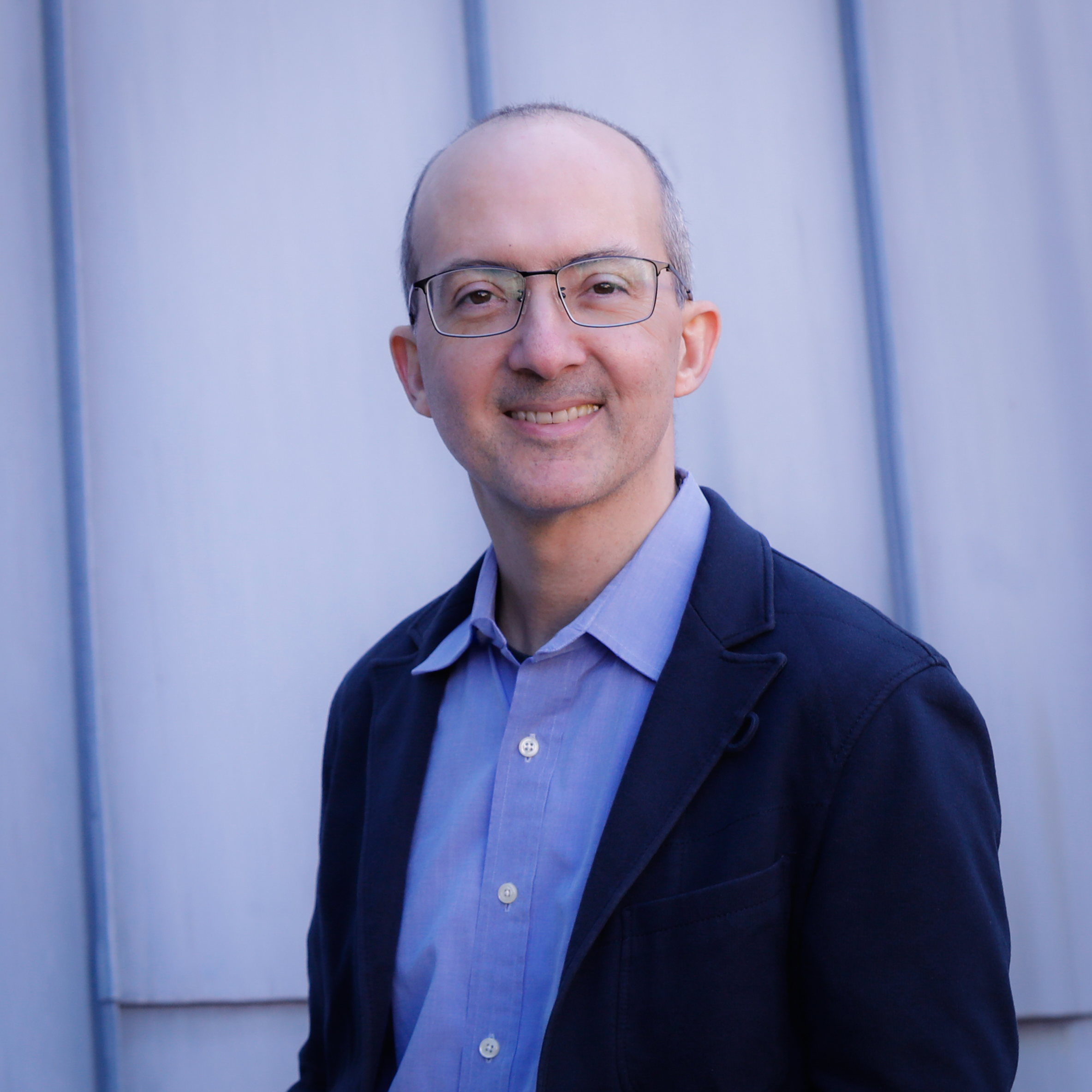
Prof. Brent R. Stockwell
Department of Biological Sciences, Department of Chemistry, Department of Pathology and Cell Biology, Columbia University, New York, NY, USA.
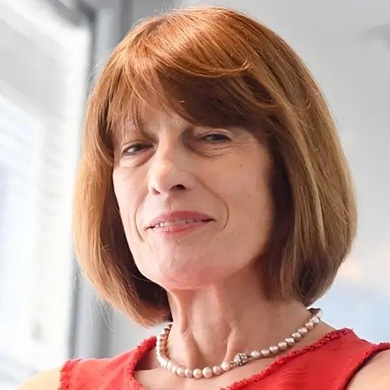
Prof. Gordana Vunjak-Novakovic
Department of Biomedical Engineering, Columbia University, New York, NY, USA.
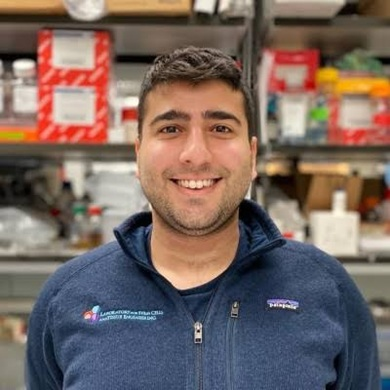
Dr. Daniel Naveed Tavakol
Department of Biomedical Engineering, Columbia University, New York, NY, USA.
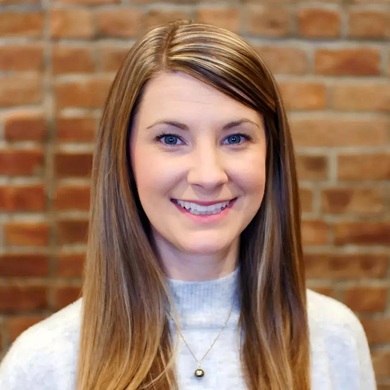
Dr. Pamela L. Graney
Department of Biomedical Engineering, Columbia University, New York, NY, USA.
Introduction
In this episode of EXO Chats, host Prof. Brent Stockwell speaks with Prof. Gordana Vunjak-Novakovic, Dr. Daniel Naveed Tavakol, and Dr. Pamela L. Graney from Columbia University about their article Human iPSC-derived macrophages for studying intrinsic and extrinsic factors in cystic fibrosis, published in EXO - Beyond the Cell.
Although cystic fibrosis is caused by mutations in CFTR, highly effective modulator therapies do not fully resolve persistent airway inflammation. The conversation explores how human iPSC-derived macrophages can help disentangle the intrinsic effects of CF mutations from the influence of the diseased lung environment. The guests discuss how the extracellular matrix, soluble signals, and patient-specific genetic backgrounds shape macrophage behavior, as well as the value of engineered human tissue models for studying these complex interactions.
The discussion also highlights the importance of early intervention, precision medicine, and more advanced multicellular platforms for developing therapies that address both the underlying genetic defect and the inflammatory tissue environment.
Related article published in EXO: Human iPSC-derived macrophages for studying intrinsic and extrinsic factors in cystic fibrosis
Full Transcript
Brent Stockwell: In 2019, a drug arrived that corrects the underlying defect in most people with cystic fibrosis. It transformed the disease, and yet the airways still stay inflamed. Today's guests asked a simple question about that paradox: How much of the problem lives in the immune cell itself, and how much lives in the damaged tissue around it?
Welcome to EXO Chats. I'm Brent Stockwell, Editor-in-Chief of EXO - Beyond the Cell. And the paper we're going to talk about today takes that tagline "beyond the cell" literally. This is a study of cystic fibrosis that tries to separate two things: what a diseased immune cell does because of its mutation, and what it does because of the environment that it's sitting in. The title of the paper is Human iPSC-derived macrophages for studying intrinsic and extrinsic factors in cystic fibrosis. I'm joined today by three of the authors of that paper.
First, we're very pleased to have Professor Gordana Vunjak-Novakovic with us today. She's a University Professor and the Mikati Foundation Professor of Biomedical Engineering at Columbia University, where I am as well, and a pioneer in tissue engineering and regenerative medicine. She's an elected member of the National Academy of Engineering, the National Academy of Medicine, and the National Academy of Inventors, and her groundbreaking work has helped advance engineered human tissues and organ-on-a-chip systems. She was recently named a 2026 L'Oreal UNESCO for Women in Science Laureate. Congratulations!
And we're also joined by Dr. Daniel Naveed Tavakol and Dr. Pamela L. Graney, Associate Research Scientists at Columbia University. And Naveed and Pam were both first authors on the article we're going to discuss today. So welcome to all three of you.
Gordana Vunjak-Novakovic: I would like to thank you. First of all, it's really wonderful to see how the journal is progressing. We were very lucky and very happy to be part of it almost from the beginning. And also, I was very pleased to see that our paper was one of the few most viewed and most downloaded.
And I think it is also a fit to the journal, because what we do in general in our laboratory is to enable the cells to express their normal biological functions by engineering their environments. So, when we say that we are engineering cells and engineering tissues, it is really a very indirect process because the cells do that job and they are the ones that are really focusing on designing the environment. And this paper is also an example of how important are environmental conditions for the cell function. Obviously, genetics is also critical, but environment cannot be neglected. So, a lot of what we see is really part of the contexts that the cells are living in.
So, thank you again for giving us this opportunity to be published in your journal. Thank you for highlighting our paper when it was published and also for this opportunity to maybe give a little bit more insight into what has been done and the observations that have been made.
Brent Stockwell: Thank you so much. That's a great introduction. So let me start, Gordana, with you and the paradox about this paper in a way that it's addressing.
So, just for the listeners, the combination drug Trikafta corrects the F508del defect and helps up to 90% of cystic fibrosis patients, and it's one of the great successes of modern medicine. And yet that inflamed airway persists even in people on therapy. So, what does it tell us? And this gets to the question you're talking about - about environment-mechanistically, that fixing the channel doesn't fix all of the inflammation in the lung, for example.
Gordana Vunjak-Novakovic: Yeah. I think it's really two factors. One is the one that you mentioned that there is this real discrepancy. There are two different sets of factors that are competing or working with each other. And then the other is the timing. We have done a lot of work on modeling cystic fibrosis in the lung over the last four or five years. As you explained, the disease is a genetic disease. So, it is caused by a mutation in a gene. In this particular case, this is a gene that is regulating the transport of salts, particularly the chloride. So, you have this gene mutation, which is at the core of the disease, and then you have symptoms.
The disease is progressive. So, when someone is born with this gene mutation, there is a period of time when there are really no symptoms. Mutation is there, but the lung is still functioning normally. Over time, the function of the lung starts to decline. And this is a result of the changes both in the cells themselves, and in the cellular surrounding, in the extracellular matrix, and in the cells that are circulating through the lung - in particular, these innate immune cells, macrophages, that we were studying.
So, when we were thinking about what could be done for these patients, we realized that timing is incredibly important. So, when someone is born with a disease, you do get a window of time which is pretty long. We are talking about years, but not infinite. So, if you miss this window of time and then someone comes to the situation that actually they carry the disease for a very long period of time, all these changes happen. And you correct the mutation, as you explained, using this drug, but then the rest is not really corrected.
The inflammation persists, the changes in extracellular matrix persist, and the whole milieu of the lung is irreversibly changed. So, it's too late to do correction. So, the point I'm trying to make is, in addition to all these other factors, it's also a matter of time. Being mindful about intervening early enough is critical for this disease.
Brent Stockwell: That's great. That's a great summary of the key question here. Let me ask Naveed a follow up to that. So, in the paper, you're looking at macrophages and the role of the intrinsic and the environment. So, what brought you to macrophages versus neutrophils or other immune cells?
Daniel Naveed Tavakol: Yeah, that's a great question. So, on one hand, it was practicality-wise. So, we were doing a lot of work in the lab on trying to derive iPSC-derived hematopoietic progenitor cells. And then during that timeline, Pam and I were working on trying to actually look at different intermediates of that process. So, isolating macrophages as an important innate immune cell that can perform a lot of the duties that we want to see in our engineered tissues, including clearance of dead cells and also responsiveness to any inflammatory cues. So that was kind of like the original purpose of it.
And then we worked actually with another (at the time) PhD student who also stay for postdoc, Meghan Pinezich, one of our other co-first authors in the paper, who was interested in basically modeling the CF environment. And so, we were trying to see, okay, what are the different factors that we can actually isolate from these cell types, whether this is different iPSC lines from disease patients, and use the macrophages as one model system.
The goal was really to eventually go towards modeling neutrophils and other cell types as well. And I think in future, there will kind of be that arrangement of looking at how neutrophils or perhaps macrophages, fibroblasts, endothelial cells, all these other cells that are there in the microenvironment might play. But I think we wanted to start out with a cell that we knew how to differentiate them well and how to characterize well, and then from there, take the study further, as our interests were going. But I don't know, Pam, if you want to add.
Pamela L. Graney: Yeah, I think I agree with everything that Naveed said, but I would just like to add that one of the benefits of us having this interest and skill in macrophage differentiation is that macrophages are a much more underexplored cell type in CF. A lot of times when we talk about CF, when we read about CF in the literature, there's a large focus on the neutrophil as the primary immune cell, and the neutrophil is important, but I think now we're beginning to appreciate how important the macrophage cell is. And those two cell types communicate to really facilitate the disease progression. So, I hope this is just the beginning of the work in macrophages because we've really only opened the door, and we haven't really gone through to explore all of the deep details of different phenotypes of macrophages that could be driving this.
Brent Stockwell: Go ahead, Gordana.
Gordana Vunjak-Novakovic: Just to add one small detail. I mean, neutrophil is neutrophil, but actually macrophages are not like a set of discrete phenotypes. They're a kind of a continuum, which is going back and forth. And then on one end of the spectrum, you have a set of very detrimental functions-they are really causing inflammation, all these that we are talking about today-but on the other end of the spectrum, you have this really significant regenerative ability. So, this is interesting translationally, but it's also interesting in a very fundamental sense, biologically, to understand this cell type, which is very, very responsive to the outer conditions, probably more than many other cells in our body.
Brent Stockwell: That's perfect. Yeah, that makes a lot of sense. I think it's a great platform. And I wanted to ask Pam a follow-up about that. So, Gordana's lab is known for building these engineered tissues and organ-on-chip systems, and really constructing the microenvironment. And in this system, you combine that great tool with the iPSC (induced pluripotent stem cell)-derived macrophages. And that set of tools together could be very powerful for many different questions. What made you think that this was the right tool or this was the right question to address with that tool? What brought you to CF?
Pamela L. Graney: Well, our group works consistently with the Cystic Fibrosis Foundation. So, there's a team of researchers in our lab that work with that group, and Meghan was on that team. And so, this was sort of a natural collaboration that happened in the lab where we had the skills in developing a cell type that's critical in cystic fibrosis, and we had a researcher who was dedicated to studying cystic fibrosis as part of her PhD.
And so, it was really marrying those two interests and joining our expertise in each respective area to really push this question forward, because it really takes expertise on the immune side and expertise on the CF side to really answer this question. And part of this work was piggybacking off of some of Meghan's earlier publications that show that there are known differences in the extracellular matrix within the CF lung, and specifically the distal lung, which is less focused on.
And so that was where we had joined sort of the environmental matrix properties and then the cell type to really look at differences in cell behavior at baseline and in response to this inflammatory environment. And then, if you were to correct a diseased cell type, but you still had this inflammatory environment, would that actually improve patient outcomes? And so that was really where we were starting from with the paper.
Brent Stockwell: Okay, that makes a lot of sense. That's a history there. Let me ask Gordana then. So we go through the paper, some of the key findings. So, when you just look at the macrophages in isolation, so without the matrix, without LPS stimulation or activation, tell the listeners: what do you see in terms of differences with cystic fibrosis versus normal macrophages at baseline? And was any of that surprising to you?
Gordana Vunjak-Novakovic: So, it's very interesting that actually macrophages in cystic fibrosis get primed to respond to the inflammatory conditions. So, you have this even before we challenge them using LPS, using a molecule that actually is supposed to cause the inflammatory response. Our initial idea in the paper was just to expose macrophages to LPS and see how they respond. But then subsequently, we found that even without the LPS, they have changed their phenotype, obviously in response to the environmental conditions in the lung.
And then we tried using the in vitro model that allows you the freedom to really change individual parameters at will and then look into their effects, each of the factors alone or the collective. Then we found out that actually this change in phenotype of macrophages was due to both the cellular environment, so the cell populations in the lung have changed in cystic fibrosis. We have another factor, which is the secretome, the biochemical milieu that is a result of release of many factors by many cells.
And something that we maybe didn't expect right away: the extracellular matrix. But now when you look back into the picture that is sort of emerging, it totally makes a lot of sense, because the cells in all conditions, normal, physiological, and pathological, our cells always have this conversation with all constituents. They talk to extracellular matrix, they talk to other cells, they talk to the soluble factors, and it is also importantly two-way communication. The cells themselves respond to extracellular matrix, but then they also regenerate the extracellular matrix, they degrade, break this extracellular matrix. So, it's a very complex picture that we are dealing with.
And this is something that is not easy at all to study in a whole organism, in an animal model. I mean, I won't go in this moment into how much an animal model-ferret, for example-resembles cystic fibrosis in human, but actually animal model gives you the advantage of a systemic environment, as does the patient, the human; but then, there is no way to parse out these different conditions. So, this is why we reach out to in vitro as a complementary approach to looking into clinical data. And then we know, there is this saying, which I believe is very true: All models are wrong, but some of them are useful.
So, this is where we play on this usefulness, being very careful and mindful about how much you can do. The model is not perfect, but actually the model does give you an opportunity, enables you to have some findings that you would not have in a systemic environment. And then using these findings, you make a better model and then you learn more and you go back and forth.
And I think one of the big challenges within the scope of this paper but also in general today is, we talk about data, we generate more and more data every day, and how to integrate this data. Because some of them are very different from each other. You have gene expression, you have proteins, you have secretome, but then you have also physiological data that are measured in patients. How do you interpret this? How to put this together; I think this is one of the real challenges today. And when we talk about big data and AI and biology, I think for me this is one of the really key drivers of progress.
What can we do to enable meaningful interpretation of our experimental data to make them able to inform, on one hand, biological research, fundamental research, and on the other hand, translational studies towards therapy? So, it's complex, but then we are learning. Maybe this is the best description of where we are today.
Brent Stockwell: Yeah, I think it's a great summary of why NIH has this "new approach methodologies" concept. And another saying I like is that "mice are not just little people," so humans are actually different. So, in that vein, let me ask-Naveed or Pam, whoever feels comfortable to answer this-about the individual differences, because you were getting these iPSC macrophages from individual patients ultimately. So, how much difference or how many differences do you really see between individuals, or is it pretty consistent, what you're seeing?
Pamela L. Graney: Yeah, I'm actually really glad that you're bringing this up because this was something that was a bit surprising when we started looking at some of the initial data. So, the CF cell lines that we used to differentiate the iPSC macrophages had different CFTR mutations, different types. So, one was the very common F508del, we had the G542X, and they're different classes. The F508del is a class two. The other two mutations are class one. And so, when you have different classes, it either affects the way that a protein is produced-so it might not be produced at all-or it affects the way the protein is folded and transported to the surface, making it just unable to do its job even though it is being produced.
And so, when we had done some of the initial sequencing data with these three lines, something that was a bit surprising to me, at least, was that when we compared our healthy lines and our CF lines derived from the same line, those cell types sort of clustered together in terms of how different or how similar they are, instead of what I expected, which was all of the CF lines clustering together and all of the healthy lines clustering together. And so, this really told us that the patient individuality here is such a critical component of how these patients are treated moving forward.
And one of the limitations of our study is that we did only use one cell line per mutation type. So, we can't really make any generalizabilities in terms of that. But I think it just really touches on the importance of precision medicine and moving in this direction going forward to really improve patient outcomes with CF. And I'll leave it to Naveed if he wants to add anything else.
Daniel Naveed Tavakol: Yeah, I totally agree. I think getting the lines that we did was relatively doable because we worked with the Cystic Fibrosis Foundation. However, I do think there are limited iPSC lines available for CF patients. And so overall in the field, I think we're getting a lot better at banking different iPSC lines from different disease clusters of people. But I think there are still some cases in rare diseases where you don't get as many patients that have iPSC lines that have been derived from them, and also making the isogenic corrected controls of those cells as well.
And I think the CF Foundation is doing some of this work to actually make some of these isogenic lines. But I think all of those are really important in understanding the class of the mutations and how that affects the patient.
Brent Stockwell: Go ahead, Gordana.
Gordana Vunjak-Novakovic: Just to say something about the Cystic Fibrosis Foundation. I think this is a really wonderful example of a foundation that's based completely on philanthropy and devoted to one single disease. And we've been working with them for years. We started on a very small project. So, it was led by Meghan Pinezich, that Naveed and Pam mentioned. She was our first student who really as a graduate student worked on this problem. And then more recently, they gave us this larger grant that they call a "pioneer grant."
And they are not only funding this research, they're a real partner in it. They're providing us with the cells. They're providing us with contacts with people that can help us. So, for me, this is an example of a great model of how science can be advanced by working collectively. And then the drug that you mentioned and some of the therapeutic modalities that are now available to the patients are really direct results of their engagement. They were the ones starting to build this CF research community. So, I just want to say that we are incredibly grateful to them for providing the right environment and the resources for many different groups. Their annual conference now has many hundreds of people. So, this tells you that this area of research is really growing.
Brent Stockwell: Absolutely. So let me ask one final question to each of you, and it's about the next steps in the field. And I'm wondering about where you think you should take this research. Other people, maybe young researchers just getting started, want to get into this area. And how do we ultimately, maybe as part of that, correct the matrix problems in these existing milieu or environments? So, we'll start with Gordana. How about that?
Gordana Vunjak-Novakovic: Sure. So, I'll try to say it briefly as a sort of two-part answer. One is, this particular study just opened a number of questions-answered some of the questions, but actually opened many, many more. So, I think there is more that can be done and hopefully will be done in this space.
For me, the effect of time, meaning the state of the lung at the time that you are looking into this phenomenon, is very important. In line with what Pam and Naveed just mentioned, there are similarities and differences between the patients. It would be incredibly interesting to see what would be the results if we used the cells from a relatively young individual, say between birth and teenage years, then you don't have these detrimental changes in the lung and you can have these genetics being exposed much more directly. So, this is one example of where we could go. Also, the study was, for all sorts of reasons, limited to a finite number of lines. Doing a broader exploration so that we can really pursue a precision medicine approach would be very important.
The other direction, and this is something that we've been doing with the Cystic Fibrosis Foundation, is to really remove the cause of the disease. So, we are looking actively into how you can pursue gene therapy of this disease. Obviously, early enough, because once the lung has changed, became fibrotic, lost its function, then it doesn't really help to correct the mutation. So, we are trying to intervene early, and then try to solve some of the engineering delivery problems. So, we are looking into what would be the best carrier for the gene cargo that you are using to do correction of the gene mutation-what are the particles in terms of charge and size etc.-and the other is how to deliver.
Because delivery of anything into the lungs, especially distal lung, meaning peripheral lung where actually the oxygen transport happens, because the upper lung are just the conduits for transport of air and then the gas exchange oxygen/CO2 happens in distal lung-so we are working on this very actively. We developed two models; one is a very small-scale bioreactor model that allows screening studies, and the other is the whole lung model, where we are using lungs from animal sources. These are porcine pig lungs that are very similar anatomically to human lungs and physiologically. We introduce mucus that mimics the mucus from cystic fibrosis patients, and we are trying to figure out how to enhance transport of the therapeutic into this lung.
And then finally, in line with what I mentioned related to the Cystic Fibrosis Foundation, they are very interested, when we developed this project, one goal was to develop a model. But then the other goal was to develop a model that would be designed so that we can give it to other people; you don't need some super special training to use it. And so, the smaller of the two models, the screening model, is something we're very interested in, and we are making it now. Columbia is making it available to the Cystic Fibrosis Foundation to distribute. So, we would like to democratize this approach, enable people, just share what we have learned over the years, and then make it possible so that it really goes beyond our laboratory. It goes to others who are interested and able to study other aspects of the problem.
Brent Stockwell: Perfect. That's an exciting future. Let's go to Pam. I'd love to hear your thoughts about what you'd like to see next.
Pamela L. Graney: Yeah. Well, I first off just want to say I completely agree and echo everything that Gordana just mentioned. I think she had a very comprehensive overview of so many different avenues where this could really go.
I personally have just always been interested in macrophage behavior and all the different forms that macrophages come in, from being pro-inflammatory to pro-reparative. And something that we see in a lot of diseases and tissue regeneration is really trying to regulate the macrophage response using different approaches. And so, something that we didn't look at that could be looked at in the future is really understanding which type of macrophage really contributes to disease progression and to inflammation, and is there a way to modulate that behavior to reduce the overall inflammatory environment.
And then of course, there's a lot of areas that we didn't have the opportunity to look at in this particular study. I think we mentioned in the paper, but things looking at tissue stiffness, for example, is a very big field in other applications, and that's something that we didn't explore. But tissue stiffness alone, even if you remove other factors, can really drive the cell behavior, and so it would be really interesting for a model to look at the impact of the early changes in tissue stiffness and if these things are reversible or if that's something that will just continue to progress during the disease.
And then of course, looking at different cell types. So, we had a very simple model of looking at one cell type. We mentioned the neutrophil earlier, but of course other studies could look at cell-cell communication and how that's further regulating the disease progression.
Brent Stockwell: Great. Okay. Those are also exciting ideas. Naveed, do you want to give us your thoughts?
Daniel Naveed Tavakol: Yeah, I'd probably echo what Gordana and Pam both said, but really emphasizing the point that our model is a very simple model of what's happening in the myeloid cells or macrophages specifically in a cystic fibrosis. So I think going to make more complex models that are still simple enough to be translated to other labs-I think that's what's really next for projects like this.
I mean looking at how epithelial cells, fibroblasts, endothelial cells, other supportive cells in the niche actually drive macrophage phenotype is important, and then looking at how this environment may change, testing therapeutics in a dish is something that people are using more and more now, and I think with the FDA's interests in using new approach methodologies to translate some of these new therapeutics in parallel to pre-clinical animal models, I think that's where we're really headed.
And so, I feel like, at least for this field, there's going to be a lot of momentum building upon the large animal models and the in vitro human models and finding the right balance of both to get a bit more clinical translation sooner, rather than having to wait many, many years for a drug to kind of make it to the patient.
Brent Stockwell: That's great. So, for me, the takeaway from the paper is that the inflammation in cystic fibrosis-probably other diseases-is really in these two places: in the cell, the macrophage in this case, and also in the matrix. And that if you just correct the genetics in the cell, it doesn't correct the environment, at least if you don't do it at an early enough stage. And that's why we like this tagline "beyond the cell" that we have here for the journal.
So, I want to thank Gordana, Pam and Naveed for the work that you did and for bringing this really fantastic paper to EXO and for being here today.
And I'm going to sign off. For our listeners, I remind you the paper is Human iPSC-derived macrophages for studying intrinsic and extrinsic factors in cystic fibrosis. It's open access in EXO - Beyond the Cell. We'll link to it in the show notes. And I'm Brent Stockwell, and thanks again for listening to EXO Chats.


Subscribe
