
Exercise Oncology: A Discovery Engine for New Cancer Treatment Strategies
Published On: 18 Sep 2026
Views: 85
Subscribe
Speaker(s)

Prof. Brent R. Stockwell
Department of Biological Sciences, Department of Chemistry, Department of Pathology and Cell Biology, Columbia University, New York, NY, USA.
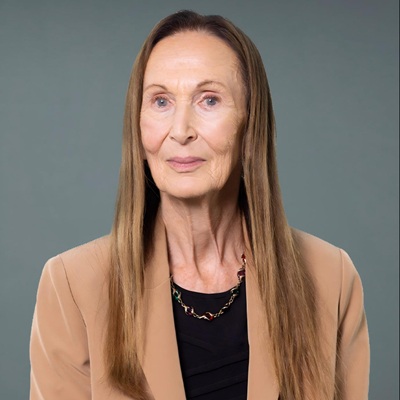
Prof. Dafna Bar-Sagi
Department of Biochemistry and Molecular Pharmacology, NYU Langone Health, New York, NY, USA.

Dr. Emma S. Kurz
Memorial Sloan Kettering Cancer Center, New York, NY, USA.
Introduction
What can exercise teach us about developing better cancer therapies? In this episode of EXO Chats, Prof. Brent Stockwell is joined by Dr. Emma Kurz of Memorial Sloan Kettering Cancer Center and Prof. Dafna Bar-Sagi of NYU Langone Health, who also serves on the Editorial Board of EXO to explore this question through their perspective article, Beyond the treadmill: Exercise oncology as a platform for translational advance.
Exercise is increasingly recognized as a powerful adjunct in cancer care, yet many patients with advanced disease, cachexia, or treatment-related toxicities may be unable to follow conventional exercise regimens. Based on the article, this episode explores a broader view of exercise-not only as a therapeutic recommendation, but also as a discovery platform for identifying biological mechanisms that can be translated into new treatments.
Dr. Kurz and Prof. Bar-Sagi discuss how exercise may enhance anti-tumor immune responses, including through IL-15 signaling, and how these insights could guide new treatment strategies for patients unable to exercise. The conversation highlights exercise oncology as a promising route toward more effective and accessible cancer therapies.
Related article published in EXO: Beyond the treadmill: Exercise oncology as a platform for translational advance
Full Transcript
Brent Stockwell: Exercise has a growing body of evidence in oncology because patients who move, do better. Their tumors respond better. Their immune system does better. And for the last decade, the field has taken that observation and turned it into a prescription to get patients moving. But the patients who could benefit the most with advanced cancer, cachexia, and other issues are often the ones who cannot exercise. So, what if we stop thinking of exercise as a therapy and start thinking of it as a screening platform, a discovery engine? That's the argument in today's paper.
Welcome to EXO Chats, the podcast from EXO - Beyond the Cell, the journal from Science Exploration Press, dedicated to everything that's happening outside the cell membrane. I'm Brent Stockwell, and in every episode, we sit down with the researchers drawing the maps of the world beyond the cell. The papers are all open access online.
So, today's paper is a perspective in EXO called Beyond the treadmill: Exercise oncology as a platform for translational advance. The argument is short and sharp that exercise works, but many patients cannot do it. We're going to get into that. I have both of the authors here with me today. Dafna Bar-Sagi is the Saul J. Farber Professor of Biochemistry & Molecular Pharmacology, and the Executive Vice President and Vice Dean for Science and the Chief Scientific Officer of NYU Langone Health, and one of the most influential voices in the biology of RAS signaling and pancreatic cancer. She's also an Editorial Board member of EXO. And Emma Kurz, MD, PhD is a hematology and oncology fellow at Memorial Sloan Kettering Cancer Center and is the first author of the paper. Dafna and Emma, welcome to EXO Chats.
Dafna Bar-Sagi: Thank you, Brent.
Emma Kurz: Thanks for having us.
Brent Stockwell: Absolutely! Quick couple of warm-up questions before we get into the paper. So, Emma, I'm curious. How did you as a physician scientist end up getting interested in a research program at the intersection of exercise and cancer?
Emma Kurz: I love this question because it exhibits both how much chance plays into the work we do in the lab and also how interconnected the sort of physiology of getting on the treadmill is to cancer biology and anti-tumor immunity because that is the underlying reason we got into this space.
Many years ago, people made an observation that when you exercise there's sort of this profound leukocytosis. It's transient. It's mediated by sympathetic nervous system surge. Not a lot of work had examined what the effect of that surge could be on anti-tumor immunity particularly for cancers like pancreatic cancer that don't tend to have robust anti-tumor immune responses or response to checkpoint blockade at baseline.
And so, the question was this is a non-toxic lifestyle modification. Does repeated exercise bouts or exercise training have any effect on the immune milieu in this disease? And if so, how and why? A really interesting question that turned out to be far more complicated than I think we originally anticipated.
Brent Stockwell: That's amazing. And Dafna, for you, when Emma showed up talking about exercise and pancreatic cancer and other cancers, what was your initial response and sort of how did you get excited about this?
Dafna Bar-Sagi: I got excited about this. It actually was very much along the lines that I was thinking before I even had Emma proposing to do this work, which was the recognition from our own work and others that the myopic view of cancer is just the cell itself. And it really sort of sits very well together with the principle of EXO - is that there are things that go really beyond the cell boundaries.
I was working predominantly in the tumor microenvironment, but was independently very much interested in systemic effects in general inflammation or things of this nature. And so, it was really music to my ears when Emma wanted to pursue this project.
This being said, I think that all of us that have been fortunate to have in our labs people that can take on a project and carry it through. In itself, it created a lot of excitement not only for me but for people in the lab. And so, it was really kind of a perfect partnership.
Brent Stockwell: That's really great. That is a great origin story there. So, Emma, let me come back to you. So, the paper in the perspective you're talking about the patients who can't exercise. It's hard for them to really just use it as a prescription, as a therapy. Can you give the audience some idea of like how common is that in, let's say, pancreatic cancer? Who are those patients and how often are they seeing physicians, and struggling with this kind of prescription?
Emma Kurz: Yeah. I think it's actually most pertinent for a disease like pancreatic cancer. I think just taking a step back clinically, this is a patient population that, really, the majority of patients are discovered, unfortunately, at late-stage disease, as is true in many other cancer types.
When patients have metastatic or very large disease burden, there's often an associated degree of weight loss, failure to thrive, decreased oral intake, particularly when it comes to GI and hepatobiliary cancers like pancreatic, and also a clinical syndrome of cachexia, which is something that's been well described by both pre-clinical and really beautiful, elegant mechanistic work in this disease — that we know is associated with poor prognosis and just overall declined functional status in an inflammatory state.
The majority of patients are presenting with metastatic disease. And oftentimes, you'll hear the classic board question of weight loss, depressed mood and sort of painless jaundice as a presentation for pancreatic cancer. That tends to actually be true in the clinic a lot of the time. But patients who are sort of having rapid weight loss tend not to be the same set of patients who could get on a treadmill five days a week because they're unable to keep up with their caloric intake. They can't really expend more energy than they already have. That does not even sort of getting into patients who progress, patients who are on chemotherapy who might have treatment related toxicities.
In the day and age of KRAS inhibition it also applies, there's significant GI toxicity, skin toxicity so I think when you really think about the overall representative patient population which by the way tends to be on average significantly older than many other solid tumor types, it's really challenging to imagine like a vigorous exercise treadmill regimen in them five days a week.
Brent Stockwell: Right, absolutely. If we can bottle that up in a different way, that could really help those patients. So, Dafna, let me ask you about something I found very interesting in the perspective, the discussion of lactate. And you talked about this Rundqvist paper in eLife where you can kind of recapitulate some of the effects of exercise with lactate. That is a big effect. But then you go to a different tumor and then it has the opposite effect like PDAC. What do you think about that, like why does a metabolite product of exercise do different things in different cancer contexts?
Dafna Bar-Sagi: I think that it's not unique to exercise to lactate to any other metabolite that we wish to study, because the makeup of the tumor cells is such that they are the dependencies on either metabolites or on other things that exist in the tumor microenvironment. It’s typically very tumor dependent.
Even if the elements sometimes are common, it's the baseline of the tumor in terms of even if we're going to take things like rates of cell division, vascularization. So pancreatic cancer for example has very poor vascularization. So, obviously, oxygen delivery and nutrient delivery is very limited. So, it's a very important point that you are bringing up because the tendency for all of us is to generalize, but the really tedious part of what we're doing, each of us studying a different cancer, is really try to ensure that we understand the individualism of every tumor. And if that's not enough as we now start to understand even within the tumors their neighborhoods and different regions I mean the whole spatial omics approach is now telling us that within one tumor you have seen one area, you have seen one area, and you're going to have to do this. I thought it was good to bring it up just really to make sure that we're all recognizing and also even with respect of the study that we had that this particular potentially therapeutic modality is going to work in certain pancreatic tumors. But by no means one would want to argue that it's going to be kind of a generic thing that now you try to apply.
This being said, I just want to follow up for a moment on what you and Emma discussed before, which is the difficulties for this patient population to really take advantage of exercise itself in order to improve outcomes of therapeutics.
However, Emma probably is going to be much better positioned because by now she has seen a lot of patients, but even for my limited experience, this patient population is for all the obvious reasons is extremely motivated to really improve the potential outcome. It is still a disease that it's pretty much not curable. We are making a lot of headway in terms of extending lifespan, but I think that we had already a few examples in which we tried to mobilize early. There were not formally clinical trials, but just pilot trials which we try to mobilize patients to do it, and it was definitely possible. It's not the easiest, and as Emma is pointing out, they're not going to be able to do a very strenuous type of exercise.
Again, one of the things I'm not sure and I don't remember now whether we emphasized it in the piece, but those who pay attention to it, every single time when I give a talk about this study and I show people for the mouse experiment, what is the speed that the mice are running at? And then everybody sits there and try to calculate well what is it going to be on the treadmill. And the potentially unanticipated thing - I hope I remember - three to three and a half miles per hour. It’s essentially a fast walk, it’s a walk that may be fast but certainly not strenuous, and that in itself is sufficient to trigger the response that Emma talked about it, which is this leukocytosis. So, the lesson is that the beneficial exercise and the beneficial effect of exercise as an anti-tumor modality doesn't necessarily have to be something that is really dependent on someone being in a fantastic physical shape.
Brent Stockwell: That is super important. That’s a really great point. I didn't take that away originally, so I appreciate that. Emma, I want to ask you about one of the case studies. So, you have these great case studies in the paper which really walk you through three examples of where you can try to find the molecular effects of exercise and then try to recapitulate those. And so, one of those is really, as far as I could tell, it's based on your 2022 Cancer Cell paper about IL-15. So, I was wondering if you can just walk us through that study and the moment when you realized that IL-15 is playing such an important role and what that did for you in terms of understanding.
Emma Kurz: The IL-15 story first started again with the principle of what cytokines are preferentially upregulated traditionally by muscle in response to vigorous exercise. So, they take the term myokines; it’s simply a cytokine that's secreted by muscle in response to a physiologic stimulus.
IL-15 and IL-6 and actually IL-10 traditionally were studied in that context, because first there's this sort of burst of immune activation and then if you really undergo vigorous exercise and you have a little bit of cell death and cell products to clean up, you need sort of more immune suppressive TGF-beta-expressing macrophages to go in and clean up the lactic acid that you created if you really sprint. So, the exercise response is sort of two-toned in that manner. There are some cytokines that are released that are quite immune stimulatory and then there are some that are really actually immunosuppressive and the tempo of those is controlled by the body in response to exercise really elegantly.
The profound phenotype we saw in the tumors of mice that were on the treadmill, compared to those that were not, was an effector activated cytotoxic CD8 T-cell phenotype and of the myokines that I just listed, IL-6 is actually pro-tumor in pancreatic cancer. I mean it can be mixed, but it is largely pro-tumor in pancreatic cancer, and we don’t think IL-10 was doing it and so we hypothesized that there could be an increase in IL-15-responsive CD8+ T cells that maybe exercise is inducing this known increase in IL-15 signaling and that these T cells that we're seeing in the tumor and in the blood were really responsive to that cytokine signaling pathway. So that's how we originally came to it.
These T cells that are increased in the tumors of exercising mice do preferentially express IL-15 receptor, the cognate alpha subunit domain of the receptor, that's the one that's specific to IL-15 as opposed to shared with IL-2, and then it turned into a really fun collaboration with Novartis at the time because they were developing an IL-15 super agonist agent for non-small-cell lung cancer and bladder cancer and some actually non-Hodgkin's lymphoma, and they were great partners for us to test their drug as a mimic to see if we could induce a very similar immune response to the one that we were seeing in the mice on the treadmill. And we did, and I can talk more about that if it's of interest, but that was the birth of the IL-15 story.
Brent Stockwell: Yeah, that’s perfect! So let me switch to Dafna for a followup about that because I guess the three case studies talk about effects of exercise on metabolism, exercise-induced cytokines, and then on the microbiome. But I'm curious about what do you think, sort of linking all these together, the relative contribution of metabolism, cytokines, and the microbiome; if we had to generalize, which is contributing more or is there synergy and how do they intersect with each other?
Dafna Bar-Sagi: I think that truly it's going to be important to do it, to ask this, or to provide an answer to the question that you're asking by systematically exploring it.
But my gut feeling is going to be that ultimately the executioner of the anti-tumor response are the cytotoxic T cells. They are the ones now whether their activation is not only because of the IL-15 axis, but maybe because of some of the metabolic product of the microbiome that remains to be addressed. But I feel that at the end of the day, these are the soldiers that are fighting the war.
And because of the fact that we were able to demonstrate that this axis in these T cells is really responsible for activation of these cells that everything else can be included, but this is probably the most relevant potentially therapeutic axis to take advantage of.
Brent Stockwell: Let me ask a kind of provocative question, Dafna, about that to follow up. So both of you in the paper are very careful to say that you're not trying to replace exercise completely; like, they are still valuable and you can't fully recapitulate that, but you're trying to find for these patients some of the benefits, so that can be recapitulated in other ways. But is it possible that if we really understood the effect of exercise, let's say on CD8+ T cells, ultimately, we could fully recapitulate it in a pill, in a bottle. Do you think that's possible?
Dafna Bar-Sagi: I am skeptical. Anything is possible but I'm skeptical whether it is possible simply because exercise has so many other effects, some of which you have mentioned, and these effects are very much individual dependent because depending on the physiology of any given individual, those effects are going to vary. I think that we cannot in a simple manner at this point in time say that all the other beneficial effects of exercise are not contributing to, not necessarily the targeting effects of IL-15 agonists, but to the overall response to this therapy that will require probably other systemic components.
If we want to talk about exercise in different contexts, which people are also talking about, whether it’s really in the contexts of, for example, prevention. If you're exercising, are you less susceptible to contracting a malignant disease; that is definitely something or this is going to be definitely something that I don't think we're going to be able to create a bottle with a cocktail of drugs that are mimicking exercise.
And last, but not least, and Emma can follow, there is obviously a part of what exercise is bringing to the table is an engagement of the central nervous system that is responsible for a lot of the responses that we are seeing, because even the release of the leukocytotic effect is related to a certain extent to a sympathetic activation. And so, I suggest for those who are listening and are hoping that they're not going to have to get up early in the morning to go to the gym. No, not yet.
Emma Kurz: Yeah, not yet. I agree. I totally agree with that. I think skepticism for me as well, what I have learned in reading about this field over the past seven years is that exercise is like an orchestra. That's how I think about it. And it quite literally is an orchestrated response, multifocal. And when you take away the brass section of an orchestra, it's still an orchestra. It just doesn't sound the same. And so, I don't think that we are in a place right now where we can package all parts of that orchestra into something that people can do not by exercising, but I think we have a violin and maybe some string sections and other than that, so it will take significant change in order to get to that point.
Brent Stockwell: That's great. Okay. I just want to ask you each one more question, a prediction from each of you. So, if in five years, in 2031, we come back and sit here then, what's the intervention that came from using exercise as a screening tool that you're most excited about that you really hope to see changing the treatment of some cancers? So maybe we'll start with Dafna.
Dafna Bar-Sagi: From a narrow perspective, having worked on pancreatic cancer for almost three decades. what I would like to see is that the treatment with IL-15, potentially with other targeted therapies whether it’s RAS inhibitors or other that are likely to come, there is going to be a real meaningful improvement of the survival of pancreatic cancer patients. So that’s for me I would like to sit with you here five years from now and we can say remember that when we spoke about it - I told you that my wish that in five years from now - things are going to be much better.
Brent Stockwell: Thank you, and Emma.
Emma Kurz: That's my dream too. It is a much younger dream, but it's definitely my dream too.
I think from a more generalized perspective, I think the thing I intellectually fantasize about is expanding exercise as a platform for a lot of these autologous cell therapies and CAR-T and just understanding that we can use our body's own movement to actually make a more profoundly active anti-tumor effect whether in hematologic malignancies or in solid tumor malignancies.
I think that adopting that into standard of care in the next 5 to 10 years would be incredibly cool and there are already studies to that effect starting in leukemia where they are harvesting T cells and then using DLIs from exercised versus non-exercised hosts or donor lymphocyte infusions and showing that there's a more profound effect. So those kind of creative approaches - I think standardizing those and implementing those into oncology would be my dream for the next five years.
Brent Stockwell: That is very inspiring. So, we'll close it out here. I just want to say Dafna and Emma you've written a really exciting paper. It's thrilling to read and it really opens the mind in terms of what's possible. For our listeners, it's out there, open access as all the papers are at EXO - Beyond the Cell. If you search for "beyond the treadmill" or go to the website, you'll be able to find it. And so that's it for this episode of EXO Chats. Thanks to Dr. Emma Kurz and Dr. Dafna Bar-Sagi for their time and for writing this very exciting paper and sharing some of their ideas with us here today. Thanks, everybody!
Share


Subscribe
