Table of Contents
Simultaneously improving thermal conductivities and mechanical strength of carbon fibers/epoxy composites via CNT/copolymer hybrid interphase
Carbon fibers (CF)/epoxy composites are widely utilized in aerospace and transportation due to their light weight and high specific strength/modulus. However, poor interfacial binding between CF and the epoxy matrix leads to phonon scattering and inefficient ...
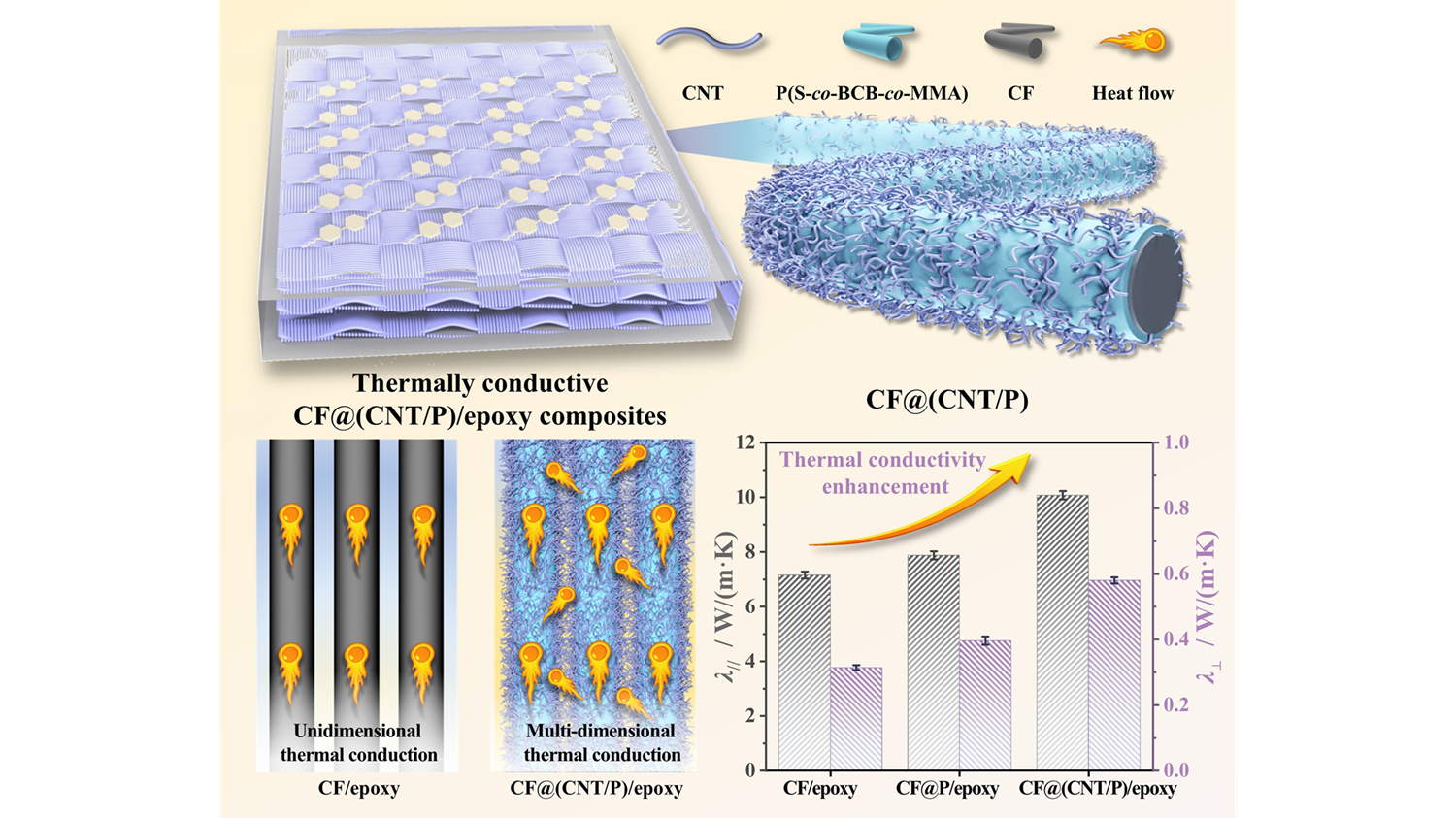
More.Carbon fibers (CF)/epoxy composites are widely utilized in aerospace and transportation due to their light weight and high specific strength/modulus. However, poor interfacial binding between CF and the epoxy matrix leads to phonon scattering and inefficient load transfer, causing heat accumulation and reduced service life in high-power electronic systems. In this study, CF was coated with a styrene, benzocyclobutene, and methyl methacrylate units contained polymer layer mixed with carbon nanotubes (CNT) through impregnation and drying. The polymer layer was then thermally crosslinked to obtain the polymer and CNT coated CF (CF@(CNT/P)). CF@(CNT/P) was then applied as reinforced fibers and epoxy resin containing liquid crystal structure as matrix to prepare CF@(CNT/P)/epoxy composites. The π-π interactions and hydrogen bonds between CF and epoxy resin were enhanced by the benzene ring and ester groups in the polymer, thereby improving the interfacial binding between epoxy resin and CF. CF@(CNT/P)/epoxy composite showed enhanced load-bearing and thermal conduction performance. When the mass fractions of CNT and copolymer in CNT/P/dichloromethane (DCM) solution were 0.1 wt% and 0.03 wt%, respectively, the CF@(CNT/P) had the best interfacial binding to the epoxy resin. The interlaminar shear strength and flexural strength of the CF@(CNT/P)/epoxy composite increased from 23.7 and 252.5 MPa of CF/epoxy composite to 31.4 and 369.1 MPa, respectively. Meanwhile, the in-plane (λ∥) and through-plane (λ⊥) thermal conductivity were improved from 7.15 and 0.31 W/(m·K) of CF/epoxy composite to 10.08 and 0.58 W/(m·K), respectively. The CF@(CNT/P)/epoxy composite also demonstrated an electromagnetic interference shielding effectiveness of 38.6 dB which has broad application in high-power electronic information systems.
Less.Yuhan Lin, ... Junwei Gu
DOI:https://doi.org/10.70401/tx.2026.0023 - July 01, 2026
Experimental study on stable deep eutectic solvent based nanofluids by a one-step strategy for solar energy harvesting
Deep eutectic solvent (DES) based nanofluids have gained ample attention owing to their extraordinary thermophysical properties such as wide temperature range and thermal stability. While poor static stability of DES based nanofluids heavily hinders their ...
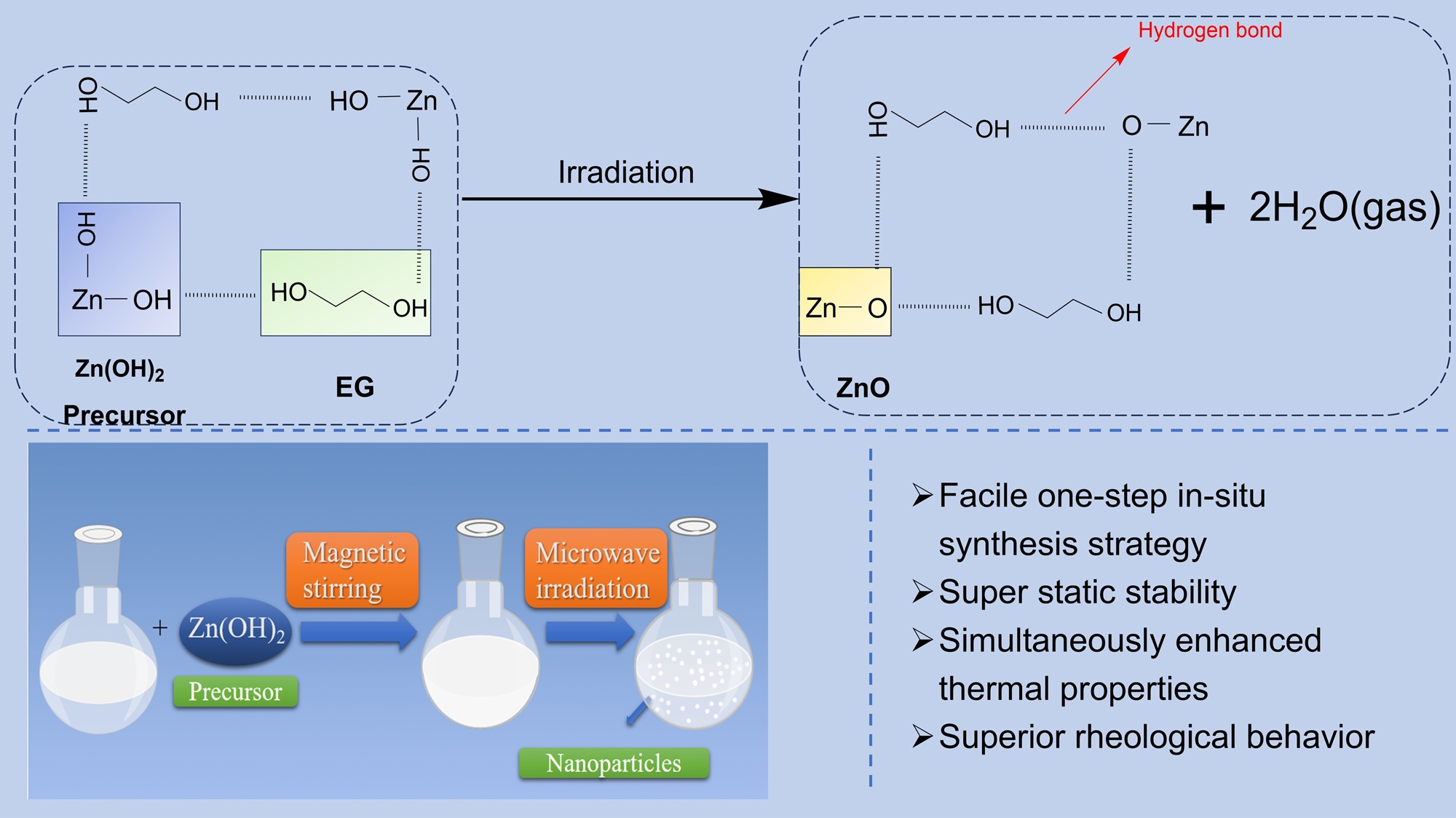
More.Deep eutectic solvent (DES) based nanofluids have gained ample attention owing to their extraordinary thermophysical properties such as wide temperature range and thermal stability. While poor static stability of DES based nanofluids heavily hinders their practical application due to the incompatibility with dispersant. Herin, a novel ZnO nanofluids using ethylene glycol and potassium acetate DES for solar thermal utilization was developed. With the aim at addressing the poor stability, a one-step in situ synthesis involving microwave-induced dehydration was employed to prepare self-dispersing ZnO nanoparticles without external dispersants. Thermophysical properties and photothermal performance of nanofluids with varying mass fractions (0.5-5 wt.%) were systematically investigated. Results indicate that ZnO inclusion significantly improves thermal conductivity and photothermal conversion. Specifically, the 5 wt.% sample exhibited a 12% increase in thermal conductivity at 65℃ compared to the base fluid, while the 0.5 wt.% sample demonstrated optimal photothermal response under low light intensity. Additionally, the fluids displayed anomalously enhanced specific heat capacity (up to 14.6%), attributed to the formation of ordered interfacial liquid layers on the high-surface-area ZnO nanoparticles through electrostatic interactions and hydrogen bond rearrangement, offering dual advantages in heat transfer and storage, while maintaining dispersion stability for approximately two weeks, which thus presents a low-cost, stable, and environmentally friendly strategy for developing heat transfer fluids suitable for medium-to-high temperature solar collection systems.
Less.Xiao Zhang, ... Changhui Liu
DOI:https://doi.org/10.70401/tx.2026.0022 - June 29, 2026
Interfacial heat transport in two-dimensional heterostructures: From formation to functionality
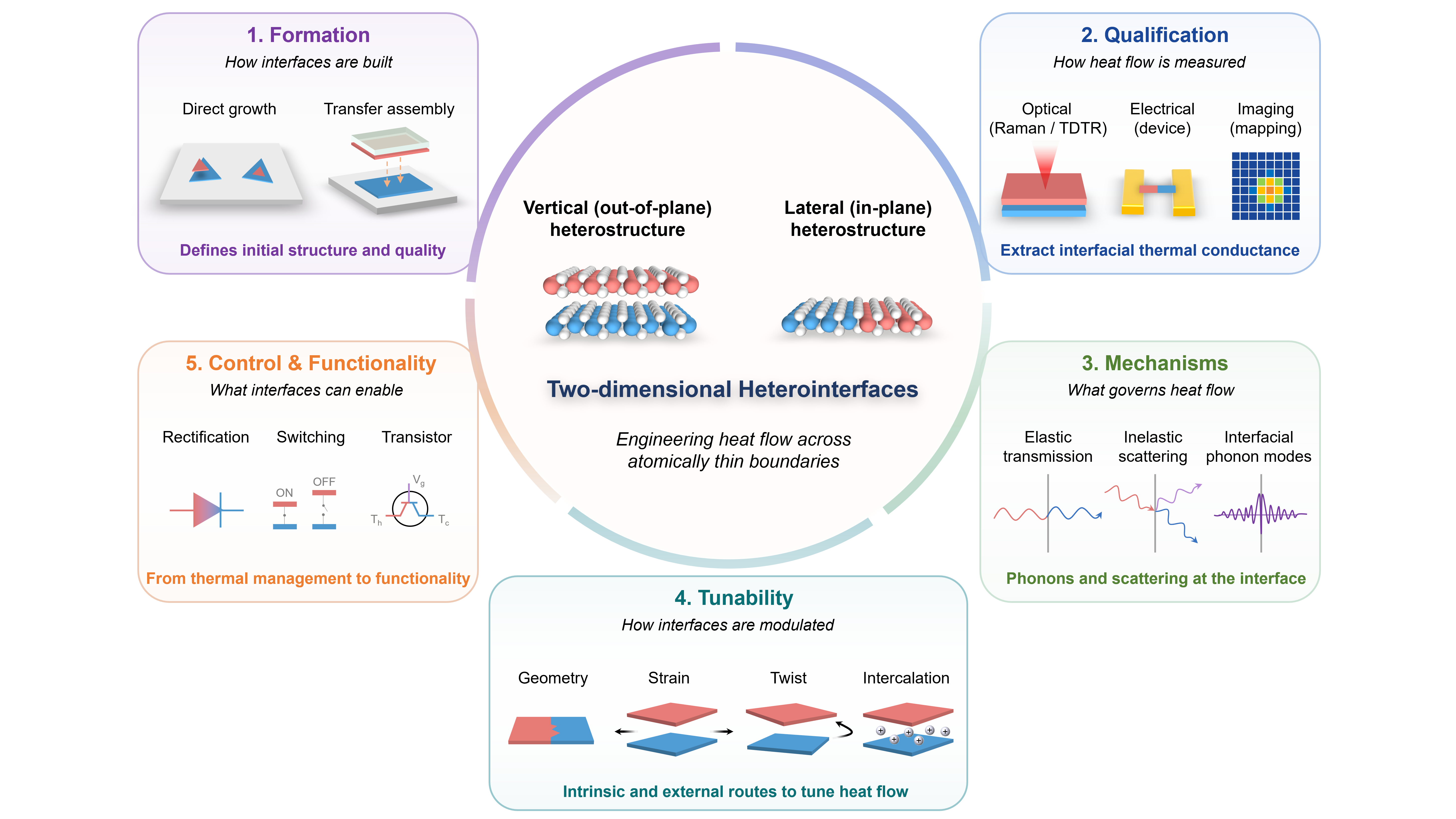
Two-dimensional (2D) heterostructures provide an unusually versatile platform for engineering interfaces at the atomic scale. As these materials move toward electronic, optoelectronic and multifunctional devices, heat flow across their interfaces ...
More.Two-dimensional (2D) heterostructures provide an unusually versatile platform for engineering interfaces at the atomic scale. As these materials move toward electronic, optoelectronic and multifunctional devices, heat flow across their interfaces is emerging as a central factor that governs performance, stability and reliability. Interfacial thermal transport has traditionally been treated as a material-pair-specific conductance that should be measured and optimized. In 2D heterostructures, however, the interface is not a passive boundary with a fixed thermal response. Its conductance is shaped by the structural history, local configuration and dynamic state of the interface. In this perspective, we discuss how interface formation, thermal metrology and microscopic phonon mechanisms together define heat flow across atomically thin heterointerfaces. We highlight how direct growth and transfer assembly create distinct opportunities for lateral and vertical interfaces, how Raman thermometry, pump-probe thermoreflectance and electrical methods quantify interfacial transport, and how elastic transmission, inelastic scattering and interface-specific vibrational states govern nanoscale heat flow. We then consider how intrinsic and external control of 2D heterointerfaces can be used to tune conductance for heat dissipation, local heat confinement, rectification and thermal switching. We argue that the future of the field lies in moving from passive characterization of interfacial thermal conductance toward predictive, spatially resolved and actively controlled heat flow in 2D heterostructures.
Less.Yufeng Zhang, ... Xing Zhang
DOI:https://doi.org/10.70401/tx.2026.0021 - June 23, 2026
Imaging thermal properties of thermal interface materials using frequency-domain thermoreflectance microscopy
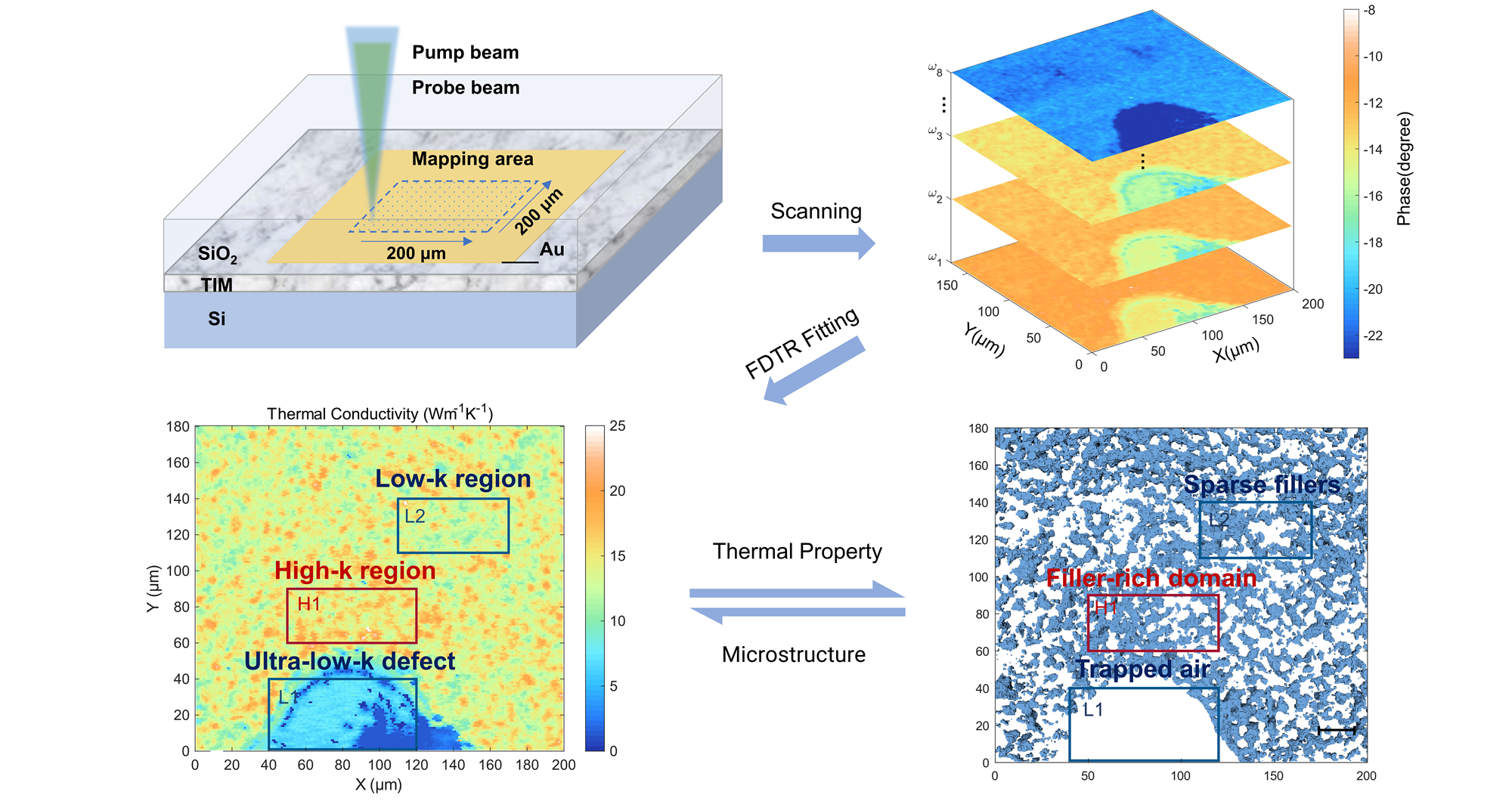
Imaging thermal properties at the microscale is crucial for unveiling the structure-property relation and developing next-generation thermal management materials. Here, we apply a frequency-domain thermoreflectance (FDTR) microscopy for imaging the ...
More.Imaging thermal properties at the microscale is crucial for unveiling the structure-property relation and developing next-generation thermal management materials. Here, we apply a frequency-domain thermoreflectance (FDTR) microscopy for imaging the thermal conductivity and interfacial thermal conductance of thermal interface materials (TIMs). A fixture customized for imaging thermal properties of TIMs is developed, where the sample is sandwiched between a silica slide coated with a metal transducer and a substrate wafer, and the thermal transport properties are extracted using a bidirectional thermal model. The thermal conductivity of TIMs loaded with thermally conductive particles is profiled with micrometer resolution, and significant local non-uniformity is observed. Pressure-dependent FDTR imaging during loading and unloading reveals the local redistribution of conductive filler particles. Correlative micro-computed tomography reveals that the high thermal conductivity regions correspond to the aggregation of thermally conductive particles. Further statistical analysis of the FDTR image unveiled the asymmetrical and long-tailed probabilistic distribution of thermal conductivity values. Through statistical modeling, we demonstrate that this asymmetry originates from the lognormal size distribution of microparticles. Our work sheds light on the structure-property relation between microstructure and thermal conductivity distribution of TIMs at the microscale.
Less.Yuhan Yao, ... Xin Qian
DOI:https://doi.org/10.70401/tx.2026.0020 - June 02, 2026
Research progress on thermal Hall effect
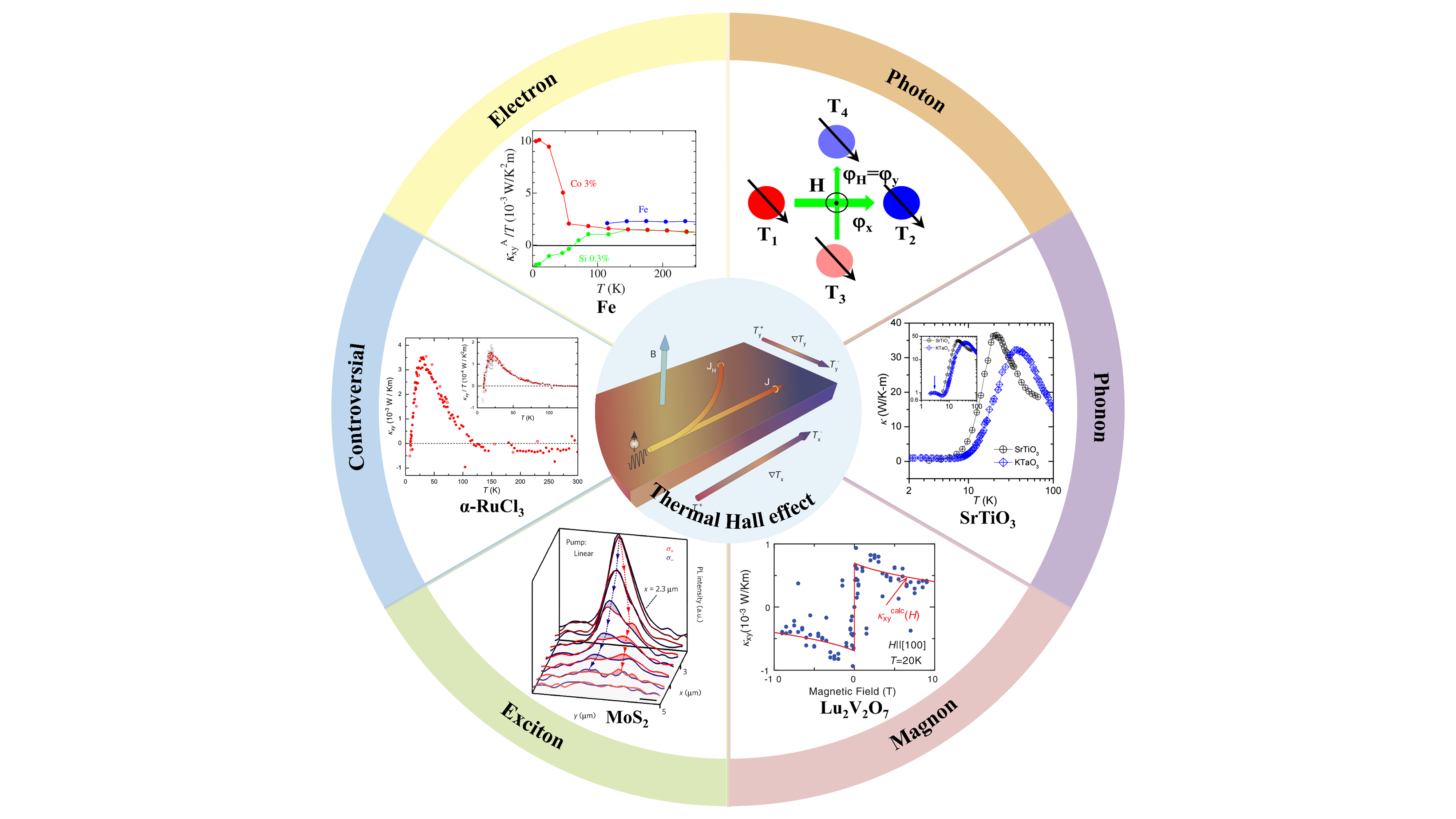
Thermal Hall effect (THE) refers to the phenomenon whereby, in a magnetic field, when a longitudinal heat current flows through a material, the heat carriers are deflected, thereby generating a transverse temperature difference between the two lateral edges. ...
More.Thermal Hall effect (THE) refers to the phenomenon whereby, in a magnetic field, when a longitudinal heat current flows through a material, the heat carriers are deflected, thereby generating a transverse temperature difference between the two lateral edges. The transition from electrical to thermal transport enables this effect to involve a wide range of carriers, thereby providing a unique perspective for investigating complex quantum states in condensed matter physics. THE is increasingly becoming a powerful probe of neutral excitations in materials and is used to explore multifield control phenomena in magneto-thermal-electrical coupled systems. Advances in the field of THE have significantly advanced the study of condensed matter systems under extreme conditions (low temperatures and strong magnetic fields) and have laid the groundwork for exploring novel magneto-thermal-electrical effects in quantum materials. This review systematically reviews recent theoretical and experimental progress on THE, with particular attention to the underlying heat carriers. Through an in-depth analysis of the transport mechanisms of different carriers, quantum material systems that can be used to investigate multicarrier coupled transport are identified, which will significantly facilitate the synergistic control of magneto-thermal-electrical transport in complex interacting systems. Finally, we propose a novel in situ, multiparameter integrated characterization method that enables simultaneous and precise measurement of magnetic, thermal, and electrical parameters on the same micro/nanoscale samples. This approach not only overcomes the limitations of bulk materials but also serves as a key experimental platform for revealing the mechanisms of multicarrier coupled transport in micro/nano samples.
Less.Zewen Song, ... Ting Zhang
DOI:https://doi.org/10.70401/tx.2026.0016 - March 16, 2026