
Generative AI-Driven Architectural Design: Automating the Transition from Concept to Building Energy Simulation
Time
July 22, 2026, at 3:00 PM (Beijing Time)July 22, 2026, at 5:00 PM (Sydney Time)
Contact Us
Email: jbdejournal@sciexplor.comSpeaker
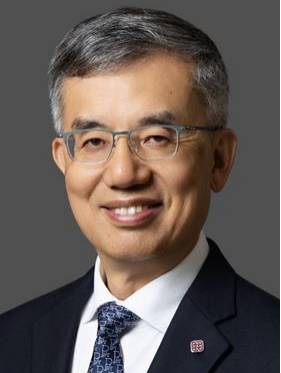
Prof. Qingyan Chen
Department of Building Environment and Energy Engineering, The Hong Kong Polytechnic University, Hong Kong, China.
Qingyan Chen is the Director of the PolyU Academy for Interdisciplinary Research (PAIR) and Chair Professor of Building Thermal Science and Global STEM Professor at The Hong Kong Polytechnic University (PolyU). He is also Professor Emeritus of Mechanical Engineering at Purdue University, USA, and served as Editor-in-Chief of Building and Environment from 2008 to 2024. He received numerous awards from different international organisations, including recent election as a Fellow of the Royal Society (U.K. National Academy of Sciences).
Host
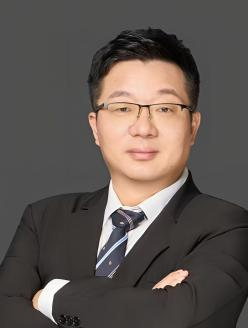
Prof. Hua Qian
School of Energy and Environment, Southeast University, Nanjing, Jiangsu, China.
Hua Qian is a Professor at the School of Energy and Environment, Southeast University. He serves as an expert for the World Health Organization (WHO) on the airborne transmission of respiratory pathogens, a Fellow of the International Society of Indoor Air Quality and Climate, and Vice Chair of the Indoor Environment and Health Committee of the Chinese Society for Environmental Sciences, among other professional appointments.
Prof. Qian has led more than 40 research projects. He has authored or co-authored more than 300 scholarly publications, including over 150 papers indexed in the Science Citation Index (SCI). His work has received more than 13,000 citations, with an h-index of 52. Two of his publications have been recommended by the U.S. Environmental Protection Agency as key references on indoor air and COVID-19. His research has also been cited 25 times in WHO standards and official policy documents issued by governmental agencies in the United States, the United Kingdom, Germany, and other countries.
Four of his publications have received Best Paper Awards from the SCI-indexed journals Indoor Air and Building and Environment, as well as from the Chinese Science Bulletin. He contributed to the preparation of the WHO Global Technical Consultation Report on Proposed Terminology for Pathogens That Transmit Through the Air and the WHO guideline Natural Ventilation for Infection Control in Health-Care Settings. He has received three provincial- or ministerial-level scientific and technological awards.
Prof. Qian has led more than 40 research projects. He has authored or co-authored more than 300 scholarly publications, including over 150 papers indexed in the Science Citation Index (SCI). His work has received more than 13,000 citations, with an h-index of 52. Two of his publications have been recommended by the U.S. Environmental Protection Agency as key references on indoor air and COVID-19. His research has also been cited 25 times in WHO standards and official policy documents issued by governmental agencies in the United States, the United Kingdom, Germany, and other countries.
Four of his publications have received Best Paper Awards from the SCI-indexed journals Indoor Air and Building and Environment, as well as from the Chinese Science Bulletin. He contributed to the preparation of the WHO Global Technical Consultation Report on Proposed Terminology for Pathogens That Transmit Through the Air and the WHO guideline Natural Ventilation for Infection Control in Health-Care Settings. He has received three provincial- or ministerial-level scientific and technological awards.
Discussants

Prof. Darren Robinson
School of Architecture and Landscape, The University of Sheffield, Sheffield, UK.
Professor Darren Robinson is the Chair in Architectural and Urban Sciences at the University of Sheffield, whose pioneering research operates at the intersection of social, building, and urban physics. His multi-scale work spans from analyzing the impacts of occupant behavior on individual buildings to optimizing the metabolic efficiency of complex urban systems, and simulating regional or national building stocks to inform robust decarbonization policies and strategies. An elected Fellow of the International Building Performance Simulation Association (IBPSA), he has earned numerous accolades, including the CIBSE Napier-Shaw Medal and several journal Best Paper Awards.
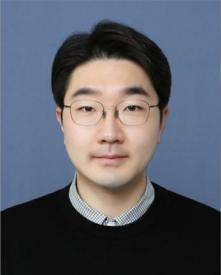
A/Prof. Sungmin Yoon
School of Civil, Architectural Engineering and Landscae Architecture, Sungkyunkwan University, Suwon, South Korea.
Sungmin Yoon is an Associate Professor in the Department of Architectural Engineering at Sungkyunkwan University, Korea, where he leads the Building Information Science and Technology (BIST) Laboratory. His research focuses on digital twin technologies for buildings, cities, and high-performance facilities, with an emphasis on building energy systems, HVAC operation, virtual sensing, in-situ modeling and calibration, and AI-enabled operation and control. At BIST, he develops ontology- and knowledge-graph-based frameworks that connect heterogeneous data, documents, models, and expert knowledge to support reliable AI agents and decision-support systems. His recent work explores how digital twins, large language models, and domain ontologies can be integrated to generate virtual models, automate engineering workflows, improve operational intelligence, and enhance sustainable built environments. Through these efforts, Dr. Yoon aims to advance intelligent, data-driven, and human-centered engineering systems for the next generation of smart buildings, cities, and industrial infrastructure.
Introduction
Early-stage architectural design heavily influences building performance, yet translating creative conceptual workflows into structured building energy modeling (BEM) remains a bottleneck. To bridge this gap, this study presents generative artificial intelligence (AI) workflows that automatically translate design intent into EnergyPlus-compatible inputs. In one workflow, ChatGPT-image and Hunyuan3D-2.5 convert 2D conceptual designs into 3D meshes for BEM, while in another, Claude 3.7 Sonnet generates Python-coded geometries as an automated architect. Both approaches evaluate these designs directly in EnergyPlus. Tested on a Hong Kong office building, shape and HVAC optimization reduced energy consumption significantly while eliminating traditional modeling time. This research demonstrates AI’s potential to seamlessly integrate creative design exploration with automated energy performance optimization.
Presentation
Presentation
207


