Leveraging knowledge graphs in facilities management: A scoping review

Eduardo Navarro Bringas
*

*Correspondence to:
Eduardo Navarro Bringas, Institute for Sustainable Building Design (ISBD), Heriot-Watt University, Edinburgh, Scotland EH14 4AS, UK.
E-mail: e.navarro_bringas@hw.ac.uk
J Build Des Environ. 2026;4:2025120. 10.70401/jbde.2026.0033
Received: November 27, 2025Accepted: February 10, 2026Published: March 06, 2026
This article belongs to the Special lssue Digital Transformation in Construction: Innovations and Challenges
Abstract
Background: Knowledge graphs (KGs) and Semantic web technologies (SWT) are increasingly explored in facilities management (FM) to address persistent problems of interoperability, fragmented data, and limited automation across operational systems.
Methods: A scoping review was conducted in accordance with PRISMA-ScR 2020 to map KG applications in FM and identify emerging research directions. Web of Science and Scopus were queried for English-language, peer-reviewed studies applying ontologies, SWT, linked data, or KGs at building-level FM. Studies focused on non-FM contexts, earlier lifecycle phases without operation and maintenance relevance, or artificial intelligence and machine learning approaches without explicit SWT/KG integration were excluded. Following de-duplication and qualitative screening, 48 studies were thematically analysed.
Results: Four dominant application areas were identified: (1) ontology-driven semantic interoperability (n = 36), (2) systems integration across FM data sources (n = 24), (3) data and information retrieval from graph-based stores (n = 14), and (4) automated compliance and validation through knowledge-based reasoning (n = 6). Most studies employed modular, domain-specific ontologies deployed on graph databases to link static building information modelling and asset data with near real-time streams. Emerging directions include the use of KGs as semantic integration layers in digital twin (DT) architectures, and KG-grounded retrieval-augmented generation to enhance trustworthy and explainable access to FM information.
Conclusion: This review consolidates dispersed research on KG applications in FM and outlines a structured research agenda spanning modular ontology development, integration with DT and compliance workflows, as well as longer-term opportunities for scalable and auditable generative AI applications. Findings reflect peer-reviewed journal literature and may under-represent emerging industry practice.
Keywords
Facilities management, knowledge graphs, semantic technologies, information integration, digital twins, retrieval augmented generation
1. Introduction
Over the last decades, the volume, variety, and velocity of data generated globally have accelerated at an unprecedented rate, a trend commonly characterised as the rise of big data. The International Data Corporation[1] predicted that the total data generated worldwide would grow from 45 zettabytes in 2019 to 175 zettabytes by 2025. This exponential increase has transformed industries that rely on complex systems and asset performance, such as the effective and optimal operation of buildings and infrastructure, placing greater emphasis on the need for effective data management, integration, and analysis. Facilities management (FM), defined by the International Facility Management Association as an ‘Organisational function that integrates people, place, and process to enhance productivity and quality of life’, is particularly exposed to these challenges[2]. Research has identified and recognised FM as a knowledge-intensive profession, requiring access to reliable, real-time, and historical data to manage, operate, and optimise built assets[3]. As FM systems evolve toward data-driven decision-making, the value of data and information has become widely acknowledged within recent studies[4-7]. In practice, however, FM teams contend with fragmented computer-aided facilities management (CAFM) databases, limited and uneven building information modelling (BIM)-FM integration, and slow adoption of structured BIM models, all of which hinder effective use of building and asset data[4,7,8].
Regarding big data in FM, a number of potential benefits associated with big data applications have been highlighted, including improved lifecycle management, predictive maintenance, enhanced energy performance, engineering compliance, and greater client value through benchmarking[4]. Recent studies have also linked big data and Internet of Things (IoT) applications with improvements and added value in operational transparency, reductions in asset downtime, and improved productivity and efficiency in workflows and maintenance tasks[5]. Despite these potential applications, FM still faces well-documented challenges to effective data use. Among others, integration of heterogeneous data sources, often stored in siloed or incompatible systems, remains a main challenge[4,9]. For instance, recent attempts have aimed to integrate structured data within BIM models with semi-structured or unstructured data such as maintenance logs, occupant feedback surveys, and real-time sensor data to generate new insights[10]. This fragmentation hinders both system interoperability and data reusability, limiting the effectiveness of FM decision-support systems. Two-thirds of FM professionals cited data integration and analysis capability, rather than data collection, as the most pressing technological challenge on road to the digitalisation of the profession[4]. These challenges also reflect under-developed information governance and skills gaps on data modelling and exchange in operational settings[7].
In this regard, semantic web technologies (SWT) such as ontologies and knowledge graphs (KGs) have emerged as promising tools for structuring and linking diverse datasets across platforms and various knowledge domains[11-13]. Originally envisioned within the semantic web community, KGs are now widely applied to organise knowledge and support data retrieval, reasoning, and system integration across fields ranging from healthcare recommendation systems[14], finance[15], to information retrieval in complex supply chain logistics[16]. Within the Architecture, Engineering, Construction and Operations (AECO) sector, previous studies around KG applications have primarily focused on applications in architecture and construction, with limited exploration of FM-specific use cases. Moreover, recent literature reviews of SWTs in AECO focus heavily on industry foundation classes (IFC) to ontology web language (OWL) conversions and review only technologies compliant with World Wide Web Consortium (W3C) standards[17,18], which fail to capture a broader range of KG topics, such as non W3C compliant KG structures (e.g., labelled property graphs) or enterprise KGs[19,20]. More targeted literature reviews[21], while they address the interoperability challenge in FM, including how KGs have been deployed as potential solutions, still fail to capture broader applications of KGs other than addressing the data interoperability challenges. Other recent reviews, centred around thermal comfort in buildings[22] or medical equipment maintenance[23], are narrowly scoped around niche domains. To date, no comprehensive review has mapped out the emerging landscape of KG applications within the FM domain, nor synthesised the technical approaches currently under research.
This paper thus addresses this gap by undertaking a scoping review of recent applications of KGs within an FM context. The scoping review’s contribution is therefore twofold; first, to provide a synthesis that integrates quantitative descriptors with a thematic interpretation across KG use cases in FM related activities; and second, to provide an agenda setting discussion focused on FM, which outlines near, medium, and long term directions for practice and research regarding KGs applications. As such, two primary research questions guided the scoping review:
1) What KG applications and use cases have been applied within FM?
2) What emerging research directions arise for the application of KGs in FM?
2. Literature Review: Defining KGs
2.1 Definition and scope of KGs
The term “Knowledge Graph” was first popularised by Google in 2012 as part of an effort to enhance search engine capabilities by better understanding relationships between real-world entities[24]. However, the underlying concepts predate this usage and are deeply rooted in the vision of the Semantic Web principles (SW) introduced by Tim Berners-Lee in the early 2000s[25]. The SW main proposition involves extending the conventional World Wide Web, which primarily consists of hyperlinks between human-readable documents, by providing data with well-defined meaning (i.e., semantically rich), enabling computers and people to work in cooperation. Central to this vision was the concept of “linked data”, where information across the web is semantically interconnected[26]. Ever since, a number of formal definitions of KGs have emerged. One of the most widely cited is by Paulheim[27], who defined a KG as:
a) Describing real-world entities and their interrelations, organised in a graph;
b) Defining possible classes and relations of entities in a schema;
c) Allowing potentially interrelating arbitrary entities with each other;
d) Covering various topical domains.
This definition emphasises the structural features of KGs: nodes representing entities and edges denoting relationships. Building upon this, Ehrlinger and Wöß[24] propose a more functionally oriented definition: “A knowledge graph acquires and integrates information into an ontology and applies a reasoner to derive new knowledge”. This definition, compared with the earlier definition by Paulheim[27], underscores the role of ontologies and reasoning engines in deriving insights from structured knowledge databases, establishing a clear distinction between KGs and traditional databases. While early applications of KGs leaned heavily on formal ontologies developed using W3C standards (e.g., OWL, Resource Description Framework (RDF)), recent developments have followed a more pragmatic approach. In practice, especially within enterprises, KGs often combine structured schemas with lightweight ontologies or “schema-less” models (e.g., labelled property graphs) designed for specific use cases[28]. This divergence has led to a distinction between open KGs (e.g., DBpedia, Wikidata), which aim for general-purpose data modelling, and enterprise KGs, which prioritise business-specific applications and flexibility[29]. The following section provides a brief overview of the three KG constituents based on the definition provided by Ehrlinger and Wöß[24] (Figure 1).
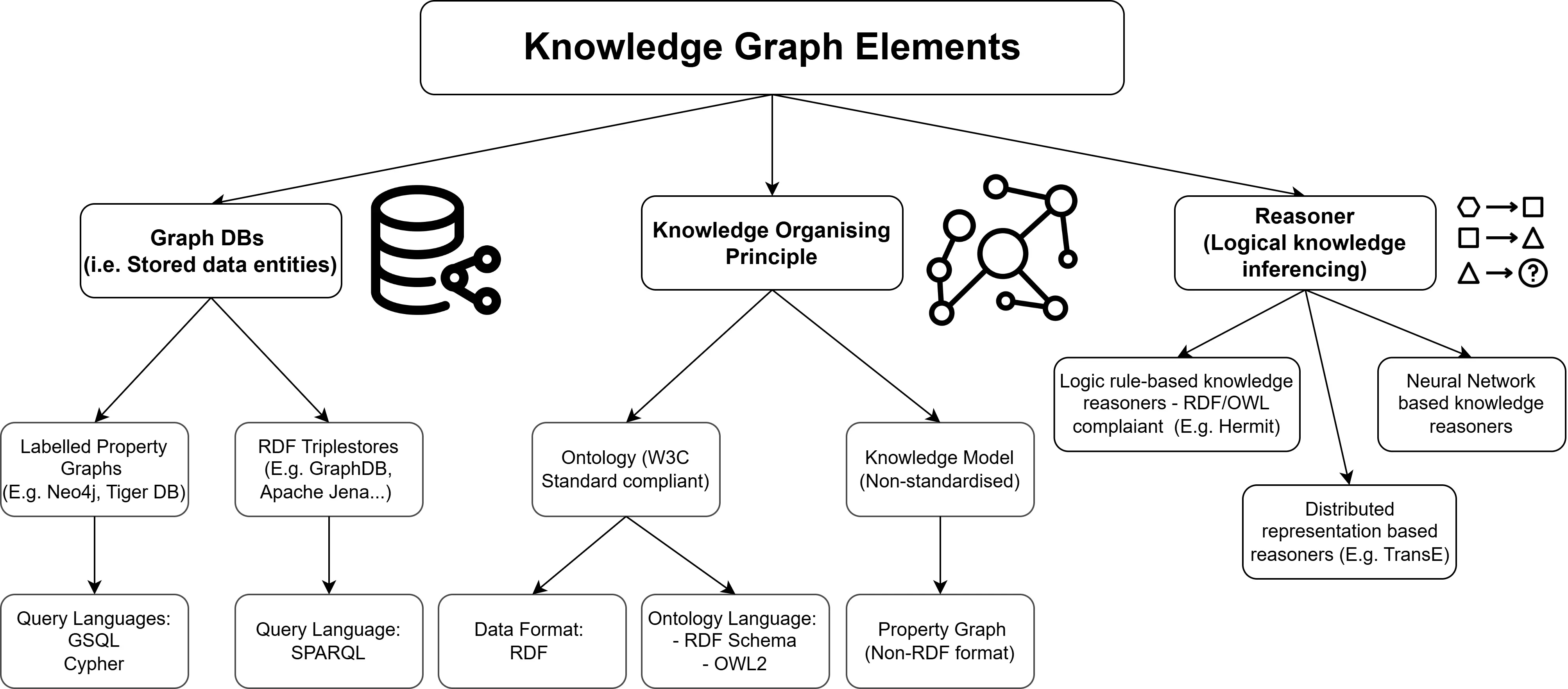
Figure 1. Elements constituting a knowledge graph. Definition presented by the study[24].
2.2 The knowledge organising principle
In computer science, ontologies serve as formal knowledge representations, which refer to explicit specifications of shared conceptualisations[30]. Ontologies describe the structure of knowledge within a domain, defining its entities, properties, constraints, and relationships using formal, machine-readable languages such as OWL or RDF.
Ontologies are thus a key element of KGs, enabling semantic consistency and reusability. When developed using standard languages/schemas (e.g., RDFS or OWL), they can be extended, linked, or integrated with other ontologies to achieve broader interoperability[31]. In the built environment, notable examples of ontologies compliant with OWL include the building topology ontology (BOT) ontology for building topology representations, or the building product ontology (BPO) ontology for building product data[32,33]. However, standard ontologies are sometimes criticised for being too rigid or academic in real-world applications, potentially leading to over-engineered systems.
As such, recent approaches, especially those in enterprise/organisational contexts, have advocated for more agile, use-case-driven knowledge models[34]. These models may leverage partial ontologies, lightweight vocabularies, or even develop their own schema definitions tailored to specific tasks or use cases. While such models may sacrifice generalisability and reusability, they offer greater flexibility and responsiveness, which is particularly important in dynamic domains such as those in FM[20].
2.3 The knowledge base
While an organising principle (e.g., ontology) provides a formalised framework to define concepts, relationships, and properties within a domain, the knowledge-base provides the means to store the data and information instances to conform with the organising principle or ontology[24]. KGs represent data instances as nodes and relationships within a graph-based data model. In many practical implementations, this representation is materialised in graph databases, although alternative, non-materialised approaches also exist. Unlike traditional relational databases (RDBS) that store data in tables, graph databases model data as nodes and relationships, offering greater flexibility for representing complex, interconnected information. This graph structure underpins the KG’s ability to represent real-world entities and their relationships more naturally.
Graph databases fall under the broader category of NoSQL databases, which are well-suited for handling large volumes of heterogeneous and rapidly evolving data. These database systems offer scalable and querying capabilities for stored data. Graph databases allow storing links between the different data instances, making them particularly suitable for storing highly interconnected and related data, such as data stored in RDF triples. For instance, graph traversal queries that would be costly in RDBS systems can be executed efficiently in graph databases[35]. Two predominant types of graph databases are used to store and develop knowledge-bases:
• RDF triplestores: Represent knowledge as subject-predicate-object triples. These are closely aligned with W3C standards and are often queried using the Simple Protocol and RDF Query Language (SPARQL)[36].
• LPG: Allow nodes and relationships to store key-value pairs, providing greater modelling flexibility. LPGs are not aligned with W3C standards. LPGs are queried using languages such as Cypher (e.g., Neo4j)[28].
As Donkers and Yang[37] note, RDF triplestores excel in semantic reasoning and linked data integration, while LPGs are more intuitive for application developers and offer additional support for graph analytics. Selecting between the two depends on project requirements. RDF triplestores are advisable when semantic fidelity and standards-based interoperability are fundamental (e.g., formal ontologies, knowledge reasoning, or cross-dataset linkages), while LPGs are advisable when a more pragmatic approach is preferred, such as when schema flexibility, more understandable and smaller property-centric graph models, or query efficiency are important[34,37]. Moreover, recent research storing the BIM model information in different graph databases (including RDF triplestore and LPG) also illustrates how LPG graph databases can result in smaller graphs that are faster to query[35].
Figure 2 provides an example of a generic product data (i.e., a chair) stored in RDF triplestore[32]. The BPO ontology provides a logical organising principle to structure building product data. This data includes classes such as, bpo:Product, and sub-classes such as bpo:Assembly or bpo:Component. The organising principle allows storing the data of a given “chair1” type instance consisting of a “frame1” assembly instance, which consists of components such as “foot1” or “armrest1”. The example in Figure 2 models only a simple instance of a chair, however, a graph database could store multiple instances of products in the building. These data instances are stored in a triple format (subject, predicate and object) within the RDF triplestore. An instance of triple, using the chair example, would include a subject (“backrest1”), a predicate (“isPartOf”) and an object (“chair1”). This triple structure would provide semantic meaning and allows linking different data instances of backrests and chair types. The ontology (i.e., organising principle) ensures data instances and relations stored in the knowledge-base are consistent with the logical rules embedded (e.g., inheritance rules, axioms, modularity etc.).
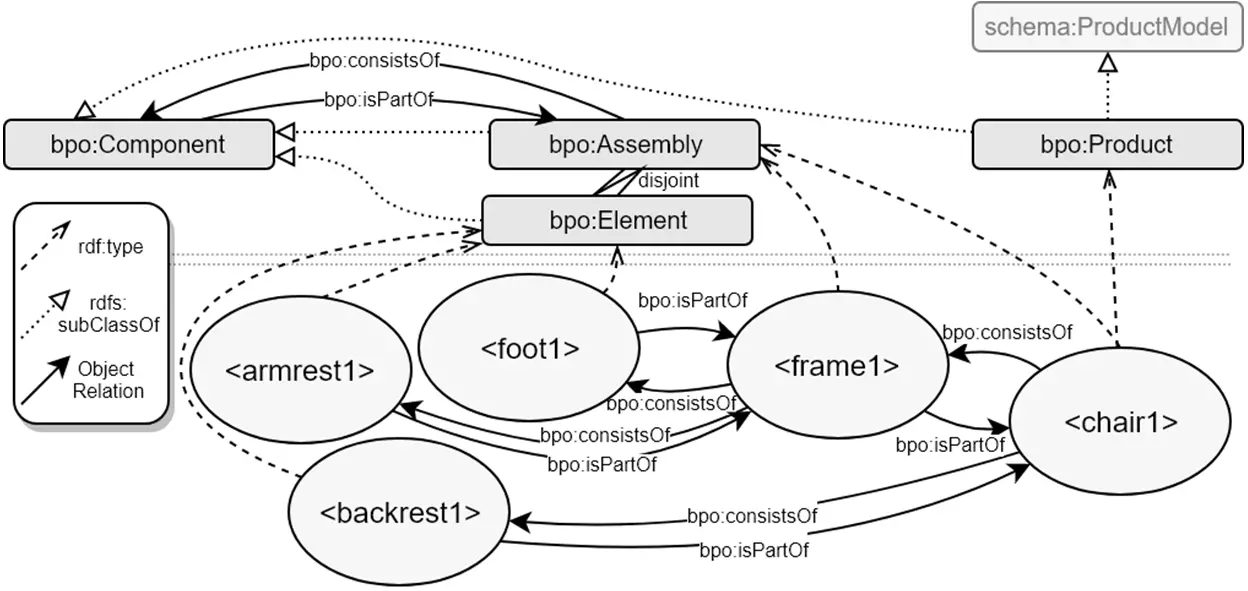
Figure 2. Exemplar of “chair1” data instance represented through the BPO[32]. BPO: building product ontology.
2.4 Knowledge-reasoning
The final component that distinguishes a KG from other data systems is its reasoning capability. In KGs, reasoning uses established facts and logical structures to infer missing entities or relationships, check consistency, and answer complex queries, thereby enriching the knowledge base[38]. In FM, examples of knowledge-reasoning are predominantly rule-based[39,40]. OWL reasoners (e.g., Apache Jena) are used to classify ontologies and enforce property constraints, while rule sets expressed through the Semantic Web Rule Language encode domain and business logic. In practical terms this supports tasks such as validating COBie fields, checking type and containment constraints, and inferring relations between spaces, systems, and equipment[39,40]. The main value of this approach is explainability, because every inferred result can be traced to explicit axioms or rules, although effectiveness depends on the quality and completeness of the underlying ontology[38].
While basic reasoning capabilities are often supported within RDF triplestores, complex semantic reasoning is increasingly delegated to dedicated reasoning engines that operate alongside the underlying KG. This separation allows reasoning tasks to scale independently from data storage and supports more expressive inference paradigms. Representative state-of-the-art systems include Ontop, which enables ontology-based data access through virtual KGs without full data materialisation[41]; Vadalog, which supports scalable datalog-based rule reasoning over large KGs[42]; and Nemo, a recent rule reasoning toolkit designed to flexibly integrate with diverse KG architectures[43]. While these systems are well established in the broader SW and data management literature, their application within AECO remains limited.
Other reasoning families are widely discussed in the computer-science literature but remain largely untested in FM. For example, distributed representation methods embed entities and relations in vector spaces to support similarity and link prediction, and neural approaches use deep models to learn multi-hop patterns directly from the KG structure and RDF triple data. These techniques can be computationally efficient or flexible, but they reduce interpretability and are not yet evidenced in FM case studies; they are therefore best viewed as longer-term prospects rather than current practice[44].
3. Methodology
Given the exploratory nature of this study and its aim to map existing KG applications in FM, a scoping review was adopted. Scoping reviews are appropriate for examining emerging and heterogeneous research domains, where concepts, technologies, and applications are still evolving[45,46]. In this context, the approach enables a structured mapping of existing KG applications in FM and supports the identification of emerging research directions. The review was conducted in accordance with the PRISMA-ScR 2020 reporting guidelines and follows the methodological framework proposed by Arksey and O’Malley[46]. The following subsections describe the search strategy, inclusion and exclusion criteria, screening process, and thematic analysis procedures.
Step 1: Identification of research questions and objectives
The following scoping review aims to address the following research questions:
• What applications and use cases have KGs been applied to within FM?
• What emerging research directions arise for the application of KGs in FM?
Step 2: Identification of relevant studies
For the scoping literature retrieval procedure, the PRISMA 2020 framework was adopted to ensure a systematic and rigorous process was followed[47], and the reporting and retrieval were further aligned with the PRISMA extension specific to scoping reviews (i.e., PRISMA-ScR)[48].
For the retrieval, the two primary multidisciplinary citation indexes, Scopus and Web of Science (WoS), were selected. These databases have complementary and extensive coverage across engineering, computer science, and the built environment and are widely used as core sources in AECO evidence syntheses. A recent comparative evaluation has shown their breadth in engineering and social science subjects, and partial non-overlap in journal coverage, which reduces single-source bias[49]. Moreover, recent AECO and FM reviews likewise relied on Scopus and WoS as primary databases when surveying digital technologies in the built environment[50].
To ensure the retrieval of rigorous and mature evidence, only peer-reviewed journal articles were included. Restricting the review to journal literature is consistent with established review guidance that permits scoping the corpus to peer-reviewed sources where methodological rigour and replicability are primary aims; it is a common design choice in information systems SLRs and scoping reviews[51,52]. The risk that cutting-edge KG developments may first appear in conference venues was mitigated through the inclusion of citation checks within the included journal articles.
The exact keywords, search strings, and retrieval parameters used in the retrieval are available in Table 1.
Table 1. Scoping review search parameters overview.
| Item | Inclusion/Exclusion | Justification |
| Keywords | Includes the following FM AND Semantic Technology, Knowledge Graph, Ontology, Semantic Web, Linked Data | Due to the focus on facilities management, to ensure the search is relevant to the profession, the initial keyword selected the term “Facility Management” in the key search. Scopus engine also includes similar terms in the search, e.g., Facilities, instead of Facility. Additionally, to filter among the FM literature, terms associated with Knowledge Graphs were also included in the search. This allows for various alternatives, such as semantic web and technologies, ontologies or linked data. This allows for a comprehensive search of knowledge graph applications. |
| Databases | SCOPUS and WoS | The two most comprehensive academic databases in the field were used (i.e., Scopus and WoS). This avoided bias from a single database and aligns with choices in previous scoping and systematic reviews in the FM and AECO[50] |
| Retrieval Date | November 01, 2025 | The systematic review identified all resources/articles published up to the query date of November 01, 2025. |
| Language | English | Only literature written in English were used to facilitate understanding for the researcher |
| Document type | Articles (Peer-reviewed) | Only peer-reviewed articles are included to ensure the rigor of the retrieved sources, to ensure robust academic outcomes from the review[51]. |
| Search String used in Scopus | TITLE-ABS-KEY (“Facility* Manage*” AND (“Semantic Technology” OR “Knowledge Graph” OR “Ontology” OR “Semantic Web” OR “Linked Data”)) AND PUBYEAR 2025 AND (LIMIT-TO (DOCTYPE, “ar”)) AND (LIMIT-TO (LANGUAGE, “English”)) | |
| Search String used in WoS | TS = (“facilit* manag*”) AND TS = (“semantic technolog*” OR “knowledge graph*” OR ontolog* OR “semantic web” OR “linked data”) AND PY = (1900-2025) AND DT = (Article) AND LA = (English) | |
FM: facilities management; WoS: Web of Science.
Step 3: Study selection, screening and inclusion
The retrieval from the two databases yielded an initial sample of 140 articles; 61 from Scopus and 79 from WoS. A first screening to remove duplicates between databases, resulted in the identification of 92 unique records.
The abstracts of these unique records were further screened to ensure their appropriateness for inclusion in the final scoping review sample. The inclusion criteria, to align with the scoping research questions and aims, were as follows: 1) Only articles covering original applications of semantic web technologies (i.e., see the elements discussed in the literature review); 2) the focus of analysis referred to a building; and 3) the application was oriented towards activities and tasks primarily associated with FM and the operational phase of the building. As such, the following exclusion criteria were applied:
• Criterion 1: Exclusion of articles where the focus of the study is not related to FM at a building level. For example, articles focused on urban, utilities, infrastructure assets, or city scale, etc.
• Criterion 2: Exclusion of articles not focused on terms related to the scoping review or did not demonstrate practical applications of KG or SWTs. This excluded articles solely focused on topics such as BIM, AI, or ML, etc. with no ontology, SWT, or KG application underpinning them.
• Criterion 3: Excluded articles solely focused on earlier phases of the project lifecycle rather than the operation and maintenance phase. For example, this resulted in the exclusion of articles focused on design phases, early costing/estimation, or the construction phase.
After the screening of abstracts, a further 41 records were excluded based on the three criteria specified above (Figure 3). Additionally, 3 more articles were excluded as the records could not be retrieved or were in a different language than English. As such, the final retrieved sample for inclusion in the scoping review included a total of 48 articles, which are presented in Table 2. The retrieval and screening process, following PRISMA 2020[47], is outlined in Figure 3.
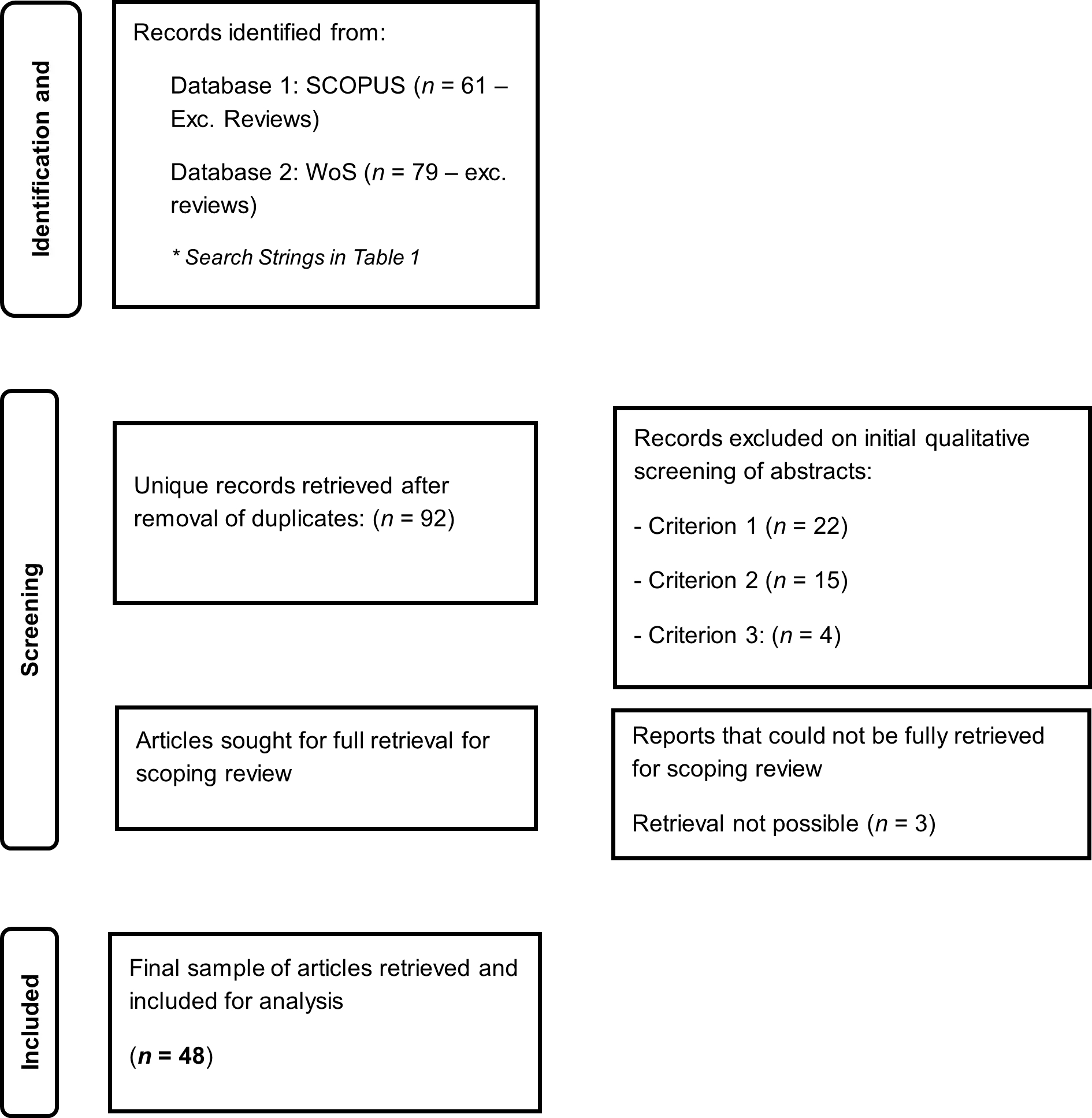
Figure 3. Flowchart of the steps followed for the literature retrieval PRISMA 2020[47]. PRISMA: Preferred Reporting Items for Systematic Reviews and Meta-Analyses.
Table 2. Overview of retrieved articles for the scoping review and the prevalence of SWT and application themes.
| General details of retrieved articles | Knowledge organising principle (i.e., ontology) used | Technology used for knowledge/graph-base | KG Application Themes | |||||||||
| Author, year and reference | Title | Journal | General & Monolithic Ont. | Modular & domain specific Ont. | Non-standard or unclear knowledge org. principle | RDF triple store | Label Property Graph (LPG) | Not Reported or Unclear | Ontology-driven semantic interop. | Multi-system integration | Data & information retrieval | Automated compliance & validation |
| Kumar and Teo[40] | Development of a rule-based system to enhance the data consistency and usability of COBie datasheets | Journal of Computational Design & Engineering | √ | √ | √ | |||||||
| Gouda et al.[53] | Revolutionizing semantic integration of maintenance cost prediction for building systems using artificial neural networks | Journal of Building Engineering | √ | √ | √ | √ | ||||||
| Niknam et al.[39] | Integrating BIM and product manufacturer data using the semantic web technologies | Journal of Information Technology in Construction | √ | √ | √ | √ | √ | |||||
| Wang and Chen[54] | Towards digital-twin-enabled facility management: the natural language processing model for managing facilities in buildings | Intelligent Buildings International | √ | √ | √ | √ | ||||||
| Sadeghi et al.[55] | Information-augmented exchange objects to inform facilities management BIM guidelines: introducing the level of semantics schema | Journal of Facilities Management | √ | √ | √ | |||||||
| Chen et al.[3] | Automated facility inspection using robotics and BIM: A knowledge-driven approach | Automation in Construction | √ | √ | √ | √ | ||||||
| Sadeghineko and Kumar[56] | Application of semantic Web ontologies for the improvement of information exchange in existing buildings | Construction Innovation | √ | √ | √ | |||||||
| Kim et al.[57] | Integration of ifc objects and facility management work information using Semantic Web | Automation in Construction | √ | √ | √ | √ | √ | |||||
| Hosseini et al.[58] | A computationally inexpensive method to outsource facility maintenance services through the internet in real-time | Journal of Building Engineering | √ | √ | √ | |||||||
| Quinn et al.[59] | Building automation system, BIM integration using a linked data structure | Automation in Construction | √ | √ | √ | |||||||
| Sobhkhiz and El-Diraby[60] | Dynamic integration of unstructured data with BIM using a no-model approach based on machine learning and concept networks | Automation in Construction | √ | √ | √ | |||||||
| Dibley et al.[61] | Software agent reasoning supporting non-intrusive building space usage monitoring | Computers in Industry | √ | √ | √ | √ | ||||||
| Werbrouck et al.[62] | Scan-to-graph: Semantic enrichment of existing building geometry | Automation in Construction | √ | √ | √ | |||||||
| Niknam and Karshenas[63] | A shared ontology approach to semantic representation of BIM data | Automation in Construction | √ | √ | √ | √ | ||||||
| Previtali et al.[64] | An ontology-based representation of vaulted system for HBIM | Buildings | √ | √ | √ | √ | ||||||
| Merino et al.[65] | Data integration for digital twins in the built environment based on federated data models | Smart Infrastructure and Construction | √ | √ | √ | |||||||
| Kučera and Pitner[66] | Semantic BMS: Allowing usage of building automation data in facility benchmarking | Advanced Engineering Informatics | √ | √ | √ | √ | √ | |||||
| Dibley et al.[67] | An integrated framework utilising software agent reasoning and ontology models for sensor based building monitoring | Journal of Civil Engineering and Management | √ | √ | √ | |||||||
| Chen and Tsai[68] | Conversation‐based information delivery method for facility management | Sensors | √ | √ | √ | |||||||
| Schevers et al.[69] | Towards digital facility modelling for Sydney Opera House using IFC and semantic web technology | Electronic Journal of Information Technology in Construction | √ | √ | √ | |||||||
| Kumar and Teo[70] | Exploring the application of property graph model in visualizing COBie data | Journal of Facilities Management | √ | √ | √ | |||||||
| Luschi et al.[71] | Empowering Clinical Engineering and Evidence-Based Maintenance with IoT and Indoor Navigation | Future Internet | √ | √ | √ | |||||||
| Dibley et al.[72] | Towards intelligent agent based software for building related decision support | Advanced Engineering Informatics | √ | √ | √ | |||||||
| Arslan et al.[73] | Understanding Occupant Behaviors in Dynamic Environments using ObiDE framework | Building and Environment | √ | √ | √ | |||||||
| Gispert et al.[74] | Development of an ontology-based asset information model for predictive maintenance in building facilities | Smart and Sustainable Built Environment | √ | √ | √ | |||||||
| El-Mokhtari et al.[75] | Development of a Cognitive Digital Twin for Building Management and Operations | Frontiers in Built Environment | √ | √ | √ | |||||||
| Wang et al.[76] | Route Planning for Fire Rescue Operations in Long-Term Care Facilities Using Ontology and Building Information Models | Buildings | √ | √ | √ | |||||||
| González et al.[77] | An approach based on the ifcOWL ontology to support indoor navigation | Egyptian Informatics Journal | √ | √ | √ | |||||||
| Nepal and Staub-French[10] | Supporting knowledge-intensive construction management tasks in BIM | Journal of Information Technology in Construction | √ | √ | √ | |||||||
| Lucas et al.[78] | A pilot model for a proof of concept healthcare facility information management prototype | Journal of Information Technology in Construction | √ | √ | √ | |||||||
| Farias et al.[79] | COBieOWL, an OWL ontology based on COBie standard | Proceedings of On the Move to Meaningful Internet Systems | √ | √ | √ | |||||||
| Donkers et al.[22] | Semantic Web Technologies for Indoor Environmental Quality: A Review and Ontology Design | Buildings | √ | √ | √ | √ | ||||||
| Donkers et al.[80] | Creating occupant-centered digital twins using the Occupant Feedback Ontology implemented in a smartwatch app | Semantic Web | √ | √ | √ | √ | ||||||
| Wagner and Rüppel[32] | BPO: The Building Product Ontology for Assembled Products | Linked Data in Architecture and Construction | √ | √ | √ | √ | ||||||
| Kebede et al.[81] | Integration of manufacturers’ product data in BIM platforms using semantic web technologies | Automation in Construction | √ | √ | √ | √ | ||||||
| Terkaj et al.[82] | Reusing Domain Ontologies in Linked Building Data: the Case of Building Automation and Control | The Joint Ontology Workshops | √ | √ | √ | √ | ||||||
| Herrera-Martin et al.[83] | A method for transferring BIM data into domain ontologies: A case study based on airport services | Egyptian Informatics Journal | √ | √ | √ | |||||||
| Gouda et al.[84] | BIM and semantic web-based maintenance information for existing buildings | Automation in Construction | √ | √ | √ | √ | √ | |||||
| Pittet et al.[85] | An ontology change management approach for facility management | Computers in Industry | √ | √ | √ | |||||||
| O’Donnell et al.[86] | Building performance optimization using cross-domain scenario modelling, Linked data, And complex event processing | Building and Environment | √ | √ | √ | √ | ||||||
| Chang and Tsai[87] | Knowledge-based navigation system for building health diagnosis | Advanced Engineering Informatics | √ | √ | √ | √ | √ | |||||
| Biagini et al.[88] | From BIM to digital twin. IOT data integration in asset management platform | Journal of Information Technology in Construction | √ | √ | √ | √ | ||||||
| Esnaola-Gonzalez et al.[89] | Semantic prediction assistant approach applied to energy efficiency in Tertiary buildings | Semantic Web | √ | √ | √ | √ | ||||||
| Tomašević et al.[90] | Ontology-based facility data model for energy management | Advanced Engineering Informatics | √ | √ | √ | √ | √ | |||||
| Petrinja et al.[91] | A provenance data management system for improving the product modelling process | Automation in Construction | √ | √ | √ | |||||||
| Christenson[92] | An emergent ontology for digitally modelling existing buildings: examining Kyoto’s Nishiki market | International Journal of Architectural Research | √ | √ | √ | |||||||
| Zhong et al.[93] | Ontology-based framework for building environmental monitoring and compliance checking under BIM environment | Building and Environment | √ | √ | √ | √ | √ | |||||
| Schelenger et al.[94] | Reference architecture and ontology framework for digital twin construction | Automation in Construction | √ | √ | √ | √ | √ | |||||
| 11 | 21 | 16 | 26 | 3 | 19 | 36 | 24 | 14 | 6 | |||
SWT: semantic web technologies; BIM: building information modelling.
Step 4: Charting the data
The next stage involved charting key information from each study to support both synthesis and thematic interpretation. This step parallels data extraction processes in systematic reviews but maintains the broader scope and “descriptive-analytical” nature typical of scoping reviews[46]. A common analytical framework was applied to all included studies to collect standard bibliometric details (e.g., author, year, publication outlet), along with information on the KG or semantic web applications identified, the technologies and data schemas used (including ontologies), and a description of the application’s purpose (See Table 2). The synthesising of process information in a meaningful format is a critical but complex aspect of scoping reviews. To address this, a thematic analysis approach was employed to ensure that the varied applications and implementations of KGs could be represented with consistency[45]. The resulting chart forms the foundation for both the thematic analysis in the following section and the identification of future research directions.
Step 5: Collating, organising and reporting results
Following the charting stage, the extracted data were analysed and synthesised through both descriptive-analytical and thematic reporting approaches[46], following the guidance. Initially, the review offers a descriptive summary of the included studies, covering general bibliographic information, application domain, semantic technology deployed, and the primary application identified (Table 2). This descriptive overview provides context on the breadth and maturity of KG-related research in FM and highlights both focused and under focused areas.
The second level of synthesis involved organising the literature into four thematic areas, based on the identified applications of KGs. These themes became the central analytical lens through which the studies were grouped and interpreted. Building on this thematic structure, the review also identified three emerging directions for future KG applications in FM, areas that remain underexplored but hold clear potential based on the trajectory of current work. This aligns with the purpose of scoping reviews, “(…) contextualising knowledge in terms of identifying the current state of understanding; identifying the sorts of things we know and do not know; and then setting this within policy and practice contexts”[95].
4. Results
4.1 Overview of retrieved literature
The studies included in the final corpus, comprising 48 peer-reviewed articles, were first mapped against key KG components: the organising principle/ontology style and the knowledge-base (graph database) used. An overview of the corpus and the prevalence of these KG elements and themes is presented in Table 2. In addition, the KG applications discussed in the articles were coded against four themes identified during the screening of the retrieved literature: (1) ontology-driven semantic interoperability, (2) systems integration through semantic interoperability, (3) data and information retrieval from KGs, and (4) automated compliance and data validation through knowledge reasoning. This thematic coding provides a consistent categorisation of how KGs are being applied in FM. The themes are discussed in more detail in the subsequent (qualitative) thematic analysis.
Regarding the organising principle (i.e., ontology) underpinning the knowledge graph, 11 papers (23%) rely primarily on large, relatively monolithic models such as ifcOWL or COBieOWL. More commonly, 21 articles (44%) adopt smaller modular ontologies to develop domain-specific models aligned with the application/use-case. Finally, 16 articles (33%) describe non-standard knowledge organising principles, typically lightweight taxonomies, bespoke class sets defined directly in the application layer, or label-heavy graphs without a published OWL/RDFS ontology (i.e., aligned with W3C standards). These approaches are often pragmatic or proof-of-concept (e.g., a project-specific schemas or ad-hoc class hierarchies), which simplifies system development but reduces portability and reuse, makes alignment with other schemas harder, and limits the scope for knowledge reasoning beyond simple traversal or string matching.
For the knowledge-base technology, the sample clearly shows RDF triplestores as the prevalent approach, with 26 studies (54%) choosing them, with only 3 articles (6%) using an LPG database (e.g., OrientDB or Neo4j)[70]. The remaining 19 studies in the sample (40%) did not state the store used. Where a query layer is reported, SPARQL is the default for RDF triplestores and is even mentioned for some LPG implementations[40], while alternative query mechanisms are rare, with few references to Cypher, custom APIs, and natural language processing (NLP).
Regarding the application and use-case themes (noting that several studies map to multiple themes), the distribution leans towards standardisation and data integration; ontology-driven semantic interoperability appears in 36 papers (75%) and multi-system integration in 24 (50%). Smaller but notable groups address data and information retrieval (14; 29%) and automated compliance/validation (6; 12.5%). In practical terms, most studies concentrate on establishing common vocabularies and connecting datasets; comparatively fewer demonstrate sustained use of the graph for interactive querying or rule-based checks.
Finally, the timeline of KG applications (Figure 4) also provides additional context. Although W3C standards (RDF/OWL) date to the early 2000s, publications were sporadic before 2013 and then picked up from 2018 onwards (i.e., IFCOwl converter was published in 2016), with the largest volumes in 2023-2024 and continued activity in 2025. Interoperability appears consistently across the whole period and remains the dominant contribution each year. Multi-system integration grows in the late 2010s and early 2020s, aligning with the rise of digital-twin, IoT, and big data initiatives in FM practice. By contrast, retrieval and automated validation appear later and remain comparatively thin, suggesting these more “proactive” uses of KGs are emerging but not yet common. Overall, the trend moves from agreeing on shared vocabularies to wiring heterogeneous systems together; examples that put the graph to work for retrieval, checking, and reasoning are more common in recent years, but they remain the exception rather than the norm.
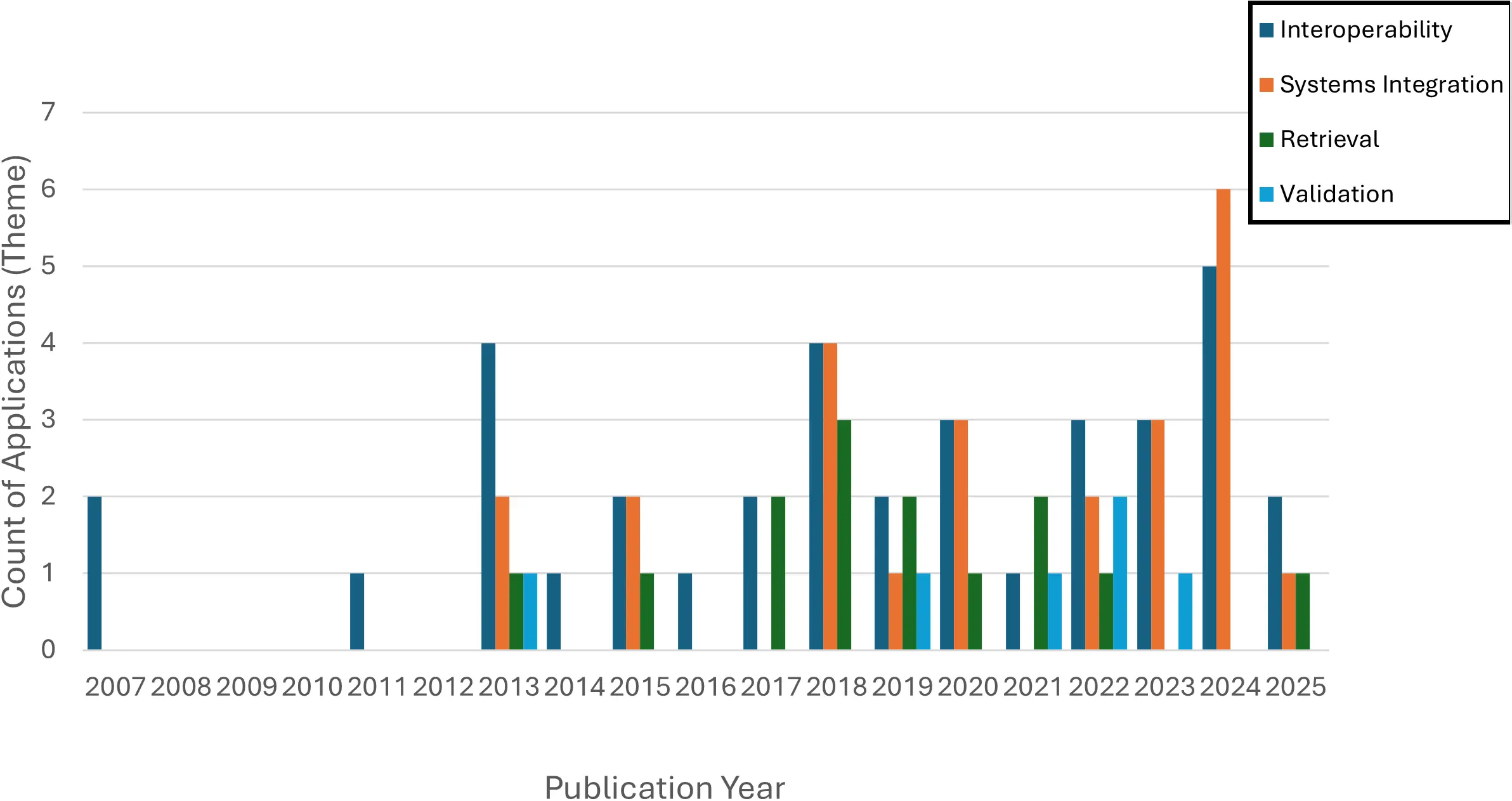
Figure 4. KG application themes identified per year (some articles include multiple). KG: knowledge graph.
4.2 Thematic analysis
The four application themes identified in this review reflect dominant use-case orientations rather than mutually exclusive technical implementations. Knowledge reasoning is rarely presented as a standalone application and is more often embedded within broader themes such as automated compliance and validation, multisystem integration, or data and information retrieval. Accordingly, reasoning is treated here as an enabling capability that underpins multiple KG applications, rather than as a separate thematic category. The analysis that follows therefore focuses on the primary application intent of each study while, as shown in the previous table, recognising that individual systems may span multiple themes.
4.2.1 Ontology-driven semantic interoperability
The most common application of KGs within FM involves developing semantic ontologies to address persistent data interoperability challenges, often framed as semantic interoperability[21,69]. Work in this space typically adopts open-standard languages and structures associated with the SW, notably RDF and OWL, to provide machine-interpretable vocabularies and relations.
Within the scoped literature, two broad ontology-engineering approaches recur; 1) large, monolithic ontologies and 2) modular, domain-specific ontologies. Monolithic approaches usually convert comprehensive open BIM schemas, most prominently IFC, into ontologies compatible with SW languages like OWL (e.g., IFCOwl[96]), with similar efforts around COBie (e.g., COBieOWL[53,79]). However, large ontologies like IfcOWL, although initially promising for semantic validation and data retrieval[79], present several challenges. These ontologies are difficult to maintain, update, and fully implement due to their complexity and size. Moreover, IfcOWL also faces the inherent difficulties of translating the native EXPRESS schema into OWL/RDF, thus limiting their practical applicability for concrete FM use cases[17,97]. To address some of these challenges, recent studies have aimed to translate IFC into leaner domain ontologies tailored to specific service contexts (e.g., airport operations), illustrating the value of narrowing the scope of large ontologies to meet operational needs[83].
In the retrieved corpus, domain-specific smaller ontologies, usually combining smaller modular ontologies, remain the most common ontologies used for a range of FM applications. Modular ontologies, such as the BOT, BPO, or the ontology for managing geometry (OMG), facilitate easier maintenance, updating, extension, and reusability in comparison with more complex ontologies such as IFCOwl. For instance, recent research demonstrates the reusability of existing modular ontologies, such as BOT, BPO, and OMG, which can be extended as needed to meet the requirements of the systems being developed[56]. Other research has also demonstrated the possibility of linking different smaller ontologies to ensure data interoperability for FM tasks such as predictive maintenance, connecting geometric data with product data[10,74]. These smaller modular ontologies are also combined to develop ontological frameworks, for example, to connect BMS and sensor data to static BIM data, resulting in the Building Automation and Control Systems ontology[82]. This shift towards modular stacks appears pragmatic in nature, as these are easier to maintain and extend, and they align naturally with digital twin (DT) architectures where semantic layers must evolve alongside sensors and systems. However, integration challenges remain, particularly where shared vocabularies or robust cross-domain mappings are lacking[63]. Earlier linked-data exemplars also demonstrate how interoperable graphs can be used for building performance data integration and diagnostics workflows in FM[86,87]. More recently, modular ontological stacks have been positioned as the semantic layer within DT pipelines, aligning IoT/BMS streams with asset/component information and spatial/geometric data[88,94]. The ontologies recurring across the sample are summarised in Table 3.
Table 3. Overview of ontologies identified in the scoping review.
| Ontology | Reference | Overview |
| ifcOWL ontology | [98] | OWL representation of the IFC schema for BIM data exchange; typically auto-generated from EXPRESS. Often cited as a bridge/reference model rather than the primary operational layer in recent FM deployments |
| CoBIEOWL | [79] | OWL ontology based on COBie for semantic representation of asset data. Used in FM handover and CAFM contexts[53] |
| BOT | [99] | Minimal ontology for building topology (i.e., sites-buildings-storeys-spaces) designed for reuse and extension. |
| BOE | [100] | Classifies building elements such as walls and ceilings within a hierarchical structure, complementing BOT. |
| BPO | [101] | Product vocabularies for component-level descriptions & hierarchies, complementing BOT. |
| OMG | [102] | Links geometry descriptions to non-geometric semantics; useful for model-to-graph alignment. |
| BIMSO | [63] | Shared large ontology based on UNIFORMAT schema to support cross-disciplinary exchange. |
| Brick | [103] | Standardises semantic descriptions of physical, logical, and virtual assets in buildings and their relationships. |
| ODIN | [71] | Supports integration of building and geometric data with medical equipment and maintenance information. |
| DNAS | [104] | Represents energy-related occupant behavior in buildings, focusing on drivers, needs, actions, and systems. |
| STriDE | [73] | Developed for modelling spatio-temporal trajectories in dynamic environments. |
| OBiDE | [73] | Framework for occupant-centred DTs, integrating occupant behaviour and movement data. |
| REC | [105] | Open-source ontology for building-related data, covering aspects from building structures to business and user activities, aligning with W3C standards. |
| OntoFM | [67] | Multi-agent systems framework supporting real-time building monitoring through ontology models. |
| OFO | [106] | Semantically describes passive and active occupant feedback, enabling integration with building information systems. |
| iSTA | [3] | Supports facility management inspection through robotics, integrating occupant feedback and behaviour data. |
| BACS | [82] | Provides a semantic framework for building automation and control systems, enhancing interoperability and data exchange. |
| SSN (Semantic Sensor Ontology) | [107] | General ontology for the description of IoT sensors, their observations, procedures, features of interest, samples, observed properties, and actuators. |
OWL: ontology web language; IFC: industry foundation classes; BIM: building information modelling; BOT: building topology ontology; BOE: building element ontology; BPO: building product ontology; OMG: ontology for managing geometry; BIMSO: BIM shared ontology; REC: RealEstateCore; OFO: occupant feedback ontology; CAFM: computer-aided facilities management.
4.2.2 Systems integration through semantic interoperability
KGs and SWT have notably demonstrated their potential in facilitating data and information integration across heterogeneous systems within FM domains. As seen in the previous section, such integration leverages semantic interoperability, achieved by mapping data structures to formal ontologies, to overcome data silos commonly encountered in FM. However, beyond the development of ontologies, several articles demonstrate how semantic technologies can be deployed to facilitate the integration of multiple systems, which appears in 24 of 48 studies (50%), making it the second most prevalent application theme.
For instance, research demonstrates the integration of robotic inspection capabilities for typical FM tasks such as health and safety inspections via the iSTA ontological framework[3]. Their approach reuses common ontologies (e.g., BOT) with robotic-agent ontologies to automate fire-safety inspection processes in buildings[3]. In a healthcare context, the integration of medical equipment maintenance information and requirements with indoor positioning systems[71] is demonstrated by other research. This approach allows augmenting hospital operation and maintenance workflows and enables more proactive and efficient interventions.
In the heritage domain, broader system integration has been demonstrated by connecting specialised architectural and heritage restoration data with broader cultural and geographical linked data structures[64]. This enables an information system that reveals otherwise hidden connections and patterns across heritage assets in different European countries. Other typical processes, such as “Scan-to-BIM” workflows, also benefit from semantic interoperability. Researchers have proposed a “Scan-to-Graph” workflow that enables the conversion of scan data into a graph database using the BOT ontology[62]. The acquired geometric data is then semantically enriched with additional information via extensions from other modular ontologies such as BOE. This helps address the traditional challenges of Scan-to-BIM processes where object and component-level information is sparse.
Real-time data integration, particularly critical in DT applications, represents another significant area of systems integration through semantic interoperability. For instance, an extract-transform-load pipeline can be developed for transforming IoT sensor data into RDF triples that allow loading them into a centralised knowledge base to support asset maintenance[58]. Similarly, IoT sensor data and static BIM datasets can be linked, extending existing building automation systems (BAS) with near-real-time semantic visualisation capabilities[59].
In the context of occupancy monitoring, research has integrated software-agent reasoning with ontologies for non-intrusive occupancy monitoring, enabling more informed FM decision-making[61,67]. More recently, ontologies have been shown to enable the integration of passive occupant physiological and perception data into BIM systems, showcasing the suitability of modular ontological stacks in the development of richer DT data layers that integrate additional occupant data[80].
More explicitly, DT architectures increasingly position semantic technologies as a foundational technology to enable data and systems integration. For instance, Merino et al.[65] demonstrate the integration of available data from different building systems, including the BAS, the building’s operational records, BIM data, and real-time IoT sensor data into a single DT architecture to enable dynamic asset-management applications. In developing a cognitive DT for a university campus, other researchers likewise emphasise semantic interoperability’s role in integrating static and dynamic data sources, a prerequisite for responsive DT behaviour in complex operational environments[75]. While DT-oriented semantic integrations identified in the retrieved literature are technically coherent, most are reported as short pilots rather than longitudinal deployments. Practical barriers, such as identity resolution across namespaces and entities, time synchronisation of data streams, and the versioning and maintenance of evolving KGs, continue to constrain large-scale deployment, which helps to explain the plateau in KG applications shown in Figure 4.
4.2.3 Data and information retrieval
Within the corpus, studies with a data/information retrieval application form a distinct but smaller strand (14 of 48; 29%), reflecting that most FM knowledge-graph work still prioritises interoperability as a precursor to usable querying. Although SWT were developed primarily to support semantic integration, graph structures make it easier to traverse relationships and answer multi-hop questions than conventional relational stores[81]. This observation is consistent with the prevalence of RDF triple stores across the corpus (26 of 48), with a minority using property-graph databases (3 of 48), while the remaining papers do not specify the underlying store.
In practice, retrieval work tends to link FM tasks to explicit graph queries or query patterns. For example, previous applications have automated retrieval by integrating asset and maintenance information and documents into BIM models, reducing the need for manual look-ups through a KG-backed workflow[39]. Other developments similarly leveraged SPARQL querying capabilities to integrate IFC object data with FM workflows, streamlining information retrieval processes for facility managers[57]. Kebede et al.[81] demonstrated effective query flows for typical building product data (i.e., luminaries) stored in a RDF triplestore governed by the BPO ontology.
Other applications have presented an advanced querying interfaces, combining Building Management System data streams with BIM databases using semantic APIs[66]. The system developed in their research aimed to address limitations of conventional SPARQL-based retrieval through user-friendly interfaces with predefined search queries. In order to facilitate the retrieval of information, Chen and Tsai[68] further explored the use of conversational-based information retrieval, integrating NLP and rule-based methods to retrieve FM information interactively. Their research showcased the potential of NLP for information querying, although the rule-based predefined query interface performed better in the evaluation with experts. In parallel, property-graph platforms have been shown to improve comprehension through built-in graph visualisation and SQL-like/graph-pattern querying, which can be easier for COBie-centred tasks than working from spreadsheets alone[70].
Despite recent developments, retrieval remains less common than interoperability and system-integration. Three practical issues repeat across the corpus: First, effective querying still requires some query literacy in SPARQL or well-curated templates aligned to a stable ontology, and free-form querying (e.g., NLP) is rarely deployed[66,68]. Second, retrieval quality depends on mapping completeness and resilience to change, so as assets and schemas evolve, querying capability can be affected[57,81]. Third, many implementations are operationally underspecified, with the store or query language not reported or rarely addressed. These limitations might explain why the retrieval theme lags interoperability, even if graph databases have been available for some time.
4.2.4 Automated compliance checking through knowledge reasoning
Automated compliance and validation are a relatively niche theme in the corpus (6 of 48; 12%), but they are increasingly relevant as FM datasets become more structured and queryable. In these studies, formal ontologies provide the classes, properties, and axioms, and reasoners or rule engines execute checks for completeness, conformance, and simple inference over the data and information[108].
For example, research illustrates SWTs’ capability to verify product data compliance with COBie standards[53]. Such automatic compliance ensures that the introduced product data is complete and accurate, which in turn enables enhanced predictive analytics processes down the line. Similarly, reasoning applications have deployed rule-based reasoning to ensure consistency and accuracy in COBie data drops across the project lifecycle[40]. The use of built-in knowledge reasoners on graph DB enabled the detection of redundancies, as well as the identification of missing data across the project lifecycle. Moreover, the BIMSO ontology is integrated with the Apache Jena reasoning engine to validate and query large FM information sets[63]. Their follow-up work showcased how such pipelines can auto-populate component and material fields and then verify these against declared constraints[39]. Zhong and colleagues[93] extended the pattern to environmental monitoring and compliance checking in a BIM context, illustrating how operational rules can be formalised so compliance checks move from ad-hoc scripts to reusable graph-reasoning rules.
Despite recent developments, KG-based reasoning in FM remains limited. Robust knowledge inference requires well-specified ontologies; when using lightweight ontologies that lack axioms and constraint rules, results become unreliable. Rule sets depend on shared vocabularies and mappings that can change with projects and product catalogues, requiring ongoing maintenance. Moreover, multi-system deployments still face asset identity matching and data/time stream synchronisation issues. These limitations may explain the smaller body of reasoning/compliance work and its slower growth relative to other themes in Figure 4.
5. Discussion
5.1 Synthesis of the KG applications
The wider AECO literature consistently points to interoperability problems, such as competing schemas and inconsistent vocabularies, as a core constraint[17,18,21]. The scoping review highlights similar patterns in FM, but with added operational complexity. FM data is drawn from CAFM platforms, vendor-specific BAS/BMS, historic registers, BIM static models, and real-time IoT streams, and it must remain aligned as assets evolve. This makes day-to-day tasks such as keeping data current, resolving duplicate identities, or recording information provenance central concerns, more so than in design and construction settings[4,7]. The shift towards modular ontologies and frameworks aligns with earlier reviews that link maintainable semantic enrichment to small, composable ontologies. The FM corpus shows studies that align BAS/IoT streams with BIM spatial and asset hierarchies for integration and monitoring[58,59]. Domain-specific applications (e.g., healthcare) also demonstrate modular ontologies to connect relevant workflows[71], and several DT pilots use the ontology layer explicitly as the backbone to fuse static BIM data with dynamic/real-time data streams[65,75].
Pragmatically, small semantic layers can be introduced within existing CAFM and BAS workflows rather than as separate technologies. Minimal ontology stacks, such as BOT for spatial topology, a product vocabulary such as BPO or REC, and a sensor layer such as SSN, would cover most early use cases for real-time data integration. This would require data-to-ontology mappings to be scoped around use cases, clear documentation of these mappings, and versioning to ensure they can be updated safely as production data and use reveal gaps[99,101]. In operational FM settings, this also implies lightweight ontology governance practices, including change tracking, responsibility for schema updates, and lifecycle management of semantic models as asset portfolios and information requirements evolve. This alignment could be anchored in identifiers that teams are already familiar with. For example, relevant IFC and COBie could be used (i.e., not the entire schema, but only directly relevant entities) as graph properties, allowing CAFM forms and BMS adapters to record against the same identifiers, which enables communication across systems[40,53,79]. Another consideration pertains to access for non-specialists. Most FM teams will not write SPARQL or similar graph query languages, so task-led pre-coded queries or query methods that translate plain questions into auditable queries should be implemented. A natural language front end can sit on top of the same query library to lower the skills barrier without losing traceability, as recent FM prototypes have shown[54,68]. All in all, if identifiers are anchored, governance is in place, and access is usable, FM teams can start with a few automated checks that deliver clear value on product and asset data (e.g., streamline maintenance, support statutory compliance checks, or inform lifecycle replacement decisions) and widen the scope over time.
5.2 Establishing a research agenda for KGs in FM
5.2.1 KG application for DT architectures: Short horizon
In the near term, an immediate focus for the application of KGs, and related research, in FM is as the semantic integration layer inside DT pipelines. As demonstrated in the review, recent pilots already point towards this direction. In this context, ontologies are used to align BIM/asset hierarchies with BAS/IoT streams and operational records so that live data can be queried against spatial and product context in near real-time[58,59,65,75]. Rather than full schema conversions, pragmatic stacks built from small, reusable ontologies (e.g., BOT for topology, a product layer such as BPO/REC, and a sensor layer such as SSN/Brick) provide enough shared meaning to connect static and dynamic sources while keeping models maintainable[99,101,103,105,107]. To develop more complex and human-centric FM services, Donkers et al.[80] further showcase how occupant-related data streams can be integrated without losing tractability when this strategy is applied.
Moreover, DTs are increasingly used to support core FM tasks such as predictive maintenance and asset prognosis[109]. However, to enable these advanced DT applications, as well as data analytics, the integration of different data streams is paramount[4,7]. In this regard, KGs operate as the semantic integration layer, that is, they reconcile identifiers across sources, expose a unified view for querying, and make relationships between spaces, systems, and components explicit[110]. Based on the recent DT definition proposed by Abdelrahman and colleagues[111], “A building DT (…) is a spatial–temporal virtual representation of a physical asset or system that manages all relevant static and dynamic information. It enables collaborative services, adapts to operational changes at suitable intervals, and can forecast future scenarios for optimized performance and decision-making”. As seen in the sample, the majority of FM pilots to date have demonstrated the clear value of KGs at the data integration layer, and to an extent in using the graph to retrieve and visualise data states of the asset. However, based on the definition, a DT is only complete when it closes the action/adaptation loop. A natural next step is to encode control policies and safety constraints in the graph (e.g., as rules linked to assets, zones, and operating limits) so that knowledge reasoning can drive adaptation of the systems in the physical asset. In that context, knowledge inferred recommendations can become executable set-point adjustments or work orders routed to BMS or CAFM systems, with explainability/provenance captured for audit. Thus, the deployment of KG reasoning at the actuator layer of DTs is an underexplored research area. As shown in the scoping review, knowledge inference and reasoning are still relatively underexplored capabilities in FM. However, knowledge reasoning could be a key feature if DTs are to move beyond the monitoring of integrated systems and asset data towards timely proactive interventions. Future KG-enabled DT implementations should therefore be evaluated not only in terms of integration capability but also against operational criteria such as the reliability of inferred recommendations, the latency of data-to-decision workflows, the auditability of reasoning paths, and the ability to adapt to evolving asset data over time.
5.3 KG enhanced generative AI applications in FM: Long horizon
In recent years, the integration of KGs with generative AI and large language models (LLMs) has advanced information retrieval and recommendation systems, and could benefit FM. However, using foundational LLMs in a domain such as FM is heavily constrained. First, foundational models can hallucinate, presenting fabricated or unverifiable content as facts[112]. Additionally, outputs resulting from FMs often lack transparency and explainability, which is problematic in high-stakes tasks such as asset maintenance, diagnostics, and compliance[113]. Moreover, foundational LLM models are trained on open data and typically cannot access private, building-specific databases (e.g., CAFM, BIM…), where security and confidentiality prevent model training on sensitive data/information[114].
As the scoping review highlights, a strong point of KGs is their capacity to structure and link heterogeneous facility and asset data, enabling semantic querying across diverse FM use cases[54,64,70]. Although not yet widely tested in FM, other domains like product design or healthcare showcase LLMs’ capability to translate natural-language questions into formal queries (e.g., SPARQL/Cypher), improving accessibility to databases without requiring end-users to be familiar with query languages[115,116]. These capabilities are well-suited to asset-heavy settings where maintenance logs, sensor streams, spatial data, and evolving regulatory requirements must be queried together. Early FM examples in our corpus (e.g., HBIM and COBie-centric FM systems) have used KGs to model spatial, material, and performance attributes but often rely on predefined queries, limiting flexibility and accessibility to these systems for users with no coding/query language knowledge[64,70]. Wang and Chen[54] took a step further by adding an NLP layer for question-asking, though still constrained by preset templates. Building on this, LLM-assisted AI-agents coupled to robust KGs could provide richer and more relevant information retrieval as well as more targeted and smarter recommendations for FM decision-making.
To mitigate LLM shortcomings, many studies use retrieval-augmented generation (RAG). Traditional RAG draws on a vector store of documents; Graph-RAG instead retrieves from a structured KG[117]. Because responses are grounded in entities and relations modelled within the ontology, recent work reports higher factual accuracy, clearer provenance, and higher explainability than the use of foundational LLMs[118,119]. In FM contexts, evaluation of KG-grounded LLM or Graph-RAG systems should consider the trustworthiness of retrieved information, traceability of responses to asset data sources, latency of retrieval and reasoning pipelines, and robustness when operating on continuously evolving asset datasets.
For FM applications, a pragmatic route would entail the exposure of an asset or systems KG as the retrieval base to LLM and agentic-AI systems. From this foundational LLMs model process the end user question into a formal query language, the KG returns the queried facts and relevant entities to the query, and the LLM processes this context into a recommendation/response to the user query, which also cites relevant graph entities for further explainability. Visualisation can also show the path between entities, improving explainability, an approach already explored for making COBie data more accessible[70]. As such, future research work should test Graph-RAG at scale for FM retrieval and recommendations, especially with evolving datasets, particularly, given the complexity, difficulty, as well as time required to navigate asset-heavy context (e.g., complex buildings, large infrastructure systems…).
5.4 Limitations of the scoping review
The scoping review was intentionally broad to capture a wide range of published evidence of KG and SWT applications in FM. The scoping review did not include formal quality assessment of individual studies. The search and retrieval were restricted to WoS and Scopus and to records published in English, which might have introduced a database and language bias. The decision to exclude grey literature might result in an under-representation of commercial solutions and in-house deployments, areas where KGs are often advanced but poorly documented in academic outlets. Additionally, our scope centred on building-level FM; urban, city-level, utility, or infrastructure cases were screened out, which limits the generalisability of findings to these contexts.
Moreover, study selection and thematic analysis involved researcher judgement. Although the process followed predefined inclusion/exclusion criteria and a stable coding frame, selection and classification bias are possible. Several studies contributed to multiple themes, as such reported counts should be considered descriptive and not be treated as statistical evidence. In addition, extraction depended on what the authors of retrieved sources disclosed. As such, incomplete and unclear reporting of ontology stacks, graph stores, or query languages in several articles may have affected final category tallies. All in all, these limitations mean the findings should be interpreted as a structured map of published FM-focused research activity rather than a definitive inventory of all KG applications across the sector.
6. Conclusions
The digitalisation of the built environment continues to create opportunities for better operations, sustainability, and decision-making in FM. However, FM still grapples with fragmented databases, inconsistent BIM-FM compliant handovers, and uneven adoption of asset information models, which together limit data reuse and interoperability. Across the review, four broad KG application themes were identified; ontology-driven semantic interoperability, system integration, data and information retrieval, and a smaller set of automated compliance use cases. Modular ontologies have been prominent in FM applications as they are simpler to maintain and extend, and they map leanly to specific operational systems. In practice, KGs increasingly serve as an integration layer that links static BIM and asset hierarchies with BAS/BMS and IoT data for monitoring and decision support. Information retrieval from KGs shows clear opportunities but still relies heavily on technical query skills, and rule-based reasoning is promising but remains limited in scope and deployment within FM.
Future research should prioritise the real-world deployment of KG-enabled DT architectures, evaluate the usability and robustness of Graph-RAG systems for FM retrieval tasks, and the development of operational metrics to assess their impact on performance, compliance, and decision-making. The continued convergence of semantic technologies, Artificial Intelligence, and DTs holds significant promise for realising smarter and more sustainable buildings in practice.
Acknowledgments
The author thanks the anonymous reviewers and academic colleagues for their constructive feedback on earlier versions of this manuscript.
Authors contribution
The author contributed solely to this article.
Conflicts of interest
Not applicable.
Ethical approval
Not applicable.
Consent to participate
Not applicable.
Consent for publication
Not applicable.
Availability of data and materials
Not applicable.
Funding
This work was supported by the Heriot-Watt University start up fund (Grant No. D22SL070).
Copyright
© The Author(s) 2026.
References
-
1. Reinsel D, Gantz J, Rydning J. The digitization of the world: From edge to core. Framingham: International Data Corporation; 2018. Available from: https://www.seagate.com/files/www-content/our-story/trends/files/dataage-idc-report-final.pdf
-
2. What is Facility Management [Internet]. Houston: IFMA; 2025 [cited 2025 Jul 04]. Available from: https://www.ifma.org/what-is-fm/
-
3. Chen J, Lu W, Fu Y, Dong Z. Automated facility inspection using robotics and BIM: A knowledge-driven approach. Adv Eng Inform. 2023;55:101838.[DOI]
-
4. Ahmed V, Tezel A, Aziz Z, Sibley M. The future of Big Data in facilities management: Opportunities and challenges. Facilities. 2017;35:725-745.[DOI]
-
5. Konanahalli A, Marinelli M, Oyedele L. Big data value proposition in UK facilities management: A structural equation modelling approach. Buildings. 2024;14(7):2083.[DOI]
-
6. Atkin B, Bildsten L. A future for facility management. Constr Innov. 2017;17(2):116-124.[DOI]
-
7. Konanahalli A, Marinelli M, Oyedele L. Drivers and challenges associated with the implementation of big data within U.K. facilities management sector: An exploratory factor analysis approach. IEEE Trans Eng Manag. 2022;69(4):916-929.[DOI]
-
8. Pinti L, Codinhoto R, Bonelli S. A review of building information modelling (BIM) for facility management (FM): Implementation in public organisations. Appl Sci. 2022;12(3):1540.[DOI]
-
9. Scaife AD. Improve predictive maintenance through the application of artificial intelligence: A systematic review. Results Eng. 2024;21:101645.[DOI]
-
10. Nepal M, Staub-French S. Supporting knowledge-intensive construction management tasks in BIM. J Inf Technol Constr. 2016;21:13-38. Available from: https://eprints.qut.edu.au/221030/
-
11. Mohamed SM, Farah KS, Lotfy AM, Rizk KA, Saeed AY, Mohamed SH, et al. Knowledge graphs: The future of data integration and insightful discovery. In: Radwan AJ, Abd-El-Hafiz SK, Abdel Halim IT, Liu Y, Qiu M, editors. Advanced research trends in sustainable solutions, data analytics, and security. Hershey: IGI Global Scientific Publishing; 2025. p. 99-146.[DOI]
-
12. Abu-Salih B. Domain-specific knowledge graphs: A survey. J Netw Comput Appl. 2021;185:103076.[DOI]
-
13. Bonatti PA, Decker S, Polleres A, Presutti V. Knowledge graphs: New directions for knowledge representation on the semantic web (dagstuhl seminar 18371). Dagst Rep. 2019;8(9):29-111.[DOI]
-
14. Zhang JC, Zain AM, Zhou KQ, Chen X, Zhang RM. A review of recommender systems based on knowledge graph embedding. Expert Syst Appl. 2024;250:123876.[DOI]
-
15. Zehra S, Mohsin SFM, Wasi S, Jami SI, Siddiqui MS, Syed MKR. Financial knowledge graph based financial report query system. IEEE Access. 2021;9:69766-69782.[DOI]
-
16. Brockmann N, Elson Kosasih E, Brintrup A. Supply chain link prediction on uncertain knowledge graph. SIGKDD Explor Newsl. 2022;24(2):124-130.[DOI]
-
17. Pauwels P, Zhang S, Lee YC. Semantic web technologies in AEC industry: A literature overview. Autom Constr. 2017;73:145-165.[DOI]
-
18. Shen XH, Sepasgozar SME, Ostwald MJ. Knowledge-based semantic web technologies in the AEC sector. Autom Constr. 2024;167:105686.[DOI]
-
19. Sequeda J, Lassila O. Designing and building enterprise knowledge graphs. Cham: Springer; 2021.[DOI]
-
20. Hogan A, Blomqvist E, Cochez M, D’amato C, De Melo G, Gutierrez C, et al. Knowledge graphs. ACM Comput Surv. 2022;54(4):1-37.[DOI]
-
21. Ozturk GB. Interoperability in building information modeling for AECO/FM industry. Autom Constr. 2020;113:103122.[DOI]
-
22. Donkers A, Yang D, de Vries B, Baken N. Semantic web technologies for indoor environmental quality: A review and ontology design. Buildings. 2022;12(10):1522.[DOI]
-
23. Luschi A, Petraccone C, Fico G, Pecchia L, Iadanza E. Semantic ontologies for complex healthcare structures: A scoping review. IEEE Access. 2023;11:19228-19246.[DOI]
-
24. Ehrlinger L, Wöß W. Towards a definition of knowledge graphs. SEMANTiCS (Posters, Demos, SuCCESS). 2016;48(1-4):2. Available from: https://ceur-ws.org/Vol-1695/paper4.pdf?utm_source=gradientflow&utm_medium=newsletter&utm_campaign=issues20
-
25. Berners-Lee T, Hendler J, Lassila O. The semantic web. Sci Am. 2001;284(5):34-43.[DOI]
-
26. Berners-Lee T, Chen Y, Chilton L, Connolly D, Dhanaraj R, Hollenbach J, et al. Tabulator: Exploring and analyzing linked data on the semantic web. In: Proceedings of the 3rd International Semantic Web User Interaction Workshop; 2006 Nov 05; Athens, Georgia. Aachen: CEUR-WS.org; 2006. p. 159. Available from: https://www.researchgate.net/profile/Dan-Connolly-3.pdf
-
27. Paulheim H. Knowledge graph refinement: A survey of approaches and evaluation methods. Semant Web. 2016;8(3):489-508.[DOI]
-
28. Di Pierro D, Ferilli S, Redavid D. LPG-based knowledge graphs: A survey, a proposal and current trends. Information. 2023;14(3):154.[DOI]
-
29. Galkin M, Auer S, Vidal ME, Scerri S. Enterprise knowledge graphs: A semantic approach for knowledge management in the next generation of enterprise information systems. In: Hammoudi S, Śmiałek M, Camp O, Filipe J, editors. Proceedings of the 19th International Conference on Enterprise Information Systems; 2017 Apr 26-29; Porto, Portugal. Cham: Springer; 2017. p. 88-98.[DOI]
-
30. Gruber TR. A translation approach to portable ontology specifications. Knowl Acquis. 1993;5(2):199-220.[DOI]
-
31. Allemang D, Hendler J. Semantic web for the working ontologist: Effective modeling in RDFS and OWL. Amsterdam: Elsevier; 2011.[DOI]
-
32. Wagner A, Rüppel U. BPO: The Building Product Ontology for assembled products. In: Proceedings of the 7th Linked Data in Architecture and Construction Workshop (LDAC 2019); 2019 Jun 19-21; Lisbon, Portugal. Aachen: CEUR-WS.org; 2019. p. 106-119. Available from: https://www.bibsonomy.org/bibtex/1e96f2a187a195114186048b71b67b801?utm_source=chatgpt.com
-
33. Rasmussen MH, Lefrançois M, Schneider GF, Pauwels P. BOT: The building topology ontology of the W3C linked building data group. Semant Web. 2020;12(1):143-161.[DOI]
-
34. Barrasa J, Webber J. Building knowledge graphs. Sebastopol: O’Reilly Media, Inc; 2023. Available from: https://www.oreilly.com/9781098127091/
-
35. Napps D, Winck G, König M. Comparative study of Rdf and Lpg for Bim-based design decision support. SSRN Electron J [Internet]. 2025.[DOI]
-
36. Ali W, Saleem M, Yao B, Hogan A, Ngomo AN. A survey of RDF stores & SPARQL engines for querying knowledge graphs. VLDB J. 2022;31(3):711.[DOI]
-
37. Albertus Donkers AJ, Yang D, Baken N. Linked data for smart homes: Comparing RDF and labeled property graphs. In: 8th Linked Data in Architecture and Construction Workshop, LDAC 2020; 2020 Jun 17-19; Dublin, Ireland. Aachen: CEUR-WS.org; 2020. p. 23-36. Available from: https://ceur-ws.org/Vol-2636/02paper.pdf
-
38. Liu R, Yin G, Liu Z. Learning to walk with logical embedding for knowledge reasoning. Inf Sci. 2024;667:120471.[DOI]
-
39. Niknam M, Jalaei F, Karshenas S. Integrating BIM and product manufacturer data using the semantic web technologies. J Inf Technol Constr. 2019;24:424-439. Available from: https://itcon.org/papers/2019_22-ITcon-Niknam.pdf
-
40. Kumar V, Teo ALE. Development of a rule-based system to enhance the data consistency and usability of COBie datasheets. J Comput Des Eng. 2021;8(1):343-361.[DOI]
-
41. Xiao G, Lanti D, Kontchakov R, Komla-Ebri S, Güzel-Kalaycı E, Ding L, et al. The virtual knowledge graph system ontop. In: International Semantic Web Conference–ISWC 2020; 2020 Nov 02-06; Athens, Greece. Cham: Springer; 2020. p. 259-277.[DOI]
-
42. Bellomarini L, Gottlob G, Sallinger E. The vadalog system: Datalog-based reasoning for knowledge graphs. arXiv:1807.08709 [Preprint]. 2018.[DOI]
-
43. Ivliev A, Gerlach L, Meusel S, Steinberg J, Krötzsch M. Nemo: Your friendly and versatile rule reasoning toolkit. In: Proceedings of the 21st International Conference on Principles of Knowledge Representation and Reasoning; 2024 Nov 02-08; Hanoi, Vietnam. Palo Alto: International Joint Conferences on Artificial Intelligence Organization; 2024. p. 743-754.[DOI]
-
44. Tian L, Zhou X, Wu YP, Zhou WT, Zhang JH, Zhang TS. Knowledge graph and knowledge reasoning: A systematic review. J Electron Sci Technol. 2022;20(2):100159.[DOI]
-
45. Levac D, Colquhoun H, O’Brien KK. Scoping studies: Advancing the methodology. Implementation Sci. 2010;5:69.[DOI]
-
46. Arksey H, O’Malley L. Scoping studies: Towards a methodological framework. Int J Soc Res Methodol. 2005;8(1):19-32.[DOI]
-
47. Page MJ, McKenzie JE, Bossuyt PM, Boutron I, Hoffmann TC, Mulrow CD, et al. The PRISMA 2020 statement: An updated guideline for reporting systematic reviews. BMJ. 2021;n71.[DOI]
-
49. Mongeon P, Paul-Hus A. The journal coverage of Web of Science and Scopus: A comparative analysis. Scientometrics. 2016;106(1):213-228.[DOI]
-
50. Abideen DK, Yunusa-Kaltungo A, Manu P, Cheung C. A systematic review of the extent to which BIM is integrated into operation and maintenance. Sustainability. 2022;14(14):8692.[DOI]
-
51. Okoli C. A guide to conducting a standalone systematic literature review. Commun Assoc Inf Syst. 2015;37(1):43. Available from: https://hal.science/hal-01574600v1
-
52. Keele S. Guidelines for performing systematic literature reviews in software engineering. UK: Keele University, University of Durham; 2007 Jul. Report No.: EBSE-2007-01. Available from: https://legacyfileshare.elsevier.com/promis_misc.pdf
-
53. Gouda Mohamed A, Ghaly JE, Marzouk M. Revolutionizing semantic integration of maintenance cost prediction for building systems using artificial neural networks. J Build Eng. 2024;96:110416.[DOI]
-
54. Wang L, Chen N. Towards digital-twin-enabled facility management: The natural language processing model for managing facilities in buildings. Intell Build Int. 2024;16(2):73-87.[DOI]
-
55. Sadeghi M, Elliott JW, Mehany MH. Information-augmented exchange objects to inform facilities management BIM guidelines: Introducing the level of semantics schema. J Facil Manag. 2023;21(2):260-281.[DOI]
-
56. Sadeghineko F, Kumar B. Application of semantic Web ontologies for the improvement of information exchange in existing buildings. Constr Innov. 2022;22(3):444-464.[DOI]
-
57. Kim K, Kim H, Kim W, Kim C, Kim J, Yu J. Integration of ifc objects and facility management work information using Semantic Web. Autom Constr. 2018;87:173-187.[DOI]
-
58. Hosseini SA, Fathi A, Shafaat A, Niknam M. A computationally inexpensive method to outsource facility maintenance services through the Internet in real-time. J Build Eng. 2023;76:107424.[DOI]
-
59. Quinn C, Shabestari AZ, Misic T, Gilani S, Litoiu M, McArthur JJ. Building automation system - BIM integration using a linked data structure. Autom Constr. 2020;118:103257.[DOI]
-
60. Sobhkhiz S, El-Diraby T. Dynamic integration of unstructured data with BIM using a no-model approach based on machine learning and concept networks. Autom Constr. 2023;150:104859.[DOI]
-
61. Dibley M, Li H, Rezgui Y, Miles J. Software agent reasoning supporting non-intrusive building space usage monitoring. Comput Ind. 2013;64(6):678-693.[DOI]
-
62. Werbrouck J, Pauwels P, Bonduel M, Beetz J, Bekers W. Scan-to-graph: Semantic enrichment of existing building geometry. Autom Constr. 2020;119:103286.[DOI]
-
63. Niknam M, Karshenas S. A shared ontology approach to semantic representation of BIM data. Autom Constr. 2017;80:22-36.[DOI]
-
64. Previtali M, Brumana R, Stanga C, Banfi F. An ontology-based representation of vaulted system for HBIM. Appl Sci. 2020;10(4):1377.[DOI]
-
65. Merino J, Xie X, Moretti N, Chang JY, Parlikad A. Data integration for digital twins in the built environment based on federated data models. Proc Inst Civ Eng Smart Infrastruct Constr. 2023;176(4):194-211.[DOI]
-
66. Kučera A, Pitner T. Semantic BMS: Allowing usage of building automation data in facility benchmarking. Adv Eng Inform. 2018;35:69-84.[DOI]
-
67. Dibley M, Li H, Rezgui Y, Miles J. An integrated framework utilising software agent reasoning and ontology models for sensor based building monitoring. J Civ Eng Manag. 2015;21(3):356-375.[DOI]
-
69. Schevers H, Mitchell J, Akhurst P, Marchant D, Bull S, McDonald K, et al. Towards digital facility modelling for Sydney opera house using IFC and semantic web technology. J Inf Technol Constr. 2007;12(24):347-362. Available from: https://itcon.org/02481.pdf
-
70. Kumar V, Teo EALE. Exploring the application of property graph model in visualizing COBie data. J Facil Manag. 2021;19(4):500-526.[DOI]
-
71. Luschi A, Daino GL, Ghisalberti G, Mezzatesta V, Iadanza E. Empowering clinical engineering and evidence-based maintenance with IoT and indoor navigation. Future Internet. 2024;16(8):1-21.[DOI]
-
72. Dibley MJ, Li H, Miles JC, Rezgui Y. Towards intelligent agent based software for building related decision support. Adv Eng Inform. 2011;25(2):311-329.[DOI]
-
73. Arslan M, Cruz C, Ginhac D. Understanding occupant behaviors in dynamic environments using OBiDE framework. Build Environ. 2019;166:106412.[DOI]
-
74. Gispert DE, Yitmen I, Sadri H, Taheri A. Development of an ontology-based asset information model for predictive maintenance in building facilities. Smart Sustain Built Environ. 2025;14(3):740-757.[DOI]
-
75. El Mokhtari K, Panushev I, McArthur JJ. Development of a cognitive digital twin for building management and operations. Front Built Environ. 2022;8:856873.[DOI]
-
76. Wang RG, Wu PY, Liu CY, Tan JC, Chuang ML, Chou CC. Route planning for fire rescue operations in long-term care facilities using ontology and building information models. Buildings. 2022;12(7):1060.[DOI]
-
77. González E, Piñeiro JD, Toledo J, Arnay R, Acosta L. An approach based on the ifcOWL ontology to support indoor navigation. Egypt Inform J. 2021;22(1):1-13.[DOI]
-
78. Lucas J, Bulbul T, Thabet W. A pilot model for a proof of concept healthcare facility information management prototype. J Inf Technol Constr. 2013;18(5):76-98. Available from: https://www.itcon.org/paper/2013/5
-
79. Farias M, Roxin A, Nicolle C. Cobieowl, an owl ontology based on cobie standard. In: OTM Confederated International Conferences “On the Move to Meaningful Internet Systems”; 2015 Oct 26-30; Rhodes, Greece. Cham: Springer; 2015. p. 361-377.[DOI]
-
80. Donkers A, de Vries B, Yang D. Creating occupant-centered digital twins using the Occupant Feedback Ontology implemented in a smartwatch app. Semant Web. 2024;15(2):259-284.[DOI]
-
81. Kebede R, Moscati A, Tan H, Johansson P. Integration of manufacturers' product data in BIM platforms using semantic web technologies. Autom Constr. 2022;144:104630.[DOI]
-
82. Terkaj W, Schneider GF, Pauwels P. Reusing domain ontologies in linked building data: The case of building automation and control. In: 8th International Workshop on Formal Ontologies meet Industry: Episode 3: The Tyrolean Autumn of Ontology; 2017 Sep 21-23; Bolzano, Italy. Aachen: CEUR-WS.org; 2017. Available from: https://biblio.ugent.be/publication/8578705
-
83. Herrera-Martín JJ, Castilla-Rodríguez I, González EJ, Martín-Dorta N. A method for transferring BIM data into domain ontologies: A case study based on airport services. Egypt Inform J. 2022;23(3):447-467.[DOI]
-
84. Gouda Mohamed A, Abdallah MR, Marzouk M. BIM and semantic web-based maintenance information for existing buildings. Autom Constr. 2020;116:103209.[DOI]
-
85. Pittet P, Cruz C, Nicolle C. An ontology change management approach for facility management. Comput Ind. 2014;65(9):1301-1315.[DOI]
-
86. O’Donnell J, Corry E, Hasan S, Keane M, Curry E. Building performance optimization using cross-domain scenario modeling, linked data, and complex event processing. Build Environ. 2013;62:102-111.[DOI]
-
87. Chang CY, Tsai MD. Knowledge-based navigation system for building health diagnosis. Adv Eng Inform. 2013;27(2):246-260.[DOI]
-
88. Biagini C, Bongini A, Marzi L. From BIM to digital twin. IOT data integration in asset management platform. J Inf Technol Constr. 2024;29:1103-1127.[DOI]
-
89. Esnaola-Gonzalez I, Bermúdez J, Fernandez I, Arnaiz A. Semantic prediction assistant approach applied to energy efficiency in Tertiary buildings. Semant Web. 2018;9(6):735-762.[DOI]
-
90. Tomašević NM, Batić MČ, Blanes LM, Keane MM, Vraneš S. Ontology-based facility data model for energy management. Adv Eng Inform. 2015;29(4):971-984.[DOI]
-
91. Petrinja E, Stankovski V, Turk Ž. A provenance data management system for improving the product modelling process. Autom Constr. 2007;16(4):485-497.[DOI]
-
92. Christenson M. An emergent ontology for digitally modeling existing buildings: Examining Kyoto’s Nishiki market. Archnet IJAR Int J Archit Res. 2025;19(3):527-542.[DOI]
-
93. Zhong B, Gan C, Luo H, Xing X. Ontology-based framework for building environmental monitoring and compliance checking under BIM environment. Build Environ. 2018;141:127-142.[DOI]
-
94. Schlenger J, Pluta K, Mathew A, Yeung T, Sacks R, Borrmann A. Reference architecture and ontology framework for digital twin construction. Autom Constr. 2025;174:106111.[DOI]
-
96. Pauwels P, Krijnen T, Terkaj W, Beetz J. Enhancing the ifcOWL ontology with an alternative representation for geometric data. Autom Constr. 2017;80:77-94.[DOI]
-
97. Teclaw W, O’Donnel J, Kukkonen V, Pauwels P, Labonnote N, Hjelseth E. Federating cross-domain BIM-based knowledge graph. Adv Eng Inform. 2024;62:102770.[DOI]
-
98. Pauwels P, Terkaj W. ifcOWL ontology (IFC4_ADD2_TC1) [Internet]. Norwalk: buildingSMART International; c2019 [cited 2025 Apr 14]. Available from: https://standards.buildingsmart.org/IFC/DEV/IFC4/ADD2_TC1/OWL/index.html
-
99. Rasmussen MH, Pauwels P, Lefrançois M, Schneider GF. Building Topology Ontology [Internet]. Cambridge: Linked Building Data Community Group; c2021 [cited 2025 Apr 14]. Available from: https://w3c-lbd-cg.github.io/bot/
-
100. Pauwels P. Building Element Ontology (BOE) [Internet]. Ghent: Department of Architectural Engineering, Ghent University; c2018 [cited 2025 May 14]. Available from: https://pi.pauwel.be/voc/buildingelement/index-en.html
-
101. Wagner A, Moeller LK, Leifgen C, Eller C. BPO: Building Product Ontology [Internet]. Darmstadt: iib, Technische Universität Darmstadt; c2019 [cited 2025 May 14]. Available from: https://annawagner.github.io/bpo/
-
102. Wagner A, Bonduel M, Pauwels P. OMG: Ontology for Managing Geometry [Internet]. Darmstadt: Anna Wagner & iib, Technische Universität Darmstadt; c2019 [cited 2025 May 14]. Available from: https://annawagner.github.io/omg/archive/0-3/
-
103. Brick: A uniform metadata schema for buildings [Internet]. Berkeley: Brick Consortium, Inc; c2025 [cited 2025 Apr 14]. Available from: https://brickschema.org/
-
104. Hong T, D’Oca S, Turner WJN, Taylor-Lange SC. An ontology to represent energy-related occupant behavior in buildings. Part I: Introduction to the DNAs framework. Build Environ. 2015;92:764-777.[DOI]
-
105. RealEstateCore [Internet]. Stockholm: RealEstateCore Consortium; c2020 [cited 2025 Apr 14]. Available from: https://www.realestatecore.io/introduction/
-
106. Donkers A, de Vries B, Yang D. Occupant Feedback Ontology [Internet]. Eindhoven: Eindhoven University of Technology; c2025 [cited 2025 May 14]. Available from: https://alexdonkers.github.io/ofo/
-
107. Haller A, Janowicz K, Cox SJD, Lefrançois M, Taylor K, Le Phuoc D, et al. The modular SSN ontology: A joint W3C and OGC standard specifying the semantics of sensors, observations, sampling, and actuation. Semant Web. 2018;10(1):9-32.[DOI]
-
108. Chen X, Jia S, Xiang Y. A review: Knowledge reasoning over knowledge graph. Expert Syst Appl. 2020;141:112948.[DOI]
-
109. Hakimi O, Liu H, Abudayyeh O. Digital twin-enabled smart facility management: A bibliometric review. Front Eng Manag. 2024;11(1):32-49.[DOI]
-
110. Massafra A, Costantino C, Predari G, Gulli R. Building information modeling and building performance simulation-based decision support systems for improved built heritage operation. Sustainability. 2023;15(14):11240.[DOI]
-
111. Abdelrahman M, Macatulad E, Lei B, Quintana M, Miller C, Biljecki F. What is a Digital Twin anyway? Deriving the definition for the built environment from over 15, 000 scientific publications. Build Environ. 2025;274:112748.[DOI]
-
112. Xu Z, Jain S, Kankanhalli M. Hallucination is inevitable: An innate limitation of large language models. arXiv:2401.11817 [Preprint]. 2024.[DOI]
-
113. Barman KG, Wood N, Pawlowski P. Beyond transparency and explainability: On the need for adequate and contextualized user guidelines for LLM use. Ethics Inf Technol. 2024;26(3):47.[DOI]
-
114. Yao Y, Duan J, Xu K, Cai Y, Sun Z, Zhang Y. A survey on large language model (LLM) security and privacy: The Good, The Bad, and The Ugly. High Confid Comput. 2024;4(2):100211.[DOI]
-
115. Matsumoto N, Moran J, Choi H, Hernandez ME, Venkatesan M, Wang P, et al. KRAGEN: A knowledge graph-enhanced RAG framework for biomedical problem solving using large language models. Bioinformatics. 2024;40(6):btae353.[DOI]
-
116. Bahr L, Wehner C, Wewerka J, Bittencourt J, Schmid U, Daub R. Knowledge graph enhanced retrieval-augmented generation for failure mode and effects analysis. J Ind Inf Integr. 2025;45:100807.[DOI]
-
117. Peng B, Zhu Y, Liu Y, Bo X, Shi H, Hong C, et al. Graph retrieval-augmented generation: A survey. ACM Trans Inf Syst. 2025;44(2):1-52.[DOI]
-
118. Zhu Z, Huang T, Wang K, Ye J, Chen X, Luo S. Graph-based approaches and functionalities in retrieval-augmented generation: A comprehensive survey. arXiv:2504.10499 [Preprint]. 2025.[DOI]
-
119. Njeh C, Nakouri H, Jaafar F. Enhancing RAG-retrieval to improve LLMs robustness and resilience to hallucinations. In: International Conference on Hybrid Artificial Intelligent Systems; 2024 Oct 09-11; Salamanca, Spain. Cham: Springer; 2025. p. 201-213.[DOI]
Copyright
© The Author(s) 2026. This is an Open Access article licensed under a Creative Commons Attribution 4.0 International License (https://creativecommons.org/licenses/by/4.0/), which permits unrestricted use, sharing, adaptation, distribution and reproduction in any medium or format, for any purpose, even commercially, as long as you give appropriate credit to the original author(s) and the source, provide a link to the Creative Commons license, and indicate if changes were made.
Publisher’s Note
Science Exploration remains a neutral stance on jurisdictional claims in published
maps
and institutional affiliations. The views expressed in this article are solely those
of
the author(s) and do not reflect the opinions of the Editors or the publisher.
Share And Cite


Science Exploration Style
Navarro Bringas E. Leveraging knowledge graphs in facilities management: A scoping review. J Build Des Environ. 2026;4:2025120. https://doi.org/10.70401/jbde.2026.0033
Tips
Copy completed.
Submit a Manuscript
Author Instructions
Cite this Article
Article Metrics
0
View
0
Download
Cited
Article Updates

- Abstract
- Keywords
- 1. Introduction
- 2. Literature Review: Defining KGs
- 3. Methodology
- 4. Results
- 5. Discussion
- 6. Conclusions
- Acknowledgments
- Authors contribution
- Conflicts of interest
- Ethical approval
- Consent to participate
- Consent for publication
- Availability of data and materials
- Funding
- References
- Copyright
 Get citation
Science Exploration Style

Navarro Bringas E. Leveraging knowledge graphs in facilities management: A scoping review. J Build Des Environ. 2026;4:2025120. https://doi.org/10.70401/jbde.2026.0033
copy
Share Link
copy
Subscribe