Conference Collaborations

EMBO Workshop-Chemical biology 2026

Date: September 8-11, 2026 | Venue: EMBL Heidelberg and Virtual

The conference sets the stage for the dissemination and exchange of new developments in diverse, emerging fields within chemical biology. It is the largest and longest-standing conference in the field, being a platform for inspiration, collaboration, and networking for researchers in academia and industry.
We aim to provide the possibility for every chemical biologist to meet and discuss with peers topics ranging from tool development to biological applications, from computational protein design to new drug modalities.

Website:

https://www.embl.org/about/info/course-and-conference-office/events/CHB26-01/?utm_source=scieExpress&utm_medium=mpreferral&utm_id=CHB26-01

The 7th International Congress on Biohydrogels 2026

Date: October 29-31, 2026 | Venue: Casablanca, Morocco

This conference focuses on frontier research and technological innovations in biohydrogels, polymeric biomaterials, and functional soft materials, aiming to explore their design, fabrication, characterization, and diverse applications across biomedical, environmental, and industrial fields. The conference brings together leading researchers, industry experts, clinicians, and young scholars from around the world to engage in in-depth discussions on topics including advanced hydrogel systems, tissue engineering, regenerative medicine, drug delivery, biofabrication and 3D bioprinting, smart and stimuli-responsive materials, sustainable biomaterials, and emerging healthcare technologies. By providing a platform for interdisciplinary exchange, the conference seeks to promote international collaboration, share the latest scientific advances, and accelerate the translation of innovative hydrogel-based technologies from laboratory research to real-world applications. Through keynote lectures, invited presentations, oral sessions, and poster discussions, participants will have the opportunity to exchange ideas, establish collaborations, and contribute to shaping the future of biohydrogel science and engineering.

Website:

https://www.biohydrogels2026.com/

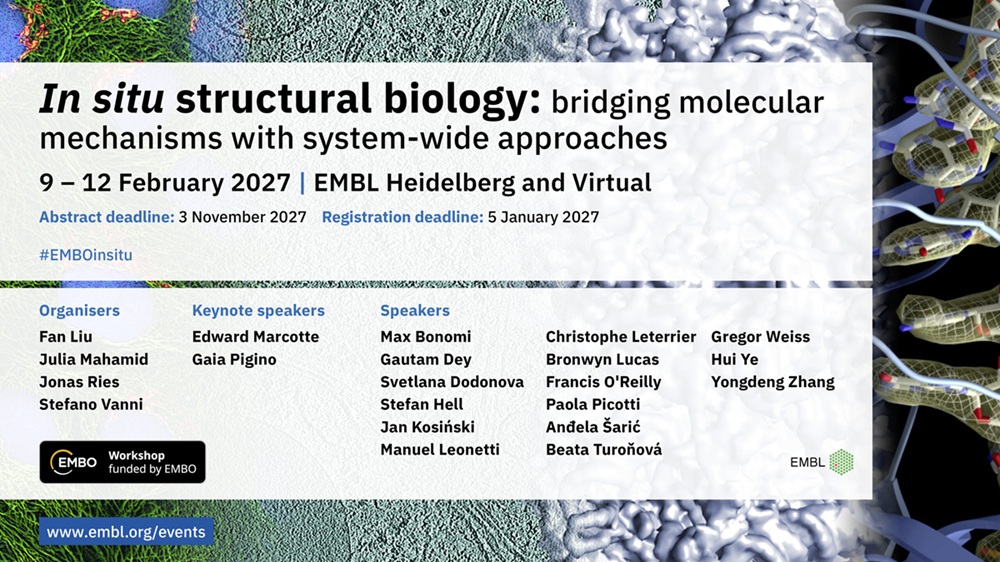
EMBO Workshop-In situ structural biology: bridging molecular mechanisms with system-wide approaches

Date: February 9-12, 2027 | Venue: EMBL Heidelberg and Virtual

This event will bring together experts from cryo-electron and fluorescence microscopy, mass spectrometry and computational modeling to focus on data integration across different methods towards understanding protein structures and interactions in situ.
In situ structural biology is a rapidly advancing field focused on understanding the structure and function of macromolecular complexes within intact cells and tissues.
Recent technological developments have pushed forward the ability to study proteins in their native context. Yet, a comprehensive understanding of molecular functions in situ requires systematic integration of complementary methods and data types.
This edition will have additional focus on system-wide approaches, showcasing recent technological and methodological advances and promoting their integration with other methodologies as powerful tools for cell biology across multiple scales.

Website:

https://www.embl.org/about/info/course-and-conference-office/events/ISS27-01/?utm_source=scieExpress&utm_medium=mpreferral&utm_id=ISS27-01

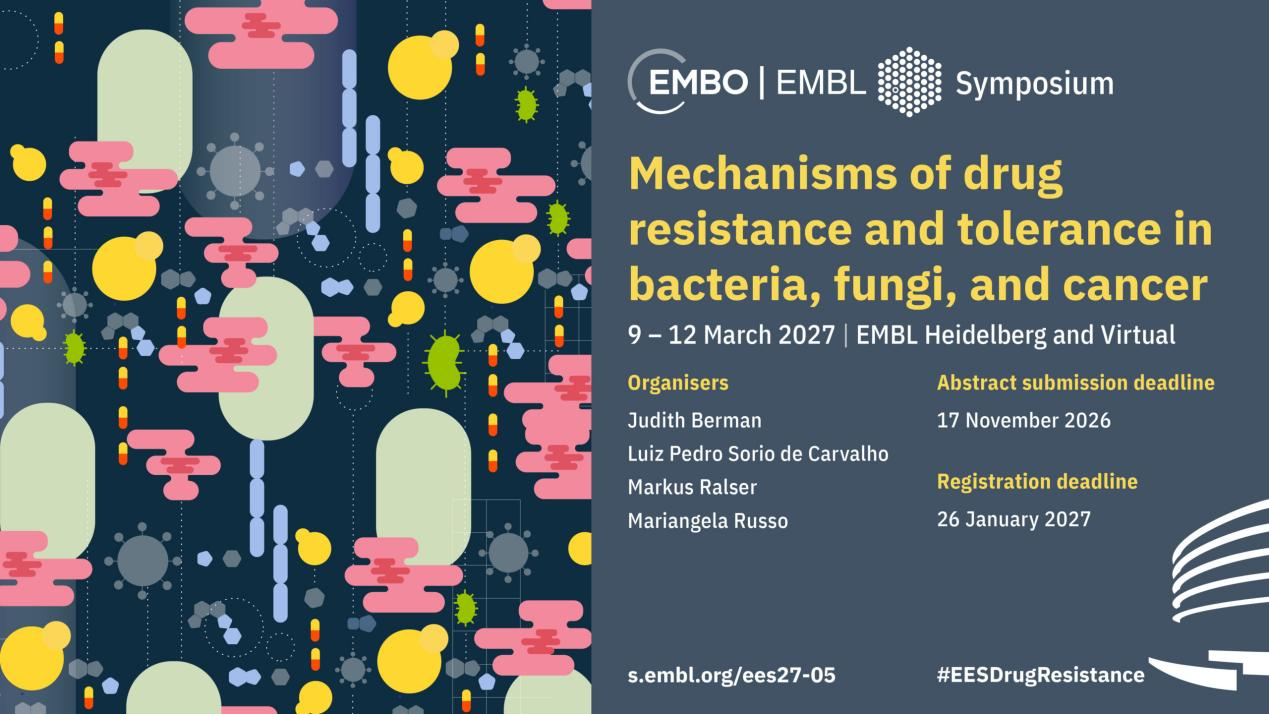
EMBO | EMBL Symposium-Mechanisms of drug resistance and tolerance in bacteria, fungi, and cancer

Date: March 9-12, 2027 | Venue: EMBL Heidelberg and Virtual

Resilience to antimicrobial drugs is a rapidly increasing problem of global health. Similarly, cancer cells that become drug-resistant or tolerant affect therapy outcomes, for instance during cancer chemotherapy. The underlying biological mechanisms of tolerance, resistance, and persistence are increasingly being studied and reveal a complex interplay between (cellular) evolution, genetics, biochemistry, and metabolism. Understanding these mechanisms holds the long-term promise of developing new therapeutic strategies less prone to drug resistance and, in the short term, enhances our understanding of clonal evolution and single-cell biology.
Drug tolerance, persistence and resistance are increasingly a problem of global health, both for infectious disease and cancer. The underlying biological mechanisms underpinning drug tolerance, persistence and resistance are increasingly being studied and reveal a complex interplay between (cellular) evolution, (non-genetic) plasticity, biochemistry, and metabolism. Understanding these mechanisms potentiates the long-term promise to develop new therapeutic strategies that are less prone to resistance, thus prolonging the clinical benefit for the patients and, in the short term, provide a better understanding of clonal evolution and single cell biology.
With the second edition of this symposium, we aim to bring together a highly international group of researchers to exchange in person on the latest work on the biological mechanisms that mediate drug resistance and tolerance across species barriers.

Website:

https://www.embl.org/about/info/course-and-conference-office/events/EES27-05/?utm_source=scieExpress&utm_medium=mpreferral&utm_id=EES27-05#vf-tabs__section-overview

EMBL-KAUST Conference-The expanding world of RBPs: from posttranscriptional control to riboregulation

Date: March 15-18, 2027 | Venue: EMBL Heidelberg and Virtual

This meeting brings together leaders in RNA-binding proteins (RBPs) to explore their biological functions, from posttranscriptional regulation of RNA expression to the riboregulation of protein functions.
Methodological advances have expanded the repertoire of known RBPs, revealing new classes and RNA-interaction modes, and highlighting the need to understand how RNA binding shapes biological functions.
Building on the first edition, this second meeting will expand knowledge of classical and newly discovered RBPs, highlighting advances enabled by emerging experimental and data-analysis tools. It will also explore the dynamic cellular processes involving RBPs and the role of RNA structural plasticity in shaping interactions with canonical and non-canonical RBPs.

Website:

https://www.embl.org/about/info/course-and-conference-office/events/RBP27-01/?utm_source=scieExpress&utm_medium=mpreferral&utm_id=RBP27-01

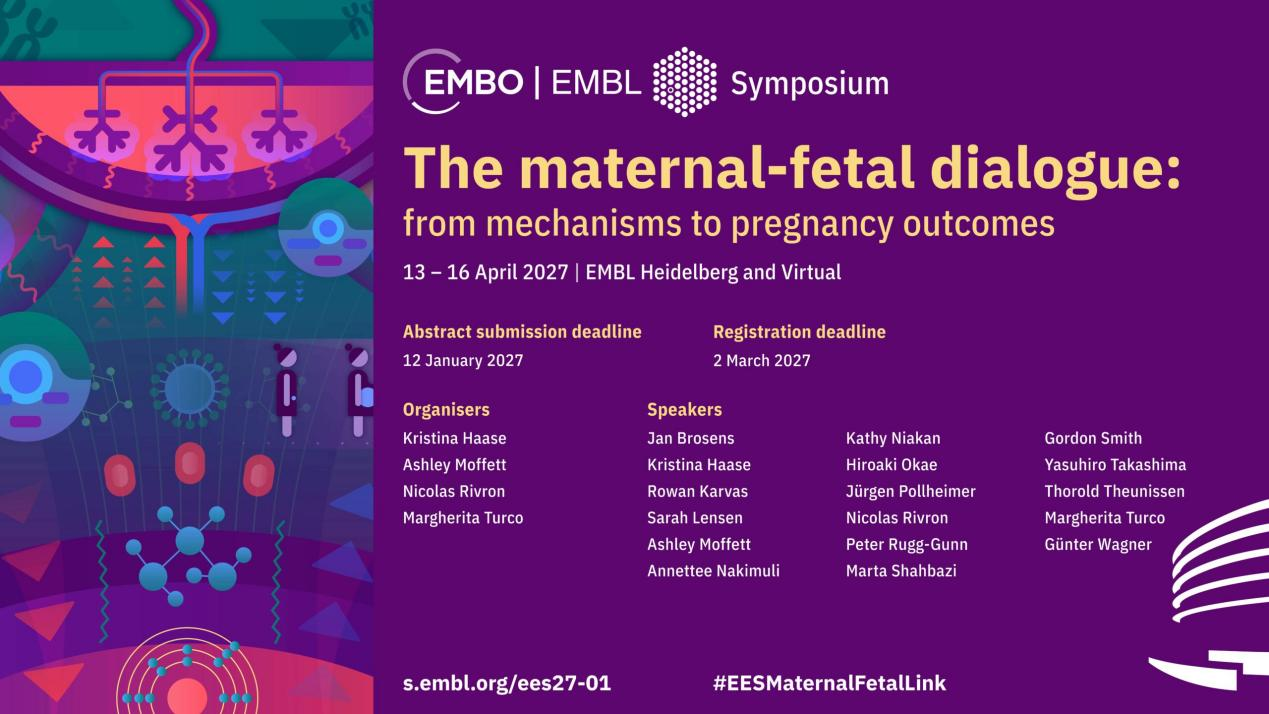
EMBO | EMBL Symposium-The maternal-fetal dialogue: from mechanisms to pregnancy outcomes

Date: April 13-16, 2027 | Venue: EMBL Heidelberg and Virtual

This symposium examines how maternal-fetal interactions support healthy development or, when disrupted, contribute to pregnancy complications, bridging molecular mechanisms and clinical outcomes.
The emergence of stem-cell and organoid models of the embryo, placenta and endometrium, together with their integration with rapidly advancing transcriptomic, gene-editing and bioengineering technologies, is revealing previously inaccessible processes in human pregnancy. Cross-disciplinary dialogue can connect fundamental discoveries and open new directions in pregnancy research..
By bringing together researchers studying maternal-fetal interactions from molecular mechanisms to clinical outcomes, the symposium will connect perspectives, define key questions and promote collaborations.

Website:

https://www.embl.org/about/info/course-and-conference-office/events/EES27-01/?utm_source=scieExpress&utm_medium=mpreferral&utm_id=EES27-01

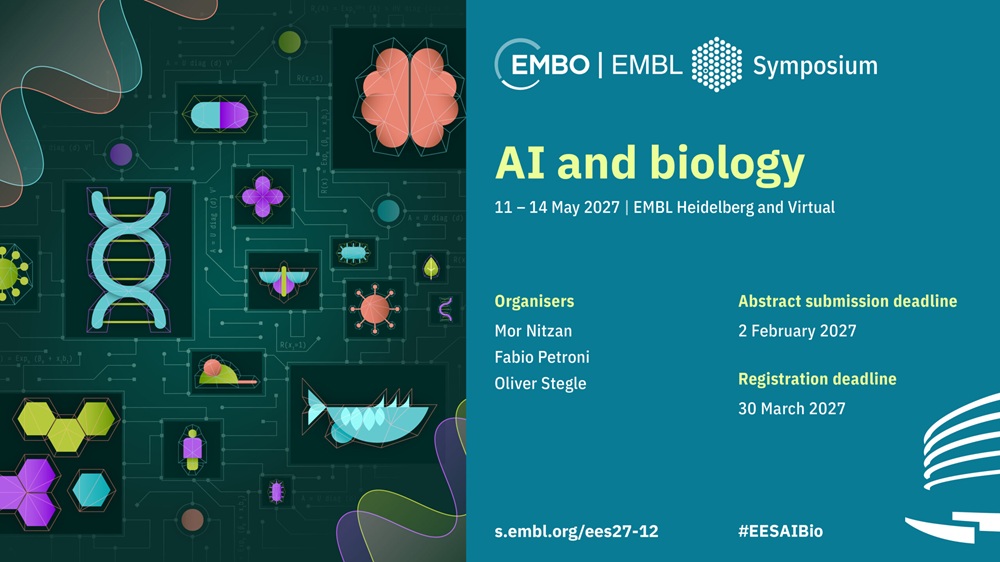
EMBO | EMBL Symposium-AI and biology

Date: May 11-14, 2027 | Venue: EMBL Heidelberg and Virtual

Artificial intelligence (AI) is transforming virtually all areas of science, and the life sciences are no exception. Stepping up the pace following the 2024 and 2026 meetings, this symposium already returns for the third time in 2027, maintaining the momentum amongst this engaged community of researchers to discuss the latest developments in the field both in person and online..
AI-based methods are pushing the limits of what is possible in experimental design, data analysis, simulation, and modelling. The aim of this symposium is to catalyse synergistic interactions between AI researchers in different subfields of biology and biomedicine by exploring shared theoretical approaches, cross-domain experiments, foundation models, and data integration, as well as shared topics in dissemination of tools, agent-based workflows and collaboration with experimental labs. Furthermore, we will look into the future and discuss how the concerted actions of AI and life science communities can enable both fields to exploit the full potential of the ongoing data deluge and find new application areas ripe for disruption by AI..
AI-based analytics is subject to active research in at least three major application areas: sequencing, imaging and structural biology. While all three domains are experiencing very fast growth, the developments are largely happening independently. The aim of our symposium is to convene these communities to discuss topics of mutual interest to make progress, including on the theoretical/methodological side and on the more strategic issues of identifying the next areas of high potential..
The onsite meeting will take a new, multi-track direction for the first day with selected workshops and tutorials. Days 2, 3 and 4 follow the hybrid symposium format, packed as before with invited and selected speakers and poster sessions.

Website:

https://www.embl.org/about/info/course-and-conference-office/events/EES27-12/?utm_source=scieExpress&utm_medium=mpreferral&utm_id=EES27-12

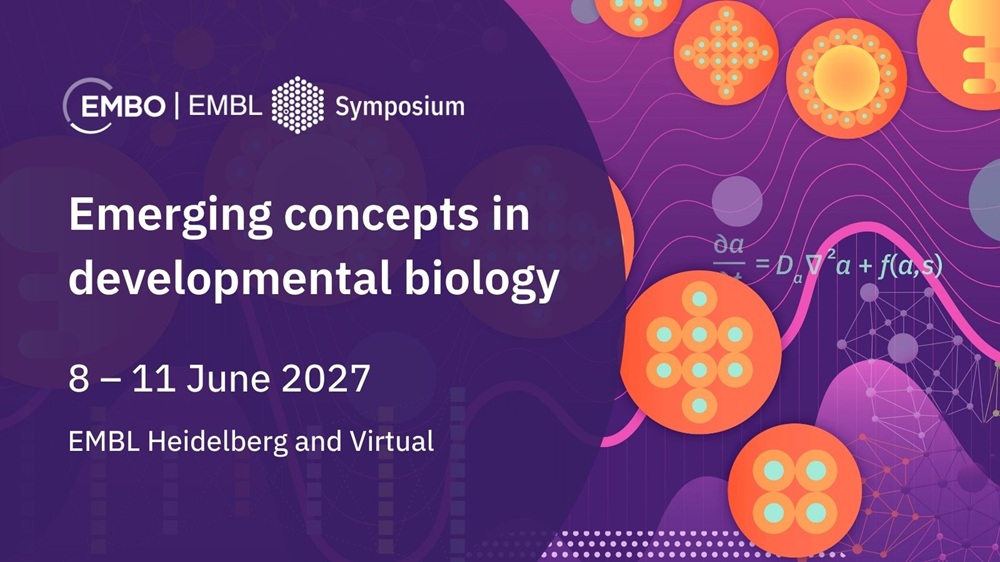
EMBO | EMBL Symposium-Emerging concepts in developmental biology

Date: June 8-11, 2027 | Venue: EMBL Heidelberg and Virtual

Developmental biology is inherently interdisciplinary. It draws on insights from embryology, genetics, cell and molecular biology, biophysics, systems biology, multi-omics, evolutionary biology, and quantitative biology to unravel how organisms develop. These fields evolve rapidly, reshaping the research landscape and driving innovation. This new symposium seeks to highlight the cutting-edge methodological and conceptual breakthroughs redefining this field..
The meeting will explore the dynamic interface of developmental biology with emerging technologies and transformative concepts to tackle fundamental questions on patterning, morphogenesis, cell differentiation, growth, organogenesis, regeneration, and evolution. It will spotlight state-of-the-art methodologies, including multi-modal imaging, synthetic developmental biology, AI-driven insights, advances in genetic engineering, and high-throughput genotype-to-phenotype platforms. By bridging in vivo and ex vivo systems—such as gastruloids and organoids—with non-model organisms, we aim to uncover new conceptual frameworks to understand developmental complexity..
The symposium will feature researchers at the forefront of the field, addressing processes in physiological contexts (e.g., in-utero development, oogenesis) and through theoretical lenses (e.g., information propagation, dynamical systems), fostering a holistic perspective on development in its full biological and conceptual richness. This meeting will connect a wide community of researchers interested in developmental processes, seeding a reference meeting on modern developmental biology.

Website:

https://www.embl.org/about/info/course-and-conference-office/events/EES27-02/?utm_source=scieExpress&utm_medium=mpreferral&utm_id=EES27-02

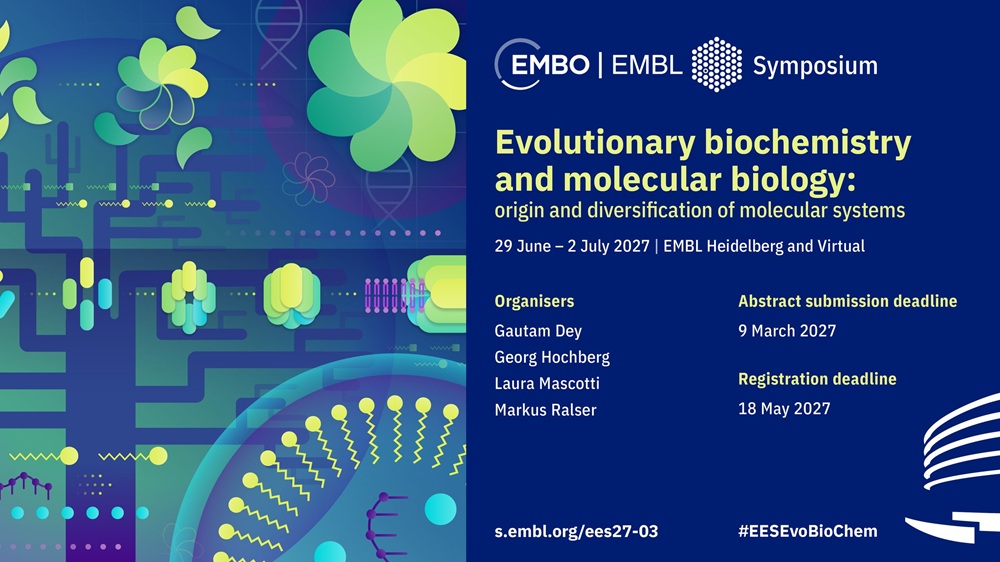
EMBO | EMBL Symposium-Evolutionary biochemistry and molecular biology: origin and diversification of molecular systems

Date: June 29-July 2, 2027 | Venue: EMBL Heidelberg and Virtual

Life’s history is written in molecules. This symposium will explore how the molecular systems of modern cells originated, evolved, and gave rise to biological complexity..
Evolutionary biochemistry is emerging as a transformative field. Advances in genomics, AI-enabled protein analysis, structural biology, and ancestral sequence reconstruction now allow researchers to investigate the origins of proteins, metabolism, and cells with unprecedented precision, making this an ideal moment to unite the field..
By bringing together researchers in chemistry, biochemistry, evolutionary biology, and computational science, this meeting will foster collaborations, establish shared approaches, and help define the future directions of evolutionary biochemistry.

Website:

https://www.embl.org/about/info/course-and-conference-office/events/EES27-03/?utm_source=scieExpress&utm_medium=mpreferral&utm_id=EES27-03

EMBO | EMBL Symposium-Mechanobiology across the tree of life

Date: June 9-12, 2026 | Venue: EMBL Heidelberg and Virtual

How do cells and tissues build themselves and respond to their environment? Over the past decade, it has become clear that physico-chemical properties are rapidly modulated to accommodate or drive changes in shape or behaviour and to exchange matter and information with the environment.
Solving the grand challenges of this field requires integrating expertise from biology, physics, and engineering. Furthermore, understanding which processes are system-specific and which represent generalisable principles requires us to use the lens of evolution to compare across the tree of life.
Responding to this critical challenge, we bring together researchers across all biological systems to discuss how new technologies can empower studies of cell wall, cytoskeleton, and membrane biology, including advanced imaging in in vitro and in vivo systems, as well as approaches that combine molecular biology with computational and biophysical methods.
Since this is a new and expanding area, we will have a particular focus on early-career researchers. Our goal is to inspire, catalyse, and foster collaborations across diverse communities to reach a comprehensive understanding of mechanobiology across kingdoms, integrating cell wall, actin and membrane biochemistry and biophysics with cell mechanics.

Website:

https://www.embl.org/about/info/course-and-conference-office/events/EES26-06/?utm_source=scieExpress&utm_medium=mpreferral&utm_id=EES26-06

EMBO Workshop-Building networks: engineering in vascular biology

Date: May 13-15, 2026 | Venue: EMBL Barcelona-Barcelona Biomedical Research Park (PRBB)

Vascularisation is a rapidly growing field, with researchers across disciplines recognising its crucial role in organ development, disease progression, and therapeutic delivery. Traditionally, vascular biologists have relied on animal models to investigate key processes such as vascular signalling, angiogenesis, and remodelling. These models remain foundational, however, they do not always fully capture human-specific vascular behaviour.
In recent years, advances in multicellular systems, gene editing, stem cell technologies, and bioengineering have created new opportunities to study vascular biology in vitro using human cells.
This upcoming edition of the meeting aims to unite researchers working at the intersection of engineering and vascular biology, facilitating discussions on how to apply cutting-edge techniques in spatial omics, advanced imaging, and the use of AI to vascular research.

Website:

https://www.embl.org/about/info/course-and-conference-office/events/EVB26-01/?utm_source=scieExpress&utm_medium=mpreferral&utm_id=EVB26-01

EMBO | EMBL Symposium-AI and biology

Date: March 10-13, 2026 | Venue: EMBL Heidelberg and Virtual

Artificial intelligence (AI) is transforming virtually all areas of science, and the life sciences are no exception. Following the success of the inaugural 2024 meeting – which brought together an engaged community of researchers both in person and online – the 2026 edition marks the second installment of this growing scientific gathering.
AI-based methods are pushing the limits of what is possible in experimental design, data analysis, simulation, and modelling. The aim of this symposium is to catalyse synergistic interactions between AI researchers in different subfields of biology and biomedicine by exploring shared theoretical approaches, cross-domain experiments, foundation models, and data integration, as well as shared topics in dissemination of tools, agent-based workflows and collaboration with experimental labs. Furthermore, we will look into the future and discuss how the concerted actions of AI and life science communities can enable both fields to exploit the full potential of the ongoing data deluge and find new application areas ripe for disruption by AI.
AI-based analytics is subject to active research in at least three major application areas: sequencing, imaging and structural biology. While all three domains are experiencing very fast growth, the developments are largely happening independently. The aim of our symposium is to convene these communities to discuss topics of mutual interest to make progress, including on the theoretical/methodological side and on the more strategic issues of identifying the next areas of high potential.

Website:

https://www.embl.org/about/info/course-and-conference-office/events/EES26-02/?utm_source=scieExpress&utm_medium=mpreferral&utm_id=EES26-02

EMBL Conference-The new cardiobiology: engineering, vascular, and molecular insights

Date: February 16-19, 2026 | Venue: EMBL Heidelberg and Virtual

Cardiovascular disease is the leading cause of human mortality, and despite an active research community many of the underlying mechanisms are unknown. Open questions surround molecular triggers, the relationship of GxE, impact of epigenetics, the role of sex, inflammation and microbiome, as well as metabolism and multi-organ links in cardiovascular disease. Advanced molecular and human-mimicking tissue engineering techniques are revolutionizing the way we approach cardiovascular discovery research. These developments led to the inaugural “The new cardiobiology” meeting at EMBL in 2024.
In light of further technical advances in the field, the conference will repeat in 2026 and seek to unite speakers across cardiac and vascular biology, tissue engineering as well as systems biology to continue studying cardiovascular disease.

Website:

https://www.embl.org/about/info/course-and-conference-office/events/NCB26-01/?utm_source=scieExpress&utm_medium=mpreferral&utm_id=NCB26-01#vf-tabs__section-overview