
Developments of 3D Printed Tissues/Organs
Time
3:00 PM, February 9, 2026 (Beijing)Contact Us
Email: bmehjournal@sciexplor.comSpeaker

Prof. Yong He
School of Mechanical Engineering, Zhejiang University, Hangzhou, Zhejiang, China.
Prof. Yong He, a Qiushi Distinguished Professor at Zhejiang University and recipient of the National Science Fund for Distinguished Young Scholars, serves as Deputy Director of the State Key Laboratory of Fluid Power and Mechatronic Systems and Director of the Institute of Ultra-Precision and Biomanufacturing at the Yangtze River Delta National Innovation Center. His work focuses on additive manufacturing (3D printing) and biomanufacturing, and he serves as Deputy Editor-in-Chief of Bio-Design and Manufacturing and as an Editorial Board Member of Biofabrication. Prof. He has led major national research programs and published two monographs and over 100 SCI-indexed papers in leading journals such as Science Translational Medicine, Nature Protocols, Nature Reviews Bioengineering, and Cell Biomaterials. He also holds more than 50 invention patents, with his publications cited over 18,000 times, and founded the EFL (Engineering for Life) initiative to promote interdisciplinary and translational research in engineering and medicine.
Hosts

Prof. Ningbo Li
School of Stomatology, Shandong First Medical University, Jinan, Shandong, China.
Prof. Ningbo Li is an Associate Professor (PI), master’s supervisor, and postdoctoral cooperative supervisor at Shandong First Medical University. His research focuses on “Materials for Promoting Bone Repair and Regeneration”. He primarily employs materials engineering approaches, including nanotechnology to conduct a series of studies on the intracellular functional mechanisms of materials with specific physicochemical properties (e.g., dental and bone materials) in promoting osteogenesis, neuro-enhanced bone repair, and biomimetic 3D-printed implants. He has led multiple national and provincial-level research projects and has published over 30 SCI papers in professional journals such as Bioactive Materials, Chemical Engineering Journal, and Journal of Nanobiotechnology. He has also applied for 15 national invention patents. He is a member of the Chinese Society for Biomaterials and a committee member of the Shandong Society of Regenerative Medicine.
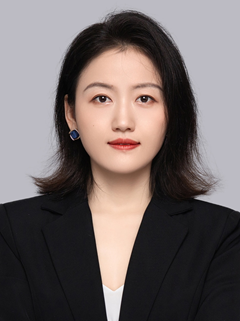
Dr. Xiaozhao Wang
Liangzhu Laboratory, Zhejiang University, Hangzhou, Zhejiang, China.
Dr. Xiaozhao Wang is an investigator of the Double-Innovation Hundred Talents Program at Liangzhu Laboratory. Her research focuses on elucidating material assembly principles in the musculoskeletal system and developing precision strategies for tissue regeneration, with particular emphasis on AI-driven bioactive material design and the diagnosis of bone and joint diseases. She has authored more than 30 peer-reviewed publications as first or corresponding author in leading journals, including PNAS, Annals of the Rheumatic Diseases, Nano Letters, Nature Communications, and Science Translational Medicine. Dr. Wang has an H-index of 19, has received two grants from the National Natural Science Foundation of China, and is a recipient of the Zhejiang Province Ten Thousand Talents Program (Young Innovation Track).
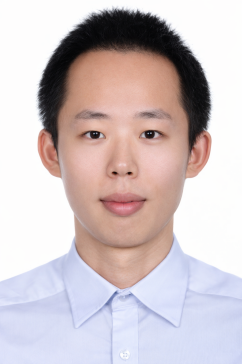
Dr. Huifeng Shao
School of Mechanical Engineering, Hangzhou Dianzi University, Hangzhou, Zhejiang, China.
Huifeng Shao, Ph.D. and dual postdoctoral fellowships in Mechanical Engineering and Biomedical Engineering. He is currently an Associate Professor and Doctoral Supervisor at Hangzhou Dianzi University. His primary research focuses on 3D bioprinting. He has led more than 10 projects, including grants from the National Natural Science Foundation of China and key sub-projects of the National Key R&D Program. He has published more than 30 SCI papers in journals such as International Journal of Extreme Manufacturing, Advanced Functional Materials, and Nano Energy. Additionally, he has applied for over 50 Chinese patents, with more than 30 already authorized. He serves as a committee member of the Advanced Manufacturing of Biomaterials Division of the Chinese Society for Biomaterials, a member of the National Additive Manufacturing Expert Committee of the Yangtze River Delta Steel Industry Development Association, and the Chair of the Biomedical Additive Manufacturing Session at the Additive Manufacturing Technology (International) Summit. He is dedicated to interdisciplinary research and the translation of scientific achievements in the field of medical engineering integration.
Introduction
Bio-3D printing refers to the use of additive manufacturing techniques to assemble cells as the primary building blocks in a spatially and temporally controlled manner, enabling the construction of functional tissues and organs in vitro and offering a promising pathway to address the critical shortage of transplantable organs. However, the fabrication of viable tissues and organs outside the body remains extremely challenging and is still in its early stages globally, requiring parallel advances in scientific exploration and technological iteration, as well as coordinated efforts between fundamental research and clinical translation. Over the past decade, our team has conducted systematic research on photocurable bioink shaping theories and methods, a series of 3D-printing processes, consumables, and equipment. This presentation will focus on these key challenges and explore how to integrate biological development with engineering assembly in in-vitro tissue fabrication, advancing the field through the combined approach of printing-induced shaping and growth-driven morphogenesis.
Presentation
Presentation
32
Free Discussion
19


