
Liquid Metal-Assisted Wearable Devices for Inflammation Management in Chronic Diseases
Time
3:00 PM, November 5, 2026 (China)Zoom Meeting Link: https://us06web.zoom.us/j/88934938832?pwd=LlMbdcZhgjERO5EE0xizUtRcU2txBy.1
Meeting ID: 889 3493 8832
Passcode: 933313
Contact Us
Email: bmehjournal@sciexplor.comSpeaker

Prof. Guozhen Liu
School of Medicine, The Chinese University of Hong Kong, Shenzhen, Guangdong, China.
Prof. Liu is the founder of the Biomedical Engineering Programme at the School of Medicine, The Chinese University of Hong Kong, Shenzhen. She is the Director of CUHKSZ-Boyalife Joint Laboratory of Regenerative Medicine Engineering. Her research interests include biomedical engineering, biosensors, nanobiotechnology, in vitro diagnostics, wearable devices, and in vivo continuous monitoring. Her career has been marked by a dynamic interplay between academia and industry. Her Integrated Devices and Intelligent Diagnostics (ID2) Laboratory focuses on developing biosensing tools and intelligent nanoparticles for the early diagnosis and prevention of chronic diseases. Her team has pioneered various CRISPR/Cas biosensors capable of quantifying inflammation from point-of-care testing and real-time in vivo monitoring. Her global impact is reflected in her being listed among the top 0.05% scholar in biosensors by ScholarGPS. She holds prestigious fellowships from the RSC, IET, and IPEM, alongside the CChem chartered status. As a dedicated advocate for women in STEM, she received the 2026 IPEM Gold Award in Academia and the Georgina Sweet Award for Women in Quantitative Biomedical Science in 2020. She currently serves as an Associate Editor for ACS Sensors and has been named a Distinguished Lecturer of the IEEE Sensors Council (2026–2028). Beyond academia, she has extensive industry experience in biomedical device development, including roles at AstraZeneca and as R&D Manager, China, at AgaMatrix Inc. She is a co-founder of Bio-Sens Tech in Sydney.
Host
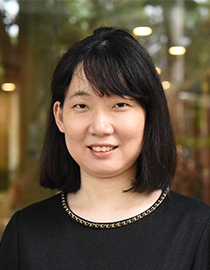
Prof. Ruirui Qiao
Australian Institute for Bioengineering and Nanotechnology, The University of Queensland, Brisbane, QLD, Australia.
Prof. Ruirui Qiao is a Group Leader at the Australian Institute for Bioengineering and Nanotechnology (AIBN), The University of Queensland (UQ), where she holds an NHMRC Emerging Leadership Fellowship (2021–2026) and an ARC Future Fellowship (2026–2030). At AIBN, Prof. Qiao leads a multidisciplinary research group focused on the design and engineering of functional polymer/inorganic nanohybrids and biomaterial platforms for biomedical applications, including drug and gene delivery, disease modelling, tissue engineering, antibacterial technologies, and soft robotics. Her current research includes polymer-engineered magnetic nanoparticles for precision brain delivery, droplet-engineered microgel platforms for organoid and blood–brain barrier models, and liquid metal nanoparticle-enabled soft materials for 3D/4D printing and soft robotics.
Prof. Qiao has published more than 130 peer-reviewed articles in leading journals, including Science, Nature Communications, Advanced Materials, ACS Nano, and the Journal of the American Chemical Society. She has an h-index of 54 and has received more than 10,500 citations. She currently serves as an Associate Editor for Science Advances (AAAS) and the Journal of Nanobiotechnology (Springer Nature), as well as a Topic Editor for Polymer Science & Technology (ACS).
Discussants

Dr. Sasan Adibi
Faculty of Information Technology, Monash University, Clayton, VIC, Australia.
Dr. Sasan Adibi is a digital health researcher, academic, and technology innovator with over 20 years of experience spanning health informatics, wearable technologies, biomedical sensing, and technology-assisted chronic disease management. He is Founder and CEO of Research Vitality and Director of Digital Health and AI at Guidelines and Economists Network International (GENI). His research encompasses mobile health, wearable and physiological sensors, Internet of Medical Things (IoMT), remote patient monitoring, and AI-enabled healthcare.
His recent publication in Nutrients (2026), A Conceptual Digital Health Framework for Longevity Optimization: Inflammation-Centered Approach Integrating Microbiome and Lifestyle Data-A Review and Proposed Platform, explores the integration of inflammatory biomarkers, microbiome data, and continuous lifestyle monitoring to support personalised interventions and healthy ageing.
Dr. Adibi holds a PhD in Communications and Information Systems from the University of Waterloo, Canada. He has authored over 100 scholarly publications, edited books on digital health, and contributed to patented health-informatics technologies. His work focuses on translating emerging technologies into practical, evidence-informed healthcare solutions.
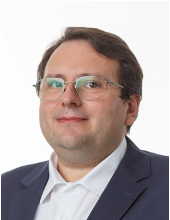
Prof. Daniele Tosi
Laboratory of Biosensors and Bioinstruments, Center for Life Sciences, National Laboratory Astana, Nazarbayev University, Astana, Kazakhstan.
Dr. Daniele Tosi is a Full Professor at Nazarbayev University, School of Engineering and Digital Sciences, and Head of Biosensors and Bioinstruments Laboratory at National Laboratory Astana. He holds a PhD in Electronic and Communication Engineering at Politecnico di Torino (Italy, 2010). He is the co-founder of Backeer, a spin-off of Nazarbayev University commercializing low-cost biosensing technologies for portable devices.
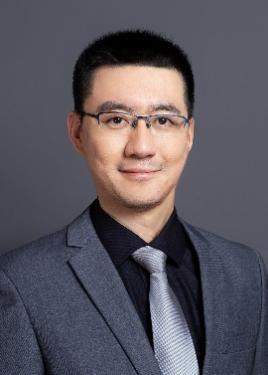
Prof. Xiaoyu Cheng
College of Optical Science and Engineering, Zhejiang University, Hangzhou, Zhejiang, China.
Dr. Xiaoyu Cheng is an Associate Professor at the College of Optical Science and Engineering, Zhejiang University. He received a BSc from the Australian National University in 2010, a PhD from the University of New South Wales in 2015. He worked as a postdoctoral fellow at Temple University, USA, before joining Zhejiang University in 2018. His research focuses on bio-optoelectronic sensing technology and devices, particularly the development of next-generation sensing materials and interfaces, microfluidics, precision optical detection, and applications to disease biomarkers in complex media. He has published over 40 research papers, including 6 cover articles, and obtained 20 patents. He has also co-founded a National High-Tech Enterprise focusing on the early diagnosis of neurodegenerative diseases using blood-based biomarkers.
Prof. Long Ren
Institute for Quantum Science and Technology, Shanghai University, Shanghai, China.
Prof. Long Ren has been a Professor at Shanghai University, China, since December 2024. He previously worked as a Researcher at Wuhan University of Technology (2021–2024) and an Associate Research Fellow at the University of Wollongong, Australia (2019–2020). He received his PhD in Materials Science from the University of Wollongong in 2019 under the supervision of Prof. Shi Xue Dou.
His research focuses on the design and synthesis of liquid metals and their hybrid materials, with particular emphasis on their functional properties and applications in smart materials, flexible electronics, and energy-related devices. He has published over 90 peer-reviewed journal articles in leading journals, including Nature Energy, Advanced Materials, Journal of the American Chemical Society, and Materials Today. His publications have received more than 7,500 citations, with an H-index of 48 (Google Scholar).
Introduction
Inflammation is a central driver of the development and progression of chronic diseases and cancer, making its monitoring essential for early diagnosis, effective management, and prevention. Mounting evidence indicates that cytokines and other inflammatory biomarkers secreted by innate immune cells play a critical role in inflammation-related diseases. Yet the field remains constrained by the lack of effective tools for monitoring cytokines to guide timely and effective treatment. This talk will highlight recent advances in the surface engineering of liquid metal nanoparticles that can be integrated with microfluidic biochips, wearable devices, and implantable systems to enable inflammation quantification for wound healing and for the early diagnosis and prevention of chronic diseases. It will further showcase applications of these integrated devices for biomarker discovery in Parkinson’s disease, as well as advanced sensing technologies developed in the Integrated Devices and Intelligent Diagnostics (ID2) laboratory.


