Virtual reality-based compassion meditation for clinical contexts: A co-design study of a loving-kindness meditation prototype

María Alejandra Quiros-Ramírez
1,2,*

,
Sophia Haberland
1
,
Tom Hempel
1
,
Rüdiger Arlt
3
,
Philipp Keune
3
,
Stephan Streuber
1
*Correspondence to:
María Alejandra Quiros-Ramírez, Faculty of Electrical Engineering and Computer Science, Hochschule Coburg, Friedrich-Streib-Straße 2/4-010, Coburg 96450, Germany.
E-mail: alejandra.quiros@hs-coburg.de
Empath Comput. 2026;2:202523. 10.70401/ec.2025.0014
Received: October 18, 2025Accepted: December 26, 2025Published: December 31, 2025
Abstract
Aims: This study introduces and evaluates a virtual reality (VR) prototype designed for the Loving-Kindness Meditation (LKM) to support mental health rehabilitation and relaxation in clinical contexts. The aims include the co-creation of a VR-based mindfulness experience with clinical experts and the evaluation of its usability, user experience, and short-term effects on relaxation, affect, and self-compassion.
Methods: Following a design thinking and co-creation approach, the VR-based LKM experience was developed iteratively with input from clinicians and computer scientists. The final prototype was implemented for the Meta Quest 3 and included five immersive scenes representing phases of the LKM and transition moments guided by a professional voice recording. Eleven participants (M = 36.5 years,
Results: Participants reported significant decreases in negative affect (t(10) = -2.512, p = .0307, d = -1.037) and stress (t(10) = -3.318, p = .007, d = -1.328), as well as increases in relaxation (t(10) = 5.487, p < .0001, d = 2.471) and self-compassion (t(10) = 2.231, p = .0497, d = 0.283). Usability was rated as excellent (M = 92.5), and presence as good (M = 4.0, SD = 0.43). Qualitative feedback described the experience as calming, aesthetically pleasing, and easy to engage with, highlighting the falling leaves and pulsating orb as effective design elements.
Conclusion: The co-designed VR-LKM prototype was perceived as highly usable and beneficial for inducing relaxation and self-compassion, suggesting its potential as a supportive tool for clinical mindfulness interventions. The results indicate that immersive VR can effectively facilitate engagement and emotional regulation, providing a foundation for future clinical trials and broader implementation in therapeutic and wellness settings.
Keywords
Virtual reality, mindfulness, loving-kindness meditation, co-design, relaxation, self-compassion
1. Introduction
Maintaining a regular meditation practice can bring great benefits to well-being[1-3]. There are different forms of mindfulness meditation, such as Loving-Kindness Meditation (LKM)[4]. This practice aims to focus the meditator’s attention on the silent repetition of phrases that express kindness, compassion, and wishes of well-being toward oneself and others. Typical phrases include “May I be well”, “May you be healthy”, “May we be safe”. The benefits of LKM include increased compassion toward oneself and others, enhanced positive emotions and social connectedness, and overall improvements in well-being[5-7]. The practice has also been associated with a reduction in self-criticism, depressive symptoms, and stress, indicating its potential clinical applications[8-11].
However, there are certain difficulties associated with starting and maintaining a meditation practice. In general, it is difficult for beginners to sustain a regular meditation practice given the level of motivation and attention that it requires[12-14]. VR may be a useful tool to tackle these challenges. VR can be defined as a computer-generated (CG) environment that fully immerses users in a
Previous work has shown the promise of VR in supporting mindfulness meditation, particularly among novices, with reported benefits including greater long-term adherence to the practice[17], higher concentration levels[18], and reduced effort in sustaining the meditation[19], due to the immersive qualities and visual feedback provided by the virtual environment. Studies have also shown that VR can effectively support LKM, with participants reporting high motivation and curiosity to continue practicing after their first exposure in VR[20]. However, whether practicing LKM in VR can support mental health rehabilitation, and how such virtual experiences should be designed for clinical contexts, remain largely unexplored.
In this paper, we introduce our work on the design, development, and evaluation of a new VR-based LKM (VR-LKM) experience. The goals of this study are to (a) co-create a VR version of LKM together with clinical partners, (b) evaluate the usability and user experience of this VR-LKM experience with non-clinical participants, and (c) establish the foundations for future clinical studies using the newly developed VR-LKM experience.
2. Background
Meditation can be described as paying undivided and purposeful attention to the “present moment” while attending, in a
2.1 Mindfulness and compassion-based meditation in applied and clinical contexts
Mindfulness-based interventions such as MBSR have been widely applied in both clinical and non-clinical populations[2,23-25], demonstrating positive outcomes for psychophysiological well-being, including the improvement of anxiety, depression, and
Preliminary studies show that compassion practices, such as LKM, can support the treatment of psychological problems related to interpersonal processes, including depression, social anxiety, and anger[8]. Other studies have found that the positive effects of compassionate practices, such as self-compassion, mindfulness, and well-being, can have a lasting impact, observed six to twelve months after the intervention[28]. In general, compassion-based meditation practices have received less attention than other forms of meditation in clinical interventions, despite the promising results in targeting maladaptive self-schemata and enhancing pro-social behaviors[27].
From a psychological perspective, LKM is thought to work through several complementary mechanisms. First, LKM involves repeated and sustained attention on compassionate intentions, which helps anchor the practitioner’s attention and gradually link thoughts or representations of the self and others to feelings of warmth and care[8,29]. Second, LKM may reduce threat-based self-focused processing by decreasing habitual self-criticism and fostering more affiliative, regulative emotional responses, as described in compassion-focused models of emotion regulation[8,30]. In addition, previous research suggests that compassion-based practices may also facilitate perspective taking and detachment from rigid self-concepts, supporting more flexible and self-transcending modes of emotional processing[27]. Together, these mechanisms highlight the importance of an emotionally engaging, safe, and
2.2 Using VR to support meditation practices
VR has emerged as a promising tool to support meditation interventions. The immersive qualities of VR enhance the feeling of presence[17,19], supporting attention regulation and reducing distractions[31]. Furthermore, VR-based interventions offer a promising and scalable alternative to in-person meditation-based interventions, addressing the limited availability of trained professionals while maintaining user motivation and adherence[32].
Most VR mindfulness applications use head-mounted displays to deliver stereoscopic 3D environments. Visualization styles typically correspond to: (a) 360˚ video environments, such as immersive forests or beach scenes paired with guided audio narration, or (b) CG environments, which allow dynamic interaction and adaptive feedback[33]. Across studies, simple and calming environments that feature natural landscapes, such as forests or flowing water, seem to promote emotional safety and attentional focus[19].
VR-based mindfulness studies report positive effects on psychological and physiological outcomes such as reduced anxiety, depression, stress, and pain levels, as well as improved mindfulness, mood, and general well-being[31,34]. Some of these effects, including improvements in depression and anxiety symptoms, appear to persist beyond the VR exposure[35].
There are currently few virtual reality experiences available to support LKM. Wang et al.[36] co-designed an LKM VR app with couples in long-distance relationships, showing that the use of the app had positive effects on the couples. Quiros-Ramirez, Vahlenkamp, and Streuber[20] co-designed a mobile VR-based LKM application with both experienced meditators and non-meditators. After the intervention, participants reported enhanced relaxation, mindfulness, and compassion. These applications have not been specifically tailored for clinical users, who often present unique emotional, physical, and environmental needs. In particular, existing VR-based LKM experiences do not consider older individuals in their co-creation process, thereby limiting the range of users who may be able to use them also in clinical contexts as well. Prior work has also offered limited examination of usability, user experience, or outcomes related to self-compassion from a clinical perspective.
2.3 VR-meditation in clinical contexts
VR-based mindfulness interventions have expanded into clinical settings. Studies show that VR can provide a supportive environment for cultivating mindfulness and improving health outcomes among individuals with various psychological and physical conditions, including anxiety, depression, substance use, and chronic pain[17,37]. For example, VR-supported mindfulness has been shown to decrease negative affect in patients with mood and anxiety disorders[38]. Other pilot interventions have found reductions in pain and anxiety in children and young adults with inflammatory bowel disease[39], and decreases in opioid cravings and negative affect among patients with opioid use disorder following VR-based Mindfulness-Oriented Recovery Enhancement[37].
VR appears to facilitate the accessibility and acceptability of mindfulness interventions, particularly for populations who might otherwise face barriers to engagement, such as mobility limitations, cognitive overload, or emotional discomfort in traditional group settings. Furthermore, the ability to deliver standardized, repeatable, and self-paced sessions supports scalability in clinical and rehabilitation contexts[19,35]. The accumulating evidence suggests that VR may serve as a valuable adjunctive tool to existing mindfulness-based therapies, enhancing engagement, consistency, and emotional safety in clinical practice.
Currently, there is no dedicated VR-based LKM intervention for clinical contexts; however, preliminary studies exist on the use of
These works indicate that VR provides a unique opportunity to support compassion-based contemplative practices. However, evidence for VR-based LKM remains sparse, with most existing work focusing on self-compassion or empathy paradigms rather than formalized LKM protocols. Moreover, prior VR-based mindfulness and compassion interventions have largely been evaluated in controlled or outpatient settings and have placed limited emphasis on the practical constraints of clinical use, such as reduced mobility, fatigue, attentional demands, or posture (e.g., semi-reclined or bed-seated use). The present work addresses this gap by
3. Design Process
We followed a design thinking approach[43] (empathize, define, ideate, prototype, test) to iteratively design and develop the new
Discussions within the group led to a deeper understanding of the population that would utilize the VR-LKM. The target group consists of stationary patients in neurology or psychology clinics (our use case at hand being in the Klinikum Bayreuth, Germany). These patients are on average 50 years old or older, typically not experienced in meditation, and potentially wary of it and technology in general. Their underlying mental and physical preconditions may vary. Some of them may have limited or no mobility, and for these patients the VR-LKM intervention would be experienced in a semi-reclined or bed-seated posture.
Figure 1 shows several different idea sketches on the appearance and interactions brainstormed during our design process. Panel 1 shows different stations in a natural environment, where users could explore the different phases of the LKM. Panel 2 introduces the idea of the sky lantern as a metaphor for the compassionate wishes. In this case, users would hold the lanterns, release them to the environment, and observe them float into the sky as they repeat their kind wishes to themselves or others.
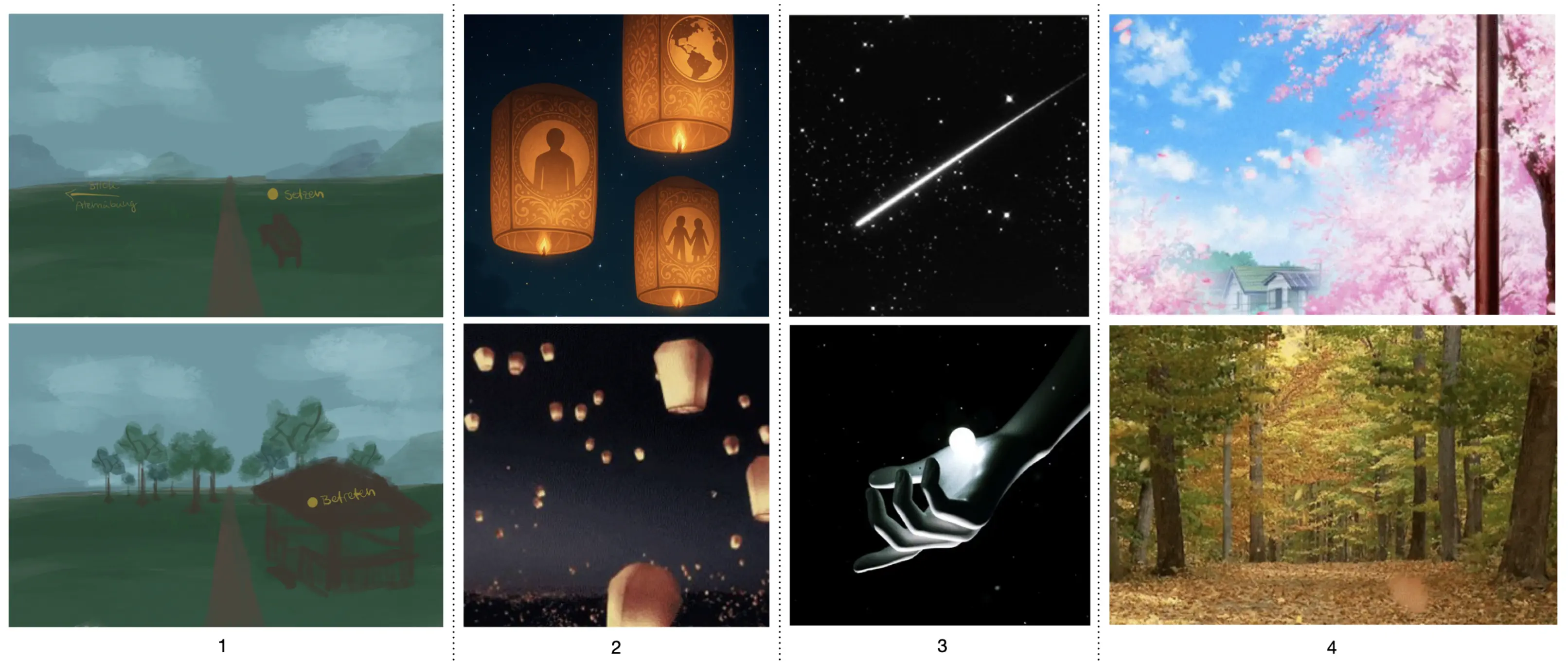
Therapeutic mindfulness exercises often employ visualization metaphors to facilitate decentering and non-attachment, such as imagining thoughts or worries as leaves floating down a stream or clouds passing by[44]. Panel 3 (Figure 1) introduces the concept of ‘falling objects’, in this case, celestial objects (inspired by the visualizations from this study[20]), to help users decenter, ground themselves, and focus on the meditation. Panel 4 (Figure 1) depicts an alternative metaphor for falling items, in this case in the form of leaves or flowers in different seasons (depicting spring and fall).
Several ideas were discarded during the different ideation stages. Elements like fire (e.g., the sky lanterns) or waterscapes (e.g., a pier on a lake that we had sketched during the ideation phase) were scrapped to avoid triggering users who have experienced traumatic events involving these elements. Furthermore, dark environments were also discarded since some users may find them scary or distressing. Mandatory interactions were also scrapped to include users with limited mobility. Considering the potential skepticism of some users in the target group, the environmental choices were narrowed to familiar environments like forests or woods, with the anchoring effect of falling leaves as a grounding meditative element.
3.1 Prototype
As a result of several design iterations, a final prototype was designed and developed. The chosen environment was a forest, with various kinds of trees and bushes. Three phases of the LKM: directed toward (a) the self, (b) another person, and (c) all beings, were represented through distinct seasonal variations of the forest: spring, summer, and autumn, presented as three different scenes. The leaves of the trees slowly fall in each of the scenes. Users can extend their virtual hands (tracked through the controllers) and touch the leaves, altering their trajectory. Further iterations led to the inclusion of two additional scenes: an introductory phase designed to help participants settle into the meditation experience, and a closing phase to support their transition back to reality. In both scenes, a softly glowing orb positioned at the center of the environment expanded and contracted slowly, mimicking the natural rhythm of breathing and inviting users to synchronize their breathing (see Phases 1 and 5 in Figure 2). In the introductory scene, participants received a brief explanation of the experience and were guided through a short relaxation exercise involving breathwork.

Considering the importance of embodiment for presence, self-related processing, and even compassion[40], users were provided with a virtual body. The body was created using Ready Player Me and designed to be as neutral as possible (see Figure 2, Phases 2 and 3).
Attention anchoring elements were set in each of the meditation scenes. In the Loving-Kindness to the Self phase, a mirror was placed in front of the user, and their movements were tracked and mapped onto the virtual body using inverse kinematics, allowing users to perceive their own reflection and representation of their ‘self’ in the virtual environment. Bodily movement was left as an optional feature to accommodate users with limited physical mobility. In the Loving-Kindness to Another phase, a second virtual body, matching the user’s neutral style, was placed under the tree where the mirror was before, representing the person toward whom kind intentions are directed. Finally, in the Loving-Kindness to Everyone phase, besides the ‘another’ body, animals were carefully placed throughout the forest environment, symbolizing the expansion of compassion to all living beings.
A script was prepared for the meditation, including the LKM and the two extra phases (intro and end). The script was iterated upon and improved with feedback from the co-creation group. A voice actress was recruited to read the final script (see
The prototype was developed for Meta Quest 3 using Unity 6,000.1.2f1 and publicly available assets from the Unity Asset Store. Final IK (Inverse Kinematics) was utilized to solve the user’s avatar’s real-time full-body motion based on the positional and rotational data from the headset and handheld controllers, without additional full-body trackers. This approach allowed for an approximate
The prototype is designed to be utilized either independently or with the assistance of another person, such as clinical staff. In its current implementation, an assisting person can start the application in advance and then support the user in placing and adjusting the headset. To accommodate this process, the prototype includes a 10-second standby delay at the beginning, allowing time for physical adjustments and brief explanations.
To reduce cognitive and operational demands, the interaction is intentionally kept minimal. Scenes can be skipped using a single button (“B”) on the right-hand controller if the assisting person deems it necessary to shorten or simplify the experience. In addition, audio volume can be adjusted to account for individual hearing needs.
Iteratively, different versions of the prototype were tested in three small pilot sessions in Germany and Switzerland. Feedback from volunteers was collected and used to refine the prototype prior to the experimental evaluation.
4. Experimental Evaluation
After the design thinking process, which included pilot evaluations, we set up an experiment to evaluate whether the prototype of the LKM in VR works as expected. We have two different goals for this experiment: (1) to ensure the prototype is usable and the experience of the users’ is satisfactory, (2) to evaluate whether it is inductive of relaxation, self-compassion, and improvement of the user’s affective states. The study was conducted in accordance with the Declaration of Helsinki.
4.1 Materials and methods
4.1.1 Apparatus and stimulus
We used the final LKM VR prototype resulting from our design thinking process (see Section 3). The Meta Quest 3 was used as a VR headset.
4.1.2 Measures
Three constructs were measured before and after the intervention:
Self-compassion. Self-compassion was evaluated using the Self-Kindness subscale of the Self-Compassion Scale (SCS)[45], which consists of five items assessing kind, understanding, and supportive responses toward oneself in times of difficulty. Responses were given on a 5-point Likert scale ranging from almost never to almost always, with higher scores indicating greater self-kindness.
Relaxation. Relaxation was assessed using two single items, “I feel relaxed” and “I feel stressed,” each rated on a 5-point Likert scale. These items were selected to capture immediate subjective experiences of relaxation and stress before and after the VR-LKM intervention.
Affect. Affect was measured using the German version of the positive and negative affect schedule (PANAS)[46]. The PANAS has two subscales assessing positive and negative affective states, respectively, each consisting of multiple emotion descriptors rated on a
After the intervention, usability and experience were evaluated using the following instruments:
Usability. Usability was evaluated using the System Usability Scale (SUS)[47], a widely used 10-item questionnaire rated on a 5-point Likert scale. The SUS yields a total score ranging from 0 to 100, with higher scores indicating better perceived usability.
Simulator sickness. Potential cybersickness symptoms were assessed using a sub-selection of the Simulator Sickness Questionnaire (SSQ)[48], focusing on common discomfort indicators relevant to short VR exposures.
User experience and environment. A self-developed set of questions tailored to the prototype was used to assess different aspects of the meditation experience, including the virtual environment, visual elements, and audio design. These questions aimed to capture subjective impressions relevant for evaluating immersion, comfort, and emotional impact.
Presence. Presence was measured using the IGroup Presence Questionnaire (IPQ)[49], which assesses dimensions of spatial presence, involvement, and experienced realism using Likert-scale items. Higher scores indicate a stronger perceived sense of presence in the virtual environment.
Qualitative feedback. A semi-structured interview was conducted following the VR session to collect in-depth qualitative feedback on participants’ experiences and to inform future design iterations of the VR-LKM prototype.
4.1.3 Procedure
Participants were welcomed into the Social VR Lab of the University of Coburg. At the beginning, they received an information sheet about the experiment and could ask questions to the experimenter. Afterwards, the participant gave written informed consent for their participation in the experiment. Participants then filled out a demographic questionnaire including information about their age, gender, meditation experience, and their VR/gaming experience. Before the VR experience, participants filled out pre-intervention questionnaires consisting of the SCS, PANAS, and two single items, “I feel relaxed” and “I feel stressed”, evaluated on a 5-point Likert scale.
Afterwards, participants received the VR headset, and the trial coordinator explained how to use the controllers and adjust the headset. Once participants indicated that they were comfortable with the device and had no further questions, the coordinator assisted with the headset fit and initiated the LKM-VR experience. During the VR session, participants were seated, allowing us to maintain a consistent and controlled posture across all participants. The coordinator remained present throughout the session to provide assistance or troubleshooting if needed. The VR experience lasted approximately 12 minutes.
After the intervention, participants filled out the post-intervention questionnaires, including the SCS, PANAS, SUS, SSQ-subset, IPQ, and the extra items evaluatingthe experience.
Afterwards, a semi-structured interview was conducted to collect feedback about participants’ subjective experience during the LKM VR experience. Finally, participants were debriefed and thanked for their participation.
4.1.4 Participants
A convenience sample of 11 people from ages 18 to 60 (M = 36.5, SD = 14.6, female = 6, male = 5), all without diagnosed mental health conditions, was recruited from the University of Coburg and its surroundings. All participants were informed about the nature of the experiment, gave written informed consent, and were free to withdraw from it at any time.
4.2 Results
For completeness, we report both frequentist statistics and Bayes factors (BF10). BF10 quantifies the strength of evidence for the alternative hypothesis relative to the null hypothesis (e.g., BF10 = 5 indicates that the data are five times more likely under the alternative than under the null).
4.2.1 Relaxation and affect
The results of PANAS, SCS, and relaxation in pre- and post-intervention are shown in Figure 3. Paired-samples t-tests were conducted to test the significance of the observed differences.
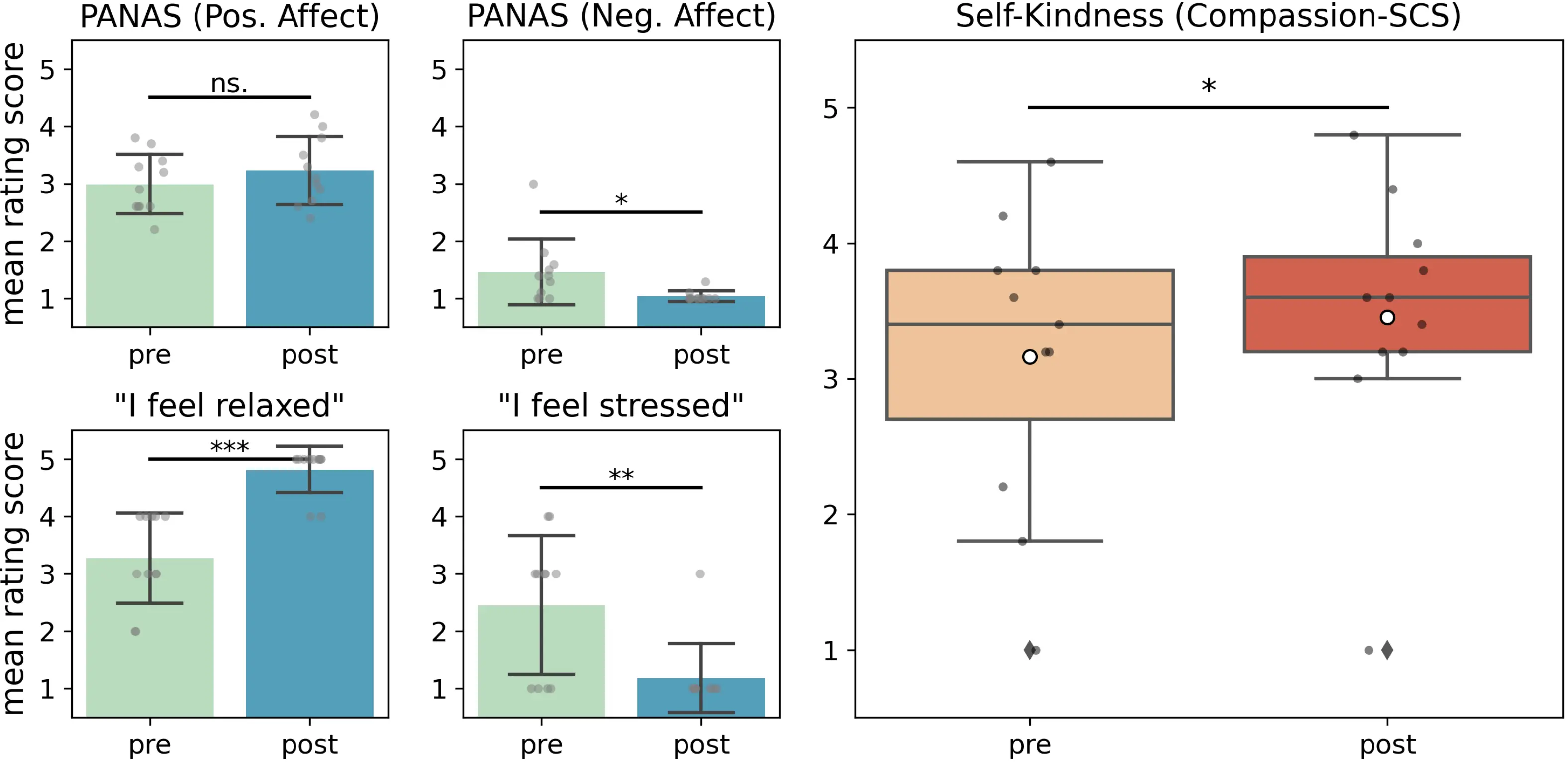
Figure 3. Pre- and post-self-report for PANAS questionnaire, the items stress, relaxation, and Self-kindness. PANAS: positive and negative affect schedule;
A paired-samples t-test was conducted to compare the Positive and Negative Affect Scores between pre- and post-treatment. There was a significant difference between pre (M = 1.464, SD = 0.575) and post (M = 1.036, SD = 0.092) in the Negative Affect Score of PANAS,
There was an increase in relaxation, as measured by the item “I feel relaxed” on a 5-point Likert Scale. A paired-samples t-test revealed significantly higher relaxation scores in post-treatment M = 4.818, SD = 0.405 compared to pre-treatment (M = 3.272,
4.2.2 Self-compassion
The evaluation of the five Self-Kindness Items from the SCS revealed a small but significant increase in self-compassion
4.2.3 Usability and user experience
The SUS resulted in a very high usability rating with an overall mean of M = 92.5. Figure 4 (left) shows the usability scores per age for illustrative purposes.
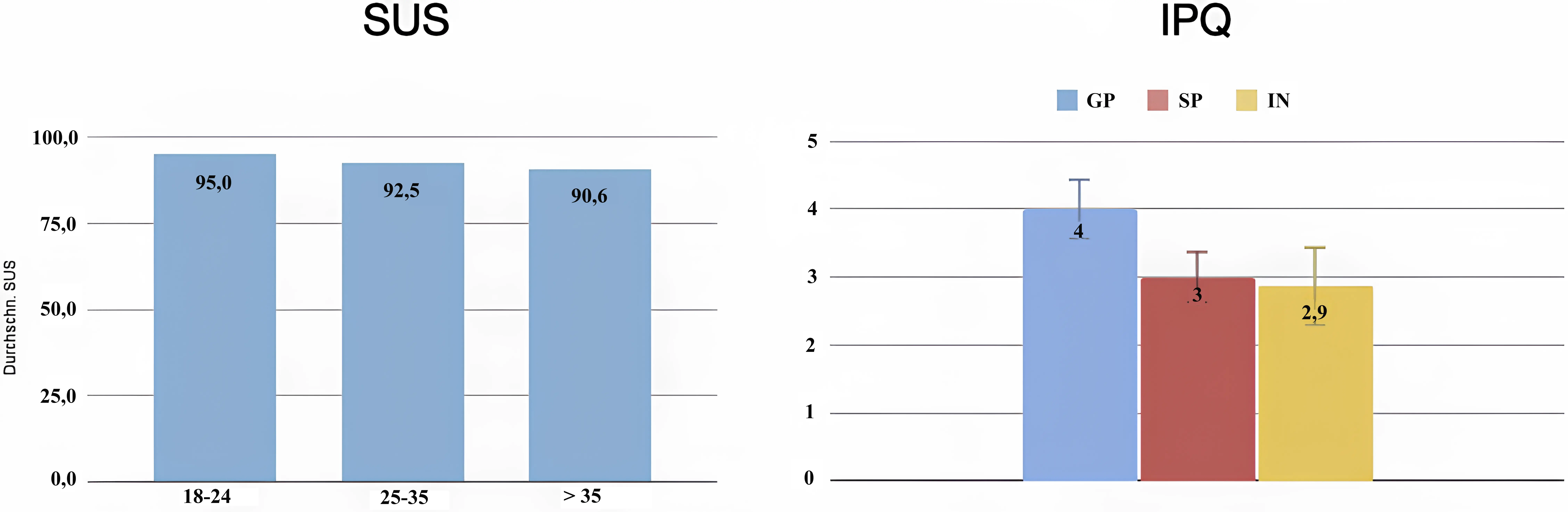
Figure 4. Responses to the SUS and IPQ questionnaires. SUS: System Usability Scale; IPQ: IGroup Presence Questionnaire.
Regarding presence, the score for general presence was generally high(M = 4.000, SD = 0.426). The average score for spatial presence is M = 3.011 (SD = 0.369), and for involvement, M = 2.864 (SD = 0.568). Given the lack of active interaction, the somewhat lower scores in the spatial and involvement were expected.
Only one participant reported simulator sickness symptoms (slight headache and mild eye strain were reported in the
The additional feedback items showed a generally positive experience. The VR experience was perceived as pleasant (M = 4.727,
Since people in meditation tend to close their eyes, we directly asked the participants whether they closed their eyes during the LKM in VR experience. This occurred rarely across our participants (M = 2.182, SD = 1.266).
4.3 Qualitative evaluation
After completing the post-questionnaire, participants took part in a semi-structured interview to gather individual impressions, subjective feelings, and suggestions for improvement. Conversations were recorded in notes, key statements were transcribed, and analyzed thematically. The main findings are summarized below and illustrated with sample quotes. Participants varied in their familiarity with meditation, yet overall impressions were consistent across experience levels.
General experience. The majority of the participants evaluated the VR-LKM as positive, relaxing, and refreshing. Frequently used keywords to describe the experience were beautiful, calming, interesting, cool, pleasant, and unwinding. One participant described: “When the leaves fell in Autumn, I could forget all my worries; it was as if I could let go of pressure and fears about the future”. Another emphasized the special atmosphere: “It was pretty cool, like in the movies, simply a new experience of relaxation”. Even participants without previous meditation or VR experience reported being able to settle in easily: “Interestingly, it was more relaxing than expected, even though I’ve never tried VR before”.
Facilitators and Barriers. Almost all of the participants said they found it easy to engage with the experience, frequently using words such as simple, intuitive, and easy. The pulsing orb was mentioned as particularly helpful: “The orb with the flow of breath, you immediately get into the rhythm, which was very nice”. Some participants noted that they were tempted to close their eyes but decided against it, not to miss anything of the visual experience. Some difficulties were mentioned as well. One experienced VR user described a spontaneous urge to move around freely: “I would have liked to walk around, but that would probably have been distracting”.
Meditative effect. The guided meditation was predominantly described as effective. The narrator’s voice was particularly praised: “The voice was pleasant, calm, and easy to understand, which allowed me to concentrate well on the meditation”. Some participants said that they were able to focus much better than with other media-based meditation options (e.g., guided meditations on YouTube): “I’m usually too distracted, but here I was able to get much more involved”. Keywords such as letting go, putting worries aside, cleansing, and relaxation were mentioned repeatedly.
Design aspects. The falling leaves were a central design element, described as particularly successful. Several participants associated this visual feature with an inner metaphor: “The leaves reminded me of my worries, which I was able to let go of”. Others noted physical sensations such as their shoulders dropping or jaw muscles relaxing when watching the leaves fall. Opinions about the animals were mixed. Some wanted more realism and movement (“The deer could have moved, perhaps grazing on the ground”), while others found the static representation more pleasant because it was not distracting (“Precisely because only the leaves were moving, I was able to concentrate better”). Alternative design ideas included having an abstract or neutral representation of the animals, similar to the avatars, more dynamic lighting (e.g., sun effects, raindrops in the sunlight, more colors), and clearer instructions for the interactive elements. Not all the participants were aware of the possibility of interaction with the leaves (touching leaves, blowing them away, or catching them) or the use of the mirror (“It could have been stated more clearly: ‘Wave to yourself!’)”. This suggests that some functions were not discovered intuitively and may require guidance.
Script feedback. One participant noted that one of the selected kindness phrases, “May I be free”, although meant to evoke a feeling of release within meditation, could be interpreted in a distressing way by individuals with severe psychological strain or suicidal ideation.
5. Discussion
The present study investigated the effectiveness and user experience of a VR-LKM prototype developed through a co-creation process involving experts from Computer Science and Clinical Psychology. The results show that the VR-LKM was well-received, easy to use, and effective in increasing relaxation, decreasing negative affect and stress, and increasing compassion (as kindness to the self) in a non-clinical convenience sample. Our quantitative and qualitative results suggest that VR-based compassion meditation may be an accessible and engaging approach to support well-being.
Participants reported a high level of usability and engagement, as well as clear relaxation effects after the intervention. The prototype was described as calming, beautiful, and refreshing, which is consistent with the intended meditative atmosphere. The results from the PANAS and the self-reported relaxation item support these subjective impressions, showing reductions in negative affect and an increase in perceived relaxation. These findings align with previous studies reporting stress reduction and enhanced mindfulness through VR meditation and compassion interventions[17,19,40]. The co-design process appeared to be a key factor in achieving this positive outcome, as it allowed the integration of aesthetic, emotional, and usability feedback from both clinical and design perspectives.
While the intervention produced clear changes in relaxation and affect, the increase in self-compassion was more modest. This pattern is not unexpected and can be understood in light of the nature of the construct itself. The relatively small effect size for
The qualitative results point to the elements that supported immersion, engagement, and relaxation. Design elements such as the pulsing orb and the falling leaves were experienced as central anchors for attention and emotional grounding. The mirror and embodied avatar supported a sense of presence without introducing body-related discomfort, which may be relevant for future applications in clinical settings. Importantly, participants emphasized the narrator’s voice and pacing as crucial in helping them focus and relax, suggesting that subtle design choices in sound, rhythm, and language can significantly influence emotional outcomes.
At the same time, some participants expressed curiosity about interacting with the environment or moving more freely, while others appreciated the stillness and simplicity. While potentially triggering or highly dynamic elements were intentionally avoided to reduce risk for vulnerable users, such constraints may limit engagement for individuals who prefer more interactive or exploratory experiences. This engagement, may at the same time, have a therapeutic component for specific users. This contrast highlights a fundamental challenge in clinical VR design: creating experiences that are sufficiently engaging while remaining predictable, calming, and cognitively accessible. Rather than resolving this trade-off through a single design choice, future iterations will explore adjustable levels of interactivity and visual complexity. This approach aims to support individualized use without compromising psychological safety.
One feature of the LKM is the possibility of modifying and varying the kind intention ‘scripts’. The feedback received regarding the phrase “May I be free” highlights the importance of linguistic and emotional sensitivity when adapting meditation scripts for vulnerable populations. Future iterations will optionally substitute this phrase with established, less ambiguous alternatives
Although the VR-LKM prototype was designed with potential clinical use in mind, the present findings were obtained in a non-clinical convenience sample and need to be carefully translated to the final target population. In practice, clinical users may face additional barriers, such as reduced cognitive capacity, heightened anxiety, sensory sensitivity, fatigue, or limited familiarity with immersive technologies, to name a few. The co-design process employed in this study offers a partial mitigation of these challenges by integrating clinical expertise into early design decisions, including the simplification of visual environments, controlled pacing, and conservative interaction demands. The option for staff-assisted setup and the ability to intervene or adapt the session further support accessibility for first-time VR users and individuals with limited digital literacy. Ongoing collaboration with clinical staff will allow these considerations to be refined through rapid prototyping, on-site observations, and iterative adaptation as the prototype is introduced into real clinical environments.
5.1 Limitations and future work
There are several limitations to our current study. The sample size was small and consisted of healthy adults, limiting the generalizability of the findings to clinical populations. This sample selection was intentionally chosen as an initial step of the
Moreover, the design did not include a control condition or physiological measures, so conclusions about efficacy must be interpreted with caution. This choice was intentional in the context of this feasibility and co-design study, where the primary aim was to assess whether the VR-LKM prototype could effectively address the target constructs (e.g., compassion, relaxation, affect) and to evaluate its acceptability among users. Given the needs of future clinical users, who may have limited mobility and spend extended time in inpatient settings, VR was selected as the modality for initial evaluation due to its potential to provide immersion and a sense of presence beyond what audio- or video-based interventions could provide. Future work will incorporate control conditions and compare VR-based LKM with alternative delivery formats to determine whether VR confers additional benefits.
Additionally, participants completed the VR session in a seated position to maintain methodological consistency in this pilot phase. In clinical settings, the intervention is expected to be used in a semi-reclined or bed-seated posture. Future studies will evaluate the feasibility and experiential impact of delivering the VR-LKM in these alternative positions, and subsequent adaptations of the prototype will be informed by feedback from clinical staff and patients.
Future co-design iterations will extend the current design to include iterative testing within clinical wards, informed by direct observation of environmental constraints and patient-caregiver workflows. Planned adaptations include configurable control settings (e.g., visual complexity, motion dynamics, audio intensity, and interaction simplicity), enabling caregivers to tailor the experience to individual patients’ cognitive, emotional, and physical needs. This approach aims to balance standardization with flexibility while preserving emotional safety in diverse clinical contexts.
In summary, future work will include more co-design iterations to improve the current prototype, in particular, its customization to cater to diverse clinical populations. We aim to evaluate the VR-LKM in clinical or rehabilitation contexts, where stress regulation and emotional recovery are of particular relevance. Larger-scale and longitudinal studies could further examine whether repeated use enhances self-compassion and resilience over time. Comparing VR-based meditation with traditional or audio-guided formats, as well as alternative non-meditation VR experiences, would clarify the specific contributions of immersion, embodiment, and sensory design.
6. Conclusion
Following an iterative co-design process, we developed and evaluated a VR-LKM prototype designed to promote relaxation and compassion. Our findings indicate that the VR-LKM was well accepted, easy to use, and effective in enhancing relaxation and
Supplementary materials
The supplementary material for this article is available at: Supplementary materials.
Acknowledgements
The authors thank Heidi Daouk for her support in recording the voice track for the VR-LKM experience. The authors used AI-assisted tools exclusively for language polishing. No AI tools were used to generate content, data, interpretations, or figures. The authors take full responsibility for the integrity and originality of the work.
Authors contribution
Quiros-Ramirez MA: Conceptualization, methodology, formal analysis, writing-original draft, project administration, resources, writing-review & editing.
Haberland S: Conceptualization, methodology, formal analysis, software, visualization, investigation, writing-review & editing.
Hempel T: Software, formal analysis, writing-review & editing.
Arlt R, Philipp K: Conceptualization, methodology, writing-review & editing.
Streuber S: Conceptualization, methodology, formal analysis, visualization, writing-review & editing.
Conflicts of interest
All authors declare no conflicts of interest.
Ethical approval
This study was waived from formal ethical approval by the Ethics Committee of the University of Konstanz in accordance with its institutional regulations, as it involved non-invasive procedures with healthy adult participants and did not pose any risk to participants’ health, dignity, or personal rights.
Consent to participate
All participants provided written informed consent prior to participation, were fully informed about the study procedures, and were free to withdraw from the study at any time without any adverse consequences. Data collection and processing were conducted in compliance with the General Data Protection Regulation (GDPR).
Consent for publication
Not applicable.
Availability of data and materials
Data supporting the findings of this study are available from the corresponding author upon reasonable request.
Funding
This research is part of the Collaborative Research Project “AI4Coping—Artificial Intelligence for Sustainable Support in Stress Management”, funded by the Bavarian State Ministry of Science and the Arts (StMWK; Grant No. H.2-F1116.CO/52/2).
Copyright
© The Author(s) 2025.
References
-
1. Keune PM, Perczel Forintos D. Mindfulness meditation: A preliminary study on meditation practice during everyday life activities and its association with well-being. Psihol Teme. 2010;19(2):373-386.
-
2. Grossman P, Niemann L, Schmidt S, Walach H. Mindfulness-based stress reduction and health benefits. A meta-analysis. J Psychosom Res. 2004;57(1):35-43.[DOI]
-
3. Treves IN, Chen YY, Wilson CL, Verdonk C, Qina Au J, Pustejovsky JE, et al. A meta-analysis of the effects of mindfulness meditation training on self-reported interoception. Sci Rep. 2025;15(1):38889.[DOI]
-
4. Salzberg S, Kabat-Zinn J. Lovingkindness: The revolutionary art of happiness. Boston: Shambhala Publications; 2004.
-
5. Fredrickson BL, Cohn MA, Coffey KA, Pek J, Finkel SM. Open hearts build lives: Positive emotions, induced through loving-kindness meditation, build consequential personal resources. J Pers Soc Psychol. 2008;95(5):1045-1062.[DOI]
-
6. Zeng X, Chiu CP, Wang R, Oei TP, Leung FY. The effect of loving-kindness meditation on positive emotions: A meta-analytic review. Front Psychol. 2015;6:1693.[DOI]
-
7. Zhuniq M, Winter F, Aguilar-Raab C. Compassion for others and well-being: A meta-analysis. Sci Rep. 2025;15(1):36478.[DOI]
-
8. Hofmann SG, Grossman P, Hinton DE. Loving-kindness and compassion meditation: Potential for psychological interventions. Clin Psychol Rev. 2011;31(7):1126-1132.[DOI]
-
9. Graser J, Stangier U. Compassion and loving-kindness meditation: An overview and prospects for the application in clinical samples. Harv Rev Psychiatry. 2018;26(4):201-215.[DOI]
-
10. May CJ, Weyker JR, Spengel SK, Finkler LJ, Hendrix SE. Tracking longitudinal changes in affect and mindfulness caused by concentration and loving-kindness meditation with hierarchical linear modeling. Mindfulness. 2014;5(3):249-258.[DOI]
-
11. Petrovic J, Mettler J, Cho S, Heath NL. The effects of loving-kindness interventions on positive and negative mental health outcomes: A systematic review and meta-analysis. Clin Psychol Rev. 2024;110:102433.[DOI]
-
12. Kabat-Zinn J. Coming to our senses: Healing ourselves and the world through mindfulness. London: Hachette UK; 2005.
-
13. Miles E, Matcham F, Strauss C, Cavanagh K. Making mindfulness meditation a healthy habit. Mindfulness. 2023;14(12):2988-3005.[DOI]
-
14. Osin EN, Turilina , II . Mindfulness meditation experiences of novice practitioners in an online intervention: Trajectories, predictors, and challenges. Appl Psychol Health Well-Being. 2022;14(1):101-121.[DOI]
-
15. Milgram P, Kishino F. A taxonomy of mixed reality visual displays. IEICE Trans Inf Syst. 1994;77(12):1321-1329.
-
16. Slater M, Wilbur S. A framework for immersive virtual environments (FIVE): Speculations on the role of presence in virtual environments. Presence: Teleoper Virtual Environ. 1997;6(6):603-616.Slater M, Wilbur S. A framework for immersive virtual environments (FIVE): Speculations on the role of presence in virtual environments. Presence: Teleoper Virtual Environ. 1997;6(6):603-616.[DOI]
-
17. Navarro-Haro MV, Modrego-Alarcón M, Hoffman HG, López-Montoyo A, Navarro-Gil M, Montero-Marin J, et al. Evaluation of a mindfulness-based intervention with and without virtual reality dialectical behavior therapy® mindfulness skills training for the treatment of generalized anxiety disorder in primary care: A pilot study. Front Psychol. 2019;10:55.[DOI]
-
18. Jo M, Kim E, Lee J. Virtual reality vs. Imagery: Comparing approaches in guided meditation. Front Psychol. 2024;15:1472780.[DOI]
-
19. Seabrook E, Kelly R, Foley F, Theiler S, Thomas N, Wadley G, et al. Understanding how virtual reality can support mindfulness practice: Mixed methods study. J Med Internet Res. 2020;22(3):e16106.[DOI]
-
20. Quirós-Ramírez MA, Vahlenkamp P, Streuber S. Design and evaluation of a loving kindness virtual reality meditation experience. J Japan Soc Fuzzy Theory Intell Informatics. 2022;34(4):697-709.[DOI]
-
21. Kabat-Zinn J. Mindfulness-based interventions in context: Past, present, and future. Clin Psychol Sci Pract. 2003;10(2):144-156.[DOI]
-
22. Kabat-Zinn J. An outpatient program in behavioral medicine for chronic pain patients based on the practice of mindfulness meditation: Theoretical considerations and preliminary results. Gen Hosp Psychiatry. 1982;4(1):33-47.[DOI]
-
23. Goyal M, Singh S, Sibinga EM, Gould NF, Rowland-Seymour A, Sharma R, et al. Meditation programs for psychological stress and well-being: A systematic review and meta-analysis. JAMA Intern Med. 2014;174(3):357-368.[DOI]
-
24. Creswell JD. Mindfulness interventions. Annu Rev Psychol. 2017;68:491-516.[DOI]
-
25. Goldberg SB, Riordan KM, Sun S, Davidson RJ. The empirical status of mindfulness-based interventions: A systematic review of 44 meta-analyses of randomized controlled trials. Perspect Psychol Sci. 2022;17(1):108-130.[DOI]
-
26. Khoury B, Lecomte T, Fortin G, Masse M, Therien P, Bouchard V, et al. Mindfulness-based therapy: A comprehensive meta-analysis. Clin Psychol Rev. 2013;33(6):763-771.[DOI]
-
27. Dahl CJ, Lutz A, Davidson RJ. Reconstructing and deconstructing the self: Cognitive mechanisms in meditation practice. Trends Cogn Sci. 2015;19(9):515-523.[DOI]
-
28. Neff KD, Germer CK. A pilot study and randomized controlled trial of the mindful self-compassion program. J Clin Psychol. 2013;69(1):28-44.[DOI]
-
29. Hutcherson CA, Seppala EM, Gross JJ. Loving-kindness meditation increases social connectedness. Emotion. 2008;8(5):720-724.[DOI]
-
30. Gilbert P. The origins and nature of compassion focused therapy. Br J Clin Psychol. 2014;53(1):6-41.[DOI]
-
31. Wieczorek A, Schrank F, Renner KH, Wagner M. Psychological and physiological health outcomes of virtual reality-based mindfulness interventions: A systematic review and evidence mapping of empirical studies. Digit Health. 2024.[DOI]
-
32. Ma J, Zhao D, Xu N, Yang J. The effectiveness of immersive virtual reality (VR) based mindfulness training on improvement mental-health in adults: A narrative systematic review. Explore. 2023;19(3):310-318.[DOI]
-
33. Liu M, Kong A, Huang F, Lau N, Hoorn JF. Exploring technology-assisted mindfulness: A systematic progressive review on the role of virtual reality. Virtual Real. 2025;29(3):143.[DOI]
-
34. Zhang S, Chen M, Yang N, Lu S, Ni S. Effectiveness of VR based mindfulness on psychological and physiological health: A systematic review. Curr Psychol. 2023;42(6):5033-5045.[DOI]
-
35. Ma J, Li H, Liang C, Li S, Liu Z, Qu C. A brief virtual reality-based mindfulness intervention can improve olfactory perception while reducing depression and anxiety symptoms in university students. Humanit Soc Sci Commun. 2025;12(1):294.[DOI]
-
36. Wang X, Mo X, Lee LH, Wei X, Jin X, Fan M, et al. Designing loving-kindness meditation in virtual reality for long-distance romantic relationships. In: Proceedings of the 31st ACM International Conference on Multimedia; 2023 Oct 29-Nov 03; Ottawa, Canada. New York: Association for Computing Machinery; 2023. p. 7608-7617.[DOI]
-
37. Garland EL, Recasens M, Taple BJ, Donaldson GW, Weisberg RB. Virtual reality-based Mindfulness-Oriented Recovery Enhancement (MORE-VR) as an adjunct to medications for opioid use disorder: A Phase 1 trial. Ann Med. 2024;56(1):2392870.[DOI]
-
38. Blackmore R, Giles C, Tremain H, Kelly R, Foley F, Fletcher K, et al. Examining the use of virtual reality to support mindfulness skills practice in mood and anxiety disorders: Mixed methods study. J Med Internet Res. 2024;26:e45640.[DOI]
-
39. Wren AA, Neiman N, Caruso TJ, Rodriguez S, Taylor K, Madill M, et al. Mindfulness-based virtual reality intervention for children and young adults with inflammatory bowel disease: A pilot feasibility and acceptability study. Children. 2021;8(5):368.[DOI]
-
40. Falconer CJ, Rovira A, King JA, Gilbert P, Antley A, Fearon P, et al. Embodying self-compassion within virtual reality and its effects on patients with depression. BJPsych Open. 2016;2(1):74-80.[DOI]
-
41. Halim I, Stemmet L, Hach S, Porter R, Liang HN, Vaezipour A, et al. Individualized virtual reality for increasing self-compassion: Evaluation study. JMIR Ment Health. 2023;10:e47617.[DOI]
-
42. Žilinský T, Halamová J. The effects of virtual reality on enhancement of self-compassion and self-protection, and reduction of self-criticism: A systematic review. Int J Environ Res Public Health. 2023;20(3):2592.[DOI]
-
43. Meinel C, Leifer L, Plattner H. Design thinking: Understand-improve-apply. Heidelberg: Springer; 2011. Available from: https://link.springer.com/book/10.1007/978-3-642-13757-0
-
44. Harris R. ACT made simple: An easy-to-read primer on acceptance and commitment therapy. 2nd ed. Oakland: New Harbinger Publications; 2019.
-
45. Neff KD. The development and validation of a scale to measure self-compassion. Self Ident. 2003;2(3):223-250.[DOI]
-
46. Krohne HW, Egloff B, Kohlmann CW. Positive and negative affect schedule—german version. Diagnostica. 1996;42(2):139-156.[DOI]
-
47. Lewis JR. The system usability scale: Past, present, and future. Int J Hum-Comput Interact. 2018;34(7):577-590.[DOI]
-
48. Kennedy RS, Lane NE, Berbaum KS, Lilienthal MG. Simulator sickness questionnaire: An enhanced method for quantifying simulator sickness. Int J Aviat Psychol. 1993;3(3):203-220.[DOI]
-
49. Schubert T, Friedmann F, Regenbrecht H. The experience of presence: Factor analytic insights. Presence: Teleoper Virtual Environ. 2001;10(3):266-281.[DOI]
-
50. Kirby JN, Tellegen CL, Steindl SR. A meta-analysis of compassion-based interventions: Current state of knowledge and future directions. Behav Ther. 2017;48(6):778-792.[DOI]
-
51. Boorstein S. Pay attention, for goodness’ sake: Practicing the perfections of the heart-the buddhist path of kindness. New York: Ballantine Books; 2007.
-
52. Weiss A. Beginning mindfulness: Learning the way of awareness. Novato: New World Library; 2004.
Copyright
© The Author(s) 2026. This is an Open Access article licensed under a Creative Commons Attribution 4.0 International License (https://creativecommons.org/licenses/by/4.0/), which permits unrestricted use, sharing, adaptation, distribution and reproduction in any medium or format, for any purpose, even commercially, as long as you give appropriate credit to the original author(s) and the source, provide a link to the Creative Commons license, and indicate if changes were made.
Publisher’s Note
Science Exploration remains a neutral stance on jurisdictional claims in published
maps
and institutional affiliations. The views expressed in this article are solely those
of
the author(s) and do not reflect the opinions of the Editors or the publisher.
Share And Cite


Science Exploration Style
Quiros-Ramírez MA, Haberland S, Hempel T, Arlt R, Keune P, Streuber S. Virtual reality-based compassion meditation for clinical contexts: A co-design study of a loving-kindness meditation prototype. Empath Comput. 2026;2:202523. https://doi.org/10.70401/ec.2025.0014
Tips
Copy completed.
Submit a Manuscript
Author Instructions
Cite this Article
Article Metrics
0
View
0
Download
Cited
Article Updates

- Abstract
- Keywords
- 1. Introduction
- 2. Background
- 3. Design Process
- 4. Experimental Evaluation
- 5. Discussion
- 6. Conclusion
- Supplementary materials
- Acknowledgements
- Authors contribution
- Conflicts of interest
- Ethical approval
- Consent to participate
- Consent for publication
- Availability of data and materials
- Funding
- Copyright
 Get citation
Science Exploration Style

Quiros-Ramírez MA, Haberland S, Hempel T, Arlt R, Keune P, Streuber S. Virtual reality-based compassion meditation for clinical contexts: A co-design study of a loving-kindness meditation prototype. Empath Comput. 2026;2:202523. https://doi.org/10.70401/ec.2025.0014
copy
Share Link
copy
Subscribe