Table of Contents
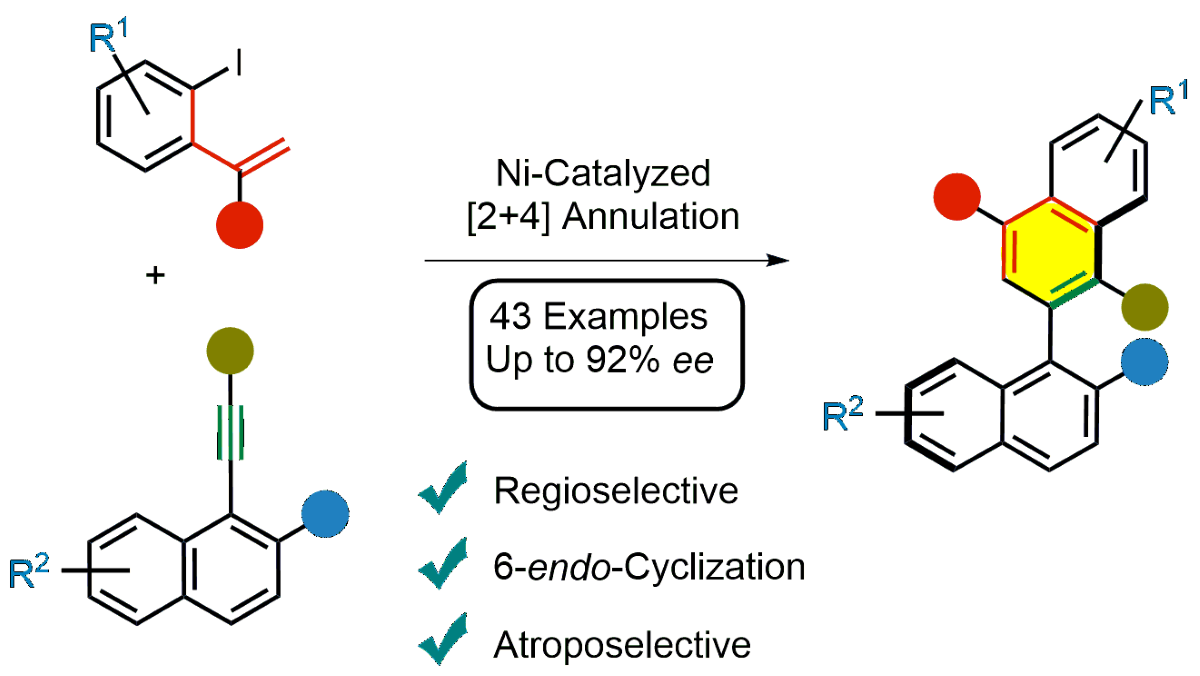
Enantioselective synthesis of axially chiral 1,2'-binaphthyls via nickel-catalyzed asymmetric [2+4] annulation
Axially chiral biaryls exhibit broad applications across diverse disciplines, and thus the development of conceptually new methods for accessing this structural motif remains highly desirable. Herein, we report the successful implementation of atroposelective ...
More.Axially chiral biaryls exhibit broad applications across diverse disciplines, and thus the development of conceptually new methods for accessing this structural motif remains highly desirable. Herein, we report the successful implementation of atroposelective de novo benzene formation via asymmetric [2+4] annulation in the enantioselective synthesis of axially chiral 1,2'-binaphthyls using β-substituted α-naphthylalkynes and o-iodostyrenes as C-4 and C-2 synthons, respectively. This nickel/PyrOX-catalyzed annulation reaction features a broad substrate scope (43 examples), excellent regiocontrol, exclusive 6-endo cyclization, and good to high enantioselectivity (up to 92% ee). Furthermore, the synthetic utility of the products is demonstrated through their efficient derivatizations into a range of potential bidentate ligands and bifunctional organocatalysts.
Less.Weitao Hu, ... Chuan Wang
DOI:https://doi.org/10.70401/cc.2026.0031 - June 16, 2026
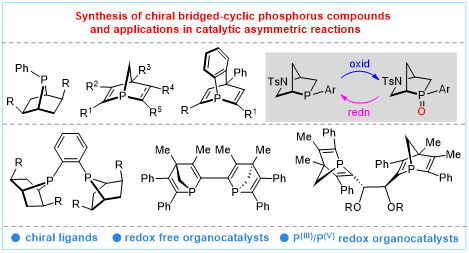
Advances in the synthesis of chiral bridged-cyclic phosphorus compounds and the applications in asymmetric catalysis
Due to the conformational rigidity, the bridged-cyclic chiral phosphorus compounds have been demonstrated to show enantioinducing ability generally superior to conformationally flexible chiral phosphorus compounds as ligands or organocatalysts in ...
More.Due to the conformational rigidity, the bridged-cyclic chiral phosphorus compounds have been demonstrated to show enantioinducing ability generally superior to conformationally flexible chiral phosphorus compounds as ligands or organocatalysts in catalytic asymmetric reactions. However, investigations into the bridged-cyclic chiral phosphorus compounds are relatively much rarer than the non-bridged-cyclic phosphorus compounds resulting from the paucity of efficient synthetic methods. In order to draw the attention of researchers who are interested in asymmetric synthesis and catalysis to this issue, in this review, we intend to summarize the progress in the synthesis of bridged-cyclic chiral phosphorus compounds and their applications in catalytic asymmetric reactions. We wish this review article could serve as a useful guide and stimulate, to some extent, the interests of asymmetric catalysis scholars to devote to this challenging but greatly important field.
Less.Fu-She Han
DOI:https://doi.org/10.70401/cc.2026.0030 - June 09, 2026
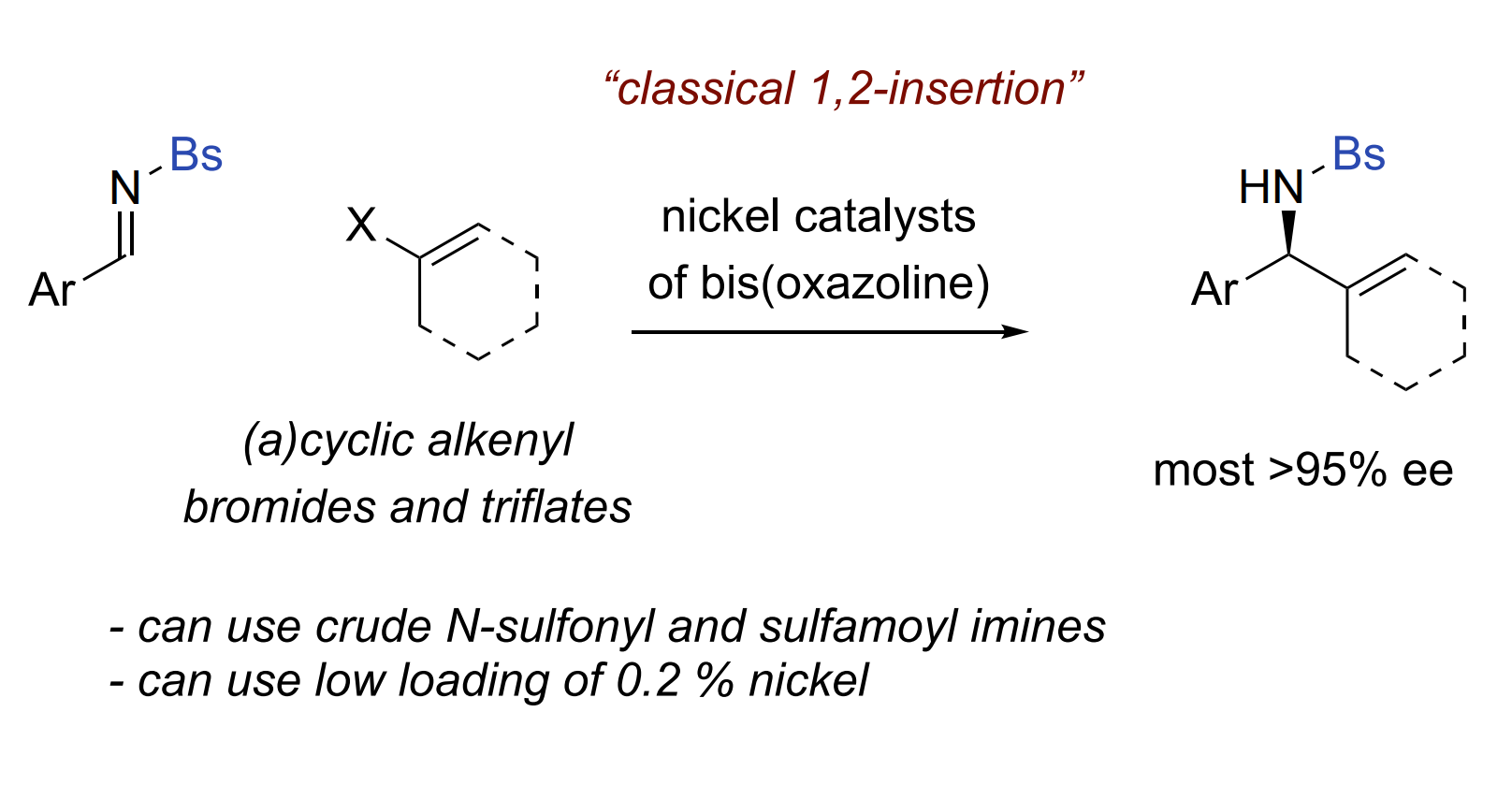
Highly active nickel catalysts for enantioselective reductive alkenylation of N-sulfonyl aldimines
Chiral nickel complexes of bis(oxazoline)s serve as highly active catalysts for an enantioselective reductive alkenylation of N-sulfonyl and
Mengxin Zhao, ... Jianrong Steve Zhou
DOI:https://doi.org/10.70401/cc.2026.0029 - June 01, 2026
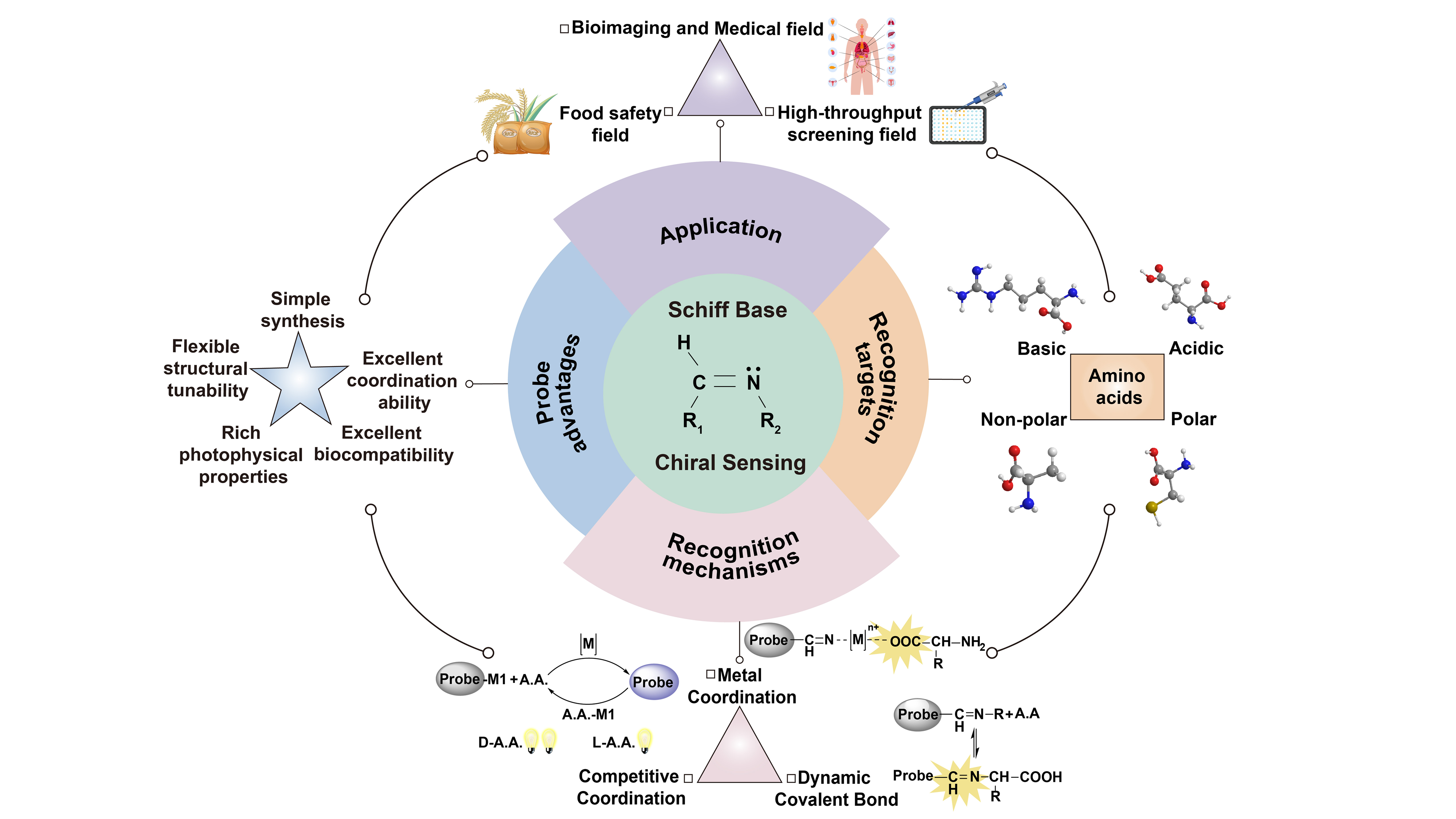
Schiff base fluorescent probes for enantioselective recognition of amino acids
Amino acids are typical naturally occurring chiral compounds, whose enantiomeric pairs show distinct biological functions and markedly different application prospects. The precise chiral recognition of amino acid enantiomers is of great significance ...
More.Amino acids are typical naturally occurring chiral compounds, whose enantiomeric pairs show distinct biological functions and markedly different application prospects. The precise chiral recognition of amino acid enantiomers is of great significance in diverse fields including life sciences, medical diagnosis, and pharmaceutical development. Over the past decade, chiral fluorescent probes toward amino acids have gained considerable attention for enantiomer recognition. Among these probes, Schiff base chiral fluorescent probes have emerged as a powerful class of sensors for achieving high enantioselective recognition of amino acids, owing to their advantages of facile synthesis, tunable structure, facile functionalization, and excellent photophysical and coordination properties. This review systematically summarizes the research progress of such probes in the enantiomer recognition of different types of amino acids, including acidic, basic, non-polar, and polar amino acids. It focuses on discussing probe design strategies, enantioselective recognition, interaction mechanisms, and application developments. In addition, this paper also highlights and outlines the major challenges existing in this field and the difficult issues that need to be addressed in the future.
Less.Jinyu Wei, ... Shuangxi Gu
DOI:https://doi.org/10.70401/cc.2026.0027 - May 15, 2026
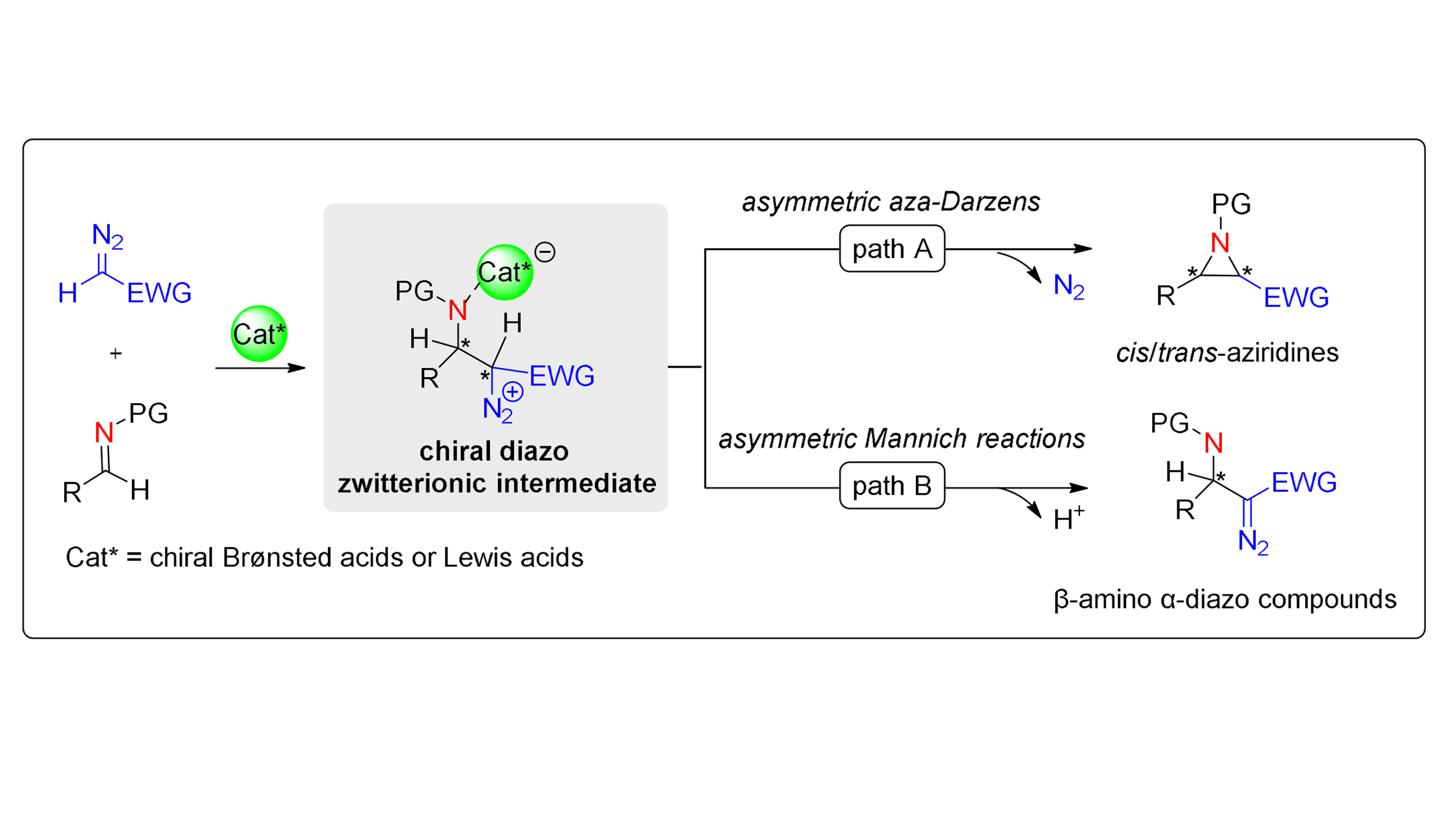
Transition-metal-free chiral Brønsted/Lewis acid-catalyzed asymmetric diazo nucleophile-imine reactions
Over the past few decades, transition-metal-free chiral Brønsted acid or Lewis
Pei-Run Xie, ... Jun Xuan
DOI:https://doi.org/10.70401/cc.2026.0026 - May 12, 2026