The Ambient XR framework: Integrating ambient and immersive technologies for ageing populations

Rawan A. Al-Rashid Agha
1,2,*

,
Abraham Campbell
1,*
*Correspondence to:
Rawan A. Al-Rashid Agha, School of Computer Science, University College Dublin, Dublin, Dublin 4, Ireland; Department of Computer Science and Engineering, University of Kurdistan Hewlêr, Erbil 44001, Erbil Governorate, Iraq.
E-mail: rawan.alrashid@ucdconnect.ie
Abraham Campbell, School of Computer Science, University College Dublin, Dublin, Dublin 4, Ireland. E-mail: abey.campbell@ucd.ie
Abraham Campbell, School of Computer Science, University College Dublin, Dublin, Dublin 4, Ireland. E-mail: abey.campbell@ucd.ie
Empath Comput. 2026;2:202615. 10.70401/ec.2026.0024
Received: April 14, 2026Accepted: August 19, 2026Published: August 19, 2026
This article belongs to the Special lssue Adaptive Empathic Interactive Media for Therapy
Abstract
Population ageing is increasing the demand for technologies that support independent living while addressing the growing complexity of cognitive decline, caregiving, and long-term home-based care. Despite the fact that ambient assisted living (AAL) and extended reality (XR) technologies have independently demonstrated considerable potential, both approaches remain fragmented in their technological paradigm: AAL offers constant environmental support but is lacking in terms of cognitive and social stimulation, and XR provides immersive therapeutic experiences that are not integrated into everyday routine. This paper introduces the Ambient XR Framework, a conceptual architecture for the relational orchestration that integrates ambient intelligence and immersive technologies centred on the resident-caregiver dyad. The concept does not intend to replace current assistive technologies but rather introduces immersive interaction as a context-aware feature of the ambient care environment. It describes an operational workflow, three design principles, a multidimensional design space, and an evaluation roadmap and incorporates governance, consent, and ethical considerations in the architectural framework. Three exemplar research directions, such as ambient memory support, memory co-creation, and skill rehearsal for older adults with mild cognitive impairment, showcase how the framework can support continuity of daily life and immersive experiences. The Ambient XR Framework can serve as a design ground for creating next-generation, human-centered Ambient XR ecosystems for the ageing population.
Keywords
Ambient assisted living, extended reality, ageing, dementia, caregiving, human-computer interaction, mixed reality, smart home
1. Introduction
Population ageing is no longer a distant demographic projection but a lived reality where most of the baby boomer generation has reached retirement age[1]. By 2050, around 1.5 billion people will be 65 or older, which represents approximately 16% of the global population[2]. This demographic shift has implications for how we live, how we age, and how we care for one another. Cognitive decline, the slow loss of functional independence, and the social isolation that tends to creep in alongside both are the challenges older adults face. But most of them do not face these challenges alone. Behind most older adults living at home is a family caregiver, usually a spouse, an adult child, or a close relative, someone who coordinates visits, keeps track of well-being, and provides the kind of human connection that technology has not yet managed to replicate. Yet the technologies designed to support ageing have been built almost entirely around the individual, leaving this caregiving relationship underserved, poorly understood, and largely ignored as a unit of design.
Not everyone grows old and becomes independent. Culture will be considered here as a design variable rather than merely as context. Variations exist with regard to the structure of the household, the existence of the caregiver, consent, privacy, and technology-based interventions at home, these variations can be seen both internally and externally. Independent living need not be incompatible with co-resident care by the family in many cultures. The model being proposed here is suited to one particular configuration prevalent in cultures where the elderly person is independent but receives regular visits from a family member until they reach their 80s or 90s, managing their own routines and maintaining a strong sense of personal autonomy. Researchers working in other cultural contexts will need to rethink both the assumptions and the design priorities accordingly, a point we will return to in the limitations section.
Healthcare systems, meanwhile, are overwhelmed and often reactive, and poorly placed to scale with this demographic shift. Technology has offered partial answers, but most solutions tend to address one piece of a much larger problem. Two technological pathways have emerged. Ambient assisted living (AAL) systems include sensors and assistive technologies that are part of domestic environments, and other related technologies have incorporated these settings by adding socially assistive robots offering tasks like reminders, surveillance, fall assistance, and communication support[3]. They integrate unobtrusively into daily life and provide practical, non-intrusive support. But they struggle with the social and emotional dimensions of ageing: they cannot deliver the kind of deep cognitive engagement or meaningful social connection that would make a real difference[4,5]. And this is important, they create no meaningful interface for the caregiver who comes through the door knowing little more than what the resident has chosen to share.
Extended reality (XR) technologies, virtual reality (VR), augmented reality (AR), and mixed reality (MR), approach the problem differently, and they show genuine therapeutic potential with older adults in particular. Social VR has been shown to be utilised as a genuine communication medium for older adults[6], and a feasibility study found preliminary evidence that immersive VR can reduce anxiety and depressive symptoms among older adults with cognitive and physical impairments[7]. XR-based cognitive exercises have demonstrated small-to-medium effects in people with mild cognitive impairment and dementia[8]. But adoption remains narrow. XR applications mostly function as sporadic clinical sessions with little connection to the daily life they are meant to improve[9]. Whatever cognitive or emotional progress occurs inside the immersive session lacks a real pathway back into everyday living[10], and that discontinuity tends to undermine long-term effectiveness. Like AAL, XR is typically designed for one user in one session. The caregiver remains a peripheral figure, completely absent from the therapeutic encounter.
This position paper proposes the Ambient XR Framework as a conceptual architecture for the relational orchestration of ambient and immersive technologies in order to aid resident-caregiver dyads. It argues that this may reflect technological silos rather than human-centred design requirements. And an important missing dimension is not a better sensor or a more immersive headset. It is a relational orchestration architecture: one that serves both the person and those who care for them as a connected unit, rather than as separate design problems. Rather than asking “whose modality is best?”, the Ambient XR Framework pushes researchers and practitioners toward different questions: when is each modality most effective, how can they complement one another, and how can they serve a caregiving relationship rather than an isolated individual?
There are four main contributions that are made by this position paper. First, the definition of the Ambient XR Framework as a conceptual architecture for the relational orchestration of ambient and immersive technologies is provided. Second, the resident-caregiver dyad is identified as the unit of design. Third, three design principles and a design space for future Ambient XR system designs are discussed. Fourth, three future research directions are proposed along with the methodological and ethical aspects.
The paper is organised as follows. Section 2 sets out the single-modality trap and explains why robots are not the answer. Section 3 reviews the literature and identifies the key gaps. Section 4 presents the Ambient XR framework, its three principles, design space, and three exemplar research directions. Section 5 discusses methodological implications and limitations of the framework. Section 6 covers ethical risks and dual-use risks. Section 7 closes with what this all means for the field.
2. Problem Statement: The Single-Modality Technology Trap
There is a recurring limitation in how most assistive technology for ageing gets built: The design starts with a modality choice rather than a human need. The result is systems optimised for technological maturity rather than human need[11]. The design process runs backwards: from tool to problem, rather than from problem to tool.
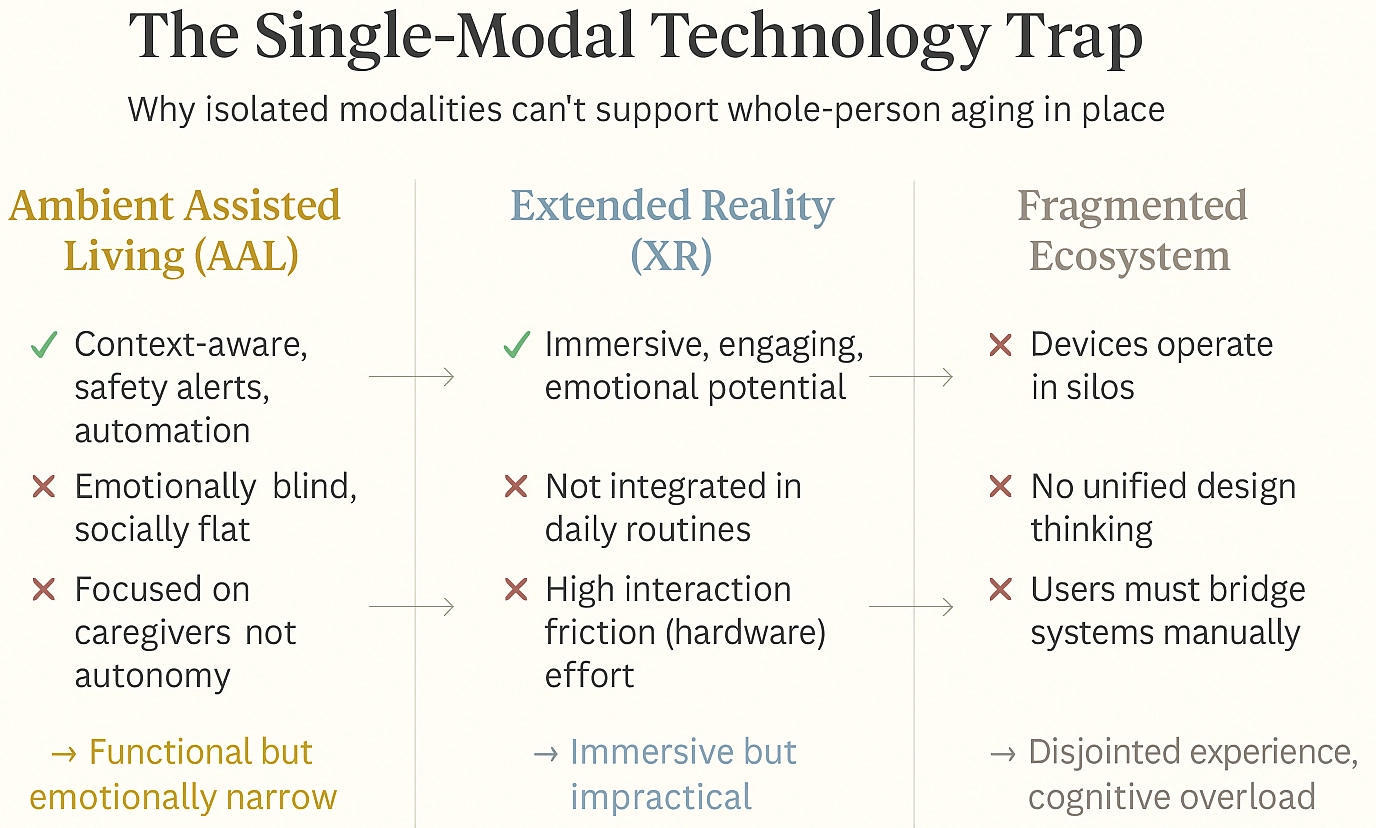
The ambient XR framework, therefore, rests on the notion of calm technology presented by Weiser and Brown[12], quietly embedding itself in users’ daily routine without needing their attention. Quiet embedding is important. Nevertheless, there is a set of inherent limitations to what ambient modalities could achieve. It is generally less suited to create the intentionally constructed safe emotional space needed to facilitate therapy, nor does it offer any means to engage users cognitively deeply enough. However, XR, by its very nature, constructs highly immersive environments specifically geared toward interaction, whether for reminiscence, training, or rehabilitation purposes. At the same time, there are several problems with the structure of VR and AR technologies that significantly hinder their effectiveness. The first problem is temporal isolation of each experience session, which happens in isolation from everything happening around and has little impact on users’ real-life routine. Second, there is a contextual isolation, where virtual experiences rarely take real-world sensor inputs as context and adapt accordingly. Finally, there is a transition failure, where skills learned in VR often struggle to transfer to the real world since perceptual scaffolding becomes absent once a user takes off his or her headset. These limitations are summarised in Figure 1, showing the proposed single-modality technology trap.
Another possible route worth considering has become much more visible in the last years. That is, the use of artificial intelligence (AI) to develop social robots that have been studied in both home and care-facility contexts, although implementation remains constrained by technical, organisational and contextual factors. [13]. For people with memory loss, a home is more than just a place but an essential cognitive anchor. Research on dementia-care environments shows that being in a familiar environment (homelike design) can reduce stress, anxiety, and agitation among people with dementia, while unfamiliar things, like moving or speaking, might trigger fear, distress, and even behavioural problems[14]. According to the Alzheimer’s Society, people with dementia often experience visual hallucinations, most commonly with dementia with Lewy bodies, and may also misidentify unfamiliar things and people; both can be distressing, particularly when caused by unfamiliar or strange new appearances in the environment[15]. This raises the possibility that introducing a robot into such a setting may cause additional unpredictability and stress, especially if it is seen as an unfamiliar agent in an already challenging living environment. It is worth noting that the overwhelming majority of research in this area has been conducted in either a clinical or institutional setting, thus struggling to address risks associated with home environments where professional help was unavailable[13]. The argument is not that robotics are inherently inadequate or that ambient projection technology is always benign; indeed, any type of unfamiliar technological agency such as cues projected into the environment, voice projections, and digital objects present risks of creating confusion for the elderly struggling with cognitive impairment. It is in determining the specific context where this technology can be familiar, controllable and meaningful to the resident rather than threatening.
Finally, the proposed framework seeks to address another issue, that could be seen as an architectural gap. Namely, all components necessary for creating a more advanced framework, depth sensors, intelligent agents, spatial projectors, shared virtual environments, now exist. The proposed framework is intended to solve this problem through understanding the contexts where ambient and immersive technologies could be used together for performing routine care tasks. It further provides principles for determining when immersion would be a good addition to ambient technologies. However, more importantly, the relational gap poses a challenge to existing frameworks in that we have not found any existing framework that considers the resident-caregiver dyad as a holistic unit, including a common data layer and collaborative environment. Instead of proposing yet another individual technology, the Ambient XR Framework describes the concept of orchestrating technologies that already exist, across time, context, and resident-caregiver relationship.
3. Related Work
Two substantive technological pathways have emerged in response to population ageing, AAL and XR, each backed by genuine evidence, each constrained by structural limitations that go beyond any individual shortcoming. What follows reviews both, along with the emerging body of dyadic research that has begun to name what both technologies have missed: the caregiving relationship itself as a unit of design. Since the review is a narrative one, the claims of absence refer to research not present in the reviewed literature and not to the proof of non-existence.
3.1 Ambient assisted living
The AAL field has moved well past simple monitoring systems. For instance, ElliQ has features to start interactions and suggest activities to users. According to deployed data, some users are engaged in about 30 interactions per day[16]. MIT’s Memoro and MemPal bring AI-augmented everyday memory support and multimodal memory cues into daily life with real context-awareness and personalisation[17,18]. Basic AAL functions such as fall detection and medication management are well-established, and much research has been done about them[5]. A major scoping review of AI models in AAL found that deep learning, natural language processing (NLP), and instance-based learning dominate the field, primarily targeting activity recognition, but its conclusions were pointed: Future work must bring caregivers in as designers and users, not afterthoughts, and must integrate physiological sensing to move beyond monitoring toward genuinely responsive care[11].
That said, when it comes to care’s social and emotional aspects, AAL systems usually fall short, a situation which is in line with findings from technology acceptance research, whereby adoption is contingent on things that AAL does not deal with directly[4]. They can track physical states reasonably well, but detecting emotional pain, loneliness, or the complex situations where intervention might do more harm than good is another matter entirely. The “always-on” characteristic of ambient monitoring, which is what makes it useful, is also what makes it feel like surveillance to many users[19]. These systems cannot create the kind of intentional, emotionally bounded space that meaningful cognitive or social activity requires. Human-computer interaction (HCI) research has pointed to partial exceptions: Foley et al.’s Printer Pals, a receipt-printer-based ambient device embedded in a care home environment, showed how ambient technology grounded in experience-centred design can support social agency among people with dementia without the adoption barriers of personal devices[20]. Though promising, it is not a home deployment and the caregiver is not involved.
That caregiver absence is a structural gap, not an oversight. Stamate et al. synthesising technology adoption literature for ageing populations, concluded that assistive technologies are built for “users” in ways that treat caregivers as irrelevant to whether adoption actually succeeds, when in practice, caregivers co-determine it[21]. Houben et al. interviewed 42 informal caregivers of people with dementia at CHI 2024, finding that caregivers navigate information gaps, shifting roles, and evolving emotional demands across the entire arc of the condition, none of which technology design has consistently accounted for[22]. To the best of our knowledge, no AAL framework treats the caregiver’s visit, the shared time, or the accumulated spatial knowledge of the home as design material. The research conducted in 2025 using the methodology of research through design was done on AI-enhanced reminiscence interventions for people suffering from dementia. The results have shown that interventions that aim at replacing humans might simplify the treatment process by overlooking emotional aspects associated with growing older, loss, and identity issues. Hence, concluding that AI belongs in this process alongside a human rather than in place of one[23]. All in all, the research reflects significant advancements made with regard to the technological abilities of AAL, although caregiving is still perceived more as a secondary concern than a central one.
3.2 Extended reality
XR has made real inroads into elder care, particularly in institutional settings. Commercial platforms like Rendever, MyndVR, and XRHealth provide examples of increasing commercial interest in VR-based interventions for older adults in care facilities. The feasibility study of Rendever’s platform concluded that the platform is safe, highly satisfactory and provided preliminary evidence of its potential at helping family members connect to patients with mild cognitive impairment and dementia remotely[24]. Baker et al. showed that older adults can use social VR as a genuine communication medium, not just a passive viewing experience[6]. According to the meta-analysis by Kim et al., including 11 studies, there were small-to-medium effects of VR-based cognitive training in individuals with mild cognitive impairment (MCI) and dementia[8], and Dockx et al.’s Cochrane review found preliminary, low-to-very-low-quality evidence for VR’s efficacy in Parkinson’s rehabilitation, based on eight studies and 263 participants[25]. A systematic mapping review provided the list of possible quality of life benefits in both VR and AR approaches and emphasized AR as an especially promising but scarcely studied [26]. Even so, the adoption barriers are real: installation complexity, headset discomfort, cybersickness, and the disconnection from daily life that makes long-term benefit hard to sustain[9]. VR in dementia care has a growing evidence base; AR, by contrast, remains clinically understudied in cognitively impaired older adults, though Dickinson et al. note that low levels of immersion in AR may improve tolerability for this population and avoid some of the visuospatial disruption that full VR can cause for people suffering from memory impairment; however, there is not enough evidence regarding the usage of AR in treatment of dementia[27].
The most recent work has begun tackling the dyadic gap directly, though it has not yet closed it. Rochon et al. developed the Isle of toolkit for experiential well-being in dementia (TEND), an immersive VR intervention built explicitly around the dementia-caregiver dyad, and established that designing simultaneously for the clinical and relational needs of both parties is a first-order design challenge, not an add-on[28]. Flynn et al. deployed a multi-user VR social connecting space in participants’ own homes and found genuine promise for dyadic social connectedness[29]; whether effects from a session persist into daily life beyond the immersive session itself was not addressed in the paper. In separate work, Flynn et al. spoke with eight dementia-caregiver dyads and found caregivers describing single-user VR as socially inadequate; what they wanted was a shared experiential space they could inhabit together[30]. The dyadic dimension of XR design is no longer invisible. Nonetheless, to the best of our knowledge, currently there does not exist any framework that incorporates ambient support, immersive intervention, and the resident-caregiver relationship within a continuous system operating in the home environment. The most relevant prior work that aims to bridge the ambient and immersive approaches in a single domestic environment is HoloHome[31]. HoloHome adds an MR interface to Microsoft HoloLens for smart-home management and object localisation via contextual prompts, achieving a usability rating of 71.5% in initial trials. However, this study used only healthy adults without involving any caregiver perspective. The literature points to an increasing appreciation of the resident-caregiver dyad as a legitimate design unit; however, the interaction remains limited to the duration of the immersive session only.
3.3 Technology acceptance
Utility and ease of use remain the strongest predictors of technology adoption in older adult populations, though what counts as “useful” or “easy” varies considerably across individuals[4,32]. The Senior Technology Acceptance Model (STAM) highlights that age-related abilities, attitudes, perceived usefulness, and facilitating conditions as important determinants of older adults’ technology acceptance[32]. Context matters too: Seifert and Schlomann found that older adults engage more readily with demanding technologies like VR when the purpose aligns clearly with their own priorities in life[33]. What this body of research has not addressed, however, is how the caregiver shapes the adoption decision. Whether a home-based technology gets used at all often depends on whether the caregiver trusts it and sees value in it, which is a relational dynamic. The individual-centric models currently used to study adoption are not built to capture it. In addition to usefulness and ease of use, adoption depends on physical abilities of the user. Visual limitations of ageing include reduced contrast sensitivity, cataract, glaucoma, and age-related macular degeneration, all of which might impact the way that head-mounted displays (HMDs) and MR applications interact with older adults. These points highlight the need for accessible design; screening for functional vision and oculomotor impairments as proposed by Dæhlen et al[34]. using immersive VR eye tracking can be considered as one of the ways to determine HMD compatibility before the implementation of immersive XR technology. Therefore, conventional technology acceptance frameworks seem to be not suitable to explain the adoption process based on a dyadic, rather than singular, decision-making process. Table 1 summarises the reviewed existing relevant work, highlighting their contributions and the remaining gaps that motivate the proposed framework.
Table 1. Related work summary.
| Study/System | Stream | Technology | Individual/Dyadic | Temporal | Key Contribution | Key Gap Left |
| Ambient Assisted Living | ||||||
| Blackman et al.[5] | AAL | Smart sensors, fall detection | Individual | Monitoring | Technical competence of core AAL features | No social dimension; caregiver absent from design |
| Broadbent et al.[16] (ElliQ) | AAL | Social robotics, conversational AI | Individual | Monitoring→engagement | Proactive dialogue; high interaction levels | No caregiver interface; Dementia-specific deployment and caregiver integration were not evaluated |
| Maniar et al.[18] (MemPal) | AAL | Wearable multimodal memory assistant | Individual | Monitoring+support | Personalised memory cues in daily life | No shared layer with caregiver |
| Zulfikar et al.[17] (Memoro) | AAL | LLM-powered memory augmentation interface | Individual | Support | Real-time memory augmentation | No ambient continuity or caregiver participation |
| Jovanovic et al.[11] | AAL | AI models (DL, NLP) | Individual | Monitoring | Comprehensive AI mapping in AAL; calls for caregiver inclusion | Review identifies stronger involvement from caregiver and healthcare-professional in design and use. |
| Foley et al.[20] (Printer Pals) | AAL | Receipt-printer-based ambient device | Partial social | Social engagement | Ambient non-wearable design promotes agency | Care home setting; no home deployment; no dyadic layer |
| Peek et al.[4] | AAL | Cross-AAL | Individual | Monitoring | Flags surveillance paradox and emotional gap | Adoption framed as individual; caregiver role ignored |
| Stamate et al.[21] | AAL | Cross-system review | Dyadic gap named | Adoption | Caregivers are co-determinants of adoption | Gap identified but no framework proposed |
| Houben et al.[22] | AAL | 42 caregiver interviews | Caregiver-centred | Relational process | Maps caregiver information gaps and emotional uncertainty | No technology proposed; does not provide persistent cross-context interaction |
| Extended Reality: Clinical Evidence | ||||||
| Kim et al.[8] | XR | VR cognitive training | Individual | Learning | Small-to-medium pooled effects for VR-based cognitive training | Clinical only; no daily life continuity or caregiver |
| Dockx et al.[25] | XR | VR motor rehabilitation | Individual | Rehabilitation | Low-to-very-low-quality Cochrane evidence for VR in Parkinson’s rehabilitation | Evidence was limited and heterogeneous; integration with everyday home rehabilitation was not established. |
| Afifi et al.[24] (Rendever) | XR | Commercial VR, family networking | Individual+family | Feasibility (3 weekly sessions) | Safe, highly satisfying; effective for remote family engagement | Feasibility only; caregiver not co-resident |
| Baragash et al.[26] | XR | VR+AR | Individual | Rehabilitation | QoL improvements; AR underexplored for daily wellbeing | AR evidence thin; no ambient layer; no dyadic engagement |
| Dickinson et al.[27] | XR | AR dementia-specific | Individual | Support | AR less immersive; may advantage people with memory impairment | Conference poster; limited empirical evidence for AR in dementia care |
| Kokorelias et al.[35] | XR | VR+AR caregiver skill-building | Caregiver-only | Training | Flags very limited evidence of dyadic home applications | Resident and caregiver still separate systems |
| Dyadic XR: Emerging Work | ||||||
| Rochon et al.[28] (Isle of TEND) | Dyadic XR | Immersive VR dyad intervention | Dyadic | Psychosocial support | First IVET prototype for dementia-caregiver dyad | Session-bounded; no ambient layer; Longitudinal effects and continuity outside IVET sessions were not evaluated. |
| Flynn et al.[29] (MUVR) | Dyadic XR | Multi-user VR home-based PAR | Dyadic | Social connectedness | Dyadic VR in actual homes; social connectedness potential | No session continuity; no pathway into daily life |
| Flynn et al.[30] | Dyadic XR | VR participatory dyad interviews | Dyadic | Social connectedness | Caregivers affirm desire for shared immersive space | No home system proposed; no ambient integration |
| HoloHome[31] | Ambient XR | Mixed reality (HoloLens); smart-home AR overlay | Individual | Ambient management | MR interface for object localisation and smart-home control in domestic setting; SUS 71.5% | Healthy adults only; no caregiver; no therapeutic or relational design |
| Technology Acceptance | ||||||
| Chen & Chan[32] (STAM) | Acceptance | Cross-modality modelling | Individual | Adoption | Autonomy preservation as primary adoption driver | Caregiver role in co-determining adoption not addressed |
| Seifert & Schlomann[33] | Acceptance | VR+AR acceptance review | Individual | Adoption | Motivation is context-dependent; purpose drives engagement | Individual framing; relational motivation not examined |
| Knowles et al.[36] | Acceptance | Field position (CHI 2024) | Relational framing | Field direction | HCI must move toward care relationships as unit of design | No framework proposed for ambient-immersive integration |
AAL: ambient assisted living; AR: augmented reality; VR: virtual reality; HCI: human-computer interaction; STAM: senior technology acceptance model; XR: extended reality; MR: mixed reality; MUVR: multi-user VR; TEND: toolkit for experiential well-being in dementia; IVET: immersive virtual environment technology; NLP: natural language processing; AI: artificial intelligence; DL: deep learning.
3.4 Summary and gap
Across all three bodies of literature, the same absence keeps appearing. AAL has matured into sophisticated ambient support but it is individual-centric, generating no shared data layer and no interface for the person who arrives to provide care. XR has demonstrated real therapeutic value but it continues to function as a session-bounded clinical tool, disconnected from daily life and, with rare exceptions, from the caregiver. The most recent dyadic XR work has named relational design as a priority, but has not yet answered the architectural question: how do ambient and immersive modalities connect within the same home, as continuous states rather than separate applications? When does memory assistance shift from ambient to immersive? How does a home serve both the resident and the caregiver as a shared space? Knowles et al. have argued that HCI must move beyond deficit-oriented individual models toward care relationships as the proper unit of design[36]. Table 2 describes the conceptual differences between traditional AAL systems, individual XR systems, the closest prior ambient–immersive integration, and the proposed Ambient XR Framework. The Ambient XR Framework is an attempt to give that call a concrete form, not a better sensor, not a richer headset, but a relational orchestration architecture in which the home holds continuity for both the person and those who care for them.
Table 2. Positioning the proposed ambient XR framework relative to AAL, conventional XR, and prior ambient–immersive integration.
| Aspect | AAL | Conventional XR | Prior Ambient-Immersive Integration (e.g., HoloHome[31]) | Ambient XR Framework |
| Interaction | Ambient only | Immersive only | MR layered onto smart-home control | Adaptive ambient-immersive continuum |
| Care model | Individual | Individual | Individual (healthy adults) | Resident-caregiver dyad |
| Continuity | Continuous monitoring | Session-based | Session-based interaction | Persistent across visits |
| Persistent context | Sensor/event history | Session memory | Spatial map for object retrieval | Persistent shared spatial memory |
| Governance | Privacy controls | Session consent | Device permissions | Layered, revocable consent |
| Primary contribution | Smart-home assistance | Therapeutic immersion | Domestic MR interface | Relational orchestration of ambient and immersive care |
Note: The first two columns summarise established research paradigms, while the third represents the closest prior ambient-immersive integration identified in this review. The novelty of the Ambient XR Framework lies in combining these characteristics into a unified architecture that supports persistent, dyadic, and context-aware interaction across ambient and immersive environments. AAL: ambient assisted living; XR: extended reality; MR: mixed reality.
Together, the literature highlights three distinct gaps that exist rather than a single gap:
1) The modality gap between ambient and immersive systems.
2) The temporal gap between episodic and sustained home-based care.
3) The relational gap resulting from the continued assumption that the senior is the single user rather than the resident-caregiver dyad.
These observations altogether motivate the Ambient XR Framework, which is proposed as a conceptual architecture to bridge all three gaps simultaneously.
4. The Ambient XR Framework
O’Grady et al.’s paper on evolutionary ambient assisted living systems captures something worth noting: visionary conceptual frameworks in computing tend to arrive before the technology needed to realise them[37]. At the time of that publication, adaptive systems capable of learning user preferences in real time were largely theoretical. Today, the advancements of machine learning have made such capabilities routine. The Ambient XR Framework sits in the same position. It is not a product specification. It is a conceptual direction for a moment when the enabling technologies have matured but no integrated vision of their potential yet exists. Those technologies are real and available now. Depth-sensing systems that map room geometry in real time, AI models that recognise objects and behavioural patterns, spatial projectors that overlay information onto physical surfaces, shared virtual environments that place two people in the same experiential space; all of this exists today in consumer-grade hardware at falling cost. What is missing is not another sensing technology or immersive application, but a principled architecture that explains how these capabilities fit together, specifically in the home, specifically for someone living with cognitive decline and the family member who supports them.
The broader trajectory of spatial computing points in this direction. Persistent, shared digital experiences embedded into physical environments are increasingly described as a defining feature of the next phase of computing[38]. The question this framework raises is what that convergence means for ageing at home, not as an entertainment destination, but as a home that understands itself and can open into a richer shared space when the caregiver arrives.
The framework’s organising premise is simple: the home can function as a living XR environment: ambient by default, immersive when appropriate, and consistently oriented toward supporting the resident’s independence and dignity rather than enabling surveillance or control. Three principles operationalise this premise. Three exemplars make them empirically investigable.
One point needs establishing before the principles. The centrality of the caregiver relationship here is not a design preference; it reflects clinical reality. In cases of even mild Alzheimer’s, which is the most common type of dementia, personality and many functions may remain relatively unchanged while short-term memory is often one of the first to be affected cognitively, which differs according to other types of dementias like frontotemporal or Lewy body dementia. Systems that require users to remember prior interactions, build familiarity over time, or recall the meaning of cues are imposing demands that directly conflict with the nature of the impairment. An ambient system can prompt and support in the moment, but it cannot hold continuity across time on the person’s behalf. Unbehaun et al., in a four month information and communication technologies (ICT) adoption study across 52 people with dementia and 25 caregivers, found that successful appropriation depended on value perceived across the care network, not on individual preference alone[39]. Smriti et al. found that caregivers push back against technologies that displace relational tasks[40]. And Foley, Pantidi, and McCarthy, drawing on long-term ethnographic work in advanced dementia care, argue that as cognitive capacity diminishes, design must shift toward relational recognition through another person[41]. Rememo’s research through design further confirms the strong relational and contextual nature of reminiscence facilitation, which involves not only an understanding of the therapy objectives but also flexible communication and emotional intelligence qualities that digital technologies alone cannot emulate[23]. Within this framework, the caregiver is not an operator of a system, they are a co-inhabitant of the shared home environment.
Unlike conventional implementations where an individual application would have to provide the functionality of continuous care, the Ambient XR Framework conceptualises a shared home environment where ambient intelligence, immersive technologies, and AI become its complementary components. Figure 2 is illustrated to explain how the components interact with each other.
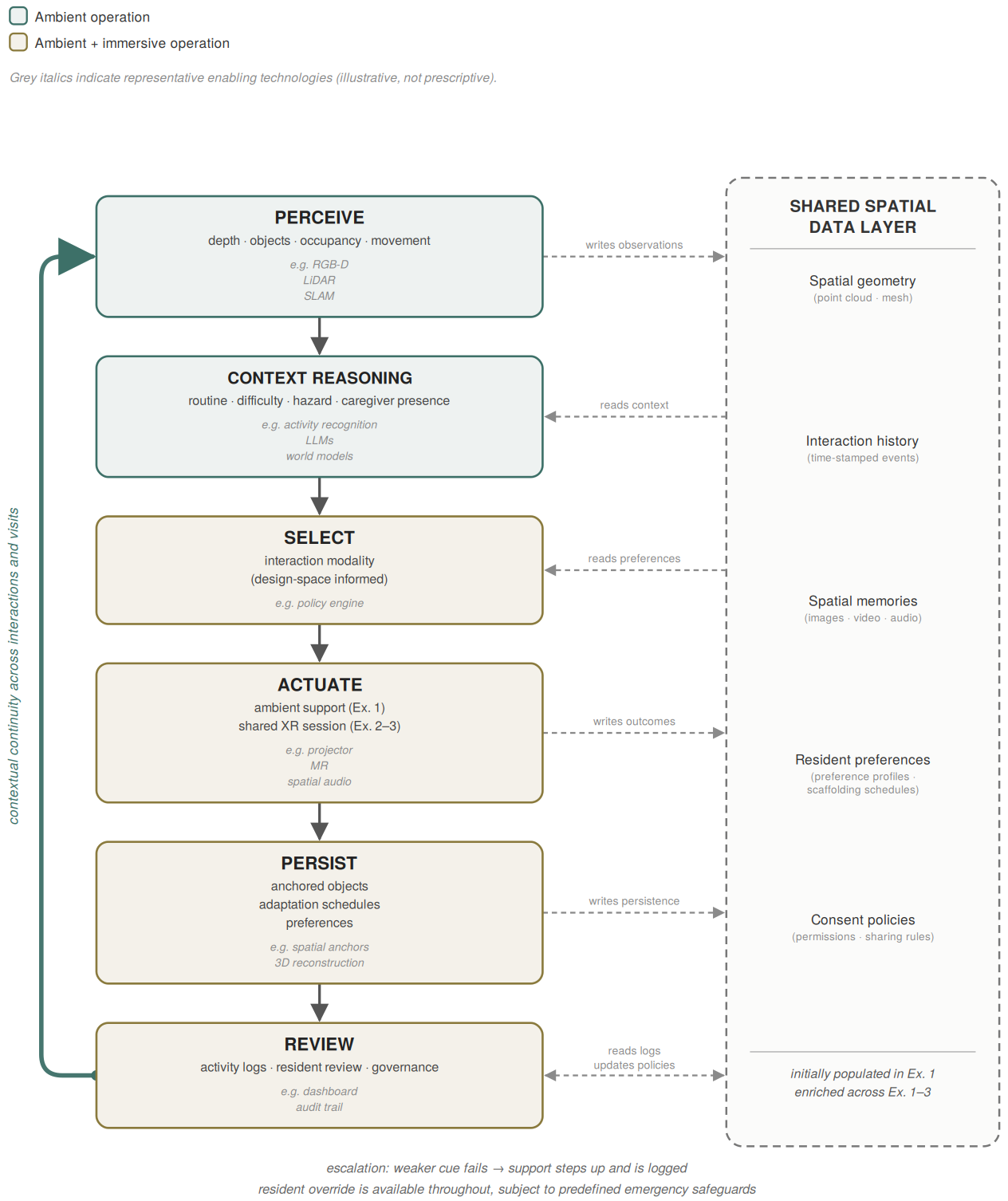
Figure 2. Conceptual operational model of the ambient XR framework. XR: extended reality.
4.1 Framework operation
Figure 2 presents the operational model of the Ambient XR Framework, along with an indicative list of technologies that support the practical application of each functional phase. The technologies listed are merely illustrative as there is no particular way of using technology to make the function feasible. The framework operates as a continuous loop rather than a set of consecutive interactions. Contextual sensing provides an evolving awareness of the resident’s environment and activity, while contextual reasoning explains this awareness in terms of current assistance needs. Based on the evolving context, the framework chooses the most suitable point along the ambient–immersive continuum.
One of the most important features of the Ambient XR Framework is the complementarity of the ambient and immersive interaction instead of treating them as mutually exclusive. Routine activities are addressed through ambient assistance without causing any disturbance in the course of everyday life. When collaborative work, guided reminiscence, or more intensive cognitive engagement is needed, immersive experiences are offered to residents instead of being activated automatically.
As opposed to conventional XR applications where each session is considered as an isolated event, the Ambient XR Framework maintains continuity of the interaction context and therefore the assistance process by preserving the common spatial data layer. The interaction history, spatial memories, learned preferences, and governance decisions become available for following interactions, and the assistance process is able to evolve gradually. Continuity of the spatial data layer allows for augmenting the immersive sessions rather than replacing ambient assistance.
Continuous human supervision constitutes an essential part of the operational model of the Ambient XR Framework. Residents are able to configure the consent and activity review mechanism in order to influence the routine operation of the system. Caregivers are involved in accordance with the agreements, and there are predefined safety rules for exceptional situations when immediate intervention is required.
The shared spatial data layer acts as the persistent state of the Ambient XR Framework, rather than the generative models themselves. It stores spatial geometry, interaction history, multimodal spatial memories, preferences, and consent policies in order to keep interactions persistent across different visits. Indicative AI techniques, such as world models and diffusion models[42-44], may contribute to achieving scene understanding, prediction, or media generation, but these models are not responsible for the persistence aspect. Instead, the generated imagery, video, audio, or the reconstructed environment will have to be persistently saved and anchored to the shared spatial representation. Examples of such techniques include three-dimensional and temporally consistent world modeling through the use of technologies like PAIWorld. It should be recognized that PAIWorld was designed for robotic manipulation purposes rather than for home care contexts[45].
4.2 Core principles
1) Principle 1: Context-aware modality selection:
• Definition:
The modality should be adjustable, not fixed. A system that always operates in one state is designed for average scenarios, meaning that it will be incorrect in many situations. The proposed framework therefore treats modality as a dynamic variable, consistently adapting to the resident’s cognitive load, emotional state, social context, task demands, and safety considerations. The findings of the 2025 systematic review by Huang et al. on the perception of conversational AI by older adults point to the necessity of having an adaptive and adjustable conversation model that imitates natural communication to minimize the risk of confusion. This suggestion is extended here to people with dementia[46].
• Design implication:
Unlike in the case where either ambient or immersive interaction is preallocated from the outset of the framework, the approach involves selecting the least intrusive modality that can meet the needs of the resident. Ambient interaction is thus used as the default method for routine activities, while conversational or immersive interaction is only employed where there is a need for more complex cognitive reasoning or assistance. Modality is viewed from this perspective as a continuum and not as a choice, whereby assistance changes alongside changing contexts.
• Example:
In Exemplar 1, this means starting the interaction with the weakest cue possible, such as a path projected onto the floor or a pulsing lamp near a danger zone, before gradually escalating to conversational guidance if the weak cue fails to work. In Exemplar 2, it would mean moving fluidly between reviewing spatial data, building memories together, and practising tasks in mixed reality, selecting the depth of engagement according to the purpose of the visit.
2) Principle 2: Seamless ambient-immersive transitions:
• Definition:
Neither ambient mode nor immersive mode exists independently. Rather, these two modes form a continuum, which is managed in accordance with the second principle. Immersive mode leaves its traces in the ambient layer, while the information gathered in the ambient mode makes future sessions more effective.
• Design implication:
Continuity is enabled through the common spatial data layer shown in Figure 2, in which interaction history, spatial memories, user preferences, and context can carry on from visit to visit. Instead of considering each visit as a stand-alone incident, it allows for every interaction to be based on previous interactions and thereby establishes a cycle of support extending beyond individual visits.
• Example:
In Exemplar 1, the ambient layer logs all movement paths, object locations, and even pauses as a persistent record of the resident’s experience available once the caregiver arrives. In Exemplar 2, the resident and caregiver co-create a shared memory environment, resulting in ambient visualisations and physically anchored objects that remain after the visit. While Exemplar 3 allows practising skills through spatially anchored MR support in such a way that later on, in real life, they reappear as fading ambient cues, which coincides with the applicability of the context and perceptual continuity suggested by Levac et al. as a mediating factor of skill transfer from VR practice to real-world behaviour[47].
3) Principle 3: Human-centred orchestration:
• Definition:
Autonomous modulation can cause disorientation, regardless of good intentions. That is why the third principle guarantees the preservation of the user’s sovereignty, meaning that they can overrule autonomous changes.
• Design implication:
This is accomplished through configurable consent, activity review, and the option to override non-critical actions taken by the system. The caregivers are involved in accordance with the permission settings provided by the resident, whereas there are predefined guidelines for exceptional cases when some action has to be taken immediately. Governance becomes a part of the process itself rather than something imposed from outside. This is clearly demonstrated in Figure 2, where governance becomes a part of the entire operational loop, allowing for consent, activity review, and resident supervision at every step.
• Example:
In Exemplar 1, the resident has full control over the ambient cues (turning off the sensors during intimate moments or reviewing the recorded data). In Exemplar 2, access to the ambient spatial record of the resident’s environment depends on the latter’s consent, which is adjustable and revocable. Before any object is left in the environment permanently, the resident has to give the necessary permission. The pace of skill scaffolding, as proposed, is transparent and adjustable by both participants of the process. This principle reflects the idea of value-sensitive design[48], which is understood not as just another checklist but as a recognition of human agency as something to enhance, not replace.
4.3 Ambient XR design space
The operational model illustrated in Figure 2 explains how an Ambient XR system could function. The design space provides a supplementary mechanism for researchers to place and analyse candidate Ambient XR environments along three independent axes of interaction, social participation, and temporal continuity. As such, designers can match interaction modality, social involvement, and temporality to the application requirements without altering the same architectural framework.
The interaction dimension represents a continuum starting from unobtrusive ambient assistance to full immersion. Interaction depth does not have to be either/or option; it can change dynamically depending on the resident’s needs, cognitive load, and the caregiver’s situation. This continuum is conceptually informed by Milgram and Kishino’s reality-virtuality continuum[49], although the Ambient XR Framework is not confined to using this framework solely for classification purposes; instead, it aims to enhance the framework’s use in creating adaptive interactions.
The social dimension refers to the level of participation in the interaction process, starting from resident-focused assistance to a collaborative experience with a caregiver or another trusted participant. The social dimension highlights the fact that the resident-caregiver dyad is the central component of the framework.
The temporal dimension defines how long assistance is continuous. Interactions may be immediate and specific to a certain moment or prolonged and based on the accumulation of spatial memory, interaction history, and preferences developed during several visits.
As Table 3 shows, the three exemplar directions are located in the designated areas of each of these dimensions. However, the mappings are illustrative only; further Ambient XR systems can implement a different combination or extension of the exemplars according to the interaction goal, social context, and continuity requirement.
Table 3. Mapping the exemplar research directions onto the ambient XR design space. The mappings are illustrative rather than prescriptive; future ambient XR systems may occupy different positions within the three dimensions depending on application requirements.
| Research Direction | Interaction Dimension | Social Dimension | Temporal Dimension | Framework Role |
| Exemplar 1: Ambient memory & safety | Ambient→Conversational | Resident | Immediate support→short-term continuity | Generates contextual awareness and populates the shared spatial data layer. |
| Exemplar 2: Shared memory co-creation | Conversational→Immersive | Resident+caregiver | Persistent memory | Supports the co-creation of autobiographical memories and enriches the shared spatial data layer. |
| Exemplar 3: Skill Rehearsal & Transfer | Immersive→Ambient | Resident+caregiver/therapist | Long-term adaptation | Reinforces rehabilitation (Skill transfer) through immersive practice followed by a gradual transition towards ambient assistance. |
XR: extended reality.
Exemplar 1 illustrates the ambient sensing and contextual foundation of the home. Exemplars 2 and 3 then further illustrate this layer of shared spatial data using caregiver visits that involve co-creation of memories and practice sessions for skills. The consequence is that the memories and knowledge generated from these sessions become part of the layer of shared spatial data, thus contributing to future ambient assistance and forming a cycle of support.
4.4 Research directions: Three exemplars
The three exemplars that follow are research directions, not product specifications. They are concrete enough to support hypothesis generation and prototype development, but framed as open questions rather than engineering deliverables. All three centre on the same scenario: an older adult with mild cognitive impairment living at home, and a family member who visits regularly to provide support.
Exemplar 1: Ambient memory and safety assistant: Principle 1: Context-aware modality selection
The home’s foundational capability here is understanding its environment continuously, maintaining a continuously updated model of where objects are, how the resident moves, and when something has gone wrong. Using depth sensing, it builds a spatial understanding of daily life: movement patterns, object locations, moments of hesitation that may signal difficulty (Figure 3). This sits quietly in the background, consistent with the vision of calm technology that Weiser and Brown articulated[12]. When a need arises, for example, a misplaced object, a safety risk, a routine that has gone off track, the response starts in the least intrusive way possible. A projected path on the floor, a pulsing lamp near the hazard, a gentle voice prompt only if the spatial cue has not been enough, as illustrated in Figure 4.
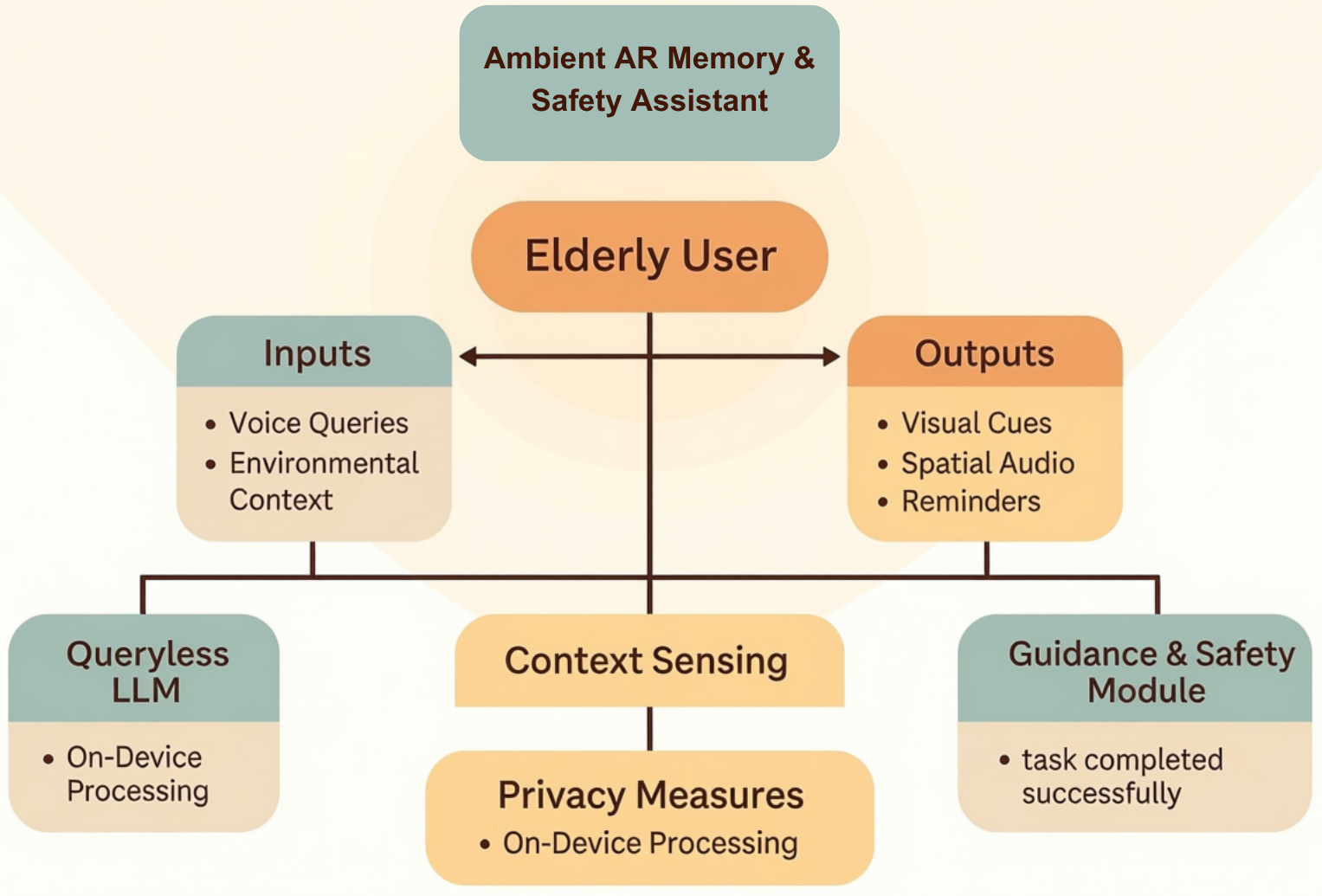
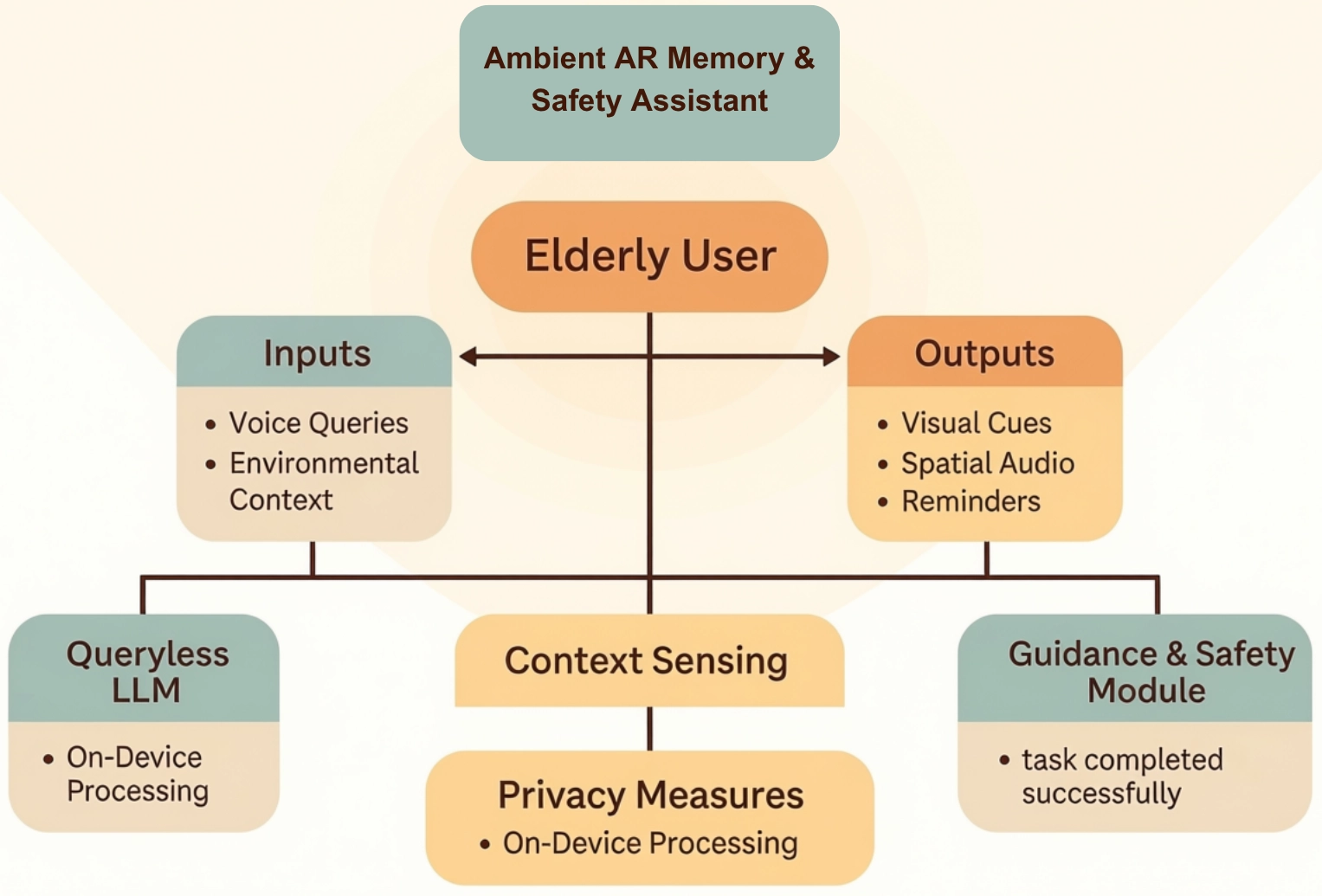
Figure 3. Conceptual framework, Exemplar 1: Ambient memory and safety assistant. AR: augmented reality; LLM: large language models.
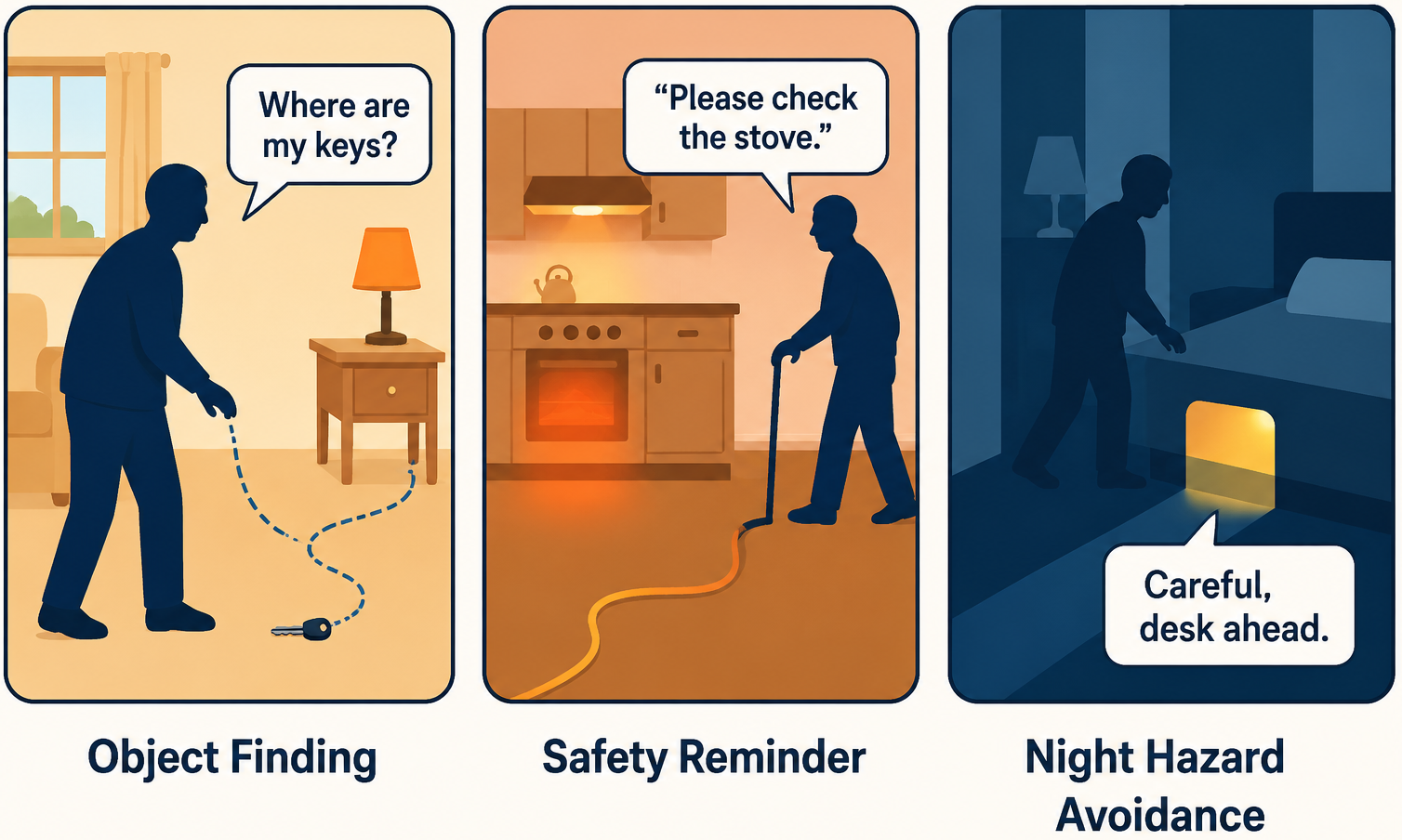
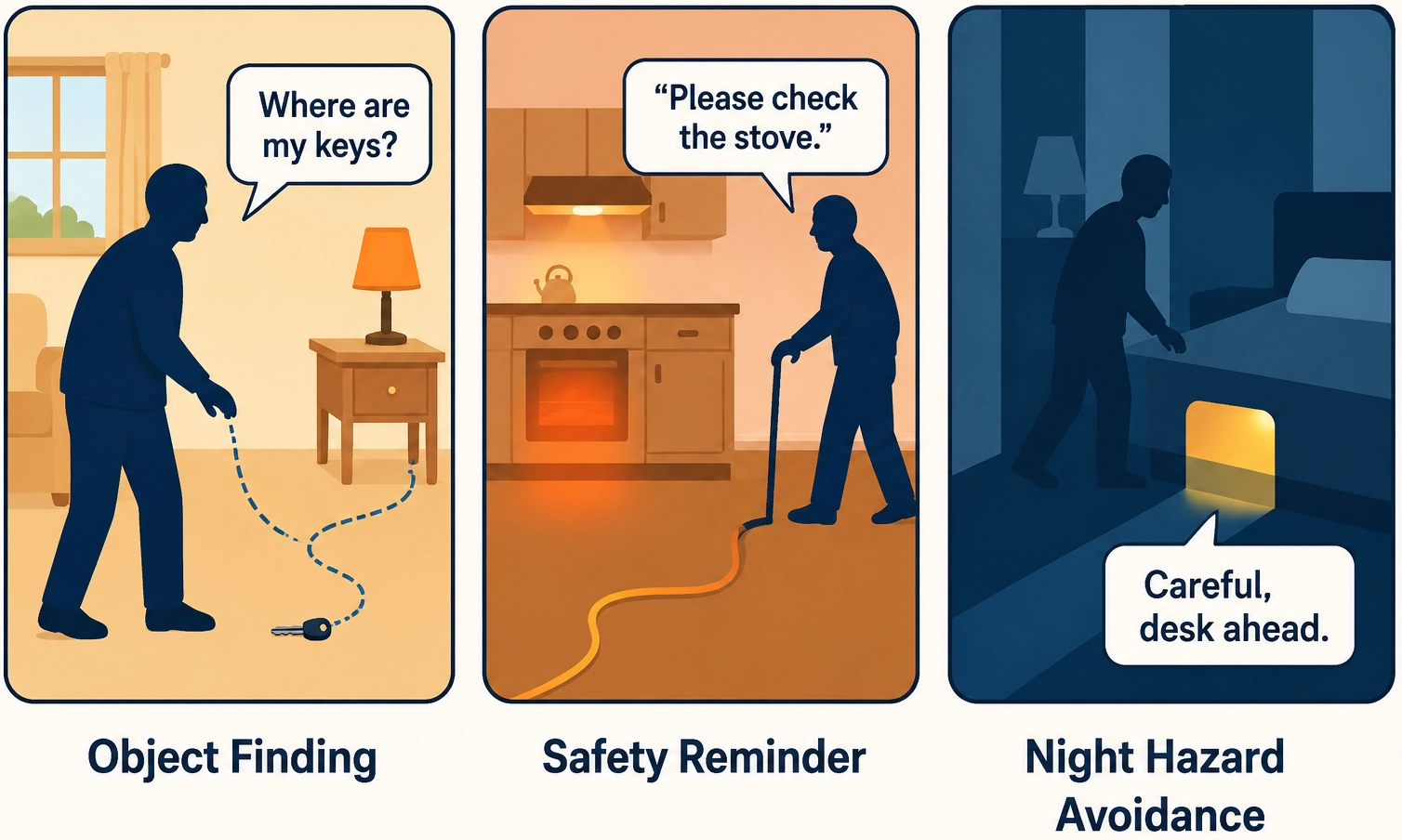
Figure 4. Visual storyboard, Exemplar 1: Ambient memory and safety assistant.
Projector-based AR and alternative smart lighting can replace wearable or HMD devices used, allowing a lower-barrier method of implementation without sacrificing the spatial cues that make the system effective. Dickinson et al. argue that a lower immersion method may be more tolerated by memory-impaired individuals, who may be disoriented by the visuospatial disruption that is inherent in VR[27]. Using depth sensing, detecting object locations and user movement through 3D point clouds processed entirely on-device is proposed as a design response to the surveillance concerns Berridge associated with passive ambient monitoring[19], but its efficacy at doing so remains to be proven. Even though this technique makes visual identification difficult, behavioural analysis may be inferred after a period of observation of movement patterns and behaviour; thus, it does not mitigate the larger issues of privacy mentioned in Section 6.
Over time, every interaction this system records feeds into a structured spatial log of daily life. That log is not only a safety record; it is the data layer that Exemplar 2 draws on when the caregiver arrives.
Key research questions:
• Would spatial AR cues reduce cognitive load compared to verbal instructions that require mental transformation?
• Would a depth-sensing, camera-free architecture produce higher perceived autonomy than camera-based alternatives, and would this translate to sustained adoption?
• Could projector-based AR achieve comparable functional outcomes to wearable devices while proving more acceptable in real home environments?
• What design decisions should govern which elements of the spatial log are surfaced when the caregiver arrives, and how does this shared data shape what happens in Exemplar 2?
2) Exemplar 2: Memory co-creation and persistent objects: Principle 2: Seamless ambient-immersive transitions
The Shared Immersive Home: Architectural Overview of Exemplars 2 and 3. Exemplars 2 and 3 use a common architectural underpinning called the Shared Immersive Home. Both exemplars operate during caregiver visits; both use the spatial data layer created in Exemplar 1; both have an output that persists in the ambient layer experienced between visits. As illustrated in Figure 5, the architecture of this system is one whereby the ambient layer (Exemplar 1) and the immersive layer (Exemplars 2 and 3) constantly communicate and build each other up. The difference between Exemplar 2 and Exemplar 3 is the type of activity carried out in the immersive space. While the former is memory and identity-oriented, the latter is oriented around skills and independence. Together they constitute the whole caregiving experience in the converging home.
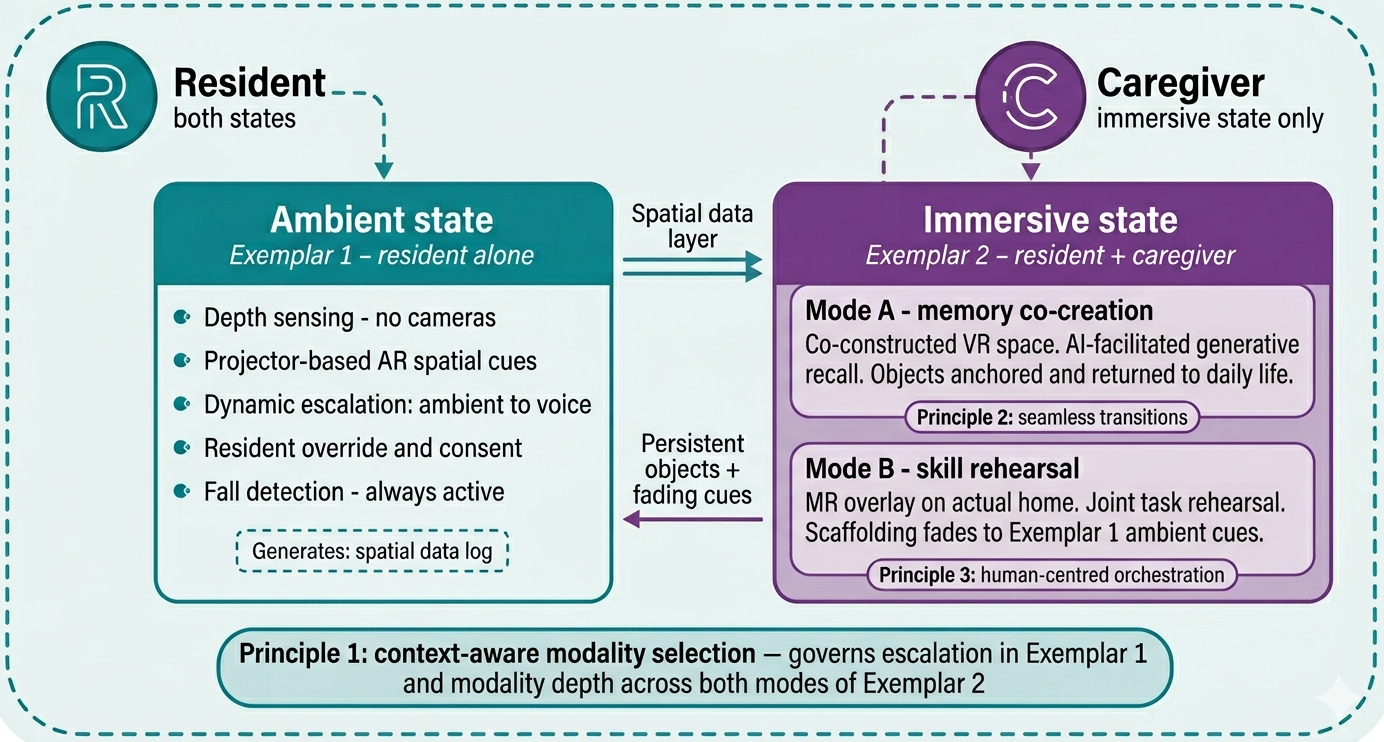
Figure 5. Conceptual framework: The shared immersive home (Exemplars 2 and 3). The ambient state (left) continuously feeds a spatial data layer into the immersive state (right); content co-created in Exemplars 2 and 3 persists back into the ambient layer of Exemplar 1. AR: augmented reality.
With a visit, the home opens up to both parties, who jointly inhabit the shared immersive environment. A scoping review regarding the use of VR/AR interventions for dementia caregivers found that there was a relatively small amount of research on home-based dyadic interventions where both the patient and caregiver were treated as one entity[35]. Exemplar 2 directly tackles the gap by providing a collaborative memory creation experience.
The environment that the resident and the caregiver jointly create, be it the childhood home, the location of the wedding, or a culturally significant place, is not something that is designed to be experienced out of the box, as per most existing conversational agent systems. Instead, it is created collaboratively, while the AI agent facilitates the process, generating prompts that enable residents and caregivers to bring relevant content into the conversation[23]. The design draws inspiration from Welsh et al.’s “Ticket to Talk”[50] study on digital prompts for intergenerational conversations on dementia-related topics and from Hodge and Morrissey’s research on personalized VR co-creation for dementia patients and their relatives[51].
The defining characteristic of Exemplar 2, as opposed to passive reminiscence tools, is how it handles objects mentioned in the process of memory creation. The participant selects specific objects relevant to their sense of identity: a teacup, a record, a photo, and embeds them in the environment (Figure 6). Instead of disappearing when the session ends, these objects remain as a part of the ambient layer, being placed on shelves or projected in their places of relevance. This enables the seamless transition postulated by the framework.
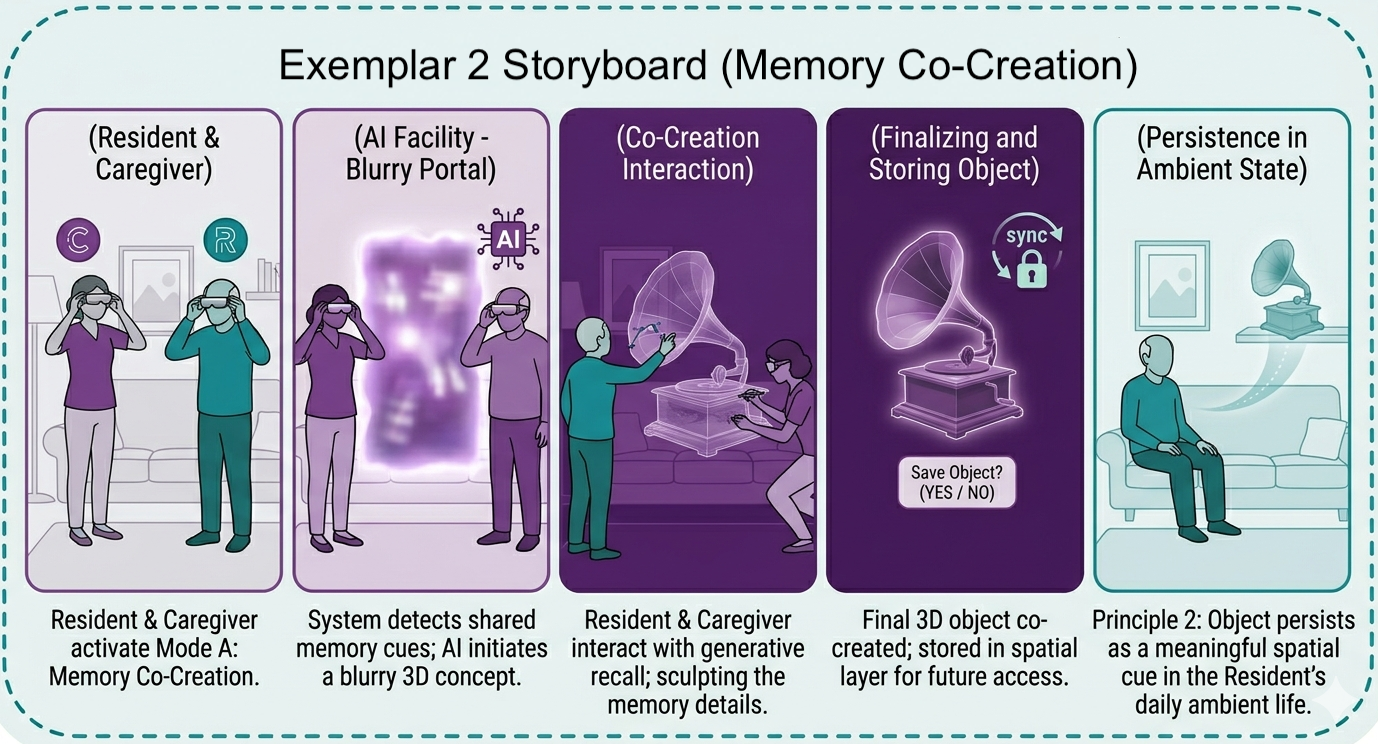
Figure 6. Visual storyboard, Exemplar 2: Memory co-creation and persistent objects.
The deployment of persistent objects is based on established practices of reminiscence therapy for patients with dementia. Personal memory boxes filled with meaningful photos, music, books, records, and other objects are regularly used to engage the resident in conversations, ensure continuity of identity and allow the engagement of caregivers, visitors, and the resident through life histories. Studies conducted on the impact of the use of memory boxes in dementia care settings show that they can be helpful in prompting reminiscence, recognition, continuity of self, and social interactions among residents, caregivers, and family members[52]. Reminiscence therapy in general uses photographs, music, audio recordings, and other familiar objects as means of eliciting memories and prompting interactions[53,54]. Exemplar 2 uses one of the well-established physical practices of dementia care in the spatial environment, allowing persistent storage of meaningful objects.
However, since autobiographical memories might trigger grieving, traumatization, or emotional disturbance, persistent memory objects cannot necessarily be considered perpetually positive. Rather, the approach views them as modifiable artifacts with their visibility, placement, or behavior potentially being altered with respect to the resident and caregiver. Spatial memories might thus be moved to new locations, temporarily concealed, simplified, faded slowly, or altogether eliminated once they cease to benefit the resident’s well-being and preferences. This recognizes the practical existence of a right to forget in the Ambient XR and takes into account the fact that therapeutic benefit may change along with the cognitive capacity and emotions of the person or their evolving wishes. Hence, persistence is associated with sustained care and not permanent presence of all digital memories.
Key research questions:
• Would the act of collaborative memory environment creation be more effective in terms of autobiographical recall and identity continuity between visits compared to the mere usage of pre-designed reminiscence tools?
• Can the persistent objects placed together by the resident and the caregiver strengthen the sense of identity and improve the caregiving relationship?
• What effect does the generation of spatial logs in Exemplar 1 have on co-creating a personally relevant environment, and what factors play a role in deciding which data to surface?
3) Exemplar 3: Skill rehearsal in the shared home: Principle 3: Human-centred Orchestration
The concept behind Exemplar 3 is that of MR, where instead of the resident being provided with an entirely virtual world, they are presented with digital cues within their physical space of the home. It targets skills that the resident used to have but now finds difficult due to memory impairment (e.g., making tea, performing tasks related to medications or the morning routines) (Figure 7). It uses the shared immersive environment along with spatially anchored guidance to the actual kitchen, bathroom, and living room spaces mapped by Exemplar 1 and populated with the objects relevant to the resident thanks to Exemplar 2. The caregiver is always present, learning firsthand which actions need support and how to facilitate the task completion without undermining autonomy. As competence progresses, scaffolding becomes less intensive until the resident requires only minimal cues. Fading can be viewed by both participants, and adjusted by either of them.
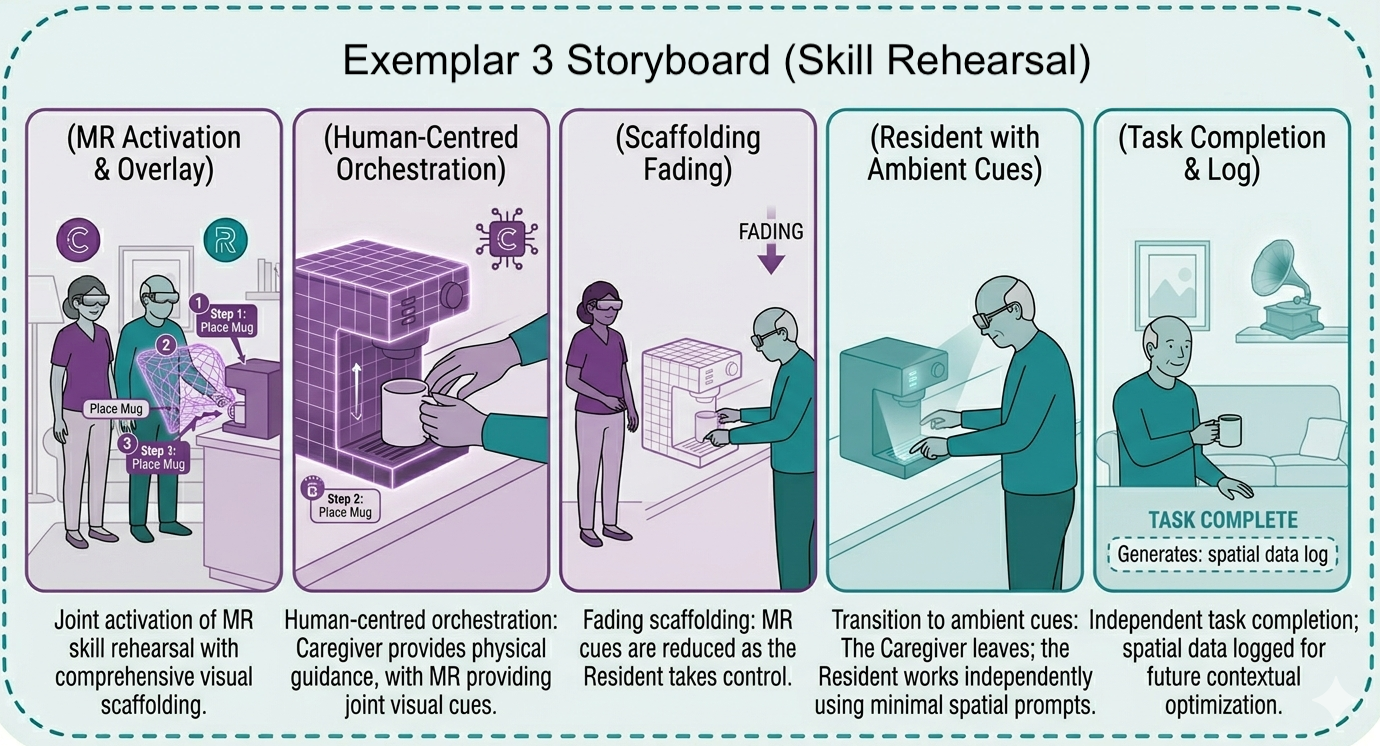
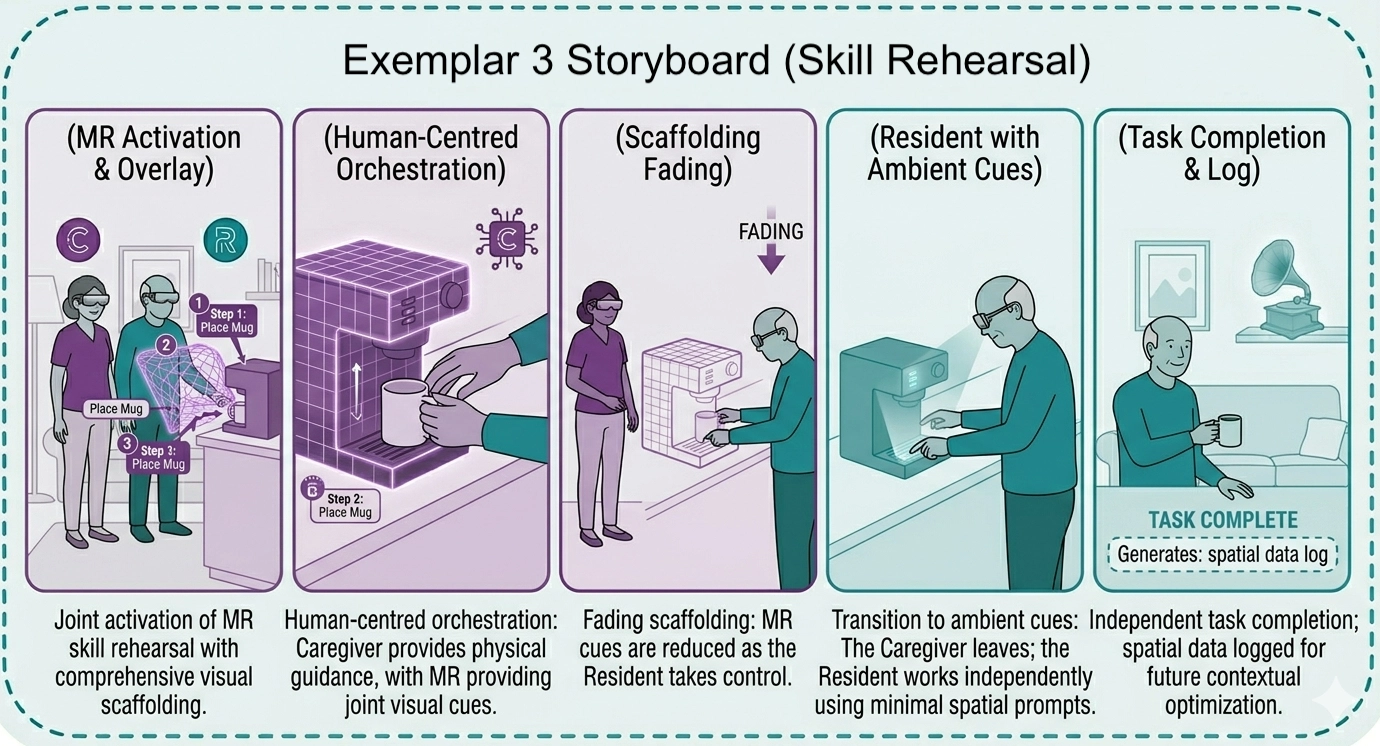
Figure 7. Visual storyboard, Exemplar 3: Skill rehearsal in the shared home. MR: mixed reality.
There is an intentional architectural connection between Exemplars 2 and 3. Namely, it takes place in a space where identity has been established through memory co-creation in Exemplar 2. According to Levac et al., contextual and perceptual continuity between rehearsal and the real world is a mediator of skill transfer effectiveness[47]. Exemplar 1’s ambient layer, triggering familiar cues in the kitchen after rehearsal, provides precisely this continuity. Together, the three exemplars form a single converging home environment, not a collection of separate systems.
Key research questions:
• Would MR rehearsal complemented with progressive ambient scaffolding provide better real-life skill mastery compared to immersive rehearsal alone, ambient scaffolding alone, or traditional occupational therapy?
• Are the positive effects of MR-supported practice enhanced by carrying it out in the environment where the person feels at home (as opposed to the pre-configured environment)?
• Do gains obtained from immersive experiences carry on in the ambient layer and affect future sessions in terms of relational and cognitive benefits, or do they dissipate between visits?
Together, the three exemplars illustrate how the Ambient XR Framework is designed as one shared home environment, not as three individual applications. The first exemplar sets the context of awareness, the second enhances it by developing collaborative memory, while the third takes immersive experience to everyday life. Although future Ambient XR frameworks will be built differently, the connection between the three layers: ambient sensing, shared immersive interaction, and contextual continuity is what distinguishes them.
4.5 The central research question and systemic evaluation
The framework’s central question is this: could a home in which an ambient sensing layer and a shared immersive space continuously build on one another produce functional, relational, and cognitive benefits that no single modality, and no isolated intervention, could achieve alone?
This is a systemic claim, and it needs systemic evaluation. Demonstrating that ambient AR supports the resident, or that VR co-creation enriches the visit, or that mixed reality rehearsal improves task performance, each in isolation, would not answer it. The argument is specifically about convergence: that a home that knows its resident provides context, making co-created memories meaningful; that objects anchored together persist as daily reminders of a relationship that continues between visits; that skills rehearsed in a personally meaningful environment transfer more reliably because environmental continuity is preserved. Evaluating this properly means taking the resident-caregiver dyad as the unit of analysis, using longitudinal designs, and developing outcome measures that include relational quality, caregiver confidence, and the sustainability of shared engagement over time. Current measurement tools evaluate some of these outcomes separately; nevertheless, specific measures evaluating ongoing shared space interaction, dyad agency, and sustained Ambient XR experience across sessions might need to be developed. Developing them would itself constitute a contribution.
5. Discussion
Each of the technologies underlying the XR Framework has shown therapeutic and practical value. Ambient and spatially situated cues could allow for engaging with daily activities without the need for using a personal device constantly, and immersive environments would be useful for focused reminiscence, cognitive stimulation, social engagement, and skill rehearsal. The contribution of this paper, though, is not a new sensing modality, display technology, or therapeutic application. Instead, it offers a relational orchestration architecture in which ambient and immersive interactions are related, outcomes are preserved between visits, and support is provided to the resident-caregiver dyad rather than to the resident alone.
5.1 From component effectiveness to systemic convergence
The current literature provides evidence for the feasibility and potential value of several individual components of the proposed framework, but it does not validate the integrated framework itself. The core idea of the framework is the relationship between these components, specifically whether ambient context can increase the relevance of immersive experiences, whether co-created content can persist meaningfully outside of immersive interactions, and whether skills practised in a virtual setting can transfer more effectively if ambient scaffolding persists between visits.
Previous research has reported potential benefits of environmentally situated AR and ambient cues in mitigating disorientation and adoption barriers related to the use of more immersive technologies[26,27], as well as depth-based sensing and on-device processing as ways to mitigate privacy issues with camera-based systems, although they do not remove the broader surveillance risks created by continuous observation[19]. Similarly, VR-based reminiscence and cognitive interventions have shown benefits for mental well-being of people with mild cognitive impairment and dementia[7,8,55]. Building on this evidence, the framework evaluates the combination of technologies rather than their effectiveness individually.
5.2 The resident-caregiver dyad as the unit of design
Having the resident-caregiver dyad as the unit of design results in completely changing the purpose and criteria of evaluation for the system. While a caregiver’s involvement can be understood as a way of using technology and interpreting a dashboard or simply assisting the resident with a headset. The involvement of the caregiver adds a layer of knowledge, emotional judgment, contextual understanding, and continuity that an automated system may not be able to replicate. Earlier research indicates that the adoption and use of technology among older adults living with dementia is influenced by the perceived value of such technologies across the entire care relationship, and caregivers may avoid technologies that disrupt rather than facilitate relational work[39,40].
Therefore, it is not about reducing caregiving to the provision of data access or task supervision. Although ambient support can reduce repetitive prompting or the burden of monitoring, the intention is to preserve time and attention to provide relational care rather than substitute it. This point is especially relevant for reminiscence and identity-oriented activities, where interpretation, emotional judgement, and shared history remain central to meaningful engagement.
5.3 Persistence as a design commitment
While persistence can be viewed as the main difference between the proposed framework and traditional session-based XR, it poses the questions of surveillance, unwanted reminders, potential misrepresentation of the user’s actions, and unequal access to information and interaction within a shared space between the resident and caregiver. Thus, the issue of persistence cannot be separated from the issue of consent. Both have to be designed simultaneously.
5.4 Methodological roadmap for framework evaluation
Since the framework makes a systemic claim that goes beyond the particular characteristics of each component, it requires evaluation methods that go beyond short-term usability tests and evaluation of its three illustrative embodiments in isolation. Proving that ambient cues help the resident, that co-creation improves the experience of the visit, or that MR rehearsal improves task performance will not alone or even together demonstrate the value added by the integrated environment over the value of its component parts. Thus, a pathway of three phases in the evaluation is proposed, each answering a question that sets up the next.
Phase 1: Participatory design. Working with older adults with mild cognitive impairment, family caregivers, and clinical experts (e.g., occupational therapists) would define the scope of the framework before the system is built. This phase would address which ambient cues are tolerable and intelligible in the domestic environment, whether the escalation from a spatial cue to explicit instruction is appropriate or intrusive, which parts of the spatial log should be made available to the visiting caregiver and which should remain private, and how the consent levels and the object lifecycle discussed in Section 4 and Section 6 should be structured. Since the framework assumes dyadic design, both parties participate in the definition of the criteria, rather than just the resident. The main outcome of this phase would be the definition of design criteria, including a governance model, to guide further prototype design.
Phase 2: Wizard-of-Oz prototyping. Before the automated interaction becomes feasible, one can examine the interaction itself with a human controller standing in for the automation. The questions to be addressed in this phase include whether the modality changes are intelligible to the resident, whether the suggested immersive session is seen as helpful rather than intrusive, whether the persistent objects are recognized and understood as they move from the immersive to the ambient layer, and whether the continuous ambient sensing is experienced as help rather than as surveillance. By deliberately separating the interaction question from the engineering question at this point, it is ensured that a system that senses perfectly but escalates unintelligibly will fail on the right account rather than on the wrong one.
Phase 3: Longitudinal in-home deployment. Only longitudinal deployment addresses the convergence claim, because the mechanisms proposed by the framework, context accumulation between visits, co-created content extending into daily living, scaffolding fading away with growing competence, depend on their operation over time. The resident-caregiver dyad is the unit of analysis; the outcomes are to be reported for both individuals separately and for the dyad as a whole. The comparative conditions that distinguish ambient support from immersive intervention from their integration will enable the assessment of systemic benefit over additive benefit from the individual components. Alongside functional outcomes, the measurement of the level of cognitive engagement, autobiographical memory, and autonomy should be supplemented by the measurement of caregiver workload, caregiver confidence, feeling of being monitored, relationship quality, and continuity between visits. In particular, special attention should be paid to the quality of the transition, including whether the change of modalities is comprehensible to the resident, whether the immersion starts with meaningful consent, and whether the fading ambient scaffolding fosters independence.
Existing tools exist for usability testing, presence measurement, functional outcomes, cognitive outcomes, caregiver burden, quality of life, and technology acceptance. However, existing tools do not measure the persistent shared spatial interaction, dyadic agency, continuity between sessions, and relational impact of co-created digital artefacts. The development of such tools is thus a prerequisite for Phase 3 and a valuable methodological contribution on its own.
5.5 Scope and limitations
The Ambient XR Framework is currently conceptual and has not been realized as an entire system, which means that the feasibility will be contingent not only upon the readiness of technologies but also upon the possibility of their reliable and long-term interoperability, maintenance, accessible interaction design, and affordability in a home setting. Technical readiness of components cannot be considered sufficient to ensure the success of their integration.
The framework is targeted specifically towards older adults suffering from mild cognitive impairments or mild/moderate dementia and able to understand environmental cues. However, the suitability will depend upon the level of cognitive functions, sensory impairments, mobility, personal background, disease progression, and technological proficiency. In case of severe dementia, the use of the proposed framework should not be considered since relational presence, sensory comfort, and recognition by another person may be more important than the support in task completion.
The framework also represents a specific culture-based domestic situation when an older adult lives independently and receives constant support from a family caregiver. In multigenerational families, co-residential care arrangements, and other cultures where the expectation of privacy, autonomy, and family responsibility is different, the social aspect, the consensual model, and the role of the ambient layer will need significant modification. Therefore, culture should be considered a variable in design rather than a background aspect.
Finally, the exemplars provided are research directions and are not the exact specification of Ambient XR. Other systems can implement different types of sensors, interaction technologies, caregiving practices, and therapy purposes. The defining proposition is the combination of context awareness, shared interactive experience, governance of persistence, and relational continuity in the home environment and not a particular implementation.
6. Ethical Considerations and Dual-Use Risks
The Ambient XR Framework is intended to promote autonomy and dignity. Nevertheless, the design choices which make it particularly effective for therapy purposes pose certain dangers that require explicit recognition. These risks are inherent in the architecture of the framework and stem from the way the system perceives, retains, processes, and distributes information about the home. Therefore, ethical measures need to be embedded in the operation of the system.
6.1 Domestic surveillance and data sovereignty
The fact that the framework would continuously perceive activity in the home and persistently retain a spatial memory of it gives rise to the capacity for domestic surveillance even if initially intended for a positive purpose. The shared spatial data layer can include information such as household geometry, interaction history, multimodal memories, scaffolding schedule, preference profile, and consent policy. All these types of data present specific exposures: for example, the information about the geometry of the household may give away its structure and how it is used; interaction history may tell about residents’ hesitations, functional decline, and so forth.
While depth sensing and on-device processing may address some of the risks of camera-based monitoring systems, these design choices do not make observation ethically neutral. According to Berridge, passive monitoring changes the meaning of privacy in independent living spaces[19]. Therefore, the residents need to have meaningful control over what type of data is being perceived and retained, who is accessing it, and for what purpose. In order to ensure data sovereignty, the framework needs to have selective data collection, purpose limitation, configurable retention period, on-device data processing, and the possibility of deleting or restricting access to the non-essential data.
6.2 Informational asymmetry and relational power
Another risk that may emerge due to the presence of the system in the house is informational asymmetry between the resident and the caregiver. The caregiver will be able to check information about activity history, hesitations, system escalations, and patterns of support that are invisible to the resident and that he or she does not understand. The ethical issue here is not simply asymmetry of information but the fact that the system makes one person legible to the other person without making him/her equally legible and understandable in return.
This informational asymmetry may change the dynamics of the relationship even if the intentions of the caregiver are benevolent. Different perceptions of the same events (for example, the system data about the resident’s decline vs. the resident’s experience) may result in misunderstanding. In order to address the issue, Principle 3 calls for mutual transparency, understandable explanations, consent-controlled disclosure, and pre-agreement before any shared memories and virtual objects appear. This issue is relevant to value-sensitive design since agency, privacy, and trust are the qualities of the system rather than its external limitations.
6.3 Adaptive influence, dependency, and dual use
One of the goals of the context-aware modality selection is to provide the minimum necessary intrusion to the residents in the form of support. However, this capability can also be used for influencing the resident’s behavior or creating dependence on the system. Thus, the system can escalate the prompts and organize routines not in the interests of the resident but for organizational convenience or can use information about his/her emotions and behaviors to make the decisions without the resident’s knowledge and consent.
Additionally, over-assistance may deprive the resident of the opportunity to solve problems independently, increasing dependence or creating learned helplessness. In order to address the risks, the framework should retain control over non-critical adaptive processes, provide reasons for modality changes, and enable reduction or disengagement of the support levels as well as keep documentation of the autonomous decisions for later review. Safety-critical functions should be controlled with the pre-defined and limited emergency rules.
Finally, the framework may present a risk of dual use beyond the caregiving purposes. Persistent spatial maps, behavioral routines, preference profile, and emotional inferences may attract the attention of insurers, commercial platforms, landlords, employers, and other organizations that want to evaluate the resident’s risk, influence his/her behavior, or personalize the persuasion efforts. Therefore, the framework should incorporate strict prohibitions on the secondary uses, auditing, access logging, and separation between the care-related functions and commercial use of data.
6.4 Consent under changing cognitive capacity
Given that the system is intended for people who have potentially changing decision-making capacity, informed consent is particularly challenging. The consent provided during the installation cannot be considered valid forever as the functions of the system, the type of the data it keeps, and caregiving arrangements change with time.
Therefore, consent should be seen as an ongoing and layered process in which the resident has the option to give separate consents to different functionalities of the system: environmental perception, persistent storage, caregiver access, generation of immersive content, and creation of enduring virtual objects. Consent should always be revocable, and the resident should receive visual indications of active sensing, recording, and sharing. If full informed consent becomes impossible, supported decision-making, assent, dissent, and participation of a trusted advocate should be used. The resident’s refusal or discomfort should remain meaningful even in the case where the caregiver or the proxy believes that the use of the system is beneficial. Additionally, consent should be reassessed periodically or if there is a substantial change in either of the resident’s cognitive capability, caregiver arrangement, or system functionality.
Emergency safeguards require particular attention. While the framework may retain narrowly defined safety functions when other sensing and adaptation capabilities are disabled, these exceptions should be transparent, proportional, and agreed in advance. Emergency access cannot become a universal justification for continuous monitoring.
6.5 Governance as part of the architecture
The ethical feasibility of Ambient XR technology depends on governance mechanisms that should work throughout the whole lifetime of the system. These mechanisms include configurable permissions, data minimization, on-device processing, retention controls, visible indicators of recording, audit trails, resident reviews, caregiver accountability, independent oversight, and procedures for contesting and correcting the system’s interpretation.
However, governance should go beyond the operation and involve the design and evaluation process as well. The residents and their caregivers should be involved in setting the criteria for meaningful support, appropriate persistence, valid escalation, and legitimate access for the caregivers. Researchers should pay attention not only to the technical performance of the system, but also to who benefits from its use, who suffers from it, whose interpretation becomes the official one, and how the power balance is changing with the use of the system.
7. Conclusion
The argument this paper has advanced is not primarily about technology. It is about a design assumption the field has inherited without questioning: that the appropriate unit of support for ageing at home is the individual older adult, and that the job of technology is to serve that individual more efficiently. Two decades of sophisticated single-modality systems have emerged from this assumption, each improving within its own boundaries, none of them addressing the relational reality of how most people actually age. Behind the resident is a caregiver. Behind the caregiver is a visit, a relationship, a shared history, and a future both of them are navigating together. No existing framework treats that relationship as design material.
The Ambient XR Framework proposes that it should be. The three principles at its core are not technical specifications, they are design commitments. That the home should respond to what the moment requires rather than defaulting to a fixed modality. That what is built during a shared immersive visit should not dissolve when the caregiver leaves. That the person living in the home should remain in control of a system that is, after all, their home. To support this vision, the paper introduced a conceptual operational model, a multidimensional design space, and an evaluation roadmap that frame Ambient XR as a research agenda rather than a predefined implementation. These commitments are grounded in existing evidence, achievable with consumer-grade hardware available today, and directly responsive to the gaps the literature has identified. What they require is not a new invention but a new architecture, one that connects what already works in isolation into something that might work together.
The field is at a moment where that connection is becoming possible. Spatial sensing, AI-driven context awareness, shared virtual environments, and projector-based augmentation are all maturing at the same time, and the research community working on ageing and technology is increasingly naming dyadic and relational dimensions of care as priorities. The framework proposed here is an attempt to give that emerging consensus a concrete architectural form: a home that knows itself, that holds continuity on behalf of the person living in it, and that opens into a richer shared space when the person who cares for them arrives. Whether that vision can be realised, and what it produces when it is, are empirical questions. This framework has been designed in a conceptual fashion and does not claim any empirical evidence deliberately. Instead, it creates a foundation that will be used to develop a prototype, perform participatory design, and evaluate the performance of the Ambient XR environments over time. Instead of focusing on specific technologies, the Ambient XR Framework aims at developing the next-generation adaptive, ethical, and person-centred digital ecosystem for an ageing population by shifting focus from technology to interaction.
Acknowledgments
The authors used generative AI tools (ChatGPT 5.5 and Claude Sonnet 5) for language refinement of the manuscript text. Google Gemini was used to create conceptual storyboard illustrations for the author-developed exemplar scenarios in Figure 4, Figure 6, and Figure 7. These exemplars were informed by the reviewed literature and volunteering experience and are presented as illustrative research directions rather than empirically validated use cases. Google Gemini 3.1 Pro was used to generate the storyboard visuals, which were reviewed and finalised by the authors. Microsoft PowerPoint was used to prepare the remaining figures and layouts. Generative AI was not used for data collection, data analysis, interpretation of results, or the formulation of the manuscript’s conclusions. The authors reviewed and approved the final manuscript and take full responsibility for its content.
Author contribution
Agha RAAR: Conceptualization, investigation, methodology, visualization, writing-original draft.
Campbell A: Supervision, conceptualization, methodology, writing-review & editing.
Both authors contributed to the refinement of the exemplar use cases and the conceptual and technological positioning of the framework. Both authors read and approved the final manuscript.
Conflict of interest
The authors declare no conflicts of interest.
Ethical approval
Not applicable.
Consent to participate
Not applicable.
Consent for publication
Not applicable.
Availability of data and materials
Not applicable.
Funding
None.
Copyright
© The Author(s) 2026.
References
-
1. Tragaki A. From ‘demographic bomb’ to ‘silver tsunami’: Navigating global population shifts. Eur View. 2024;23(1):22-30.[DOI]
-
2. United Nations. World population ageing 2019: Highlights. New York: United Nations; 2019. Available from: https://digitallibrary.un.org/record/3846855?v=pdf
-
3. Gross HM, Schroeter C, Mueller S, Volkhardt M, Einhorn E, Bley A, et al. I’ll keep an eye on you: Home robot companion for elderly people with cognitive impairment. In: 2011 IEEE International Conference on Systems, Man, and Cybernetics; 2011 Oct 9-12; Anchorage, USA. Piscataway: IEEE; 2011. p. 2481-2488.[DOI]
-
4. Peek STM, Wouters EJM, van Hoof J, Luijkx KG, Boeije HR, Vrijhoef HJM. Factors influencing acceptance of technology for aging in place: A systematic review. Int J Med Inform. 2014;83(4):235-248.[DOI]
-
5. Blackman S, Matlo C, Bobrovitskiy C, Waldoch A, Mei Lan F, Jackson P, et al. Ambient assisted living technologies for aging well: A scoping review. J Intell Syst. 2016;25(1):55-69.[DOI]
-
6. Baker S, Kelly RM, Waycott J, Carrasco R, Hoang T, Batchelor F, et al. Interrogating social virtual reality as a communication medium for older adults. Proc ACM Hum-Comput Interact. 2019;3(CSCW):1-24.[DOI]
-
7. Appel L, Appel E, Bogler O, Wiseman M, Cohen L, Ein N, et al. Older adults with cognitive and/or physical impairments can benefit from immersive virtual reality experiences: A feasibility study. Front Med. 2020;6:329.[DOI]
-
9. Snoswell AJ, Snoswell CL. Immersive virtual reality in health care: Systematic review of technology and disease states. JMIR Biomed Eng. 2019;4(1):e15025.[DOI]
-
10. García-Betances RI, Arredondo Waldmeyer MT, Fico G, Cabrera-Umpiérrez MF. A succinct overview of virtual reality technology use in Alzheimer’s disease. Front Aging Neurosci. 2015;7:80.[DOI]
-
11. Jovanovic M, Mitrov G, Zdravevski E, Lameski P, Colantonio S, Kampel M, et al. Ambient assisted living: Scoping review of artificial intelligence models, domains, technology, and concerns. J Med Internet Res. 2022;24(11):e36553.[DOI]
-
12. Weiser M, Brown JS. Designing calm technology. PowerGrid J. 1996;1(1):75-85. Available from: https://courses.ischool.berkeley.edu/i290-13/07readings/weiser.pdf
-
13. Koh WQ, Felding SA, Toomey E, Casey D. Barriers and facilitators to the implementation of social robots for older adults and people with dementia: A scoping review. BMC Geriatrics. Front Dement. 2025;4:1470066.[DOI]
-
15. Alzheimer’s Society. Hallucinations and dementia [Internet]. Alzheimer’s Society; 2021. Available from: https://www.alzheimers.org.uk/about-dementia/stages-and-symptoms/hallucinations
-
16. Broadbent E, Loveys K, Ilan G, Chen G, Chilukuri MM, Boardman SG, et al. ElliQ, an AI-driven social robot to alleviate loneliness: Progress and lessons learned. J Aging Res Lifestyle. 2024;13:22-28.[DOI]
-
17. Zulfikar WD, Chan S, Maes P. Memoro: Using large language models to realize a concise interface for real-time memory augmentation. In: Proceedings of the CHI Conference on Human Factors in Computing Systems; 2024 May 11-16; Honolulu, USA. New York: Association for Computing Machinery; 2024. p. 1-18.[DOI]
-
18. Maniar N, Chan SWT, Zulfikar W, Ren S, Xu C, Maes P. MemPal: Leveraging multimodal AI and LLMs for voice-activated object retrieval in homes of older adults. In: Proceedings of the 30th International Conference on Intelligent User Interfaces; 2025 Mar 24-27; Cagliari, Italy. New York: Association for Computing Machinery; 2025. p. 993-1015.[DOI]
-
20. Foley S, Welsh D, Pantidi N, Morrissey K, Nappey T, McCarthy J. Printer pals: Experience-centered design to support agency for people with dementia. In: Proceedings of the 2019 CHI Conference on Human Factors in Computing Systems; 2019 May 4-9; Glasgow, UK. New York: Association for Computing Machinery; 2019. p. 1-13.[DOI]
-
21. Stamate A, Marzan MD, Velciu M, Paul C, Spiru L. Advancing user-centric design and technology adoption for aging populations: A multifaceted approach. Front Public Health. 2024;12:1469815.[DOI]
-
22. Houben M, Brankaert R, Gosen M, van Overloop V, IJsselsteijn W. Design opportunities for care transitions in dementia: Understanding informal caregivers’ experiences through a practice-informed approach. In: Proceedings of the CHI Conference on Human Factors in Computing Systems; 2024 May 11-16; Honolulu, USA. New York: Association for Computing Machinery; 2024. p. 1-13.[DOI]
-
23. Seah C, Lee YC, Lee JJ, Yen CC, Zheng C. Rememo: A research-through-design inquiry towards an AI-in-the-loop therapist’s tool for dementia reminiscence. In: Proceedings of the 2026 CHI Conference on Human Factors in Computing Systems; 2026 Apr 13-17; Barcelona, Spain. New York: Association for Computing Machinery; 2026. p. 1-20.[DOI]
-
24. Afifi T, Collins NL, Rand K, Fujiwara K, Mazur A, Otmar C, et al. Testing the feasibility of virtual reality with older adults with cognitive impairments and their family members who live at a distance. Innov Aging. 2021;5(2):igab014.[DOI]
-
25. Dockx K, Bekkers EM, Van den Bergh V, Ginis P, Rochester L, Hausdorff JM, et al. Virtual reality for rehabilitation in Parkinson’s disease. Cochrane Database Syst Rev. 2016;2016(12):CD010760.[DOI]
-
26. Baragash RS, Aldowah H, Ghazal S. Virtual and augmented reality applications to improve older adults’ quality of life: A systematic mapping review and future directions. Digit Health. 2022;8:205520762211320.[DOI]
-
27. Dickinson R, Kimball J, Fahed M, Chang T, Sekhon H, Vahia IV. Augmented reality (AR) in dementia care: Understanding its scope and defining its potential. Am J Geriatr Psychiatry. 2023;31(3):S132-S133.[DOI]
-
29. Flynn A, Koh WQ, Reilly G, Brennan A, Redfern S, Barry M, et al. A multi-user virtual reality social connecting space for people living with dementia and their support persons: A participatory action research study. Int J Hum Comput Interact. 2025;41(7):4211-4229.[DOI]
-
30. Flynn A, Brennan A, Barry M, Redfern S, Casey D. Social connectedness and the role of virtual reality: Experiences and perceptions of people living with dementia and their caregivers. Disabil Rehabil Assist Technol. 2024;19(7):2615-2629.[DOI]
-
31. Mahroo A, Greci L, Mondellini M, Sacco M. Assessment of a mixed reality smart home controller: HoloHome pilot study on healthy adults. Virtual Reality. 2023;27(3):2673-2690.[DOI]
-
32. Chen K, Chan AHS. Gerontechnology acceptance by elderly Hong Kong Chinese: A senior technology acceptance model (STAM). Ergonomics. 2014;57(5):635-652.[DOI]
-
33. Seifert A, Schlomann A. The use of virtual and augmented reality by older adults: Potentials and challenges. Front Virtual Real. 2021;2:639718.[DOI]
-
34. Dæhlen A, Heldal I, Katona J. Towards developing an immersive virtual reality applications for supporting vision screening-A user study. J Appl Tech Educ Sci. 2023;12(4):330.[DOI]
-
36. Knowles B, Singh A, Ambe AH, Brewer RN, Lazar A, Petrie H, et al. HCI and aging: New directions, new principles. In: Extended Abstracts of the 2024 CHI Conference on Human Factors in Computing Systems; 2024 May 11-16; Honolulu, USA. New York: Association for Computing Machinery; 2024. p. 1-5.[DOI]
-
37. O’Grady MJ, Muldoon C, Dragone M, Tynan R, O’Hare GMP. Towards evolutionary ambient assisted living systems. J Ambient Intell Human Comput. 2010;1(1):15-29.[DOI]
-
38. Mystakidis S. Metaverse. Encyclopedia. 2022;2(1):486-497.[DOI]
-
39. Unbehaun D, Aal K, Vaziri DD, Tolmie PD, Wieching R, Randall D, et al. Social technology appropriation in dementia: Investigating the role of caregivers in engaging people with dementia with a videogame-based training system. In: Proceedings of the 2020 CHI Conference on Human Factors in Computing Systems; 2020 Apr 25-30; Honolulu, USA. New York: Association for Computing Machinery; 2020. p. 1-15.[DOI]
-
40. Smriti D, Wang L, Huh-Yoo J. Emotion work in caregiving: The role of technology to support informal caregivers of persons living with dementia. Proc ACM Hum-Comput Interact. 2024;8(CSCW1):1-34.[DOI]
-
41. Foley S, Pantidi N, McCarthy J. Care and design: An ethnography of mutual recognition in the context of advanced dementia. In: Proceedings of the 2019 CHI Conference on Human Factors in Computing Systems; 2019 May 4-9; Glasgow Scotland UK. New York: Association for Computing Machinery; 2019. p. 1-15.[DOI]
-
42. Ha D, Schmidhuber J. World models. arXiv:1803.10122 [Preprint]. 2018.[DOI]
-
43. Ho J, Jain A, Abbeel P. Denoising diffusion probabilistic models. Adv Neural Inf Process Syst. 2020;33:6840-6851. Available from: https://proceedings.neurips.cc/paper_files/paper/2020/file/4c5bcfec8584af0d967f1ab10179ca4b-Paper.pdf
-
44. Ding J, Zhang Y, Shang Y, Zhang Y, Zong Z, Feng J, et al. Understanding world or predicting future? A comprehensive survey of world models. ACM Comput Surv. 2026;58(3):1-38.[DOI]
-
45. Huang Y, Lv X, Xu J, Yu Z, Zhang J, Hu R, et al. PAIWorld: A 3D-consistent world foundation model for robotic manipulation. arXiv:2606.18375 [Preprint]. 2026.[DOI]
-
46. Huang Y, Zhou Q, Piper AM. Designing conversational AI for aging: A systematic review of older adults’ perceptions and needs. In: Proceedings of the 2025 CHI Conference on Human Factors in Computing Systems; 2025 Apr 26-May 1; Yokohama, Japan. New York: Association for Computing Machinery; 2025. p. 1-20.[DOI]
-
47. Levac DE, Huber ME, Sternad D. Learning and transfer of complex motor skills in virtual reality: A perspective review. J NeuroEngineering Rehabil. 2019;16(1):121.[DOI]
-
48. Friedman B, Hendry DG, Borning A. A survey of value sensitive design methods. Found Trends Hum Comput Interact. 2017;11(2):63-125.[DOI]
-
49. Milgram P, Kishino F. A taxonomy of mixed reality visual displays. IEICE Trans Inf Syst. 1994;E77-D(12):1321-1329. Available from: https://globals.ieice.org/en_transactions/information/10.1587/e77-d_12_1321/_p
-
50. Welsh D, Morrissey K, Foley S, McNaney R, Salis C, McCarthy J, et al. Ticket to talk: Supporting conversation between young people and people with dementia through digital media. In: Proceedings of the 2018 CHI Conference on Human Factors in Computing Systems; 2018 Apr 21-26; Montreal, Canada. New York: Association for Computing Machinery; 2018. p. 1-14.[DOI]
-
51. Hodge J, Morrissey K. Sharing a virtual world with people living with dementia. In: Brankaert R, Kenning G, editors. HCI and design in the context of dementia. Cham: Springer; 2020. p. 237-253.[DOI]
-
52. Gulwadi GB. Establishing continuity of self-memory boxes in dementia facilities for older adults: Their use and usefulness. J Hous Elder. 2013;27(1-2):105-119.[DOI]
-
53. Woods B, O’Philbin L, Farrell EM, Spector AE, Orrell M. Reminiscence therapy for dementia. Cochrane Database Syst Rev. 2018;2018(3):CD001120.[DOI]
-
54. McKeown J, Clarke A, Ingleton C, Ryan T, Repper J. The use of life story work with people with dementia to enhance person-centred care. Int J Older People Nurs. 2010;5(2):148-158.[DOI]
-
55. Mao Q, Zhao Z, Yu L, Zhao Y, Wang H. The effects of virtual reality-based reminiscence therapies for older adults with cognitive impairment: Systematic review. J Med Internet Res. 2024;26:e53348.[DOI]
Copyright
© The Author(s) 2026. This is an Open Access article licensed under a Creative Commons Attribution 4.0 International License (https://creativecommons.org/licenses/by/4.0/), which permits unrestricted use, sharing, adaptation, distribution and reproduction in any medium or format, for any purpose, even commercially, as long as you give appropriate credit to the original author(s) and the source, provide a link to the Creative Commons license, and indicate if changes were made.
Publisher’s Note
Science Exploration remains a neutral stance on jurisdictional claims in published
maps
and institutional affiliations. The views expressed in this article are solely those
of
the author(s) and do not reflect the opinions of the Editors or the publisher.
Share And Cite


Science Exploration Style
Agha RAAR, Campbell A. The Ambient XR framework: Integrating ambient and immersive technologies for ageing populations. Empath Comput. 2026;2:202615. https://doi.org/10.70401/ec.2026.0024
Tips
Copy completed.
Submit a Manuscript
Author Instructions
Cite this Article
Article Metrics
0
View
0
Download
Cited
Article Updates

- Abstract
- Keywords
- 1. Introduction
- 2. Problem Statement: The Single-Modality Technology Trap
- 3. Related Work
- 4. The Ambient XR Framework
- 5. Discussion
- 6. Ethical Considerations and Dual-Use Risks
- 7. Conclusion
- Acknowledgments
- Author contribution
- Conflict of interest
- Ethical approval
- Consent to participate
- Consent for publication
- Availability of data and materials
- Funding
- References
- Copyright
 Get citation
Science Exploration Style

Agha RAAR, Campbell A. The Ambient XR framework: Integrating ambient and immersive technologies for ageing populations. Empath Comput. 2026;2:202615. https://doi.org/10.70401/ec.2026.0024
copy
Share Link
copy