
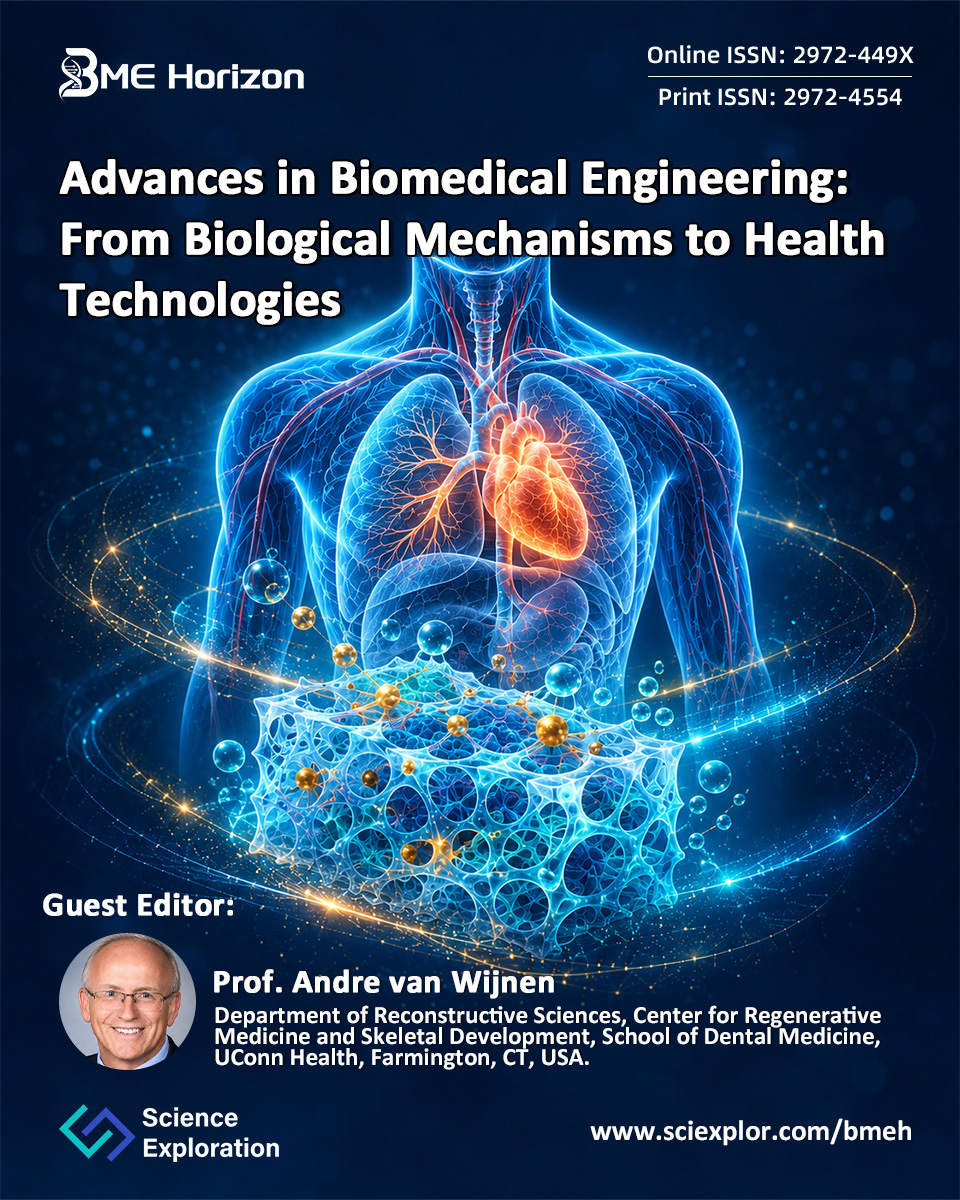
Guest Editor(s)
Special Issue Information
This topical collection addresses fundamental questions and clinical applications in biomedical engineering. Fundamental questions relate to the biomechanical forces that shape the way tissues grow, function, and fail. Applied questions discuss how images, wearable sensors, or physiological signals inform clinicians about the health of patient, and how current insights can improve the design of better therapies and devices? This Special Topics collection brings together researchers who approach these questions from across biomedical engineering.
The collection spans scales from molecules and cells to organs and whole-body systems. Studies in biomechanics, mechanobiology, and computational modeling examine how living systems respond to injury, disease, and changes in their environment. Research in biomaterials, tissue engineering, and regenerative medicine uses that understanding to design materials and constructs that interact with living tissue. Advances in microfluidics, biofabrication, and synthetic biology offer new ways to model disease, test interventions, and develop therapies.
The collection also explores how engineers measure and interpret biological activity. Imaging modalities such as MRI, ultrasound, and optical imaging reveal structure and function, while biosensors and wearable electronics make it possible to track physiological changes over time. Signal and image processing, biomedical informatics, and artificial intelligence help researchers and clinicians interpret these measurements. In parallel, advances in implants, therapeutic devices, and rehabilitation technologies bring engineering into care and everyday life.
We welcome contributions that deepen understanding of biological systems, develop new engineering methods, or examine how technologies perform in research, clinical, and everyday settings. The collection also welcomes work on how biomedical engineers learn to connect these areas through education and design. Together, these perspectives trace how biological insight can inform the tools we use to study, diagnose, and treat disease.
Contact Us
Journal Editorial Office Email: bmehjournal@sciexplor.com
For Author Instructions, please refer to: www.sciexplor.com/bmeh/author_instructions
For Online Submission, please login at: http://www.intellimanus.com/#/login?journalPath=bmeh